Quick Summary: Choose a puppy by observing its individual temperament and realistic adult size, not by relying on breed labels or looks. The best first-time match is often a small companion dog that is calm, handles being held well, and fits your household schedule, space, and budget. Early socialization during the first three months matters, while Havapoo and Cavapoo adult size is best estimated from the parents’ actual measurements.
Two puppies can be eight weeks old, both Havapoos from the same litter, and still grow into very different dogs. One settles fast in a busy apartment. The other needs a calmer home, maybe with a yard. The variables you can actually research are temperament tendencies and adult size, and both matter more than coat color ever will.
This puppy temperament guide shows you how to judge those traits before you commit. You will see what puppy temperament and size really mean, how puppy size by breed sets your expectations for height, weight, and energy, and how to match both to your household.
Everything here leans on documented breed standards and veterinary behavior guidance, not breeder stereotypes, so your first pick rests on evidence instead of a cute face and a hunch.
What Puppy Temperament Actually Means
A puppy temperament guide starts with one idea: temperament is the stable set of traits a dog is born with. It shapes how a puppy responds to new people, handling, noise, and change. Environment and training matter, but they work on top of this baseline rather than replacing it.
Temperament, Behavior, and Mood Are Three Different Things
Temperament, behavior, and mood are not the same. Temperament is inborn and fairly steady, such as how bold or cautious a puppy is. Behavior is learned, like sitting on cue. Mood shifts hour to hour with hunger, sleep, or a missed nap. Judge a puppy by its baseline traits, not by how it acted after a rough morning.
The Core Traits Worth Watching in a Small-Breed Companion
Watch a handful of traits instead of a vague “personality.” For small companion breeds, these matter most:
- Sociability – interest in people, including strangers and children
- Confidence – how quickly the puppy recovers after a startle
- Energy level – how much activity the puppy seeks and sustains
- Sensitivity to handling – response to being held, groomed, and touched
- Independence vs. closeness – desire to stay near you
Breeders can show you these traits at different ages, and honest temperament-to-lifestyle matching turns them into a real household fit.
Why Breed Descriptions Are a Starting Point, Not a Verdict
Breed traits are tendencies, not promises. The AVSAB notes that the first three months of life are the most important window for socialization, and experiences in that window shape how inborn traits develop. Mixes such as Havapoos and Cavapoos add another layer of variation. Read breed standards, then meet the actual puppy.
How Temperament Develops: Genetics, Handling, and the Socialization Window
A puppy’s adult personality blends nature and nurture. Breeding sets the range, but the first months of life decide where your dog lands inside it. That’s why good breeders handle puppies early, and why your first weeks at home matter so much.
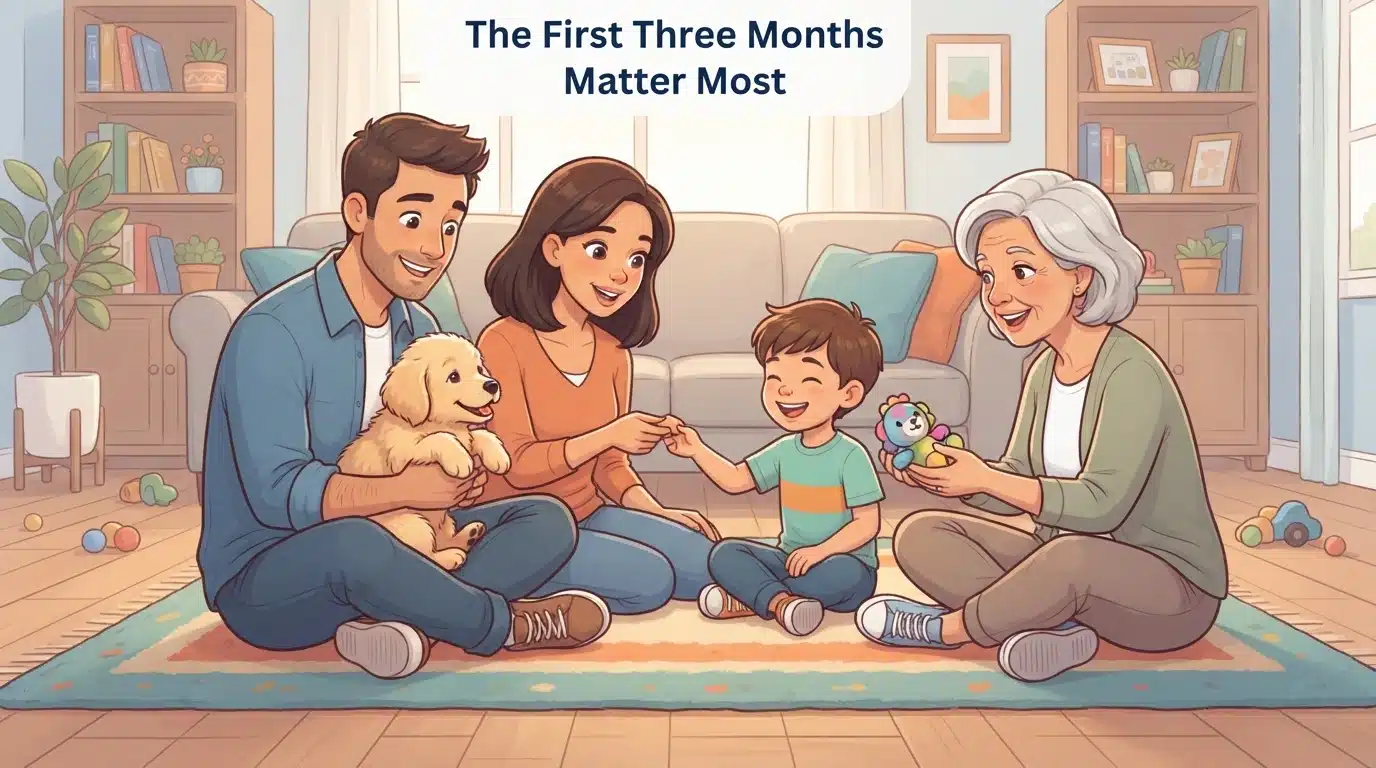
The First Three Months Matter Most
Puppy socialization classes can start as early as 7 to 8 weeks of age, as long as the puppy has received at least one set of vaccines at least 7 days before class, according to the AVSAB position statement. The group calls the first three months the most important socialization period, and it supports exposing puppies before vaccinations are complete. Miss this window and fear becomes harder to prevent.
Positive Exposure Without Overwhelm
Socialization means pleasant, controlled exposure, not flooding a puppy with new things. Keep sessions short and pair each new sound, surface, or stranger with treats and calm praise. Watch body language: tucked tail, backing away, or yawning means slow down. Positive experiences build confidence, while a single scary encounter can leave a lasting mark. Quality beats quantity every time.
How Household Routine Shapes Adult Behavior
Dogs relax into predictable days. Consistent feeding times, gentle handling, short play sessions, and quiet rest teach a puppy what to expect from humans. Households with kids should set clear rules so children handle the puppy kindly. For the first days after pickup, the steps in our first night and puppy prep guide keep that early routine calm and steady.
How to Choose a Puppy Temperament That Fits Your Family
Pick a puppy temperament that fits your family by working through three steps: write down your household’s real schedule, score each candidate puppy on calm traits, and match the puppy to your children, pets, and daily routine. Temperament, not looks, predicts how well a puppy settles in. Each step below takes under an hour.
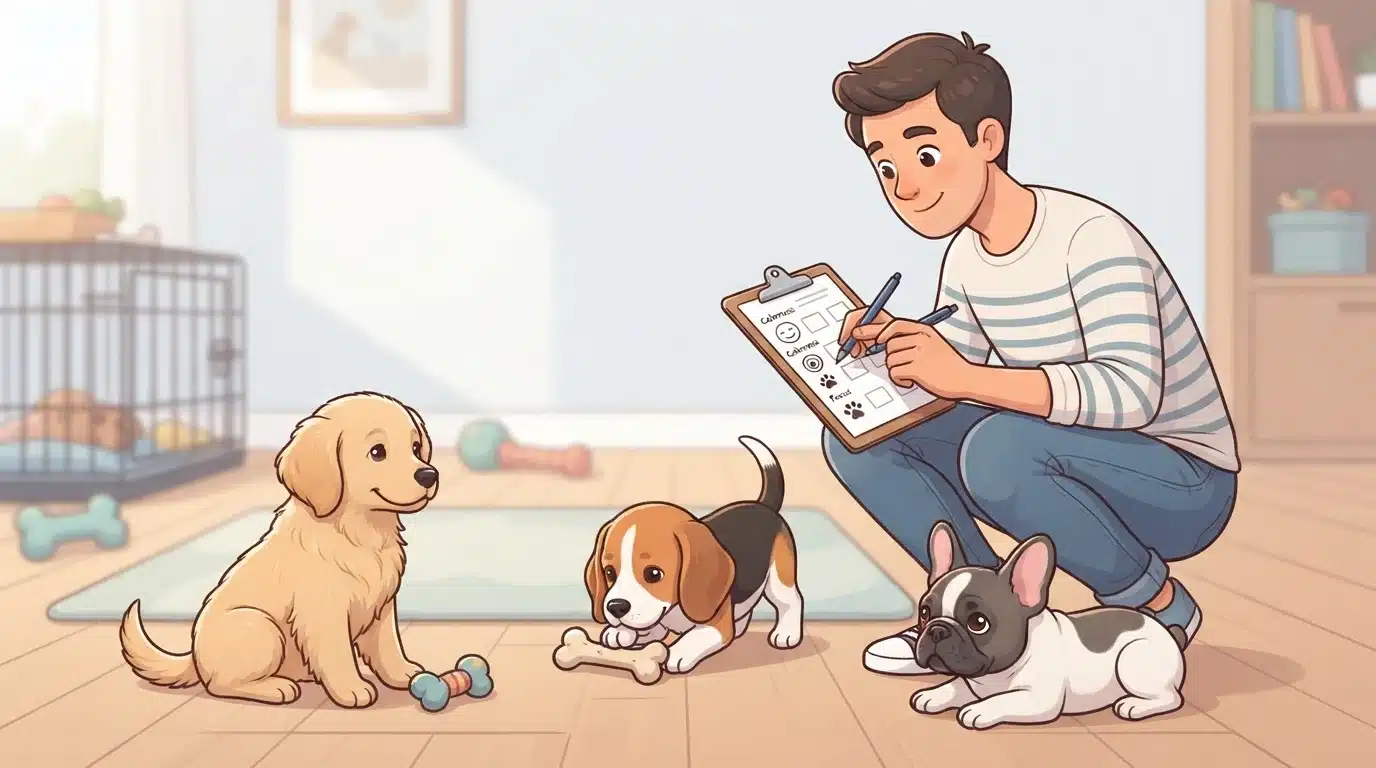
Step 1: Write Down Your Household’s Real Schedule
Be honest about your week, not your ideal week. Note who is home, when, and for how long. Include work hours, school runs, sports, and travel. A puppy that will spend four to six hours alone needs a calmer, more independent temperament than one with someone home all day. If your evenings are packed, a quieter puppy may suit you better than a bold one.
Step 2: Score Each Candidate Puppy on Calm Traits
Watch or ask about each puppy using a simple 1-to-5 score on three traits: how quickly it recovers after a startle, how it responds to being held, and how it reacts to a new person. AVSAB, the veterinary behavior group, recommends choosing based on observed behavior rather than breed labels. Sellers like Sage Puppies can share temperament notes on each puppy, so ask before you visit. Write the scores down so you can compare fairly later.
Step 3: Match the Puppy to Children, Pets, and Schedule
Now line the scores up against your home. Families with young children usually do best with a puppy that scores 4 or higher on recovery and handling, because kids are noisy and grabby. Homes with a resident dog need a puppy that accepts other pets calmly. A bolder puppy can still work, but it needs more training time, so match that need against your schedule from Step 1.
Puppy Size by Breed: What Small, Toy, and Medium Mean
The Size Categories Buyers See in Listings
Breeders usually sort puppies into three groups: toy (under 10 pounds), small (roughly 10 to 25 pounds), and medium (25 to 50 pounds). These labels are informal, though, so two listings that both say “small” can mean very different adult dogs. Always ask for the weight range behind the word.
Documented Size: The Havanese Breed Standard
How large does a Havanese adult dog get? A full-grown Havanese stands 8.5 to 11.5 inches at the withers, the highest point of the shoulders, and weighs 7 to 13 pounds, according to the AKC breed profile. That puts it firmly in the toy group, small enough for apartment life yet sturdy enough for active kids. Life expectancy runs 14 to 16 years, so this size fits families planning for a long companionship.
Mixed Breeds: Why Parent Records Beat Growth Charts
Havapoos and Cavapoos have no single standard, so their adult size depends on the parents, especially which poodle type was used. Growth charts offer rough guesses at best. Ask the breeder for the dam’s and sire’s actual weights and heights, because those records predict your puppy’s adult size far better than any chart.
Havanese, Havapoo, and Cavapoo: Temperament and Size Side by Side
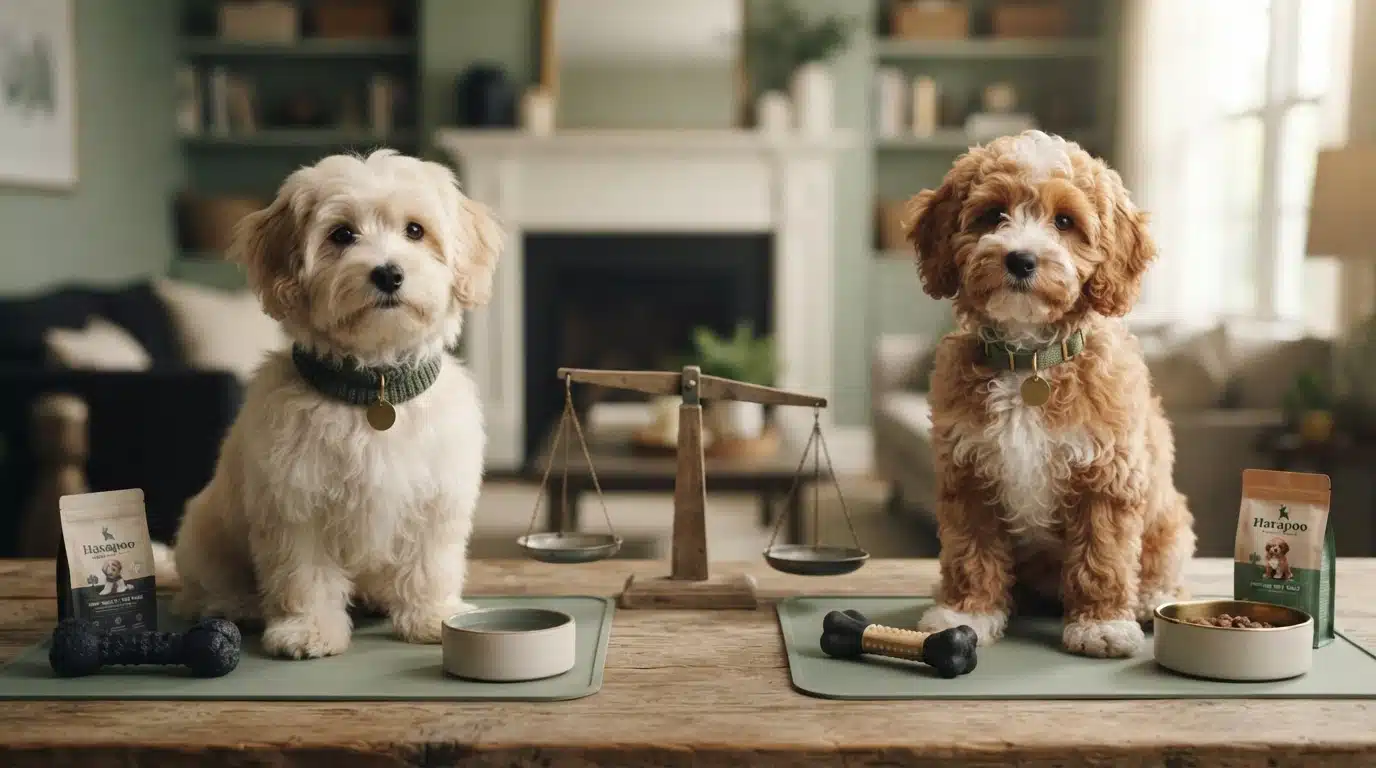
All three breeds share one core trait: they were built to be companions. A Havanese is a purebred member of the Toy Group, while a Havapoo or Cavapoo is a small cross, usually pairing a Havanese or Cavalier King Charles Spaniel with a poodle. The table below compares puppy temperament and size at a glance.
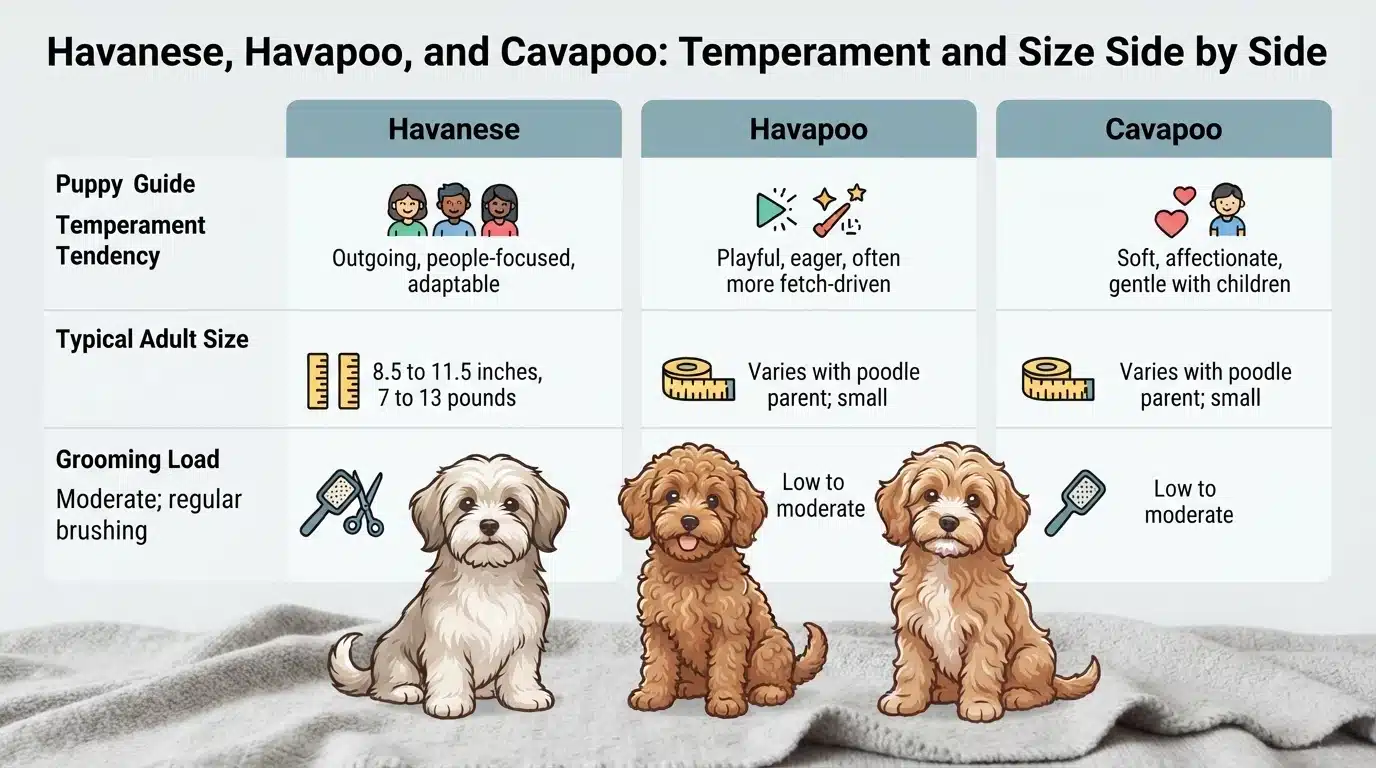
| Breed | Temperament Tendency | Typical Adult Size | Grooming Load |
|---|---|---|---|
| Havanese | Outgoing, people-focused, adaptable | 8.5 to 11.5 inches, 7 to 13 pounds | Moderate; regular brushing |
| Havapoo | Playful, eager, often more fetch-driven | Varies with poodle parent; small | Low to moderate |
| Cavapoo | Soft, affectionate, gentle with children | Varies with poodle parent; small | Low to moderate |
The Companion-Social Purebreed
The Havanese earned its nickname, the Velcro dog. According to the AKC breed profile, the breed is affectionate, cheerful, and highly trainable, which makes it a steady pick for first-time owners. It stays small for life, so handling and grooming stay manageable.
Havanese and Havapoo: Where the Mix Adds Retriever Traits
Adding poodle brings retriever instincts into the mix. Havapoos often love fetch, puzzle toys, and short training games more than a typical lapdog does. Because poodles come in several sizes, ask your breeder which poodle parent sets the adult size. Sage Puppies, for example, matches each puppy to the family’s energy level rather than a fixed size guess.
Spaniel Temperament With Poodle Trainability
Cavapoos lean gentle and tender. The Cavalier side is famously soft with children and other pets, and the poodle side adds focus and quick learning. The tradeoff: spaniel mixes can be sensitive, so they respond best to kind, reward-based training rather than correction. Early socialization keeps their confidence growing. If a calm, cushion-like family dog tops your list, browse available puppies to see which temperament fits your home.
What Size Dog Is Best for a First-Time Owner
For most first-time owners, a small companion breed in the 7 to 25 pound range is the easiest fit. Size matters less than how much energy the dog has and how well it tolerates everyday handling. Three fit factors decide the match:
- Energy level that matches your daily routine
- Handling tolerance, especially with kids
- Home and budget constraints tied to adult size
Size Is Less Important Than Energy and Handling Load
A calm 12-pound dog fits an apartment far better than a restless 40-pound dog. Temperament and size work together: a small breed with a busy, bold personality still needs real exercise and training. Focus on how the puppy recovers from startles, accepts being held, and greets new people. Those traits predict daily life better than the number on a weight chart.
Practical Home Constraints to Check
Measure your space honestly. A toy or small breed, like the Havanese at 8.5 to 11.5 inches and 7 to 13 pounds, needs little room to thrive. Larger dogs need a secure yard, sturdy gates, and room to stretch out. Check stairs, balconies, and gaps a puppy could squeeze through. Renters should confirm any pet weight limits in the lease before applying for a puppy.
Cost and Equipment Scaled to Size
Smaller dogs usually cost less to feed, and their crates, harnesses, and beds are cheaper. Grooming can run the other way: many small companion breeds need regular brushing or professional trims. Budget for yearly vet visits, vaccines, and preventives either way. Sketch a rough first-year total before you commit, so the size you pick is one you can afford to keep.
Where Temperament and Size Intersect in a Real Home
Temperament decides how a puppy handles your daily life, and size decides where that life happens. The two work together.
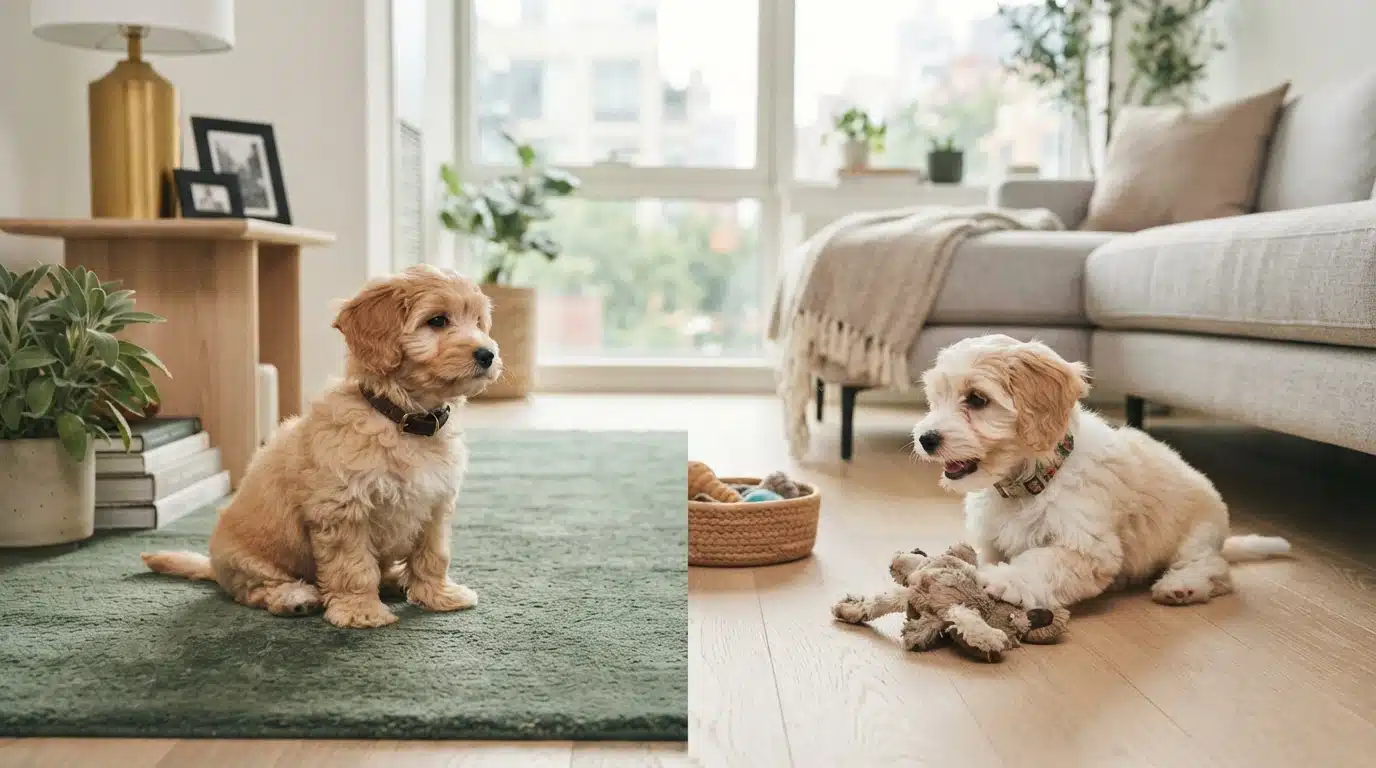
Apartments and Small Spaces
Small breeds shine here because they simply need less room. A toy or small breed, like the Havanese at 7 to 13 pounds, gets enough exercise with indoor play and short walks. The bigger factor is temperament: a calm dog fits an apartment far better than a restless one, regardless of weight. Check your lease for breed or weight rules first.
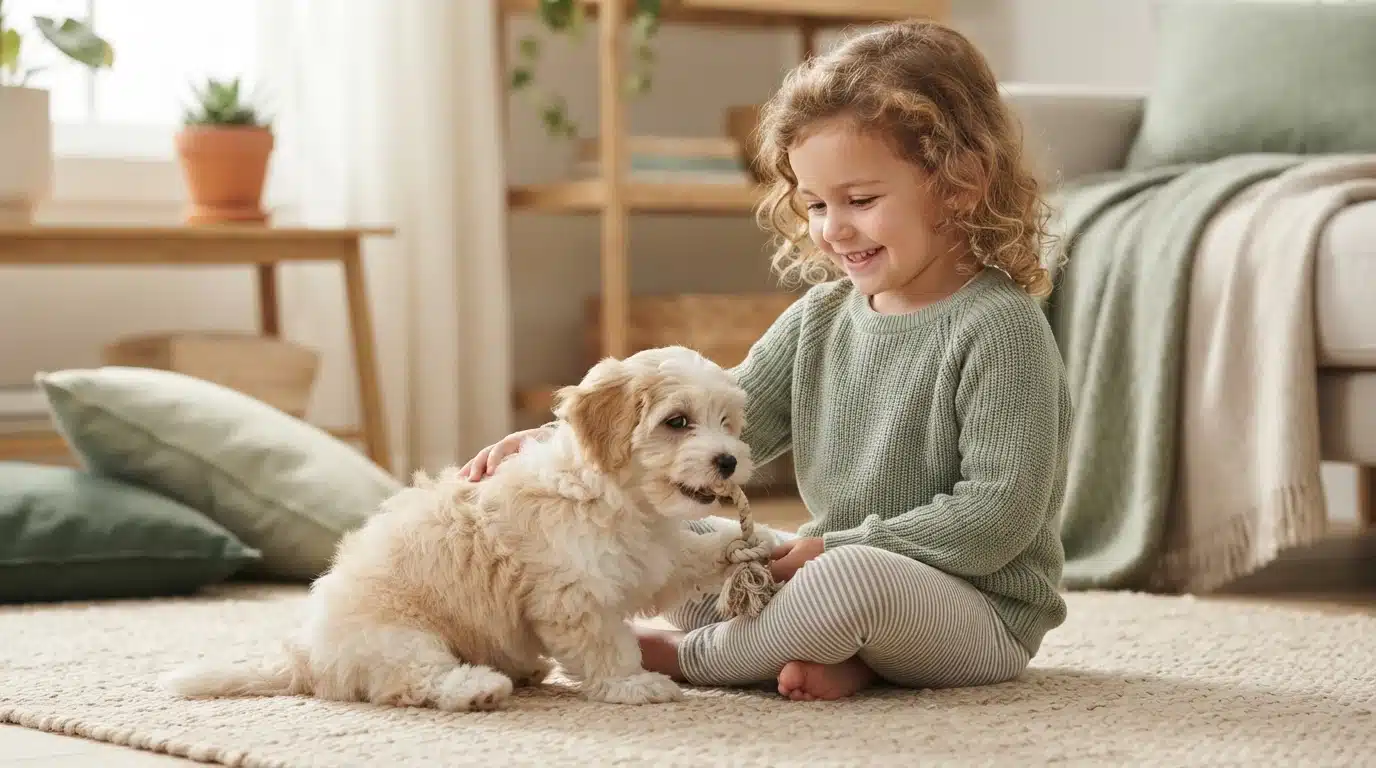
Families With Young Children
Kids need a puppy that tolerates noise, grabbing, and sudden chaos. That is a temperament question, not a size one. Look for a puppy that recovers quickly after a startle and stays relaxed when held, since young children will do both. Havanese, Havapoo, and Cavapoo lines tend toward people-focused, patient temperaments, which is why they appear often in family-matching advice.
Travel, Errands, and the Car
Small dogs travel easier. A 7 to 13 pound dog fits a carrier under an airline seat, hops into a car crate, and stays manageable on vet runs. But a nervous traveler makes any trip hard, so practice short car rides early. Ask your breeder which puppies already ride calmly; that answer matters more than the breed name on the paperwork.
Common Mistakes to Avoid When Choosing Temperament and Size
The most common mistakes are trusting breed-wide personality promises, choosing a puppy on looks alone, skipping temperament observation, picking a size that outgrows your home, and matching energy instead of weight. The fix in each case: observe the individual puppy, confirm the breed’s documented adult size, and match both traits to your actual household.
Trait Assumptions and “Guaranteed” Personalities
“Breed temperament” describes tendencies, not promises. Havanese tend to be people-focused, and Cavapoo and Havapoo puppies often lean social, but every litter mixes personalities. A quiet breed can still produce a bold, jumpy puppy. Judge each puppy directly using recovery, handling, and new-person responses, rather than assuming a breed label predicts behavior.
Size and Home Mismatches
Breeders estimate adult weight, but mixes can land at either parent’s size. Ask what range the parents actually weighed. A puppy that fits now but grows past 25 pounds can overwhelm an apartment, stairs, or a small car. Small companion breeds in the 7 to 13 pound Havanese range suit most first-time homes, and a breeder who documents expected adult size honestly, as Sage Puppies does with each litter’s parent weights, removes that guesswork.

Once you know which temperament and size fits your home, meet the puppies raised for it. Sage Puppies matches first-time families with Havanese, Havapoo, and Cavapoo puppies in Utah and nationwide. Browse available puppies and start your application today.
Frequently Asked Questions
Q1: How do I choose a puppy temperament that fits my family?
Start with your real schedule, not your ideal one. Then score each puppy on recovery after a startle, tolerance for handling, and reaction to new people. Match those scores to your kids, pets, and daily hours at home.
Q2: What size dog is best for a first-time owner?
Most first-time owners do well with a small companion breed in the 7 to 25 pound range. Size matters less than energy level and handling tolerance, so weigh those traits alongside adult weight before you decide.
Q3: How do I know if a small breed puppy is the right fit for my home?
Check three things: your space and lease rules, your budget for food and grooming, and your household’s energy. A calm 7 to 13 pound dog fits apartments, but every puppy still needs daily exercise and training.
Q4: Are Havapoos and Cavapoos good with children?
Often, yes. Their companion breeding leans people-focused and patient, but individual temperament varies within every litter. Watch the actual puppy for quick recovery and relaxed handling before deciding.
Q5: How accurate are puppy growth charts for mixed breeds?
Not very. Adult size depends mostly on the parents, especially the poodle type used. Ask for the dam’s and sire’s real weights and heights instead of relying on a chart.
Q6: When should puppy socialization start?
As early as 7 to 8 weeks, according to AVSAB guidance, once the puppy has had one vaccine set at least 7 days before class. The first three months are the key window.
Conclusion
Puppy temperament and size work together to decide how well a puppy fits your home. Temperament describes the traits a puppy is born with, and the first three months shape how those traits develop. Size sets the practical side: the Havanese stays within a documented 7 to 13 pounds, while Havapoo and Cavapoo adults follow their parents’ weights. Match a puppy’s recovery, handling tolerance, and energy to your real schedule, your kids, and your space, and judge the individual puppy rather than the breed label.