Quick Summary: Small breeds are usually the easier apartment choice because they fit within common 40-pound lease limits, need only 20 to 40 minutes of daily walking, and cost less to feed and care for. However, temperament matters more than size, since small dogs may bark frequently and calm breeds such as Greyhounds can thrive indoors. Choose based on your lease, schedule, neighbors, building access, and health records; Sage Puppies offers Havanese, Havapoo, and Cavapoo puppies suited to typical apartments and first-time owners.
If your lease caps dogs at 40 pounds, your building has one flight of stairs and you are gone nine hours a day, choosing between small versus large dogs is not really a style question. Small dogs are usually the easier fit, but size matters less than energy, noise and your schedule. Some large breeds are genuinely calm apartment dogs, and some tiny ones are not. Most renters and first-time owners get pulled in opposite directions by well-meant advice, breeder marketing and stale listicles, so this apartment dog size comparison covers space, exercise, noise, cost, health and daily routine fit. You will get a clear pick by household type, a shortlist of small breeds (Havanese, Havapoo and Cavapoo) with typical adult weights, and a simple checklist for vetting any breeder before you commit. The goal is a decision based on your lease, your hours and your neighbors, not a stereotype about size.
Small Breed vs Large Breed Dogs for Apartment Living: Side by Side
| Small breed dogs | Large breed dogs | |
|---|---|---|
| Space and Size Requirements | Comfortable in 400 to 700 square foot apartments; easily fits on a couch, in a carrier and on the elevator | Needs a larger floor plan, a secure balcony or yard, and a plan for stairs, elevators and narrow hallways |
| Exercise Needs | Mostly moderate, roughly 20 to 40 minutes of walking daily, but small dogs are often high energy in bursts | Ranges widely; many large breeds need 60 minutes or more daily, while some giant breeds are low energy |
| Noise and Barking | Usually less volume, but many small breeds bark frequently for attention | Loud when they bark, and deeper, which travels further in a building |
| First-Year Cost | Puppy price often $3,500 to $4,500 from boutique breeders; food and vet bills are lower, grooming and training costs add up | Food and vet costs rise sharply with size; crates, gates and flooring are a larger expense |
| Best For | Apartments, first-time owners, small homes, families wanting a dog they can carry and travel with | Households with yards, active routines, families seeking a dog for outdoor activity and kids who want a dog that grows into a sturdy companion |
Meet the Two Contenders: Small Breed and Large Breed Dogs
Small breed dogs
Small breed dogs are compact companion dogs, generally under 20 pounds as adults, such as Havanese, Havapoo, Cavapoo and similar toy breeds. They suit renters in small homes, first-time owners and families who want a dog they can carry and travel with. Their angle in this apartment dog size comparison is simple: they were shaped for life indoors.
Key strengths
- Comfortable in 400 to 700 square foot apartments
- Moderate daily exercise, roughly 20 to 40 minutes of walking
- Lower food and vet bills
Large breed dogs
Large breed dogs weigh over 50 pounds as adults, from active Labs and German Shepherds to calm giants like Greyhounds and Great Danes. They fit best with households that have yards, active routines or kids wanting a sturdy companion. Their angle here is the real test of large dogs in small spaces: some manage it, but only with a plan.
Key strengths
- Several calm, low energy giants adapt well indoors
- Sturdy build for outdoor activity and family life
- Deep bonds with an involved household
Are Small Dogs Really Better for Apartments Than Large Dogs?
Usually, yes, but not always. A small dog’s size solves space, weight limits and elevator issues at once, so it is the safer default for a small apartment. Still, a calm large dog in a small space can outperform a restless small one. What matters more than size:
- Barking and neighbor etiquette
- Daily exercise you can actually give
- Lease rules, pet rent and deposits
- Your schedule at home
What apartment living actually tests
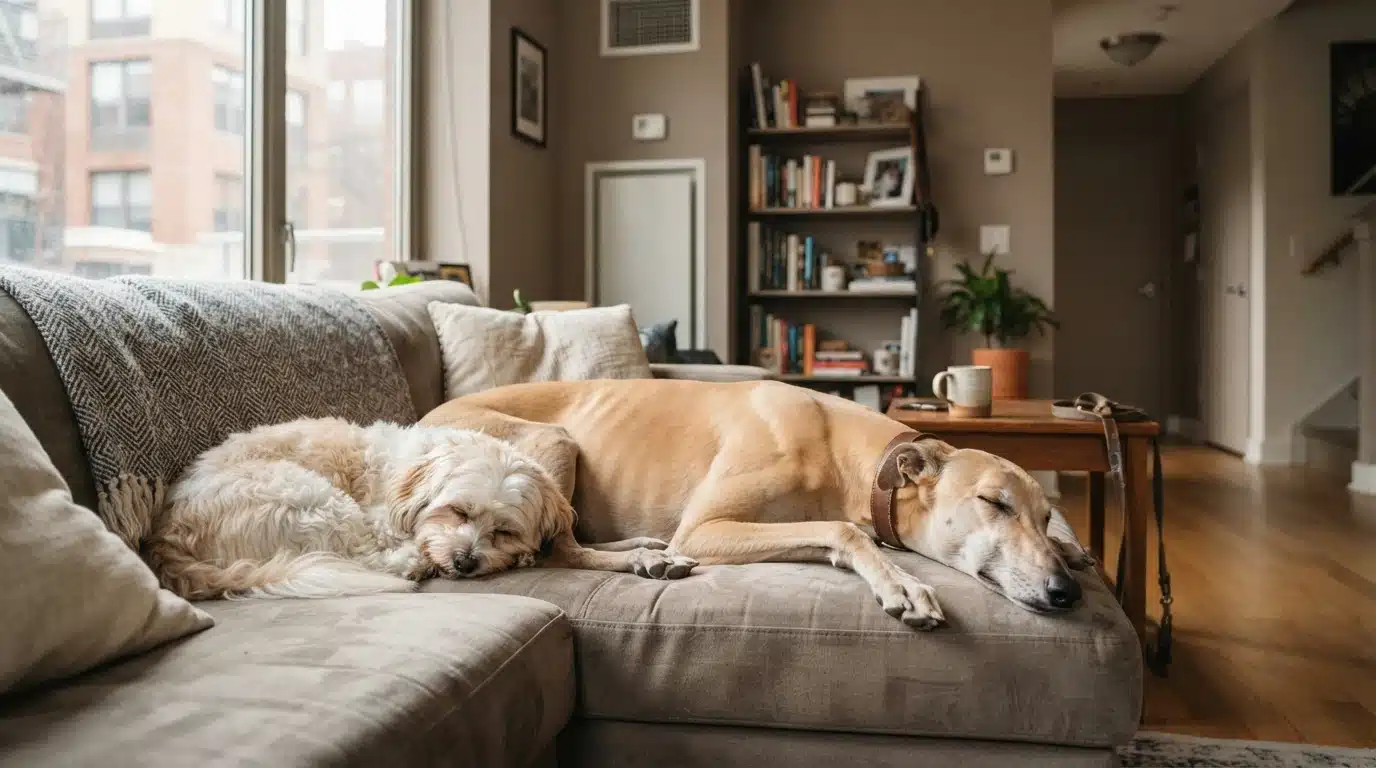
Apartment life tests noise, routine and access more than square footage. Your neighbors hear barking through thin walls. Your building’s elevator, stairs and dog weight limits set the ground rules. And your work schedule decides who burns off energy.
Where the small dog advantage is real, and where it is not
The advantage is real for logistics: carriers, stair climbs, lease caps around 40 pounds and lower food and vet bills. It is not real for behavior. Some small breeds bark more than many large ones. If you want a quieter, calmer fit, comparing a Havanese, Havapoo or Cavapoo by temperament and adult weight beats comparing by size alone, which is how any honest apartment dog size comparison should work.
Space and Size: What Changes When the Dog Is Smaller
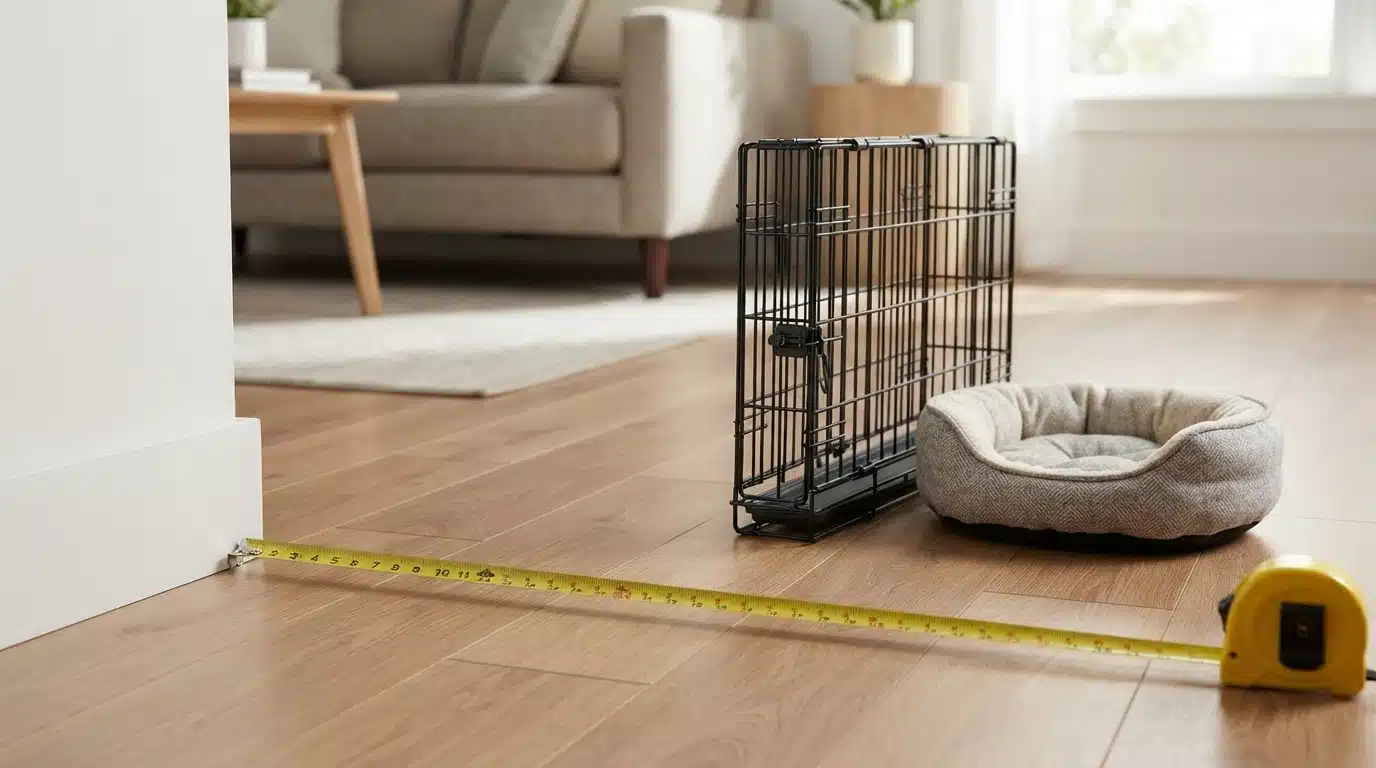
Most small dogs fit comfortably in 400 to 700 square foot apartments, while most large dogs need more room than that to move, stretch out and turn around without bumping into furniture. Size is really a logistics question. Measure your floor plan, then check the carrier, the elevator and the route to the door.
Measuring your apartment against an adult dog
Picture the adult dog, not the puppy. A Havapoo stays small enough to circle a coffee table, but a 70 pound Lab needs a clear path from couch to door. Sketch your largest open area, then subtract the couch, the bed and the desk. What is left is the dog’s living room. If the leftover space fits a twin mattress with room to walk around it, a large dog can work; anything tighter favors a smaller breed.
Damage, flooring and the cost of a big tail
Big dogs leave bigger marks. Knocked lamps, scratched doors and a tail that sweeps shelves clean all come out of a renter’s deposit, and hardwood shows claws faster than carpet. Small dogs do less force damage, though chewing and accidents happen at any size. A Havanese, Havapoo or Cavapoo tops out well under most lease weight caps, which keeps the conversation with a landlord short.
Exercise and Energy: The Myth That Small Dogs Need Less
What breed sources actually say about exercise
Size does not set energy level; breeding does. A UK study of over 4,000 dogs found small dogs were actually less likely to get walks longer than 30 minutes than medium or large dogs, even though many small breeds are high energy. The AKC notes that some large breeds are happy couch loungers while plenty of small dogs sprint, bark and demand play. Match the individual breed’s energy, not its weight. That is why Sage Puppies profiles each breed’s energy level before matching a puppy to your routine.
Low energy large breeds are not rare
What large dog breeds can live in an apartment? Calm, lower-drive ones often can:
- Greyhound: naps most of the day, needs short sprints.
- Great Dane: slow, gentle, minimal daily walking.
- Saint Bernard: relaxed indoors, moderate outdoor time.
- Basset Hound: easygoing with short sniff walks.
- Mastiff: content to lounge once grown.
The AKC’s apartment breed guide confirms many large breeds have lower activity levels than small ones.
Noise, Barking and Living Next to Neighbors
Volume versus frequency
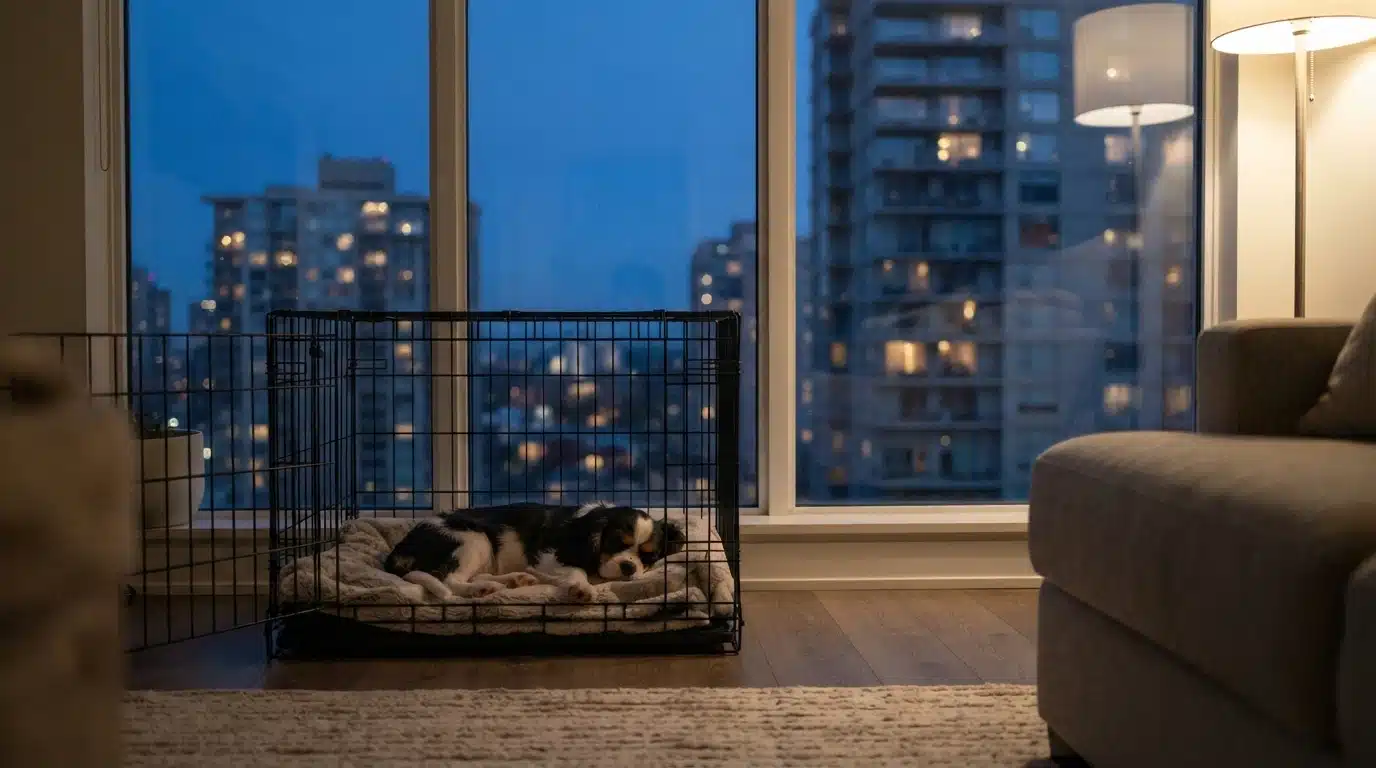
Small dogs often bark more often, not louder. A Havanese may sound the alarm at every hallway footstep, while many large breeds stay quiet between events. The problem for shared walls is frequency: ten short yaps annoy a neighbor more than one deep bark. Breeds bred to watchdog tend to be chattier, so check a breed’s barking tendency, not its size, before you sign a lease.
Adjusting a new puppy to a shared building
A new puppy barks at first because it is alone, not because it is small. Crate training near your bed, short absences that grow slowly, and puzzle feeders at departure time all help. Hang a note on your door asking neighbors to tell you early if noise becomes a pattern, since fixing week one is far easier than fixing month three. Ask your breeder how each puppy handled alone time; the matching questions used in a puppy application can surface quieter candidates.
What Each Size Adds to Your Monthly Budget
Size changes your monthly bill in four places: food, medication, grooming and supplies. A typical sample budget looks like this:
- Food: $15 to $30 a month for a small dog, $45 to $90 or more for a large one
- Flea, tick and heartworm meds: dosed by weight, so large dogs often pay double
- Grooming: $50 to $75 per visit for a Havanese or Cavapoo; short-coated large breeds cost less per cut but need fewer
- Pet rent and pet deposit: set by your building, not the dog, though some complexes charge more over a weight cap

One-time costs catch first-time owners off guard. Expect an initial vet visit with vaccinations, spay or neuter surgery, a crate sized to the adult dog, and a pet deposit that can run $200 to $500. Large dogs need bigger crates, sturdier leashes and more durable beds, so gear costs climb with weight. Small breeds add grooming tools and recurring trim appointments instead. If you want to see what a small breed’s first year looks like, the pricing and reservation page lays out puppy cost separately from these monthly numbers.
Either way, budget for the adult size, not the puppy in front of you.
Health and Safety in a Small Space
Size-related health profiles
Size shapes which health problems a dog may face, though neither side gets a free pass. Small breeds live longer, often 10 to 15 years, but they are far more prone to dental disease, loose kneecaps and collapsed airways. Large breeds age faster and more often face arthritis, bone cancer, bloat and gut problems, according to a large study of canine disease records (NIH). Small breeds also develop gum disease far more often, so brushing matters from puppyhood. Either way, ask a breeder for parent health screening before you commit.
Apartment hazards for both sizes
Space itself brings specific risks. Small dogs can slip out an open door, fall from a balcony or get stepped on in tight hallways, while large dogs can knock over furniture, strain joints on slick floors and struggle on narrow stair landings. Elevators, glass doors and thin walls create problems for both sizes, so gates and basic proofing matter more than square footage. Keep wet floors dry, trim nails for traction, and block access to cords and trash.
Whichever size you choose, ask for health testing and vaccination records before bringing a puppy home.
Matching Size to Your Schedule and Household
Short answer: Small breed puppies usually adapt faster to apartment life than large breeds because their exercise and space needs fit inside a normal workday. Large breeds can still work well in apartments if you choose a calm, lower-energy breed and have enough time each day.
Workdays, alone time and real schedules
Count your actual hours away, not your best-case ones. Puppies of any size need bathroom breaks every few hours, so a nine-hour day means a dog walker, lunch visit or daycare for the first several months. After that, a small companion dog settles into 20 to 40 minutes of daily walking. Some large breeds need an hour or more, though calm giants adapt. Honesty here matters more than breed charm. The brand’s available puppies page can show what is ready now.
Families, kids and first-time owners
Large dogs often handle rough play better, but a 70 pound dog can knock over a toddler by accident. Small breeds like Havanese, Havapoo and Cavapoo suit first-time owners because they are portable, trainable and easy to manage on a leash. What they lose in sturdiness they gain in fit. Match the dog to the household, and most apartments can host either size.
Which Should You Choose: Small Breed or Large Breed?
There is no single right answer. The best size for your apartment depends on your space, your schedule and how your building’s rules apply to dogs.
Choose a small breed if
Your apartment sits between 400 and 700 square feet, your lease caps dogs around 40 pounds, or you want a companion that fits a carrier and an elevator without drama. Small breeds also cost less to feed and make stairs and vet trips easier. If you are drawn to a Havanese, Havapoo or Cavapoo, ask the breeder about expected adult weight so you know exactly what you are bringing home. These breeds suit first-time owners who want a cheerful housemate, not a workout partner.
Choose a large breed if
You live in a roomier apartment or a ground-floor unit with direct outdoor access, and you can commit to real exercise every day. Some large dogs are surprisingly calm indoors, and greyhounds are famous couch potatoes. Large breeds work well when you have time for long walks, a car that fits a big crate, and no weight cap in your lease.
Before you commit, check these five things
- Lease rules: weight limits, breed restrictions, pet rent and deposit.
- Your daily schedule: honest hours you can walk a dog.
- Building access: stairs, elevator and a potty route.
- Noise tolerance: your neighbors’ patience for barking.
- Health records: vaccination history and breeder health testing.

If a small companion sounds right, Sage Puppies raises Havanese, Havapoo and Cavapoo puppies that fit apartment life beautifully. Browse available puppies on the site, review pricing, then submit an application. Cassie matches each family personally, so your next step starts with a simple form.
Frequently Asked Questions
Q1: Are small dogs really better for apartments than large dogs?
Usually, yes. Size solves space, weight caps and elevator issues at once. But a calm greyhound can outperform a restless small breed, so check barking tendency and energy before deciding.
Q2: What large dog breeds can live in an apartment?
Greyhounds, Great Danes, Saint Bernards, Basset Hounds and Mastiffs adapt well. They need a clear floor path, a big crate and daily exercise, plus a lease without a weight cap.
Q3: Do small breed puppies adapt better to apartment living than large breeds?
Usually. Their exercise needs, 20 to 40 minutes daily, fit a normal workday, and they fit carriers and stairs easily. Any puppy still needs bathroom breaks every few hours early on.
Q4: How much does pet rent and a pet deposit cost?
Deposits typically run $200 to $500, and pet rent is set by your building, not the dog. Some complexes charge extra above a weight limit.
Q5: Do small dogs bark more than large dogs?
Often more frequently, though not louder. Ten short yaps bother neighbors more than one deep bark, so choose a breed by barking tendency, not size.
Wrapping Up: The Right Dog for Your Space
Size helps, but it is not the whole answer. Small breed dogs usually win in apartments because they fit under lease weight limits, need 20 to 40 minutes of daily walking and cost less to feed. Still, temperament and barking matter more than pounds, so match the individual breed to your schedule.
For most renters and first-time owners, a Havanese, Havapoo or Cavapoo is the easiest fit in a 400 to 700 square foot home. Large breeds can work too, but only with real exercise time and a lease with no weight cap. Check your lease rules, your honest hours away and the puppy’s health testing records before you commit, then choose the dog that matches the life you actually live.