Quick Summary: For most apartment households, a small breed such as a Havanese, Havapoo, or Cavapoo is the easier choice because it fits common weight limits, needs only 20 to 45 minutes of daily activity, and is easier to manage in shared spaces. A large dog can work if your lease permits it and you can commit to 60 to 90 or more minutes of exercise, though food, vet, and travel costs are higher. Before choosing any puppy, read the lease carefully and match its adult size, energy, noise level, and care needs to your real routine.
Two dogs, one building. A 12-pound Havapoo puppy rides the elevator without anyone shifting grocery bags. A 70-pound Lab puppy makes every trip a negotiation. Both can share a second-floor apartment, but only one turns a thin wall into a 7 a.m. problem. The short answer: for most apartment households, choosing a puppy for apartments means picking small, and a Havanese, Havapoo, or Cavapoo is an easier match. A large dog works only when your building allows the size and your days hold real time and space for exercise. The decision looks simple until the building weighs in: lease weight caps, breed restricted breeds lists, shared walls, work schedules, and dog size and apartment living costs in a few hundred square feet. This guide compares both paths on the six factors apartments actually test, then shows how to choose a puppy for apartments step by step, ending with a clear pick for each household.
Small Breed Puppies vs Large Dogs in Apartments: At a Glance
| Small breed puppies (Havanese, Havapoo, Cavapoo) | Large breed puppies (Retriever, Shepherd, and similar) | |
|---|---|---|
| Adult size and weight | About 7-13 lb Havanese, roughly 7-20 lb Havapoo, roughly 12-25 lb Cavapoo | Commonly 55-110+ lb at maturity |
| Space and exercise needs | Moderate energy, roughly 20-45 minutes of daily walk and play | Higher energy, often 60-90+ minutes of daily exercise plus space |
| Noise and neighbor impact | Low to moderate; Havanese alert, Havapoo and Cavapoo usually quieter | Often low barkers, but a strong bark carries in a shared building |
| Time alone tolerance | Moderate; separation anxiety is common if left alone long | Generally steadier alone, especially with a predictable routine |
| Ongoing yearly cost | Lower food cost, higher grooming and dental spend | Higher food and orthopedic care, but lower grooming spend |
| Health watch areas and lifespan | Dental disease, tracheal collapse, heart and eye checks; often 12-16 years | Hip and elbow dysplasia, cruciate injury, bloat risk; often 9-12 years |
How Small breed puppies (Havanese, Havapoo, Cavapoo) and Large breed puppies (Retriever, Shepherd, and similar) Compare
Small breed puppies (Havanese, Havapoo, Cavapoo)
These toy and companion crosses average about 7 to 25 pounds and fit apartment households that want a quiet, close, low-shedding dog. They need only 20 to 45 minutes of daily activity, so choosing a puppy for apartments often starts here.

Key strengths
- Quiet small dog breeds with low to moderate barking
- Often live 12 to 16 years
Large breed puppies (Retriever, Shepherd, and similar)
Large breeds commonly reach 55 pounds or more, which shapes lease eligibility, exercise time, vet logistics, and yearly cost. They usually settle alone well, but need 60 to 90 or more minutes of daily exercise. Strong barks also carry in shared buildings.
Key strengths
- Generally steadier when left alone
- Lower grooming spend than curly-coated small breeds
The Apartment Test Your Puppy Has to Pass
Before you fall for a face, run the puppy through four practical tests. Most apartment surprises come from skipping one of them.
- Lease rules. Many buildings set an apartment weight limit for dogs, often 25 to 50 pounds, plus breed restricted breeds in apartments lists.
- Noise. Think about dog barking and neighbors in apartments, since thin walls turn yapping into complaints.
- Training and alone time. Separation anxiety in small breeds is real, and so is a bored large dog.
- Five-year cost and health. Food, grooming, and vet bills differ sharply by size.
Your lease decides more than your taste does
Your landlord’s rules come before any wishlist. Check pet deposits, monthly pet rent, weight caps, and banned breed lists in writing. Some breeds and mixes get labeled by name even when the puppy is calm and small, so ask before you pay a deposit. A written pet addendum protects you later.
The four questions to answer before you look at any litter
How big will this puppy be at two years old? How much noise will it make when you leave for work? Can you handle grooming and dental care for a tiny mouth? And what happens when the dog is home alone? The small breed puppy buying guide walks through each of these in detail. Answer all four honestly, and the right size usually picks itself.
What Breed of Puppy Is Best for an Apartment?
The best apartment puppies are quiet small breeds that stay under most building weight caps, bark rarely, and thrive on modest daily exercise. Havanese, Havapoo, and Cavapoo puppies fit that description, which is why they dominate the list of quiet small dog breeds for apartments and condos.
- Havanese: about 7-13 lb adult, calm indoors, alert but not noisy
- Havapoo: roughly 7-20 lb adult, low-shedding, easygoing energy
- Cavapoo: roughly 12-25 lb adult, gentle, friendly with neighbors and kids
The small breed shortlist for apartment households
Each of these three crosses solves the same three apartment problems at once. They stay small enough for elevators and dog weight limits. They need only 20 to 45 minutes of daily activity, which fits a lunchtime walk plus evening play. And they bond closely to their people, so boredom barking is less likely than in more independent or high-energy breeds. Their health watch list runs short too, though small breed dental disease and tracheal collapse mean regular tooth brushing and a harness instead of a collar. If you want a deeper rundown of these quiet small dog breeds, our breed guides cover adult size, grooming schedules, and temperament in detail.
When a large breed is genuinely the better answer
Yes, a large dog can live in an apartment when three conditions hold: your lease allows the size, you can commit 60 to 90 or more minutes of daily exercise, and you train consistently from day one. A calm Greyhound or a well-worked Labrador proves it daily. But that schedule is a real job, and one missed month shows up as chewed baseboards.
How to choose a puppy for apartments, in order
Choosing a puppy for apartments works best as a sequence. First, check your lease for the apartment weight limit for dogs and any breed restricted breeds in apartments list. Second, match your honest daily schedule to the breed’s exercise needs. Third, meet the parents and ask about noise. Then reserve early, because good litters go fast.
Noise, Energy, and the Hours You Are Away
Barking is a training story, not a size story
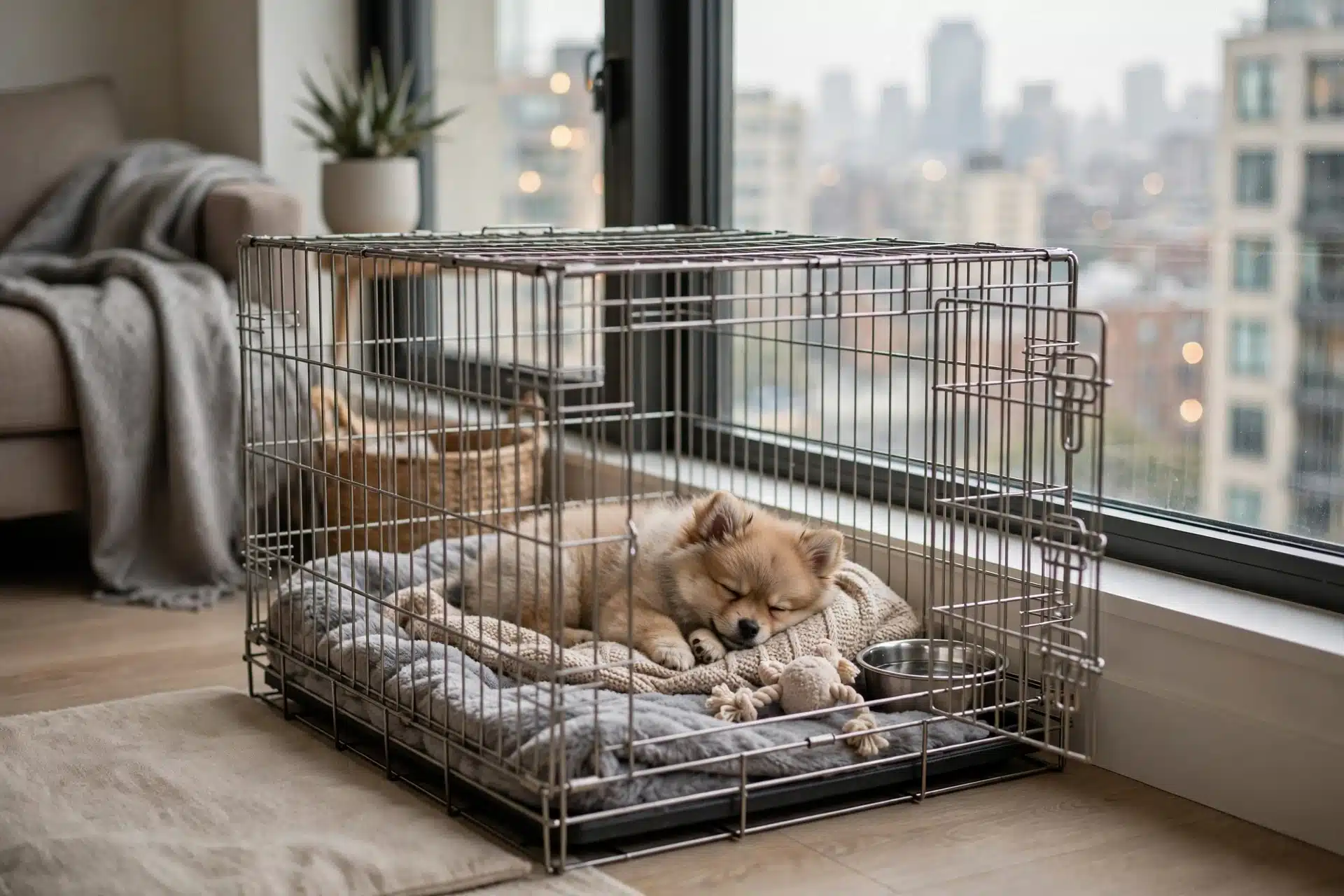
Any puppy can learn to bark at every hallway sound, and any puppy can learn to settle. Size matters far less than habit. Tiny dogs sometimes get a pass from owners who shrug off yapping as cute, so small breeds can end up noisier if nobody sets rules. Teach a quiet cue early and reward calm behavior, and neighbors stay friendly.
Exercise volume is where the real difference shows
Energy needs are the sharpest split in dog size and apartment living. Large breeds often want 60 to 90 or more minutes of daily exercise, while small companion breeds settle for 20 to 45 minutes. A tired large dog can do fine indoors, but a pent-up one climbs walls, literally. Match the dog to the time you actually have.
Hours alone, and the separation anxiety question
Small breeds bond hard, and separation anxiety in small breeds is a real risk when puppies spend eight hours alone. Build tolerance slowly: short absences, a safe den, and a midday dog walker or pet sitter for young pups. The calm, people-focused temperaments behind Cassie’s Havanese, Havapoo, and Cavapoo program help, and steady puppy training milestones do the rest.
The Physical Reality of a Small Apartment
Floors, stairs, and carrying
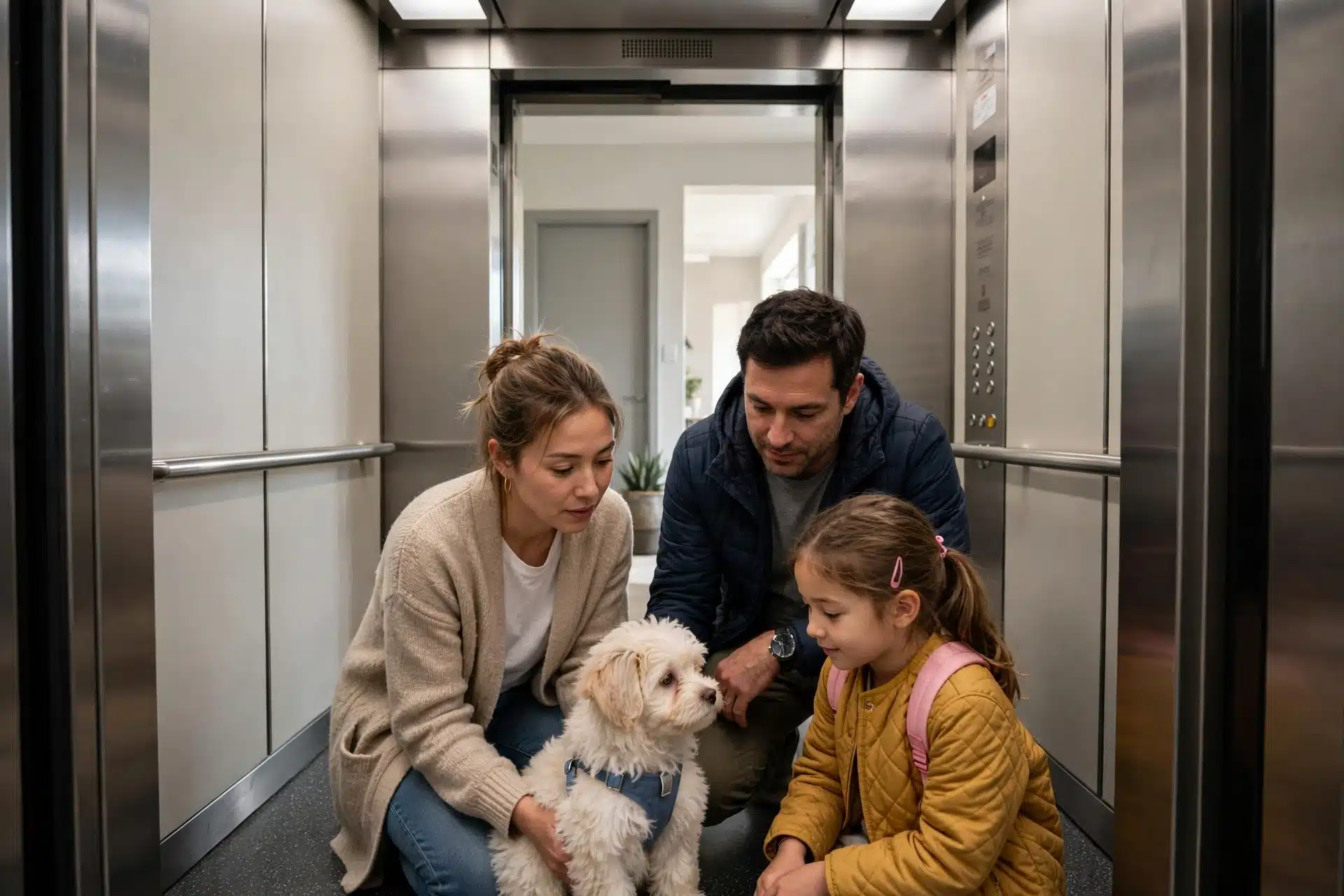
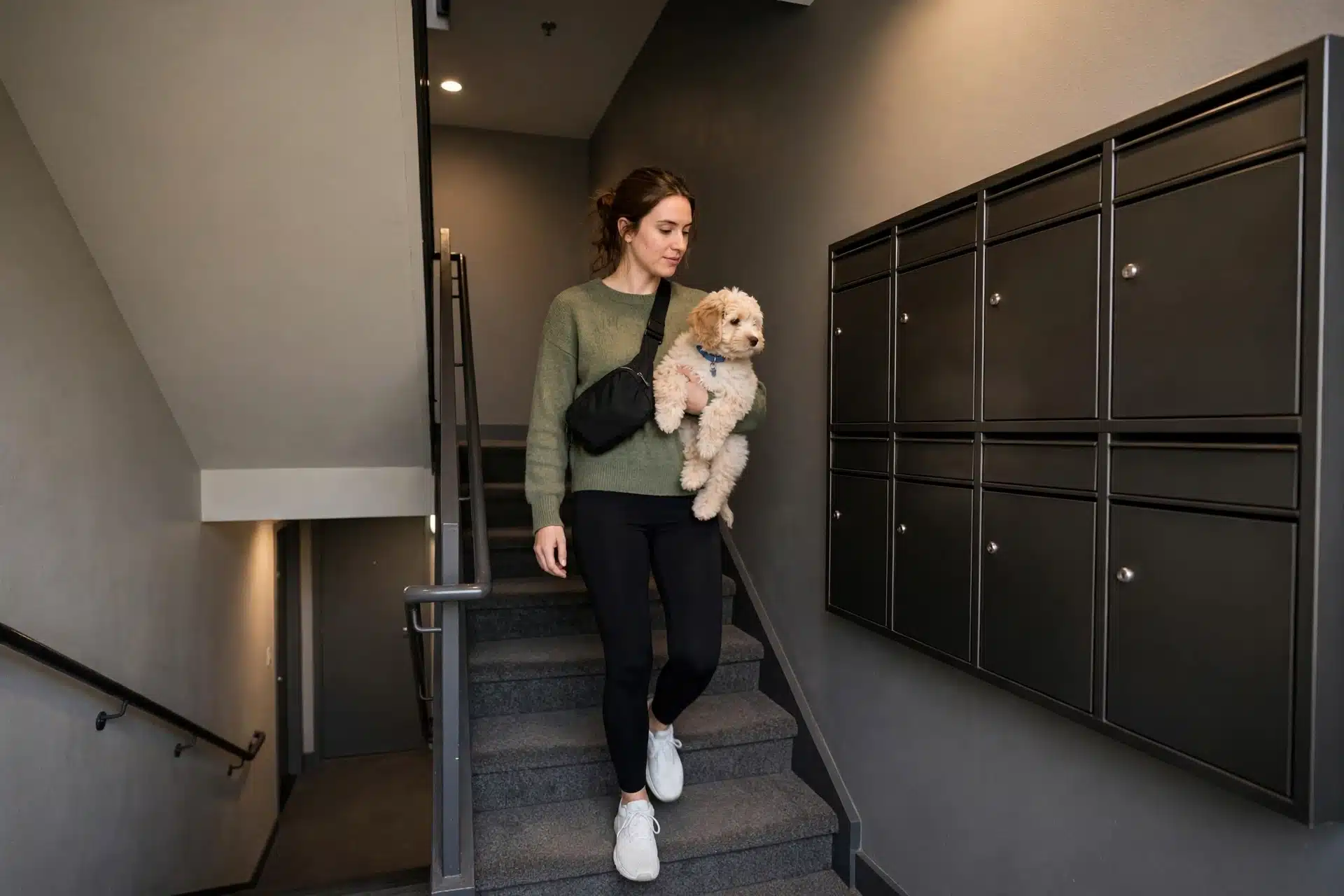
Picture your daily routes: the lobby, the elevator, a flight of stairs, maybe a narrow hallway. A small dog handles all of it on its own four paws. Many buildings still require you to carry a dog through common areas, and a 12-pound Havapoo tucks under one arm. A 70-pound Lab turns that same trip into a wrestling match, especially after rain or a muddy dog run. Stairs add wear on growing joints too, which large breeds feel more than small ones.
Travel, flying, and vet visits
Getting anywhere is easier with a small dog. Most airlines accept dogs that fit an under-seat carrier, typically up to about 20 pounds, so a Havanese or Cavapoo can fly in the cabin with you. Larger dogs usually travel as checked cargo, which costs more and adds stress. Vet visits follow the same pattern: a small dog rides in a carrier, while a big dog needs a car, a harness, and help lifting if it is injured or aging. Routine care is simply lighter all around.
What Each Path Costs Over Five Years
The purchase price is only the entry fee. Food, vet care, grooming, and supplies keep going for a decade or more, so look at the whole bill before you choose.

Purchase price and what it actually buys
Breeders charge more than rescues, but a good puppy price usually covers health testing of the parents, first vaccines, deworming, and early socialization. Sage Puppies, for example, prices its Havanese, Havapoo, and Cavapoo puppies at $3,500 to $4,500. Adopting from a shelter often runs a few hundred dollars, yet it may skip health history on the parents. Ask any breeder exactly what the fee includes before you compare numbers.
Monthly and annual running costs
Here is a labeled example budget, based on AKC annual figures:
| Example budget | Yearly cost |
|---|---|
| Food | $446 |
| Vet care | $423 |
| Travel | $279 |
| Grooming | $190 |
| Sitting and walking | $223 |
| Toys and treats | $217 |
| Total | $1,778 |
Small breeds eat less, but need grooming every four to six weeks. Large breeds eat far more, which Rover’s cost report notes can push yearly costs past $5,000.
The Health Trade-Off Nobody Mentions
Bigger dogs are not automatically healthier, and smaller dogs are not automatically fragile. Each size comes with its own watch list, and knowing both helps you budget time and vet money honestly.
What small breed owners watch for
Small dogs live longer, often 12 to 16 years, but their compact mouths and airways need attention. Dental disease tops the list, so daily brushing and yearly cleanings matter. Toy breeds also face tracheal collapse, which triggers a honking cough, and patellar luxation, a slipping kneecap. HillsPet’s overview lists these among the most common small-dog problems. Use a harness instead of a collar to protect the throat.
What large breed owners watch for
Large breeds run into structural problems instead. Hip and elbow dysplasia, cruciate ligament tears, and bloat, a fast-twisting stomach emergency, are the big three. Their lifespans run shorter too, often 9 to 12 years. Slower growth feeding, joint supplements your vet approves, and controlled exercise as a puppy lower the risks. The trade-off is real either way: more years with a small dog, fewer with a large one.
Finding a Small Breed Puppy in Utah and Beyond
A good breeder answers hard questions without hesitation. Before you put money down, ask these:
- Can I see the parents? Temperament and adult size run in the line.
- What health testing was done? Ask for patella, heart, and eye results on both parents.
- How are puppies socialized? Apartment dogs meet elevators, neighbors, and noise early.
- What does the contract cover? Get return terms and health records in writing.
- When can the puppy go home? Most responsible programs release puppies around eight weeks.
A serious breeder will also ask about your lifestyle. Small programs like Sage Puppies in South Jordan match each Havanese, Havapoo, or Cavapoo puppy to the household, not just the payment.
Local pickup or nationwide delivery
If you live near Salt Lake City, pickup lets you meet the breeder and see the home first. Out-of-state families can still verify everything through video calls and photo updates. Many breeders, including those across Utah, offer ground transport or flight nanny service, so check the available puppies page for current litters and delivery options. Either way, expect a written application before a deposit.
Which Should You Choose: A Small Breed Puppy or a Large Dog?
Both sizes can work in an apartment. The right answer depends on your lease, your schedule, and how much noise and exercise you can honestly commit to.
Choose a small breed puppy if
Your building caps weight, your daily exercise window is short, and you want a dog who settles indoors. Small breeds such as the Havanese, Havapoo, and Cavapoo need only 20 to 45 minutes of activity a day and fit under the apartment weight limits many leases set. They are also easier to carry through lobbies and on elevators.
Choose a large dog if
Your lease allows bigger dogs and you can give 60 to 90 or more minutes of daily exercise. Temperament and training matter more than size, as USA Today’s breed guide points out, and calm giants like Greyhounds do fine in small spaces. Just budget for higher food, vet, and sitting costs.
The next step, whichever you pick
Read your pet addendum before you fall in love with a puppy. Then match the breed’s adult size, energy, and noise level to your real daily routine, not your ideal one. Honesty here prevents returns, fines, and heartache later.

A small breed fits your lease, your walls, and your schedule. If that sounds right, Sage Puppies raises Havanese, Havapoo, and Cavapoo puppies in Utah with nationwide delivery. Browse the available puppies, or start the application and meet your match.
Frequently Asked Questions
Q1: What breed of puppy is best for an apartment?
For most apartments, a quiet small breed that stays under building weight caps works best. Havanese, Havapoo, and Cavapoo puppies fit lifts, thin walls, and 20-45 minute exercise windows.
Q2: Is a small dog easier to care for in an apartment than a large one?
Usually yes. Small dogs cost less to feed, travel in-cabin, and need less exercise. The trade-offs are more grooming, dental care, and stricter barking training.
Q3: Which small dog breeds are good for apartment living?
Havanese, Havapoos, and Cavapoos top the list. Each stays roughly 7-25 pounds, barks rarely when trained, and settles indoors after a short daily walk.
Q4: Can a large dog live in an apartment legally?
Only if your lease allows it. Many buildings set a 25-50 pound apartment weight limit for dogs plus breed restricted breeds lists, so get written approval before reserving a puppy.
Q5: How do I stop my puppy from barking at neighbors?
Teach a quiet cue early and reward calm behavior. Manage hallway noise with a covered den, and give a midday walk or pet sitter visit so boredom never becomes noise.
Q6: How long can a small puppy be left alone?
Build tolerance slowly with short absences. Adult small breeds handle a workday better than puppies, but young dogs need a midday walker or sitter to avoid separation anxiety.
Conclusion
For most apartment households, a small breed puppy is the easier, safer pick. Havanese, Havapoo, and Cavapoo dogs stay under common lease weight caps, need just 20 to 45 minutes of daily activity, and travel easily through lobbies and elevators. A large dog can still work if your lease allows size and you can commit 60 to 90 or more minutes of exercise every day. Either way, read your pet addendum first, then match the breed’s adult size, energy, and noise level to your real routine. Small breeds ask less, last longer, and fit apartment life best.