Quick Summary: Verify puppy health claims by requesting dated OFA and DNA reports, then matching each dog and result to the registry’s public database and the breed’s required tests. A CHIC number confirms that results were published, not that every test passed, while DNA panels do not replace orthopedic, eye, or heart exams. Sage Puppies says it verifies and shares each parent’s health results before buyers commit, making the same documentation checks available to prospective families.
A breeder can email you a cheerful PDF called Health Test Results and it can still be worthless. No registry name, no test date, no dog identification number, no result code. If you cannot find the same results in a public database, you are reading a marketing page, not a record.
Verifying puppy health test results is the step that separates a health-tested puppy from a puppy whose parents were merely photographed next to paperwork. This guide walks you through it: which registry to search, which test each breed actually requires, how to match a certificate to a database entry, and where a DNA panel or a CHIC listing stops being proof. No genetics background needed, just a laptop and ten minutes.
We raise and place Havanese, Havapoo, and Cavapoo puppies at Sage Puppies in South Jordan, Utah, and these are the same checks we encourage every family to run before they commit.
Step 1: Ask for the Records, Not a Summary
A breeder who says “parents are health tested” has told you almost nothing. Verifying puppy health test results means seeing actual documents with names, dates and registry numbers you can look up yourself. A summary is a claim. A record is evidence, and you should collect it before you fall in love with a face.
A Request List You Can Send as Is
Ask the breeder for these in writing, ideally by email:
- OFA health test reports for both parents (hips, patellas, eyes, cardiac, as the breed requires)
- DNA test reports showing results for each disease the breed panel covers
- Registration numbers for both parents (AKC or another registry)
- CHIC number, if the parents have one, so you can search the OFA database directly
- The puppy’s own vet exam record and vaccination or deworming log
Send this list before your first phone call. A breeder who shares records quickly is telling you something useful. One who delays, excuses or sends screenshots with cropped corners is telling you something too. Some programs, including small ones like Sage Puppies, list parent health results up front; either way, treat the documents, not the breeder’s description of them, as the source of truth.
The Five Details That Make a Document Checkable
Any health record you accept should show five things:
- The dog’s registered name or number matching the parent you were told about
- The breeder or owner name linked to that dog
- The test type named specifically (patellar luxation, not “joints”)
- The result and date, so you know the test was current, not a decade old
- The issuing registry, usually OFA, so the record exists in a public database
If a PDF is missing any of these, ask for the original. You can’t verify what you can’t trace.
For a deeper walkthrough of which results matter by breed, see the results worth asking for before you commit to a litter.
Ask for Records Before You Ask for the Puppy
Timing matters. Once you’ve chosen a puppy, emotion does the deciding and pushy questions feel rude. So flip the order. Request health records when you first inquire, and make them part of your standard filter. Breeders with documented, tested parents expect the question and answer it without friction. Breeders who scramble after a deposit rarely improve with pressure. Getting records early protects your money and, more importantly, the dog you bring home.
Step 2: Match Each Test to the Breed Requirement
Verifying puppy health test results means more than glancing at a certificate. You also need to know which tests that breed is supposed to have, because each breed club sets its own list for CHIC certification. A perfect eye exam means little if the breed also needs hip or heart screening and you never saw those results.
Havanese Parents: Hips, Patellas and Annual Eye Exams
The Havanese club’s health and testing guide lists the OFA requirements clearly. Hips and patellas are evaluated with X-rays and a physical exam, and the results are posted to the OFA database. Eye exams follow the CAER format, done by a board-certified veterinary ophthalmologist.
The key detail for verifying puppy health test results here is timing. Eye certification in Havanese must be repeated, so an exam from seven years ago does not count as current. Check the date on every certificate, not just the name. The breed also uses a BAER hearing test, so ask for it if the database shows nothing.
Cavalier Parents: What the CHIC Program Asks For
Cavalier King Charles Spaniels carry a higher risk of mitral valve disease, so the heart exam matters most. CHIC participation for the breed centers on a cardiac exam by a cardiologist, an ophthalmologist eye exam, and a patella evaluation, all recorded with the OFA CHIC program.
A CHIC number does not mean every result passed. It means every required test was done and the results are public, even the ones that flagged a problem. Read each result line yourself.
Cross Breeds: Screen the Purebred Parent
Havapoos and Cavapoos have no CHIC list of their own. The fix is simple: test each parent for its own breed. A Cavapoo mother needs the Cavalier panel, and the Havanese father needs the Havanese list. Verify both dogs separately in the OFA database, and if a breeder only tests one parent, ask why. Our own walkthrough of what results to ask for covers this parent-by-parent matching in more detail.
Step 3: Look the Results Up Yourself
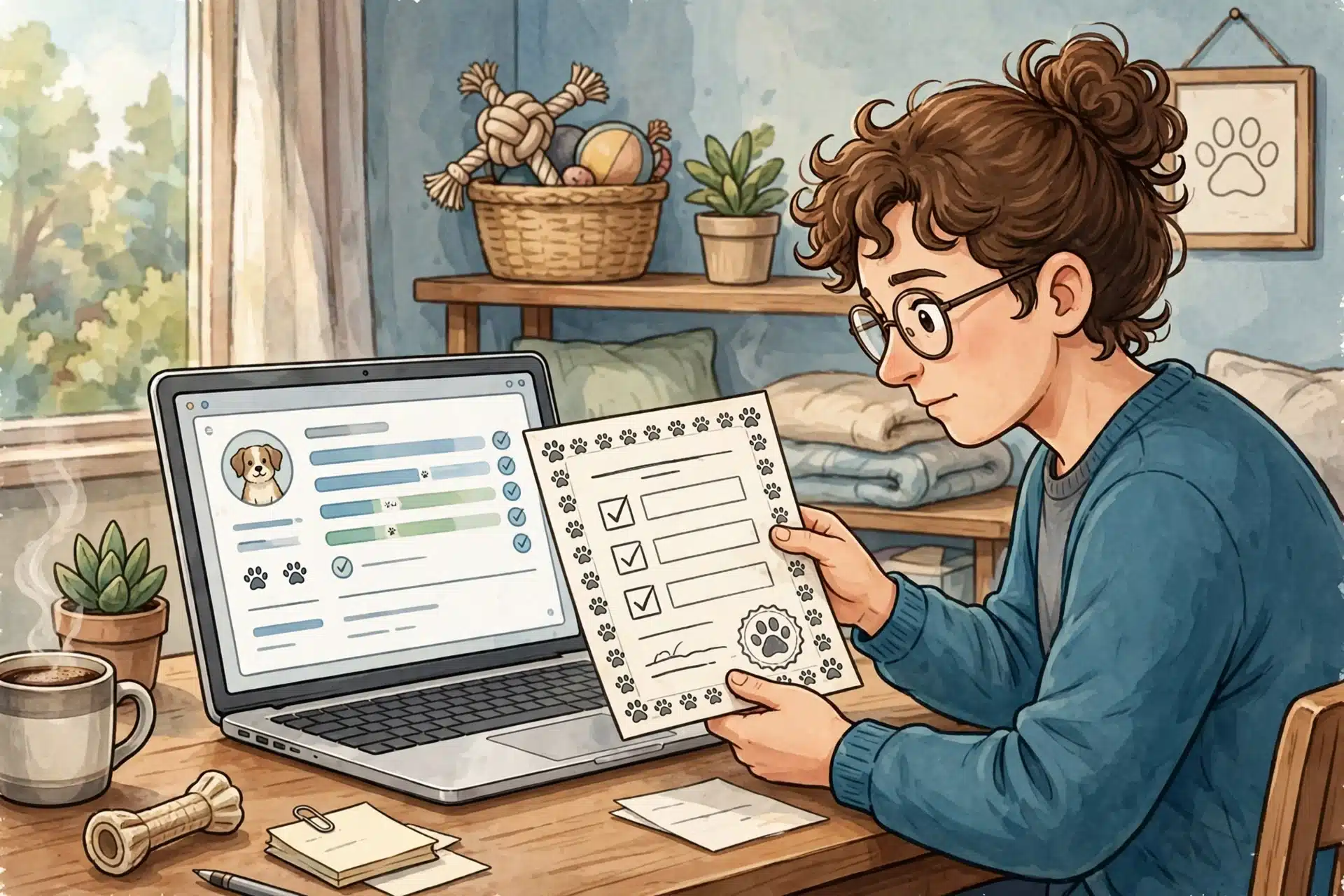
A paper certificate proves nothing on its own. The real check takes five minutes on the OFA database, which holds health testing records for millions of dogs and is free to search.
Searching the OFA Database by Name and Number
Go to the OFA website and open the advanced search. You can look a dog up by registered name, registration number, or CHIC number, so ask the breeder for at least two of these. A registered name usually includes the kennel prefix, which helps you find the right dog instead of one that happens to share a name.
Start with the dam and sire, then the litter if it is listed. Match what you see against the certificate in front of you: same breed, same birth date, same registration number. If the breeder sent a DNA report from another lab, ask for the dog’s ID on that report too, so you can confirm it belongs to the same animal. Our own genetic testing results guide walks through which results to request before you reserve.
What a CHIC Number Does and Does Not Tell You
A CHIC number means the dog completed every test its breed’s CHIC program requires, and the breeder agreed to publish all results, even the bad ones. That openness is the point: a dog can earn CHIC with less-than-ideal results on record.
So do not treat the number as a clean bill of health. Read each result on the page. Check eye exam dates, too, because annual eye tests expire, and an out-of-date exam is flagged rather than renewed automatically.
When a Record Does Not Match
Stop and ask if the name, breed, birth date, or microchip does not line up. Scammers have been known to copy a healthy dog’s name and registration number, so a near-match deserves a careful look. Ask the breeder to explain the difference in writing. A legit breeder answers quickly; one who stalls or gets defensive is telling you something. No record at all is a walk-away.
Step 4: Read the Results Without Over-Reading Them
A certificate only helps if you know what its words allow and what they don’t. Three results matter most for small breeds: orthopedic ratings, DNA status, and eye or heart exams. Each has its own vocabulary, and mixing them up leads buyers astray.
Orthopedic Results: Reading Normal, Borderline and Abnormal
The OFA sorts hips into seven ratings: Excellent, Good and Fair (all “normal”), then Borderline, Mild, Moderate and Severe. The OFA explains these hip grades directly, so you can confirm a breeder’s claim against the wording. Anything inside the normal range is a pass. Borderline sits in between: some breeders re-x-ray later, because radiologists agree on the normal, borderline or dysplastic call about 95% of the time but on the exact grade far less often. For patellas, the small-breed test, look for a normal rating rather than a number alone.
DNA Reports: Clear, Carrier and At Risk
DNA labs use three statuses. Clear means the dog has no copies of the mutation. Carrier means one copy; the dog itself is typically healthy, but pairing two carriers can produce affected puppies. At risk (sometimes “affected”) means two copies and potential disease. So a carrier parent is not a red flag by itself. What matters is the pairing: at least one parent must be clear of every mutation the other carries. Ask which variants the panel covered, because a “clear” result on a short panel says less than a clear result on a broad one.
Eye and Cardiac Certificates
Eye exams come from a board-certified ophthalmologist, and heart exams from a cardiologist, both filed with OFA. Read the form itself, not just the “passed” summary. A normal eye result can still note minor findings that don’t affect breeding. For hearts, an auscultation (listening) exam is the basic screening; an echo is the deeper test. Ask which one was done.
Step 5: Keep the Puppy’s Own Record Separate
By now you have checked the parents’ DNA results and the database listings. One more habit protects all that work: file each type of paper in its own place. Parents’ certificates prove the breeding pair was screened. Your puppy’s record shows what this puppy has received and when. Mixing them makes gaps hard to spot later.
Three Document Sets, Three Different Purposes
Think in threes. Set one is the parent documentation: OFA or registry results, DNA panel reports and eye exam certificates for the dam and sire. Set two is the litter record, which covers the whole litter, such as deworming dates and the vet check the breeder arranged. Set three is your puppy’s own record, and it follows the puppy for life. Each set answers a different question, so a page from one can never stand in for a page from another. Keep digital copies of all three from day one.

What the Puppy’s Own Record Should Show
Your puppy’s personal file should list, with dates and the clinic’s name:
- Vaccinations, including which vaccine was given, not just “shots done”
- Deworming treatments and the product used
- Microchip number, matched to the number on the certificate in your hand
- The wellness exam, with the vet’s findings and any notes
- Weight at each visit, since early growth patterns matter for small breeds
Check that the microchip number matches the paperwork before you leave the breeder. That single check catches most transfer errors.
Getting the Records Into Your Veterinarian’s Hands
Send or bring the full file to your first appointment, ideally a few days ahead so the staff can scan it in. Plan what to expect at a puppy’s first vet visit by writing down questions in advance, like vaccine timing and breed-specific screening to schedule later. Ask the clinic to flag anything missing so you can request it from the breeder while contact is still easy.
Common Mistakes to Avoid
Six Verification Mistakes and How to Fix Them
Trusting a photo of a certificate. Papers are easy to fake. Search the registry’s own database and confirm the dog’s name and results there.
Accepting “the parents are health tested” without specifics. Ask which tests, which registry, and which dogs. A real answer takes seconds to give.
Matching results to the wrong breed’s list. A panel that skips a breed’s required variants isn’t complete. Check what health testing should cover for the breed before you judge a report.
Treating a DNA panel as an orthopedic exam. Genes don’t rule out luxating patellas or hip dysplasia. X-rays and vet eye exams cover that.
Reading a CHIC number as a clean bill of health. CHIC means results were filed and made public, not that every result was normal.
Skipping the date check. Eye certifications expire. A report from five years ago may not reflect the dog today.
Fix each mistake with one habit: verify in the source database, never in the breeder’s documents alone.

If a breeder’s paperwork ever falls short, you can walk away with confidence. Or start with a program that does this work for you. At Sage Puppies, every parent’s health test results are verified and shared before you commit, so you can focus on choosing the right puppy for your family.
Frequently Asked Questions
Q1: How do I go about verifying puppy health test results?
Ask the breeder for OFA reports and DNA paperwork, then search the dog’s registered name or CHIC number in the OFA database yourself. Match breed, birth date, and results.
Q2: Do I need to test a Havapoo or Cavapoo parent against a breed list?
Yes. Screen each purebred parent for its own breed’s requirements. Verify the Havanese and Cavalier lines separately in the OFA database.
Q3: Is a carrier result on a DNA panel a deal breaker?
No. Carriers are usually healthy themselves. What matters is the pairing: at least one parent must be clear of every mutation the other carries.
Q4: Does a CHIC number guarantee healthy parents?
No. It confirms required tests were completed and published, including poor results. Read each result line yourself.
Q5: What should I do if a database record doesn’t match the certificate?
Ask the breeder to explain the difference in writing. Scammers copy healthy dogs’ details, so a near-match deserves a careful look.
Q6: How current do eye exam results need to be?
Eye certifications should be annual. An exam older than a year doesn’t count as current, so check dates on every certificate.
Conclusion
Verifying a puppy’s health test results comes down to a few habits. Ask for documents, not summaries. Match each test to the breed’s own requirements, especially for mixed breeds where each parent needs its own panel. Then search the OFA database yourself and read every result line, including dates. A CHIC number proves tests were published, not that they all passed, and a DNA panel never replaces X-rays or eye exams. Once you know how to check, a missing or mismatched record is an easy walk-away, not a gamble. If you would rather start from litters with parent results already documented, browse our available puppies and compare their paperwork for yourself.