Quick Summary: A complete puppy health panel combines DNA results with OFA hip and patella tests, a current CAER eye exam, cardiac clearance where relevant, and the puppy’s own veterinary record. Buyers should verify each purebred parent’s registered name, grades, and test dates in the public OFA database, because a CHIC number only confirms that required results were published, not that every test was normal. The tests, outcomes, dates, and any replacement or refund remedy should be named in the purchase contract before a deposit is paid.
A breeder who says the words health screened in an email has told you almost nothing. That phrase can cover three very different records: an eight-week vet exam, X-rays and eye exams the parents had at a specialist, and a DNA swab that checks a few known variants. Only one of those says anything certain about the puppy in front of you, and it is not the one most buyers assume.
This guide walks through puppy health screening panels for Havanese, Havapoo and Cavapoo litters. You will learn what each result code means, why the age of the parents matters, how to verify claims in the OFA database yourself, and what a clear result can and cannot promise. It follows current Havanese Club of America guidance, so you can read health-tested puppies for sale near me claims with a critical eye.
What a Health Screening Panel Actually Includes
When you ask a breeder for health records, you will usually get a stack of papers that look similar but mean very different things. Puppy health screening panels combine several types of proof, and knowing which is which keeps a clean bill of health from being read as more than it is.

The Three Records That Get Mixed Up
Expect three separate documents. First, DNA test results from a lab like Embark or the OFA, showing whether a dog carries gene variants. Second, an OFA CHIC certificate, which the Havanese Club of America ties to three tests: OFA hips, patellas, and annual eye exams. Third, a veterinary exam record from the puppy’s own checkup. A CHIC number means the tests were done and listed publicly, not that every result is normal.
DNA Panels and Clinical Screens Answer Different Questions
A DNA panel answers one question: does this dog carry or carry-at-risk for specific gene variants? It cannot see a loose kneecap or a murmur. Clinical screens, like an OFA patella check or a CAER eye exam done by a specialist, look at the body as it is today. You need both, because a clear DNA panel says nothing about joints and eyes, and physical exams say nothing about hidden genes. If you want a deeper walkthrough of what to ask to see, this page on reading puppy genetic test results breaks down the codes.
What a Panel Can and Cannot Promise
A completed panel lowers risk. It does not erase it. Some conditions have no known gene test, and hip scores done too young can shift. Treat a full panel as a strong sign of a careful breeding program, then keep routine vet care going after your puppy comes home.
Which Panels Apply to Havanese, Havapoo and Cavapoo
Which puppy health screening panels should a breeder hand you? For these three breeds, the core list looks like this:
- Havanese parent: OFA hips, OFA patellas, and a yearly CAER eye exam, which earn a CHIC number
- Cavalier parent: heart clearance by a cardiologist, plus patellas, hips, and eye exams
- Poodle parent: OFA hips, patellas, and eye exams, scaled to the variety’s size
A mixed litter means checking both sides, not one. Here is how the pieces fit together.
Hips, Patellas and Annual Eye Exams
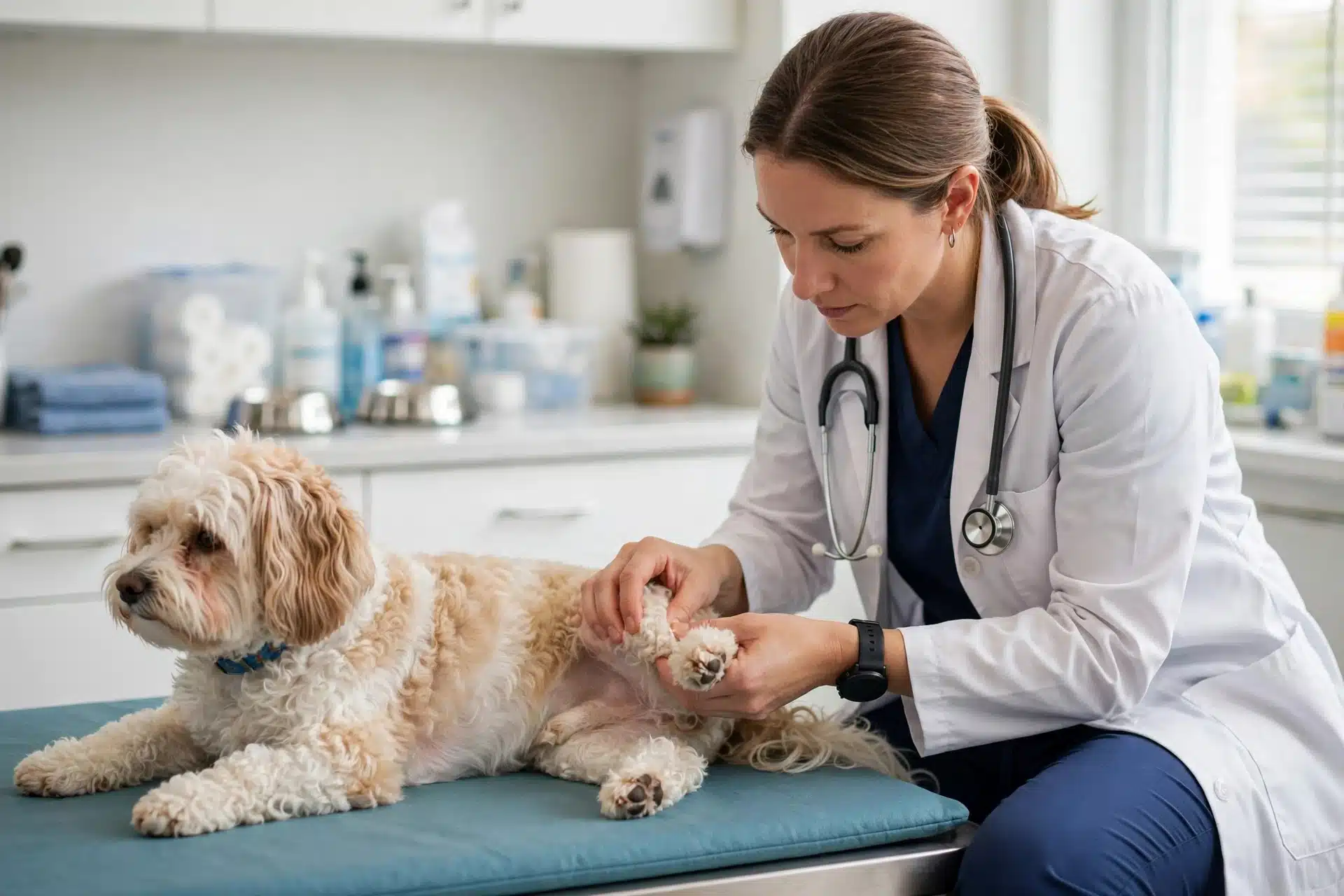
The Havanese Club of America requires three tests for a CHIC number: OFA hips, OFA patellas, and an annual eye exam. Patellas can be certified at 12 months, but hip X-rays need the dog to be at least 24 months old, so a young sire may not have final hip results yet. Eyes expire yearly, so check the exam date, not just the pass.
Check Each Purebred Parent Separately
Havapoos and Cavapoos have no single club standard, so the panel splits in two. The Havanese or Cavalier side follows that breed’s requirements. The Poodle side follows what poodle clubs and OFA recommend, which varies by variety. Ask which tests each individual parent has, and treat a breeder who can only describe the litter’s “doodle panel” as a flag. This is exactly where questions about health-tested puppy parents pay off.
Cavalier and Poodle Records, Not a Generic Panel
Cavalier King Charles Spaniels carry a serious heart condition, mitral valve disease, so a cardiologist-issued heart clearance matters more than any single generic panel. Poodles add size-dependent tests, such as hips for the larger varieties. Per the OFA database, records live under each dog’s registered name, so verify each parent on its own. Matching the panel to the breed, rather than trusting a blanket claim, is what separates documented testing from marketing.
How to Read Each Result in the Panel
Each line on a health panel tells its own story. Here is what each result actually means, and what it does not.
Hip and Patella Radiographs: Age and Grade Matter
Hip results use seven grades. Three pass: Excellent, Good, and Fair. Borderline, Mild, Moderate, and Severe all fail, according to OFA’s hip grade breakdown. Patellas get a separate grade from 1 (normal) to 4 (severely luxating). Check the dog’s age next to the grade. Hips can only be certified at 24 months, and patellas at 12 months, so an “X-rayed” young sire may still hold a preliminary result. A preliminary is a useful clue, but it is not a certificate.
Eye and Cardiac Entries
Eyes should show a CAER exam, an ophthalmologist’s check done within the past 12 months, marked “normal” or “eyelid abnormality” style notes. Breeders often list this as “eyes cleared annually.” Look for the exam date, not just the word “clear.” Heart results come from a cardiologist using a stethoscope or an echocardiogram. Both entries expire, so a stale date matters as much as the result itself.
DNA Results: Clear, Carrier, At-Risk, or Missing
DNA tests report three outcomes per condition. Clear means the dog carries no copy of the mutation. Carrier means one copy; the dog stays healthy but can pass the gene on. At-risk means two copies and elevated disease odds. For Havanese and for Havapoo and Cavapoo parents, the key question is pairing: a carrier bred to a clear dog produces no affected puppies. A blank line is the fourth result, and the riskiest one, because a missing test is not a clear test.
The Record Itself: Registration, ID and Dates
Real records carry three things: the dog’s registered name or number, the test’s certificate or registry ID, and the test date. Match that number against the registry’s public database. A photo of a certificate proves nothing without it.
Verifying the Panel Yourself in About an Hour
You do not need to trust a PDF. Every breeder who searches for health-tested puppies for sale claims clean results, and the public records let you check those claims yourself in under an hour. Here is the process:
- Ask the breeder for each parent’s registered name.
- Go to ofa.org and enter that name in the search bar.
- Open the dog’s page and compare each listed result, including dates, against the claimed panel.
- Look for a CHIC number and note the exam dates on hips, patellas and eyes.

Searching the OFA and CHIC Records
The OFA database is free and open to anyone. Type the registered name, and any results the owner chose to make public will appear, including CHIC results. A CHIC number is issued when a dog’s test results meet every requirement its breed’s parent club sets and the owner has agreed to publish them. Check the date on each result, since eye exams expire after 12 months and young sires may only hold preliminary hip results.
Questions to Ask When a Record Is Missing
Missing records do not always mean trouble, but they always deserve a question. Ask these:
- Is this a preliminary result, and when will the final one be done?
- Was the test performed but not published, and can you see the paperwork?
- Why is there no CHIC number yet?
A CHIC number itself does not prove the dog passed everything; it proves the required tests were done and the results were released.
Paying for a Second Opinion
If records look thin, take the paperwork to your own veterinarian before you commit. A short exam visit costs far less than treating a luxating patella later, and an independent set of eyes can flag gaps you missed. Reputable breeders expect this step and will answer it without flinching.
Where the Panel Should Live in Your Contract
A health panel only protects you if the written contract names it. “Parents tested” means nothing on paper. Look for the specific tests, the results, and the dates.

Documents That Should Travel With the Puppy
At pickup, you should walk away with the puppy health records and vaccination schedule, a vet examination record, and copies of the parents’ test results or their registration numbers so you can look them up yourself. If the breeder holds an OFA CHIC certificate, ask for that number too. Get everything before final payment changes hands, not after.
What a Health Guarantee Should Actually Say
A real puppy purchase contract health guarantee names conditions, not vague promises. It should list the inherited problems the panel screens for, state a replacement or refund remedy, and give a deadline for your own vet exam, often 72 hours. It should also say what voids the guarantee, such as missing vaccine boosters. Read that part before you sign, because you will be living inside its rules.
A guarantee that promises “healthy puppy” but names no conditions and no remedy protects the breeder, not you.
Specific and Guardian Terms Worth Reading Slowly
Watch for two contract styles. Specific terms spell out which tests apply to your puppy’s breed mix. Guardian terms apply when a breeding dog lives with a family, so ask who pays her vet care and who owns her tests. Ask both questions in writing.
Sage Puppies puts every parent’s panel in the contract itself, which is the standard worth holding any breeder to.
Common Misreadings That Cost Buyers Money
Treating One DNA Panel as a Complete Health Report
A DNA panel screens inherited genes only. It says nothing about hips, patellas, or heart and eye health, so a “clear panel” is not a clean bill of health. For Havanese, Havapoo and Cavapoo parents, the Havanese Club of America health testing expectation adds OFA hips and patellas plus a current CAER eye exam. Ask for all of it, not just genetics.
Reading CHIC as a Guarantee of Normal Results
A CHIC number sounds like a seal of approval, but it only proves the required tests were done and the results were published, good or bad. The OFA states this plainly on its CHIC Program page. A parent can hold a CHIC number and still carry an abnormal result. Always read the actual outcome codes.
Trusting a Screenshot Instead of a Number
A photo of paperwork proves nothing. Match each parent’s registered name in the public OFA database and read the results yourself, including dates. Eye exams expire after 12 months, and young sires often hold preliminary hip results rather than final ones. A breeder who shares registration numbers and invites verification makes that step easy, which is how we handle health records at Sage Puppies.
Your Screening Panel Request List
Ten Things to Request Before a Deposit
Ask for these in writing before money changes hands:
- OFA hips and patellas results for both parents
- A current CAER eye exam, dated within 12 months
- DNA test results marked clear, carrier, or at-risk
- OFA CHIC certificate numbers, when issued
- The parents’ ages at testing
- Cardiac exam notes
- Puppy health records and vaccination schedule
- The puppy purchase contract health guarantee, including remedy and deadline
- A written vet exam date, often 72 hours
- Contact for the parents’ owner if the breeder isn’t the owner
Where to Review Current Litters and Terms
A breeder’s own litter page should show which dogs are paired, what testing each parent holds, and the deposit and delivery terms. Compare what the page claims against the OFA database yourself. Sage Puppies keeps current litters, pricing, and reservation terms on its site, and any breeder you consider should make the same records easy to find.

When you’re ready to meet a puppy whose parents’ results you can actually read, Sage Puppies shares every certificate, grade and date up front. Ask us anything before you commit. Wisely bred, beautifully loved, and honestly documented from day one.
Frequently Asked Questions
Q1: Which health screening panels breeders should provide?
Ask for OFA hips and patellas, a CAER eye exam dated within 12 months, DNA test results showing clear, carrier or at-risk, cardiac clearance where relevant, and CHIC numbers. For a Havapoo or Cavapoo, request each purebred parent’s records separately.
Q2: What does a CHIC number actually guarantee?
Only that the breed club’s required tests were done and the results were published. A CHIC parent can still carry an abnormal result, so always read the outcome codes and dates, not just the number.
Q3: Can a young sire have final hip results?
No. OFA hips require the dog to be at least 24 months old. A younger dog may hold a preliminary, which is useful but not a certificate, so ask when finals are scheduled.
Q4: Is a carrier parent a dealbreaker?
Not necessarily. A carrier bred to a clear dog produces no affected puppies for that condition. Pairing matters more than a single result, so ask how both parents match.
Q5: How do I verify breeder health claims myself?
Get each parent’s registered name, search it on ofa.org, and compare listed results and dates against the claims. Eye exams expire after 12 months, so check dates carefully.
Q6: Should the health panel be in the contract?
Yes. A good puppy purchase contract health guarantee names the specific tests, results, the remedy, and your vet exam deadline, often 72 hours. Vague promises protect the breeder, not you.
Conclusion
Health screening panels come down to three records: DNA test results, clinical exams like OFA hips, patellas and a current CAER eye exam, and the puppy’s own vet check. Read each result code yourself, verify both purebred parents in the OFA database, and make the tests, results and remedy part of the written puppy purchase contract health guarantee. A CHIC number proves testing happened, not that everything passed. Breeders who share certificates, grades and dates up front make that last step easy, and any program you trust should do the same.