Quick Summary: Before paying a deposit, ask for the puppy’s full DNA report, both parents’ health clearances, and the puppy’s veterinary exam, vaccination, and deworming records. Verify original lab PDFs and OFA entries, and confirm names, microchips, and dates match the puppy. DNA results show inherited risks rather than guarantee good health, so physical eye, hip, and patella clearances remain necessary, especially for Havanese, Havapoo, and Cavapoo lines.
Two puppy listings can both say “health tested,” and mean very different things. One breeder had the parents’ hips and eyes checked by a vet. Another ran a cheek-swab DNA panel on the pair. Those are different promises to bring home with a new small-breed puppy, so it pays to know which one you are getting.
The problem is that buyers rarely see the actual paperwork. A listing claims testing happened, but without puppy DNA reports in hand, you cannot tell a clear result from a vague one. This guide fixes that. You will learn what a puppy DNA report actually shows, which results to request for Havanese, Havapoo and Cavapoo lines, and how to verify each one before you pay.
The framework comes from breed-club and veterinary sources, and it reflects how we document health testing for every Havanese, Havapoo and Cavapoo litter at Sage Puppies in South Jordan, Utah.
What a Puppy DNA Report Can and Cannot Tell You
A puppy DNA report is a lab analysis of a dog’s genes. It screens for inherited disease variants and confirms parentage, but it cannot promise a puppy will stay healthy for life.
What a DNA panel actually checks
A DNA panel for puppies reads a cheek-swab sample against a list of known gene variants. Labs test for dozens of inherited conditions, and UC Davis notes the same samples can confirm parentage. Puppy DNA reports may also flag breed ancestry, which helps untangle a mixed line like a Havapoo.
Potential risk is not a diagnosis
Labels like carrier or at risk describe probability, not current illness. A puppy marked at risk may stay well for years, and a clear puppy can still develop problems no gene test flags. Cornell’s veterinary team frames these results as risk information to discuss with your vet, never a diagnosis.
Why breeders run these tests in the first place
Responsible breeders test adult dogs before breeding so they never pair two carriers of the same condition. That is the real value of puppy DNA reports: they shape breeding decisions years before a litter exists. Ask for the parents’ results, not just the puppies’. A brand like Sage Puppies treats this as routine, and you should expect the same from anyone you talk to.
The Results to Request for Havanese, Havapoo and Cavapoo
Ask a breeder for three things: the puppy’s own DNA report, health clearances on both parents, and breed-specific test notes for the line. Each one answers a different question. The report shows what genes the puppy carries, the clearances show what the parents’ bodies look like on exam day, and the breed notes show which risks matter for Havanese, Havapoo and Cavapoo lines.
The puppy’s own DNA report
Request a copy of the puppy’s DNA panel, not just a promise that testing was done. Good DNA panel puppies results come from a lab report listing each condition tested and the result, such as N/N (clear) or carrier. For Havanese lines, ask that the panel covers conditions like cardiac and skeletal concerns the breed club recommends. If the report is from a multi-sire litter, ask for DNA parentage verification so you know which sire is yours.
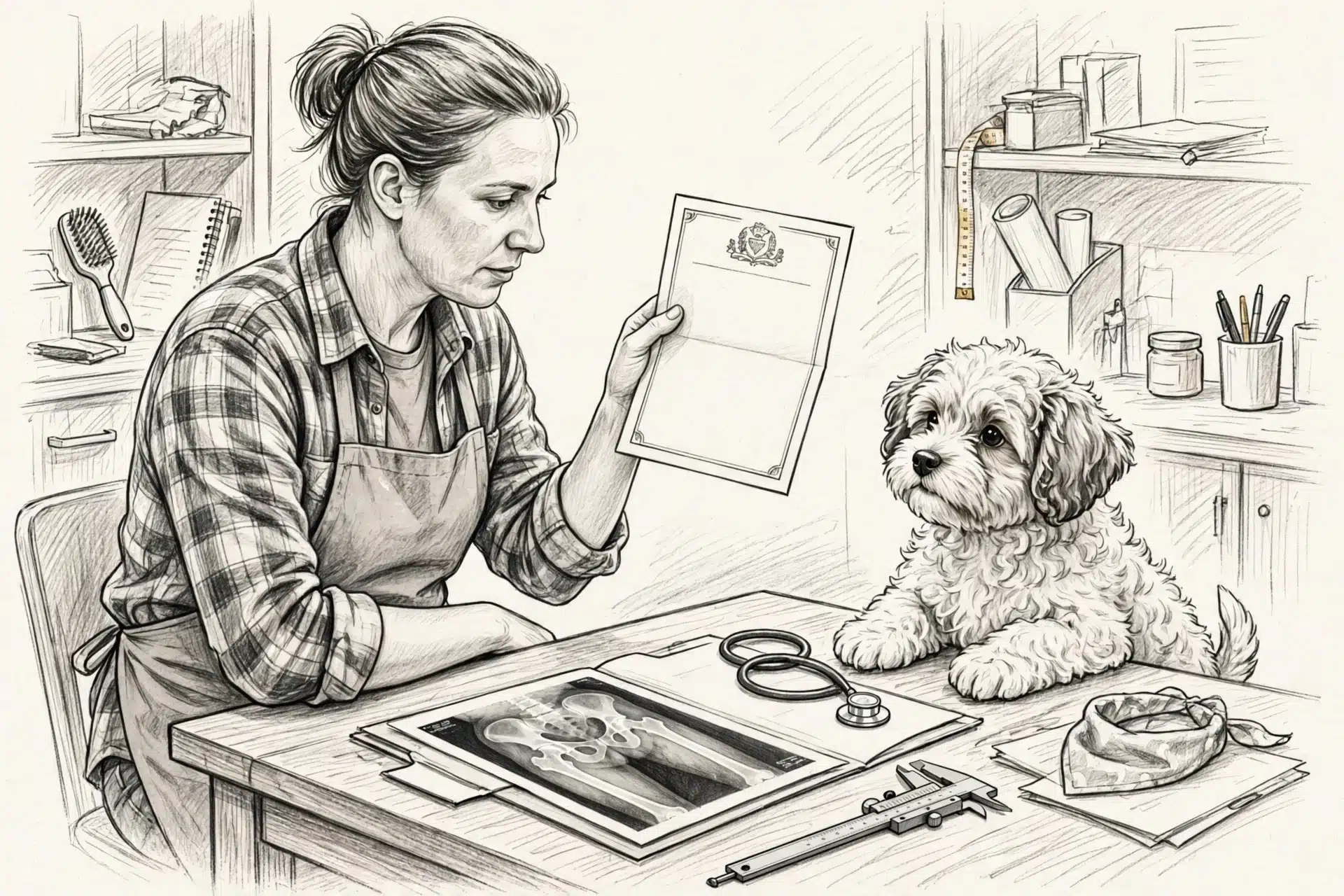
Parent clearances for eyes, hips and patellas
A clearance test for puppies actually happens on the parents. Ask for:
- CAER eye exam results from a board-certified ophthalmologist, dated within the past year
- OFA hips ratings on both parents
- OFA patellas ratings, since small breeds carry luxating patella risk
Check the breeder’s names against the OFA lookup so you can see the records yourself. Many breeding programs, including ours, also earn a CHIC certificate when a dog completes the breed’s required tests.
Breed-specific notes for Havapoo and Cavapoo lines
Havapoos and Cavapoos are crosses, so results depend on both parent breeds. For Havapoo lines, ask about Havanese and poodle panels together. For Cavapoo lines, expect cavalier-specific tests, especially for heart and syringomyelia screening on the cavalier parent. A breeder who can explain which tests matter for each cross, and why, is showing you how they think about health, not just handing over paperwork.
How to Read the Result Labels on a Report
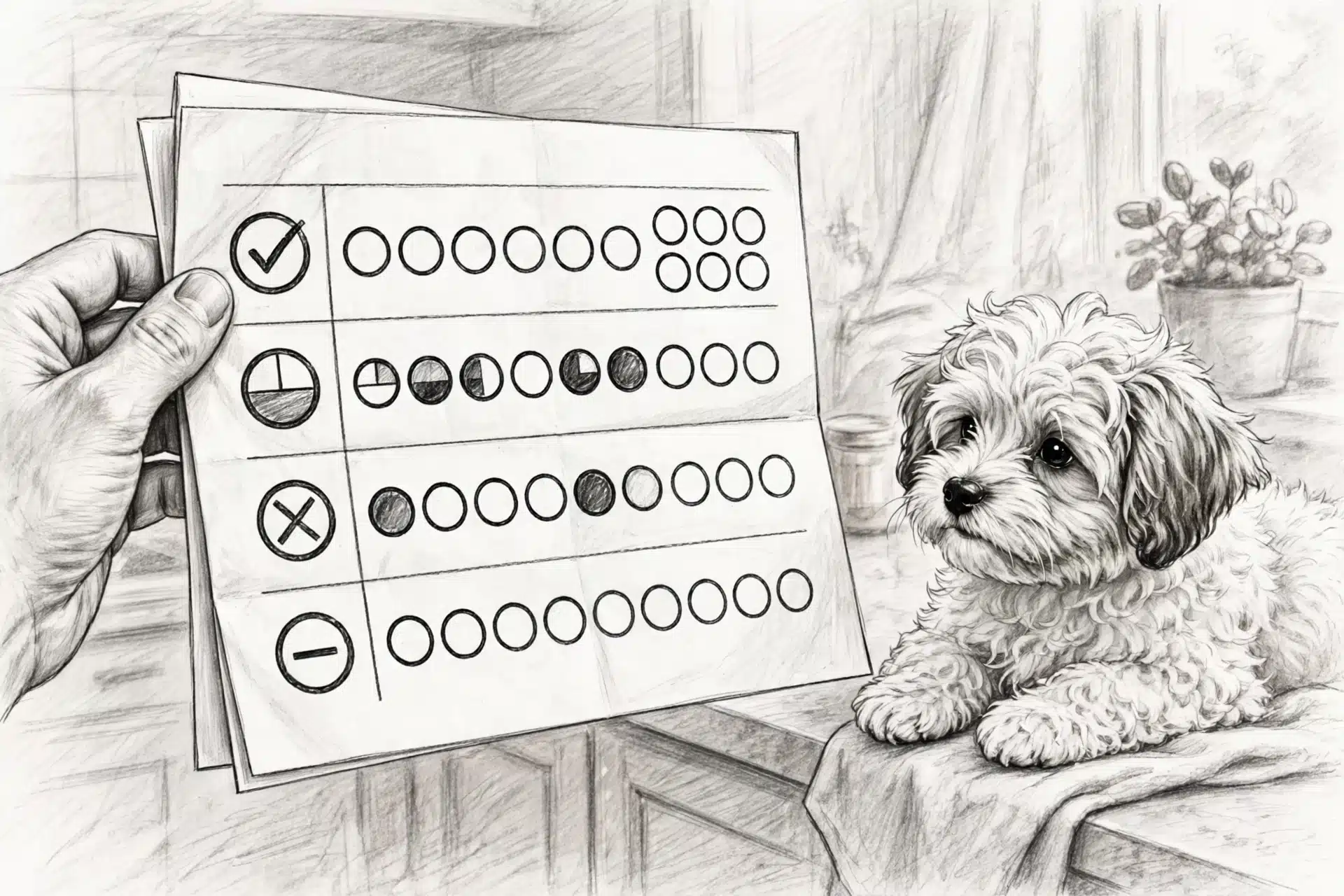
A DNA report uses four short labels, and each one means something specific. Here they are in plain language:
- N/N or Clear – the puppy carries no copies of the tested gene variant. It cannot develop or pass on that condition.
- Carrier – one copy is present, usually inherited from one parent. Carriers are typically healthy.
- Affected or At Risk – two copies, or one dominant copy, so the puppy may develop the condition.
- N/A – the test either was not run or did not apply.
Clear, carrier, affected and N/A
These clearance test puppies results tell you about genes, not promises. A clear result means the variant absent, nothing more. Carriers matter for breeding decisions, not usually for pets. An affected result deserves a conversation with the breeder before you commit.
What N/A actually means
An N/A is not a clean bill of health. It usually means the lab never tested for that variant, or the marker does not apply to this breed. Ask which one it is. If a Havanese report shows N/A for a condition common in the breed, request a reason or a follow-up test through the lab.
Matching a result to the condition name
Check that every condition listed on the report actually applies to the breed in front of you. Some panels screen dozens of variants across many breeds, so a breeder might share a long list where only a handful of results matter for Havanese, Havapoo or Cavapoo lines. Match each tested variant to its condition, and confirm the ones that matter show real results, not N/A.
How to Verify a Report Before You Buy
To verify a puppy’s DNA test results before buying, follow four steps: ask for the original lab PDF, confirm the lab name, match the results in a public database, and check that the registered name and microchip match the puppy in front of you. Five minutes of checking protects years with your dog.
Request the original lab document
Ask the breeder for the actual lab report, not a summary, screenshot, or typed list. A real result comes as a PDF from a named genetic testing laboratory, and it lists the lab’s contact details, the dog’s registered name, the sample ID, and the date. If someone can only forward a photo of a page, ask why the original is not available.
Check the lab and the public databases
Next, confirm the lab is real and the record exists. Reputable labs appear in the Orthopedic Foundation for Animals’ listings of approved genetic testing labs directory entries, and many labs release results straight to the OFA. Use the OFA’s advanced search to look up the dam, sire, or puppy by registered name. If a clearance test result is not there, ask the breeder to explain.

Confirm identity, not just paperwork
A database entry proves a dog was tested. It does not prove the puppy you are holding belongs to that line. Compare the registered names on the lab reports to the pedigree, check the microchip number against the paperwork, and ask about DNA parentage verification when a litter had multiple sires. At Sage Puppies, matching every document to the specific puppy is part of the handover, and any breeder should welcome the same questions.
DNA Results, Physical Clearances and Veterinary Exams Are Different
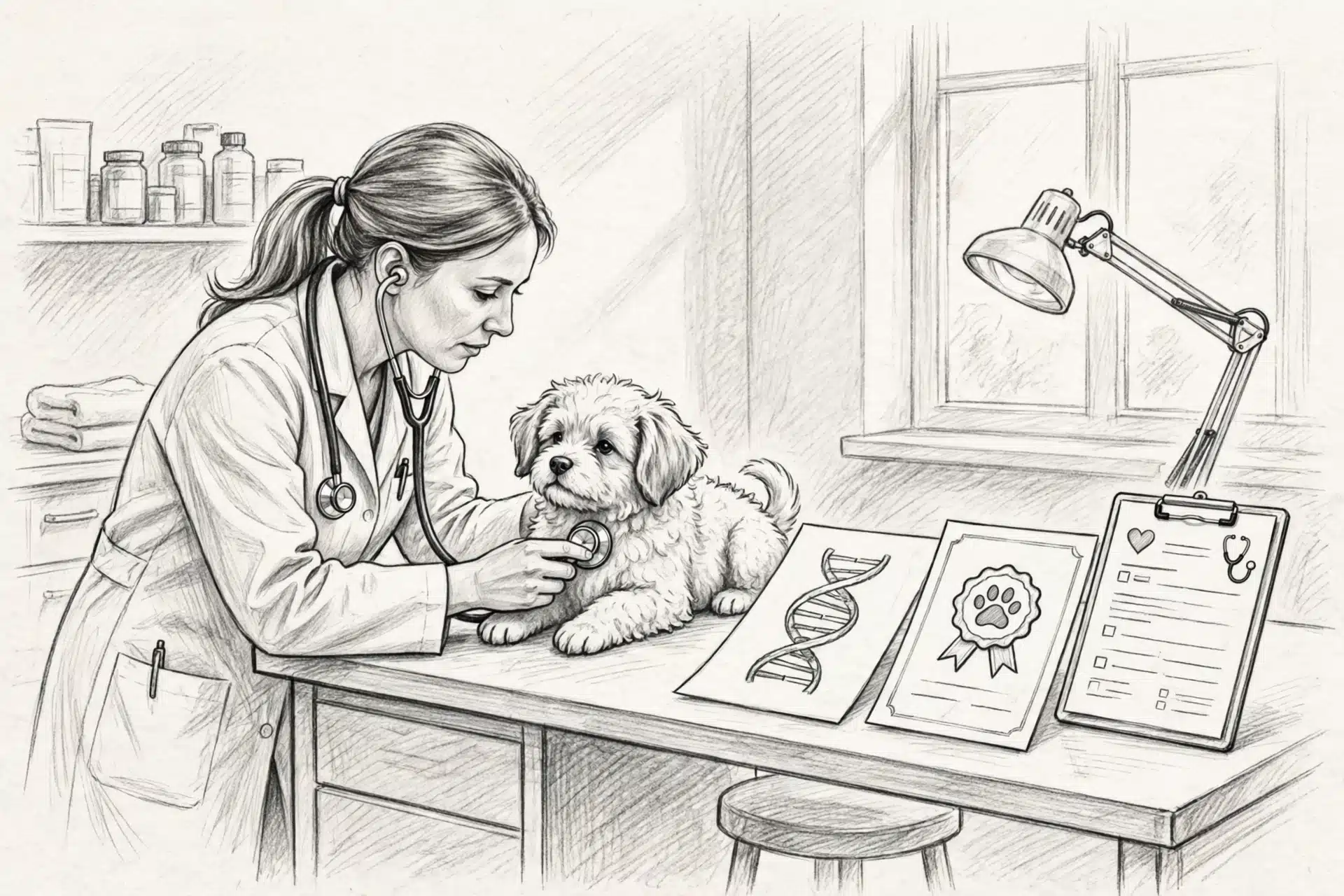
A DNA test reads genes. A clearance is a physical exam recorded with a registry. A vet exam is a checkup. These three documents answer different questions, so a responsible buyer asks for all of them.
| Document | What It Checks | Who Provides It |
|---|---|---|
| DNA panel | Inherited gene variants | Genetic testing lab |
| Physical clearance | Body structure, eyes, heart | Specialist vet, OFA registry |
| Puppy exam record | Current health on exam day | Your puppy’s veterinarian |
Genetic DNA results
A DNA panel screens for inherited gene variants, such as the ones behind certain Havanese and Cavapoo conditions. Results label each dog clear, carrier or at risk. Because genes do not change, one test per dog usually lasts a lifetime. But a clear DNA result does not rule out every problem.
Physical clearances
Clearances look at the body itself. They include OFA hips, OFA patellas and a CAER eye exam done by a board-certified ophthalmologist. A study in veterinary medicine notes that a clear genetic test does not replace a clinical eye exam, because some diseases show up only in the eye itself, per PMC research. Parents need these; puppies usually do not.
Puppy exam and vaccination records
The puppy exam covers exam-day health: heart, weight, eyes, ears and teeth. Add vaccination and deworming records. Breeders such as Sage Puppies share these with every pickup, and registries like OFA let you confirm the rest yourself.
Questions to Ask and How to Read the Answers
Ten questions to send before you reserve
Ask each breeder these ten before you place a deposit:
- Which DNA panel did the parents receive, and from which lab?
- Can you share the parents’ actual reports, not summaries?
- Are both parents N/N (clear) for each tested condition?
- Do hips and patellas have OFA numbers?
- Is there a CAER eye exam on file?
- Has the Havanese Club of America testing guide been followed?
- Were parentage checks run if multiple sires were possible?
- Do you have the puppy’s vet exam record?
- Can I see vaccination and deworming dates?
- Is a CHIC certificate available for either parent?
Red and green answers
Green answers name the lab, the panel and a record you can verify yourself, such as an OFA lookup. Red answers sound vague: “the vet checked them,” “they’ve always been healthy,” or a promise the reports are “in progress.” A breeder who tests properly keeps paperwork ready and shares it without hesitation.
Put it in writing
Ask for the results by email or text before you pay. Then confirm each claim yourself: search the OFA site for hip, patella and eye records, and request the lab’s report number so you can check it directly. Written records protect you if a problem appears later. Every document should match what you were told, name for name and date for date.
Using the Report After Your Puppy Comes Home
Bring the report to the first vet visit
Hand the DNA report to your vet at the puppy exam, along with the vaccination and deworming records. Vets use it to rule out problems before symptoms appear, so mention any carrier or at risk results early. If a result matters, your vet may suggest a baseline test or simply note it in the chart for future visits.
Adjusting care and lifestyle
Most DNA results change nothing about daily care. A carrier status needs no special routine, just awareness for future breeding decisions. Results tied to joint or eye conditions may influence how you manage jumping, stairs, exercise and weight as your puppy grows. Your vet can set sensible limits, so ask rather than guessing from the label alone.
Keep your own copy
Save a digital copy of the report where you can find it, and keep a printed one with your puppy’s records. You will want it if you ever switch vets, travel with your dog, or enroll in pet insurance, since insurers often ask about known conditions. Any breeding decision years from now depends on this paperwork too.
Common Mistakes to Avoid
Mistakes that lead to the wrong conclusion
The costliest error is reading one label as a diagnosis. A carrier result is not a sick puppy, and an at risk label needs a breeder or vet conversation, not panic. Other traps: trusting a screenshot with no lab name, accepting a “cleared by parentage” claim without seeing the parents’ reports, and assuming a DNA panel covers physical issues. Patellas and eyes need exams, not genes. OFA hips matter little here, since most small breeds are evaluated differently.
Mistakes that weaken your position later
Buyers often lose proof by waiting. Get the report before the deposit, not after pickup. Keep the puppy exam, vaccination and deworming records together in one folder, and confirm the litter’s DNA parentage verification if more than one sire is possible. Take photos of every page. A careful breeder welcomes these requests, and a program like Sage Puppies expects them as part of a normal process.

You now know which genetic results to ask for and how to check them. Put that checklist to work with a program that already tests its Havanese, Havapoo and Cavapoo parents and shares the records. Visit Sage Puppies to see current litters, review each puppy’s documentation, and start your application today.
Frequently Asked Questions
Q1: What genetic test results should I ask a puppy breeder for?
Ask for each puppy’s full DNA report from a named lab, both parents’ results for every condition tested, and DNA parentage verification if more than one sire was possible. Request the original PDF, not a summary.
Q2: Which health tests should a Havanese, Havapoo or Cavapoo puppy have?
Expect a breed-appropriate DNA panel, plus OFA hips, OFA patellas and a CAER eye exam on both parents. Cavapoo lines also need cavalier heart and syringomyelia screening. A CHIC certificate shows the breed’s required tests are complete.
Q3: How do I verify a puppy’s genetic health test results before buying?
Get the lab report, confirm the lab appears in the OFA directory, then search OFA by the parents’ registered names. Match names and microchip numbers to the puppy in front of you.
Q4: Is a carrier puppy a healthy puppy?
Usually yes. Carriers have one copy of a variant and typically never develop the condition. The status matters mostly for future breeding, so pairs should never combine two carriers of the same condition.
Q5: Do puppies need their own DNA test, or just the parents?
Ask for both. Parents’ results shape the pairing, while the puppy’s own report confirms what it inherited. In multi-sire litters, parentage testing identifies which sire is yours.
Q6: What does an N/A result mean on a DNA report?
It means the lab never ran that specific test, or the variant does not apply to the breed. Neither is a clean bill of health, so ask which case applies and request a follow-up if the condition matters for the line.
Q7: When should I ask for these records?
Before paying anything. Request reports by email or text, verify OFA entries yourself, and keep every document together with the puppy exam and vaccination records.
Conclusion
A solid claim of “health tested” rests on three documents: a lab-issued DNA panel, physical clearances on both parents, and a puppy exam record. Each answers a different question, and none replaces the others. Know which labels on a report matter, treat carrier and at risk as probability rather than diagnosis, and match every result to the conditions that actually affect Havanese, Havapoo and Cavapoo lines. Then verify it yourself: request the original PDF, search OFA by the parents’ registered names, and confirm names, microchips and dates line up. Breeders who test properly expect these questions and answer them with paperwork, not promises.