Quick Summary: You can tell whether puppies were truly family raised by seeing where they live, watching their behavior, meeting the dam, and checking health and socialization records, not by trusting website photos. A good breeder welcomes visits or live daytime walkthroughs, explains how puppies spend their days, and provides vaccination, genetic testing, and written contract terms before payment, while Sage Puppies invites prospective buyers to visit its home-raised Havanese, Havapoo, and Cavapoo puppies in South Jordan, Utah. Research suggests home-raised puppies are often more confident and less fearful, but environment alone does not prove good handling or socialization.
A breeder’s website can promise a living room floor, a kitchen playpen, or “raised by our family,” and every photo can be staged or borrowed from a past litter. So the real question is how to tell if puppies are family raised, and the answer is not on the website. You learn it by watching what a puppy does in the room you are standing in, and by checking what the breeder can show you on the spot. This guide walks through a five-step way to tell if puppy was family raised: look at behavior, inspect the home setup, watch the mother dog, review records, and apply a simple home-life test. Knowing the signs of family raised puppy behavior matters because early care shapes temperament for life, especially in small companion breeds like Havanese, Havapoos and Cavapoos. No breeder’s word can replace your own eyes.
Before You Start: What to Bring and What to Arrange
If you’re learning how to tell if puppies are family raised, the visit itself is your best tool, so plan it well.
Visit the Home, Not a Meeting Location
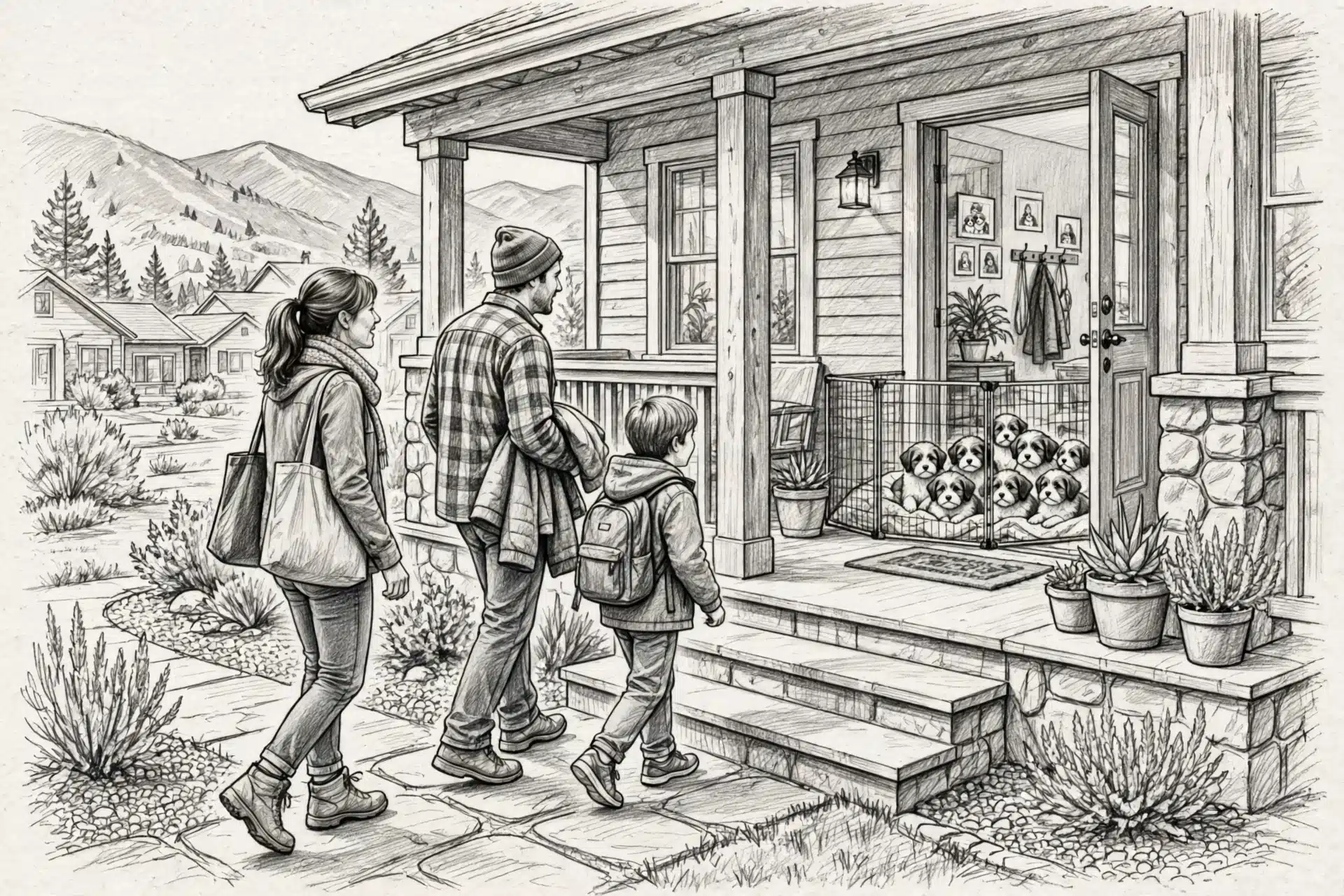
Ask to see where the puppies live, not a parking lot or a rest stop. A breeder who insists on meeting you off-site may be hiding kennel conditions. If distance makes travel hard, a live video call walking through the home is the next best thing. Schedule it during the day so you can see the space and the litter together.
Prepare a Small Set of Questions and a Way to Take Notes
Write your questions down before you go. A short list keeps you focused when a puppy is climbing your leg. Bring your phone or a notebook and jot answers right after the visit, while details are still fresh. Our guide to questions to ask before buying a family-raised puppy gives you a full script.
Know Which Documents to Ask for Before You Pay Anything
Request health records, vaccination dates, deworming history, and any genetic health testing for parent dogs before any deposit changes hands. A confident breeder shares these freely.
Step 1: Watch How the Puppy Behaves in the Room You Are In
If you want to know how to tell if puppies are family raised, start here. The first five minutes in a breeder’s home tell you more than any website or phone call. A puppy that has lived in a real household shows it immediately, because household life is all it has ever known.
How a Puppy Exposed to Household Life Usually Behaves
Watch for these behaviors:
- Curiosity without panic. The puppy approaches you within a minute or two.
- Comfort with noise. A dropped dish or doorbell gets a startle, then a quick recovery.
- Interest in normal life. It gravitates toward people, not just its littermates.
- Easy handling. It tolerates being picked up without freezing or shrieking.
Each of these comes from daily exposure to people, vacuum cleaners, kids and doorways.

What Kennel-Raised Puppies Often Look Like on Day One
Kennel or barn puppies usually show the opposite pattern. They may cower in a corner, hide behind littermates or urinate when you reach for them. Some freeze entirely, which buyers mistake for a calm dog. Others seem friendly but have never heard a television, a dishwasher or a child’s shout. That gap shows up later as noise fear or house-training struggles. One visit reveals it early.
A Simple Five-Minute Test You Can Run Yourself
Sit on the floor and stay quiet for two minutes. Then clap softly, stand up and walk a few steps. A family-raised puppy will investigate, follow you or play-bow. A puppy with no household history will bolt, freeze or need several minutes to settle. Note the reaction and compare it across the litter. To go deeper, review the questions worth asking before buying a family-raised puppy.
Step 2: Ask Where the Puppy Actually Lives and Ask for Proof
Any breeder can say the puppies are family raised. What matters is where they sleep, who handles them daily, and whether you can see it yourself. Ask one simple question first: “Where exactly do the puppies live, and may I visit that room?” Then ask for proof, not promises. Most breeders who welcome visits will offer one before you finish asking.

The Four Questions That Expose the Claim
- Where do the puppies spend their days and nights?
- How many litters do you raise per year, and where are the adult dogs?
- Can I visit and see the puppies where they live, not in a neutral spot?
- May I see photos or video of the actual whelping area, taken this week?
A confident, specific answer to all four tells you more than any website claim. A breeder with nothing to hide will not mind.
Telling the Difference Between a Home and a Building on the Property
Some breeders say “home raised” while the puppies live in a garage, barn, or separate kennel building. That is kennel raised, even if the building sits in the backyard. So get precise: which room, which floor, how many hours a day with people? Puppies raised inside a family kitchen or living room hear dishwashers, doorbells, and children long before they meet yours.
How to Read a Vague Answer
Watch for answers like “they’re raised with lots of love” or “our facility is state licensed.” Neither answers the question. Licensed means nothing about socialization, and “facility” is the word itself giving it away. Redirect gently: “So is that inside your house, or in another building?” Honest breeders answer directly, and invite you over.
Step 3: Meet the Dam and Look at the Living Setup
Why the Dam Tells You More Than the Litter Photo
The mother dog is your best evidence. Puppies inherit temperament, and they copy her behavior for their first eight weeks. A dam who is calm with visitors, accepts handling, and lives indoors as a pet says more than any gallery of newborn photos. Watch how she responds when you reach toward her puppies.
What the Setup Should Look and Feel Like
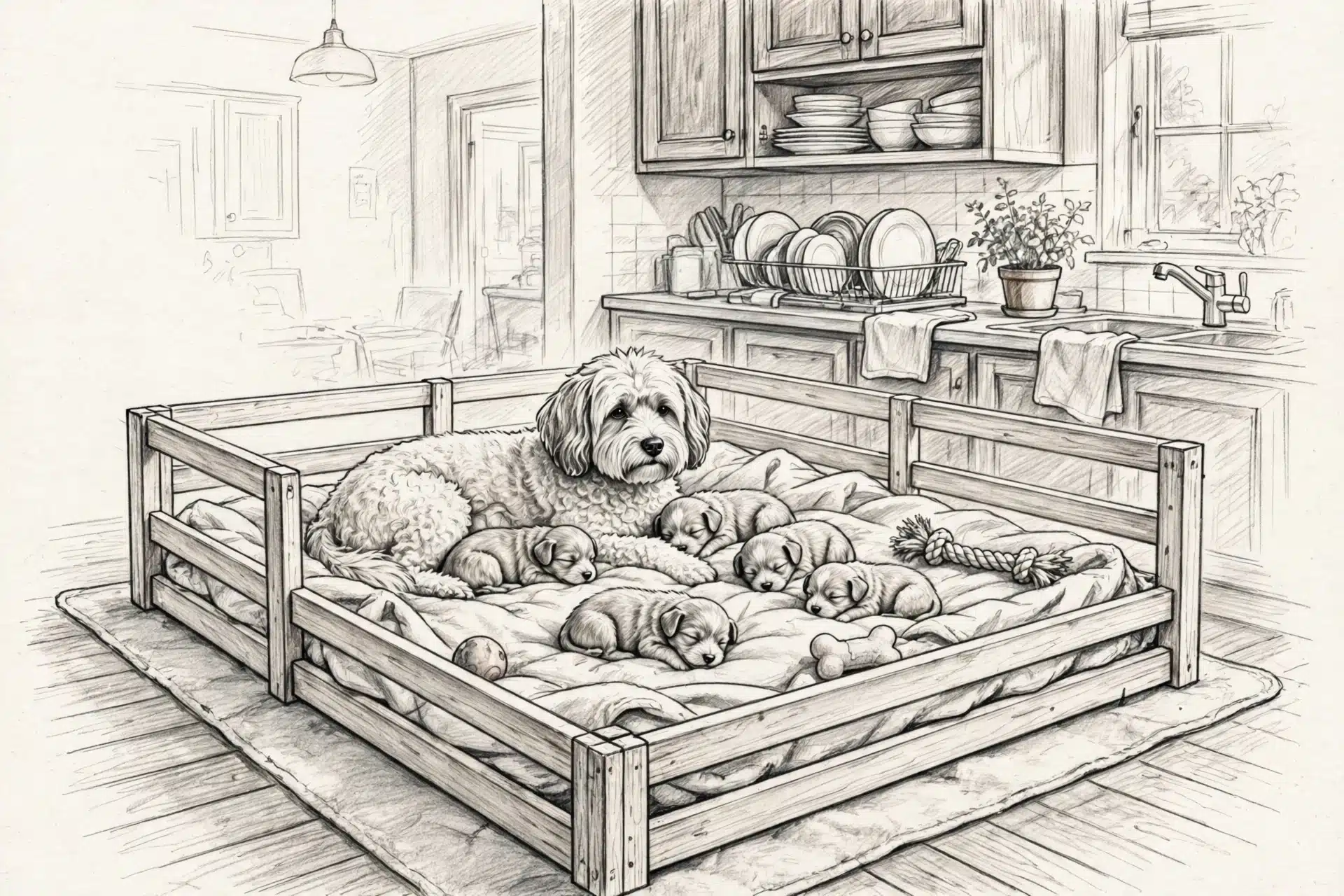
A real family setup is a lived-in home, not a showroom. Look for a whelping box or playpen in a kitchen or family room, with clean bedding, toys, and puppy-safe flooring. Puppies should smell like a house, with background noise like dishes, doors, and voices. Rows of kennels, a strong ammonia smell, or puppies kept in a garage or barn are classic puppy mill warning signs.
Questions Only the Setup Can Answer
Come with specific questions. Where does the dam sleep? How many litters does she have per year? Where were these puppies whelped, and where do they spend the day? A breeder who answers while walking you through the actual space is showing you the truth. Anyone who needs to move the puppies to a different room first is telling you something too.
Visiting in person lets you see the dam and setup together, which is exactly why breeders who welcome visits stand behind the word family-raised.
If you can’t visit, ask for a live video walkthrough of the exact room. It is a fair request, and a confident breeder will say yes.
Step 4: Check the Records That Back Up the Story
A good breeder hands you paperwork without being asked. Before any deposit, ask to see these documents:
- Vaccination and deworming records with dates and products used
- A vet exam record for the puppy, dated within days of pickup
- Genetic health testing for parent dogs through OFA or Paw Print Genetics
- A written contract with health terms and a return policy
A breeder who hesitates here is telling you something.
Health Records That Support the Claim
Ask which vaccines the litter received and when. Puppies usually get their first shot around six to eight weeks, so a breeder who claims “fully vaccinated” at five weeks is off the schedule. Request the parent dogs’ health test results too. For Havanese, Havapoo and Cavapoo parents, look for hip, eye, and heart clearances. Real breeders send you copies, not summaries.
Records That Speak to Home Rearing and Socialization
Health papers say nothing about how a puppy lived its first eight weeks. Good breeders keep socialization logs: new surfaces, sounds, handling by different people, car rides, nail trims. Ask to see theirs, even if it’s a notebook. Some breeders use puppy temperament tests around seven weeks. A breeder who records daily handling is showing you the family-raised claim in writing.
Writing and Contract Terms You Should See Before Any Deposit
Read the contract before money moves. It should name the health guarantee period, what it covers, and the return policy if the match fails. Watch for vague lines like “healthy to the best of our knowledge.” A serious program puts its terms in writing first; that’s how we handle every deposit at Sage Puppies. The questions to ask before buying a family-raised puppy list covers this too.
Step 5: Match the Puppy to Your Actual Home Life
What Home-Raised Small Breeds Usually Settle Into
A puppy raised in a house expects noise, handling, and daily routine. Havanese, Havapoos, and Cavapoos are companion breeds, so they want people nearby. That fits apartments and busy family homes alike, but a Cavapoo’s eagerness to please and gentle nature with kids and seniors is well documented in breed guides like Petplace’s Cavapoo overview. Match energy level, not just size.
Questions to Ask About Life After Pickup
Be honest before you choose a litter:
- Who is home during the day, and for how long?
- Can you handle a breed that dislikes being alone? Havanese, in particular, bond hard with people.
- Do kids, other pets, or stairs factor in?
- How will you keep routines from the breeder in the first weeks?
Ask the breeder how each puppy behaves in a crowd versus alone. That tells you more than coat color ever will.
Where to Look If You Want a Family-Raised Small Breed
Search for breeders who invite visits, limit litters each year, and document early socialization. If you are weighing Havanese against a Cavapoo, comparing Havanese and Cavapoo temperament side by side helps you see which one matches your household’s rhythm. Then plan your home setup before pickup day arrives.
Common Mistakes to Avoid When Verifying a Family-Raised Claim
Judging the Puppy Instead of the Environment
A puppy that runs up to you proves nothing on its own. Confident puppies come from loud, busy kennels too. Watch the space where the litter sleeps and plays. Listen for normal household sound, and watch how the mother dog reacts when strangers appear.
Assuming Every Kennel Is a Puppy Mill
A clean, purpose-built kennel is not a red flag. Some excellent breeders use indoor runs plus daily house time, and their puppies still get what matters: handling, noise exposure and early socialization. Judge the puppy socialization records and daily routine, not the building itself. A spotless kitchen with twelve litters a year can hide more problems than an organized kennel with two.
Paying Before You Have Seen
Never send a deposit based on photos, a video call or a smooth website. Scammers count on the fear that a puppy will sell overnight. Visit in person first, or send a trusted local person. Get the puppy deposit and contract terms in writing, including health records and return policy, before any money changes hands.
One honest visit tells you more than a dozen polished pages. Anyone can claim their puppies were raised underfoot; showing you the room where it happened is a different question entirely.
Home-Raised Versus Kennel-Raised: What the Research Actually Shows
The Findings Buyers Should Know
Studies comparing where puppies spend their first eight weeks keep pointing the same way. Puppies raised in a home were more confident and less likely to show fear-based aggression than puppies raised in kennels, according to research covered by Companion Animal Psychology. A home also delivers everyday sights and sounds: vacuum cleaners, doorbells, kids, tile floors. Kennels and large commercial operations, including facilities described as puppy mills, rarely offer that variety, so puppies miss the early socialization window that closes around 14 weeks.
A Side-by-Side Comparison
| Factor | Home-Raised Puppy | Kennel or Mill Puppy |
|---|---|---|
| Behavior | More confident, less fear aggression | Often shy, hand-shy, or over-aroused |
| Dam condition | Mother present, healthy, relaxed | Mother may be absent or unseen |
| Health testing | Documented parent testing | Rarely verifiable |
| Records | Socialization notes and vet dates | Gaps or none |
| Buyer access | You visit the home freely | Visits discouraged or staged |
Where the Science Is Still Unsettled
Researchers still debate how much the setting alone matters. Some findings suggest how puppies are handled can offset a kennel start, and one study even found kennel-raised puppies scored well on confidence. So treat environment as strong evidence, never as the whole verdict. This is why observing a litter firsthand, as covered in our puppy breeder visit guide, beats any claim on a website.

If you want to see what a truly family-raised puppy looks like, visit Sage Puppies. Cassie raises Havanese, Havapoo, and Cavapoo puppies at home in South Jordan, Utah, and welcomes your questions before you ever apply. Check the available puppies page and see the difference for yourself.
Frequently Asked Questions
Q1: How can I tell if a puppy was raised in a family home?
Visit the home and watch the puppy in the room it lives in. A family-raised puppy recovers quickly from noise, tolerates handling, and gravitates toward people. Ask for records, meet the dam, and never rely on photos alone.
Q2: What signs show a puppy was raised at home instead of in a kennel?
Look for curiosity without panic, comfort with dishwashers, doorbells, and children, and easy handling without freezing. Kennel-raised puppies often cower, hide behind littermates, or bolt during your five-minute floor test.
Q3: What is the difference between a home-raised puppy and a puppy mill puppy?
A home-raised puppy lives inside with people and a relaxed, healthy dam. A mill puppy usually comes from rows of kennels, an unseen mother, missing health testing, and a breeder who discourages visits.
Q4: Can I verify a breeder without visiting in person?
Yes. Request a live daytime video walkthrough of the exact room, plus vaccination records, vet exams, genetic health testing for parent dogs, and a written contract before sending any deposit.
Q5: How many litters a year is too many for one breeder?
There is no fixed legal limit, but high volume with dozens of litters suggests a commercial operation. Small programs limiting litters can usually describe each puppy’s daily handling in detail.
Conclusion
Telling whether puppies were truly family raised comes down to what you can see, not what you’re told. Watch behavior in the room itself, inspect the living setup, meet the dam, check records and genetic health testing for parent dogs, and apply a five-minute home-life test. A confident breeder invites you in, shares vaccination and socialization logs, and puts puppy deposit and contract terms in writing before money moves. Vague answers, off-site meetings, or missing paperwork are the clearest warning signs of all. And remember: no website, photo, or smooth phone call replaces one honest visit. Trust your own eyes first, because the puppy’s first eight weeks shape its temperament for years to come.