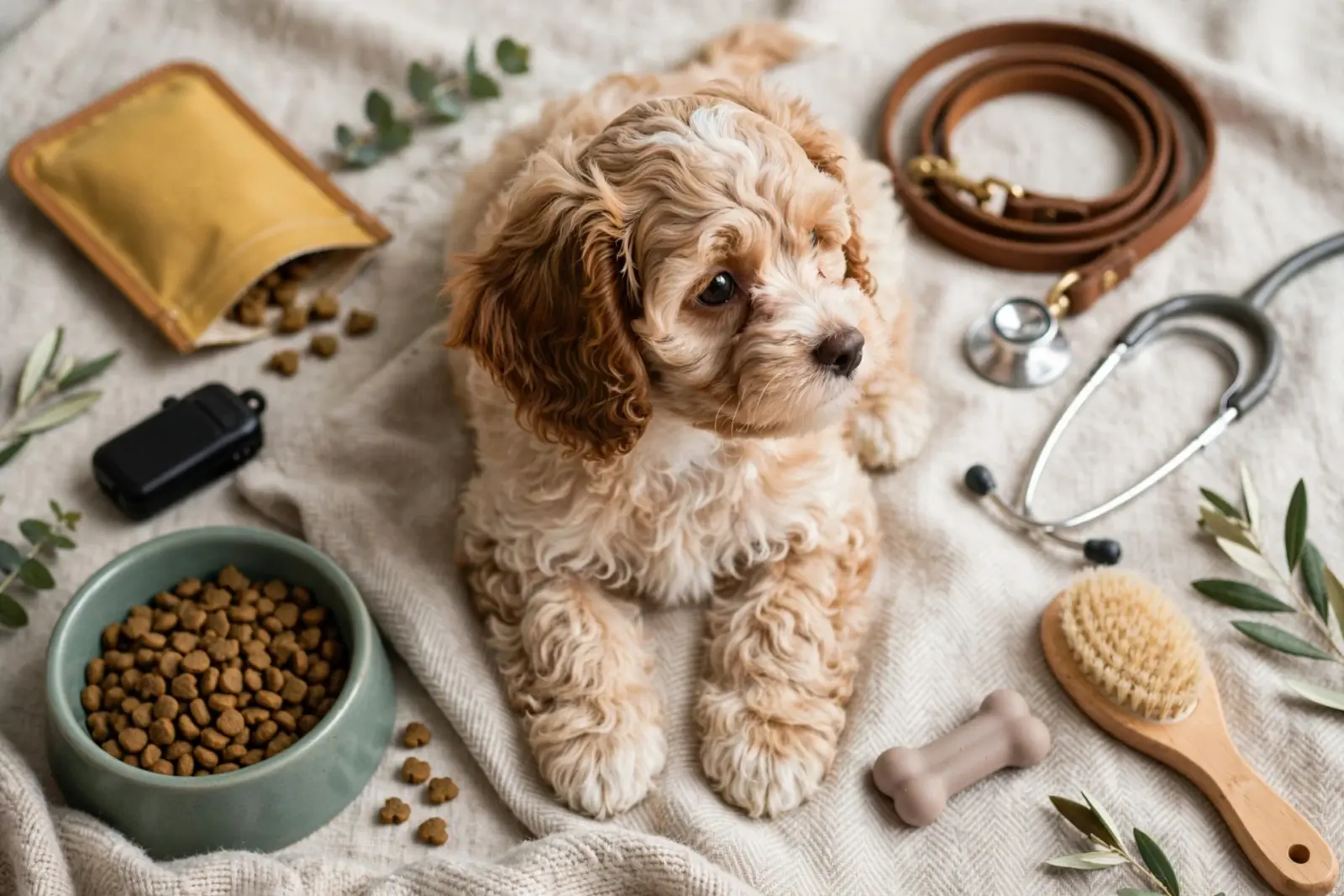
Quick Summary: Prepare a safe puppy base camp, proof the house room by room, keep the puppy’s current food and schedule, and plan a calm arrival-day routine. Family-raised puppies from Sage Puppies arrive familiar with household noises and family handling, but they still need constant supervision, consistent care, and gradual exposure to the rest of the home. Expect progress to vary rather than follow a fixed timeline, because safe setup and patient routines matter more than gadgets or deadlines.
The morning you bring a family-raised puppy home, that puppy sees your kitchen, hears your doorbell, and smells your laundry detergent for the first time. Every one of those new things can unsettle a calm eight-week-old if the house was not ready. Good family raised puppy home prep prevents that spiral before it starts.
The challenge is knowing where to begin. Most guides hand you a shopping list and stop there. This one gives you a room-by-room sequence instead, from setting up a puppy base camp to a simple arrival day routine.
It matters because a family-raised puppy arrives with real advantages: familiar food, the scent of a home, and early socialization around household noise. Your job is to keep that calm going. Cassie Milar of Sage Puppies in South Jordan, Utah, raises Havanese, Havapoo, and Cavapoo puppies in her own home, and this guide turns that start into a smooth transition for yours.
Step 1: Build One Safe Base Camp Before Buying Anything Else
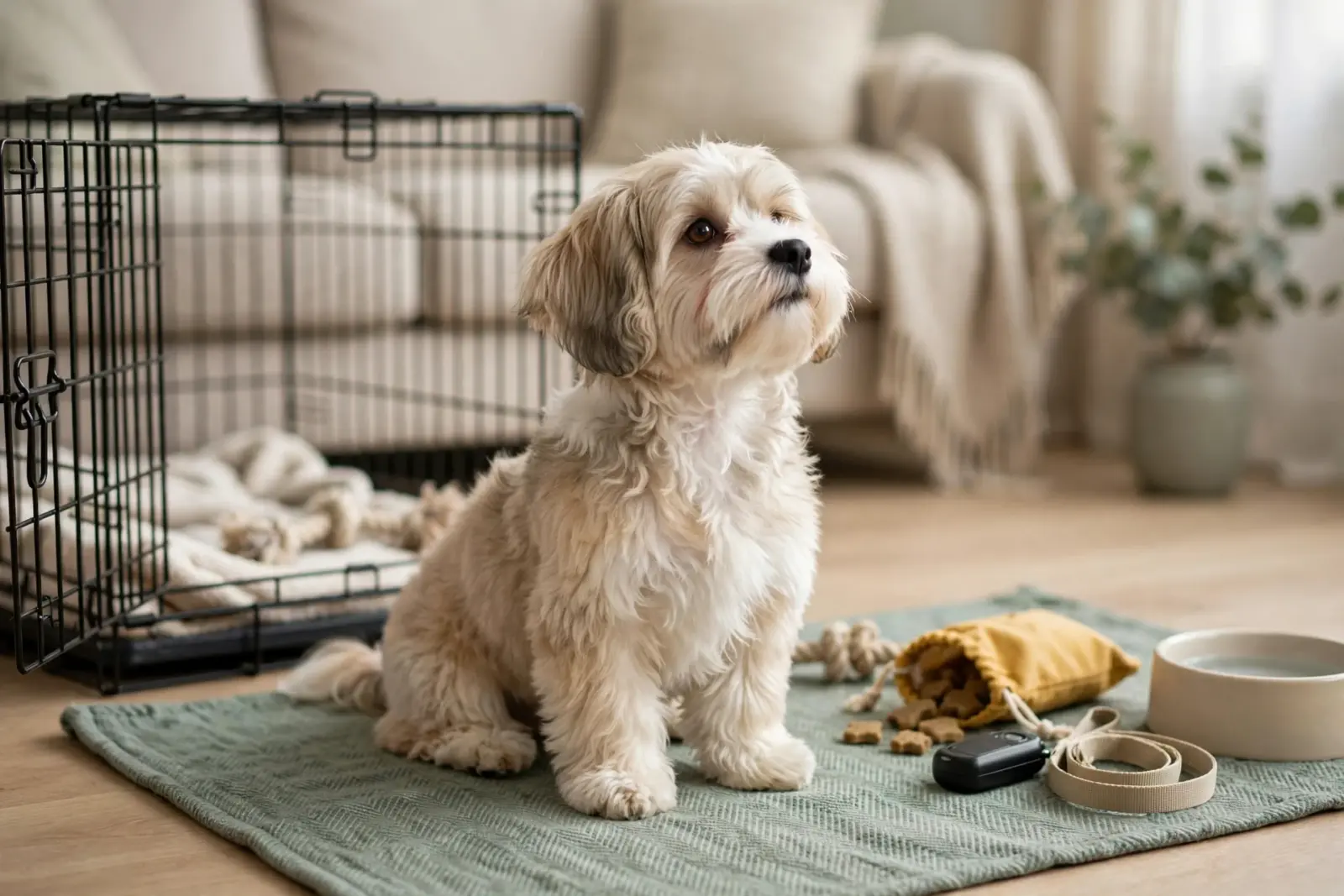
Pick one small room, such as a laundry room, a spare bedroom corner, or a gated kitchen area. Set it up with a crate, food and water bowls, a few toys, and easy-clean flooring. This single spot is the heart of family raised puppy home prep, because it gives your puppy a calm, contained place from day one.
Why One Room Works Better Than the Whole House
A whole house feels huge to a nine-week-old puppy. One room limits accidents, keeps chewable items out of reach, and lets you watch your puppy without trailing behind. It also protects your carpet and your patience. Small breeds like Havanese, Havapoos, and Cavapoos settle faster when the space feels snug rather than sprawling.
What to Put in the Base Camp
Use this short puppy proofing checklist before your puppy arrives:
- A correctly sized crate, big enough to stand and turn in but not roam
- Food and water bowls placed away from the sleeping corner
- The breeder’s current food, so the feeding routine stays the same at first
- Two or three sturdy chew toys
- A washable bed and pee pads or a potty spot nearby
- Baby gates for the doorway
Household scents matter, too. A family raised puppy home prep win is bringing home a cloth rubbed on the puppy’s littermates, which eases the first night. A new puppy supply checklist page covers sizing and product picks in detail.
Opening Up the Rest of the House Gradually
After a few settled days, open one new room at a time. Supervise each visit, then return your puppy to base camp to rest. Within two or three weeks, most puppies earn house-wide freedom, one calm exploration at a time.
Step 2: Puppy-Proof by Hazard, Room by Room
A Havanese or Cavapoo puppy is small, curious, and low to the ground, so crawl through your main living areas on your knees before arrival day. You will spot hazards an adult never notices.
Cords, Outlets, and Small Items
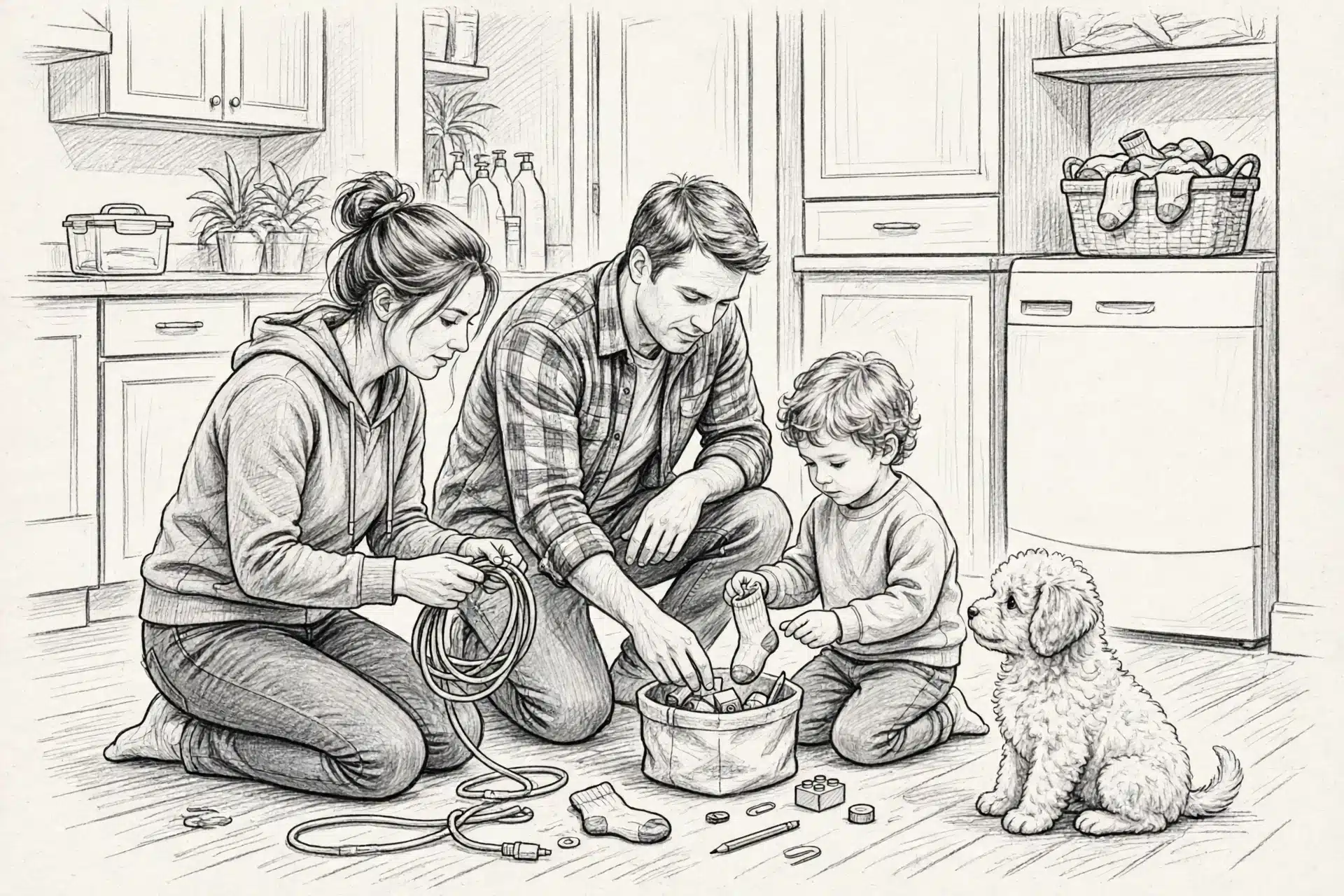
Puppies chew. Lamp cords, phone chargers, and curtain ties all sit at nose height, so tuck them behind furniture or run them through cord covers. Pop outlet caps into unused sockets, and pick up anything smaller than a golf ball: coins, hair ties, kids’ toys, batteries. The tiny feet on adjustable furniture and recliners can pinch or trap a small puppy, so keep those rooms closed at first. Walk each room once more after the first look, because you will always find a second stray cable.
Kitchen, Laundry, and Cleaning Products
The kitchen holds the densest cluster of dangers. Move cleaning sprays, dishwasher pods, and trash bins into cabinets with child latches or store them up high. Chocolate, grapes, onions, and xylitol gum all poison dogs, so keep counters clear and food sealed. In the laundry room, shut the dryer door every single time, and sweep up stray socks, which a small puppy will swallow. Store medications, sewing kits, and glue in a closed drawer. A night of tidying now prevents an emergency vet visit later.
Toxic Plants, Gates, and Safe Zones
Check your houseplants against the ASPCA’s toxic and non-toxic plant list. Pothos, philodendron, sago palm, and lilies all sicken dogs, so relocate them to a shelf your puppy cannot reach. Then block off stairs and off-limits rooms with free-standing or hardware-mounted pet gates. Finally, choose one gated room as your puppy’s safe zone, and leave nothing there except approved toys. When you bring a family-raised puppy home, this quiet corner lets familiar routines continue without new risks.
Step 3: Set Up Feeding So Nothing Changes on Arrival Day
A puppy’s stomach is the most sensitive part of the move. New home, new smells, and new food all at once often mean loose stools and a rough first week, so your goal is simple: keep the diet exactly the same at first, then change it slowly if you want to.
Match What Your Puppy Already Eats
Ask the breeder what food your puppy is eating before pickup day, and buy the same brand and formula in advance. If you want to switch later, do it gradually over about a week, starting with roughly a quarter new food and slowly increasing the share, which is the approach vets recommend so the digestive system can adjust. A sudden swap on arrival day is the most common cause of an upset stomach in a new puppy. When a family-raised program like Sage Puppies sends your puppy home, the food and feeding rhythm are already familiar, so keep that going. For portion sizes by age, the small breed puppy care checklist covers feeding schedules alongside vet visit timing.
A Feeding Area That Survives a Busy Household
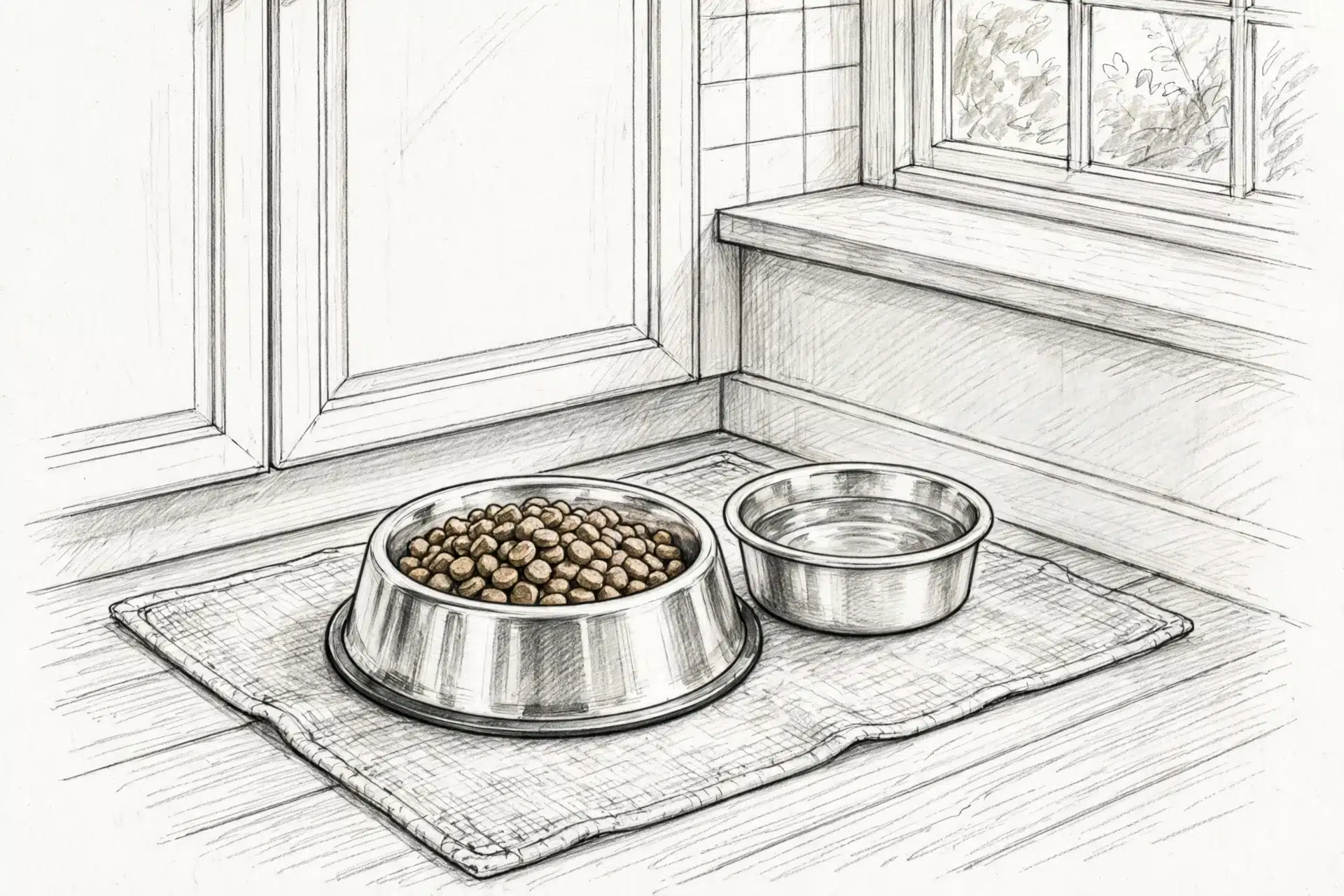
Pick one feeding spot and keep it there. A corner of the kitchen works well because it is easy to clean and away from door drafts. Use a washable mat under the bowls, and choose shallow stainless steel bowls that a tiny Havanese or Cavapoo muzzle can reach.
Water, Storage, and Meal Times
Set out fresh water where your puppy can reach it without leaving base camp. Store kibble in a sealed container away from heat. Feed at the same times each day, and plan meals so a potty trip follows within about 15 minutes.
Step 4: Build the Sleep Area and a Realistic Night Plan
Crate Size, Placement, and Comfort
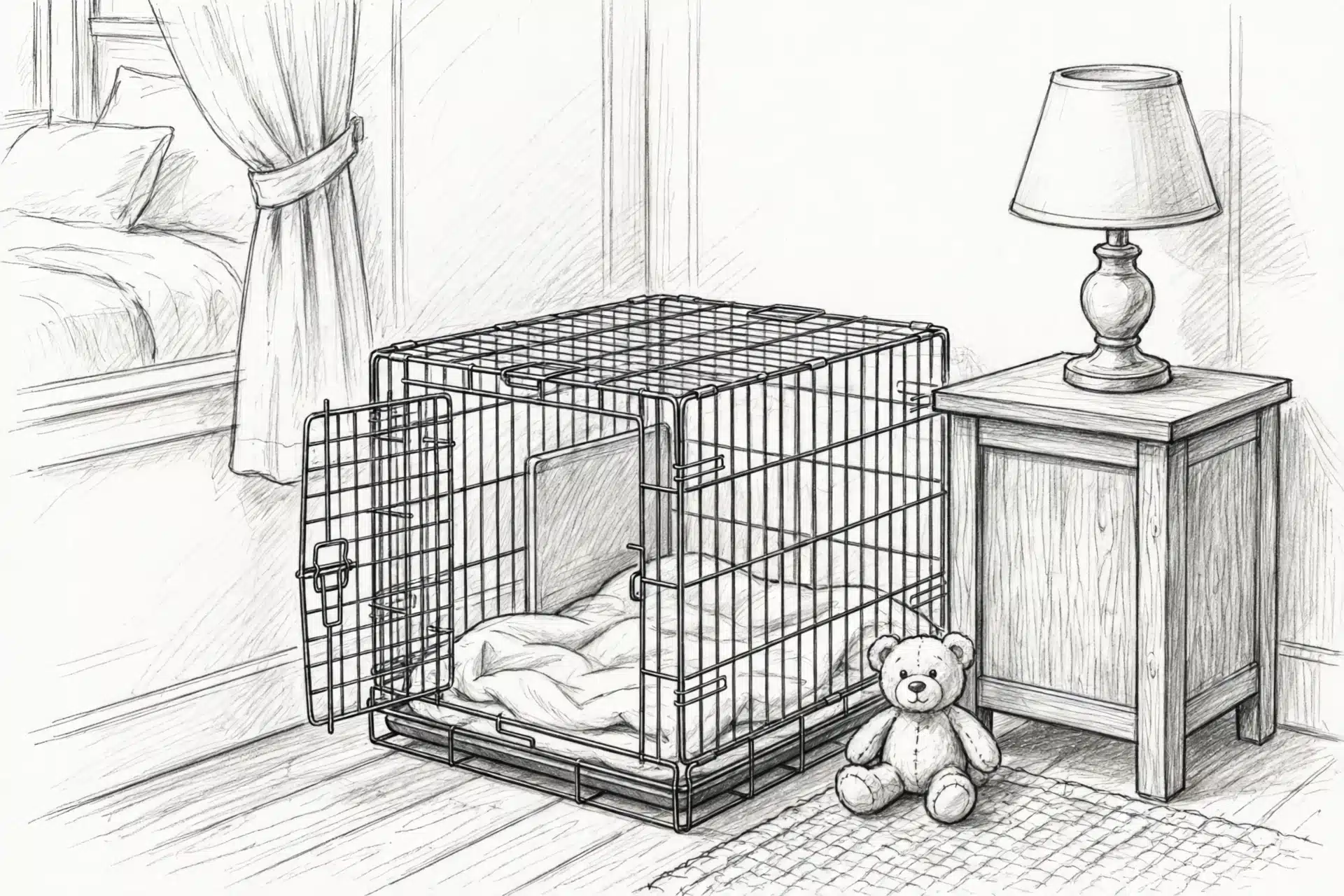
Pick a crate your puppy can stand up, turn around, and lie down in, and not much bigger. Extra room invites a potty corner, so small breeds usually need a compact crate, sometimes with a divider while they grow. Place it where your puppy can hear the household but stay out of drafts and direct vents. If you are weighing a crate against a pen, this crate vs. playpen guide covers when each one fits.
Making the Crate a Good Place
Build a positive link to the crate before night one. Feed a few meals inside, toss treats in randomly, and let the door stay open so your puppy can wander in and out. A soft washable pad and a safe toy help. Experts on how to crate train a puppy recommend short, calm sessions first, then closing the door briefly while you stay nearby. Never use the crate as punishment.
Planning the First Nights Without a Fixed Promise
Young puppies cannot hold it all night, so expect one or two potty trips. Keep them quiet and boring, then back to bed. Progress varies by puppy, so follow your puppy’s signals instead of a set schedule. Quiet reassurance beats letting crying run its course.
Step 5: Divide the Work So the Puppy Is Not Left Unsupervised
A puppy left alone for “just a minute” finds the trouble you missed. Young children in the home raise the stakes, so agree on a few non-negotiables before pickup day:
- A child never carries the puppy and never picks it up alone.
- A grown-up is always in the room when puppy and kids are together.
- Doors and gates stay closed, and someone checks them after every school run.
- Everyone approaches calmly; no chasing, screaming, or grabbing.
Put these in writing. Post the list on the fridge so no one has to guess.
Assign Roles Before the Puppy Arrives
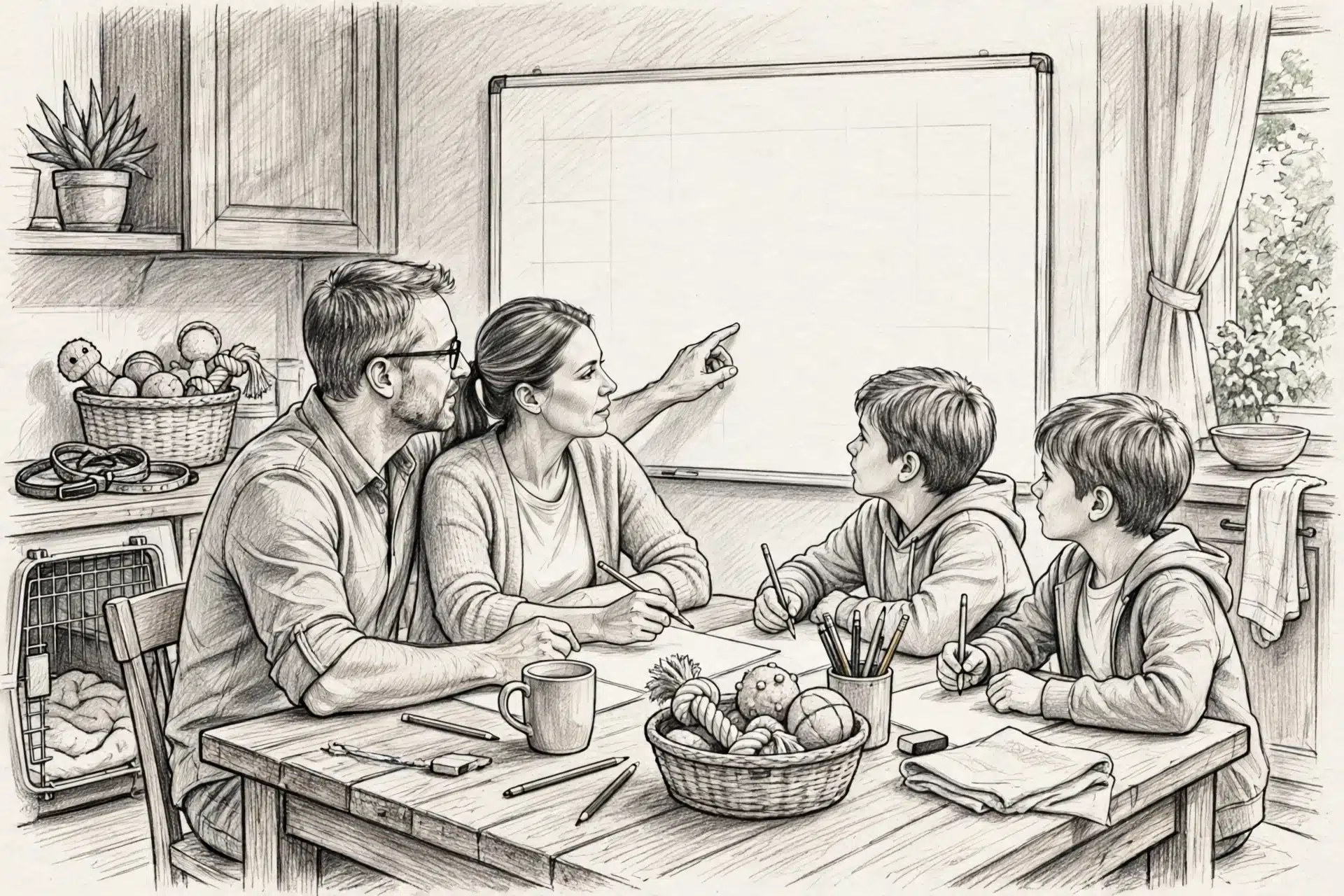
Give each family member one job. One person handles morning potty breaks, another does meals, a third covers the midday check. Kids can refill water, tidy toys, and report accidents. Adults own vet visits, training, and anything with a deadline. When roles are set early, nobody assumes “someone else did it,” and the puppy gets consistent care from day one.
Build a Supervision Schedule That Fits Real Life
Map your week honestly. School, work, sports, church: write it all down, then block out who covers each gap. A schedule only works if it survives a busy Tuesday. Swap shifts when needed, but never leave the slot empty. Small breeds bond fast, so predictable hands and voices actually help your puppy settle.
Set the Household Rules Together
Hold a short family meeting and agree on the same commands, the same feeding spots, and the same off-limits rooms. Mixed messages confuse a puppy quickly. Questions about responsibilities and fit are worth raising before you commit, so bring them to the family-raised puppy questions guide and ask early.
Step 6: Plan Arrival Day Hour by Hour
Your puppy’s first day follows a simple rhythm: ride home, potty outside, quiet meal, short nap, repeat. Keep visitors away, keep everyone calm, and let the puppy learn that your home is a safe, predictable place. Here is how that day usually unfolds.
The Car Ride and the Walk In
Bring a crate lined with a towel that smells like the litter and a family member who holds the puppy still and quiet. Skip park stops on the drive home; a small breed puppy has not finished vaccines, so keep its feet off public grass. When you arrive, carry the puppy to the yard, set it in the spot you chose, and wait. Praise gently when it goes.
The First Meal, the First Potty Trip, and the First Nap
Feed the familiar food the breeder sent home. A potty trip should follow within about 15 minutes, so stay outside until it happens. Then put the puppy in its crate or puppy base camp for a nap. Puppies sleep 18 to 20 hours a day, and overtired pups get mouthy and wild. Let each cycle of meal, potty, play, and nap run one to two hours through the evening.
Booking the First Vet Visit and Sending Records
Schedule a vet visit within the first few days. Puppies need vaccine boosters every 3 to 4 weeks until about 16 weeks old, so bring your vet the vaccination and deworming records from the breeder. If your puppy is delivered, those records arrive with it, and you can call your vet before pickup day.
Common Mistakes to Avoid During Home Prep
Buying Everything at Once, or Too Late
Order the day you know your pickup or delivery date, not the night before. A few essentials matter most: a correctly sized crate, food and water bowls, a harness, and a gate for your puppy base camp setup. Skip the giant toy haul. Two or three chews are plenty, and you can add more once you see what your puppy likes.
Changing Food, Schedule, and Environment All at Once
Your puppy already handles a lot on arrival day. New people, new smells, new floors. If you also switch food, meals, and bedtime rules in week one, you invite tummy trouble and potty setbacks. Keep the breeder’s feeding routine transition slow, and follow the plan on our new puppy supply checklist so food stays the same from day one.
Expecting a Fixed Timeline or a Risk-Free Home
There is no universal date when a puppy stops having accidents, sleeps through the night, or settles alone. Breed, temperament, and your daily rhythm all shift the pace, so treat any fixed deadline you read online as a guess. The same goes for safety. Even careful puppy proofing never makes a home risk-free, which is why supervision and a safe base camp matter more than any single gadget. Every Sage Puppies puppy leaves already used to household noise and family handling, and that head start helps, but your calm first weeks finish the job. Set up well, stay patient, and let the timeline be what it is.

Your home is ready, so the next step is meeting the puppy who fills it. Sage Puppies raises Havanese, Havapoo, and Cavapoo puppies in a real family setting, so they arrive already used to household life. Browse current Sage Puppies litters or start the simple application today.
Frequently Asked Questions
Q1: How do I start preparing your home for a family-raised puppy?
Begin with one safe base camp: a crate, bowls, a few toys, and a gate. Then puppy-proof by crawling through your main rooms, and match the food your puppy already eats before arrival day.
Q2: How big should the crate be for a small breed puppy?
Big enough to stand, turn, and lie down, and no larger. Extra room invites a potty corner.
Q3: Should I switch my puppy’s food right away?
No. Keep the breeder’s food for at least the first week, then transition gradually over about seven days.
Q4: How long until my puppy can roam the whole house?
Open one room at a time after a few settled days, supervising each visit. Most puppies earn full freedom within two or three weeks.
Q5: What should I ask the breeder before pickup day?
Ask about current food, feeding times, potty habits, and which records your vet will need.
Q6: How many potty breaks should I expect the first night?
Plan for one or two quiet trips. Progress varies by puppy, so follow its signals rather than a fixed schedule.
Conclusion
Good family raised puppy home prep comes down to sequence, not stuff. Start with one puppy base camp setup, work through a room-by-room puppy proofing checklist, keep the food your puppy already eats, and plan arrival day hour by hour. Familiar food, household scent, and early socialization give a family-raised puppy a head start, and your calm first weeks finish the job. Prepare the house before the puppy arrives, and the first night home with a puppy becomes quiet instead of chaotic.