Quick Summary: Prevent Havanese puppy mats with frequent, gentle line brushing, using a slicker brush followed by a metal comb check to the skin. Brush daily for a full coat or two to three times weekly for a short cut, and check behind the ears, neck ruff, armpits, and tail base every day. Sage Puppies recommends combing before bathing, drying while brushing, and calling a groomer for dense mats that sit tight against the skin rather than pulling or cutting them yourself.
Havanese fur matting often starts before you see it. The first sign is usually a small, tight spot at the base of an ear, where the ear flap rubs the neck ruff every time your puppy shakes its head. By the time you feel a lump, the tangle has already tightened against the skin.
Brushing a Havanese puppy the right way from week one prevents most of this. This guide gives you a clear brushing schedule, the exact tools each job needs, and a simple method for the friction zones behind the ears and neck. We also cover when to stop working a mat and call a groomer instead.
At Sage Puppies in South Jordan, Utah, we raise Havanese and Havapoo puppies and coach new families through coat care from day one. These Havanese brushing tips come from that daily work with silky coats.
Step 1: Set the Brushing Frequency Your Puppy’s Coat Needs
How often should you brush a Havanese puppy? Brush daily if you keep the coat full length, two to three times a week for a short puppy cut, and check the friction zones daily either way. Brushing Havanese puppy coats works on a simple rule: the longer the hair, the more often the brush comes out.
- Full-length coat: daily brushing, plus a comb check to the skin
- Short puppy cut: two to three sessions a week
- Friction zones (behind the ears, neck ruff, armpits): a quick daily check no matter the haircut
What published Havanese grooming guidance says
The Havanese Club of America notes that Havanese in full coat may need brushing two to three times a week depending on coat texture. Most groomers go further for puppies, because a puppy’s fine, silky hair tangles faster than an adult’s. Daily work with a slicker brush prevents the small tangles that turn into mats, and the AKC-style advice most groomers repeat matches it: daily for long coats, less often for puppy cuts.
Daily, several times a week, or both
Pick a tier based on the haircut you plan to keep, not the coat your puppy has this week. Families who love the long, flowing show-style look should treat brushing as a daily habit, about ten minutes. If a shorter puppy cut or teddy bear cut fits your household better, three sessions a week with a comb check is enough. Most first-time owners do best with a hybrid: two or three full brush-outs weekly, plus a 60-second friction-zone pass every day. That daily pass behind the ears and under the collar catches mats while they are still soft tangles. Consistency matters more than marathon sessions.
Adjusting the schedule as your puppy grows
Expect changes between five and twelve months. The soft puppy coat falls out and the denser adult coat comes in, so tangles multiply almost overnight. If mats start forming despite your routine, add a session rather than pressing harder. For a fuller picture of coat care as your puppy matures, our Havanese care and training guide walks through each stage.
For coat-stage questions specific to your puppy, Cassie’s experience with each Havanese litter at Sage Puppies informs the guidance families get at pickup and by delivery.
Step 2: Choose the Right Brushes and Combs
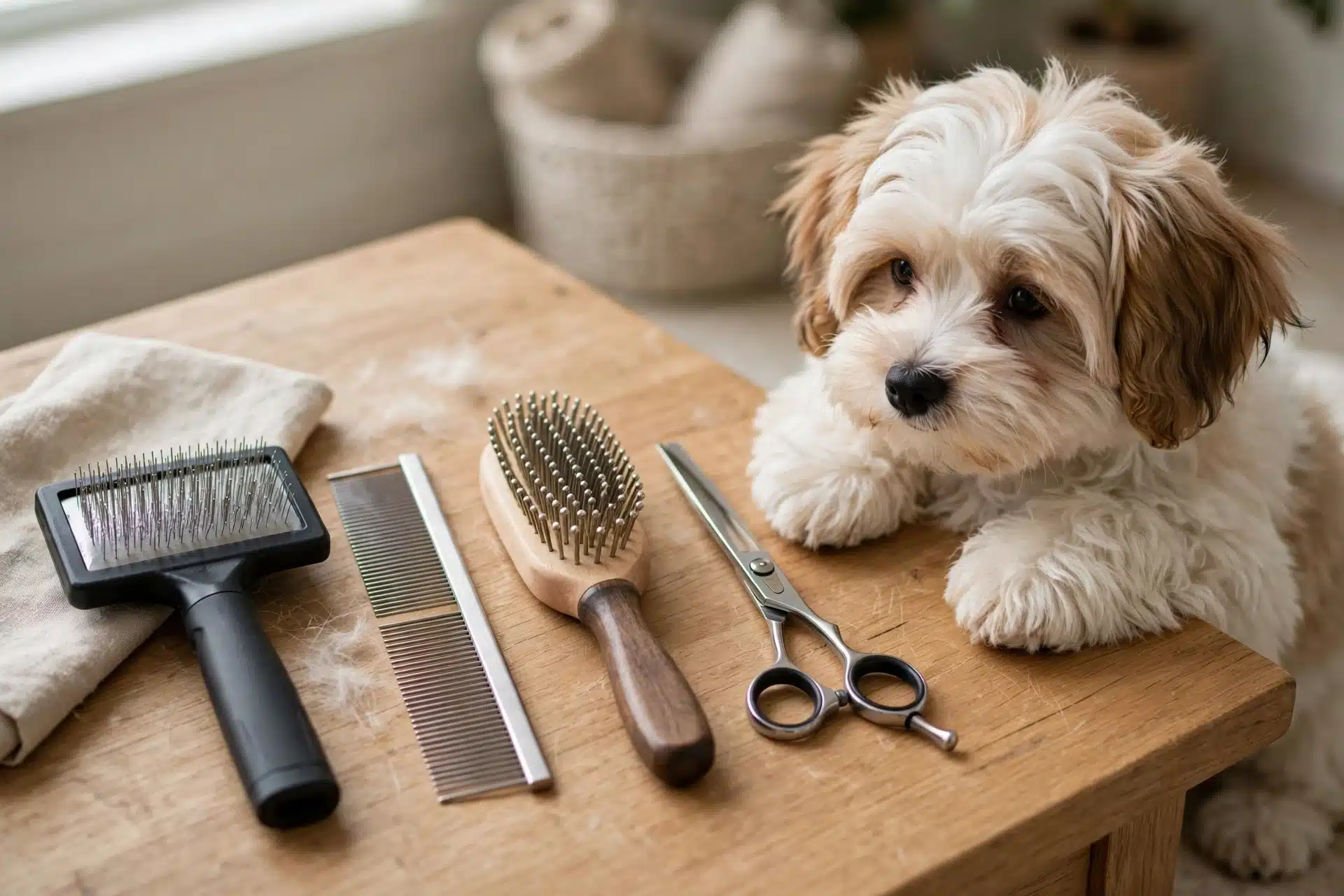
For brushing a Havanese puppy, you need four tools: a slicker brush for the body, a metal comb for mat checks, a soft pin brush for the face, and blunt-tipped scissors for tidying. That short list covers everything a fine, silky puppy coat requires.
What each tool is for
- Slicker brush (fine, bent wire pins): the workhorse. It lifts loose hair and works through tangles before they tighten.
- Metal comb (medium and wide teeth): your proof. After brushing, run it through to the skin. If it glides, you’re done; if it catches, there’s a mat.
- Pin brush (smooth, rounded pins): gentle enough for the face, legs, and anywhere the puppy is wiggly.
- Blunt-tipped scissors: trim stray fuzz around the paws and eyes, never mats.
Optional helpers and what to skip
A detangling spray helps the brush glide through longer coat, so you pull less hair. A grooming mat or non-slip towel keeps a wiggly puppy in place. Skip undercoat rakes and furminators: Havanese hair is a single-layer coat, not a double coat, and those tools just tear at it. Skip mat-splitter blades too. Skip toothbrush-style gloves; they miss tangles.
Handling sharp tools safely around a puppy
Keep scissors for short trims only, and never point them toward the skin. Comb first so blades never meet a hidden knot. Work in short sessions, and if your puppy thrashes, stop and hold still with the tool until they settle.
Coat care from the first week home makes everything easier, which is why our Havanese puppy care guide starts with brushing.
Step 3: Master the Line Brushing Technique
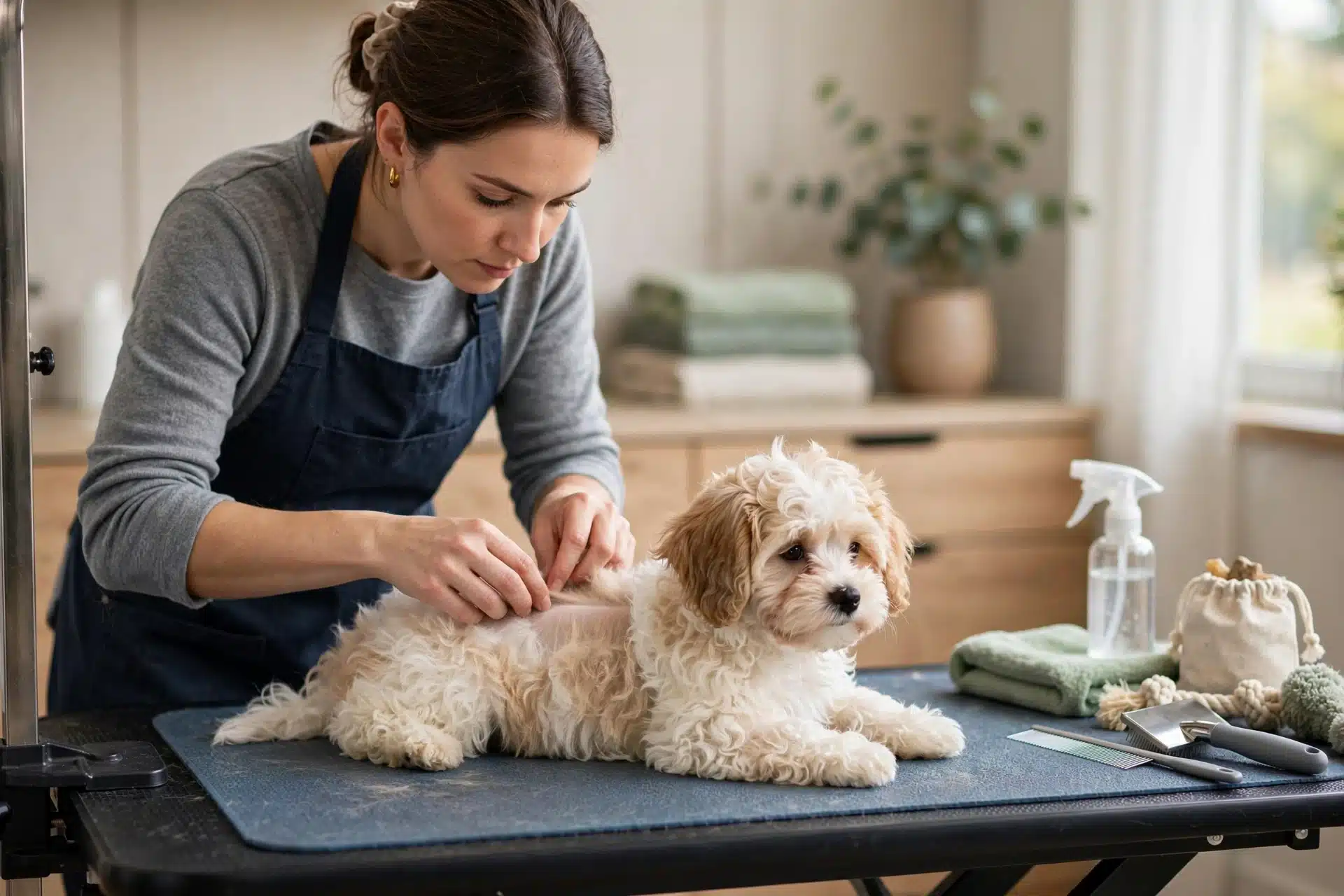
Line brushing means parting the coat into thin horizontal rows and brushing each row from the skin out. For brushing a Havanese puppy, it is the one method that reliably reaches the undercoat where mats start. You lift a row of hair, brush the hair beneath it against the skin, then drop that row and move down.
Set up the session
Pick a quiet spot with good light and a non-slip surface, like a bath mat on a table. Have your slicker brush and metal comb within reach, plus a few small treats. Keep the first sessions short, five to ten minutes, so your puppy learns that brushing ends with something good. A calm puppy before you start makes everything easier, so a short play session first helps burn off the wiggles. If your puppy was bred by a program that starts handling early, like the Havanese puppies raised in Utah at Sage Puppies, the coat work often feels familiar to them sooner.
Work section by section from the skin outward
Start at a hind leg and part the hair with your free hand to expose a thin line of skin. Point the slicker bristles at the skin and use short, light strokes from the skin outward, never dragging across the top. Brush that line until the comb glides through, then part the next line an inch above. Go slow behind the ears, the neck ruff, and the armpits. These friction zones mat first, so give each one an extra pass every session.
Finish with a comb check and a reward
Run the metal comb through each area you brushed, all the way to the skin. The comb finds tangles a slicker glides over, especially fine puppy fuzz near the tail base. If it snags, go back to that line before you finish. Then end with praise and a treat. These simple Havanese brushing tips build a puppy that stands still for life.
Step 4: Protect the Friction Zones Behind the Ears and at the Neck
Why these spots mat first
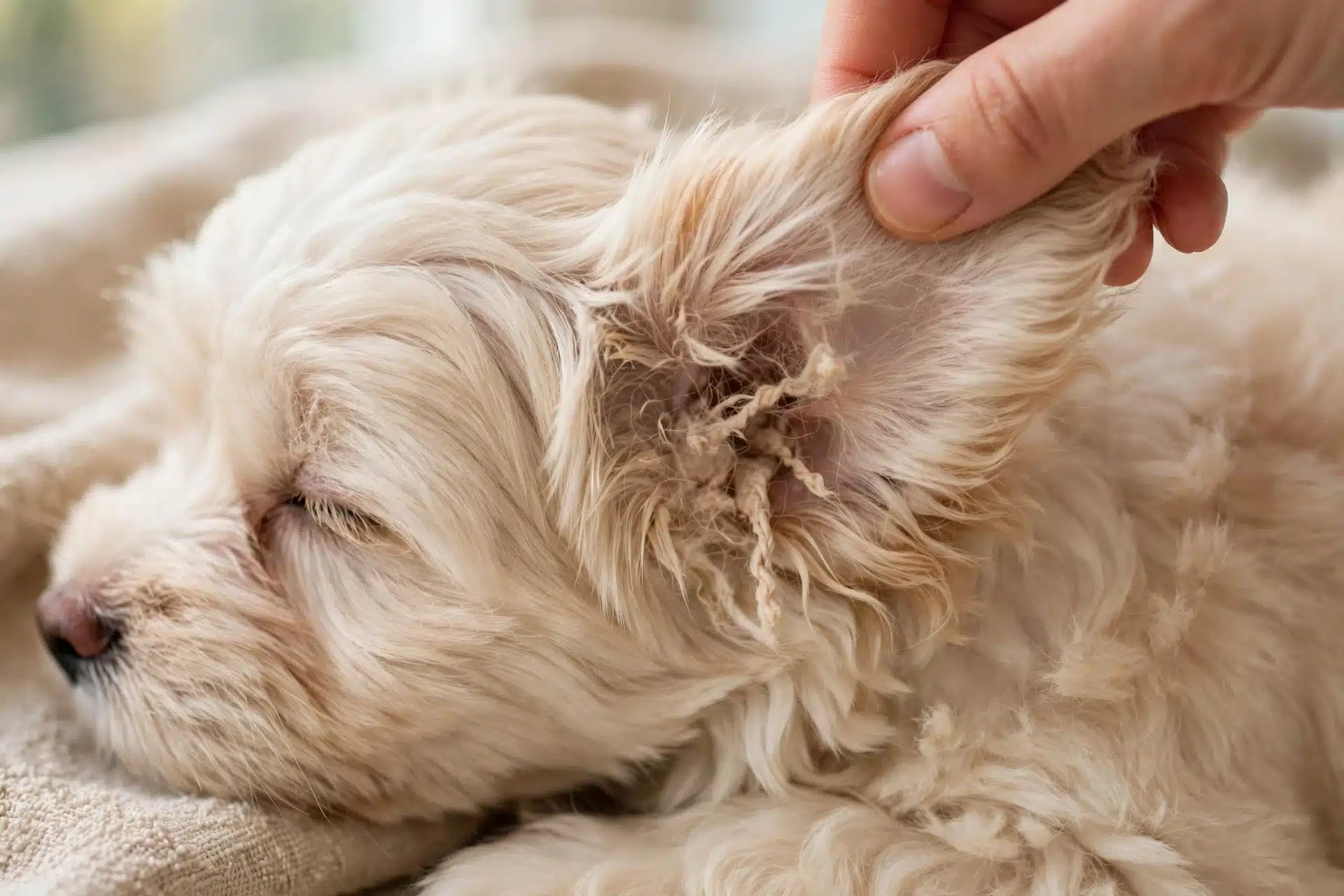
Behind the ears and at the neck, hair rubs against hair all day. Movement, scratching, and a resting head press loose strands together until they weave into tiny knots. Add moisture from a water bowl or a drooly chew toy and the tangle tightens. This is why brushing Havanese puppy coats only on the back and sides leaves these zones full of hidden mats.
The ten-second daily friction-zone check
To prevent Havanese fur matting behind the ears, run your fingers through four spots every day:
- Behind each ear, down to the skin.
- Along the neck ruff where the collar sits.
- Under each armpit.
- At the tail base.
Fingers find what eyes miss. If your fingers glide through, you are done. If they snag, separate that spot right away. This check pairs with the two or three full brush-outs each week already covered in Step 1.
Separating a small tangle before it becomes a mat
Hold the tangle at its base so you never pull the skin. Then work the loose strands free with your fingers, starting at the tips. Follow with a metal comb, picking apart small sections instead of dragging through the whole knot. A light spritz of detangler helps dry hair slide apart. If the tangle sits tight against the skin and will not open, stop and see a groomer rather than cutting blind.
Step 5: Deal with Mats Without Causing Pain
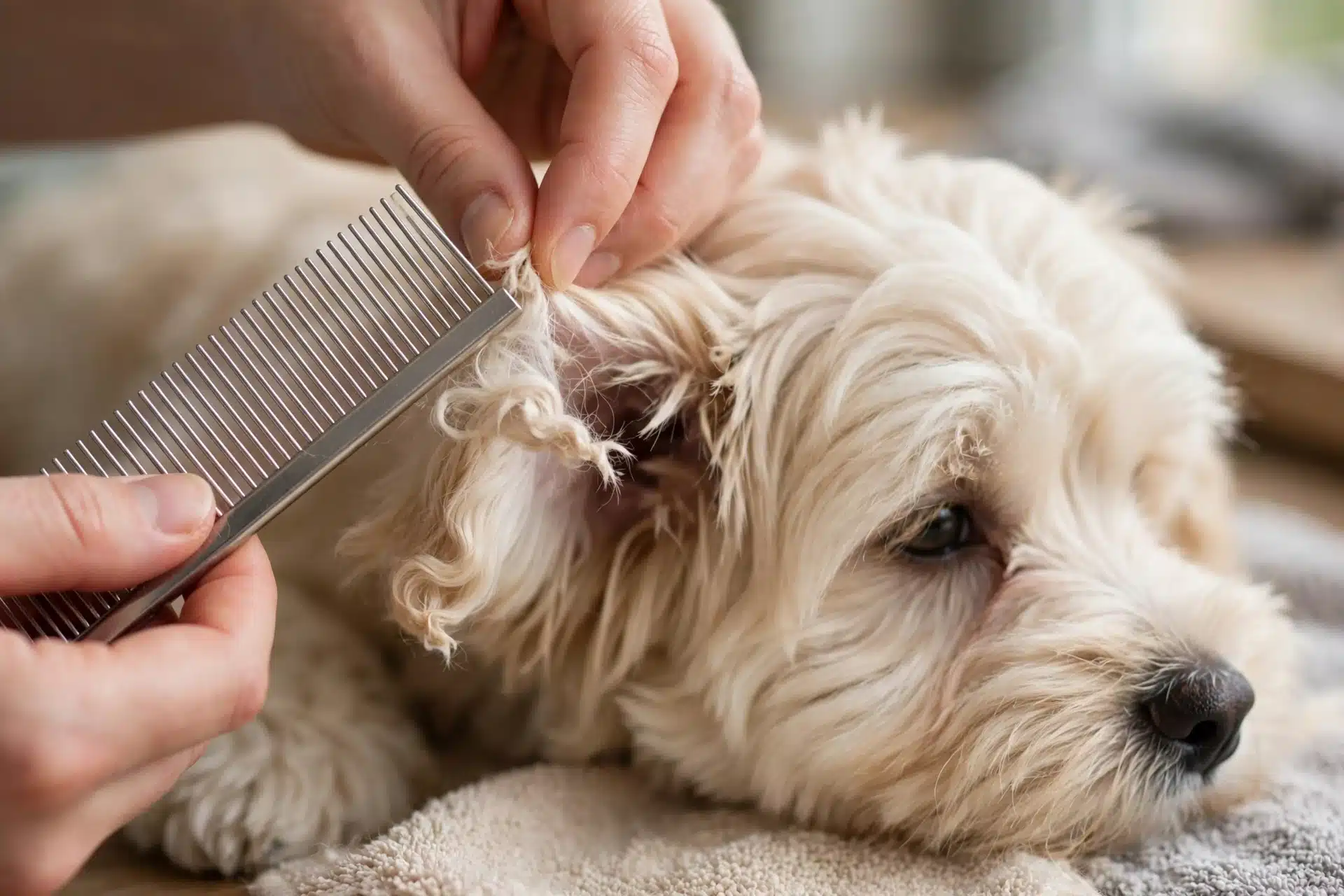
Brushing a Havanese puppy through a mat by force hurts and teaches her to fear the brush. Hold the mat’s base between your fingers so nothing tugs the skin, then work it apart from the tip down. Use your fingers first, then the wide end of a steel comb, then the pointed end of a slicker brush in short strokes. Loose mats release in a minute or two with this method.
Work small, loose mats by hand
Keep a comb in your pocket during play and couch time, and check the trouble spots. Behind the ears and along the neck ruff, mats form fastest because friction packs the hair down. Pinch the mat at the skin, split it into two or three smaller pieces, and comb each piece from the tip inward. Short sessions beat one long struggle, and a lick of praise after each win keeps your puppy willing.
Know when to stop and call a groomer
If a mat sits tight against the skin and the comb will not enter it, stop. Forcing it tears thin puppy skin, which bruises easily and heals slowly. A dense, felted patch needs clippers, and a groomer can remove it safely in minutes. A matted coat also costs more at the salon, so earlier professional help is usually the cheaper option. Several tight mats at once mean a shave-down is kinder than repeated brushing.
Signs that need a veterinarian, not a groomer
Call your vet instead if you find red or broken skin under a mat, a foul smell, sticky discharge, or your puppy flinches or cries when the area is touched. These point to infection or pain that clipping alone will not fix. Treat the skin first, then rebuild the coat.
Check our Havanese care guide for the full routine that keeps mats from forming in the first place.
Step 6: Keep the Coat Clean Between Brushing Sessions
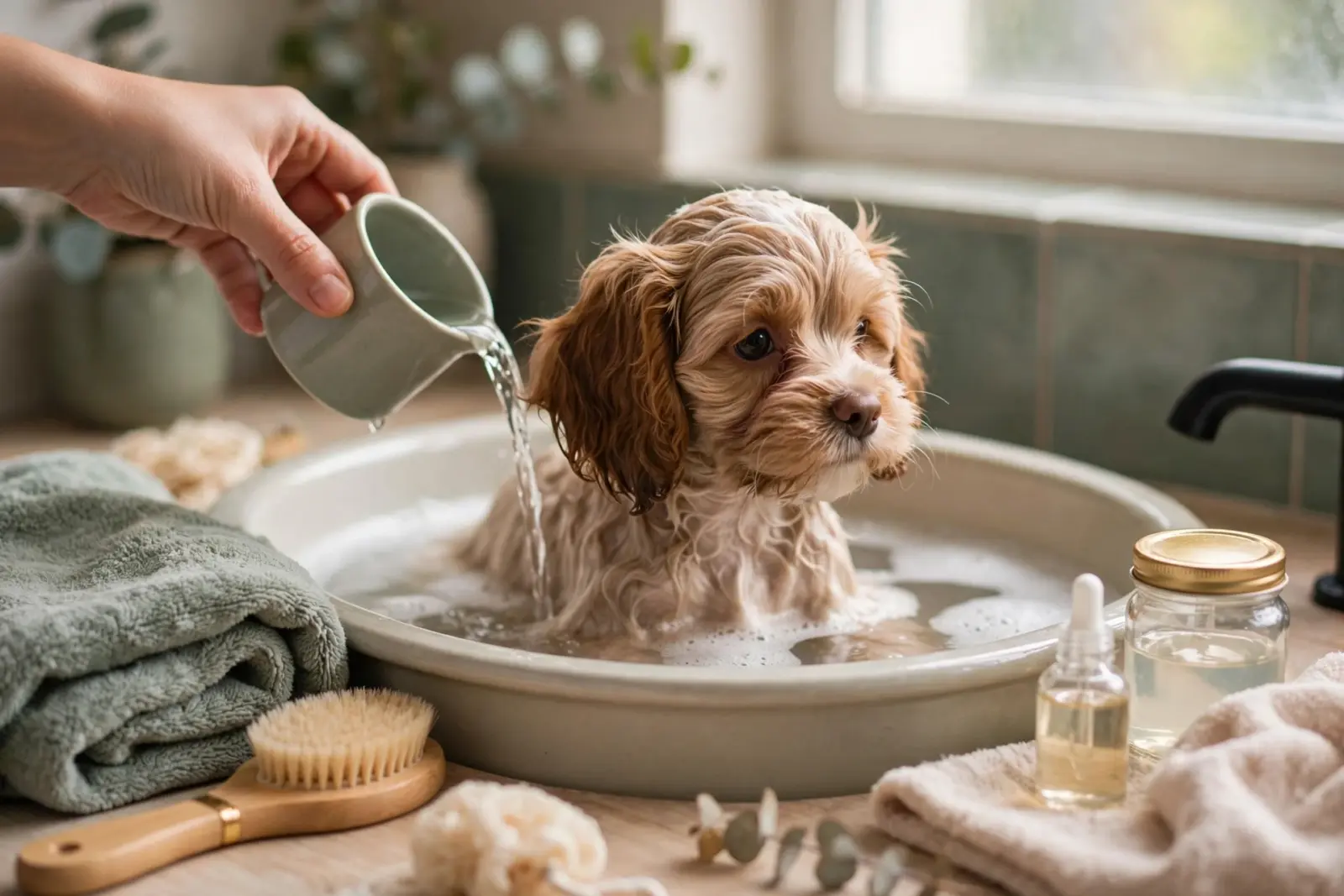
Always comb out before a bath
Water tightens any tangle your brush missed. Run a slicker brush over the coat first, then follow with a metal comb and a comb check to the skin. If the comb snags, stop and work the tangle out by hand before the bath. This is the one part of brushing Havanese puppy coats you cannot skip: a wet mat becomes a felted mat.
Dry without creating knots
Never let a Havanese air dry in a fuzzy towel ball. Squeeze the coat with an absorbent towel instead of rubbing, because rubbing rolls loose hair into tangles. Then blow dry on low heat while brushing the section you are drying, in the direction the hair grows. Brushing and drying together keeps the hair straight and flat.
Dry fully, especially behind the ears and at the tail base. Damp spots mat overnight.
Everyday habits that reduce matting
Small habits do most of the prevention work:
- Use a snood or a rolled collar instead of a flat collar that rubs the neck ruff.
- Wipe paws and belly after wet grass or snow.
- Keep food trimmed around the mouth so mush does not crust into knots.
- Slick coat with a damp hand after play, then quick-brush the friction zones.
Common Mistakes to Avoid
Brushing errors that cause mats
Most mats start with a brush that never reaches the skin. A slicker gliding over the topcoat leaves tangles forming underneath, especially behind the ears and in the armpits. Other common slips: brushing a dry, dirty coat, skipping the comb check, and rushing the daily 60-second friction-zone pass until it disappears from the routine.
Tip: Always follow the brush with a metal comb. If the comb pulls, the brush missed a tangle.
Handling errors that hurt the puppy
Hold the coat at the base before working through a tangle. Pulling free hair tightens the knot against the skin and turns a small mat into a painful one. Never shear against skin with scissors, flip a wiggly puppy onto its back mid-session, or push through a sore spot. Keep sessions short and end on a treat.
Expectation errors that cost time and money
Havanese hair does not self-clean like an adult terrier coat, so “wait until the next groom” rarely works. Letting mats stack for weeks often means a very short clip at the salon, and dense mats close to the skin belong with a professional groomer or your vet, not your scissors. Plan on two or three full brush-outs weekly instead.

Your Havanese puppy’s coat will stay mat-free with just a few short sessions a week, and the habit you build now lasts a lifetime. Want a puppy raised with this care from day one? Sage Puppies breeds Havanese and Havapoo puppies and walks every family through coat care before pickup or transport.
Frequently Asked Questions
Q1: How often should I brush a Havanese puppy?
Daily if you keep the coat full length, two to three times a week for a short puppy cut, plus a 60-second friction-zone check every day. The longer the hair, the more often the brush comes out.
Q2: How do I prevent Havanese puppy fur from matting behind the ears?
Run your fingers behind each ear down to the skin every day. If they snag, hold the tangle at its base and work it apart from the tips with your fingers, then a metal comb. A snood also reduces rubbing.
Q3: What brushes and combs do I need for a Havanese puppy?
Four tools: a slicker brush for the body, a metal comb for mat checks, a soft pin brush for the face and legs, and blunt-tipped scissors for small trims. Skip rakes, furminators, and mat-splitter blades.
Q4: Should I brush my Havanese puppy before or after a bath?
Always before. Water tightens any tangle the brush missed, and a wet mat becomes a felted mat. Comb through to the skin, bathe, then blow dry on low heat while brushing each section flat.
Q5: When should I stop brushing a mat and call a groomer?
When the mat sits tight against the skin and the comb will not enter it. Forcing it tears thin puppy skin. Dense, felted patches need clippers, and a groomer can remove them safely in minutes.
Q6: Do Havanese puppies have a double coat?
No. Havanese hair is a single-layer coat of fine, silky hair that tangles easily. That’s why undercoat rakes and furminators tear rather than help, and why line brushing to the skin matters.
Conclusion
Keeping a Havanese puppy mat-free comes down to a few habits. Match brushing frequency to coat length: daily for a full coat, two to three sessions a week for a puppy cut. Use line brushing with a slicker, then a metal comb check to the skin. Give the friction zones behind the ears, neck ruff, armpits, and tail base a ten-second finger check every day. Comb before every bath, dry while brushing, and stop at any dense mat that sits tight against the skin and call a groomer. Short, calm sessions with treats build a puppy that tolerates the brush for life, and a coat that stays soft, tangle-free, and comfortable through the tricky coat change at five to twelve months.