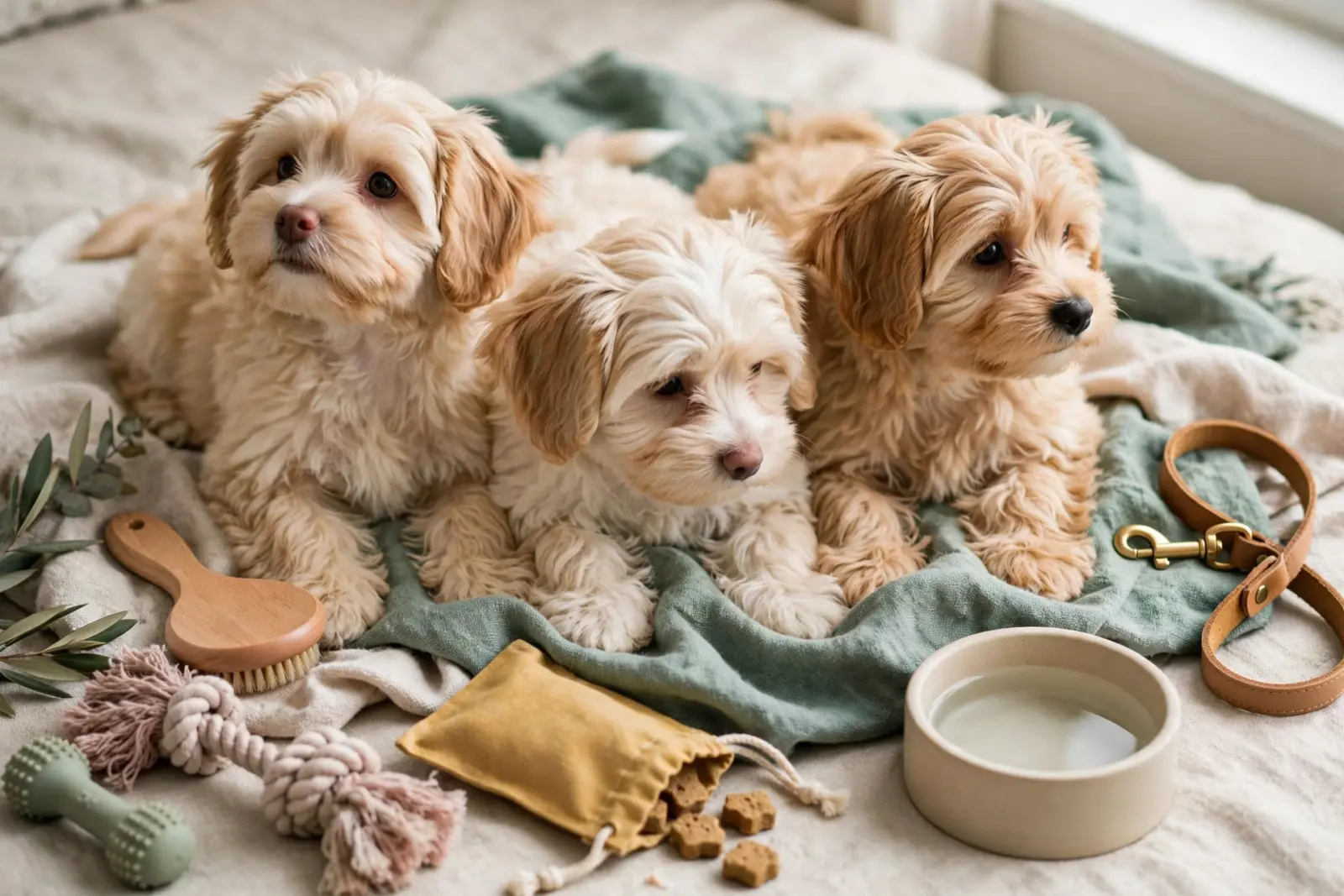
Quick Summary: Give a Cavapoo puppy its first bath after eight weeks, ideally closer to twelve and with your vet’s approval, using lukewarm water around 98 to 102°F. Brush before washing, use mild puppy-safe shampoo, rinse until the water runs clear, then towel blot and dry the curls with low heat while brushing them flat. Keep the room warm, provide a non-slip mat, and spot clean with a damp cloth until the puppy is old enough for a full bath.
Your Cavapoo’s first bath is the moment most new owners picture, and the one most likely to end with a shivering puppy, a soaked bathroom floor, and a curly coat that stays damp for days. It does not have to go that way. A calm Cavapoo first bath comes down to three things: the right water warmth, a gentle puppy shampoo made for that soft coat, and a drying routine that keeps the fluff instead of the mats. This guide walks you through how to bathe a Cavapoo puppy step by step, from checking the Cavapoo bath temperature with your wrist to towel-drying before any blow dryer comes near those curls. The age-and-temperature basics here follow widely accepted veterinary guidance, and the coat and calming details come from years of raising wavy-coated puppies in our South Jordan, Utah program at Sage Puppies. Your puppy’s first splash can be a good one.
Step 1: Confirm Your Cavapoo Is Ready for a Bath
Most vets agree on the timing for a Cavapoo first bath: wait until your puppy is at least eight weeks old, and many breeders and vets suggest waiting closer to twelve weeks when you can. Young puppies struggle to regulate their body temperature, so a full bath too early can chill them. Once your puppy passes the eight-week mark, a proper bath is safe when the water and room are warm.
Before you run the water, run through this readiness checklist:
- Age: At least eight weeks old.
- Vaccines: Ask your vet whether the first round is done, especially if you plan to use a professional groomer later.
- Health: No coughing, runny nose, or low energy that day.
- Coat: Actually dirty or smelly, not just a little dusty.
- Temperament: Curious and settled, not stressed or freshly weaned.
Puppies rarely need full baths this early. If one paw is muddy or the bottom is messy after a potty trip, spot cleaning works better than a tub session. Dampen a soft washcloth with warm water, wipe the soiled area, then towel dry completely so your puppy never sits damp. This keeps the coat clean between real baths and builds a Calm association with being handled. For more routine care like this, the advice in this Cavapoo puppy care guide on feeding, training, and health applies year-round.
Reserve the full bath for when the whole coat needs it. A warm washcloth handles the rest, and your puppy stays comfortable and warm throughout.
Step 2: Set Up the Bath Area and Check the Water Temperature
The right Cavapoo bath temperature is lukewarm, around 98 to 102 degrees Fahrenheit, which feels comfortably warm on your inner wrist. Because puppies chill faster than adult dogs, water on the cool side of that range is safer than pushing warm. Test it twice: first on your wrist, then against your puppy’s belly area, where the skin is thin and sensitive. If you can’t hold your hand under the stream for a few seconds without flinching, it’s too hot.
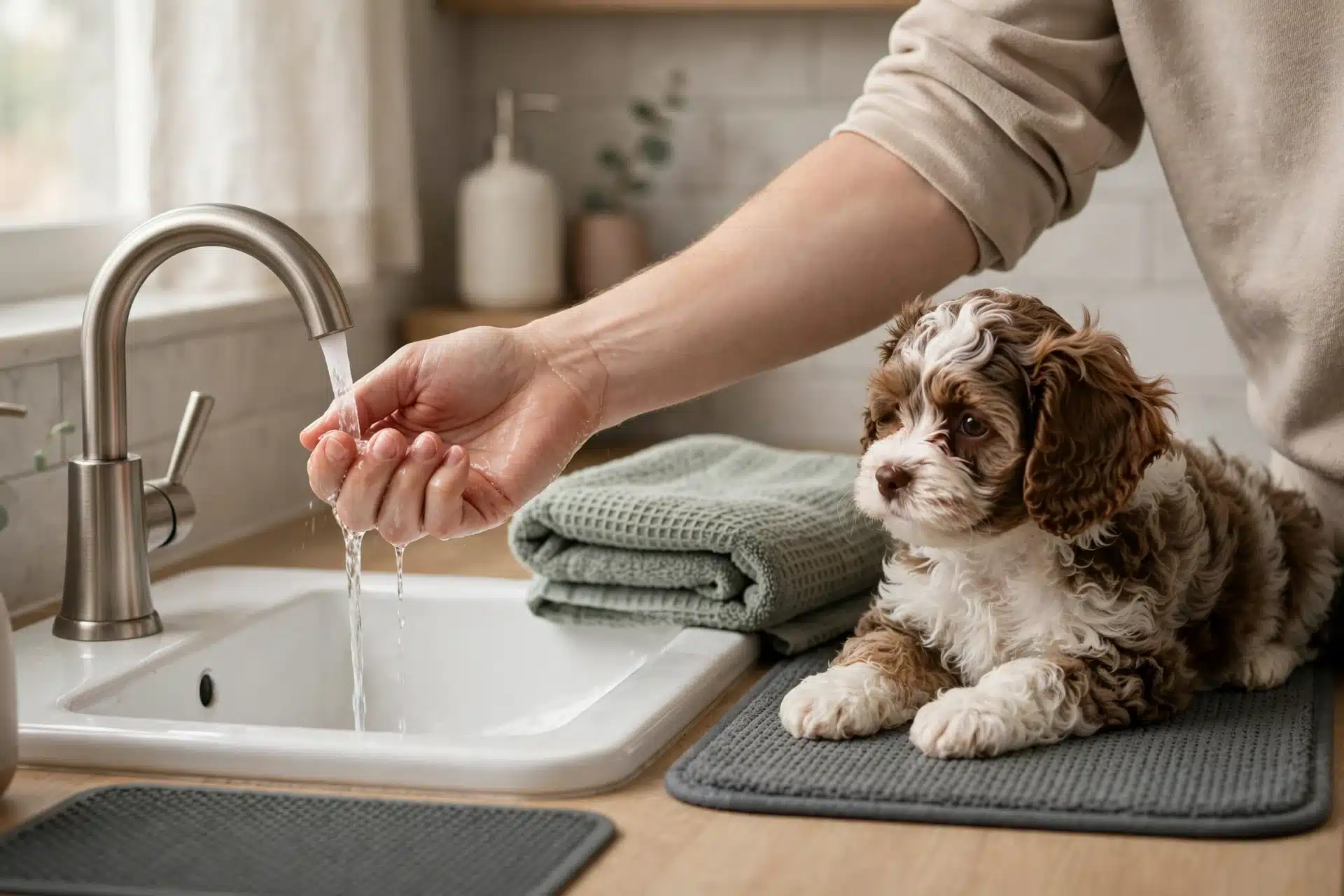
Choosing the right temperature, tested twice
Fill the tub or sink before your puppy walks in, so it isn’t startled by running water. Aim for water that feels neutral, not warm, on bare skin. Run the wrist test again right before you start, since standing water cools quickly. Keep a second bucket of pre-warmed rinse water nearby so you never turn the tap on with your puppy already wet.
The setup checklist, done before your puppy walks in
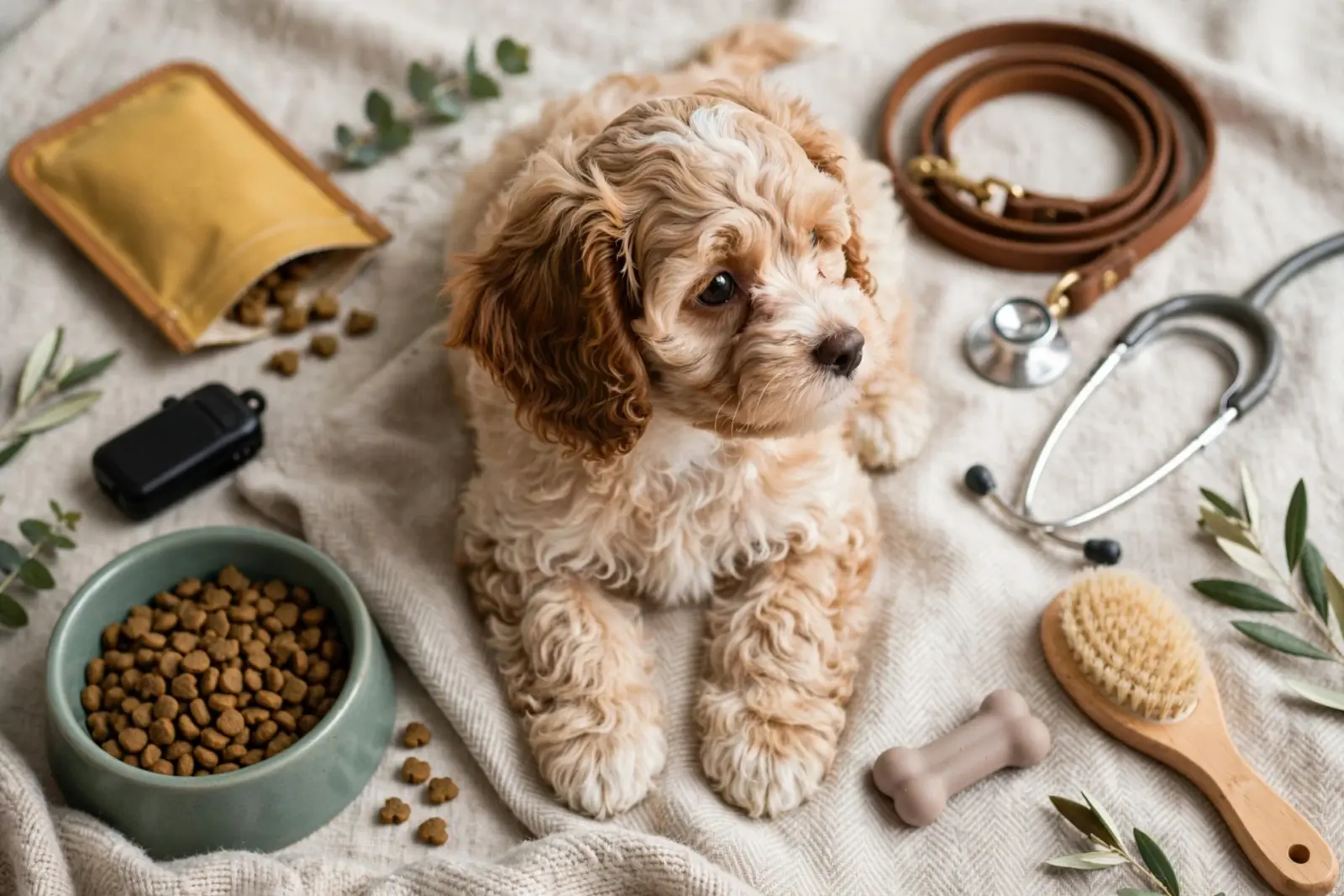
Gather everything first, because a wet puppy cannot wait while you hunt for a towel.
- Non-slip mat in the sink or tub so paws don’t slide
- Two absorbent towels, one for washing drips and one for drying
- A cup or handheld sprayer with gentle flow for rinsing
- Puppy-safe dog shampoo within arm’s reach, never human shampoo
- Treats on the counter for calm moments
Many Cavapoo first bath mishaps trace back to cold floors and slippery tubs, not the washing itself. For more setup and handling basics, our Cavapoo puppy care guide covers the routine side of puppy grooming.
Why a double coat changes the rules
Cavapoos often carry a dense, curly undercoat that holds water deep against the skin. That means lukewarm water matters more for them than for smooth-coated breeds, because trapped water pulls body heat out fast. Wet the coat down to the skin slowly, and plan your room to be warm and draft-free. A chilled puppy shivers, panics, and remembers the fear, which makes the next bath harder for both of you.
Step 3: Pick a Shampoo That Is Safe for a Young Cavapoo
A safe first-bath shampoo is a mild, unscented puppy shampoo made for dogs, ideally one labeled gentle or oatmeal-based and free of harsh detergents. Your puppy’s skin is thinner than an adult dog’s, and human products strip the natural oils a curly coat depends on. Check the label against this short list before anything touches your Cavapoo puppy:
- Made for puppies or all life stages, not adult dogs
- pH balanced for dogs, since dog skin sits at a different pH than yours
- Fragrance-free or lightly scented, because strong perfume irritates young skin
- No sulfates, alcohol, or tea tree oil, which can dry or harm a small puppy
- Tearless formula, for the near-certain splash to the face
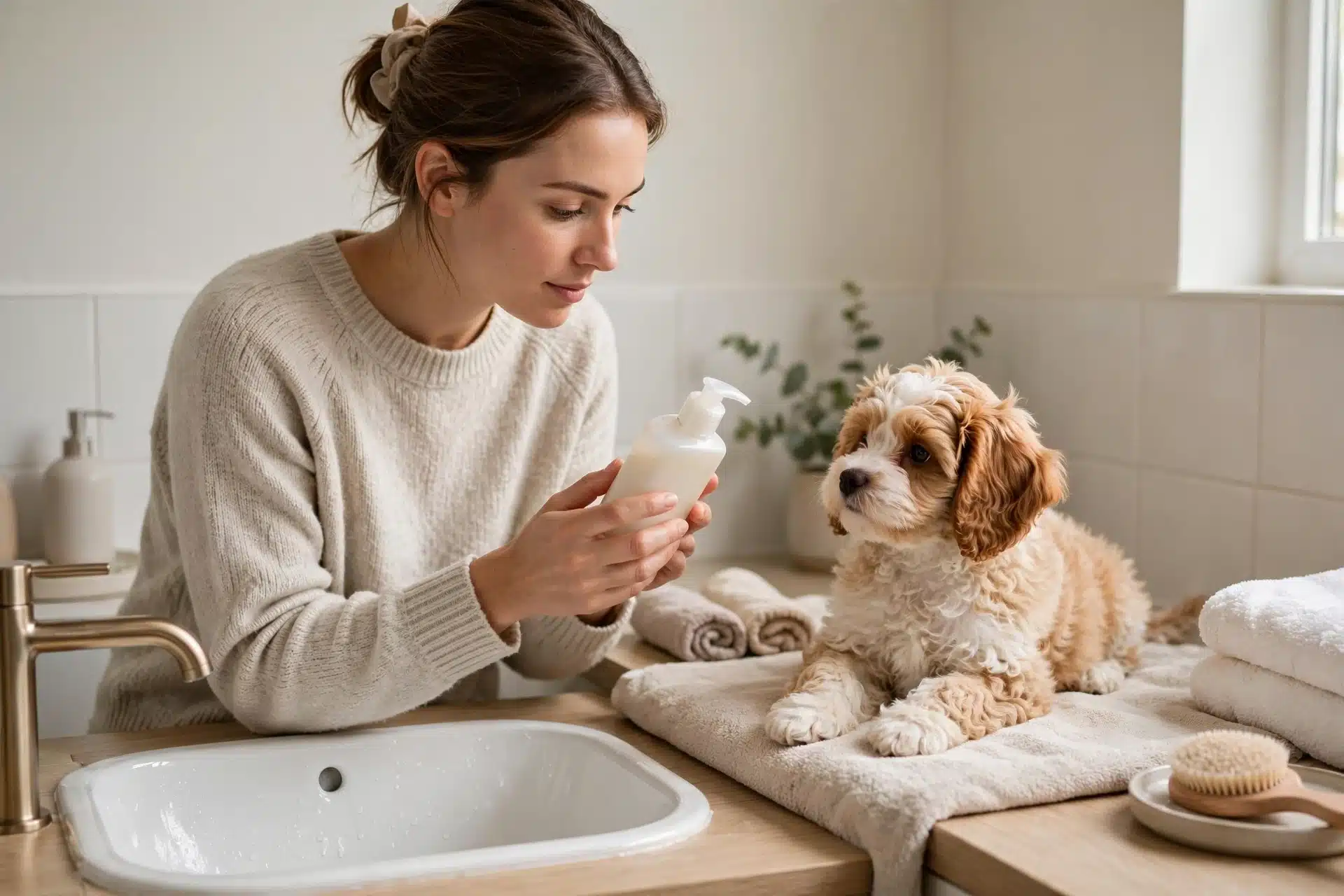
What to look for on the label
A good Cavapoo puppy shampoo will say “puppy” or “gentle” on the front, list simple ingredients, and carry a statement that it is pH balanced for dogs. Many groomers recommend oatmeal or aloe formulas for sensitive skin. If you are unsure, ask your veterinarian before the bath, especially if your puppy has any redness or flaking. It is better to wait a day than to guess with a young puppy’s skin.
Water only as a valid first option
For an eight-week-old puppy who is only slightly dusty, plain warm water is enough. Run it through the coat with your hands, rinse well, and skip shampoo entirely. This keeps the skin’s natural oils intact while your puppy learns that baths are calm and short. You can introduce a gentle cleanser at the next bath once the coat genuinely needs one.
Products to skip on the first bath
Some bottles belong back on the shelf. Skip human shampoo, including baby shampoo, because it is made for adult human skin and will dry your puppy out. Skip dish soap, flea shampoos made for adult dogs, and anything with essential oils, since small breeds absorb and react to these far more than large dogs do. Two-in-one shampoo and conditioner products are also worth avoiding for now; a simple, single-purpose puppy shampoo is easier to rinse fully, and leftover residue is one of the most common causes of post-bath itching in young puppies.
Step 4: Work Through the Bath, Step by Step
With warm water, puppy shampoo, and towels ready, you can bathe a Cavapoo puppy step by step in about ten minutes: brush first, wet from the neck down, lather with puppy shampoo, rinse well, and keep your voice calm the whole time. Here is how each part works.
Brushing before wetting
Brush your puppy slowly before any water touches its coat. Mats and tangles tighten when they get wet, and a matted Cavapoo coat holds shampoo that is hard to rinse out. Brushing also loosens dead hair and debris so the shampoo can reach the skin. Work gently, because rough strokes leave tiny scrapes that sting once shampoo goes on, a detail veterinary dermatology guidance at Virginia Tech’s veterinary teaching hospital emphasizes. Two minutes with a slicker brush saves you twenty minutes of pulling at knots later.
Wetting the body without overwhelming your puppy
Wet your puppy from the neck down first. Running water aimed at the head or face is the fastest way to scare a young dog, so save that area for a damp washcloth later. If you use a handheld sprayer, keep the flow low and close to the coat so it does not hiss or splash. A cup poured slowly over the back works just as well. Let your puppy feel the warm water on its chest and shoulders before you move toward the belly and legs.
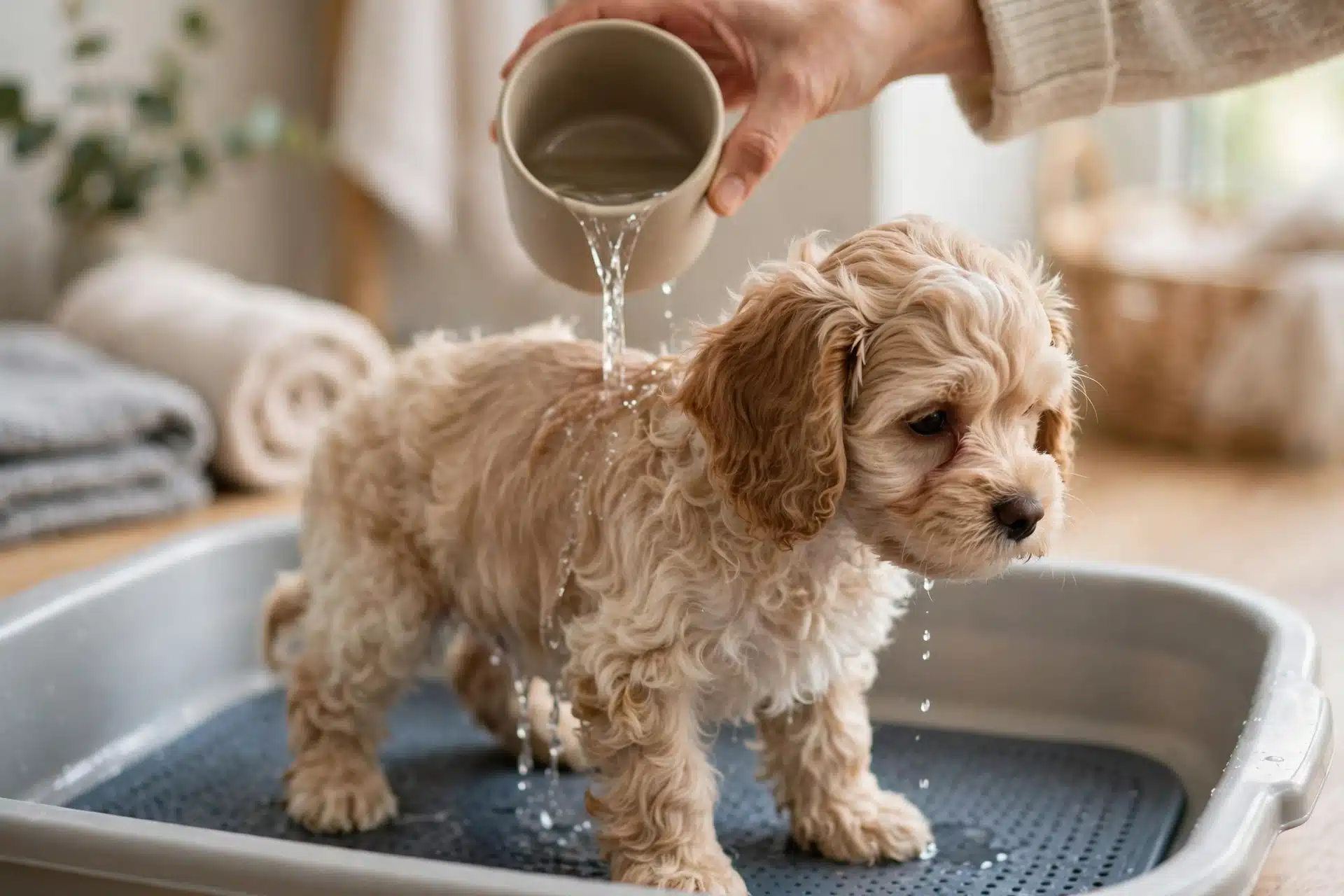
Lathering, face, paws, and ears
Dilute a small amount of puppy shampoo in a cup of warm water, then work it through the coat with your fingers. Diluting helps it spread and rinse out of a curly coat more easily. Start at the neck and work back toward the tail, then lather the legs and paws, where dirt collects. For the face, skip shampoo entirely and wipe with a damp washcloth, since even gentle formulas can irritate a puppy’s eyes, as Purina’s puppy bath guide notes. Keep water and suds out of the ears, which trap moisture and can lead to irritation. Rinse until the water runs completely clear, because leftover shampoo itches and dulls the coat.
Keeping the session calm
Your puppy reads your energy, so talk in a steady, cheerful voice from start to finish. Handle the paws and belly with slow, firm touches instead of quick grabs. If your puppy squirms, pause and let it settle rather than tightening your hold. Short praise between steps works better than constant chatter, and ending with a treat turns the whole thing into something worth remembering.
Regular brushing between baths matters just as much as the bath itself, and a simple Cavapoo grooming schedule keeps the coat tangle-free so bath day stays easy.
Step 5: Rinse, Dry, and Check the Skin
The bath is not over when the shampoo is on. A careful rinse and a calm dry-down keep your Cavapoo’s curly coat mat-free and its skin healthy, so give this stage as much attention as the wash itself.
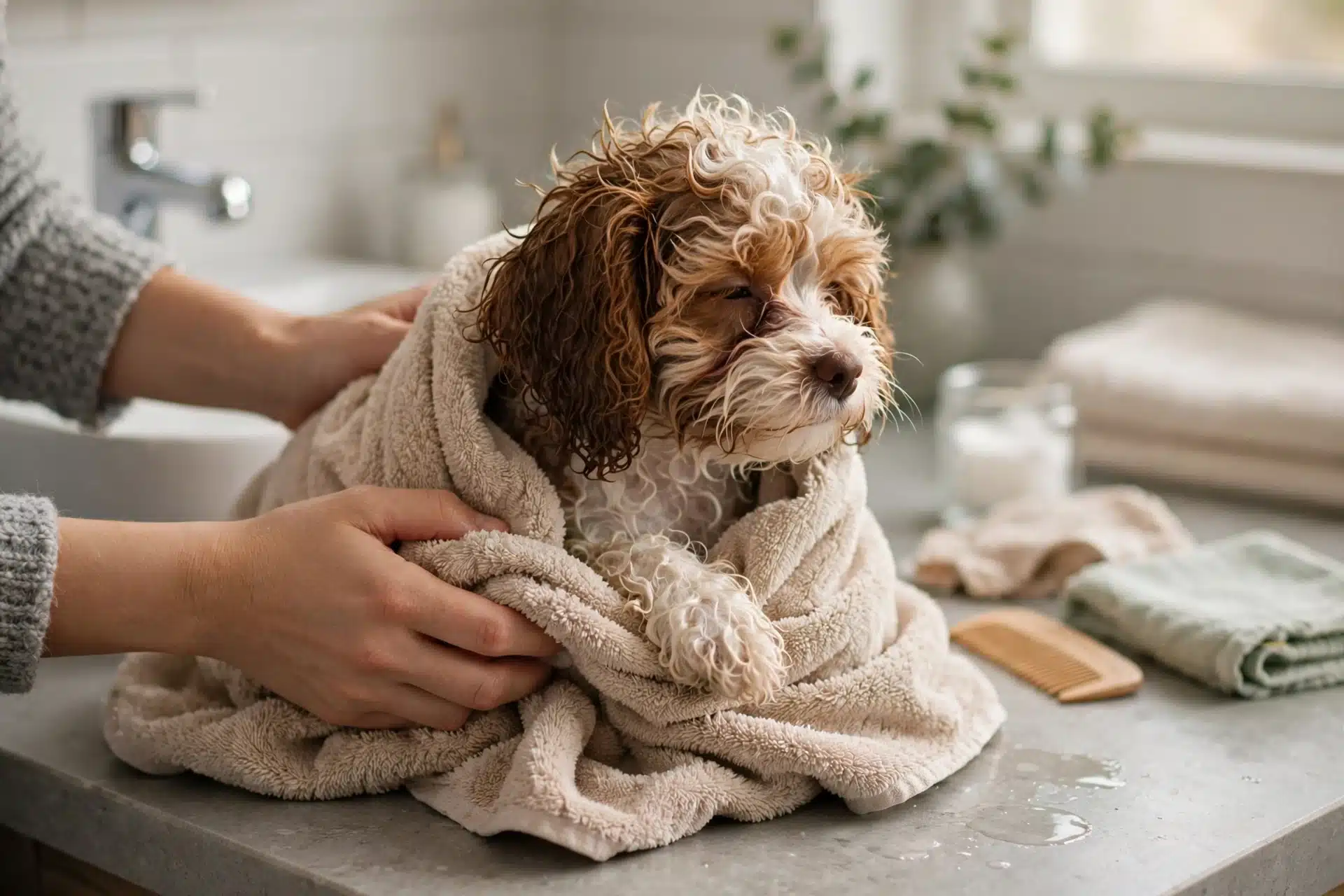
Rinsing until the water runs clear
Leftover shampoo itches and can cause flaky skin, so rinse longer than feels necessary. Scoop warm water over the coat, squeeze the fur gently, and keep going until the water runs completely clear. Part the curls in a few spots to confirm no suds hide underneath, especially along the belly, armpits, and tail. Any soap left behind is the most common cause of post-bath scratching.
Towel, then low heat, then brush flat
Here is exactly how to dry a Cavapoo puppy after its first bath:
- Towel first. Blot and squeeze with an absorbent towel to remove as much water as possible. Rubbing roughs up the curls and invites tangles, so press rather than scrub.
- Low heat next. Skip air drying, which can leave dampness close to the skin. Use a hair dryer on its lowest heat and speed setting, keep it moving, and hold it well back from the face and ears, since moving air can hurt those delicate spots. The AKC’s drying guidance stresses keeping the dryer away from the face and ears for this reason (AKC).
- Brush flat last. While the coat is barely damp, brush through it and let the curls lie flat. Brushing a curly coat dry leads to frizz and mats, so finish the job before the puppy leaves the towel.
A warm, dry puppy is also a tired, happy one, which helps the bath end on a good note.
Checking skin, ears, and the next-day follow-up
Once your puppy is dry, run your hands over the whole coat. Feel for lumps, scabs, redness, or damp patches, and take a quick look inside the ears for redness or odor. Check again the next day: mild scratching is normal, but repeated scratching, flaking, or a dull coat can point to shampoo residue or sensitive skin, which is worth a call to your vet.
Common Mistakes to Avoid
The errors that cause the most trouble
Most first-bath problems are easy to prevent once you know what they are.
Using human shampoo. Human products, even baby shampoo, have a different pH than dog skin needs. A puppy-safe dog shampoo made for a curly coat keeps the skin from drying out. Read the label and confirm it says puppy-safe.
Water that is too hot or too cold. Test with your wrist first. Lukewarm water feels like nothing on your skin, so a quick check saves your puppy from a shivery or scalding bath.
Bathing too soon or too often. Puppies under about eight weeks struggle to hold their body heat. If your pup is very young and just dirty, spot cleaning with a damp cloth works until a full bath is safe.
Skipping the rinse. Leftover shampoo itches and irritates skin. Rinse until the water runs clear, then rinse a little more.
Letting the coat air dry. A damp Cavapoo coat stays wet against the skin, which can lead to chills or hot spots. Towel dry first, then finish with a low, warm blow dryer while brushing.
No traction in the tub. A non-slip mat keeps your puppy from scrambling and turning bath time into a fear memory.
For a fuller grooming routine beyond the first bath, our small breed puppy grooming guide covers brushing and upkeep.

Your Cavapoo’s first bath can be calm, warm, and even a little fun, and it starts with the steps above. Want a puppy raised with this kind of gentle care from day one? Meet our available Cavapoos at Sage Puppies and start your application today.
Frequently Asked Questions
Q1: When can I give my Cavapoo puppy its first bath?
Wait until at least eight weeks old, and twelve weeks when possible. Young puppies struggle to regulate body temperature, so wait until your vet clears the first vaccine round and your puppy seems healthy that day.
Q2: How do I bathe a Cavapoo puppy step by step?
Brush first, fill the tub before your puppy enters, wet from the neck down, lather diluted puppy shampoo, rinse until the water runs clear, towel blot, then dry on low heat while brushing the curls flat.
Q3: What shampoo is safe for a Cavapoo puppy’s first bath?
Use a mild, unscented puppy shampoo labeled gentle or oatmeal-based, pH balanced for dogs, and free of sulfates, alcohol, and tea tree oil. Never use human or baby shampoo. Plain warm water also works for a lightly dusty coat.
Q4: How warm should the bath water be?
Aim for lukewarm, around 98 to 102 degrees Fahrenheit, and test on your inner wrist first, then against your puppy’s belly. When unsure, choose the cooler side, since puppies chill faster than adult dogs.
Q5: How often should I bathe my Cavapoo puppy?
Most young Cavapoos need a bath only every four to six weeks, or when the coat is truly dirty or smelly. Between baths, spot clean muddy paws with a damp washcloth and keep up regular brushing.
Q6: Can I use a blow dryer on my puppy?
Yes, on the lowest heat and speed setting. Keep it moving, hold it well back from the face and ears, and towel dry first so the session stays short and comfortable.
Conclusion
A Cavapoo first bath comes down to a few simple habits: wait until at least eight weeks old, test the water at 98 to 102 degrees on your wrist, choose a puppy-safe dog shampoo for a curly coat, and rinse until the water runs clear. Then towel blot, dry on low heat, and brush the curls flat while the coat is barely damp. Skip human shampoo, keep the room warm, and use a non-slip mat so paws stay steady. Bathing a Cavapoo puppy for the first time should feel calm for both of you, and when you follow these steps, your puppy walks away warm, dry, and ready for the next one.