Quick Summary: Feed Havapoo puppies four meals daily from 8 to 12 weeks, three from 3 to 6 months, and two after six months, using the food label’s calorie and cup guidance to divide portions. Keep the breeder’s food for the first week, transition to a new food over seven days, and limit treats and chews to 10% of daily calories. Weigh the puppy weekly, check body condition, and log meals, appetite, weight, and stool so portions can be adjusted by about 10%. Sage Puppies supports this routine by sending families the puppy’s age, current food, weight, and feeding guidance in its take-home packet.
A Havapoo puppy can look full after four bites and still end up with an upset stomach two hours later. A seven-pound body with a toy-sized stomach simply cannot hold much at once, so havapoo puppy feeding has to match that reality from your puppy’s very first week home.
The challenge for most new owners is knowing when to feed, how much, and how to switch foods without digestive trouble. Guessing leads to skipped meals, loose stools, and growth that falls off track.
This guide gives you a simple schedule built around small breed puppy portion size, calorie-based portions, a gentle food transition plan, and a growth log you can print. It draws on guidance from the AKC, Chewy, Petco, and the Havanese Club of America, plus the daily experience of raising Havapoo litters here in South Jordan, Utah. Your vet and breeder always have the final word on your individual puppy.
Before You Start: Know What You Are Working With
Havapoo puppy feeding works best when you know three facts before you pour the first bowl: your puppy’s exact age, the food it has been eating, and its current weight. Age sets how many meals a day you offer. The current food matters because small stomachs handle sudden switches badly. Weight drives portion math, so a kitchen scale beats a guess. A responsible breeder sends all three home with you, and we include them in every Sage Puppies take-home packet.
Confirm Your Puppy’s Age, Food, and Weight
Ask your breeder two questions before pickup or delivery day: how old is my puppy, and what food is it eating now? Most breeders wean Havapoo puppies onto a small-breed puppy formula. Keep that exact brand for the first week. Also weigh your puppy at home and write the number down, since a toy breed puppy meals schedule depends on pounds gained each month. Note the brand and weight on paper, not memory.
Book the First Vet Visit Before You Change Anything
Make the vet appointment within the first few days, and bring your feeding notes. Your vet will confirm the weight, check growth, and set a portion plan you can trust. Chewy’s feeding guide suggests four small meals a day for toy and small breeds until about six months, then three, so ask your vet how that fits your puppy. Until that visit, change nothing. Learn what else to expect at a Havapoo puppy’s first vet visit before you go.
Step 1: Set the Meal Windows for Your Puppy’s Age
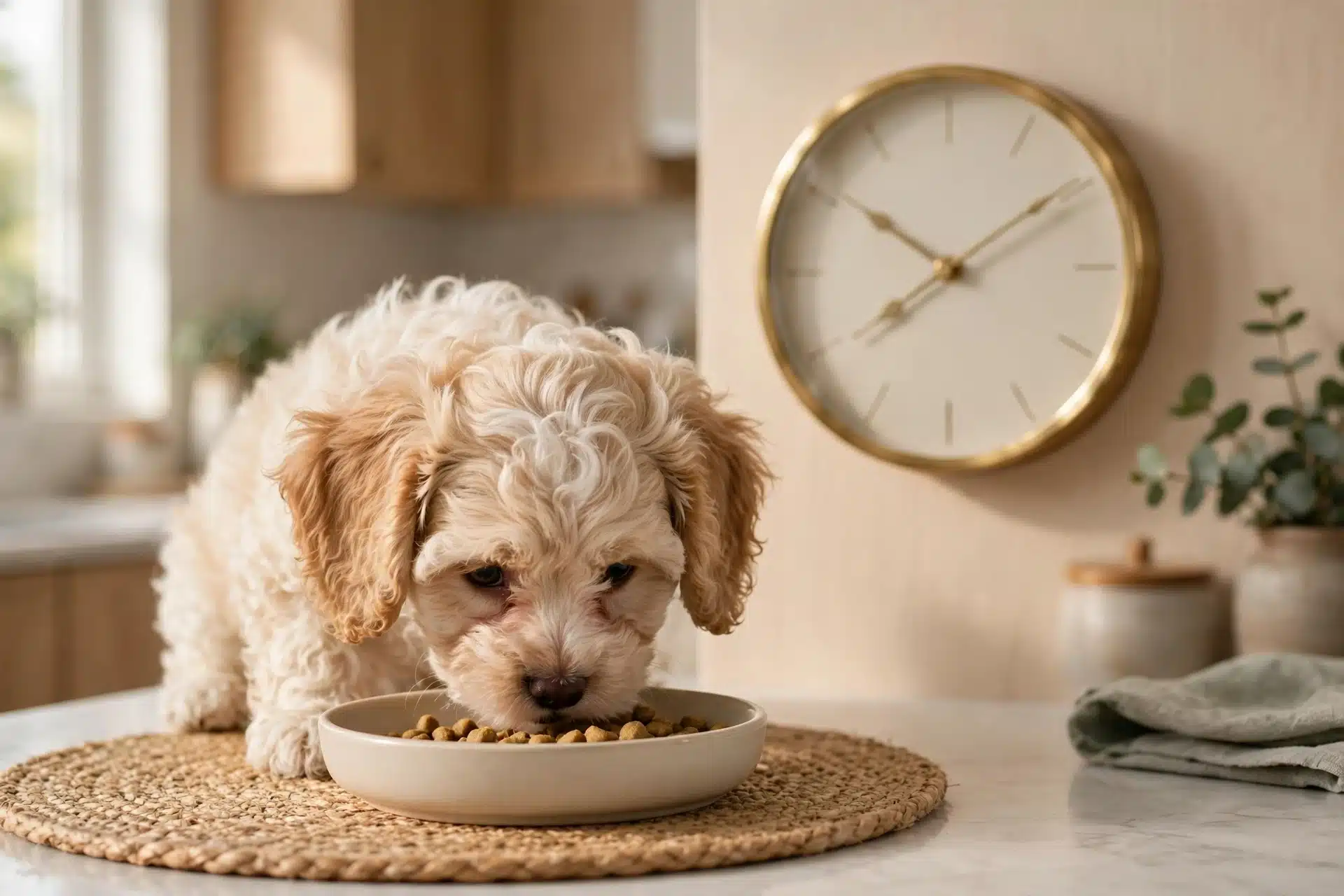
Havapoo puppy feeding starts with one simple rule: the younger the puppy, the more meals it needs each day. Here is the feeding schedule at a glance, so you can answer “how often?” before you worry about portions.
| Puppy Age | Meals Per Day | Example Meal Windows |
|---|---|---|
| 8 to 12 weeks | 4 | 7 am, 11 am, 3 pm, 7 pm |
| 3 to 6 months | 3 | 7 am, 1 pm, 7 pm |
| 6 months and older | 2 | 7 am, 6 pm |
The AKC’s puppy feeding fundamentals follow this same pattern: four meals daily from 6 to 12 weeks, three from 3 to 6 months, then two after six months. Keep the spacing even so your puppy’s stomach never goes too long between meals, especially overnight.
Eight to Twelve Weeks: Four Small Meals a Day
At this age, your Havapoo’s stomach is tiny and its blood sugar can drop fast. Four small meals, spaced about four hours apart, keep energy steady and prevent the shaky, sluggish behavior that comes with low blood sugar in toy breeds. Aim for evenly spaced windows, like 7 am, 11 am, 3 pm and 7 pm, with the last meal a few hours before bedtime.
Three to Six Months: Three Meals a Day
Somewhere around twelve weeks, drop to three meals: morning, midday and evening. Your puppy’s stomach has grown, so each portion gets bigger even as the count falls. Watch your puppy’s body condition as you go. You should feel ribs easily under a thin layer of fat, but not see them sharply.
Six Months and Older: Two Meals a Day
By six months, most Havapoos are ready for a lifelong adult-style pattern: breakfast and dinner, roughly ten to twelve hours apart. Chewy’s puppy feeding guide recommends the same switch for small breeds around this age. Keep times consistent, since a predictable routine also helps with house training.
Why Havapoos Are Often Fed More Often Than Larger Puppies
Havapoos sit on the small side of the breed range, and small breed puppy meals carry a real risk: hypoglycemia, or low blood sugar, in puppies under four months. Small bodies store less energy reserve, so long gaps between meals hit them harder than they would a Labrador puppy. More frequent, smaller meals simply match how a small puppy’s metabolism works.
Step 2: Work Out the Right Portion for Each Meal
So, how much to feed a Havapoo puppy per meal? Work it out in three quick steps:
- Find your puppy’s daily calorie needs on your vet’s chart or your food’s packaging.
- Check the label for calories per cup (a number like 400 kcal/cup).
- Divide the daily amount by your number of meals.
Worked example: a 10-week-old Havapoo eating 400 calories a day from a food with 400 kcal per cup needs 1 cup daily. At four meals, that is ¼ cup per meal.
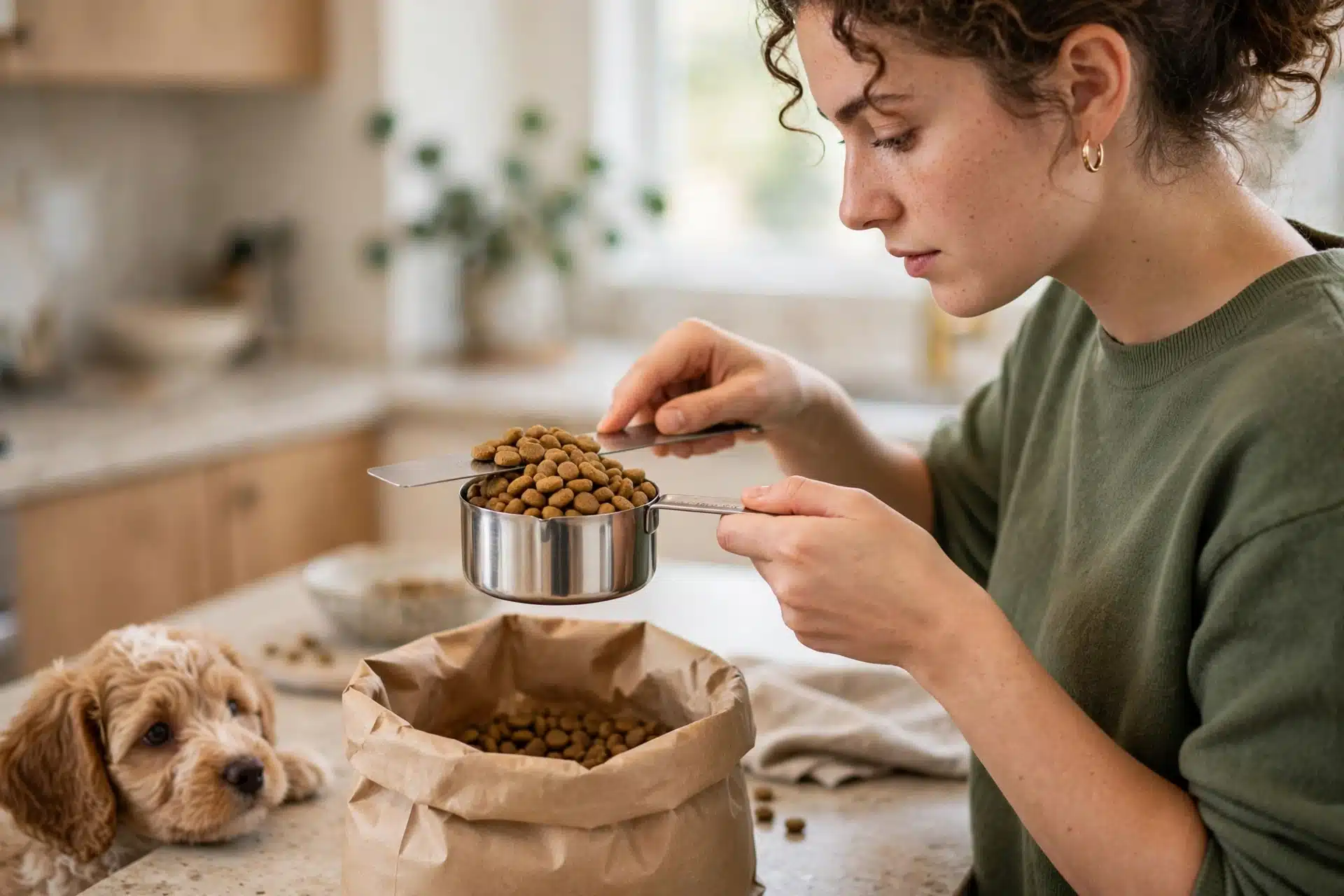
Use the Food Label Instead of Guessing With Cups
Every puppy food prints a feeding guide on the bag. Find your puppy’s current weight, read across to the suggested daily amount, then split it by meals. PetMD’s feeding chart shows why this matters: a 10-pound puppy’s daily range can span a full cup between formulas, so the label beats a generic answer. Measure with an actual measuring cup, not a mug or your hand.
Divide the Daily Total Across the Meals You Set
Take the daily total and split it evenly. At 8 to 12 weeks, four meals means a quarter of the total each time. At three meals, give a third. Two meals after six months means half each. Uneven splits are fine when life demands it, as long as the daily total stays the same and the last meal lands a few hours before bed.
Check Body Condition and Weight, Not Just the Bowl
The label is a starting point, not a rule. Weigh your puppy weekly and run a quick puppy body condition check: you should feel ribs easily under a thin fat layer and see a waist from above. Adjust portions by about 10 percent if weight climbs or stalls, and log both numbers so patterns show up early. For normal weight ranges as your puppy grows, a Havapoo growth chart helps you see where yours lands. Anything persistent, bring to your vet.
Step 3: Transition to Your Food Without Upsetting Your Puppy
A sudden switch in food is the most common cause of puppy diarrhea. The fix is simple: change your puppy’s food gradually over seven days, mixing a little more of the new food into the old each day so the gut has time to adjust.
Stay on the Breeder’s Food If You Can
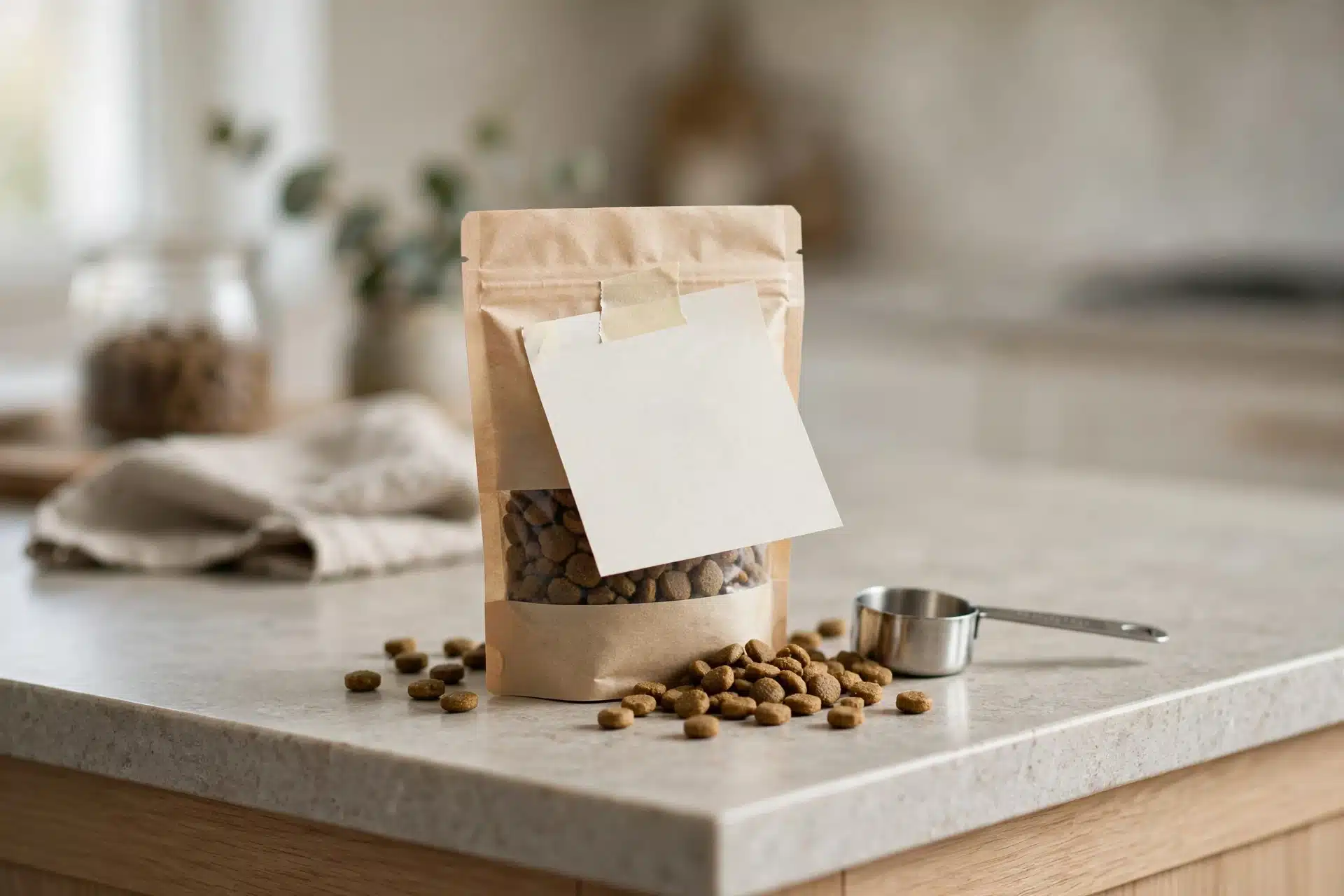
The safest start is the food your puppy already eats. Most breeders, including ours at Sage Puppies, send home a small bag or a written note about what each puppy has been eating. Buy the same formula before pickup day so you never run out mid-week. If that brand is unavailable or your vet recommends a change, use the schedule below instead of swapping bowls overnight.
A Seven-Day Transition Schedule
| Day | Old Food | New Food |
|---|---|---|
| Days 1-2 | 75% | 25% |
| Days 3-4 | 50% | 50% |
| Days 5-6 | 25% | 75% |
| Day 7 | 0% | 100% |
Mix the two foods together in the same bowl at each meal, and keep meal times on your havapoo feeding schedule so the routine stays steady. If your puppy picks around the new kibble, add a splash of warm water. Sensitive stomachs sometimes need an extra two or three days at the 50/50 step before moving on.
What Loose Stool Means Versus What Needs a Call
One soft stool during a transition is normal. Slow back to the previous mix for a day or two, then try again. Call your vet if diarrhea lasts more than 24 hours, contains blood, or comes with vomiting, low energy or a refusal to eat. Puppies this small dehydrate fast, so puppy stool monitoring is worth the extra attention.
Step 4: Manage Water, Treats, and Chews Around Meals
Keep Water Available on a Normal Schedule
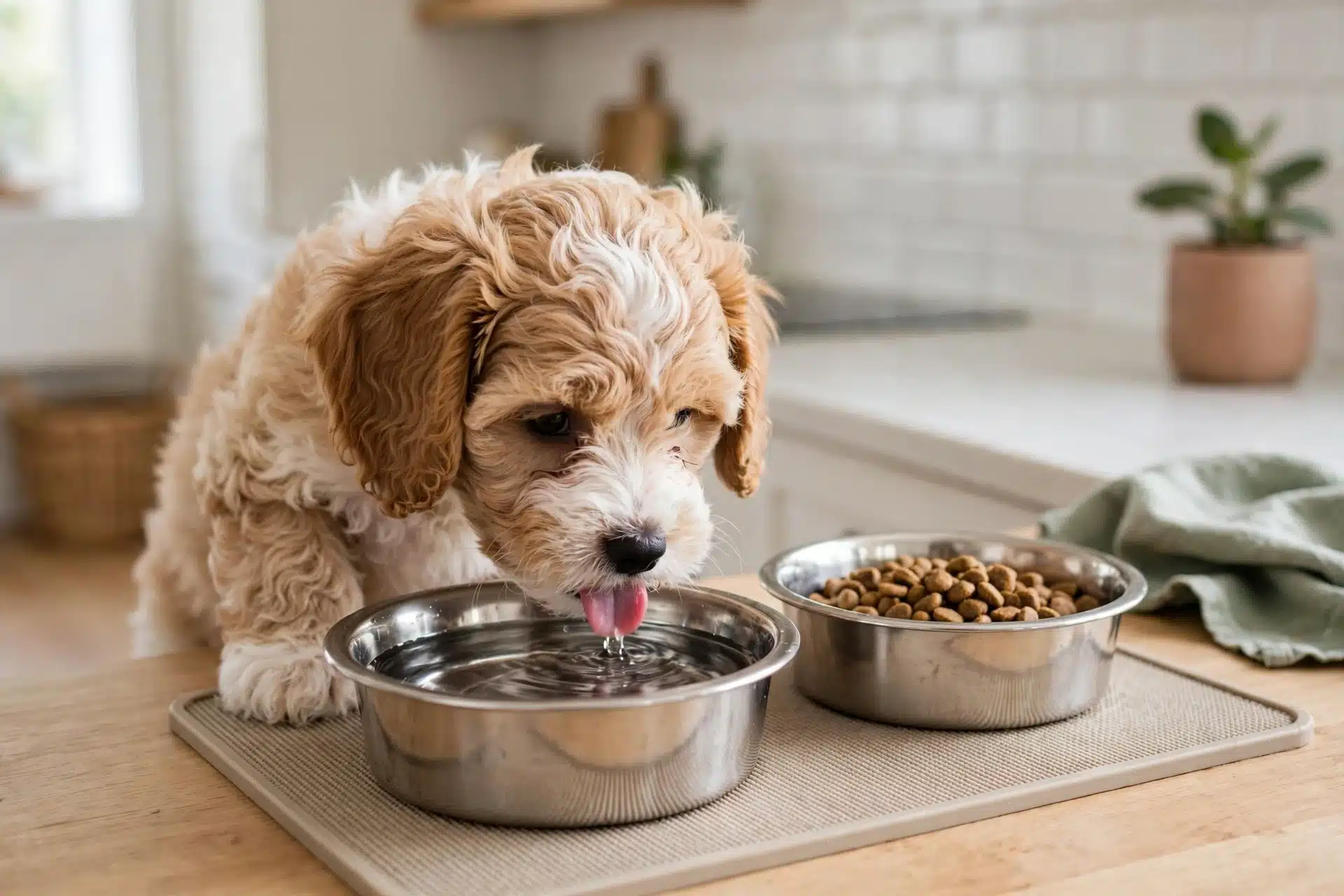
Fresh water should stay out all day, including next to your puppy’s food bowl. Puppies need water to digest their meals, so don’t withhold it after eating. The one time to plan ahead is bedtime: lift the bowl about two hours before the crate goes down for the night. That helps a young puppy hold it until morning without restricting daytime hydration.
Count Treats and Chews in the Daily Total
How many treats can a small breed puppy have per day? No more than 10% of daily calories. On a 400-calorie day, that’s 40 calories from all extras: training bites, dental chews, and table scraps. Use the label’s calories-per-treat figure, subtract treats from the food total, and log them so they don’t quietly replace balanced meals. The AKC’s treat calorie guidance applies the same 10% rule to every extra, so one training session’s worth of treats counts too. If treats crowd out meals, your puppy loses the vitamins and minerals a puppy feeding chart is built to deliver.
Use Chews and Chewing Time Between Meals
Give chews between meals, never right after, so they don’t spoil appetite. Pick a soft teething chew for small breed puppy mouths and skip hard bones or antlers, which can crack baby teeth. A good chew during the afternoon gap between meals also eases teething and gives your Havapoo something calm to do.
Step 5: Keep the Schedule Running as Your Puppy Grows
Your puppy feeding chart is a living tool, not a one-time printout. Times and portions change as your Havapoo grows, so a small log keeps the numbers honest.
A Simple Log That Takes Two Minutes a Day
Keep a note on your phone or a card on the fridge. At each meal, jot down the time, the portion, and one word about appetite. Once a week, add weight and a quick puppy stool monitoring note, like “normal” or “soft.” That’s it. Two minutes, and you’ll spot skipped meals, picky days, and portion drift before they become problems.
Review and Adjust Every Week
Sit down with the log once a week. Compare weight against a puppy body condition check: you should feel ribs easily under a thin fat layer, with a visible waist from above. Growing fast and looking lean? Add about 10 percent. Round in the middle? Trim it. The AKC’s puppy feeding fundamentals line up with the same schedule you started on, so most weeks you’re fine-tuning, not overhauling. Bigger changes, like dropping from three meals to two around six months, deserve a quick word with your vet.
Travel Days and Pickup Day Chaos
Travel throws schedules off, and that’s fine for a day or two. Feed a smaller meal a few hours before the drive so an empty-ish stomach means less motion sickness. Pack your puppy’s usual food and a familiar bowl, and keep water stops regular. If pickup day runs late, one shifted meal won’t hurt. Just return to normal times the next day.
Common Mistakes to Avoid
Mistakes That Show Up in the First Two Weeks
The fastest errors happen at the food bowl. Switching food in one day instead of running a full puppy food transition is the big one, since a Havapoo’s stomach often answers with diarrhea. Other early slips: free-feeding instead of sticking to set meal times, letting the last meal run too close to bedtime, and skipping the puppy stool monitoring that tells you whether the food actually agrees with your puppy. Keep the first week boring on purpose.
Mistakes That Show Up Later
Later mistakes creep in quietly. Treats pile past the 10 percent daily limit, table scraps replace part of a meal, and portions stay frozen at puppy size after a growth spurt. Weight gains slowly, so weigh your puppy every two weeks and adjust by about 10 percent when needed. If your breeder, like Cassie at Sage Puppies, sends home a feeding log, keep filling it in. Patterns catch problems early.

A steady feeding schedule turns those first frantic weeks into a calm routine, and your puppy thrives on it. If you’re still choosing a breeder, Sage Puppies raises well-socialized Havapoo puppies and sends each family home with honest preparation guidance, so day one starts with confidence.
Frequently Asked Questions
Q1: What is a good havapoo feeding schedule?
Feed four small meals a day from 8 to 12 weeks, three meals from 3 to 6 months, and two meals after six months. Keep spacing even, with the last meal a few hours before bedtime.
Q2: How much should I feed my Havapoo puppy at each meal?
Find daily calories from the food label, check calories per cup, then divide by your number of meals. A 10-week puppy eating one cup daily gets ¼ cup at each of four meals.
Q3: When should I switch from puppy food to adult food?
Most small breeds transition around 12 months, but your vet should confirm timing based on growth. Run a full seven-day food switch rather than changing bowls in one day.
Q4: What if my puppy skips a meal or seems picky?
One skipped meal is usually fine. Watch energy and weight, remove treats so meals matter more, and call your vet if refusal lasts more than a day or comes with vomiting.
Q5: How do I know my puppy is eating the right amount?
Do a weekly puppy body condition check. You should feel ribs under a thin fat layer and see a waist from above, then adjust portions about 10 percent if weight drifts.
Q6: Can I give my Havapoo puppy treats during training?
Yes, but keep all extras under 10 percent of daily calories, around 40 calories on a 400-calorie day, and subtract them from the food total in your feeding log.
Conclusion
A good havapoo feeding schedule comes down to four habits. Feed by age: four meals from 8 to 12 weeks, three from 3 to 6 months, two after that. Do the portion math with the label’s calories per cup instead of guessing. Switch foods over seven full days, and keep treats under 10 percent of daily calories. Then weigh weekly and log meals, weight, and stools so small problems stay small.
Your vet confirms the details, but this structure carries you through the messy first months. Follow it, adjust by about 10 percent when the numbers drift, and your Havapoo grows up steady, lean, and well fed.