Quick Summary: Havanese and Havapoo puppies cost nearly the same to raise, with first-year expenses around $1,600 to $2,600 and lifetime costs near $22,000 to $33,000. Grooming is the main difference: Havanese owners should budget $480 to $750 yearly, while Havapoo owners may spend $400 to $700, though unpredictable coat type makes the higher figure safer. At Sage Puppies, both breeds cost $3,500 to $4,500, so health testing, coat predictability, and family preference matter more than the purchase price.
Two puppies can fit the same household budget and still cost very different amounts. The Havapoo price usually starts lower, but the coat type and adult size are a blend you cannot predict in advance. The Havanese price often runs higher, yet the coat is predictable and needs grooming every four to six weeks.
Families comparing quotes often miss that part. A $2,000 puppy can bring a $600 grooming bill each year, plus dental care and training.
This guide covers the same cost categories for both breeds, from purchase price to Havapoo ownership costs over a lifetime, using Sage Puppies ranges of $3,500 to $4,500 as the planning anchor.
Havanese vs Havapoo: Cost of Ownership at a Glance
| Havanese puppy | Havapoo puppy | |
|---|---|---|
| Typical purchase price | Often higher for purebred status; published breeder ranges commonly fall around $1,500 to $3,500, with Sage Puppies puppies listed within $3,500 to $4,500 | Often below purebred pricing; published listings for Havapoo puppies commonly sit around $750 to $1,200, with some breeders charging more |
| Coat and grooming load | Long silky double coat that needs daily brushing and regular professional trims, roughly every 4 to 6 weeks | Long, low-shedding coat needing daily brushing to prevent matting; adult coat type varies by puppy |
| Estimated annual grooming cost | Roughly $480 to $750 per year in professional grooming when trimmed every 4 to 6 weeks | Roughly $400 to $700 per year in professional grooming, with coat texture driving the variation |
| Food and everyday expenses | Small portion needs; typical monthly food cost for a toy-sized dog is modest compared with vet and grooming lines | Similar small-dog food costs to a Havanese, plus slightly higher enrichment spending for a Poodle-influenced puppy |
| Health and veterinary outlook | Recognized breed with a documented health-testing program; commonly discussed concerns include dental disease, eye issues and joint conditions | Inherits risk from both parent breeds; eye, dental and joint conditions are commonly discussed in either lineage |
| Best fit for | Families wanting a predictable breed standard, a calm companion and steady coat care | Families wanting low-shedding companionship and a playful, trainable dog |
How Havanese puppy and Havapoo puppy Compare
Havanese puppy
The Havanese is a purebred companion breed from Cuba, loved for its long silky double coat, small size and people-first personality. It suits families who want a predictable breed standard and steady coat care. Breeders commonly list them around $1,500 to $3,500, and the Havanese price at Sage Puppies sits within the $3,500 to $4,500 range.
Havapoo puppy
The Havapoo is a Havanese and Poodle cross, bred for a low-shedding coat, playful smarts and companion temperament. Coat type can vary from puppy to puppy, which matters for grooming planning. The typical Havapoo price runs about $750 to $1,200, though some breeders charge more.
What You Actually Pay Up Front: Havanese Price vs Havapoo Price
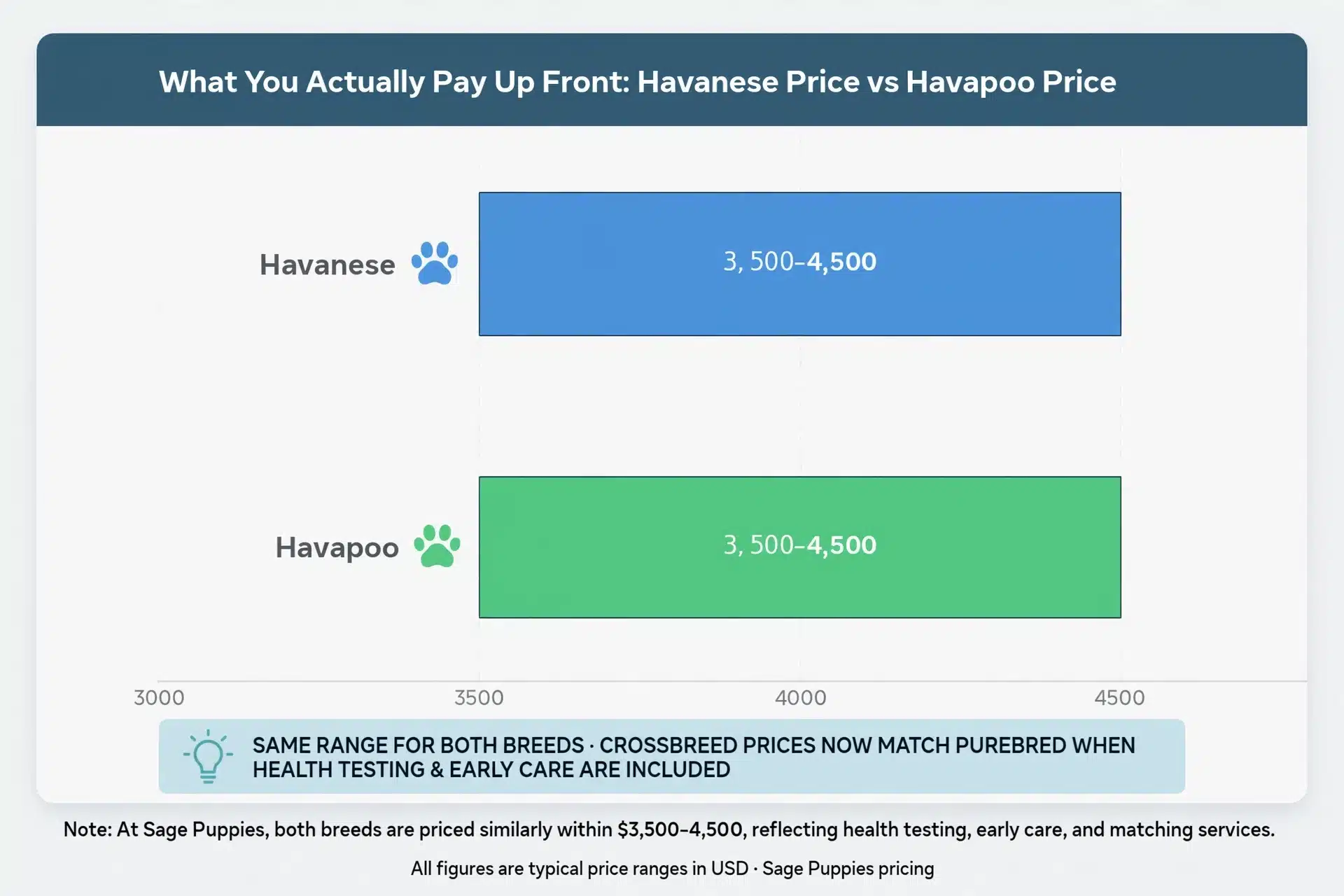
A Havanese puppy usually costs more up front than a Havapoo, but the gap is smaller than most families expect. Nationally, Havanese prices often land between about $2,200 and $3,000, and well-bred purebred lines can run higher. Havapoo pricing varies more because it is a crossbreed: listings range widely, though many breeders charge a similar amount to a purebred once health testing and early care are factored in. At Sage Puppies, both breeds sit within the same $3,500 to $4,500 range, which reflects the program’s testing, care and matching rather than breed labels.
Why a Purebred Price Is Usually Higher
Purebred puppies often cost more because the breeding behind them is more demanding. Responsible Havanese breeders test parent dogs, track pedigrees and plan litters to protect the breed’s health and temperament. That work costs money, and it shows up in the price. Market examples back this up: nationally listed Havanese prices commonly cluster in the low thousands, and breed communities report similar figures for ethical programs.
Havapoos are a planned Havanese and Poodle cross, so their pricing depends on the breeder, not a breed standard. A first-generation litter from health-tested parents can cost as much as a purebred. A casual backyard litter can cost far less, and often skips the testing that matters most.
What the Purchase Price Should Cover
A fair puppy price should already include the work that keeps a small breed healthy. Before you compare numbers, ask what each breeder’s price actually bundles:
- Health testing of both parents for known small-breed conditions
- First vaccinations, deworming and a vet exam before the puppy comes home
- Early socialization and littermate exposure during the critical first weeks
- Microchipping and registration paperwork
- A written contract that explains deposits, health terms and take-back policies
The Havanese Club of America’s breeder directory is a good way to check whether a Havanese breeder follows those standards. For planning, families can also review how puppy pricing and reservations are structured before committing. A lower price that leaves out testing, socialization or a real contract usually costs more later.
Where the Two Breeds Separate Most
The biggest money gap is not the price tag. It is the coat. Both breeds need daily brushing, but the hair behind that brush behaves differently, and that changes what grooming costs each year.
What are the annual grooming costs for Havanese vs Havapoo dogs?
- Havanese: roughly $480 to $750 per year, with professional trims every 4 to 6 weeks
- Havapoo: roughly $400 to $700 per year, usually on a similar 4 to 6 week schedule
The Yearly Numbers for Each Coat
Those ranges assume you use a professional groomer instead of trimming at home. A Havanese carries a true Havanese double coat, silky over soft undercoat, so the groomer works through more volume and more sensitivity. That is why the top end runs higher.
A Havapoo coat depends on the parent mix. Some puppies lean silkier, others grow a denser, curlier Poodle-type coat. Curly coats can mean slightly longer gaps between trims, so many Havapoo families land near the middle or lower end of the range. Budget for the higher figure either way, because you will not know the adult coat until the puppy is older.
Grooming every 4 to 6 weeks also affects timing, not just money. Skip two months on either breed and the next appointment costs more, because the groomer charges for de-matting time.
Matting, Tear Staining and the Hidden Vet Bill
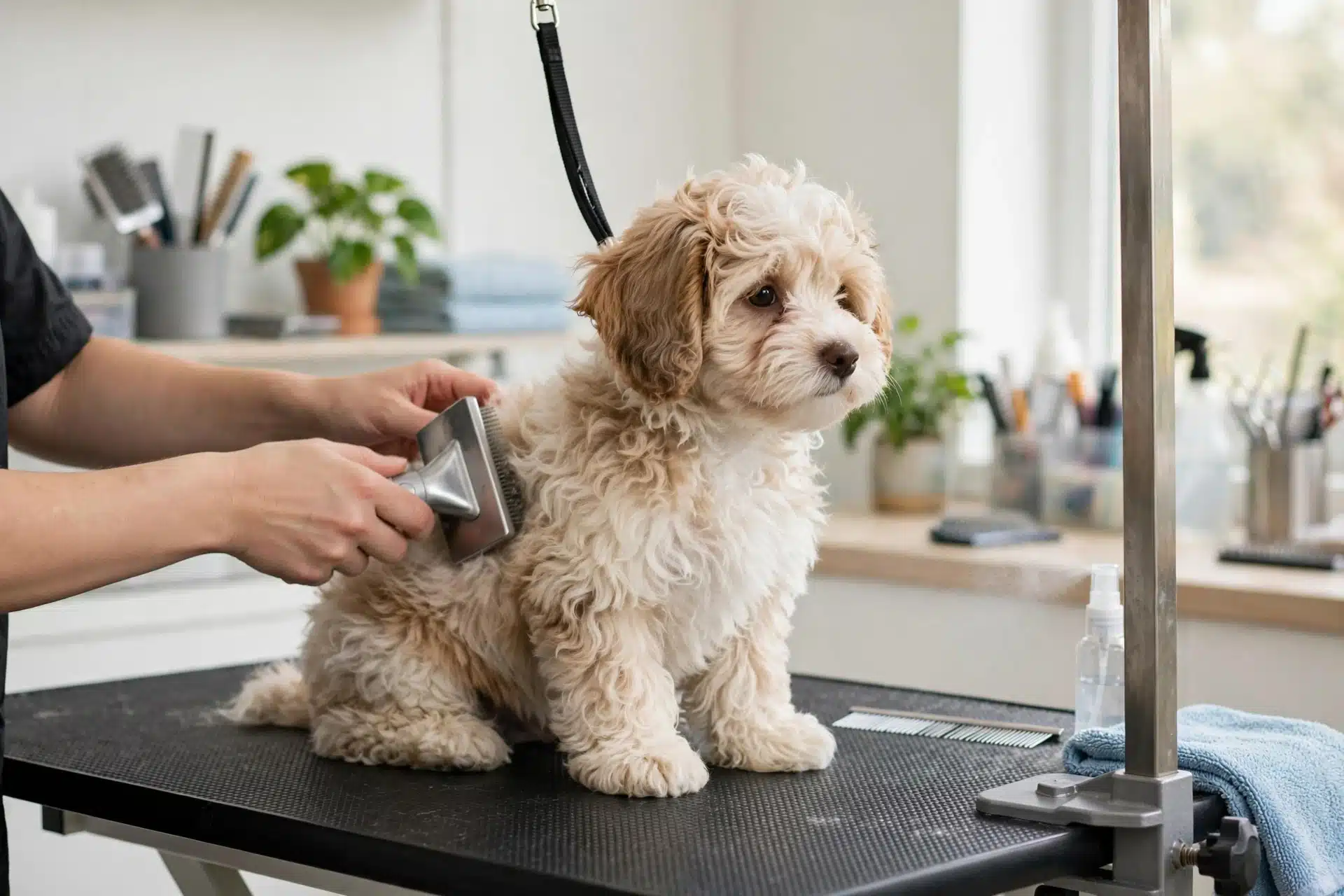
Coat care shows up in the vet budget too. Matted skin traps moisture and can lead to hot spots or skin infections, which turn a grooming problem into a medical one. Regular brushing is the cheapest matting prevention you can buy.
Small breeds of both kinds also share dental risk. Tartar buildup on tiny jaws often means professional cleanings later in life, so plan for dental care for small breeds in either budget. Raising a Havanese at home well from the start makes daily coat and tooth habits easier to keep.
Food, Veterinary Care and Everyday Expenses
What should new puppy owners budget in year one? Plan for these line items:
- Food: about $300 to $500 for a small dog
- Routine vet care: vaccines, exams, parasite prevention, roughly $400 to $700
- Spay or neuter: $200 to $500
- Grooming: $400 to $750
- Supplies, toys and treats: $200 to $400
- Training classes: $100 to $300
That puts a realistic first-year budget for either breed near $1,600 to $2,600, before surprises. Numbers vary by region, so treat these as planning estimates.
The Monthly Lines That Look Almost the Same
Here is the good news: after you bring the puppy home, the Havanese and the Havapoo cost about the same to feed and keep. Both are small dogs, usually 8 to 20 pounds, so they eat a modest 10 to 15 pounds of quality kibble each month. That runs roughly $30 to $60 depending on the brand you choose. Chow, treats, waste bags, a harness and replacement toys add maybe $20 to $40 more in a typical month.
Nationally, food is one of the smaller lines in a dog budget. The AKC’s cost breakdown puts average annual food spending near $446, and small dogs usually land at the low end. If you want a full feeding and checkup schedule mapped out by age, this small breed puppy care checklist walks through both.
Veterinary Costs and What Changes With Age
Vet bills also run close to even between the two breeds. Year one is the expensive one: a puppy series of three to four vaccine visits, deworming, flea and tick prevention, and a spay or neuter surgery. Forbes Advisor estimates routine veterinary care at about an average of $680 per year, and the first year usually costs more than that.
Two breed-specific notes matter. Small breeds, including both of these, need regular dental cleanings, often $300 to $700 under sedation as they age. And because Havapoos are a cross, adult size varies, which can nudge medication doses and food portions slightly either way. Budget a $500 to $1,000 emergency fund per dog so a surprise does not derail the family budget.
Training, Puppy Supplies and the Costs People Forget
The First Ninety Days
The first three months of puppy ownership cost more than any later stretch, and most budgets miss it. You will buy a crate, a pen, a harness, a leash, food and water bowls, a brush and comb, puzzle toys, chew toys, enzyme cleaner, and piddle pads. For a small breed like a Havanese or Havapoo, that setup usually runs $200 to $400, which matches the supplies line already in our first-year budget.
Add one-off items people forget. A baby gate or two, a seatbelt-style car harness, and a grooming starter kit for coat care between trims. Puppies also chew, so expect to replace a leash or a phone cable or two. Build your shopping list before your puppy comes home, not after.
If you want a worked example, this Havapoo puppy checklist walks through supplies, scheduling and the first week in detail.
Classes, Walking and Separation Costs
Training is the next forgotten line. A six-week puppy class typically costs $100 to $300, which we already budgeted, but private trainers charge $50 to $150 per session if you need extra help. Both breeds are smart and eager, so classes usually work well. Havapoo ownership costs can run slightly higher here if your Poodle-mix puppy is bright enough to get bored and creative.
Dogsitters add up too. Puppies under four months cannot stay alone for a full workday, so plan for a midday walker or a pet sitter, often $15 to $30 per visit. Six months of that routine can cost more than the class did.
Putting the Numbers Together: First-Year and Lifetime Budgets
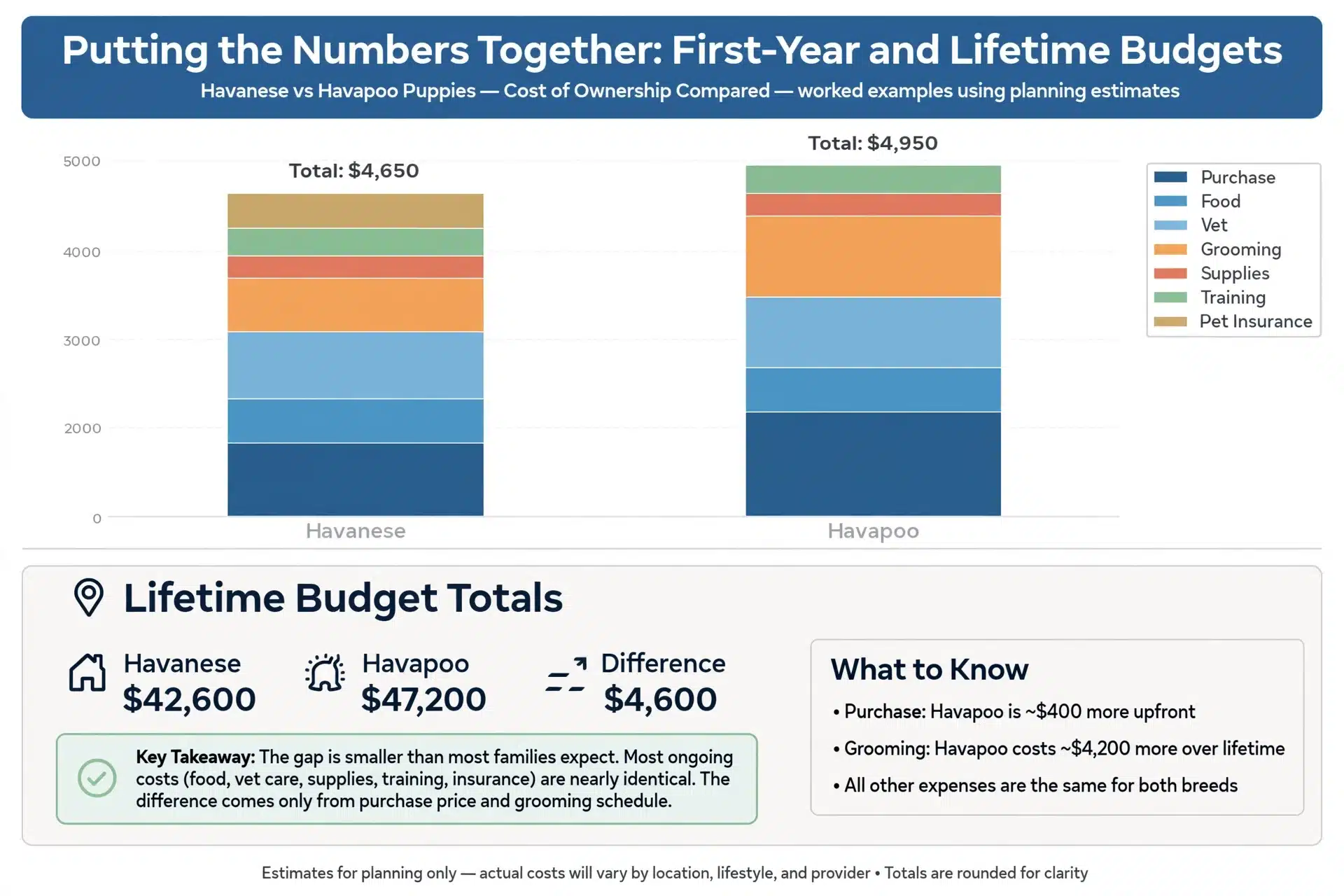
Add it up and the gap between the two breeds is smaller than most families expect. The purchase price and grooming schedule differ a bit; food, vet care and supplies are nearly identical. Here are two worked examples using planning estimates, with totals you can adjust to your own numbers.
A Havanese Example Budget
Start with a Sage purchase price of $4,000, the middle of the $3,500 to $4,500 range. Add first-year puppy costs of $1,600 to $2,600: food at $300 to $500, routine vet care at $400 to $700, spay or neuter at $200 to $500, grooming at the Havanese annual grooming cost of $480 to $750, supplies at $200 to $400 and training at $100 to $300. Planning estimate: about $5,600 to $6,600 in year one.
A Havapoo Example Budget
Use the same $4,000 Sage price, since both breeds sit in the same range here. The grooming line drops slightly to $400 to $700, and the Havapoo price variations you see elsewhere do not change these care categories. Everything else matches. Planning estimate: about $5,500 to $6,500 in year one, so the Havapoo typically runs roughly $100 cheaper in year one.
Stretching Both Budgets Across a Lifetime
Multiply a mid-range annual cost, about $1,200 to $1,800 for food, grooming and routine vet care, across a 13 to 15 year lifespan. Add the first-year total. Planning estimate: roughly $22,000 to $33,000 either way. The cheaper lifetime dog is the one that stays healthy, so breeder testing matters more than breed.
Which Should You Choose: Havanese or Havapoo?
For a first-time owner, the honest answer is that both work. The better pick depends on predictability, coat, and how you feel about crossbred variation.
Choose a Havanese If
- You want a predictable purebred: size, coat type and temperament are more consistent
- You love the classic Havanese double coat and accept the daily brushing that keeps it mat-free
- You want a proven companion breed with a long history as a family dog
- You can commit to professional grooming every 4 to 6 weeks, about $480 to $750 a year
Choose a Havapoo If
- You are open to a Havanese and Poodle cross, with wavier, often lower-shedding coats
- You want a slightly lighter grooming bill, roughly $400 to $700 a year
- You accept variation: Havapoo puppies from the same litter can differ in coat, curl and adult size
- You value the Poodle’s bright, trainable nature blended into a small companion
Your Next Step
Whichever you lean toward, buy from a breeder who health tests and tells you the truth about coat and size variation. If you want that honesty plus nationwide delivery, Sage Puppies raises both breeds in the same program, so your choice comes down to preference, not logistics. Then budget for year one: about $1,600 to $2,600 before surprises, plus the purchase price. That number matters more than the breed label.

Now that you know what each breed really costs, meet the puppies behind the numbers. Sage Puppies raises Havanese and Havapoo puppies with owner-managed matching and clear pricing. Visit Sage Puppies to see available puppies and start your application today.
Frequently Asked Questions
Q1: How much does a Havanese puppy cost compared to a Havapoo puppy?
Nationally, Havanese prices often land around $1,500 to $3,500, and many Havapoo listings run about $750 to $1,200. At Sage Puppies, both breeds sit in the same $3,500 to $4,500 range.
Q2: Which is cheaper to own over the dog’s lifetime, a Havanese or a Havapoo?
Lifetime planning estimates land near $22,000 to $33,000 for either breed. The Havapoo’s grooming runs slightly lower, but health matters more than breed label.
Q3: What are the annual grooming costs for Havanese vs Havapoo dogs?
Budget roughly $480 to $750 yearly for a Havanese and $400 to $700 for a Havapoo, both on a grooming schedule of every 4 to 6 weeks.
Q4: Is pet insurance worth it for either breed?
For many families, yes. Plans often run $30 to $60 monthly for small breeds and can offset the $500 to $1,000 emergency fund we recommend.
Q5: Do Havapoo puppies really cost less to groom?
Sometimes. Curlier coats may stretch between trims, but you cannot predict the adult coat in a Havanese and Poodle cross, so budget the higher figure.
Conclusion
The sticker price starts the conversation, but it rarely decides it. Havanese and Havapoo puppies cost about the same to keep: first-year puppy costs land near $1,600 to $2,600, and lifetime planning estimates reach roughly $22,000 to $33,000 for either breed. Grooming is the real difference, with the Havanese running $480 to $750 a year and the Havapoo $400 to $700, though crossbred coat variation means you budget for the higher number either way. Food, vet care and dental costs stay nearly identical. The smarter money move is choosing a breeder who health tests and tells you the truth about coat and size, because a healthy dog is the cheapest lifetime cost of a small breed dog.