Quick Summary: A reputable puppy breeder proves claims with verifiable health records, a written contract, and a live look at where the puppies live, while pressure to pay quickly, vague DNA claims, and blocked visits are major red flags. Check the exact parents’ OFA or CHIC results, request the puppy’s vet exam record, use traceable payments, and confirm the contract includes a return-to-breeder clause. New or small programs can still be responsible if they answer questions openly and interview buyers, so let the documented pattern, not cute photos or a polished website, guide your decision.
A breeder who can produce a Havapoo, a Havanese, and a Cavapoo litter in any given month, all ready to ship this week, is not running a thoughtful breeding program. They are running a production schedule. Puppy mills and resellers count on buyers who fall in love first and verify later. The trouble is that good breeder signs are easy to fake in photos, but hard to fake in records. That gap is where this article works. We walk through twelve red flags, and each one comes with a simple check you can run yourself: how to verify health testing, read payment terms, and spot puppy scams before a deposit leaves your account. This is breeder due diligence, not breed snobbery. The same rules apply whether you pick up in Utah or arrange delivery across the country. Good breeder signs share one core trait: everything can be checked.
What Good Breeder Signs Actually Look Like
The Six Signals That Distinguish a Careful Program
Good breeders show a consistent pattern, and you can verify most of it yourself before you send money.
- Health testing with proof. Parents have OFA or CHIC results you can look up, not just verbal claims.
- Health records for the puppy. You get a written exam record, vaccine dates, and deworming history from a vet clinic.
- Limited, planned litters. The mother is not bred every heat cycle, and puppies stay with her long enough.
- Questions for you. A careful breeder interviews buyers and matches puppies to homes.
- A written contract. It includes a return-to-breeder clause, so the dog never ends up in a shelter.
- Open answers. They welcome your questions and let you meet the mother dog.

New Breeders, Waiting Lists, and What Is Normal
A young program is not automatically a red flag. Some careful breeders are new, and a short track record matters less than how they work. Look at their testing plan, their contract, and their willingness to answer hard questions. Waiting lists are also normal. Responsible programs often have none available right away, and no ethical breeder will hold a puppy for you outside their stated process. But beware anyone who asks for a full deposit before you have seen photos, records, or a video call. Pressure, vague answers, and payment through gift cards or wire transfer should end the conversation.
## The 12 Red Flags of a Disreputable Puppy Breeder
A disreputable breeder shows some mix of these twelve warning signs: pressure to pay fast, prices that seem too good, no proof of health testing, vague parent history, denied visits, no contract, and no aftercare. Each flag below comes with a check you can run yourself.
<iframe src="https://www.youtube.com/embed/DMXC2F7exFY?autoplay=0&mute=0" width="100%" height="400" style="display:block;width:100%;max-width:100%;height:400px;min-height:300px;border:0;" frameborder="0" allow="clipboard-write; encrypted-media; gyroscope; picture-in-picture" allowfullscreen referrerpolicy="strict-origin-when-cross-origin" title="YouTube video player"></iframe>
1. **Pushes you to pay a deposit immediately.**
2. **Prices far below the breed norm** or "free to a good home" with shipping.
3. **No parent on site**, or the breeder can't say who owns the mother.
4. **Sells through a third party** who never met the litter.
5. **No verifiable health test results** for the parents.
6. **Vague DNA claims**, like "genetically clear" with nothing in writing.
7. **No puppy vet exam record** before going home.
8. **Ducks questions** about the parents' age, history, or past litters.
9. **Refuses a visit or video call** where you see the puppies' living space.
10. **No written contract**, especially no return-to-breeder clause.
11. **Wants cash apps or gift cards** instead of traceable payment.
12. **Goes quiet after pickup**, with no health guarantee or support.
### Red Flags 1 to 4: Pressure, Pricing, and Puppet Breeding
Pressure is the fastest tell. A scammer or mill reseller wants your money before you think, so "three other families are interested" or a "today only" discount means pause. Compare the price to what the breed actually costs; a $600 Cavapoo rarely exists from a real program.
Then ask who owns the mother. If she's "at a friend's place" or the seller ships puppies they've never seen, you're buying sight unseen from a broker. Puppies from [family-raised litters with a clear application process](https://sagepuppies.com/questions-to-ask-before-buying-a-family-raised-puppy/) let you meet or see the mother, and any breeder who blocks that is hiding something.
### Red Flags 5 to 8: Health Records, DNA Claims, and Parent Questions
Ask for proof, not promises. Reputable programs share the parents' OFA or vet-documented results and the puppy's own exam record. "The parents are healthy" is not a result; a dated document from a clinic or registry is.
The same rule covers genetics. A written DNA panel for the parents, listing the variants tested, beats a verbal "all clear" every time. Ask the parents' ages and how many litters the mother has had. A breeder who answers easily usually has nothing to hide.
### Red Flags 9 to 12: Facilities, Contracts, and Aftercare
Visit if you can, or ask for a live video walkthrough of where puppies sleep and play. Chains, wire floors, and dozen-litter setups are classic puppy mill warning signs.
Demand a written contract with a health guarantee and a return-to-breeder clause. Refuse untraceable payments like gift cards or Zelle to a stranger. And ask what happens after pickup: good breeders check in, answer feeding questions, and take the dog back if your home ever fails. Silence after payment says everything.
## Health Testing and DNA: What to Ask For and How to Check It
### Should a Reputable Breeder Provide Health Test Results for the Parents?
Yes. Any reputable breeder will share the parents' health test results before you place a deposit, without you having to push. That means clinical screening results, such as OFA evaluations for hips, knees, eyes, and heart, plus DNA results for breed-specific genetic conditions. If a breeder says "the parents are healthy" but offers no paperwork, treat it as a red flag, not reassurance. Vague answers like "we do our own testing" deserve the same caution.
Ask specifically for results on the exact parents of your litter, not just any dog in the program. Good breeders expect the question and answer it plainly.
### Verifying Records in Public Databases
Documents alone are not proof, so check them yourself. The [OFA's CHIC program](https://ofa.org/chic-programs/) is a public database where each dog must be permanently identified by microchip or tattoo before results count. Search the parent's registered name and look for a CHIC number.
For Havanese, the breed club requires OFA hips, patellas, and annual eye exams for a CHIC certificate, per the [Havanese Club of America](https://havaneseclubofamerica.org/hca-leads-the-way/). Know what each result means: a puppy's own vet exam, the parents' clinical screening, and DNA variant tests are three different things. A breeder who can explain that difference, and lets you verify records yourself, has already passed a major trust test.
## The Questions That Separate a Real Breeder from a Salesperson
Good breeder due diligence comes down to two short conversations: one about the dogs, one about you. A real breeder welcomes both. A salesperson answers fast, talks about availability, and changes the subject when the questions turn to health testing or your home. Bring these questions to your first call or email.

### Questions About the Dam, the Sire, and the Litter
Start with the mother. Ask her age, how many litters she has had, and where she lives. Then ask to see the results of her clinical screenings, such as OFA heart, patella, and eye exams, and any DNA test results for both parents. The [OFA's breeder interview guide](https://ofa.org/prospective-owners/interview-breeders/) recommends asking whether both parents have completed breed-specific testing, not just a quick vet visit.
Keep going with the litter itself. Ask:
- How many puppies are in the litter, and how were they raised?
- Have the puppies seen a veterinarian, and when?
- Can I visit, or see a live video of the puppies with their mother?
- What socialization have they had so far?
Vague answers are puppy mill warning signs. A breeder who will not show you the dam with her litter is hiding something, so verify breeder health records yourself before you pay anything.
### Questions About the Program and About You
A real breeder interviews you back. Expect questions about your schedule, your home, past pets, children, and how you plan to train and exercise a small companion breed. The [AKC notes that responsible breeders](https://www.akcpetinsurance.com/blog/how-to-find-a-responsible-dog-breeder) often ask about your yard, your household, and your plans because they want the right match, not the fastest sale.
Ask about their program too: how long they have bred, which breeds they focus on, their contract terms, and their return-to-breeder clause. A focused program that asks as many questions as you do, the way a thorough puppy matching process should, is usually a good sign that the puppy comes first.
## Contracts, Deposits, and Payment Structure
### What a Legitimate Puppy Contract Contains
A real contract protects both sides. Before you pay anything, ask to see it. Legitimate programs share it without hesitation.
A solid puppy contract should include:
1. The **price** and what it covers
2. A **health guarantee** with clear terms and timelines
3. **Spay/neuter or no-breeding clauses** for pet puppies
4. A **return to breeder clause**, which requires the breeder to take the dog back if you ever cannot keep it
5. Both parties' **legal names and contact details**
The AKC notes that most breeder contracts require spaying or neutering for pet-quality dogs and commonly include a return-to-breeder clause. If a breeder refuses a written contract, or the document is vague about health terms, walk away. Contracts that promise unrealistic cures or lifetime guarantees deserve the same caution.
### How Deposits and Payment Sequences Expose Risk
How money moves tells you a lot. Scammers push for fast, untraceable payments. A careful breeder never does.
Watch the sequence. Ask which [deposit terms](https://sagepuppies.com/puppy-deposit-refund-policy/) apply before you send a dollar, then check whether the answers are in writing. Reputable programs let you pay the balance at pickup or delivery, not before you have seen your puppy. Pressure to wire money, pay in gift cards, or send full payment weeks early is a classic puppy scam pattern. Small breeds like Havanese and Cavapoos are frequent scam targets, so pause whenever the price is low or the timeline feels rushed. Trust clears, dated steps.
## Visits, Virtual Tours, and Independent Site Checks
Seeing the place where your puppy was raised is the strongest single check you can run. Good breeders invite it. Puppy mills hide behind "we only deliver" excuses.
### What to Look For During a Visit or Video Walkthrough
A real visit tells you more than a month of texts. Watch how the dogs live, not just the puppy you came to meet. Clean bedding, fresh water, room to play, and dogs that run up to people are all good signs. Overcrowding, strong odor, or nervous adult dogs point the other way, and [Companion Club's visit checklist](https://ckcusa.com/blog/2025/october/red-flags-and-green-flags-when-visiting-a-breeder/) treats dirty or crowded conditions as a core warning sign. Ask to see where the mother eats and sleeps. If the breeder refuses any visit or video call, walk away. We list the full site questions in our [breeder visit guide](https://sagepuppies.com/puppy-breeder-visit-what-to-look-for-on-site/), including how to read an adult dog's body language.
### Local Licensing, Inspections, and Veterinary Relationships
Licensing depends on scale. Large commercial breeders need a federal USDA license, and you can check it in the [USDA's public search tool](https://www.aphis.usda.gov/awa/public-search), which also lists inspection reports. Small hobby programs are often exempt, so no license is not proof of a problem. What matters more is the vet. Ask who examines the puppies and the parents, and whether your vet can verify records after pickup. A breeder who names their clinic openly is usually one who has nothing to hide.
## Common Mistakes Buyers Make During Due Diligence
### Treating One Green Flag as Permission to Stop Checking
A cute website or one warm phone call is not proof. Good breeders due diligence means verifying every claim yourself: ask for the parents' OFA or CHIC numbers and look them up, request recent vet records, and confirm the puppy was seen by a licensed veterinarian. Scammers and puppy mills both borrow professional-sounding language, so a single polished detail proves nothing. Run each check separately, and treat anything the breeder refuses to document as a red flag.
### Comparing Puppies Instead of Comparing Programs
Falling for one specific puppy is the fastest way to skip the checks that matter. Compare programs side by side instead: health testing on the parents, a written contract with a return-to-breeder clause, how puppies are raised in the home, and whether the breeder asks you questions too. A program that screens buyers as carefully as you screen them is a strong sign. Price fits here as well, since a real program's costs show up honestly in what it charges.
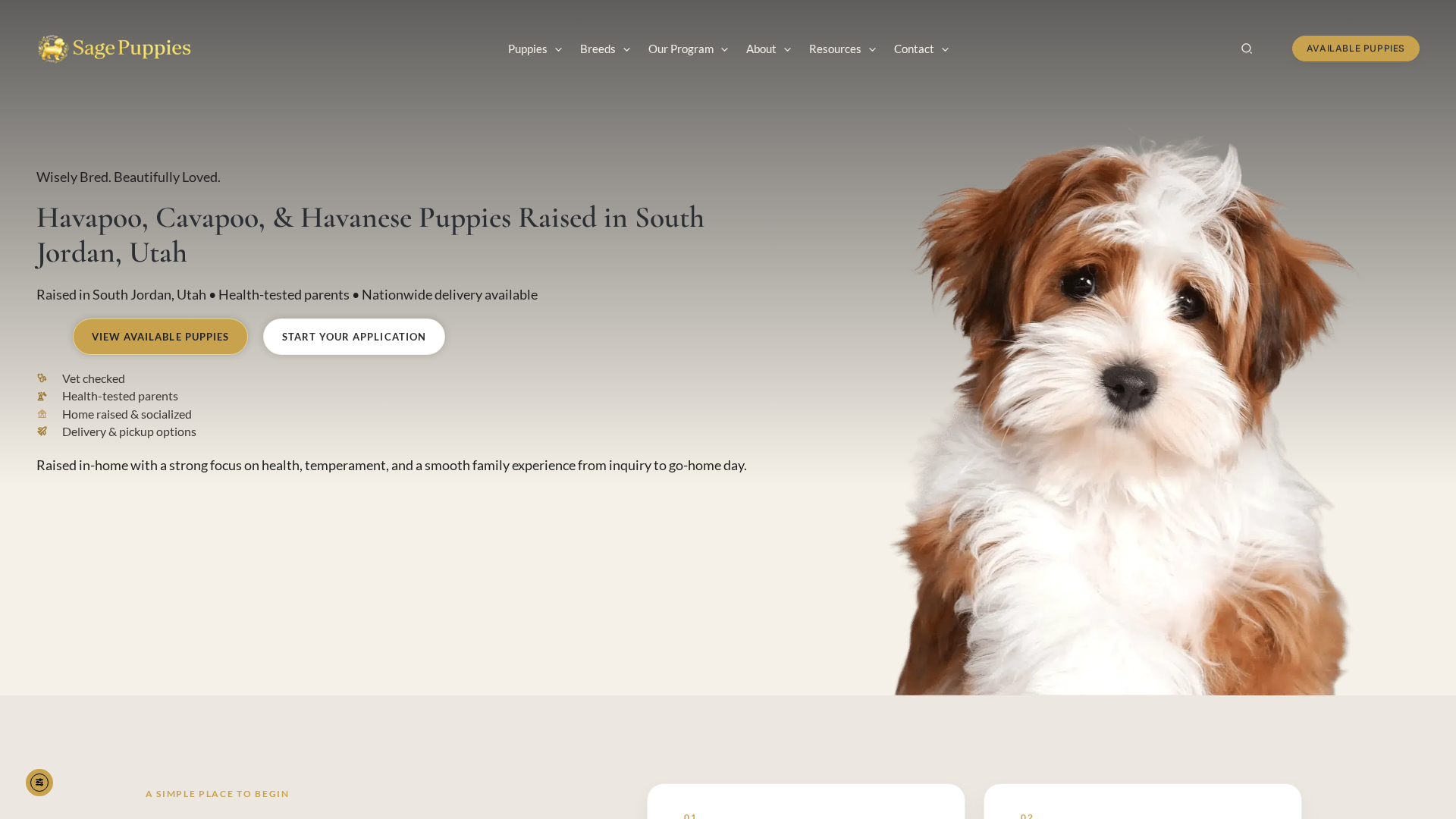
Red flags are only half the job. The other half is choosing a program you can trust, so look at how [Sage Puppies](https://sagepuppies.com) does it: documented health testing, owner-managed matching, and Havanese, Havapoo, and Cavapoo litters raised with care. Review the application and see the difference yourself.
## Frequently Asked Questions
### Q1: What are the 12 red flags of a disreputable puppy breeder?
Pressure to pay fast, low prices, no mother on site, third-party selling, no verifiable health testing, vague DNA claims, no puppy vet exam, dodged parent questions, denied visits, no written contract, untraceable payments, and silence after pickup.
### Q2: What are warning signs of a puppy mill or backyard breeder?
Crowded, dirty housing, wire floors, many litters each year, adults that seem fearful, refusal to show where puppies live, and breeding mothers every heat cycle. A mill reseller also ships puppies they have never met in person.
### Q3: Should a reputable puppy breeder provide health test results for the parents?
Yes, before any deposit. Expect OFA or CHIC results for the exact parents, plus written DNA panels. Look the records up yourself in the OFA's public database.
### Q4: How do I verify a breeder's health records myself?
Search each parent's registered name at ofa.org for a CHIC number, and ask your own vet to review the puppy's exam record after pickup.
### Q5: What payment method is safest when reserving a puppy?
Use traceable payments, and follow a written sequence: small deposit after you have seen records and a live video, balance at pickup or delivery. Never send gift cards or wire transfers.
### Q6: Are waiting lists normal with good breeders?
Yes. Careful programs often have no puppies available right away, and most interview buyers before matching anyone.
## Conclusion
A reputable puppy breeder proves everything, and a bad one only promises. Run the checks yourself: verify OFA or CHIC health test results in the public database, read the puppy's vet exam record, read the written contract with a return-to-breeder clause, and watch how money moves. Traceable payments, a live look at where puppies live, and a breeder who interviews you back all point the same direction. Pressure, vague DNA claims, and silence after pickup point the other way. No single green flag is enough, but the pattern rarely lies. Take the list to your first call, ask the hard questions early, and let the answers, not the photos, decide.