Quick Summary: A reputable puppy breeder should provide independently verifiable records, including the dam and sire’s OFA numbers, the litter’s vet exam and vaccine records, DNA results, and a written contract with a health guarantee and return clause. Check each parent’s results separately for crossbreeds, and read CHIC certification as a testing transcript rather than proof of excellent health. Visit the kennel or request an unscripted video walkthrough, watch the dogs’ behavior, and walk away from pressure, missing records, or parking-lot meetings. Sage Puppies follows this verification-first approach with documented applications, health records, and video walkthroughs for Havanese, Havapoo, and Cavapoo families.
A breeder can describe a spotless kennel, a vet-checked litter and lifetime support without showing you one document. The real reputable puppy breeder signs live in what you can independently verify before money changes hands, not in what the website promises.
That is the challenge this guide solves. Most first-time puppy families cannot tell a polished sales page from a healthy kennel, and distance makes it harder. Learn to read the paperwork instead of the marketing, and the choice gets much clearer.
This article walks through a verification-first process: matching each claim to the exact record or database that proves it, separating a puppy’s exam results from the parents’ health screening and DNA results, understanding what CHIC certification does and does not promise, and running a live-video walkthrough when you cannot visit in person.
We raise Havanese, Havapoo and Cavapoo puppies in South Jordan, Utah, and we built this process from the same documents we ask our own families to review, including a written buyer application and screening step. The reputable puppy breeder signs below work for any kennel you are considering.
Step 1: Confirm the Breeder Is a Real Program Before You Arrive
A real program shows you three things up front: who breeds the dogs, who the parents are, and where the paperwork lives. That covers the core reputable puppy breeder signs before you ever drive out. If a breeder fails this step, save yourself the trip.
Start with a short checklist:
- Search the kennel or breeder’s name in the USDA Animal Care public search tool if they ship puppies across state lines, because a commercial license requires a federal permit.
- Ask for the dam and sire’s names and match them to health test records.
- Confirm a street address, not just a meeting-lot location.
- Read their buyer application and screening process before you ask about puppies.
Look for Traceable People, Parents and Records
A legitimate breeder answers questions with names and numbers. You should get the mother’s registered name, her age, how many litters she has had, and a vet clinic that knows her. Ask to see the litter’s vet exam record and the parents’ health test results. Traceable records do not prove a great breeder, but an untraceable one almost always means trouble. Programs that breed only one or two small breeds, like Havanese, Havapoos and Cavapoos, can usually explain every dog in their care in one phone call.
Watch for the New Breeder Exception
Can a new breeder with a first litter be reputable? Yes. Everyone starts somewhere, and a first-time breeder can be excellent if the parents are health tested, the litter was vet checked, and the breeder mentors under an experienced program. What you should not accept is newness used as an excuse, where missing records get waved off with “it’s our first litter.” A clear red-flag list helps you tell the difference.
Notice Where the Urgency Comes From
Pay attention to pressure. Scammers and brokers rush you with “three families are looking at this puppy today” or deposits due within the hour. A real breeder wants you to ask questions, meet the parents, and think it over, because a bad match costs them too. If you feel pushed, stop. Urgency you did not create is one of the clearest signals to walk away.
Step 2: Verify Health Testing Instead of Taking the Claim at Face Value
“Health tested” means nothing without paperwork. Any breeder can type those two words into a listing, so treat the claim as a starting question, not an answer. Ask what was tested, on which dogs, and where you can look it up yourself. A legitimate kennel hands you registry numbers and invites the check.
The records worth requesting fall into three groups:
- Puppy exam records from a licensed vet, including vaccine dates and deworming
- Parent screening results such as orthopedic exams and eye clearances
- DNA test results for inherited conditions common to the breed
A vet check on an eight-week-old puppy is not the same thing as parent screening. You need all three layers.
Know the Three Layers of Health Evidence
Keep the layers separate in your head, because breeders sometimes blur them. A clean puppy exam only tells you that puppy was healthy on that day. Parent screening shows the dam and sire were checked for structural problems like bad hips or loose kneecaps. DNA panels reveal whether each parent carries genes for conditions such as progressive retinal atrophy. For Havanese, Havapoos and Cavapoos, all three matter. The OFA’s guidance for prospective owners tells buyers to ask for proof of screening, not verbal assurances, and to research breed-specific risks first.
Check Public Records at OFA and CHIC
The OFA health testing database is free to search by a dog’s registered name or number, so you never have to trust a photocopy. Look up both parents. A CHIC number means the dog completed the testing list its breed’s parent club requires, not that every result passed. Some dogs earn a CHIC number with “fair” hips. What the program does guarantee is transparency: results are public even when they are imperfect. The CHIC program’s own description frames it as accurate information about a breeder’s testing. That is exactly the standard you want. If a breeder cannot produce a registry number, ask why.
Match Each Cross to Its Own Parent Records
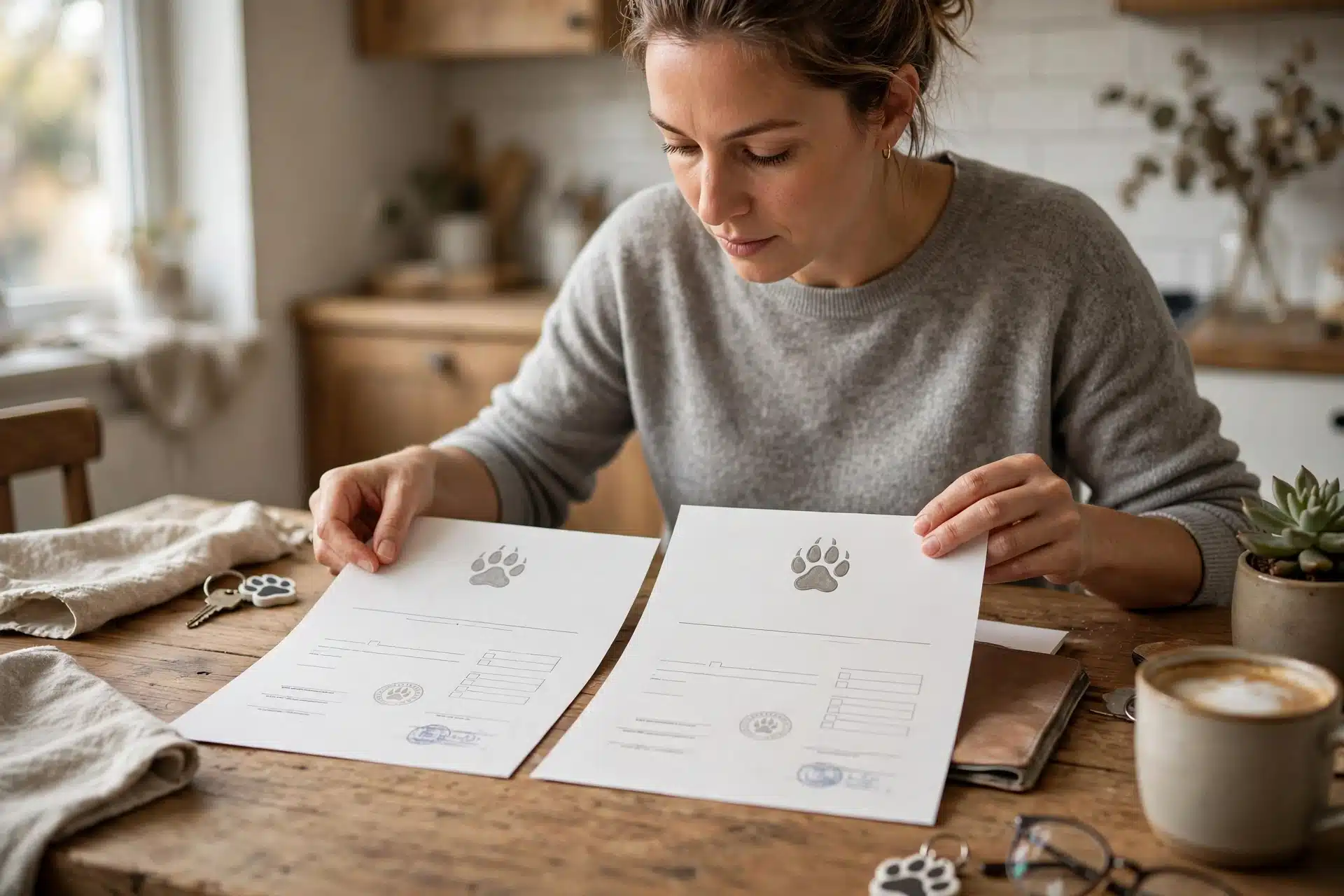
Doodles complicate things. A Havapoo or Cavapoo puppy has one purebred parent and one poodle, so each side needs its own paper trail. Verify the Havanese or Cavalier parent against Havanese or Cavalier health requirements, and check the poodle parent for poodle-specific testing. Never accept one parent’s results as covering the litter. This is standard practice in careful programs; at Sage Puppies every breeding pair is documented on its own merits. Ask for each dog’s registry number by name. A breeder who knows their lines can produce both in minutes.
Step 3: Evaluate the Kennel or Home Environment
Papers prove health testing, but they say nothing about how a puppy spends its first eight weeks. Environment matters. Puppies raised in clean, busy homes with normal household sounds tend to settle faster in yours. Puppies raised in crowded runs often struggle.
What Clean and Well Run Actually Looks Like
On a visit, use your nose and your eyes. A healthy kennel smells like a clean home, not ammonia. Look for dry bedding, fresh water in every bowl, and toys the dogs actually use. Ask where puppies sleep, where the dam whelped, and how often runs are disinfected. Common signs of a puppy mill include stacked cages, dogs pacing at the fence line, no visible water, and a breeder who will not let you see where the mother lives. If you are told “we meet you in a parking lot,” walk away. Good kennel tour questions include: How many litters do you raise each year? Where do the adult dogs live? Can I see the mother with her litter?

Run a Live Video Walkthrough When You Cannot Travel
Out-of-state buyers can still verify a lot. Here is how to check a kennel through a video call:
- Ask for an unscripted call, not a polished recording.
- Have the breeder walk from the front door to the whelping area in one take.
- Ask them to pick up the dam and show her face, coat, and movement.
- Request a pan of the whole room, including corners and floors.
- Note anything they refuse to film.
Programs like Sage Puppies already serve Utah and national families this way, pairing video walkthroughs with a documented application before a deposit. Most breeders will gladly do the same; hesitation is your answer.
Read How the Dogs Behave, Not Just How the Space Looks
Watch the dam first. A friendly, relaxed mother who approaches you calmly is a strong sign. Puppies should be curious, plump, and playful, with clear eyes and no crusted noses. Fearful dogs that hide or flinch tell you what daily life has been like. Behavior is the one thing no paperwork can fake.
Step 4: Read the Contract and See How the Breeder Screens You
The contract tells you how a breeder behaves when something goes wrong. So ask for it before you place a deposit, and read every clause. The AKC’s overview of breeder contracts is a useful reference while you review.
The Terms a Credible Contract Contains
What should a reputable breeder’s contract include? At minimum:
- Identification of the puppy, dam, and sire, plus the sale price
- A health guarantee with a clear window and what it covers
- A spay or neuter clause for pet-quality puppies
- A return to breeder clause, requiring you to send the dog back if you cannot keep it
- Vaccination and deworming records, dated and signed
The return clause matters most. It shows the breeder accepts responsibility for every dog they produce, for life.

A Good Breeder Interviews You Too
Screening runs both ways. Expect questions about your schedule, other pets, children, home setup, and plans for grooming and training. Some breeders ask for a written application and reference check. Others want a video call to see where the puppy will live.
A breeder who says yes to everyone is often a seller, not a steward. Thoughtful questions are a good sign, even when they feel personal. Sage Puppies, for example, uses a documented application so each Havanese, Havapoo, or Cavapoo matches the right family rather than the first one with a deposit.
Price Clarity and Total Cost
Get the full price in writing: purchase price, deposit terms, delivery or flight fees, and any waitlist costs. Ask what the puppy comes home with, such as food, a toy, and records. Confirm exactly when the balance is due. A written, itemized total prevents surprises on pickup day. Compare it against your first-year budget for vet care and supplies, and see a transparent breakdown of puppy pricing and reservation before you commit.
Step 5: Meet the Litter and Make the Decision
The Litter Check Itself
Watch the puppies before anyone handles them. A healthy litter plays hard, naps hard, and bounces back quickly. Eyes should be clear, coats clean, and movements steady, with no limping or head tilting. Ask how each puppy handled its first nail trim, a car ride, or a new surface. A breeder who can describe each pup’s personality in detail has spent real time with them. Many programs, including Sage Puppies, also offer a virtual kennel walkthrough so distant families can watch the litter move and interact live.

Judge the Long Term Relationship
You are not just picking a puppy; you are choosing a person you may call for twelve years. Notice how the breeder answers hard questions. Do they ask about your home, work schedule, and experience, or do they just talk price and pickup dates? Good breeders screen buyers as carefully as buyers screen them. Ask what happens if your situation changes. A written return to breeder clause, covered in Step 4, matters here because it proves the commitment runs both ways.
Know When to Walk Away
Pressure is the clearest warning sign. If someone pushes a deposit today, claims only one puppy remains, or leans on rare teacup and fad color marketing, pause. So does refusing a video call, dodging questions about the dam, or offering puppies younger than eight weeks. A reputable breeder will happily wait for the right home, even if that home is not yours. Walking away costs you a week. The wrong puppy costs you years.
Common Mistakes to Avoid
Skipping the Paperwork Because It Feels Unfriendly
Asking for health records, DNA results and contract terms is not rude. It is what a careful buyer does, and good breeders expect it. A kennel that stalls, guilts you or hands over a puppy before documents arrive is showing you a sign of a puppy mill, not a test of your manners. Reputable programs, including a documented application process like the one at Sage Puppies, put screening in writing because it protects both sides. If the paperwork feels hard to get, walk away.
Reading a CHIC Listing as a Guarantee
A CHIC certification means the parents were screened for every disease their breed club recommends and the results were posted publicly. It does not mean those results were good. A dog can earn a CHIC number with failing scores attached, so read each result instead of trusting the number. For Havanese, Havapoos and Cavapoos, check patellas, cardiac exams, hips and eye clearances one by one. Think of CHIC as a transcript, not a diploma.

Ready to see how that checklist plays out in practice? The application at Sage Puppies shows you every health record, screening result and answer before you commit to a Havanese, Havapoo or Cavapoo puppy. Start there, ask your hardest questions, and compare what you learn with any kennel you visit.
Frequently Asked Questions
Q1: How do I identify a reputable breeder near me?
Ask for the dam and sire’s registered names, then look each dog up in the OFA health testing database. A real program provides a street address, vet references, dated puppy exam records and a written contract before any deposit.
Q2: What documents should I see before paying a deposit?
Request three layers: the litter’s vet exam with vaccine dates, both parents’ screening results like patellas and eye clearances, and DNA panels for inherited conditions. Get registry numbers so you can verify results yourself.
Q3: Does a CHIC number mean the parents are healthy?
No. It means each parent completed the testing list its breed club requires and results were posted publicly. Read each result, because a dog can earn a CHIC number with imperfect scores attached.
Q4: How do I check a breeder if I live out of state?
Ask for an unscripted video call where the breeder walks you from the front door to the whelping area in one take, picks up the dam, and pans the whole room. Refusals tell you everything.
Q5: What contract terms matter most in a puppy purchase contract?
Look for a clear health guarantee window, a spay or neuter clause for pet-quality puppies, itemized pricing, and a return to breeder clause. The return clause matters most because it proves lifelong responsibility.
Q6: Are red flags the same for Doodle crossbreeds?
Yes, plus one extra step. Verify each parent separately against its own breed’s requirements, since a Havanese or Cavalier parent’s results never cover the poodle side of the pairing.
Conclusion
Finding a reputable breeder comes down to verification, not trust. Match every claim to a document: registry numbers in the OFA health testing database, dated puppy exam records, DNA results, and a written contract with a return to breeder clause. Separate the litter’s vet check from the parents’ screening, read each CHIC result individually, and never accept one parent’s paperwork for a Havapoo or Cavapoo pairing. Out of state, an unscripted video walkthrough answers what a website cannot. Walk away from pressure, parking-lot meetings, and missing records. The right kennel welcomes every question, and the effort takes a week instead of twelve years of regret.