Quick Summary: Trust health records, not the phrase “health tested,” because puppy exams, parent clinical screenings, and DNA results each prove different things. Verify both parents through OFA, request the puppy’s vaccination and deworming records, then visit the breeder and review the contract before paying a deposit. Sage Puppies publishes parent health information and pricing upfront, making these checks easier to start.
Most local puppy searches end in the search box, and that is where they go wrong. A listing can say health tested without any proof behind it. The phrase is not a document. One lookup in a public database separates breeders who publish real screening records from those who have never had any pulled.
That gap is the problem this guide solves. If you want health tested puppies for sale locally, you need to know which records prove what: a puppy’s exam paperwork, a parent’s clinical screening, and DNA variant results are three different things. We will show you how to read each one, how to verify claims through an OFA records search, and which questions sort careful breeders from casual ones.
The steps here follow guidance from the Orthopedic Foundation for Animals, the Havanese Club of America, and the AKC’s responsible breeder checklist, applied to breeds like the Havanese, Havapoo, and Cavapoo. Follow them and you can find health tested puppies for sale locally with evidence you check yourself, not just a listing you hope is true.
Step 1: Know Exactly What Health Testing Covers
“Health tested” means nothing on its own. Some breeders mean a vet visit. Others mean a full panel of DNA screens, hip X-rays, and hearing exams on both parents. Before you compare litters, learn which document proves what, because a stack of papers can still miss the tests that matter for your breed.
Three Record Types That Are Not Interchangeable
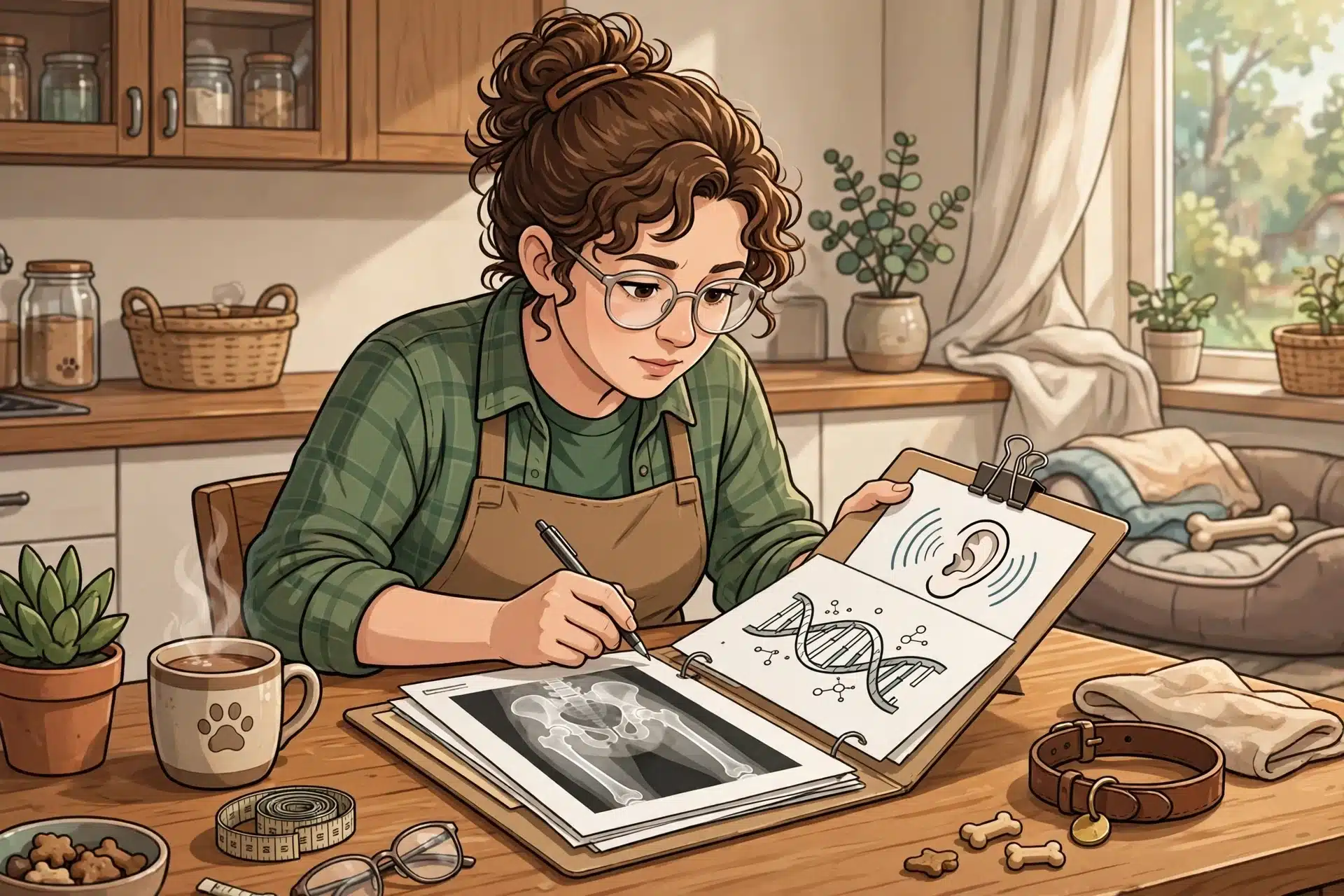
Keep three categories separate in your head. Puppy health records show vet exams, vaccines, and deworming for that puppy only. They say nothing about inherited disease. Parent clinical screening covers hips, hearing, heart, and knees on the adult dogs, and it is the only evidence a parent’s own body checked out. DNA variant results show whether each parent carries specific gene mutations. A clean vet check proves none of these, which is why reading genetic test results correctly matters so much.
What Current Havanese Screening Actually Requires
So what should a Havanese puppy’s parents have? The breed club names three core screens for a CHIC number, the Orthopedic Foundation for Animals database credential. They are hip evaluation, patellar luxation (loose kneecaps), and BAER hearing testing. Hips need X-rays, and the Havanese Club of America notes final hip certification happens after age two. A cardiac exam and eye screening are also common additions. A CHIC number lists results even when a dog fails, so read the actual scores, not just the number.
Why One Panel Never Fits Every Cross
Havapoos and Cavapoos blend two breeds, so each parent needs the screening for its own breed, plus the DNA tests relevant to that mix. When you evaluate health tested puppies for sale locally, ask which panel was run and why.
Step 2: Build a Local Shortlist You Can Actually Verify
To find health-tested puppies for sale near you, work these channels in order:

- Breed club breeder directories, which list members who agree to health-test
- Local searches aimed at small home programs, not pet stores
- Referrals from veterinary clinics and breed meetups
- Then verify every shortlisted breeder’s health records before you visit
Directories and Clubs That Point to Documented Programs
Start with the clubs. The Havanese Club of America and the AKC both maintain breeder directories, and membership requires signing a code of ethics that covers health screening. A directory listing doesn’t prove testing, but it tells you the breeder has made public commitments. That’s a better starting point than a classified ad.
Local Search Terms That Surface Breeders Instead of Resellers
The words you type decide what you find. Skip “puppies for sale near me” on its own, because resellers bid on it. Search instead for the breed plus your city and words like “home raised” or “health tested”: think “Havapoo puppies South Jordan health tested.” Programs with one or two litters a year tend to show up there, since they describe their own process in plain terms.
Veterinary Clinics, Local Referrals, and Meet Events
Your vet hears which local breeders do things right. Ask at your next appointment which Utah programs send well-cared-for litters. Breed meetups and dog parks work too; owners happily name their breeder when the puppy is thriving.
Ask each referral the same question: which health tests did the parents have, and can I see the results?
Keep notes in one list, and expect to cross off names quickly. A shortlist of two or three documented programs beats a long list of hopefuls. Some programs, like Sage Puppies in South Jordan, publish parent health information up front, which makes that first cut easy.
Step 3: Pull the Parent Health Records Yourself
Ask the breeder for each parent’s registered name, then verify the results yourself. The OFA records search takes about five minutes and shows whether the paperwork matches the promises. Start at the OFA Advanced Search page, which lets you look up dogs by name, kennel, or registration number.
Searching OFA by Parent Name and Kennel
Enter the exact registered name in Advanced Search. If you don’t have it, ask for it; a confident breeder will share it on the spot. You can also type the kennel name alone to pull up every tested dog that breeder has produced. Look for both parents, not just the dam. For a Havanese, a CHIC listing on the OFA database is a good sign that core breed tests are done.
Reading a Result Without Misreading It
Learn what each result actually proves. An “OFA Fair” hip rating still counts as a passing result; a DNA result marked “carrier” means the dog carries one copy of a variant, not that it is sick. Carriers can be bred safely to clear partners. For a deeper walkthrough, our page on reading puppy genetic test results explains which results matter and why. The key is pairing each result with the mate’s result.
When a Missing Record Is Not a Red Flag
Not everything lives in OFA. Young dogs may not have final hip scores yet, since those are done at age two or later. Some DNA panels stay with the lab instead of the database. Ask for those lab reports directly and match the dog’s name and date. Missing records become a red flag only when a breeder refuses to produce any documentation at all.
Step 4: Ask for the Puppy’s Own Records and Care History
Parent testing tells you about the family line. The puppy’s own file tells you about this puppy: what it received, when, and who provided it. Ask for these papers in writing before pickup or delivery, so nothing gets lost in the handoff. A breeder who keeps good puppy health records can usually send copies the same week.
The Documents Worth Requesting in Writing
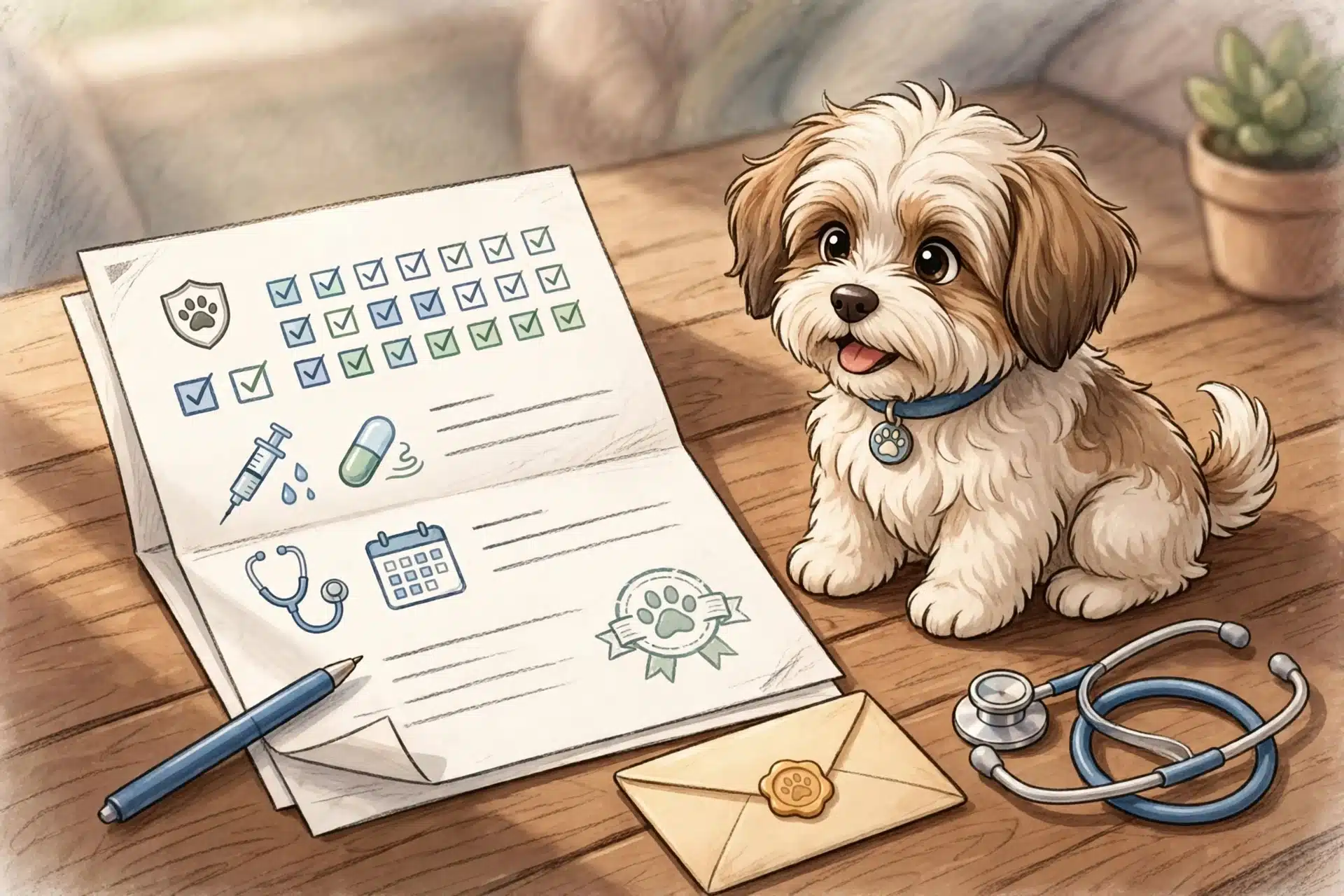
Request four things: the vaccination record with dates and vaccine names, the deworming schedule and products used, any veterinary exam notes, and a signed health certificate if the puppy ships or crosses state lines. Ask for the vet clinic’s name and phone number too. Your own vet can call to confirm details, which is a normal request.
What a Normal Pre-Pickup Record Looks Like
Most puppies leave their breeder between eight and ten weeks old, and the record should match that age. Expect one round of puppy vaccines, usually the DHPP combination, given around seven to eight weeks, plus one or two deworming treatments. Rabies shots come later, typically after twelve weeks, so do not worry if it is missing. Watch for gaps instead: a record with no clinic name, no dates, or hand-added entries deserves a question. Vets expect to see a breeder’s paperwork at the puppy’s first visit, so bring everything you received.
Connecting the Puppy’s Record to the Parents’ Records
The puppy’s file proves care, not inherited risk. That comes from the parents’ DNA and screening results. Read the two side by side: exam dates on the puppy’s record, variant results on the parents’. Breeders who track both together, the way small programs like Sage Puppies do, can usually explain how each document fits the other.
Step 5: Meet the Breeder and the Litter
A good breeder expects your visit and usually has questions of their own. Plan to see the space, watch the litter, and let the breeder interview you right back.

What to Look for in the Space and the Dogs
Look for a clean, safe area where puppies live with their mother, not a kennel run of isolated cages. The mother should look healthy, friendly, and well cared for, since her condition tells you a lot about daily care. Puppies should be bright, playful, and comfortable around people. Ask to see where the dogs sleep and eat. The AKC’s guide to responsible breeding covers what healthy housing and socialization look like.
When the Breeder Interviews You
Good breeders screen buyers as carefully as buyers screen them. Expect questions about your home, work schedule, children, other pets, and experience with small breeds. Some ask about grooming plans, since Havanese, Havapoos, and Cavapoos need regular coat care. If nobody asks you anything, treat that as a warning sign. A breeder who wants every puppy placed anywhere will skip this step.
Age at Placement and Early Development
Puppies need time with their mother and littermates. Most states set eight weeks as the minimum age for sale, and you can check your state’s rules in this table of state puppy sale age laws. Ask when the litter was born, what the puppies have experienced so far, and which vaccines they have started.
Step 6: Compare Contracts, Support, and Total Cost
Health paperwork tells you about the puppy. The contract tells you about the breeder, so read it before you pay anything.
Contract Terms Worth Reading Line by Line
What should be in a puppy purchase contract? Expect these elements, which match AKC guidance on breeder contracts:
- Full price, deposit amount, and what the deposit covers
- A health guarantee with a defined window, such as 72 hours for a vet check
- A return-to-breeder clause requiring the dog come back to the breeder, never a shelter
- Spay or neuter requirements and any co-ownership terms
- How disputes and refunds are handled
A breeder who refuses the return clause is a red flag.
Support After the Puppy Goes Home
Ask how long the breeder stays available. Good ones answer feeding questions, share vaccination timelines, and want updates for months. Some require it, with check-ins written into the contract. Ask past buyers, or read reviews, whether the breeder responded after pickup. Support that ends at handoff leaves you guessing through the hardest first weeks.
Checking Totals Instead of Headline Price
A low puppy price can hide the real cost. Build a total that includes:
- Delivery or travel fees
- Initial vet exam and vaccine series
- Spay or neuter surgery
- Crate, gear, food, and grooming for a coat that needs regular brushing
| Cost Type | Typical Range* |
|---|---|
| First-year vet care | $300-$1,000 |
| Supplies and gear | $200-$500 |
| Grooming (small breeds) | $40-$75 per visit |
*Budget examples only. Confirm local prices before you plan.
Compare breeders on that full number, not the sticker price. Sage Puppies publishes its $3,500-$4,500 range up front, which makes this math easier.
Common Mistakes to Avoid
Reading Claims Too Loosely
Buyers often hear “health tested” and stop asking questions. The phrase can mean a quick puppy exam, full parent screening, or nothing at all. A CHIC number only proves the required tests were done; it does not guarantee clear results, and DNA carrier status is not the same as a sick dog. Read each document for what it actually shows, and match the breed-specific CHIC requirements against what the breeder hands you. If a claim has no record behind it, treat it as marketing.
Sequence Errors That Cost Buyers Leverage
The order of events matters as much as the paperwork. Common missteps include:
- Paying a deposit before you see parent health records
- Skipping the vet check window in your contract
- Accepting “results coming soon” as a finished answer
Keep your leverage by reversing that flow. Ask for the OFA records search first, confirm both parents by registered name, then place money down. Only after pickup should the 72-hour vet check clock start. A program like Sage Puppies that publishes testing and pricing up front makes this sequence simple, but verify any breeder’s records the same way.

Ready to meet a puppy whose health records you can actually check? Sage Puppies raises Havanese, Havapoo, and Cavapoo puppies in South Jordan, Utah, with local pickup or nationwide delivery. Start the application today and review every health result before you decide.
Frequently Asked Questions
Q1: How do I start finding health tested puppies nearby?
Search breed club directories first, then use your breed plus your city and terms like “home raised.” Ask each program for both parents’ registered names so you can run an OFA records search before visiting or paying anything.
Q2: What are Havanese CHIC requirements?
A Havanese needs hip evaluation, patellar luxation screening, and BAER hearing testing for a CHIC number. Hip certification finishes after age two, so ask how old each parent is.
Q3: What’s the difference between puppy health records and parent testing?
Puppy records show this puppy’s vaccines, deworming, and vet exams. Parent clinical screening and DNA variant results cover inherited risk. You need both; neither replaces the other.
Q4: Does a DNA “carrier” result mean the puppy will get sick?
No. Carriers hold one copy of a variant and are usually healthy. The risk comes only when both parents carry the same one, so check the mate’s result too.
Q5: What should be in a puppy purchase contract?
Look for full price, a health guarantee window, a return-to-breeder clause, spay or neuter terms, and how refunds work. Refusal of the return clause is a warning sign.
Q6: When should I pay a deposit?
Only after confirming both parents’ records yourself. Ask for results first, then place money down.
Conclusion
Finding a health-tested puppy comes down to three habits. Learn what each document proves, from puppy health records to parent clinical screening and DNA variant results. Run the OFA records search yourself before money changes hands. And read the puppy purchase contract line by line, checking for the return-to-breeder clause and the vet check window.
None of these steps takes more than a few minutes. Together they separate breeders who document their screening from those who lean on the phrase health tested alone. The breeds you love, Havanese, Havapoo, and Cavapoo, all have known, testable risks, so the evidence is there if you ask for it.
Trust records over listings. Verify the parents, read the papers, and you will bring home a puppy whose history you actually know.