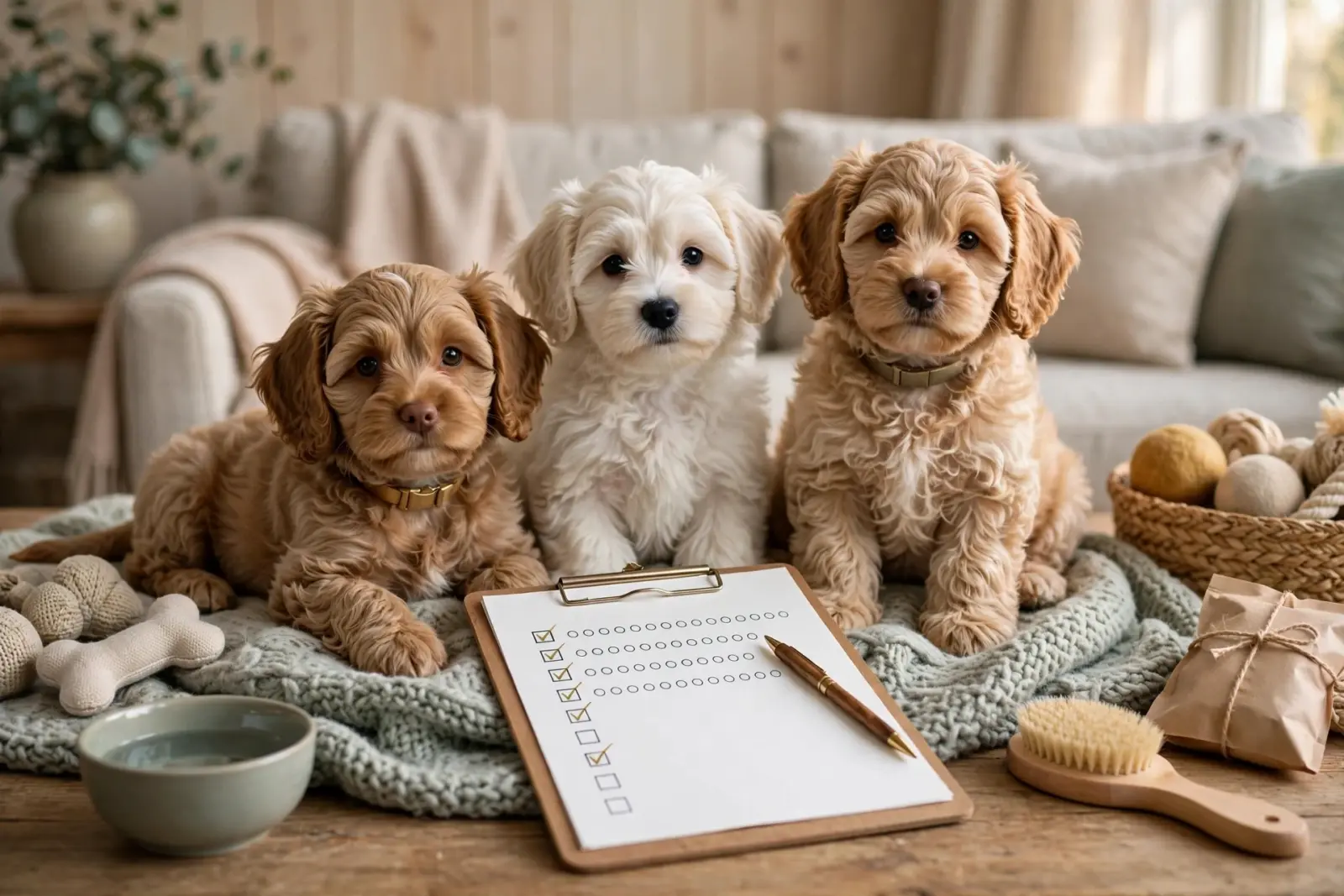
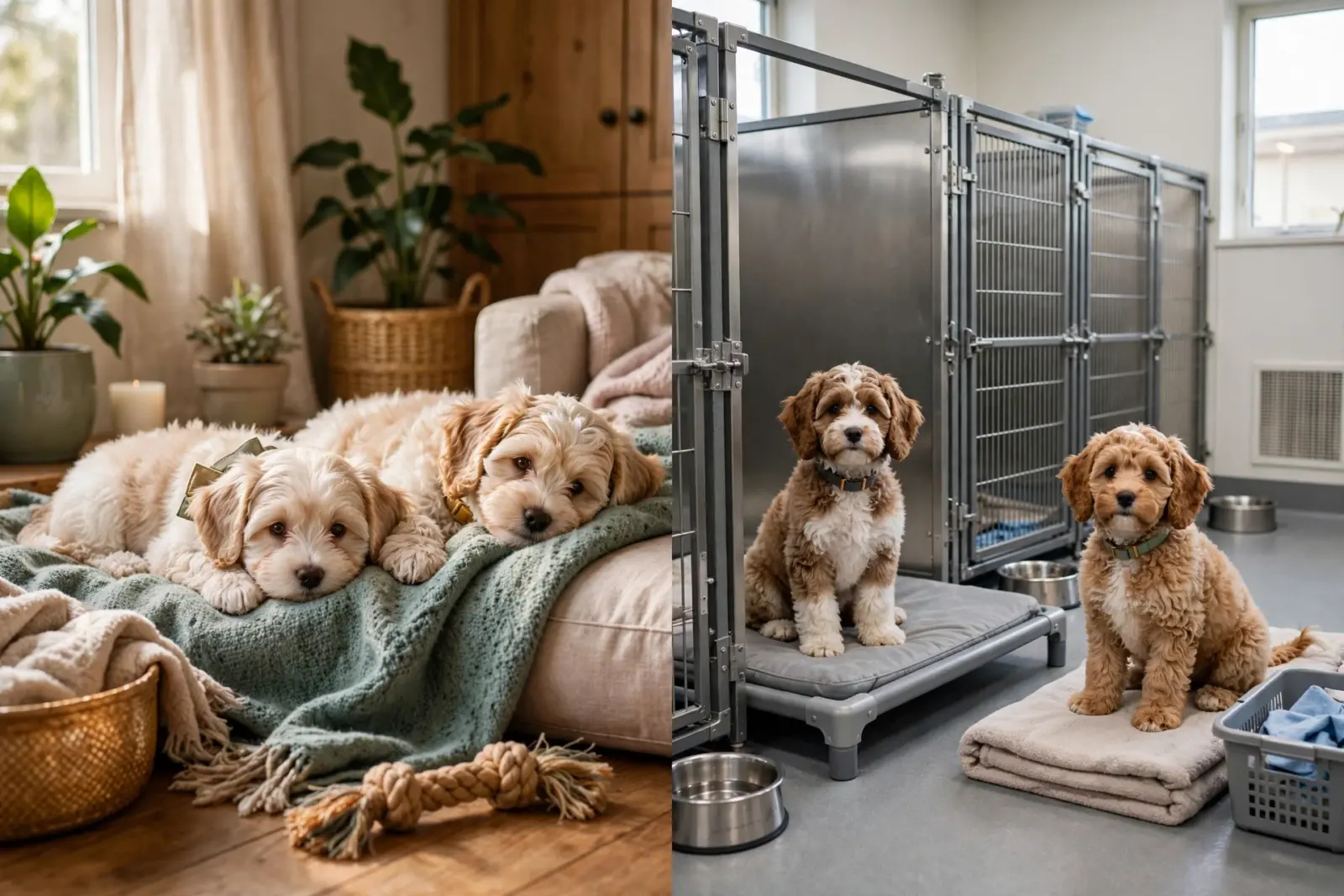
Quick Summary: Prepare a small breed puppy’s home by puppy-proofing at floor level, creating a gated safe room with a bed, water and potty area, and buying right-sized gear such as a 20- to 24-inch crate. Feed puppies three to four small, evenly spaced meals daily to prevent hypoglycemia, and plan calm socialization, safe transport, and weather precautions before pickup. Recheck hazards each month, grant more freedom only after consistent success, and keep the safe room as a dependable home base as the puppy grows.
The first hour with a new Havapoo or Cavapoo often happens on the floor of a bathroom or kitchen, because that is where you kneel when a 3-pound puppy finds the base of a cabinet fascinating. Small breeds need more than a generic hazard list. Their low height, tiny meals and quick blood sugar drops create risks a full-size checklist never mentions. This guide walks through how to prepare your home for a small breed puppy, step by step: a puppy proofing checklist, a calm safe room, right-sized supplies, and a feeding plan built around hypoglycemia. It comes from Sage Puppies, Cassie Milar’s boutique program in South Jordan, Utah, which raises Havanese, Havapoo and Cavapoo puppies with documented experience guiding first-time families from application to pickup day.
Before You Start: Plan the First Two Weeks on Paper
How to prepare your home for a small breed puppy comes down to three planning steps: confirm what your breeder sends home, block out the first week, and buy supplies in layers. Write all three down before pickup day. Paper beats panic when a 3-pound puppy is crying at 2 a.m.
Confirm What the Breaker Will Send Home With Your Puppy
Ask your breeder, in writing, exactly what arrives with the puppy: food, a blanket with littermate scent, health records, and vaccine dates. A good program walks you through these items before go-home day, so you are not guessing. When you submit an application to reserve a puppy, you get clear answers on what comes home with you and what you still need to buy. Ask about the food brand, because switching suddenly upsets small stomachs.
Block Out the First Week on Your Calendar
Put the first week on paper before pickup. Puppies need potty breaks every one to two hours, three or four small meals a day, and 16 to 20 hours of sleep, so someone must be home or able to check in. The AKC’s guide to puppy schedules and routines recommends consistent timing for meals, naps, and potty trips. Book the first vet visit within a few days, and arrange time off work now, not the night before.
Buy in Layers Rather Than All at Once
Skip the giant cart. Start with the true first-week needs: a correctly sized crate, a safe transport carrier for the ride home, bowls, puppy food, a harness, and a few soft toys. Then add a puppy gate, playpen panels, and grooming tools once you see how your puppy moves through your rooms. Buying in layers saves money and keeps small breeds from outgrowing gear before it wears out.
Step 1: Puppy-Proof Your Home Room by Room
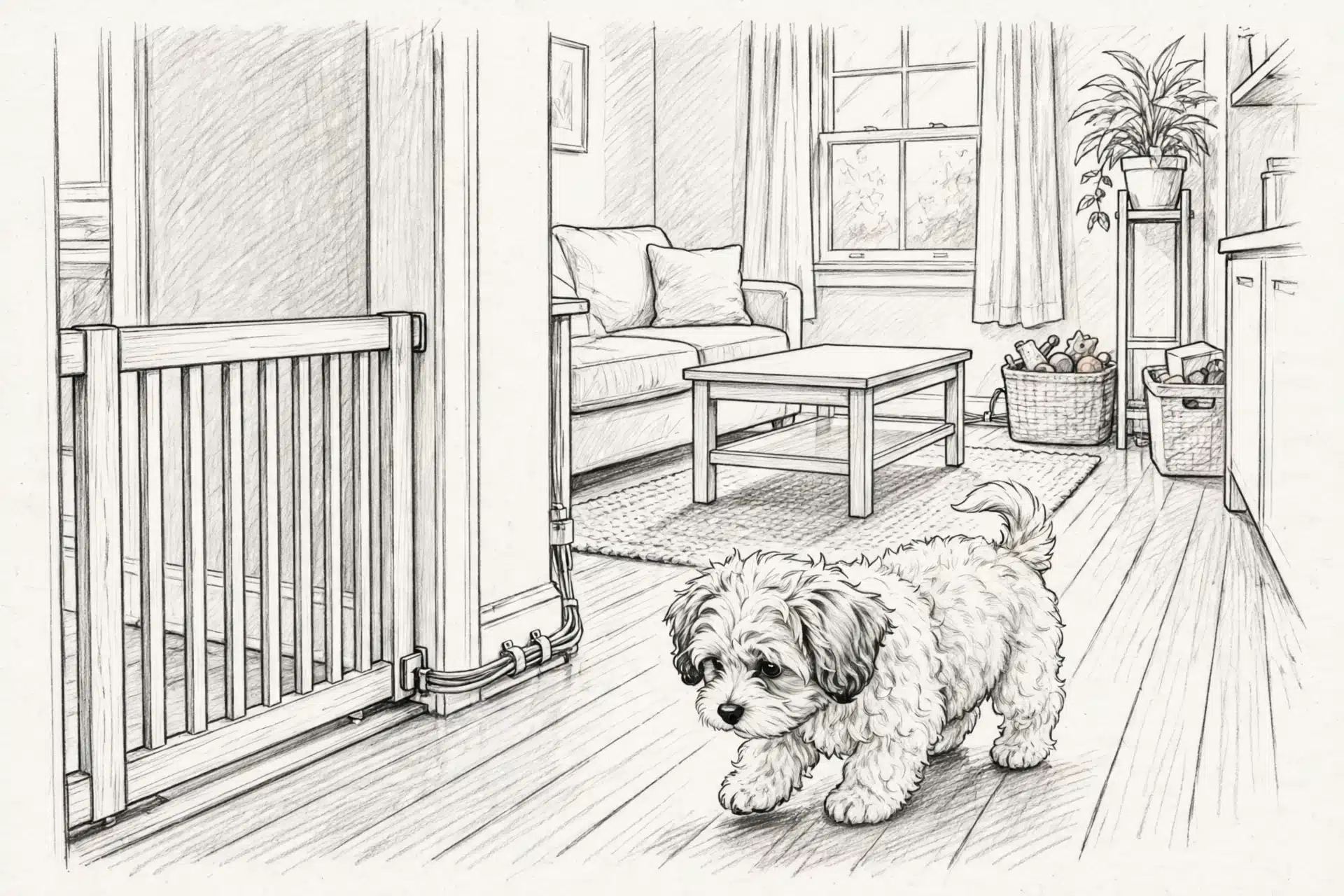
A puppy-proofing checklist that works room by room is the fastest way to prepare your home for a small breed puppy. Get down on your knees first. If a 4-pound Havapoo can reach it, chew it, or tip it over, it moves or it goes. Here is what to handle in each space.
Kitchen, Dining Area, and Trash
The kitchen hides the most puppy hazards. Sweep the floor for dropped grapes, onions, and food scraps, since some are toxic to dogs. Secure the trash can with a locking lid or tuck it inside a closed cabinet. Use cabinet latches on lower doors, and store cleaning supplies up high. If you cook while the puppy roams, block the area with a puppy gate.
Living Room, Cords, Windows, and Small Objects
Low furniture is a toy breed’s whole world. Tuck cords and charging cables into covers or behind furniture, because chewing a live wire can burn a puppy’s mouth. Pick up coins, hair ties, kids’ toys, and anything small enough to swallow. Attach bookshelves to the wall so a climbing puppy cannot pull them down. Add cordless blinds or tie the cords up high.
Laundry Room, Garage, and Closed Doors
These rooms hold the most dangerous items: detergent pods, antifreeze, rat bait, and tools. Keep both doors closed at all times, and check pockets before laundry starts. Close the toilet lid, secure loose rugs that slide under tiny legs, and block stair tops with a gate, since falls hurt short-legged breeds most.
One room at a time, this takes an afternoon. Families who pick up their Havanese or Cavapoo puppy locally in Utah often do a final walkthrough the night before, which is worth it.
Step 2: Build a Safe Room Your Puppy Can Rest In
A safe room answers “What goes in a puppy safe room?” in one setup: a bed, fresh water, a potty spot, and a few chew toys in a small, gated space. It doubles as the heart of any plan for how to prepare your home for a small breed puppy.
Choosing and Sizing the Safe Room
Pick a small room, like a bathroom, laundry room, or the corner of a kitchen, so your puppy can see family life without wandering off. Block the doorway with a sturdy puppy gate rather than shutting a door, because a Havanese or Cavapoo wants to hear you nearby. Skip carpeted rooms where you can, since accidents clean up faster on hard floors.
Bedding, Water, and a Place to Potty
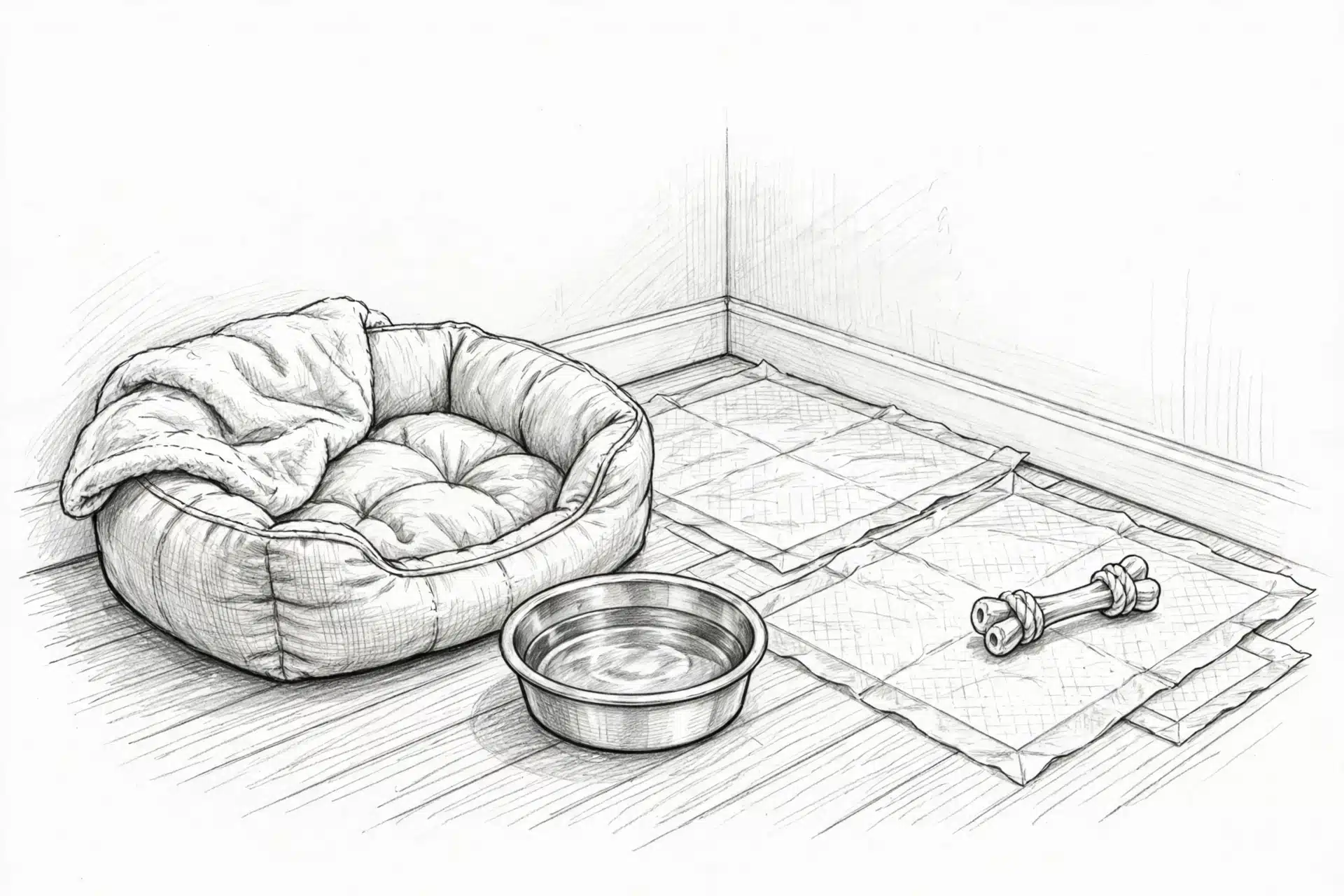
Give your puppy a low, washable bed in one corner, a shallow water bowl in another, and potty pads at the far end. Puppies refuse to soil where they sleep, so keeping these three zones apart builds good habits early. Add two or three soft chew toys, and nothing else. Extra clutter invites chewing and knocks over water.
Keeping the Puppy Near Without Stressing Them
The safe room should never feel like exile. Set it up where your family spends the evening, then open the gate during calm moments so the puppy chooses to rest there. Short, happy stays now prevent separation distress later, which matters for a small breed that sleeps 16 to 20 hours a day and needs steady, low-drama naps.
Step 3: Choose Equipment That Fits a Small Breed Puppy
Small breed puppies need smaller gear than most checklists assume. A crate sized for a Lab, a deep bowl, or a standard collar can overwhelm a 4-pound Havapoo, so buy for the puppy you are bringing home, not the dog it will become.
Crates, Pens, and Gates
Pick a crate the puppy can stand, turn, and lie down in, usually 20 to 24 inches for these breeds. Too much space invites potty accidents inside. Add a soft playpen around it for supervised freedom, and use a puppy gate with self-latching hardware at the top of every staircase, because short-legged puppies fall harder than they look.
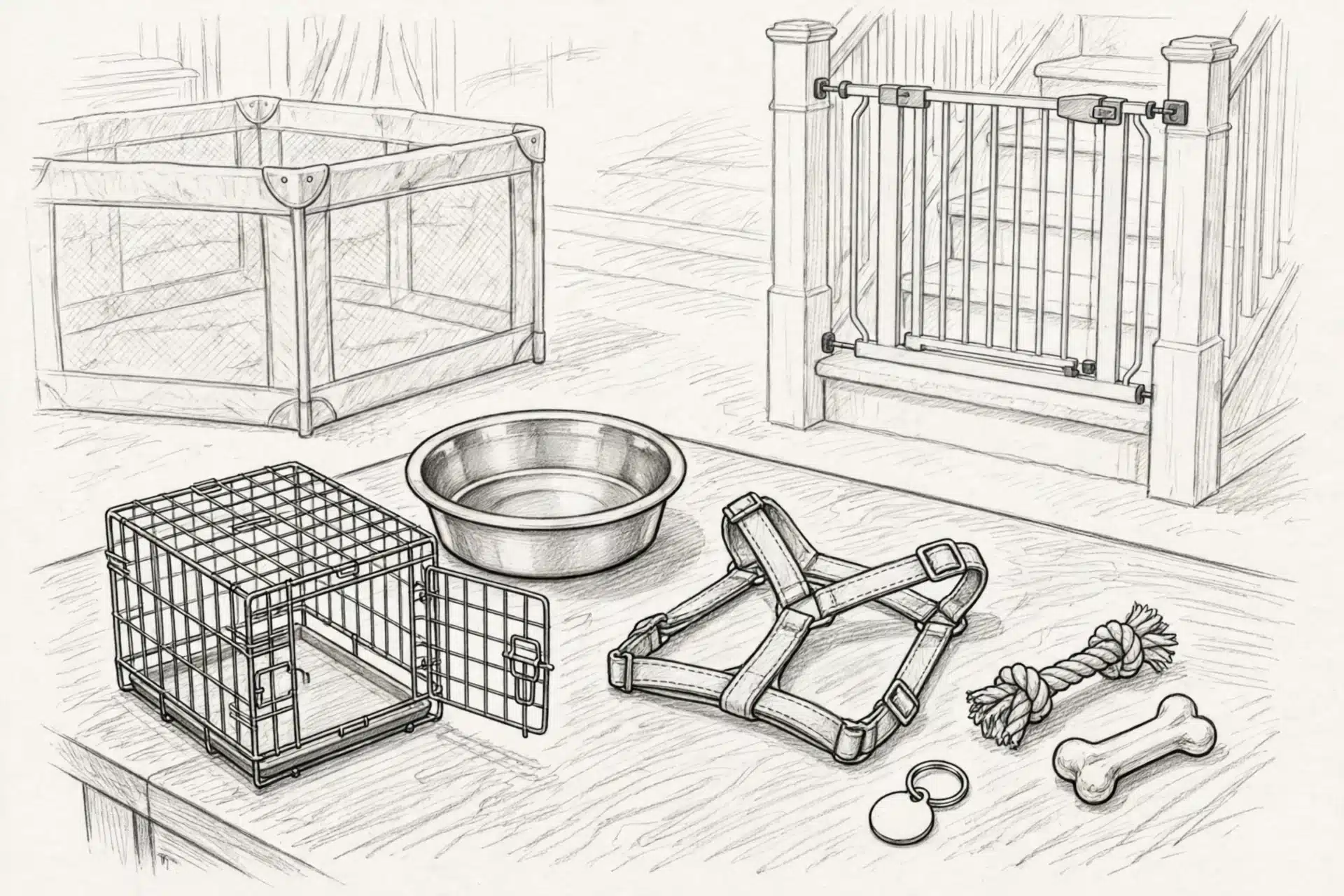
Bowls, Feeders, and Measurement
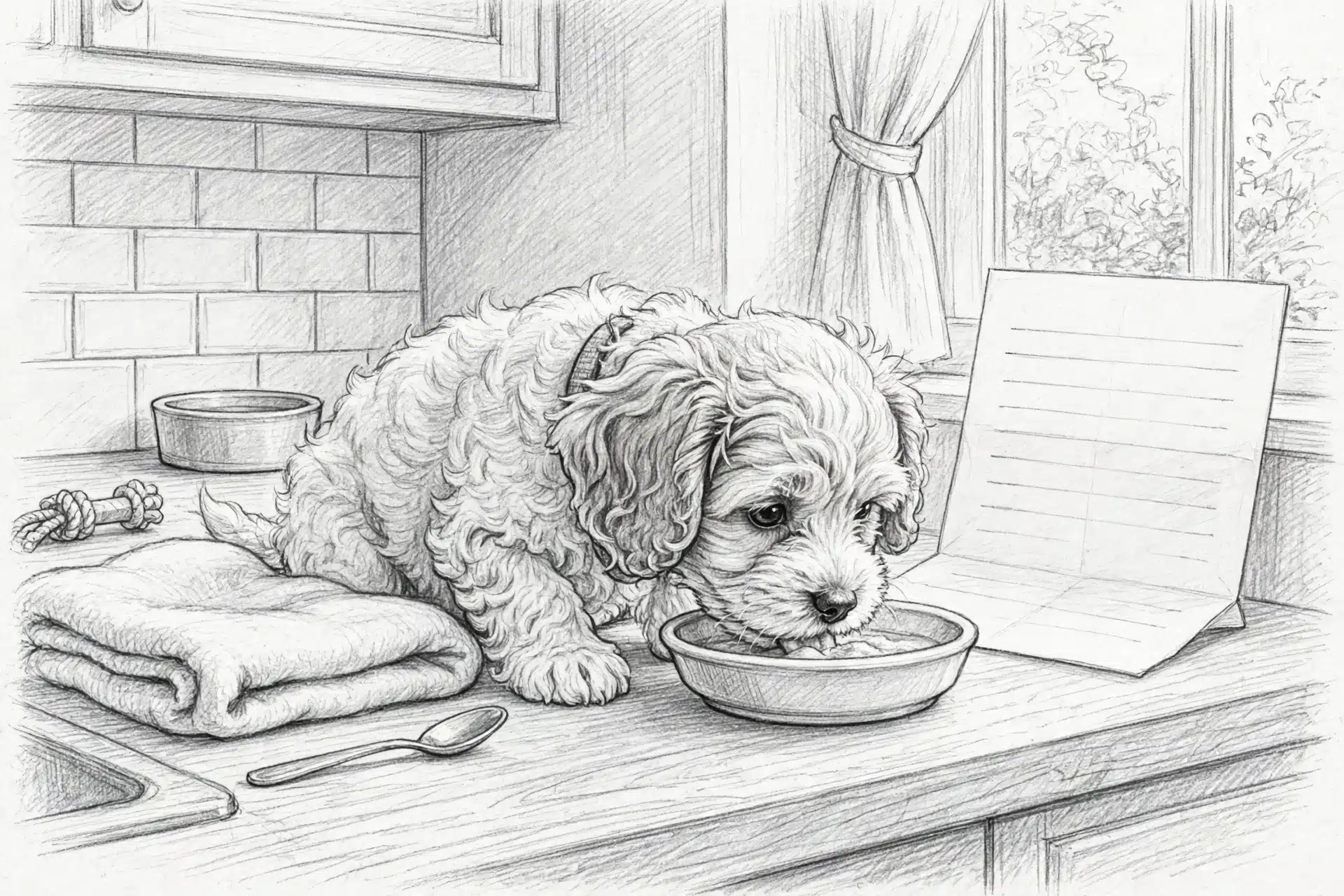
Use shallow, weighted bowls so a tiny muzzle can reach food and water without climbing in. Stainless steel or ceramic cleans best. Because small breeds eat three or four small meals a day, a kitchen scale and a labeled measuring cup keep portions exact, which protects against both overfeeding and the blood sugar dips tiny puppies are prone to.
Collars, Harnesses, ID, and Toys
Skip collars for walks; a snug Y-front harness protects a small, delicate throat. Fit the collar so two fingers slide under it, add a lightweight ID tag, and register your puppy’s microchip right away. For play, choose toys sized for tiny mouths and swap in puzzle feeders to burn energy on rainy days. If you want tested gear ideas, Cassie’s Sage Puppy Picks articles name the exact sizes these breeds need.
Step 4: Set Up Feeding and Toileting for a Small Breed
Why Small Puppies Need Frequent Meals
A small breed puppy should eat three to four small meals a day, spaced evenly from morning to bedtime. Tiny puppies store very little blood sugar, so long gaps between meals can cause hypoglycemia, a dangerous drop in blood sugar. The AKC advises feeding toy puppies under four months even more often, up to four or five times daily. Shallow bowls keep meals easy to reach.
A Sample Day of Meals, Breaks, and Naps
A steady rhythm prevents accidents and sugar dips. A simple small breed puppy feeding schedule for week one looks like this:
| Time | Activity |
|---|---|
| 7 a.m. | Meal, then a potty break outside |
| 9 a.m. | Nap in the crate |
| Noon | Meal, potty break, short play |
| 3 p.m. | Potty break and nap |
| 6 p.m. | Meal, potty break, calm play |
| 9 p.m. | Water picked up, final potty, bedtime |
Reward-Based Toilet Training That Does Not Depend on a Deadline
Take your puppy out after every meal, nap, and play session, and praise quietly the moment they finish. Small bladders mean frequent trips, but every puppy’s timeline differs, so track progress in weeks rather than promising a fixed date. Mistakes happen; clean them without drama and keep the routine going.
Step 5: Plan Safe Socialization at Home
The first three months of life are the key socialization window, so your home should offer gentle, positive exposure from day one, not isolation until shots are finished.
Visitors, Children, and Household Sounds
Introduce visitors with numbered steps:
- Let the puppy approach each guest on its own, never the reverse.
- Ask visitors to sit on the floor, offer treats, and keep greetings calm.
- Have children sit and stroke the puppy’s side with slow, gentle hands.
- Watch for yawning, lip licking, or turning away, then give a break.
Play recordings of vacuums, doorbells, and thunder at low volume with treats, following the graded approach in AVSAB’s socialization guidance.
Resident Dogs and Other Pets
Meet resident dogs on neutral ground first, both leashed, with no face-to-face pressure. Keep early meetings short and end before either animal gets tense. Feed them separately, and never leave them alone together until you have seen several calm weeks. Pick up small pets like cats’ food and litter boxes out of puppy reach. For a full week-by-week plan, see our first 12 weeks socialization checklist.
When Socialization Should Wait and When to Ask
Skip introductions when your puppy seems sick, exhausted, or overwhelmed, and pause any meeting where the other animal is stiff, growling, or fixated. AVSAB supports socializing puppies before they finish vaccines, but ask your veterinarian about class timing and local disease risk in your area. If fear reactions last more than a few days, ask a certified trainer rather than waiting it out.
Step 6: Make the Home Ready for Travel, Emergencies, and Weather
Safe Transport Setup for a Small Puppy
To keep a small breed puppy safe in the car, secure a crash-tested carrier on the floor behind a seat, never in the open cabin. Do buckle the carrier with a seatbelt or anchor strap, line it with a pad, and take short practice drives. Don’t let the puppy ride loose, on a lap, or in a standard collar clipped to a seatbelt. Improvised car restraints fail when you need them most.
A Small Emergency Kit and Vet Contacts
Put together one kit now so a bad night stays manageable. Keep a bin with:
- Food, bottled water, and a foldable bowl
- Gauze, pet-safe antiseptic, and tweezers
- A spare leash and a warmth wrap for low blood sugar risk
- Your vet’s number, plus the nearest 24-hour clinic and a poison control line
Save these contacts in your phone too. Sage Puppies sends each family home with feeding and health notes, so keep those with the kit.
Heat, Cold, Storms, and Yard Safety
Small dogs feel weather fast. Skip walks above about 85°F or on hot pavement; a young Havanese or Cavapoo overheats quickly. In winter, use a short potty break and a coat rather than long outings. For storms, close blinds, play soft sound, and offer the crate as a den. Before yard time, walk the fence line, block gaps wider than a paw, and fence off pools and stair edges.
Step 7: Keep the Home Safe as Your Puppy Grows
A puppy-proofed home changes as your puppy does. What worked at 3 pounds stops working once she can jump, climb, and reach.
Monthly Re-Check of the Whole Setup
Once a month, walk your home at your puppy’s eye level. Chewy bags she ignored last month now smell interesting, and teething peaks around 4 months as adult teeth come in, so chewing often gets worse before it ends. Check gates, cords, trash cans, and cabinet latches each time.
Moving From Confinement to Supervised Freedom
Expand your puppy’s access room by room, not all at once. Add one new space after a week of clean potty breaks there, and keep the crate and safe room in place as home base. Most small breeds stay Adolescent longer than you expect, so keep doors closed when you cannot watch.
Give freedom only after success. If accidents or chewing return, shrink the space again for a few days without scolding.
Long-Term Small Breed Housekeeping
Small dogs stay low to the ground for life, so floor-level risks never retire. Drop crumbs fast, and keep electric blankets, heater cords, and recliner mechanisms off limits. Sweep before she does, because a swallowed coin or pill can mean surgery. Check PetMD’s teething guide for when chewing should ease up. Adults of these breeds reach emotional maturity around 12 to 18 months, per Hills Pet, so steady routines pay off well past puppyhood.

Your home is ready, so the next step is simple: find the puppy it was prepared for. Sage Puppies raises Havanese, Havapoo, and Cavapoo puppies with care in South Jordan, Utah. Visit Sage Puppies, review the application, and take the first step toward your Wisely Bred, Beautifully Loved companion.
Frequently Asked Questions
Q1: How do you prepare your home for a small breed puppy?
Puppy-proof room by room at your puppy’s eye level, set up a small safe room with a bed, water and potty pads, buy right-sized gear like a 20 to 24 inch crate, and plan three or four small meals a day to protect against hypoglycemia.
Q2: What are the signs of hypoglycemia in a toy breed puppy?
Watch for wobbling, weakness, trembling, and pale gums, sometimes followed by collapse. Rub a little honey or corn syrup on the gums and call your vet right away. Frequent, evenly spaced meals prevent most episodes.
Q3: How long does puppy proofing take before pickup day?
One focused afternoon covers most homes if you work room by room. Do a final knee-level walkthrough the night before pickup, and re-check gates, cords, and trash cans monthly as your puppy grows.
Q4: Do small breed puppies really need a smaller crate?
Yes. A crate sized for a large dog invites potty accidents inside. Choose one where your puppy can stand, turn, and lie down comfortably, usually 20 to 24 inches for a Havapoo or Cavapoo.
Q5: Where should a puppy sleep the first night?
In the crate inside your safe room, or beside your bed so she can hear you. Include the blanket your breeder sends home with littermate scent, and expect some crying the first few nights.
Q6: Should I use a collar or harness for a small puppy?
Use a snug Y-front harness for walks. Collars put pressure on a small, delicate throat, so keep a collar only for ID tags alongside a registered microchip.
Conclusion
Preparing your home for a small breed puppy comes down to five things: a room-by-room puppy proofing checklist, a calm safe room, right-sized supplies, three or four small meals a day to guard against hypoglycemia, and gentle early socialization. Small breeds bring risks a generic list misses, from stair falls to blood sugar dips, but an afternoon of prep plus monthly re-checks covers most of it. Keep the crate and safe room in place as your Havanese, Havapoo or Cavapoo grows, and expand freedom only after clean weeks. A prepared home turns the first night from stressful to settled, for the puppy and for you.