Quick Summary: Family-raised puppies usually cost more because small litters receive more hands-on handling and household socialization, often during the critical three-to-14-week socialization window. Kennel-raised puppies are often cheaper and can be sound choices, but buyers may need to handle more early training and decompression after pickup, with first-year costs commonly totaling $2,000 to $3,000 either way. Sage Puppies publishes prices of $3,500 to $4,500 for home-raised Havanese, Havapoo, and Cavapoo puppies, but the best choice depends on your budget, experience, and the breeder’s verified routine, health testing, and written terms.
A kennel-raised puppy and a family-raised puppy rarely cost the same, and the gap usually comes down to breeder hours, not a fancier name. When a family raised Cavapoo sits in the upper $3,000s while kennel raised puppies list for far less, that difference is mostly labor. Knowing what that labor buys helps you decide if the price is worth it.
Many buyers assume a home-raised label guarantees a better puppy, then meet a price that seems hard to justify. First-time owners especially struggle to tell real daily care from a marketing word on a website.
This puppy cost comparison breaks both raising models into measurable parts: purchase price, hidden first-year costs, and the hours a breeder spends with each pup before go-home. It shows you how to verify what you are paying for, and it names the cases where a kennel-raised puppy is a perfectly sensible buy.
Family-Raised vs Kennel-Raised Puppies: Cost and Time at a Glance
| Family-raised puppies | Kennel-raised puppies | |
|---|---|---|
| Typical purchase price | Higher end of the small breed range; Sage Puppies publishes $3,500 to $4,500 | Often priced below family-raised listings for the same breed |
| Breeder time per puppy per day | Several brief handling and household integration sessions each day, plus logging | Scheduled rounds of feeding, cleaning and handling shared across a group of puppies |
| What the puppy experiences daily | Vacuum and doorbell sounds, floors, visitors, handling, vehicle exposure | Kennel sounds, staff handling, limited household surfaces and visitors |
| First-year cost expectations | Higher because socialization work continues at home after pickup | Often lower up front because more decompression and training work lands on the owner |
| How to verify the claim | Ask for the whelping area on live video and ask who handles puppies and how often | Ask how many litters are on site, cleaning protocol and how much individual handling each puppy gets |
| Best fit for | First-time owners, apartment households, families wanting a puppy already used to home life | Experienced owners ready to do structured socialization, and buyers prioritizing price or availability |
How Family-raised puppies and Kennel-raised puppies Compare
Family-raised puppies
Family-raised puppies are born and reared inside a household, with daily handling, household noise and rotating surfaces instead of a separate facility. This model suits first-time owners, apartment households and families who want a puppy already used to home life. Utah-based Sage Puppies raises its Havanese, Havapoo and Cavapoo litters this way, publishing prices of $3,500 to $4,500.

Key strengths
- Daily brief handling and household integration sessions, plus logging
- Exposure to vacuum and doorbell sounds, floors, visitors and vehicle rides
- Verify by asking for the whelping area on live video
Kennel-raised puppies
Kennel-raised puppies grow up in a dedicated building, room or run, where staff on scheduled rounds handle feeding, cleaning and care. The model often prices below family-raised listings for the same breed, so it draws buyers prioritizing price or availability. It fits experienced owners ready to run a structured socialization and decompression schedule themselves.
Key strengths
- Lower up-front purchase price and wider availability
- Structured care delivered across a group of puppies
- Verify by asking how many litters are on site and how much individual handling each puppy gets
The Price Gap: What Family-Raised Puppies Cost and Why
A family-raised puppy usually costs between $3,000 and $4,500 for small companion breeds, while kennel raised puppies for the same breed often list lower. The gap is not a markup. It reflects how the puppy was raised and how many litters the program produces each year. The main price drivers are:

- One or two litters per year, spread across higher per-puppy cost
- Hours of daily handling during the puppy socialization window
- Health screening and genetic testing of parent dogs
- In-home weaning, potty foundations and decompression work
Where the dollars actually differ
Most of the difference is labor, not profit. A family program raises puppies in a kitchen and living room, so each puppy gets daily handling, noise exposure and early crate practice. That takes real hours, and small litters mean those hours divide across fewer puppies. Parent health screening, vet visits and quality food add fixed costs that small programs cannot spread out. Kennel-raised puppies are often priced lower because those fixed costs spread across many more litters each year. The purchase price buys a different starting point, not just a different address.
Why kennel-raised listings often price lower
Scale explains the lower number. Commercial kennels can produce dozens of litters a year, so feeding, vetting and staffing costs per puppy drop. That is efficient, but it usually means less one-on-one handling in the first eight weeks. When you compare prices, look past the sticker and ask what each program includes, from parent testing to written health terms. Sage Puppies publishes its $3,500 to $4,500 range openly, and you can see how pricing works in its pricing and reservation guide before you apply.
How Much Time a Breeder Spends With Each Puppy
Most puppies go home around eight weeks, and the puppy socialization window runs from about three to fourteen weeks. That means the breeder controls the half that matters most for shaping temperament, so the daily time difference between models is not a luxury detail. It is the labor behind the price.

A typical day in a family home
In a home setting, puppies grow up inside normal household noise. Dishwashers, doorbells, kids and car rides happen whether the litter is there or not, and each puppy gets handled many times a day just by living with people. A breeder like this keeps litters small, often two to four puppies, so daily touch includes early handling from day three, name practice, crate intro, nail trims and short solo time. Add feeding, cleaning, photo updates and vet visits, and the work runs most of the day in short bursts across eight weeks. That is a big part of why family raised listings sit at the higher end of the price range.
A typical day in a kennel
Kennel raised puppies usually live in runs with scheduled care instead of all-day contact. One or two staff feed, clean and health-check the whole litter on a set routine, and handling time is deliberate but brief, often a few minutes per puppy per day. Larger litters and more dogs spread that time thinner. The model can still produce healthy puppies, but per-puppy contact is measured in minutes, not hours. Ask any breeder how many hours of hands-on time each puppy gets each day, and what that time actually looks like.
Before you reserve, list the questions worth asking about daily puppy handling and litter size, then compare answers side by side.
The Costs Buyers See Only After the Purchase
The sticker price is only the down payment. First-year costs for a small companion breed often land between $2,000 and $3,000, and most of that money changes hands after you bring the puppy home.
Building a first-year budget from components
Break the year into parts and the picture gets clear:
| Component | Typical first-year range |
|---|---|
| Vet visits, vaccines, spay or neuter | $500 to $1,000 |
| Food | $250 to $500 |
| Supplies and crate | $300 to $500 |
| Training classes | $200 to $600 |
| Grooming (for doodles and Havanese) | $400 to $800 |
Add your own numbers instead of trusting averages, because first-year puppy cost components vary by breed, coat type and your vet’s rates.
How the raising model shifts the follow-on costs
The model you buy from changes a few lines, not the total. Family-raised puppies often arrive house-training further along, which can trim training spending. Kennel-raised puppies sometimes need more socialization work early, which may mean extra classes or a trainer. Neither path is free; the costs just move around. Budget the full year either way, and you will not be caught off guard.
What the Research Says About Where Puppies Grow Up
Is a home-raised puppy better than a kennel-raised puppy? Research does not rank the two directly, but it shows why the setting matters. Puppies pass through a socialization window of about 3 to 14 weeks, when they absorb lessons about people, sounds and handling. Breeders control most of that window, so where a puppy lives during it shapes behavior for life, according to the AVMA’s socialization review.
The socialization window and the breeder’s share of it
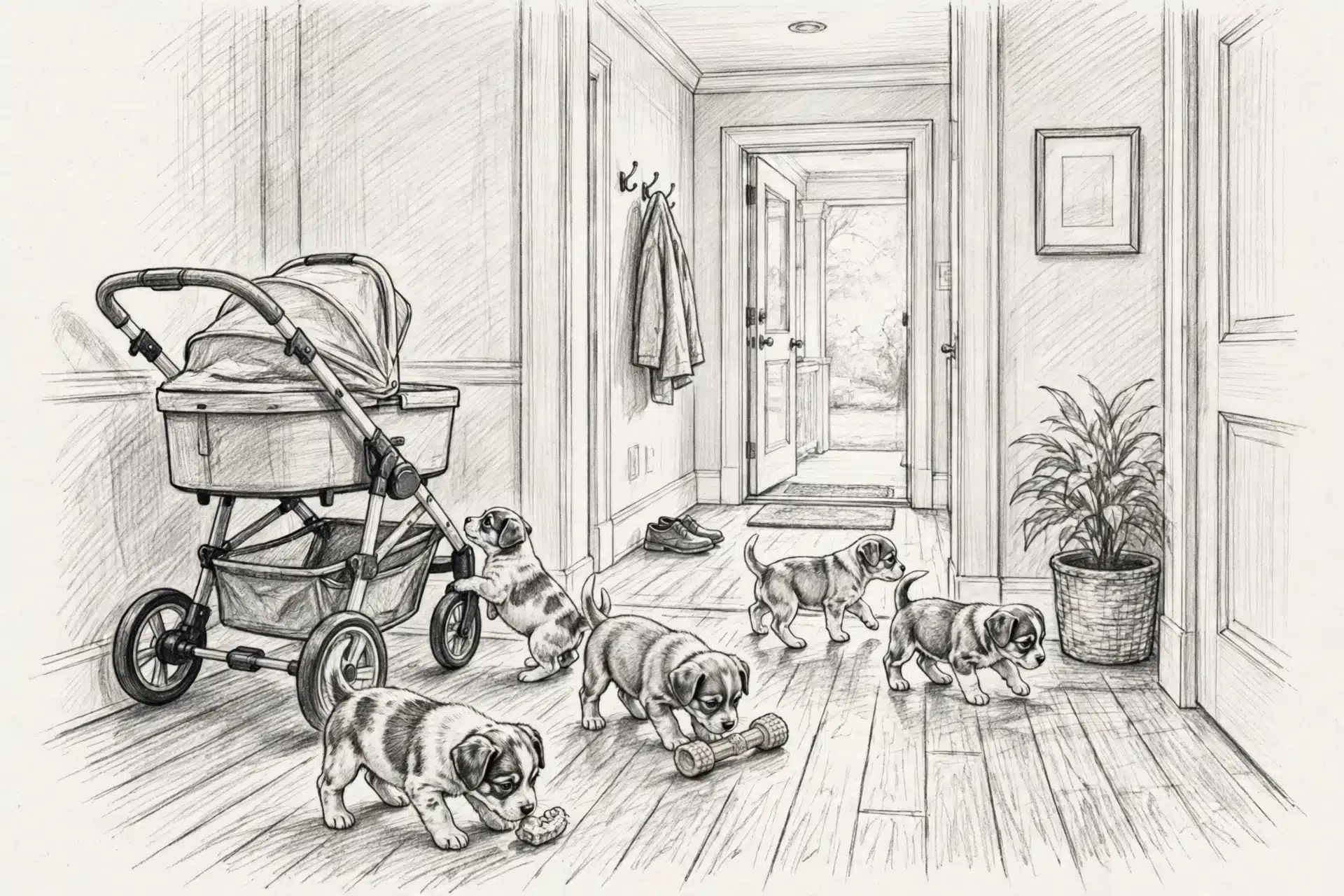
Puppies leave for new homes around 8 to 10 weeks, yet the window runs to roughly 14 weeks. That means the breeder owns the richest weeks of it. In a home, daily life supplies the curriculum: vacuum noise, children, stairs, car rides. A kennel can still socialize puppies well with planned handling. What changes is the variety a puppy meets by accident, which research links to better later behavior. Family programs like Sage Puppies build their model around those weeks.
What studies can and cannot show
Studies confirm that early experience affects adult behavior, and a few compare rearing settings in service dog programs. But they rarely isolate home versus kennel while holding breed, genetics and handling quality constant. So the evidence supports asking how a breeder socializes, not assuming one setting always wins. Verify the daily routine, then judge the program.
How to Verify the Care Model Before You Pay
You can verify a puppy was raised in a home by asking questions a kennel cannot answer well:

- Where do the puppies sleep at night?
- How many litters do you raise each year?
- Who handles the puppies daily, and how often?
- Can I visit or get a video call inside your home?
- What sounds, surfaces and people have the puppies met this week?
A breeder raising puppies in a kitchen answers these fast, with detail. Vague answers, or “we’ll send photos,” usually mean the puppies live elsewhere. The socialization window runs to about 14 weeks, so daily handling at home matters most early on.
Ask what the price includes
Price alone tells you little. Ask for a written breakdown: shots, deworming, vet exam, microchip, spay or neuter terms, starter food, and any health screening done on the parents. Then ask how deposits and waitlist spots work, and what happens to your money if a litter is small.
A trustworthy breeder puts these terms in writing before you pay. For example, programs like Sage Puppies use a clear application so families know the process before reserving. If a seller dodges the breakdown, or pushes a same-day deposit, walk away. Cheap often costs more later.
Where Sage Puppies Fits in This Comparison
The program behind the price range
Everything in the family-raised column above describes how Sage Puppies works. Cassie Milar founded the program in South Jordan, Utah, in 2025, and every litter is Havanese, Havapoo or Cavapoo, raised inside the home and handled daily through the socialization window. Small litters and hands-on care explain why the published price sits at $3,500 to $4,500 rather than the low end of the small breed range. Owner-managed matching, not a kennel roster, decides which puppy goes to which family, and both local pickup and national delivery are handled through one person.
What buyers should confirm before reserving
The same checks from earlier in this article apply to any breeder, including family-raised programs. Ask who lives with the litter, how many litters the household raises each year, and what written health terms come with the puppy. Request parent screening results and a copy of the contract before money changes hands. The puppy application walks through these questions step by step, so you know what to expect before you commit.
Which Should You Choose: Family-Raised or Kennel-Raised?
The right answer depends on your budget, your timeline and how much early socialization you want handled before pickup. Here is the honest breakdown of when each model makes sense.
Choose family-raised when
Pick a family-raised puppy if you want a dog that has lived in a home from day one. These puppies hear dishwashers, meet kids and get handled daily during the socialization window, so house sounds and cuddles feel normal by the time they come home. You are also buying transparency. You can ask about the parents’ health screening, litter size and daily routine, and good programs answer plainly. The trade-off is price and patience. Expect the higher end of the small breed range, often $3,500 to $4,500, and a waitlist while the mother rests between litters. Families with young children or first-time dog owners usually find that head start worth it.
Choose kennel-raised when
A kennel-raised puppy can be the smarter pick if your budget is firm or your waitlist is short. Purchase prices often run lower for the same breed, which leaves more room in your first-year budget for vet care, food and training classes. Many larger programs are also well run, with clean facilities, written health terms and staff who handle puppies on a schedule. The key is asking how the puppies are socialized. Because they miss some of the home-noise exposure a family raises into a puppy, plan to do more early work yourself once your pup arrives. That is a fair trade if you have the time, but it is real work during those first weeks at home.

You now know what the price gap actually buys: hands-on care during the weeks that shape a puppy for life. If that fits your family, Sage Puppies publishes its pricing openly and walks you through matching before you commit. Check the pricing and reservation guide, then submit an application to reserve a Havanese, Havapoo or Cavapoo puppy raised in our South Jordan home.
Frequently Asked Questions
Q1: How much does a family-raised puppy cost compared to a kennel-raised one?
Family-raised small breed puppies usually run $3,000 to $4,500, with Sage Puppies publishing $3,500 to $4,500. Kennel-raised puppies for the same breed often list lower because costs spread across many litters.
Q2: Is a home-raised puppy better than a kennel-raised puppy?
Not automatically. Home life supplies varied socialization by accident, which research links to better behavior, but a well-run kennel with planned handling can succeed. Verify each program’s routine instead of trusting a label.
Q3: How much time does a breeder spend raising each puppy at home?
In family programs, handling happens in short bursts across most of the day for eight weeks: early handling, crate intro, name practice, nail trims and vet visits.
Q4: Are kennel-raised puppies less healthy?
Health depends on parent screening, vetting and cleanliness, not the setting alone. Ask for genetic testing results and written health terms before comparing any two breeders.
Q5: Do I pay more first-year costs with a kennel-raised puppy?
Often yes, in effort and classes. Expect extra socialization and training work early, since kennel-raised puppies may need more decompression and habit-building after go-home.
Conclusion
The price gap between family-raised and kennel-raised puppies comes down to labor. Small litters, daily handling and household socialization during the puppy socialization window drive family-raised pricing, usually $3,500 to $4,500 for small breeds. Kennel-raised puppies often cost less up front, but more of the socialization and training work shifts to you, which shows up in first-year puppy cost components like classes and trainer time. Neither model is automatically better. The winning move is verification: ask where puppies sleep, how many litters a year, who handles them daily and what written health terms come with the puppy. A breeder who answers those questions plainly earns your deposit, whichever model they use.