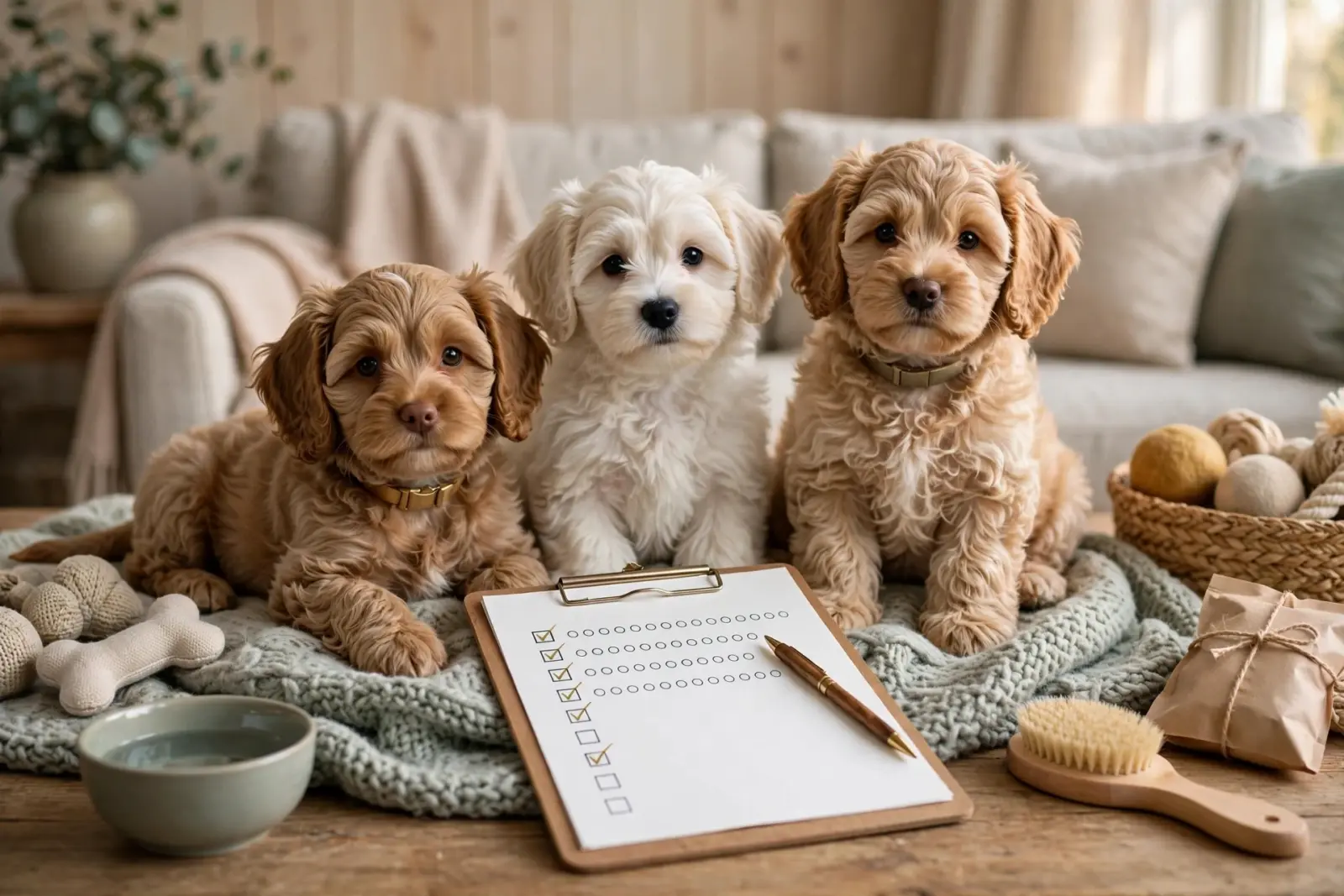
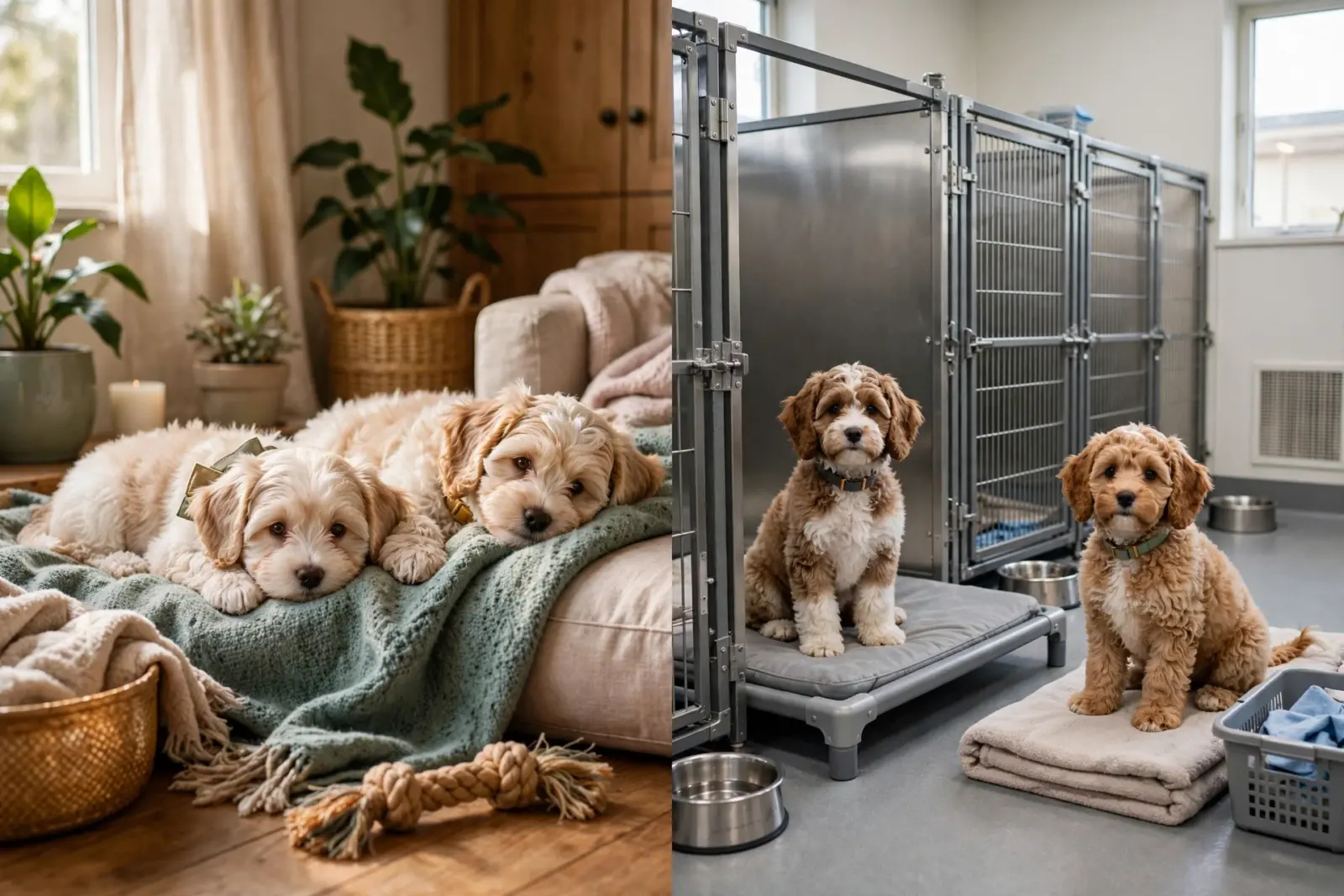
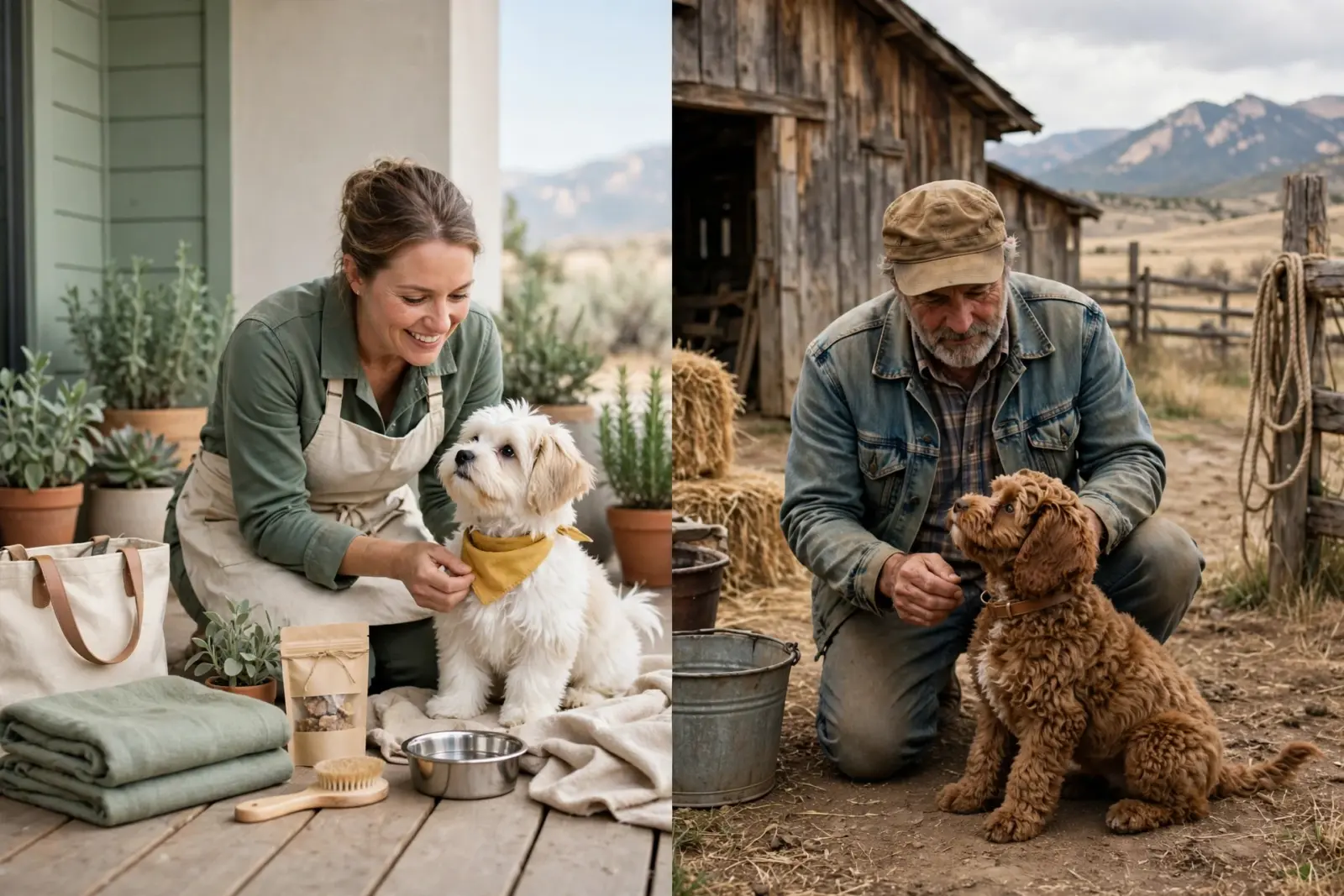
Quick Summary: Before paying a Utah puppy seller, confirm the business identity and licensing, request both parents’ OFA and DNA records plus the puppy’s vet records, and check results in public databases. Meet the mother and litter live in person or by video, read the contract and refund terms, and pay only by a traceable method. Walk away from sellers who pressure you, hide records, refuse live access, or demand gift cards, wires, cryptocurrency, or app payments; Sage Puppies is presented as a transparent example that shares records, contracts, and matching steps before payment.
Two puppies can look identical in photos. Only one comes with health records you can trace back to the parents, a physical address you can stand in front of, and a seller who answers questions without hurrying you toward a deposit. This Utah puppy buyer guide exists because the difference between those two sellers is easy to miss until your money is gone.
Here, you will learn the exact verification steps: which records to request, which public databases confirm them, what a good breeder should ask you, and which contract terms to read before you pay anything. We run Sage Puppies in South Jordan, where Cassie Milar raises Havanese, Havapoo, and Cavapoo puppies under a documented process, so every example comes from a real Utah puppy buyer guide workflow.
Before You Start: What Verification Actually Requires
How do you verify a puppy seller in Utah? Ask for four records, confirm each one in a public database, then insist on seeing the litter with their mother. Sellers who balk at any step are telling you something before money ever moves.
The Four Records Every Legitimate Seller Can Produce
Request these up front, before you talk deposits:
- Veterinary exam records for each puppy
- Vaccination and deworming dates
- Health and genetic testing for both parents, including OFA and DNA results
- A written contract showing health terms and the puppy deposit and contract terms spelled out
If the litter or dam is USDA licensed, check the seller in the USDA Animal Care public search tool, which lists licensees and inspection reports.
Access to the Puppies and Their Mother
A responsible breeder lets you meet the dam, in person for puppy pickup in Utah or by live video if you’re arranging delivery. Pre-recorded clips don’t count, because you can’t see the mother’s temperament, body condition, or how the puppies respond to people. Many Utah puppy buyer guide checklists treat this as the single pass-fail test, and ours does too. Refusal to show the dam ends the conversation.
A Simple Note System for Comparing Sellers
Talk to three or four sellers and the details blur fast. Start a note for each one and log the same fields every time: records received, database checks done, dam seen, questions they asked you, and contract red flags. Good breeders screen you back, so a long list of questions is a good sign. This Utah puppy buyer guide approach takes ten minutes per seller and keeps your decision honest.
Keep every record a seller sends you, including screenshots. If a dispute comes up later, that paper trail is your only leverage.
Step 1: Confirm the Seller’s Identity and Business
Find the Legal Name Behind the Website
Before you talk pricing, learn who actually runs the site. A real breeder lists a full legal name, a location, and a way to be reached that matches both. Scroll to the footer and the terms page for an LLC name, then search that name plus the city. If the website hides its owner, shows only a first name, or lists a address that turns out to be a shipping depot, treat it as a warning sign and keep verifying elsewhere.
Search Public Licensing and Inspection Records
Next, check the paperwork. Any breeder with more than a small number of breeding dogs and sales must hold a federal license under the Animal Welfare Act, and you can confirm that in the USDA Animal Care Public Search Tool, which lists licensees, registrants, and inspection reports. Search the legal name you found in Step 1. Smaller home programs may be exempt, so no record is not always bad news; just ask the seller directly why they are unlicensed and whether state or city rules apply to them.
Check Utah Registration and Local Context
For Utah sellers, confirm the business exists close to home. Look up the LLC in the Utah Division of Corporations’ business search, and check the county or city for a business license where required. Ask which city the puppies are raised in and whether you can visit or join a video call. A seller connected to a real Utah community, like Sage Puppies in South Jordan, will answer these questions without hesitation, and you can also browse their available puppies to see how litters are presented.
Article Title
Puppies for Sale in Utah: How to Verify Local Sellers
Step 2: Verify Health Testing and Parentage Records
Ask a seller what health records they keep, and a good one answers without hesitation. The list is short: health clearances for both parents, DNA test results, the puppy’s vet exam record, and vaccination and deworming dates. Anything less is a reason to slow down.
Request Records for Both Parents, Not Just the Puppy
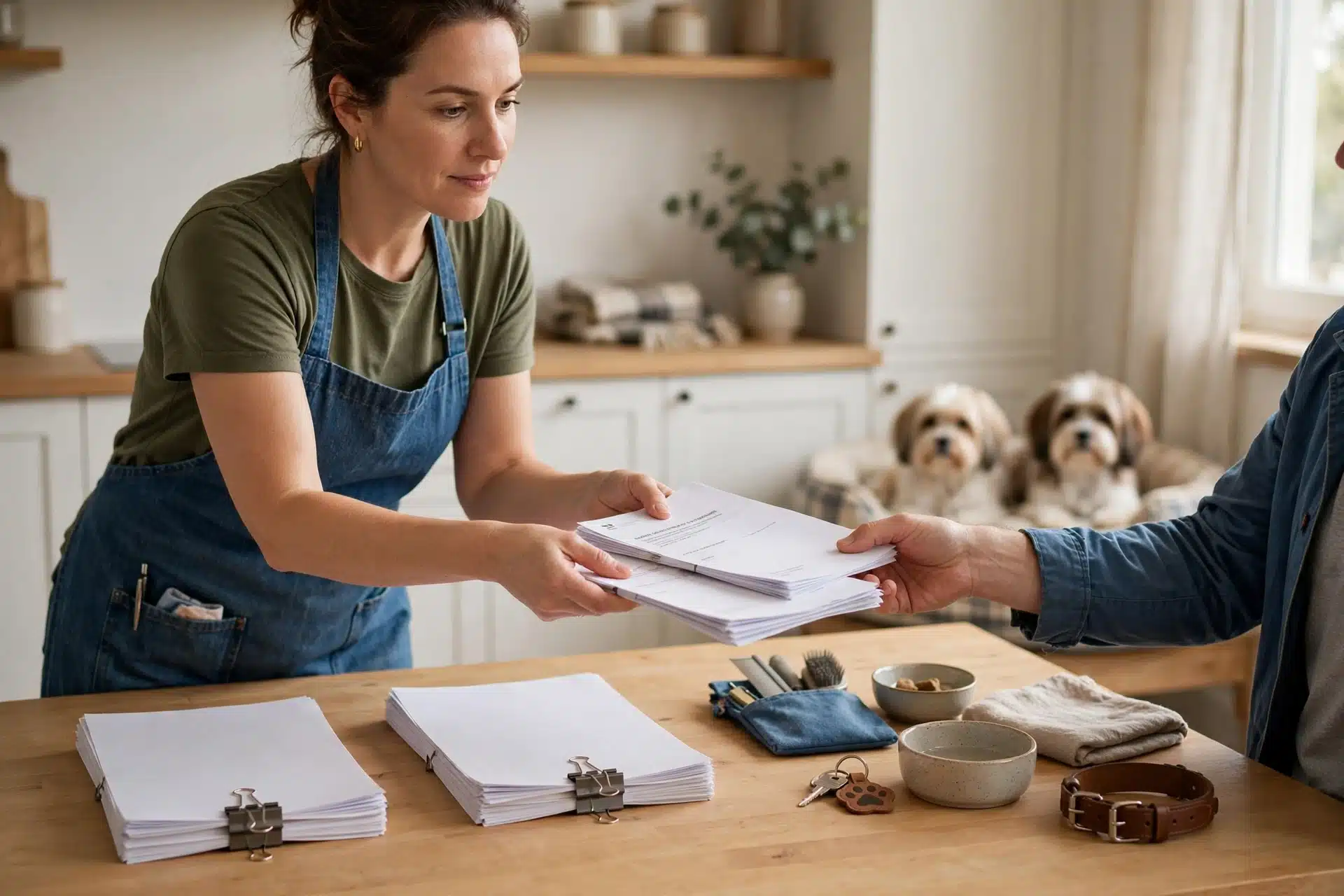
A cute puppy photo proves nothing about health. Ask for the parents’ official test results by name: patella evaluation, cardiac exam by a cardiologist, hip scores where the breed calls for them, and DNA panels covering breed-specific conditions. Havanese, for example, are screened for heart and knee problems plus inherited deafness. Breeders who test both parents keep these reports on hand. If someone sends only a vet visit receipt, that is a wellness check, not health testing. Ask to see the actual reports before you talk about a deposit.
Look Records Up in Public Databases
Paperwork can be edited, so check it yourself. The Orthopedic Foundation for Animals keeps results on millions of dogs, and its advanced search lets you look up a parent by registered name, breed, or condition. Dogs that complete all breed-recommended tests and consent to publish results earn a CHIC number through the CHIC program. Match the name on the papers to the database entry. Then ask the breeder which parent’s page you should be reading.
Separate What Screening Can and Cannot Tell You
Health testing lowers risk; it removes none of it. Clear parent tests mean those specific diseases were not passed on, but puppies can still get sick. Treat records as evidence, not a guarantee. Responsible programs, including ours, share results openly and explain the limits. For a deeper list of questions about health-tested parents, compare what each breeder offers.
Step 3: Inspect the Litter, the Mother, and the Environment
Records tell you what a breeder has done. A visit tells you how the puppies have actually been raised. Whether you drive to South Jordan or ask for a live video call, look closely at three things: the space, the mother, and how the litter behaves.
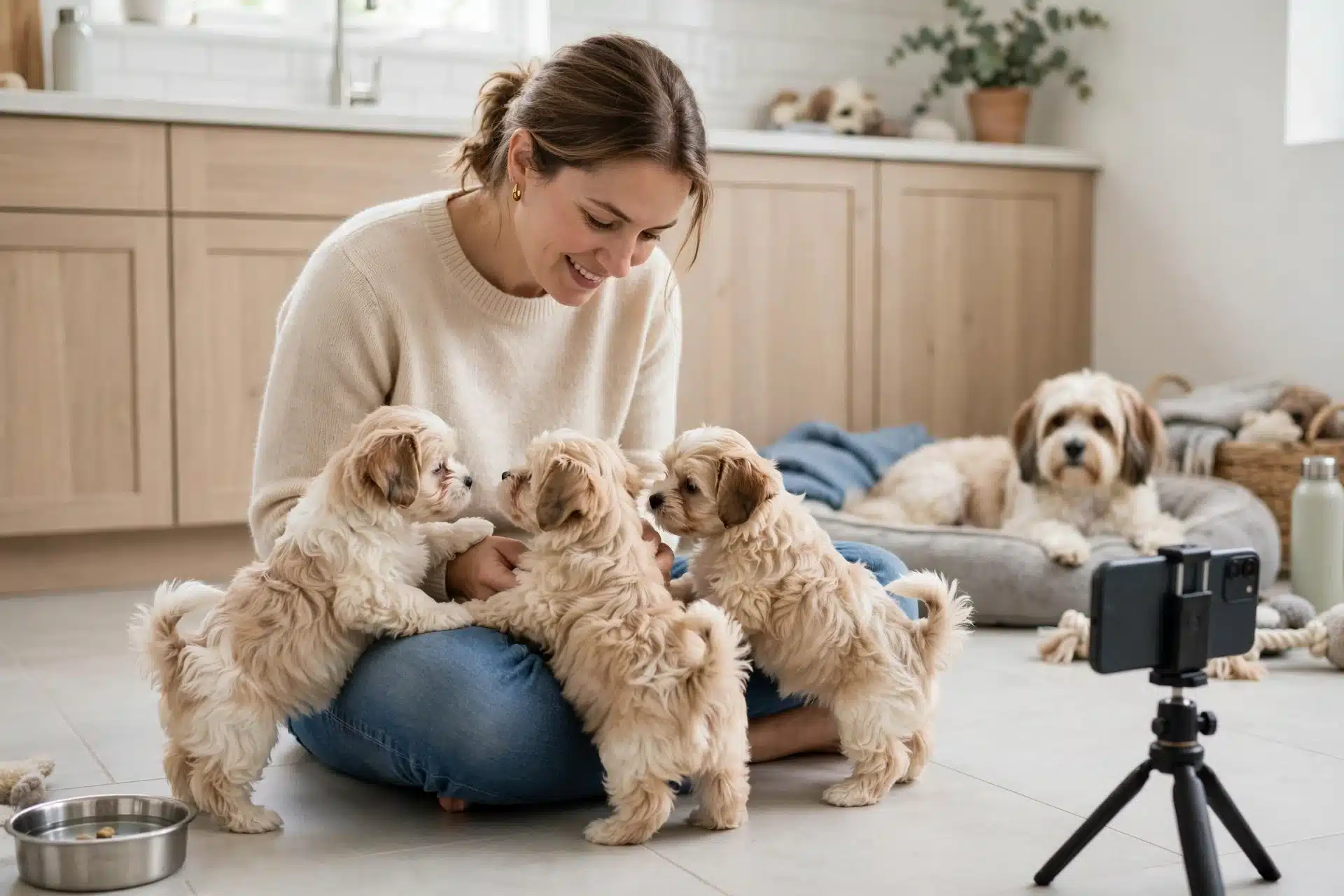
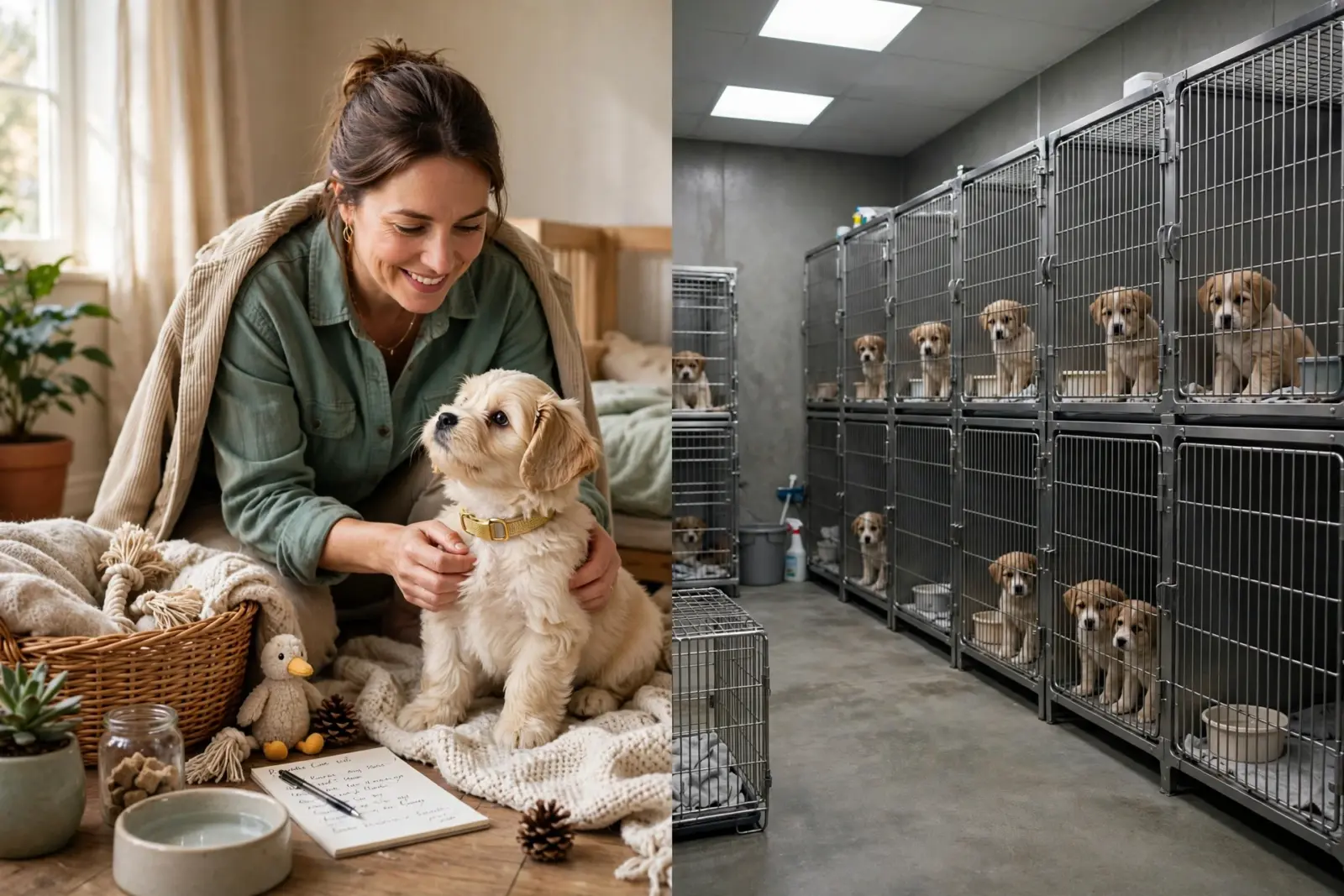
What a Healthy Litter Environment Looks Like
A good whelping and living area is clean, warm, and not crowded. Puppies should look bright-eyed, well filled out, and free of crusted eyes, coughs, or loose stools. Ask where the puppies sleep, how often the area is cleaned, and what they hear each day. Litters raised around normal household noise, handling, and gentle handling by children usually settle into family life faster. A breeder who invites you into the space, in person or on camera, has nothing to hide.
Ask to See the Mother and Ask About the Sire
Always meet the dam, the puppies’ mother, in person or on a live video call. Watch how she moves, her body condition, and her temperament around you. A nervous or underweight dam is a warning sign. For the sire, ask whether he lives with the breeder or elsewhere, and request his health testing records the same way you did for the dam. Responsible breeders answer these questions without hesitation.
Age, Timing, and Interaction Signs
Puppies should stay with their mother and littermates until at least eight weeks old. Earlier separation hurts bite inhibition and confidence. When you visit, sit on the floor and let the puppies come to you. You want curious, wobbly, social puppies, not fearful cowering or nonstop frantic barking. Ask how the breeder socializes the litter and what each puppy has experienced so far.
Step 4: Read the Contract, Deposit, and Payment Path
A good contract protects both sides. Before any money moves, ask for a written copy and read every line, including the fine print about health, returns, and who pays for shipping.

Terms That Should Be in Writing
A serious puppy contract should state, in plain language:
- The purchase price and what it covers
- A health record with vaccines, deworming, and a vet exam date
- Which health and genetic tests the parents passed, with room for you to verify them
- Spay or neuter terms, if any
- What happens if the puppy gets sick in the first days, including refund or replacement terms
- The pickup or delivery date, method, and who pays each cost
If a seller promises any of this verbally but refuses to put it in writing, walk away.
How Deposits Should Work
A deposit should hold a specific puppy or a spot in a litter, never just “a puppy someday.” Ask for the amount in writing, what it applies toward, and the refund terms if the litter changes or you change your mind. Legitimate breeders accept traceable payments and send a receipt. Sage Puppies, for example, pairs its deposits with a written application and matching process rather than a first-come payment. Avoid anyone who wants full payment before you have seen photos, video, or the puppy’s records.
Payment Methods That Signal Trouble
Never pay for a puppy with a gift card, wire transfer, cryptocurrency, or a payment app like Zelle or Venmo. The FTC warns that gift card demands are a hallmark of scams because the money is gone the moment you share the card number and PIN. These methods offer no way to trace or reverse a payment. If a seller insists on them, end the conversation.
Step 5: Let the Seller Interview You Too
A good breeder screens you as carefully as you screen them. Expect questions, and be glad when they come.
Questions Responsible Sellers Ask You
A careful seller wants to know who is raising their puppy. Common questions include: Do you have a fenced yard? Has anyone in the home had dogs before? Are there young children or other pets? Who handles training, and will someone be home most of the day? Some programs, like ours in South Jordan, use a written application before matching a puppy. Answer honestly, because these questions help match the right puppy to your household.
Red and Green Signals in the Conversation
Green: the seller asks about your home, vet plans, and daily routine, and happily answers yours. Red: they push a deposit before you meet the dam or see the litter, dodge health testing questions, or offer to meet you in a parking lot. Another red flag is a seller who never asks anything at all. Interest in your answers shows the puppy matters more than the payment.
Support After the Sale
Ask what happens after pickup or delivery. A responsible program stays reachable for feeding questions, grooming, and the first-night routine, and many put a health guarantee and return clause in the contract. Get those terms in writing before money moves. A seller who goes quiet after the deposit is telling you something.
Red Flags That Should End the Search
Pattern Red Flags
You can usually spot a scam before any money moves. Walk away if the seller:
- Offers any puppy instantly, has “available now” litters year-round, or sells many breeds at once
- Wants payment by gift card, Venmo, Zelle, or wire, and pressures you to send a deposit fast
- Refuses video calls, dodges requests to meet the mother, or sends only stock photos
- Cannot show OFA or DNA records for both parents, or prices litters well below normal range
Condition and Logistics Red Flags
Watch how the puppy is offered, not just the price. Skip any seller who ships an eight-week-old puppy sight unseen, has no proof of vaccinations or a vet exam, or keeps litters in a kennel you cannot visit. A responsible Utah breeder like Sage Puppies invites pickup in South Jordan or arranges delivery with clear terms, because families should always know who raised the litter.
What to Do When Something Feels Off
Trust the pause. Ask for one more record, a live video of the dam, or your vet’s name for a callback. A good breeder answers without offense; a bad one stalls, guilt-trips, or cuts the price to close. If answers keep sliding, stop the conversation and keep your deposit. No puppy is worth the risk.
A Final Verification Checklist Before You Pay
The Ten-Minute Check
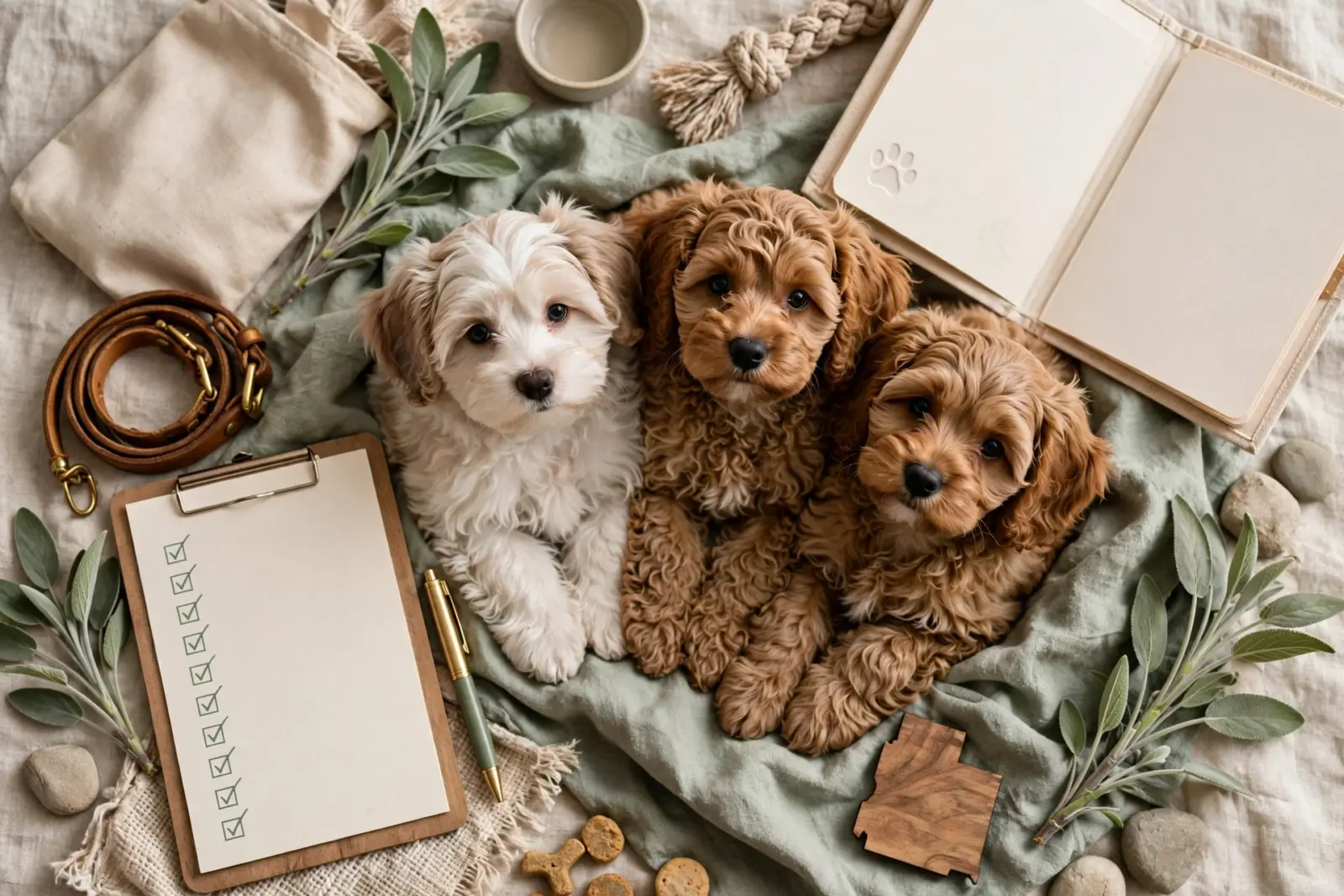
Before any deposit moves, run this quick list:
- License: Search the seller in the USDA Animal Care search if they ship puppies or keep three or more breeding dogs.
- Records: Ask for the dam’s and sire’s OFA results and DNA panel, plus the puppy’s vet exam and first shots.
- Litter: Meet the dam and puppies live or by video, unscripted.
- Paperwork: Read the contract and deposit terms first. Refund rules belong in writing.
Next Steps After Verification
If every box checks out, pay by a traceable method and never wire money or pay with gift cards. Schedule pickup or delivery in writing, including the date, location and what the puppy travels with. Keep digital copies of every record you were sent.
A breeder who answers slowly or dodges one item is telling you something. Responsible programs, including small Utah breeders like Sage Puppies, welcome these questions because verifying a puppy breeder protects their work too.
Trust the checklist, not the pressure. A genuine litter is worth a ten-minute wait.

Verifying a seller takes effort, but it protects your family for years. If you want that process done openly, Sage Puppies shares health records, contract terms, and matching steps before you commit. Start with the application and ask us anything.
Frequently Asked Questions
Q1: Where can Utah families find a trustworthy local puppy buying guide?
Start with the verification steps above: confirm the seller’s legal name, check licensing records, request OFA and DNA testing for both parents, and meet the dam in person or by video before any deposit moves.
Q2: How much should a Havanese or Havapoo puppy cost in Utah?
Price varies by breeder, health testing, and contract terms. Treat a price well below normal range as a red flag, and ask what the fee covers, such as vet exams, vaccinations, and health guarantees.
Q3: Can I verify a breeder without visiting in person?
Yes. Ask for a live, unscripted video call showing the litter and their mother, then confirm records yourself in the OFA database and USDA Animal Care search tool.
Q4: What records should a breeder send before I pay a deposit?
Request vet exam records, vaccination and deworming dates, both parents’ health and DNA test results, and a written contract with deposit and refund terms spelled out.
Q5: What payment methods are safe when buying a puppy?
Use traceable payments only. Never send gift cards, wire transfers, cryptocurrency, or app payments like Zelle or Venmo, because those funds cannot be reversed.
Q6: When can puppies leave their mother in Utah?
At least eight weeks old. Earlier separation affects bite inhibition and confidence, so ask about the litter’s exact age before agreeing to a pickup or delivery date.
Conclusion
Verifying a Utah puppy seller comes down to a short, repeatable routine: confirm the legal name, check licensing records, request health and genetic testing for both parents, meet the litter and the dam in person or by video, and read the puppy deposit and contract before money moves. Every step you complete makes a scam harder and a good breeder easier to spot.
Responsible sellers welcome the scrutiny. They answer screening questions, share records, and put terms in writing. Whether you want a Havanese, Havapoo, or Cavapoo puppy, trust the checklist over the sales pitch.