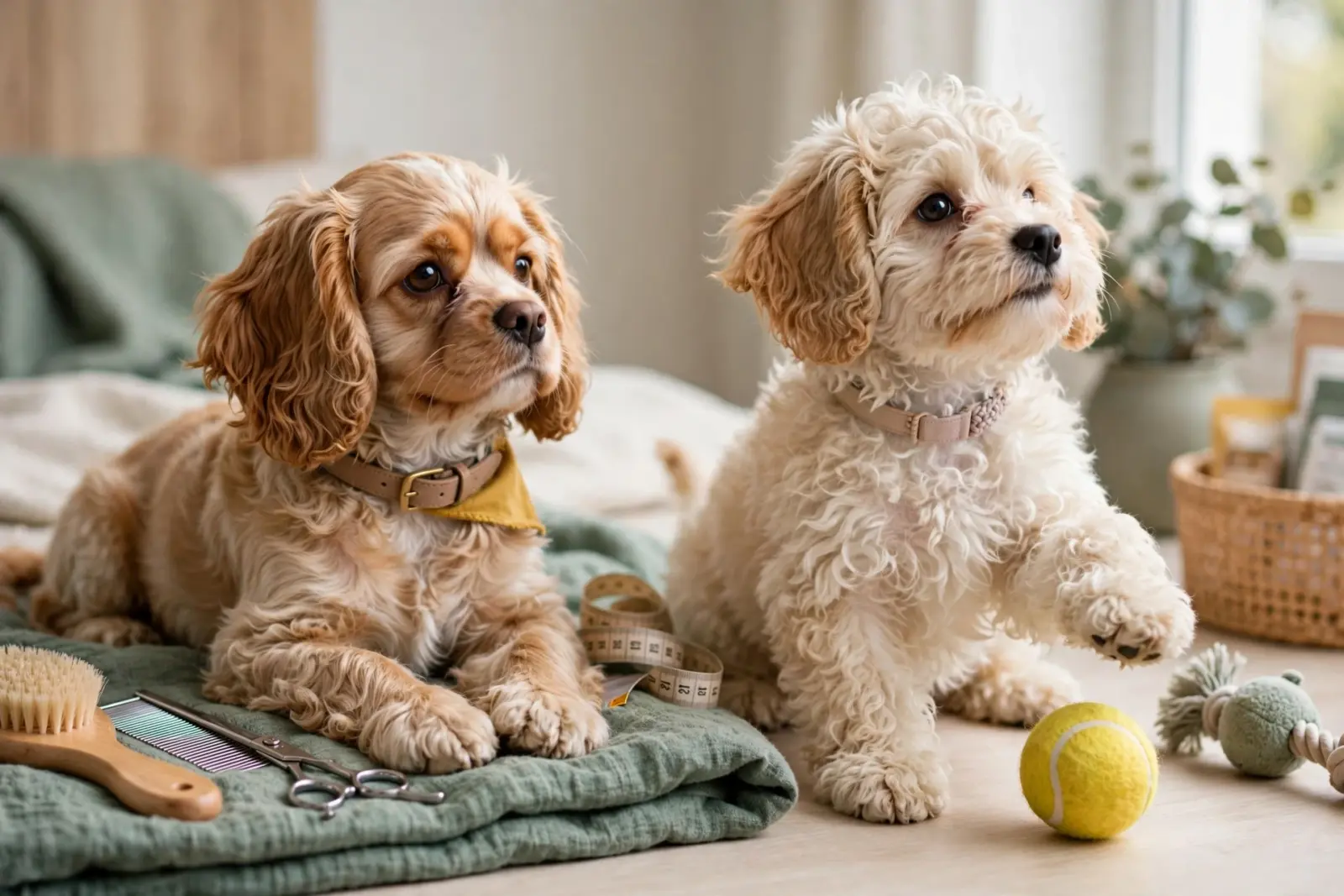
Quick Summary: The Cavalier King Charles Spaniel is usually easier for first-time owners because it trains readily, adapts well to children and visitors, and fits family life. The Chihuahua suits calm apartments and owners who want a tiny, alert companion, but it needs patient training and careful handling around young children. Both need written health screening records, while Sage Puppies offers health-screened Cavapoo puppies as a sturdier, lower-shedding alternative.
If this is your first small breed puppy, the Cavalier vs Chihuahua choice comes down to this: the Cavalier King Charles Spaniel is easier to train and live with, while the Chihuahua is easier to fit into a small space and a busy household. Both are affectionate companion breeds. The honest differences show up in daily exercise, coat care and the health screening paperwork a breeder should show you.
Most first-time buyers narrow to these two and then stall. Breed marketing says both are lap dogs good with children, so nothing helps you match one to your apartment, your routine and your tolerance for grooming or health risk. The Chihuahua breed temperament, in particular, surprises people who only met the tiny-dog stereotype.
This comparison works through what actually changes daily life: energy, behavior with kids and visitors, grooming, adult size, and the screening tests to request from any breeder. You will get a clear pick per household, one alternative pairing worth a look, and questions to bring with you. For a frame of reference, our program raises Cavapoo puppies, so we spend every day around small companion breeds and the health records behind them.
Cavalier King Charles Spaniel vs Chihuahua: At a Glance
| Cavalier King Charles Spaniel | Chihuahua | Cavapoo puppies from Sage Puppies | |
|---|---|---|---|
| Adult size and weight | 12-13 inches tall, 13-18 pounds | Typically 5-8 pounds, occasionally up to 11-12 | Small companion range, individual puppies vary |
| Energy and exercise needs | Moderate, roughly 30-45 minutes of daily walking plus play | Low to moderate, often 20-30 minutes of activity daily | Moderate, adjustable to a family routine |
| Coat and grooming load | Moderate shedding, brushing several times a week, professional trims | Short or long coat, light to moderate shedding, low grooming time | Poodle-type coat, regular brushing needed, lower shedding than a Cavalier |
| Temperament and trainability | Sweet, gentle, affectionate, generally eager to learn | Alert, bold, loyal, can be reserved with strangers, moderate trainability | Companion-oriented and trainable, softer than a pure Chihuahua |
| Key health watch points | Mitral valve disease, syringomyelia, patellar issues | Patellar luxation, dental disease, heart conditions, hypoglycemia risk | Ask for the parent dogs’ documented genetic and vet health testing |
| Typical lifespan | Roughly 9-15 years, often cited around 10-14 | Roughly 14-18 years | Typically in the low to mid teens when parents are health screened |
Meet the Contenders
Cavalier King Charles Spaniel
A small, feathered companion spaniel bred for one job: being with people. It suits families and first-time owners who want a gentle, eager-to-learn dog.

Key strengths
- Sweet, affectionate, people-oriented temperament
- Moderate exercise needs that fit most routines
Chihuahua
The smallest recognized breed, bold and deeply loyal to its favorite humans. It fits apartment dwellers and low-key households.

Key strengths
- Very compact size with low grooming demands
- Long lifespan, often into the mid teens
Cavapoo puppies from Sage Puppies
A crossbreed alternative to both, blending companion temperament with a lower-shedding Poodle-type coat. Families in the Cavalier vs Chihuahua debate often land here when they want a middle path.

Energy, Exercise and the First-Time Owner Question
Short answer: for a first-time owner, the Cavalier vs Chihuahua question usually ends with the Cavalier, because it forgives beginner mistakes. The Chihuahua is a fine choice if you want a tiny, alert companion and enjoy patient training. Why:
- Cavaliers accept new schedules, kids and guests more readily
- Chihuahuas bond hard to one person and stay wary of strangers
- Both fit apartments and small yards with daily walks
How Much Daily Exercise Each Breed Actually Needs
Cavaliers need roughly 30 to 45 minutes of walking plus play each day, and they happily join longer hikes as adults. Chihuahuas do well with 20 to 30 minutes of activity, often split into two short outings. Neither breed is a couch potato by default, but neither demands a runner’s schedule. Matching the walk to your routine matters more than the exact number of minutes.
Why Training Difficulty Separates These Two Breeds
Cavaliers were bred to work closely with people, so they read cues quickly and respond well to food rewards and praise. House training usually moves along within a few months of consistent routines. Chihuahuas are clever but independent, and their small size tempts owners to skip rules they would enforce on a larger dog. That habit creates nipping, barking and guarding behaviors that are harder to undo later. First-time owners who commit to early, gentle training succeed with either breed, but the Cavalier gives you more room for error.
Living With an Alert Dog vs a Velcro Dog
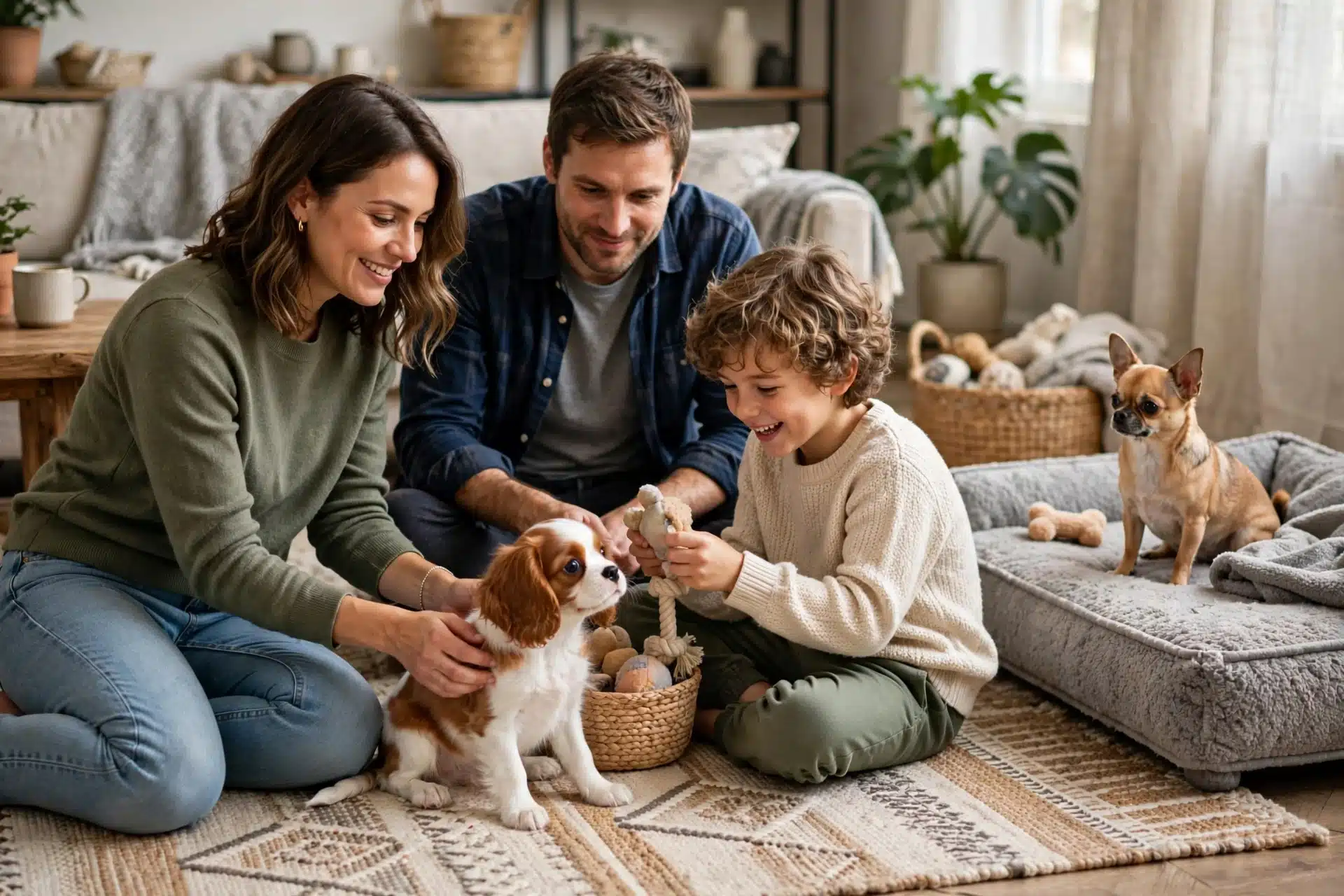
Chihuahua breed temperament leans vigilant. They announce every delivery, squirrel and passing dog, which works if you want a tiny watchdog and tries your patience if you work from home. Cavaliers bark less and trail their people from room to room, so they suit households that want constant company more than constant alerts. Both breeds dislike long hours alone. If you are planning your first weeks together, preparing your home for a small breed puppy covers the setup both breeds need.
Temperament Around Children, Visitors and Busy Homes
Are Cavalier King Charles Spaniel Puppies Good With Children?
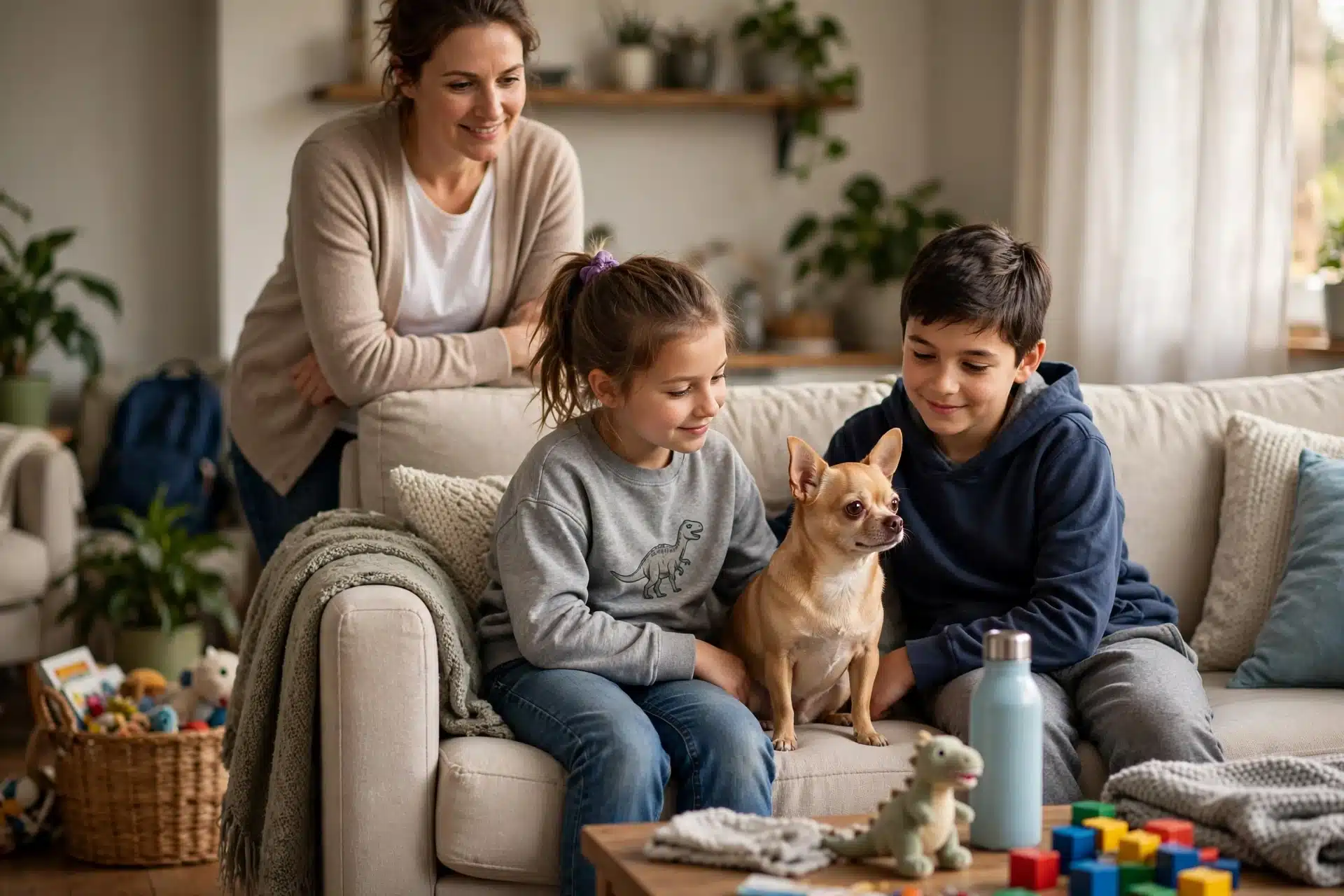
Yes, Cavalier King Charles Spaniels are widely considered one of the gentlest breeds with children. They were bred to be companions, so they tend to be soft-mouthed, patient and eager to please. Key traits to know:
- They usually tolerate hugs, dress-up games and noisy play better than most small breeds
- They rarely snap when startled, though every dog has limits
- They want to be where the family is, which suits busy homes
- They can be sensitive, so gentle handling rules still matter
Supervise any puppy with young kids, and teach children to respect nap time. The AKC notes the breed adapts well to family life. If you are bringing a small breed puppy home, our guide to preparing your home for a small breed puppy covers setup for kids and dogs together.
Chihuahua Temperament With Kids and Strangers
Chihuahuas bond intensely with one or two people, and that loyalty cuts both ways. With strangers they are often reserved, and many act barking-first at new guests until the visitor is “approved.” Around children, the picture is more mixed. Their tiny frames (5 to 8 pounds for most adults) make them fragile, and a dropped toddler hug can cause real injury. Many also guard their favorite person against other kids in the room.
That said, a well-socialized Chihuahua puppy raised around calm, gentle children can do beautifully in a quieter family. The pattern documented by breed experts holds: early socialization matters more for this breed than almost any other trait. Choose a Chihuahua for a calm household; choose a Cavalier when the house is loud, busy and full of small hands.
Coat, Shedding and the Grooming Load You Are Signing Up For
Which sheds more, the Chihuahua or the Cavalier King Charles Spaniel? The Cavalier does. Its silky coat sheds moderately all year, while most Chihuahuas shed less and need only a quick weekly brush. The Cavalier asks for far more brushing, bathing and coat care, so the grooming workload is a real difference between these two breeds.
Shedding and Coat Type Differences
The Cavalier carries a medium-length, silky coat with feathering on the ears, chest and legs. It sheds steadily through the year, with heavier drops in spring and fall, which owners confirm in owner discussions of Cavalier shedding. Chihuahuas come in two coat types: smooth and long. Both shed, but usually less, and loose hair is easy to miss on a 5 to 8 pound dog.
Grooming Time and Allergy Claims
Plan on brushing a Cavalier three to four times a week, plus baths and trims, as one grooming guide recommends. A Chihuahua needs a weekly brush and occasional nail trims. Neither breed is hypoallergenic; low-shedding crossbreeds such as Cavapoos are a better fit for mild allergies, and our small breed puppy care guide covers early coat training either way.
Adult Size, Apartment Living and Travel
What Each Breed Weighs as an Adult
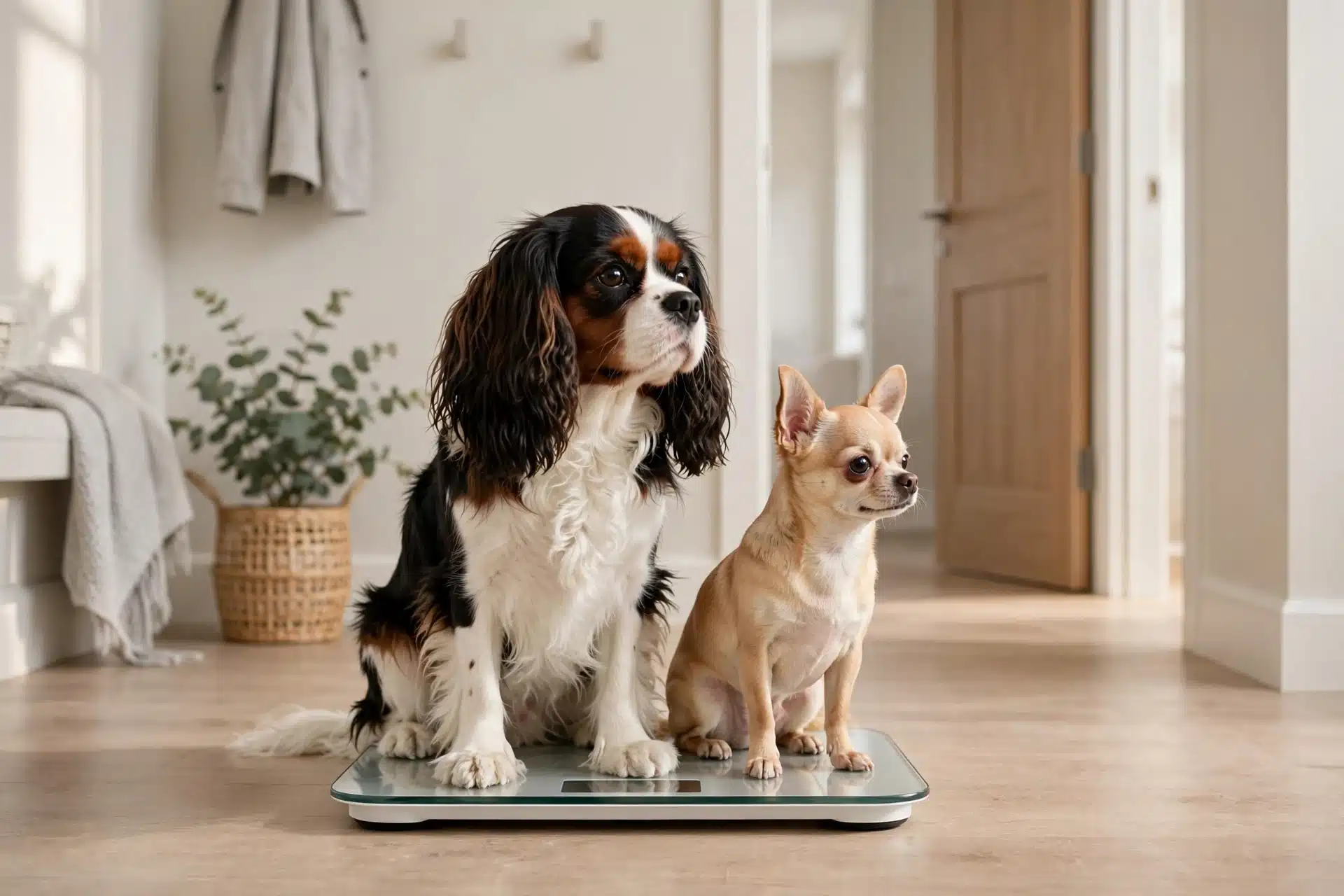
How big do Cavalier King Charles Spaniel and Chihuahua puppies get as adults? Cavaliers grow to 12-13 inches tall and weigh 13-18 pounds, according to the AKC breed profile. Chihuahuas stay far smaller, with most adults landing between 5 and 8 pounds and a few reaching 11-12 pounds.
That gap shapes daily life more than people expect. A Cavalier is a sturdy lap dog you can lift with two hands. A Chihuahua is a pocket-size companion you can carry in a carrier bag, but the same small frame means more care around stairs, furniture and toddlers.
Apartments, Stairs and Travel Logistics
Both breeds fit apartment life well, since neither needs a yard. Chihuahuas win on space and airline travel, because their size keeps them within most in-cabin carrier limits. Cavaliers handle stairs more safely and tolerate a car ride or a flight-day routine with less fuss.
If you expect frequent travel with your dog, size matters more than temperament. Ask any breeder about the parents’ adult weights so you know what you are bringing home.
Health Watch Points, Screening Questions and Lifespan
Both breeds can live long lives, but each carries breed-specific risks a careful buyer can screen for. Lifespan differs too: Cavaliers typically reach 9-15 years, while many Chihuahuas live 14-18 years.

Cavalier Cardiac and Neurological Screening
Two conditions dominate Cavalier health talk. Mitral valve disease is an early-onset heart condition that affects most Cavaliers by around age 10, and syringomyelia is a painful fluid-filled condition of the spinal cord linked to the breed’s skull shape. Ask any breeder these questions in this order:
- Do both parents have a recent cardiology exam by a board-certified cardiologist?
- What were the parents’ heart grades, and how old were they at the last exam?
- Have the parents been MRI screened for syringomyelia?
- Can I see the written test records, not just hear the summary?
The Royal Kennel Club heart scheme shows what formal cardiac screening looks like, and the Health Testing for Small Breed Puppies Explained guide walks through reading test paperwork step by step.
Chihuahua Joint, Dental and Heart Concerns
Chihuahuas bring a different list. Patellar luxation, where the kneecap slips out of place, is the most common orthopedic issue, so ask whether parents’ patellas were examined. Their tiny mouths crowd the teeth, so lifelong dental care matters. Heart murmurs and low blood sugar in very small puppies are also worth a vet conversation. Ask breeders for parent knee evaluations and any cardiac notes.
A Third Option Worth Weighing Before You Decide
What a Cavapoo Offers Against These Two
A Cavapoo is a Cavalier crossed with a Poodle, so it blends traits from both breeds above. Most adults stay in the small companion range, often 10 to 20 pounds, and the Poodle side tends to reduce shedding. You keep the Cavalier’s soft, people-focused temperament but add trainability and a coat many families find easier to live with. The trade-off is honest: a crossbreed is still a blend, so size, coat and energy vary from puppy to puppy. Grooming also matters more, since the Poodle coat usually needs regular brushing and clipping to avoid mats.
How Sage Puppies Handles Screening, Pricing and Applications
At Sage Puppies, Cavapoos are raised in South Jordan, Utah by a small program that only breeds Havanese, Havapoo and Cavapoo. Prices run $3,500 to $4,500, and each family goes through a written application so the match fits your home, not just the calendar. You can ask to see each puppy’s exam and care record, the named parents’ health screening results, and the contract before you commit. Pickup in Utah or delivery nationwide are both possible. Ask any breeder on your shortlist for the same three records.
Which Should You Choose: Cavalier King Charles or Chihuahua?
Pick a Cavalier if you want a soft, sociable family dog. Pick a Chihuahua if you want a compact, fiercely loyal companion who fits apartment life and lives a very long time. The honest deciding factors are household energy, children’s ages, and how much daily walking you will actually do.
Choose the Chihuahua If
You live in an apartment or small home and want a dog under 10 pounds. Chihuahuas bond hard with one or two people, need only 20 to 30 minutes of daily activity, and often reach 14 to 18 years of age. They suit adults, calm teens, and families with older children who understand a 5 to 8 pound dog can be hurt by rough play. Expect alertness at the door and some stubbornness in training.
Choose the Cavalier King Charles Spaniel If
You want a gentle, adaptable dog that enjoys kids, guests, and other pets. Cavaliers fit first-time owners well because they are eager to please and easy to train. Plan on 30 to 45 minutes of walking plus play each day, and ask breeders for heart screening records, since mitral valve disease is common in the breed. Their 13 to 18 pound build also handles family life more sturdily than a Chihuahua’s tiny frame.

Neither breed may be the right fit, and that’s okay. If a sturdy, low-shedding companion sounds better, Sage Puppies raises Cavapoo puppies with health-screened parents in Utah. Start with the application at Sage Puppies and we’ll help you match honestly.
Frequently Asked Questions
Q1: Which small breed puppy is better for a first-time owner, Cavalier King Charles or Chihuahua?
The Cavalier usually wins for first-timers. It forgives beginner mistakes, trains easily and adapts to kids and guests. Pick a Chihuahua only if you want a tiny, alert companion and will commit to patient early training.
Q2: How big do Cavalier King Charles and Chihuahua puppies get as adults?
Cavaliers reach 12-13 inches tall and 13-18 pounds. Most Chihuahuas stay between 5 and 8 pounds, with a few reaching 11-12 pounds.
Q3: Are Cavalier King Charles Spaniel puppies good with children?
Yes. Cavaliers rank among the gentlest breeds with kids: patient, soft-mouthed and eager to please. Still supervise play and teach children to respect nap time.
Q4: What health screening should I ask a breeder for?
- Recent cardiology exam for both parents, with heart grades
- MRI screening for syringomyemia in Cavaliers
- Patellar (knee) evaluations for Chihuahuas
- Written records, not just verbal summaries
Q5: Are either breed hypoallergenic?
No. Both shed. Low-shedding crossbreeds such as Cavapoos suit mild allergies better, though every dog varies.
Conclusion
The Cavalier vs Chihuahua choice comes down to household fit, not which breed is “better.” The Cavalier King Charles Spaniel suits first-time owners and busy families: gentle with kids, easy to train, happy with 30 to 45 minutes of daily walking. The Chihuahua suits calm homes and apartments: fiercely loyal, tiny at 5 to 8 pounds, low grooming, and long-lived at 14 to 18 years.
Whichever you pick, ask breeders for written health records, including cardiac screening for Cavaliers and patellar evaluations for Chihuahuas. If a sturdier, lower-shedding crossbreed fits better, a Cavapoo blends the Cavalier’s temperament with an easier coat.