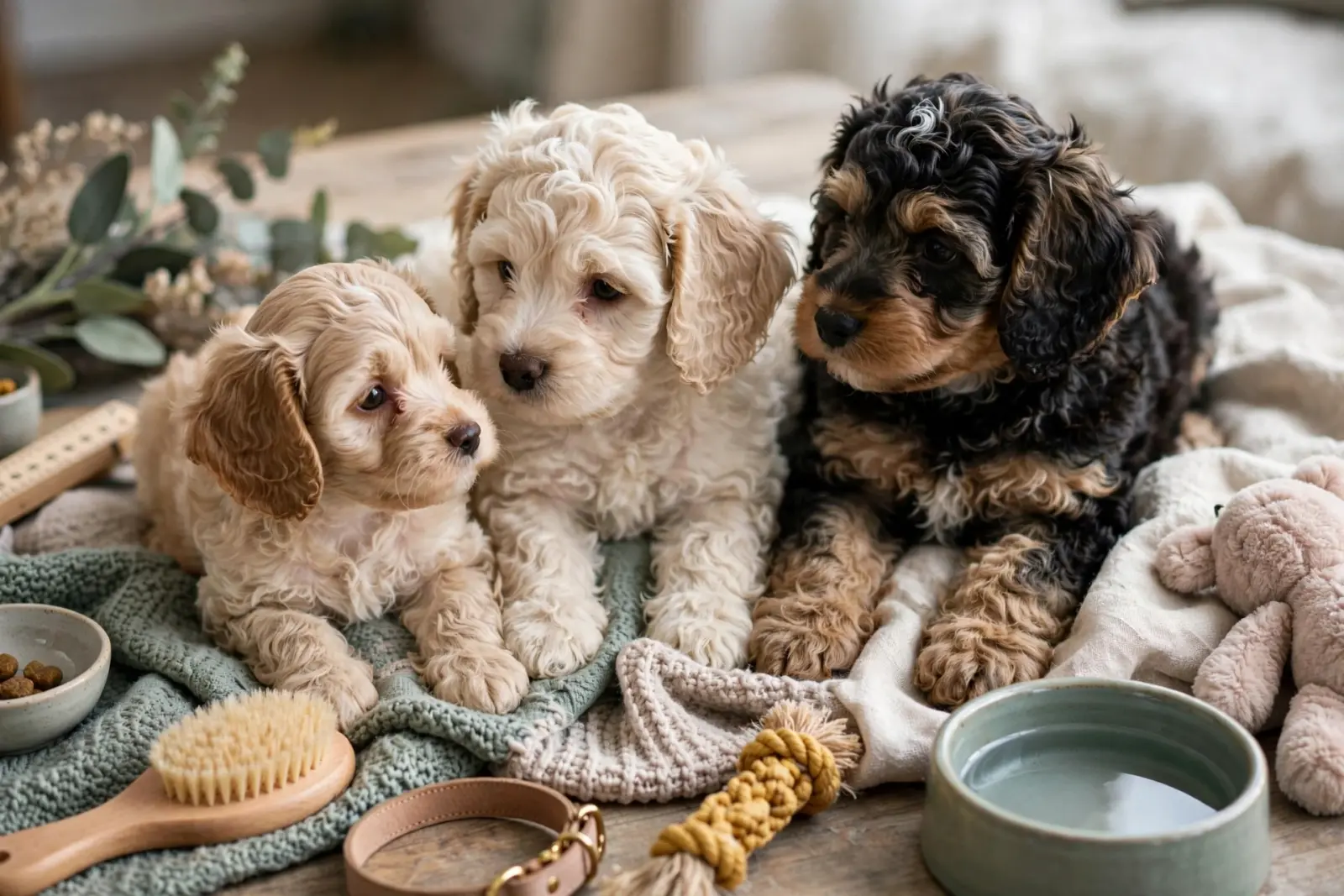
Quick Summary: Havapoos usually stay smaller and more playful into the evening, while Cavapoos often grow slightly larger and settle more easily, though individual parent size and temperament determine the outcome. Both crosses need moderate daily exercise, company, regular brushing, and professional grooming every four to six weeks, so a Havapoo may suit smaller spaces and active households while a Cavapoo may fit calmer homes. Sage Puppies recommends comparing parents, tracking a puppy’s monthly weight, and matching the specific puppy to your routine rather than relying on breed averages.
Two puppies side by side at a South Jordan kitchen table can look nearly identical today and grow into very different dogs. That is the heart of the cavapoo vs havapoo differences: a Havapoo usually trends lighter and steadier, while a Cavapoo often trends slightly larger and more people-focused. Neither prediction is a promise for the puppy in front of you.
Most comparison pages answer with fixed weight ranges and activity rankings that do not transfer to a crossbred puppy with two different parents. This guide lines up the three things that change daily life: adult size, energy and care. We compare them using the published Havanese and Cavalier King Charles Spaniel breed standards, then show where each puppy’s parents and coat decide the outcome, plus where to check current Cavapoo vs Havapoo differences in Sage’s availability and application details.
Cavapoo vs Havapoo: Size, Energy and Care at a Glance
| Cavapoo | Havapoo | |
|---|---|---|
| Adult size | Often trends slightly larger than a Havapoo; published Cavalier parents fall under about 18 pounds, Havanese parents around 7 to 13 pounds, and crossbred adult size varies | Often trends lighter and smaller; published Havanese parents fall around 7 to 13 pounds and crossbred adult size still varies by parents |
| Energy and exercise needs | Moderate; benefits from a daily walk plus play and training sessions that keep the busy mind occupied | Moderate per AKC guidance, typically a brisk daily walk plus indoor play; watch for a bouncy, playful streak |
| Coat and grooming | Silky to wavy single-layer-type coat that still tangles, needs regular brushing and periodic professional trims | Dense, silky double coat that mats readily, requiring regular brushing and professional grooming every few weeks |
| Temperament | Affectionate, people-focused and adaptable; often eager to please and receptive to training | Cheerful, sociable and steady-natured; the Havanese side is known for a springy, playful streak |
| Health considerations | Consider parent breed concerns including heart valve disease and nerve-related spinal issues in Cavaliers, plus joints and eyes | Consider parent breed concerns including liver shunts, joint problems and eye issues seen in Havanese, plus Poodle-related concerns |
| Best for | Homes wanting an affectionate, socially engaged small companion with time for daily interaction and grooming | Homes wanting a calm, devoted companion with an even temperament and reliable grooming routine |
How Cavapoo and Havapoo Compare
Cavapoo
A Cavapoo crosses a Cavalier King Charles Spaniel with a Poodle, producing an affectionate, people-focused companion with a soft, wavy or silky coat. It suits homes that want a socially engaged small dog and can offer daily interaction plus regular brushing. In any Cavapoo vs Havapoo differences review, expect the Cavapoo to trend slightly larger, since Cavalier parents often fall under about 18 pounds while Havanese parents sit around 7 to 13 pounds.
Havapoo
A Havapoo pairs a Havanese with a Poodle, blending the Havanese’s cheerful, steady nature with a dense, silky double coat that mats without routine care. It fits families wanting a calm, devoted companion with an even temperament and a consistent grooming rhythm. Both crosses share moderate energy needs, but individual puppies vary, which is why a careful matching process matters more than averages.
How Big Each Cross Usually Ends Up
Neither cross has a fixed adult size. Size depends on which parent the puppy takes after, and that is a roll of the dice in every litter.
What the Parent Breed Standards Actually Report
The published numbers give you a starting range, not a promise. The AKC lists the Cavalier King Charles Spaniel at 12 to 13 inches tall and 13 to 18 pounds. Havanese parents typically sit near 7 to 13 pounds, and a toy or miniature poodle adds another variable. So a Havapoo usually trends smaller, while a Cavapoo often lands a few pounds heavier.
Why Two Cavapoos Can Land Very Different Sizes
Crossbred puppies are not clones of a breed average. A Cavapoo from an 11-pound Cavalier dam and a toy poodle sire may stay under 12 pounds. A littermate throwing to a heavier poodle line can push toward 18 pounds or more. Healthy adult weights also depend on diet and body condition, so two dogs with the same frame can differ by several pounds. If you are planning meals ahead, a Cavapoo feeding and care guide helps you adjust portions as your puppy grows.
Growth Patterns Worth Watching in the First Year
Small crosses do most of their growing early. Most puppies reach close to their adult height by 8 to 10 months, then fill out in chest and muscle for another few months. Weigh your puppy monthly and compare the trend against the parents rather than a chart. Ask the breeder for both parents’ weights; that guess beats any formula.
Energy Level and How Much Daily Activity You Are Signing Up For
Both crosses sit in the moderate range, but the parents pull the daily routine in slightly different directions. A Cavalier’s side suggests calmer strolls; the Havanese side often means more play. Poodles add energy to either mix, so expect an upbeat small dog either way.
What Moderate Exercise Actually Looks Like in a Small Dog
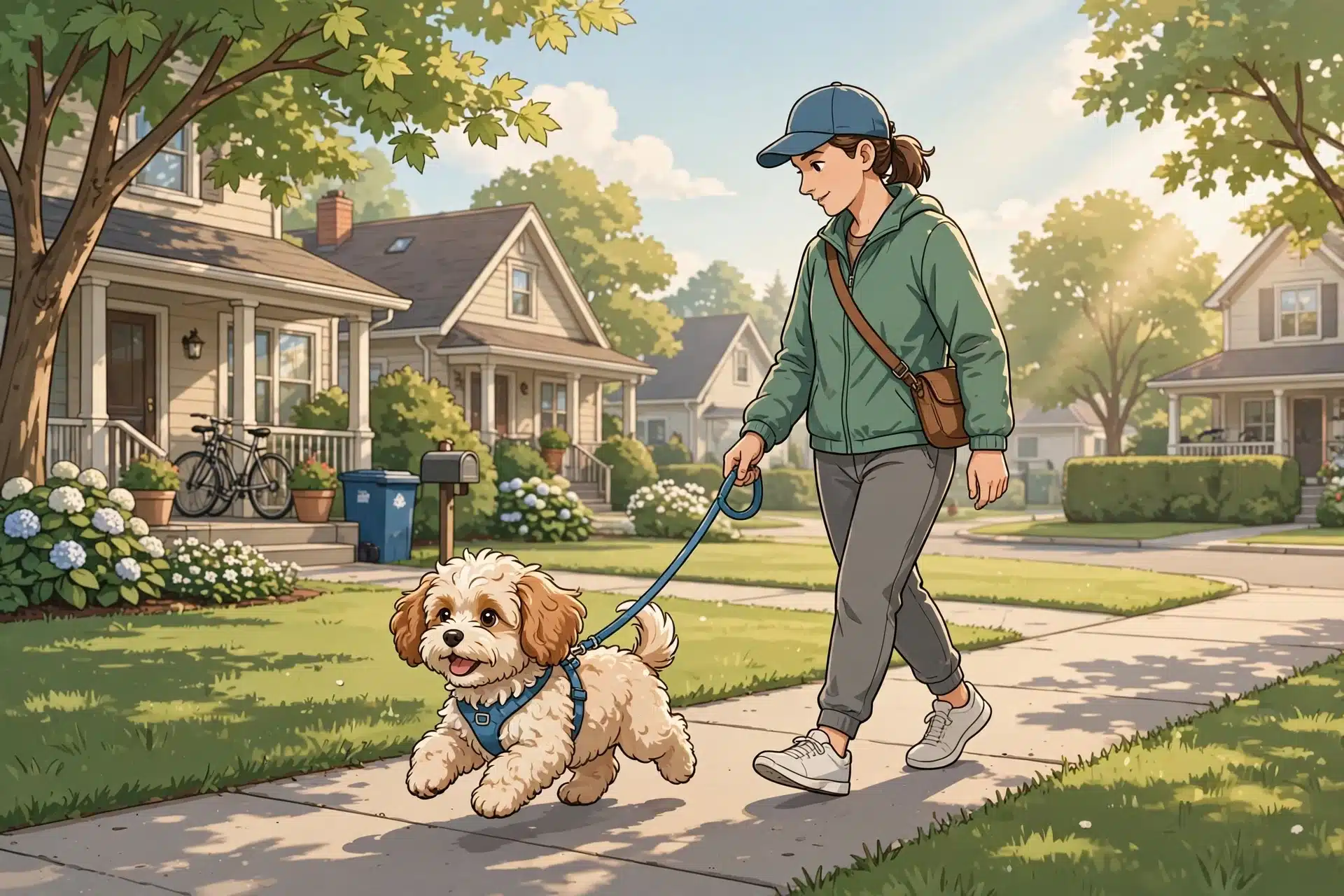
For a small companion, moderate usually means two short walks plus play, roughly 40 to 60 minutes of total activity a day. Cavaliers need only about two 20- to 30-minute walks daily, according to PetMD’s breed guide. The rest can happen indoors: fetch down a hallway, a tug session, or sniff time in the yard. Mental work counts too, so short training games tire a puppy faster than distance.
How the Cavalier and Havanese Sides Shift Daily Routine
A Cavapoo often leans toward the Cavalier pattern: a solid morning walk, some afternoon napping, and a relaxed evening. Many adult Cavaliers settle happily after their walk is done. A Havapoo tends to hold its Havanese playfulness longer, so you may see more evening zoomies and a bigger appetite for games. Neither mix is a jogging partner for long distances, and neither is a couch-only dog. The real difference is how quickly each winds down, not how much ground they cover.
Matching Energy to Your Actual Week
Be honest about your schedule before you choose. Ask yourself:
- Do you want one calm walk plus lounging, or a dog that plays hard all evening?
- Is someone home most of the day, or will activity need to fit mornings and evenings?
- Do you have a yard, or will every potty break and sniff session be a leashed walk?
If your week is full, a Cavapoo’s slightly steadier pace may fit better. If your household loves constant games and training, a Havapoo will happily keep up. Building short training sessions into the day helps either dog; our small breed puppy training basics cover skills worth teaching early. Either way, plan on 45 to 60 minutes of mixed activity, and adjust to the puppy in front of you rather than the breed label.
Coat Type, Grooming Load and Shedding
Both crosses lean toward the Havanese and Cavalier side of the family: soft, low-shedding coats that grow long instead of falling out. That sounds easy. In practice it means hair that keeps growing, tangles when it gets damp, and needs real brushing time from you.
The Havanese Double Coat Detail Most Buyers Miss
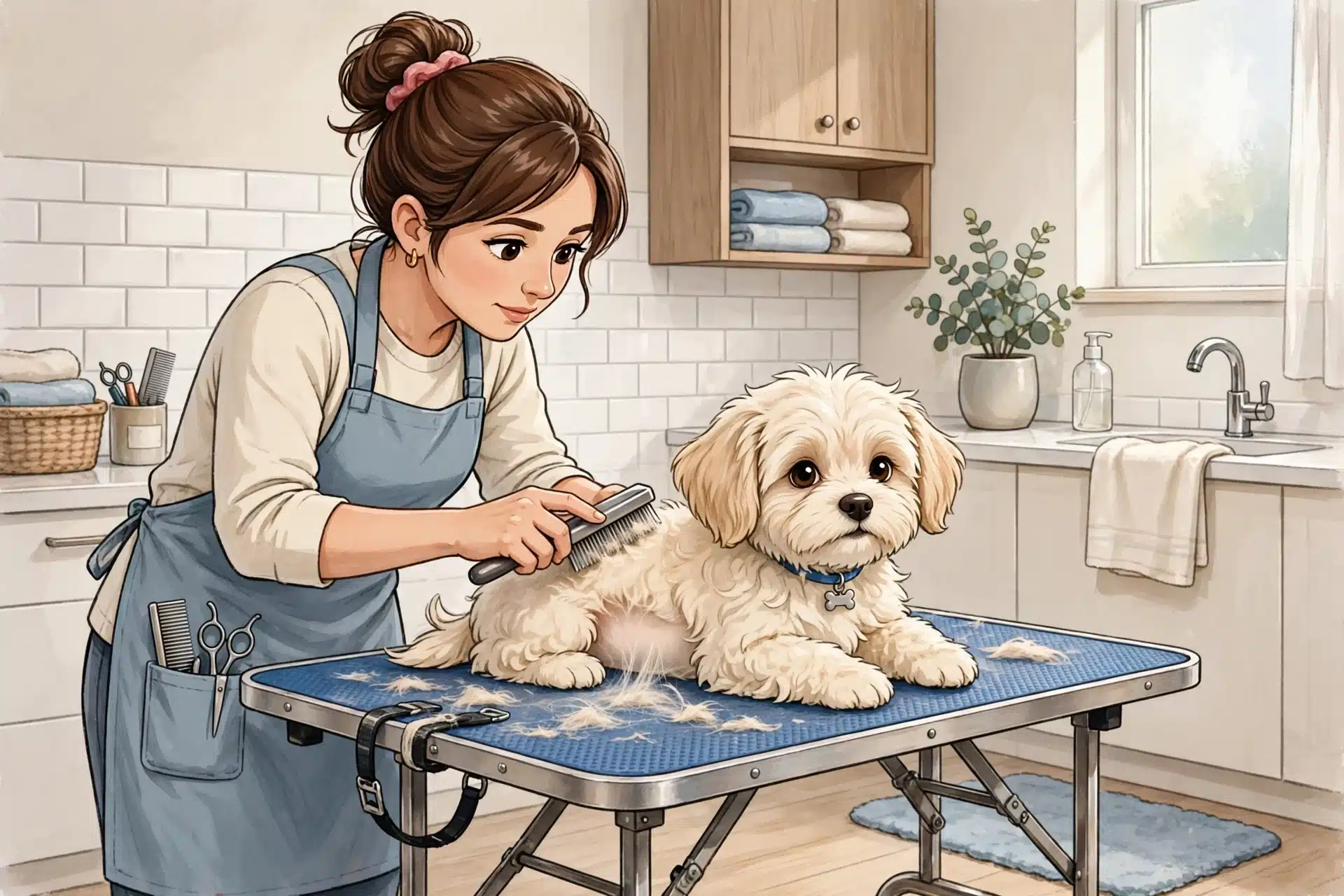
The Havanese carries a long, silky double coat. It sheds very little, but the loose hair stays trapped in the undercoat instead of dropping onto your floor, so it must come out with a brush. Skip that step and the trapped hair packs into mats close to the skin, where you cannot see them forming. The AKC’s Havanese breed profile notes the coat needs regular care to stay healthy. A Havapoo usually gets a wavier, slightly easier coat from the poodle parent, but the brushing habit still matters.
Cavapoo Coats and the Tendency to Tangle
Cavaliers bring a silky, feathered coat and poodles bring curls, so Cavapoo puppies land anywhere from soft waves to loose curls. The curlier the coat, the less it sheds and the faster it mats, especially behind the ears, under the collar and in the armpits. Many owners keep a shorter “puppy cut” to cut the work down. Either way, brushing is not optional.
Planning the Grooming Routine and Its Costs
Plan on brushing several times a week and a professional groom every four to six weeks, which commonly runs $60 to $100 per visit. Budget roughly $80 to $150 a month once you average in grooming, shampoo and tools. A pin brush or slicker plus a metal comb covers most of it. Start brushing sessions during puppyhood so the routine feels normal, not like a wrestling match.
Temperament, Training and Family Fit
Both crosses lean companion dog, but the parent breeds set a different tone. The AKC describes the Cavalier as sweet, gentle and eager to please, friendly with strangers and other animals. Havanese are known as sociable, people-focused little dogs that bond hard with their families and dislike long stretches alone. Poodles contribute sharp minds and a touch of sensitivity on both sides.
Training Response and the First Year
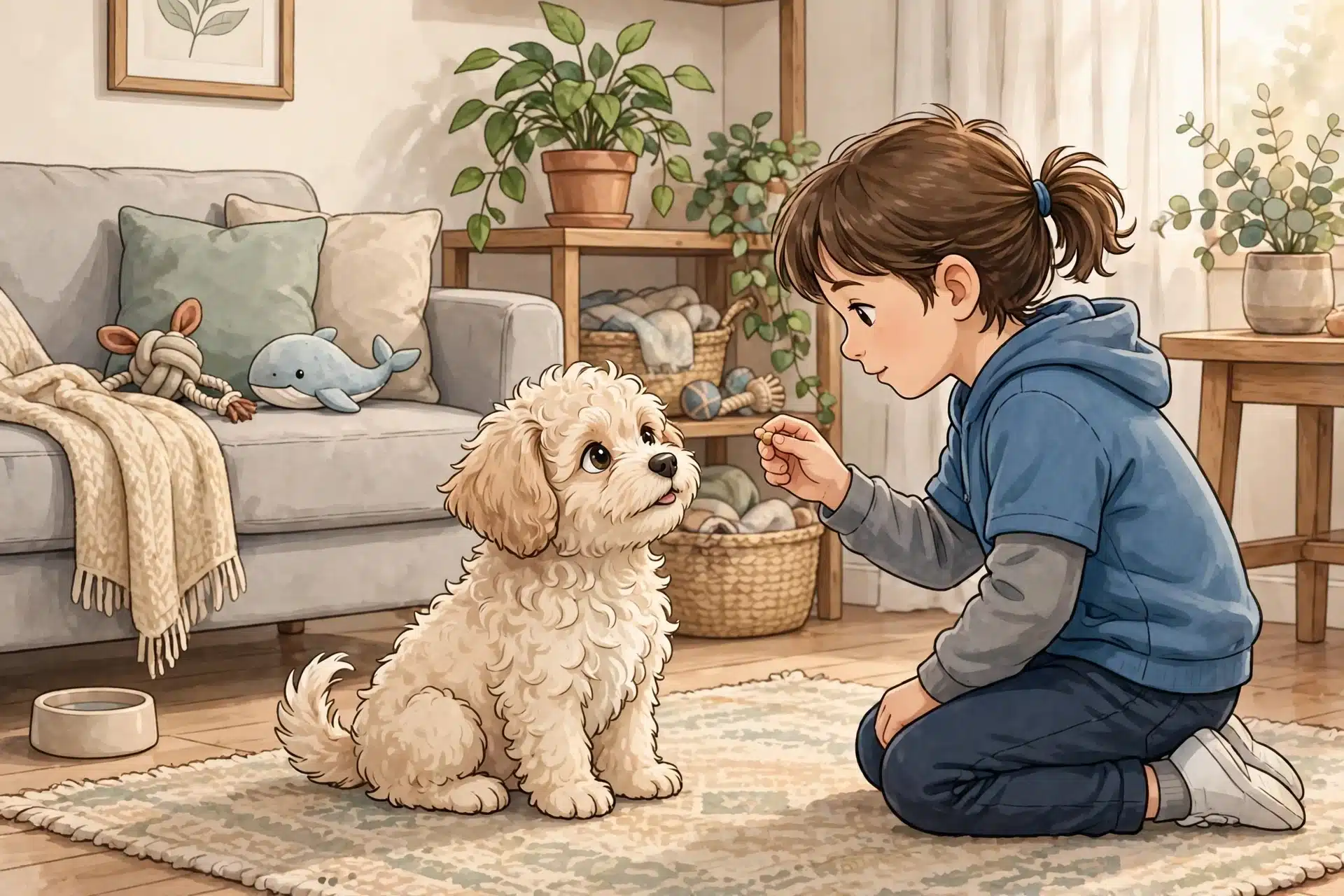
You can expect both mixes to be quick learners. Cavaliers and Havanese both want to please, and the poodle adds problem-solving skill, so short, reward-based sessions work well. The first year matters more than the breed label. House training, crate practice, gentle handling and basic cues all land easier before six months. Watch for clinginess: Havanese lines can lean velcro, while Cavaliers lean soft. Neither does well with harsh correction. Keep sessions to five minutes, end on a win, and socialize widely.
Matching Temperament to Your Household
Cavapoos usually suit calmer homes that want a lap-adjacent shadow. Havapoos often bring a bit more bounce and playfulness, which fits busier families with kids. Both need company, so neither is a good match for a household gone all day. Meeting the parents helps, since breeder descriptions only go so far. At Sage Puppies, Cassie matches families to individual puppies rather than to a breed label alone, because two littermates can differ in energy as much as the two crosses do.
Health Screening and the Questions to Ask a Breeder
Why Crossing Two Breeds Does Not Cancel Inherited Risk
A Cavapoo or Havapoo inherits genes from both parent lines, not a clean average. Mixing breeds does not erase conditions the parents carry, and some problems skip generations before they show up in a puppy. Treat any crossbreed as a dog with two health histories to review, not one guaranteed-healthy blend.

Parent Breed Concerns Worth Asking About
Cavaliers carry the heavier health load of the two. The breed is prone to early-onset mitral valve disease, a heart condition, and to syringomyelia, a neurological problem linked to the shape of the skull. Ask whether the Cavalier parent has a recent cardiac clearance from a cardiologist and an eye exam. Havanese bring their own list, including loose kneecaps (patellar luxation) and inherited eye disease, so ask for eye and patellar records on that side. Poodles add hip and eye checks to the conversation. Ask for dates and documentation, not just assurances.
Questions to Put to Any Breeder, Including Sage
- What health tests did each parent have, and can I see the paperwork?
- Has the Cavalier parent’s heart been checked by a cardiologist, and when?
- Have any puppies in past litters had heart, eye or knee problems?
- What happens if a puppy develops an inherited condition after purchase?
A breeder with clear answers, like Sage Puppies in South Jordan, makes those documents easy to request before you commit.
How the Two Crosses Fit Different Homes
Small Apartments, Stairs and Busy Schedules
A Havapoo often suits tight quarters best. With Havanese parents around 7 to 13 pounds, many stay compact, which helps in apartments and on stairs. Their moderate energy fits two short walks plus indoor play. That said, any puppy left alone all day can struggle, so plan for midday breaks or a dog walker. If you rent, check weight limits in your lease before you fall for a litter.
Homes With Yards, Time and a Grooming Routine
A Cavapoo gives you a slightly sturdier dog that loves a yard lap and a longer weekend hike. Both crosses need real coat care, though: brushing several times a week and a professional groom every four to six weeks. If nobody in the house enjoys that routine, a poodle cross of any kind will test your patience. Build grooming into your schedule before the puppy arrives, not after.
First-Time Owners and Single-Dog Households
Both crosses are eager, people-focused companions, which is exactly why first-time owners do well with either. The bigger question is your daily rhythm. A single-dog household that works from home suits both; a household gone ten hours a day suits neither. Match the puppy to your actual routine, and the differences between these two crosses shrink fast.
Which Should You Choose: Cavapoo or Havapoo?
Both crosses make warm, people-focused companions. The better fit depends on your space, your schedule, and how much grooming you want to take on.
Choose a Cavapoo If This Describes You
Pick a Cavapoo if you want a slightly larger, mellow couch companion. The Cavalier parent brings a soft, gentle temperament that suits families with kids and calmer households. You like a pup who is happy with a walk and then a nap, and you don’t mind a coat that trends toward the Cavalier’s silkier shedding pattern.
Choose a Havapoo If This Describes You
Pick a Havapoo if you want the most compact option. With Havanese parents around 7 to 13 pounds, many stay small enough for apartments, stairs, and lap travel. This cross tends to be a bit more playful and alert, so it fits an active family that wants a bright, bouncy little dog and can commit to regular coat care.
The Next Step With Either Choice
Size and energy ranges are only ranges. Meet the specific puppies, ask about each parent, and watch how a puppy responds to you before you decide. Sage Puppies raises both Cavapoos and Havapoos in South Jordan, Utah, with local pickup or nationwide delivery, so you can compare real litters instead of guessing from breed averages. The right puppy matters more than the right label.

Still torn between the two? Tell Sage Puppies about your home, schedule, and what you want in a companion, and Cassie’s matching process will point you to the right litter. See current puppies and next steps at Sage Puppies.
Frequently Asked Questions
Q1: What are the cavapoo vs havapoo size and energy differences?
Cavapoos often trend slightly larger, since Cavaliers reach 13 to 18 pounds while Havanese sit near 7 to 13 pounds. Energy is moderate for both; Havapoos usually stay playful longer into the evening.
Q2: Which cross is better for apartments?
Havapoos usually fit tighter spaces better because they tend to stay smaller and lighter. Either puppy needs midday breaks if your household is gone for long stretches.
Q3: Do either of these mixes shed?
Both shed very little, but trapped loose hair causes mats, so brush several times a week regardless of which cross you choose.
Q4: How much does grooming cost?
Plan on professional grooming every four to six weeks, commonly $60 to $100 per visit, plus brushes, comb, and shampoo at home.
Q5: How can I predict my puppy’s adult size?
Ask the breeder for both parents’ weights and compare your puppy’s monthly weight trend against them, rather than relying on a generic chart.
Conclusion
The real cavapoo vs havapoo differences come down to three things. Size: Havapoos often stay lighter, since Havanese parents weigh 7 to 13 pounds while Cavaliers reach 13 to 18. Energy: both are moderate, but Havapoos tend to keep their playful streak later into the evening. Care: both need brushing several times a week and professional grooming every four to six weeks. None of these ranges promise anything about an individual puppy, though. Parent size, coat type and temperament shape the adult dog more than the label does. Meet the parents, weigh the puppy monthly, and pick the dog that fits your week.