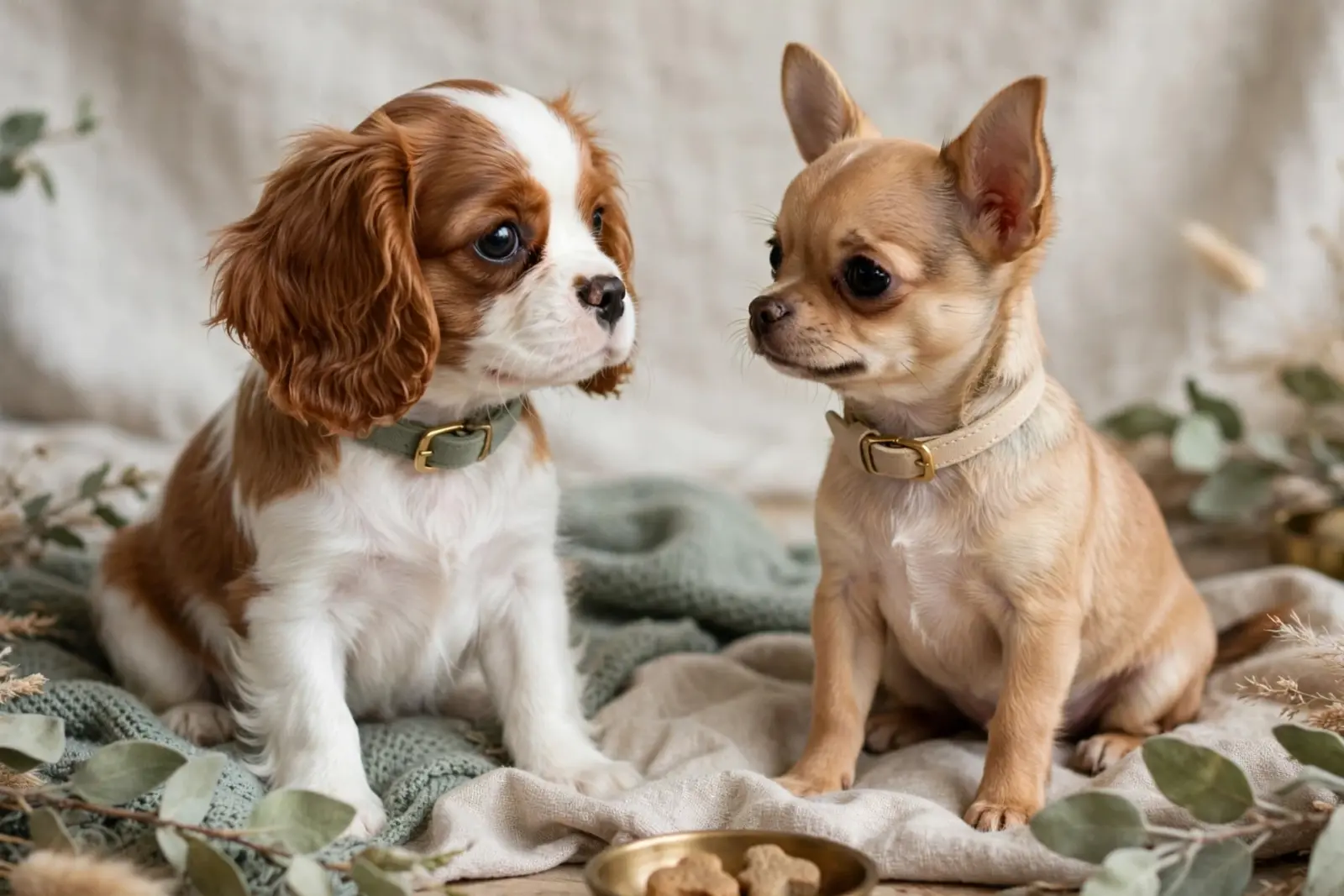
Quick Summary: Havanese and Havapoo puppies are both easy to train with short, reward-based sessions, so consistency matters more than breed. Havapoos often learn cues faster and handle tricks well, but their extra energy needs clear structure, while sensitive Havanese puppies need calm, patient handling because harsh corrections can make them shut down. Choose based on the individual puppy’s temperament and your household routine, using sessions of two to five minutes and plenty of praise and treats.
If your real question is which puppy will pick up cues faster in your living room, Havapoos usually start ahead thanks to their Poodle ancestry. Havanese puppies learn well too, but Havanese trainability depends heavily on gentle handling, because a sensitive dog can shut down under pressure. That shapes real Havanese training difficulty for busy or loud homes, while Havapoo training difficulty tends to stay low when you use short, reward-based sessions. This guide compares both breeds on learning speed, sensitivity, motivation, focus, and everyday tasks, then matches each one to the household and schedule it fits, so you choose the puppy that suits your training style, not just the breed with the better reputation.
Havanese vs Havapoo Puppies: Trainability At a Glance
| Havanese | Havapoo | |
|---|---|---|
| Learning speed and obedience potential | Quick to learn with patience; sensitive, so pressure slows progress | Often picks up cues quickly, especially with food rewards |
| Sensitivity to correction | High; harsh corrections can make a puppy shut down | Moderate to high; raised voices and leash pressure can end a session |
| Motivation and reward response | Strong; food, praise, and play all work well | Very high; responds well to treats, toys, and games |
| Focus, energy, and mental stamina | Moderate energy; short, frequent sessions work best | Higher energy; needs more mental work than a Havanese |
| Best fit for the home | Calmer households wanting a close companion | Active owners who enjoy training games and puzzle work |
| Training support available from the breeder | Owner documentation of temperament and health testing | Owner documentation of temperament and health testing |
How Havanese and Havapoo Compare
Havanese
The Havanese is Cuba’s only native breed, a small companion dog bred to stay close to people. Havanese trainability rests on sensitivity: these puppies learn quickly with patience and praise, but harsh corrections can make them shut down. They suit calmer households that want a close, eager-to-please companion.
Key strengths
- Quick learner with positive reinforcement puppy training
- Responds to food, praise, and play
- Happy with short, frequent sessions
Havapoo
The Havapoo crosses the Havanese with a Toy or Miniature Poodle, blending a sensitive Havanese side with a consistency-loving Poodle side. Havapoo temperament tends toward high food motivation and plenty of energy, so training games and puzzle work pay off. This mix fits active owners who enjoy shaping behavior themselves.
Key strengths
- Often picks up cues fast, especially with treats
- Strong drive for toys, games, and rewards
- Thrives on mental work and variety
The Short Answer: Are Havanese or Havapoo Puppies Easier to Train?
Both breeds are easy to train, and for most first-time owners the difference comes down to consistency more than breed. Havanese trainability is excellent because they live to please their people and pick up cues fast. A Havapoo can be just as quick, sometimes quicker at house training, because Poodle genes add working-drive focus. The honest verdict: neither is clearly easier, but the Havapoo’s energy needs more structure while the Havanese needs more patience with clinginess.
Where the Difference Actually Comes From
Havanese were bred as companion dogs, so their reward is you. They respond beautifully to positive reinforcement puppy training but can melt down when corrected harshly. A Havapoo inherits the Poodle’s problem-solving brain, which speeds up learning but also means a bored puppy invents its own games. Breed only sets a range; individual temperament and your daily routine decide where your puppy lands inside it.
What This Means for a First-Time Owner
Pick the Havanese if you want an eager, food-motivated partner and can be home often. Pick the Havapoo if you want sharper focus and don’t mind burning off extra energy. Either way, short daily sessions beat long ones. The basics that matter most for Havanese puppies apply to both breeds: socialize early, reward generously, keep sessions under five minutes.
Learning Speed and How Each Breed Processes Cues
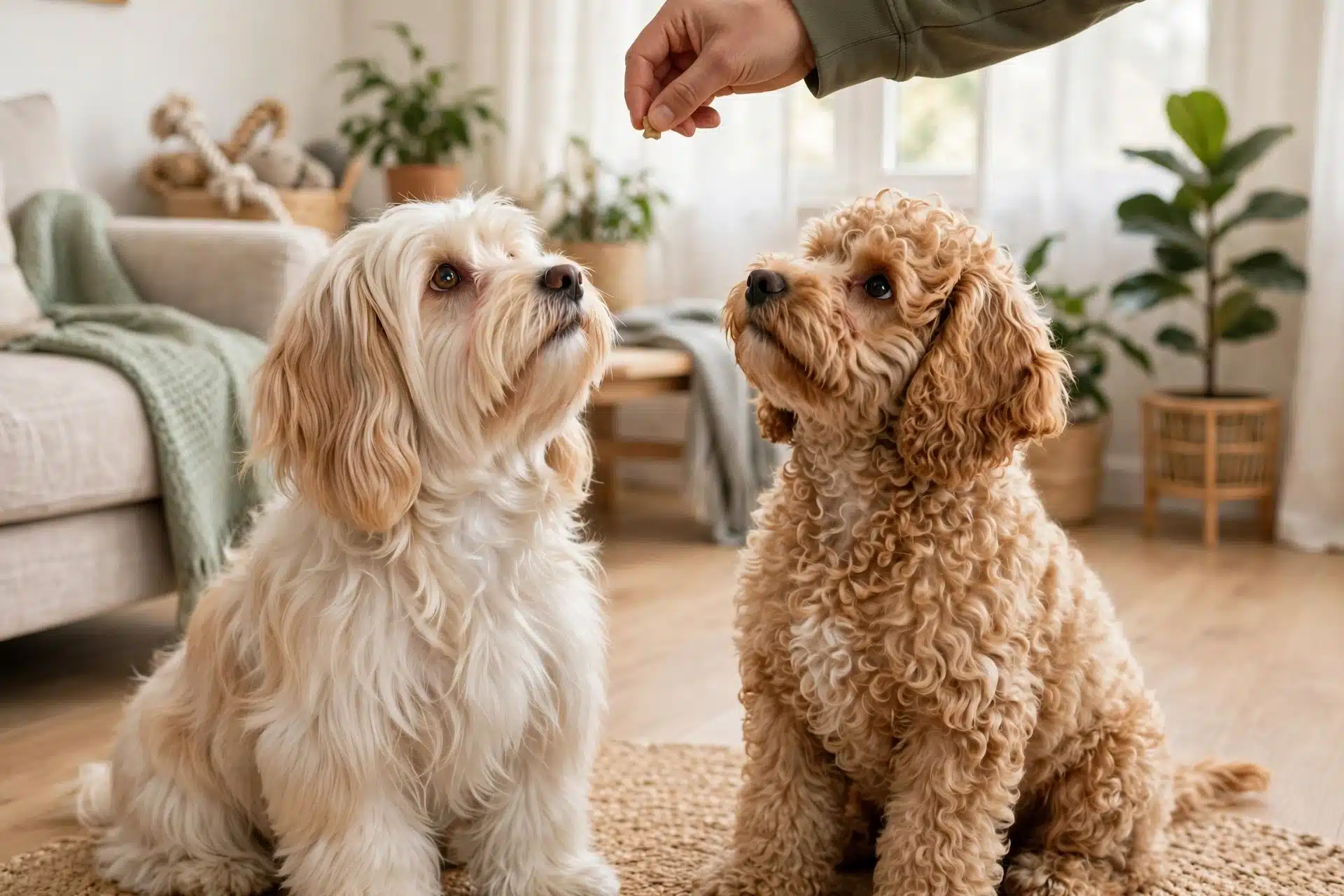
Both breeds learn fast enough for a first-time owner, but they respond to cues differently. A Havanese reads you and works for connection. A Havapoo often solves the cue like a puzzle. Neither style is better; each rewards a slightly different approach.
How Havanese Puppies Learn
Havanese puppies are people-focused. They watch your face, notice your mood, and repeat whatever earns praise. That makes positive reinforcement puppy training very effective: a treat, a happy voice, and a short session, and most pups pick up sit, come, and name recognition within days. The trade-off is sensitivity. A sharp correction can make a Havanese shut down, so keep sessions short, upbeat, and consistent. Their beginner training and care guide covers this style in depth.
How Havapoo Puppies Learn
Havapoos bring Poodle problem-solving into the mix. They often work out what you want on their own, which means they learn cues quickly but also invent their own games. Channel that with short sessions and clear boundaries. Boredom, not stubbornness, causes most Havapoo training trouble. Overall training difficulty sits close to the Havanese: both are eager, food-motivated, and quick, so the honest answer is that the gap is small.
Why Intelligence Rankings Mislead Here
Breed rankings like Stanley Coren’s list measure working and obedience trials from surveys of judges, not how fast a pet puppy learns at home. Both breeds also vary by individual and upbringing. In the Havanese vs Poodle mix training question, your consistency matters more than any ranking.
Sensitivity, Correction, and the Way You Handle Reassurance
Trainability is not only about how fast a puppy learns. It is about what happens when you say “no.” Here the two breeds diverge, and the difference shapes your whole training style.
Havanese Puppies Shut Down Under Pressure
How do you train a sensitive Havanese puppy? Keep sessions short, cheerful, and reward-heavy:
- Use tiny treats and mark every correct choice.
- Skip leash pops and scolding entirely.
- Keep each session under five minutes.
- End on an easy win.
The Havanese Club of America recommends consistency, fairness, and gentle correction with positive rewards. Push too hard and a Havanese stops offering behavior at all.
Havapoo Persistence and Task Focus
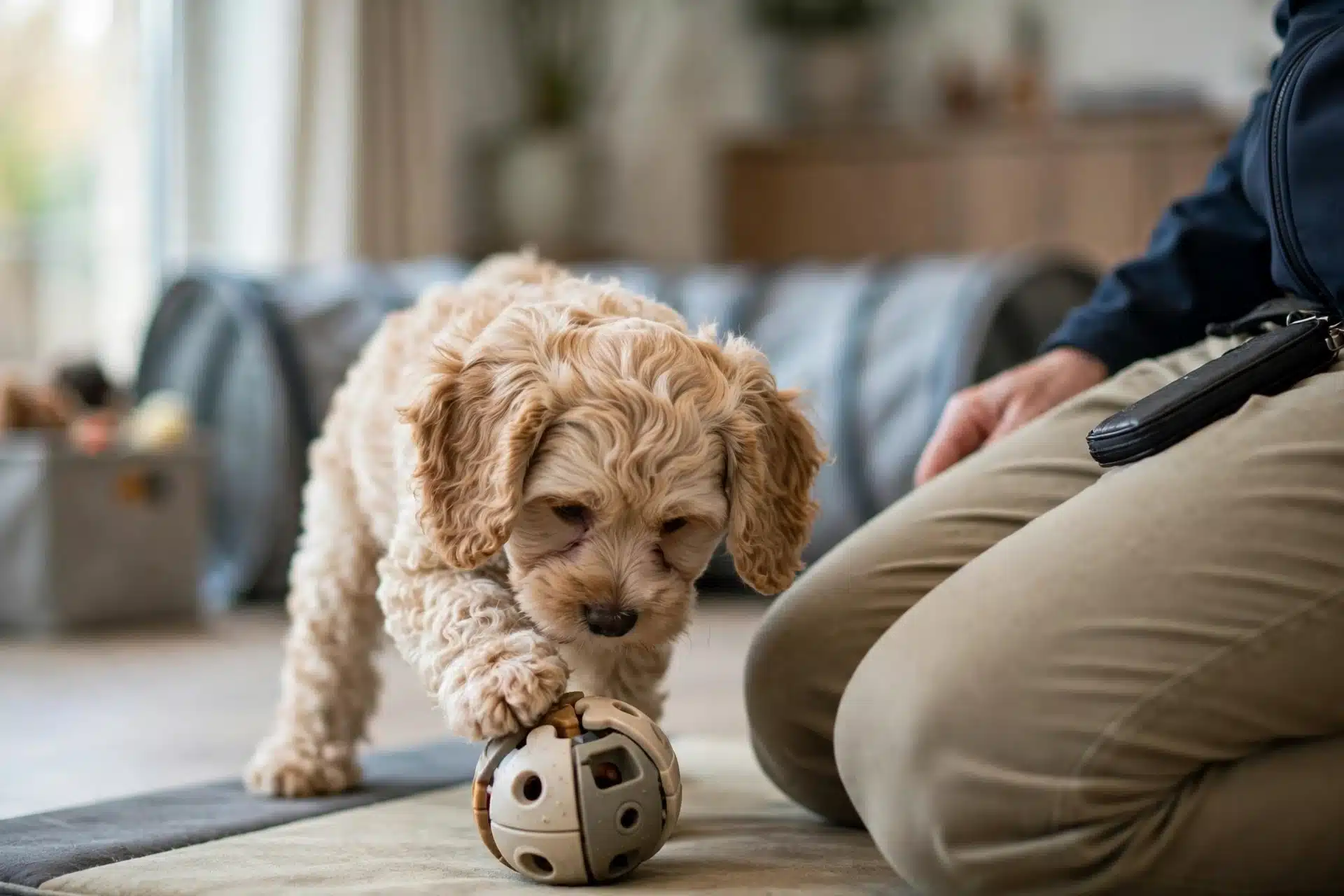
Havapoos usually take correction in stride. The Poodle half brings persistence, so a pup will keep trying a puzzle or task even after a mistake. That focus helps with longer sessions and trick training, but it also means a Havapoo will rehearse unwanted habits, like jumping, with real determination if you only correct instead of rewarding the alternative.
Adjusting Your Method for Each Temperament
With a Havanese, reassure quickly after any correction and never train while frustrated. With a Havapoo, trade persistence for structure: interrupt, redirect, then pay the right choice. Either way, matching the method to the puppy’s temperament matters more than the breed label itself.
House Training, Crate Comfort, and Everyday Skills
Toilet Habits and Routine Dependence
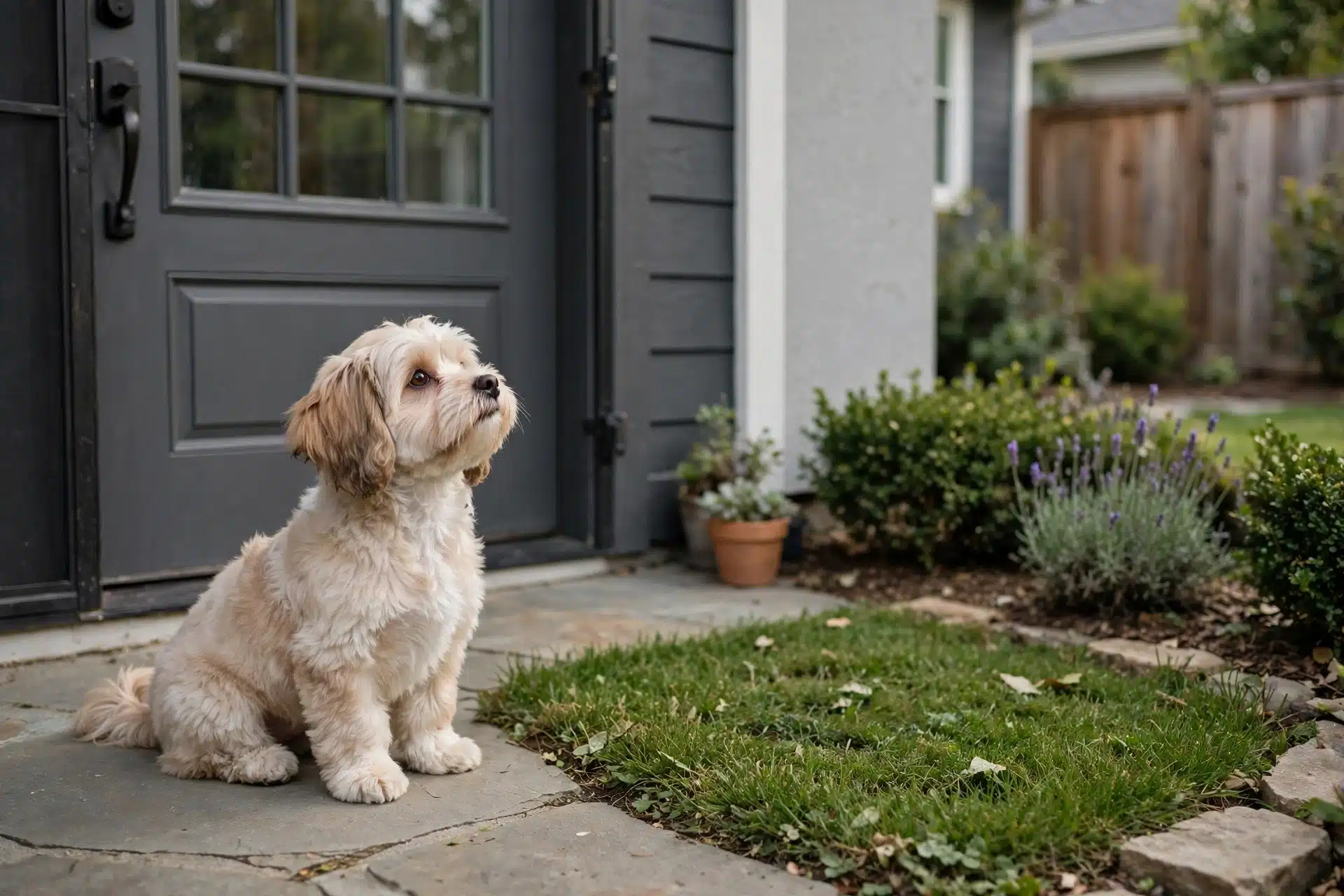
Both breeds house train on the same schedule: out after sleep, meals, and play, with a treat the instant they finish outside. The real difference is size. Small bladders mean more trips, and a Havanese or Havapoo puppy can slip behind a couch unnoticed. Research found small dogs are less likely to be fully house trained than big dogs, usually because owners miss signals and supervise less, not because the puppy learns slower (Companion Animal Psychology). Pick one door, one potty spot, and one cue word. A Havapoo’s Poodle side may catch on a little faster, but both depend on your routine far more than on breed.
Crate Comfort and Separation Distress
Both breeds were bred to keep people company, so both can struggle when left alone too soon. Build crate comfort in short stretches: meals inside the crate, the door open at first, then closed for a few minutes while you stay in the room. If your puppy panics rather than fusses, slow down. Neither breed reaches a set deadline; each puppy sets its own pace, so watch for settled napping as your signal to extend time.
Leash Skills and Everyday Manners
At 7 to 13 pounds, pulling is manageable, so start loose-leash habits early. Reward eye contact, sit at doors, and handle paws and ears daily. Both breeds pick these up quickly with short, upbeat sessions.
Training a Mixed-Breed Havapoo: What You Cannot Predict
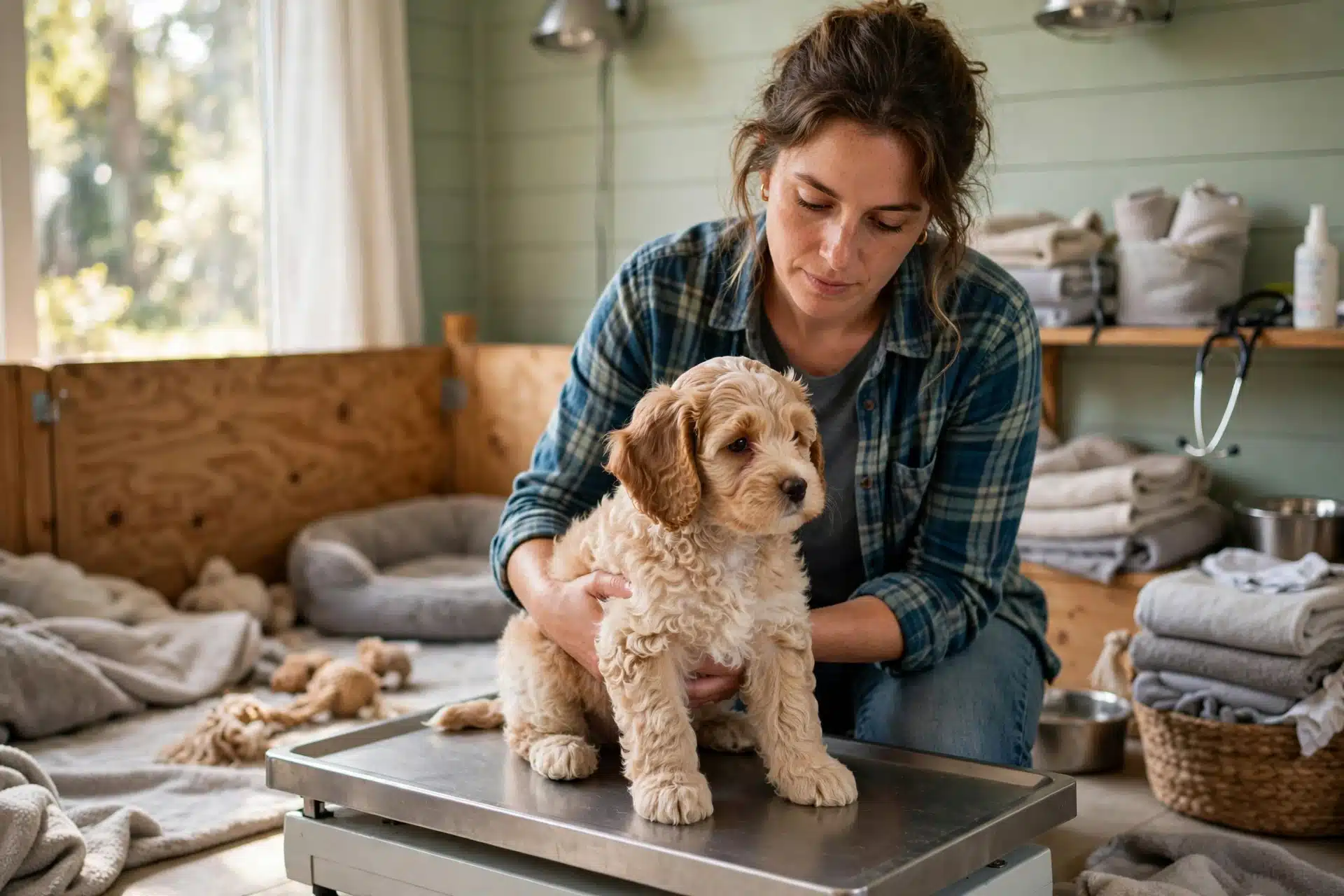
A Havapoo is a first-generation mix, so each puppy blends Havanese and Poodle traits in its own way. Research backs this up: a large UMass Chan study found breed explains only a small share of individual behavior, even in purebreds. So coat type, adult size, and how quickly your puppy learns stay uncertain until you live with the dog.
Why Mixed-Breed Puppies Vary So Widely
Littermates raised in the same home can differ in confidence, noise sensitivity, and food motivation. Genes shuffle differently in every puppy, and early experiences shape the rest. The Broad Institute found physical traits and behavior traits are not strongly linked, so a fluffy teddy-bear face predicts nothing about trainability. Plan for the puppy you meet, not the average Havapoo.
Questions to Ask About Temperament Testing
Good breeders start observing puppies well before go-home day, so ask for specifics. Any responsible breeding program worth your deposit should answer these without hedging:
- Which tests do you run, and at what age?
- How does this puppy handle being held, startled, or separated?
- Which puppy recovered fastest from a new sound or surface?
- Can I see short videos of the litter?
- What happens if my match turns out poorly?
Written notes beat generalities every time.
Energy, Mental Work, and Keeping the Training Fun
Matching Sessions to Energy Levels
Both breeds are companion dogs, not working dogs, so they do best with short, upbeat sessions. Aim for two to five minutes, several times a day, and stop while your puppy still wants more. A Havapoo with extra Poodle energy may need a quick play session before training so it can focus. A Havanese often settles faster but bores quickly, so keep cues fresh. End every session with something easy, like a sit your puppy already knows, so it finishes on a win.
Enrichment That Doubles as Training
Mental work tires a small dog faster than a long walk. Use it to reinforce training for free:
- Scatter kibble in a snuffle mat to build nose work and calm focus.
- Hand-feed part of each meal as rewards for name response and eye contact.
- Trade a stuffed Kong for a “drop it” rep, then give it back.
- Play find-it games in the yard to practice recall under mild distraction.
Ten minutes of this kind of problem-solving can settle a wiggly puppy better than an hour of zoomies.
Socialization as the Foundation for Public Skills
Training fails in public if your puppy feels scared, so treat socialization as the base layer. The first three months matter most, when sociability outweighs fear, according to the AVSAB position statement. Pair new people, surfaces, and sounds with treats, and keep each exposure brief and positive. Both breeds tend to be social by nature, but neither is born knowing how to behave at a patio café. That skill is built, one calm outing at a time.
Matching Training Expectations to Your Household
Owner Temperament and Training Style
Your own patience shapes results more than the breed does. Havanese read tone closely and can stall if you get frustrated, so a calm, cheerful voice wins. A Havapoo often stays eager through longer sessions, which suits trainers who like to keep moving. Either way, positive reinforcement puppy training, with treats and praise, beats corrections for both.
Time at Home and Work Schedules
Honesty about your hours matters. Both breeds bond hard and can slide toward separation anxiety in companion breeds when left alone all day. If you work from home or someone is usually around, either puppy fits. If you are out for long stretches, plan midday breaks or a sitter before you bring one home.
What to Ask a Havanese or Havapoo Breeder
Ask which parent dogs are calmest, how puppies were handled and socialized, and what each pup’s temperament looks like today. At Sage Puppies, the matching process pairs your household with the puppy instead of the other way around. Good answers are specific; vague ones are a reason to keep looking.
Which Should You Choose: Havanese or Havapoo?
For a first-time dog owner, both breeds are trainable with positive reinforcement puppy training. The better fit depends on predictability, coat preference, and how much daily grooming you want to take on.
Choose a Havapoo If
You want a blend of Havanese warmth and Poodle cleverness, and you enjoy a bit of variety. A Havapoo’s temperament can lean toward either parent, so pick a puppy whose energy matches your household. If you hope for a low-shedding coat and a quick learner for tricks and games, a Poodle mix fits well.
Choose a Havanese If
You want fewer surprises. Havanese temperament and size are well established across generations, and their People-oriented focus makes them eager partners in short training sessions. If you prefer a single-breed pedigree, a silky coat you can learn to groom yourself, and a proven small-companion disposition, the Havanese is the steadier choice.
Where to Start, Either Way
Meet the parents, ask about early socialization, and plan for the first month before your puppy comes home. Whether you lean Havanese or Havapoo, you can start by submitting an application through Sage Puppies so matching is based on your home, schedule, and training goals.

Whichever breed you choose, the right start matters more than the pedigree. Sage Puppies matches families with well-bred Havanese and Havapoo puppies raised for easy early learning. See who’s available at Sage Puppies and begin your application today.
Frequently Asked Questions
Q1: Are Havanese or Havapoo puppies easier to train?
Both learn quickly with positive reinforcement puppy training. Havapoos often pick up cues faster thanks to Poodle focus, while Havanese need gentler handling. Your consistency matters more than breed.
Q2: Which breed is easier to train, Havanese or Havapoo?
Neither is clearly easier. Havanese excel with patient, cheerful owners; Havapoos suit active households that can channel extra energy into games and structure.
Q3: Are Havapoos easier to train than Havanese?
Sometimes, with house training and tricks. But a mixed puppy’s Havapoo temperament varies, so plan for the individual dog.
Q4: How long should puppy training sessions last?
Two to five minutes, several times daily, always ending on an easy win.
Q5: When should socialization start?
Before go-home day, ideally. The first three months matter most, so pair new people and sounds with treats.
Conclusion
The Havanese vs Havapoo training question ends in a near tie, but for different reasons. Havapoos often learn faster because Poodle problem-solving plus strong food motivation speeds up cues, house training, and tricks. Havanese puppies learn just as well, but only under gentle, upbeat handling, because harsh corrections make a sensitive dog quit trying. Neither breed is clearly easier. The Havapoo needs more structure for its energy, while the Havanese needs more patience with clinginess. And remember that breed sets only a range. Research shows individual temperament varies within every breed, so choose the puppy whose personality matches your home, schedule, and training style, then build skill with short, reward-based sessions.