Quick Summary: A Havanese puppy’s full first-year cost usually runs $4,500 to $8,500, including purchase, vet care, food, grooming, supplies, and insurance. Recurring grooming is a major expense, with most owners paying $45 to $85 every four to six weeks, while first-year vet care adds $500 to $1,200. Save on secondhand gear or consider older puppies, but never cut health testing, vaccines, or coat care. Sage Puppies charges $3,500 to $4,500, a premium price that includes health testing and owner-managed matching, so compare breeders by their records and included services rather than price alone.
Most families underestimate a Havanese puppy’s total cost by roughly the price of the puppy itself. The breeder’s quote is real, but it is only the start. Havanese puppy expenses such as coat care, dental cleanings and a full first year of vet visits rarely show up in that first number.
So what does a Havanese actually cost in the first year, and where does the money go? This guide breaks down the whole stack: purchase price, supplies, vaccination schedules, spay or neuter surgery, grooming, food and insurance. You will see which costs are fixed and which you control, plus simple ways to plan for an affordable Havanese puppy without skipping health care.
At Sage Puppies, we raise Havanese puppies in South Jordan, Utah, and we would rather you budget honestly before you apply.
What a Havanese Puppy Costs to Buy
A Havanese puppy from a reputable breeder usually costs between $1,500 and $3,500. Where you land depends on pedigree, health testing, coat color and your region. Here are the ranges third-party listings report:
- Nationally, most listings run $2,200 to $3,000, according to Good Dog’s Havanese marketplace
- Breeder-focused sources put typical health-tested litters at $2,500 to $3,000
- Some guides cite $2,000 to $3,500 for breeder puppies nationwide
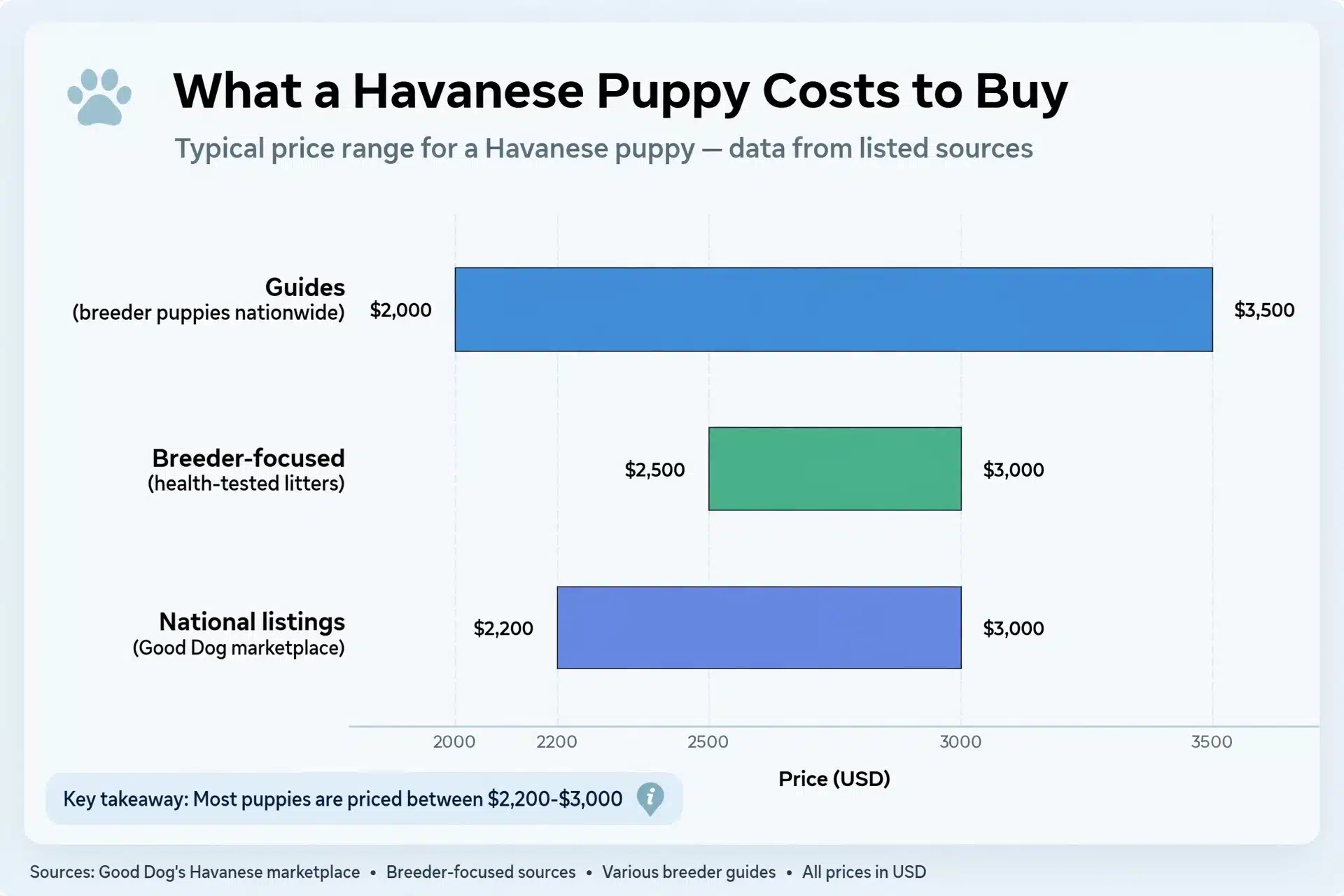
Published Price Ranges for Havanese Puppies
Those published ranges are useful for havanese puppy expenses planning, but treat them as reference points rather than quotes. Rescue and adoption routes can drop the upfront price to a few hundred dollars, while show-quality lines and small boutique programs often sit above $3,000. Any one figure you see is a snapshot, not a market standard.
What Actually Drives the Price
Several factors move the number up or down. Parent health testing and OFA certifications raise breeding costs, so well-bred litters cost more. Coat color and markings matter too: rare shades and parti patterns often carry a premium. Breeder programs that include early socialization, first vaccinations and microchipping price that work into the total. Location plays a smaller role, though delivery adds a line item.
Deposit, Balance and Delivery Terms to Ask For in Writing
Before you place a deposit, get the terms in writing: the deposit amount, whether it is refundable, the total balance due, and when. Ask what happens if no suitable puppy arrives from your chosen litter. Sage Puppies, for example, prices its Havanese puppies at $3,500 to $4,500 with a published pricing and reservation process you can review before applying. Confirm delivery or pickup fees in the same document, since havanese puppy expenses differ for local pickup versus shipped transport.
Building a Realistic First-Year Budget
The first year with a Havanese usually costs $4,500 to $8,500 all in, counting the puppy itself, vet visits, supplies, food, grooming and insurance. MarketWatch pegs the average first year with any new dog at about $4,516, before breeding premiums push a Havanese higher. Here is how the categories break down.
| Category | Low Estimate | High Estimate |
|---|---|---|
| Puppy purchase | $1,500 | $4,500 |
| Vet care, vaccines, spay/neuter | $500 | $1,200 |
| Supplies and gear | $250 | $600 |
| Food | $250 | $450 |
| Grooming | $400 | $800 |
| Insurance and extras | $300 | $950 |
The Line Items That Make Up Year One
Start with the purchase price, then add the categories most new owners underestimate. The AKC’s cost survey found one-time costs like crates, spay or neuter surgery and early vet care averaged about $2,100, with yearly food, grooming and routine care adding roughly $2,500 more. Small breeds trim food costs but need professional trims every six to eight weeks, so grooming stays steady.
Splitting the Total Into One-Time and Monthly Costs
Think in two buckets. One-time costs cover the puppy, gear, vaccines and surgery, usually $2,500 to $6,300 in year one. Ongoing costs, such as food, grooming, insurance and preventives, run roughly $95 to $225 a month. If you’re weighing what comes next, a Havanese care guide for beginners maps out those recurring needs.
How to Use This Budget for Your Own Household

Replace the low and high columns with real quotes from your vet and local groomer. Add a 10 percent cushion for surprises, then confirm the monthly portion fits comfortably in your take-home pay.
Veterinary Costs New Havanese Owners Should Plan For
Most Havanese owners spend $500 to $1,200 on vet care in the first year. Here is where that money usually goes:
- First checkup and exam fee, $50 to $100
- Core vaccine series (distemper, parvo and more), often $75 to $300
- Rabies shot, usually $20 to $50
- Deworming and fecal tests, $25 to $75
- Spay or neuter surgery, often $200 to $500 for a small breed
- Flea, tick and heartworm preventives, roughly $100 to $200
The AKC’s puppy shots guide shows why the vaccine series alone needs several visits. Budget examples are illustrative; your clinic’s prices set the final total.

Breed-Specific Conditions to Budget For
Havanese are generally healthy, but the breed has known risks worth planning for. These include luxating patellas (slipping kneecaps), cataracts and other eye issues, heart problems and some deafness. Screening for many of these happens before breeding, which is why health-tested lines cost more. A program that shares its test results openly, the way Sage’s health testing explainer describes, helps you know what you are starting with. Even with a clean start, ask your vet to check knees and eyes at each visit so small issues get caught early.
Insurance, Emergencies and the Unexpected Bill
Pet insurance for a small, generally healthy breed usually costs less than coverage for large dogs, and premiums stay lowest if you enroll young. Policies typically cost $300 to $600 a year, which fits the insurance line in this article’s budget table.
One emergency, though, can run $1,000 to $5,000. That is why a 10 percent cushion on your total budget matters. Whether you buy insurance or self-insure in a savings account, decide before the puppy comes home, not after the first bill.
Good grooming also catches problems like ear infections early, which is part of your Havanese care basics.
Grooming, Food and Everyday Care Costs
The Line Item Most Families Underestimate
How much does Havanese grooming cost per session? Most owners pay about $45 to $85 per visit, and a Havanese needs that visit every four to six weeks because the coat keeps growing like human hair. Skip it, and mats form close to the skin, which means shaving and higher bills. Havanese puppy expenses add up here faster than most families expect: six grooms a year at $60 each is $360, before tips. Budget examples vary, so price groomers in your area before you commit.
Food and Treats for a Small Breed
Food is the easy line item. A 10 to 15 pound dog eats roughly one cup a day, so a quality small-breed kibble runs about $20 to $40 per month. Add training treats, dental chews and the occasional frozen stuffing toy, and you land near $250 to $450 a year for food. Stick with a formula made for small breeds; Havanese can be picky, so buy small bags until you know what yours likes.
Prevention, Parasites and Daily Consumables
Monthly care costs are steady but easy to forget in a budget. Heartworm, flea and tick prevention for a small dog typically costs $10 to $25 a month. Add poop bags, puppy pads, grooming wipes, ear cleaner and toothpaste, and most households spend another $10 to $15 monthly. These small charges rarely feel urgent, but they are what keeps the vet bills low, so put them in your plan from day one.
One-Time Setup Costs Before the First Week
Before your puppy comes home, the gear gets bought. This is the part of the Havanese puppy cost you can actually control, and it usually runs $250 to $600 for supplies.
Crate, Gate and Puppy-Proofing
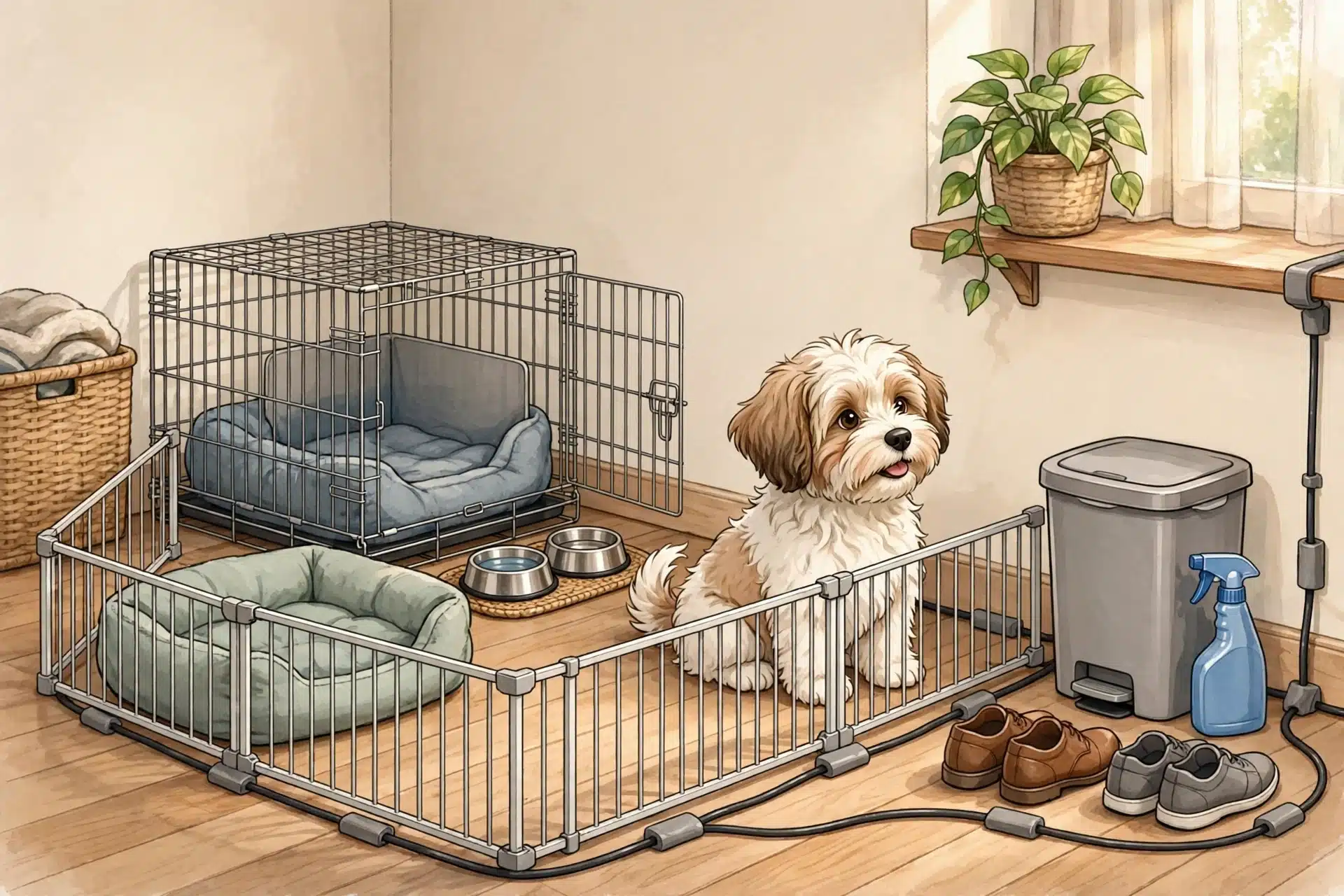
A small crate with a divider runs $40 to $90. Add an exercise gate or pen at $30 to $70, and a bed or two for $25 to $50. Then walk your house at knee height: loose cords, houseplants, shoes and trash all need a plan. Bitter apple spray and cord covers cost little and save more.
Food, Bowls and a Staging Area
Ask the breeder what food your puppy eats and start with the same brand. Switching foods mid-week invites stomach upset. Small-breed kibble runs $250 to $450 a year, so your first bag is a small slice. Budget $20 to $40 for two stainless bowls, a mat, a collar, an ID tag and a leash. Pick one corner as the puppy’s setup so the first days feel predictable.
Training and the First-Year Learning Budget
Puppy classes are optional but worth planning for. Group courses typically run $100 to $300 for a multi-week series, and a few sessions with a private trainer can add $100 to $200. Havanese are quick learners, so most families need less help than they expect. Check what your breeder starts before pickup; at Sage Puppies, early handling and socialization are part of the program. Set aside the rest for a treat pouch, clicker and chew toys.
Where It Is Safe to Save and Where It Is Not
Looking for an affordable Havanese puppy usually comes down to two levers: how you buy and what you prepare at home. Some cuts save money with no downside. Others cost far more later.
Savings That Do Not Cut Corners
Buy supplies secondhand. Crates, gates, bowls and toys show up cheap at thrift stores and local listings. Skip fancy bedding until you know your puppy’s chew style. Compare pet insurance quotes early, since monthly costs for a small dog vary a lot between carriers. Food is safe to economize on only if it still meets AAFCO standards for growth.
Ways to Reduce the Purchase Price
Ask breeders about older puppies they have kept longer, or retired breeding dogs, which often cost less. Broader travel can help too, since pickup sometimes beats delivery fees. A breeder with a published price list, like the one on Sage Puppies’ pricing page, lets you compare total cost before you apply, so there are no surprises late.
The Costs You Should Not Cut
Never skip health testing, vaccines or the first vet exam. Cut the spay or neuter budget and you risk higher surgery bills later. Grooming matters for this coat type, so learn basic brushing at home rather than dropping sessions. A trained eye and written health records are worth every dollar.
Choosing a Havanese Breeder Within Your Budget
The cheapest puppy on a listing site is rarely the cheapest puppy to own. A low price can mean skipped health tests, no vet records and thin support after you pay. A fair price usually buys transparency, so focus on what the breeder shows you, not just the number.
Questions to Ask Before You Commit to a Price
Ask what the price includes: first vaccines, a vet exam, a starter kit, spay or neuter terms, and a written contract. Ask how the puppy was raised and socialized, and what happens if the match fails. Also ask why the price sits where it does. A breeder with a clear answer and a published pricing and reservation page is easier to trust than one who dodges.
A breeder who welcomes your questions is showing you how they will act after the sale. One who rushes your deposit is showing you that too.
Records Worth Seeing Before You Pay
Ask for proof, not promises. You want the dam and sire’s health test results, the puppy’s vaccination and deworming dates, a recent vet exam note, and a written health-testing policy. Get the contract in writing and read it before you send any deposit.
Where Sage Fits in Your Budget
Sage Puppies prices Havanese puppies at $3,500 to $4,500, at the top of the national range. That reflects a boutique program with health testing and owner-managed matching, so compare what each breeder includes rather than the sticker alone.
Common Money Mistakes to Avoid
Underestimating Grooming and Dental Care
Havanese coats grow continuously, so skipping salon visits saves nothing. Mats lead to shaving, skin infections and bigger vet bills. Plan $400 to $800 a year for grooming, plus brushing you do at home. Add toothbrushing and dental chews, because a professional cleaning for a small dog can run into the hundreds once tartar sets in.
Paying the Full Price Before Understanding the Terms
Read the fine print before you send money. Ask what the deposit covers, when the balance is due, what health screening the parents had, and whether delivery or pickup changes the total. Get every promise in writing. Some breeders, including Sage Puppies, publish pricing and reservation terms up front, so you can compare apples to apples. If a seller hesitates to explain terms, that is your cue to slow down.

Ready to budget with real numbers? Sage Puppies publishes its Havanese pricing and reservation process upfront at Sage Puppies, so you can see the full picture before you apply and plan your first year with confidence.
Frequently Asked Questions
Q1: How much does a Havanese puppy cost from a breeder?
Most health-tested litters run $2,500 to $3,000 nationally, though boutique programs charge more. Sage Puppies prices Havanese puppies at $3,500 to $4,500.
Q2: What is the total first-year cost of owning a Havanese puppy?
Plan on $4,500 to $8,500 all in. That covers purchase, vet care, supplies, food, grooming and insurance.
Q3: What veterinary costs should new Havanese owners expect?
Budget $500 to $1,200 in year one: exam, vaccines, deworming, preventives and spay or neuter surgery.
Q4: Is pet insurance worth it for a Havanese?
Usually yes. Policies run $300 to $600 yearly, and one emergency can cost far more.
Q5: How can I safely lower my Havanese budget?
Buy supplies secondhand, ask about older puppies, and never skip health testing or grooming.
Conclusion
A Havanese puppy’s real price is the sticker plus the first year: roughly $4,500 to $8,500 all in. Purchase price matters, but havanese puppy expenses like grooming every six weeks, vaccine visits, insurance and supplies decide whether the budget holds. Save safely on secondhand gear, not on health testing, vaccines or coat care. Compare breeders on what their price includes and the records they show, then build your own numbers instead of trusting a single quote.