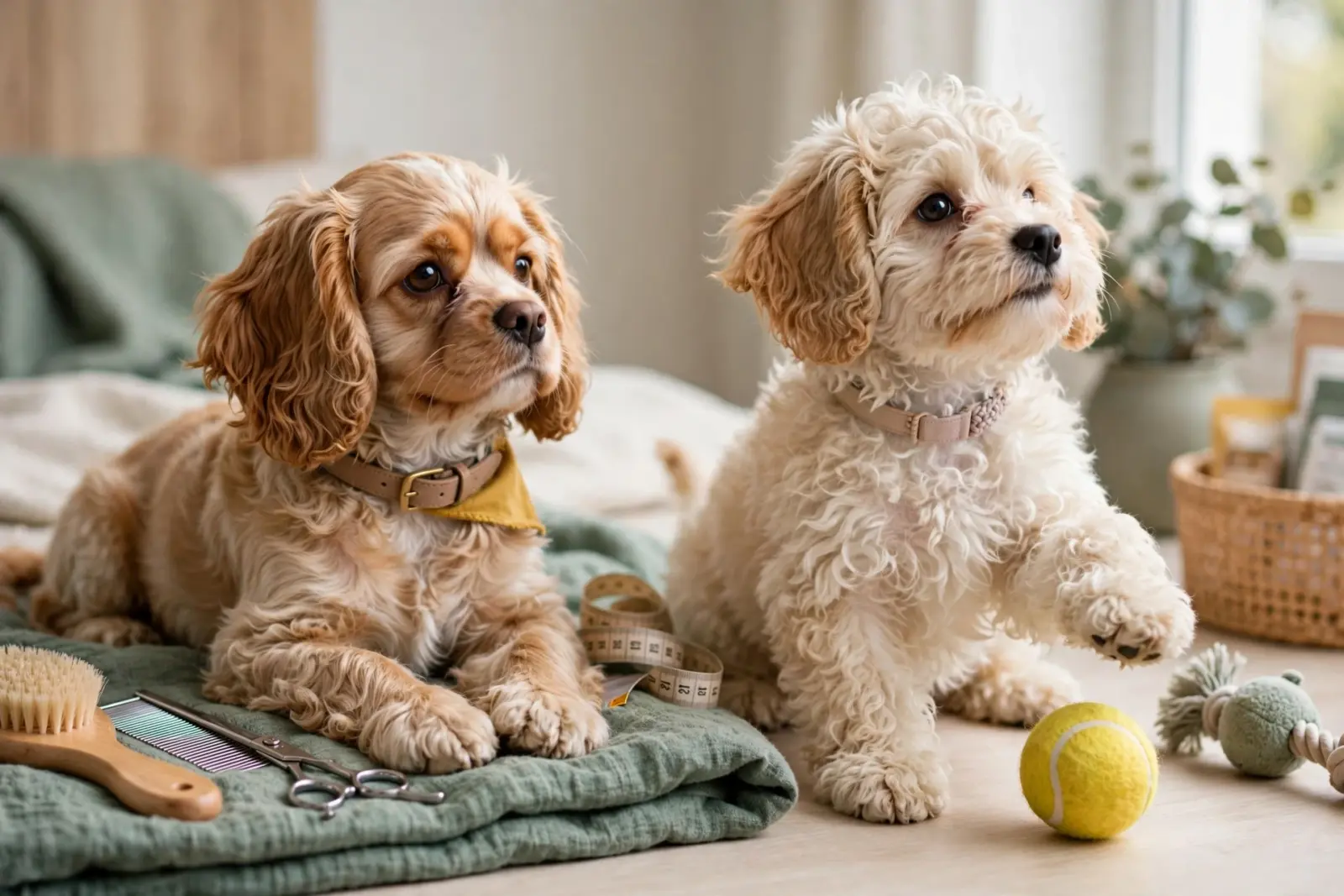
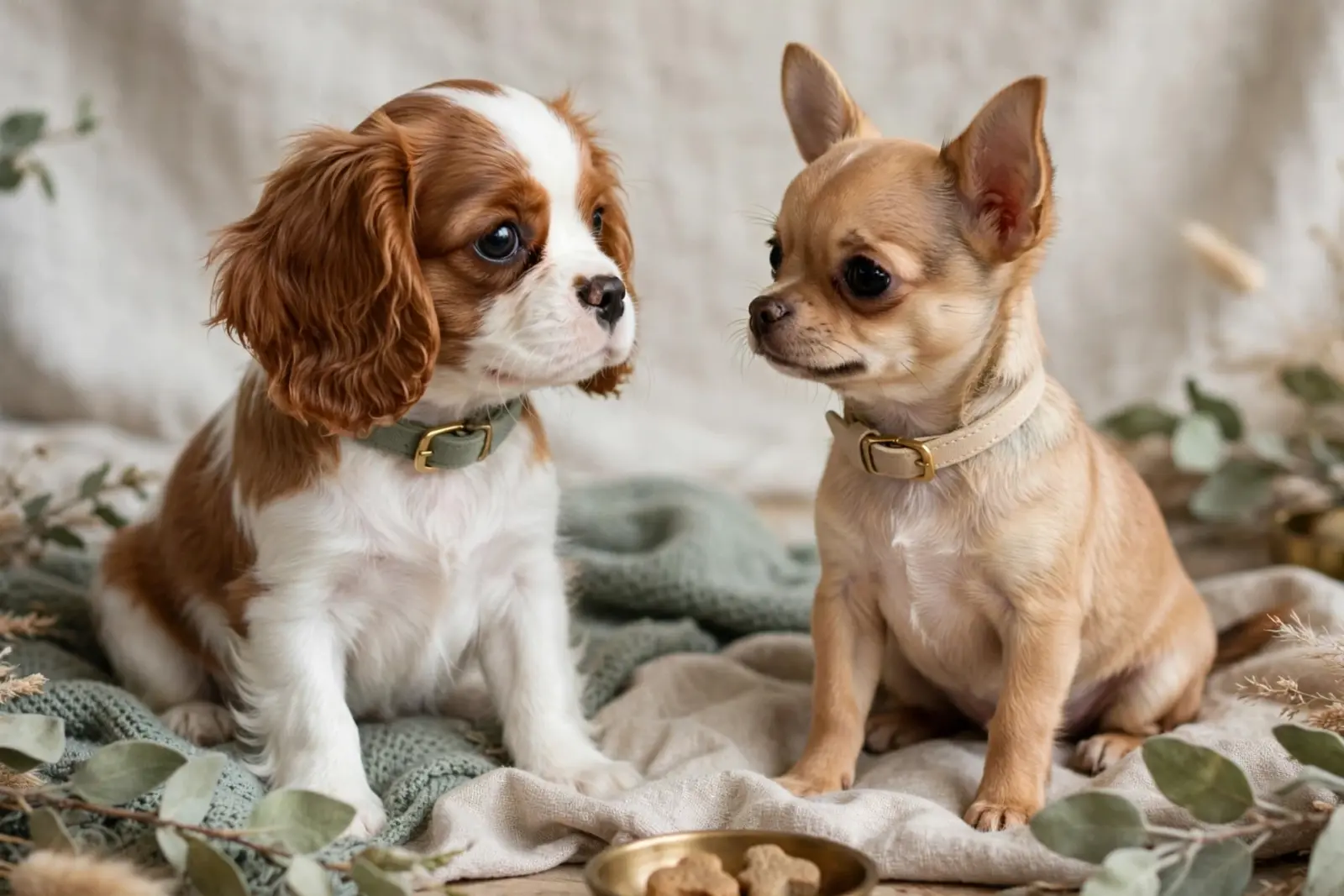
Quick Summary: Choose a Havanese for an active, people-first home that enjoys daily training, while a Shih Tzu suits a quieter household wanting a sturdier, lower-energy companion. Both need regular coat care, companionship, and gradual training for time alone, with Shih Tzus generally requiring more grooming. Before buying, request verifiable CHIC numbers, actual OFA results, current eye exams, and veterinary records for both parents.
Comparing Havanese vs Shih Tzu puppies comes down to one thing: the coat-and-companionship schedule your household can actually keep. If you want a dog woven into daily life and you will keep up with regular brushing, the Havanese usually wins. If you want a calmer, lower-energy companion and a tighter grooming budget, the Shih Tzu usually does.
The problem is that both breeds get marketed the same way: affectionate, portable, easy to train. So first-time owners and families land on the same two finalists and struggle to tell them apart.
This guide breaks the decision into six points: size and handling, coat and grooming, temperament and trainability, health testing and lifespan, exercise and time alone, and a verdict for each household type. We use breed-standard measurements and current parent-club testing requirements throughout, so you can ask sharper questions of any breeder before you commit to a small companion breed puppy.
Havanese vs Shih Tzu Puppies at a Glance
| Havanese | Shih Tzu | |
|---|---|---|
| Adult size and weight | About 7-13 lb and 8.5-11.5 in at the shoulder (HCA breed standard range) | About 9-16 lb and roughly 8-11 in at the shoulder |
| Coat and grooming routine | Long double coat, wavy to straight; daily brushing and regular professional grooming | Long dense double coat that mats easily; regular brushing and scheduled grooming |
| Temperament and trainability | Highly people-focused, playful, eager to learn; can vocalize and dislike being left alone | Calm, affectionate, friendly with children; can be stubborn and reserved with strangers |
| Health testing priorities | chic: OFA hips, OFA patellas, annual CERF eye exams, plus DNA variant testing | chic: OFA patella certification and annual CAER eye exams, with hips and cardiac optional |
| Exercise and time alone | Moderate daily activity; benefits from company, gradual short separations | Lower energy overall; more content with indoor play and moderate activity |
| Best household fit | Active families, couples and individuals wanting an involved small companion | Calmer homes, seniors, apartments and owners wanting a lower-key companion |
How Havanese and Shih Tzu Compare
Havanese
The Havanese is Cuba’s national dog, a small companion breed with a long silky double coat and a strong need to be near its people. It suits active families and owners who want a playful, trainable small dog. Sage Puppies raises Havanese puppies in Utah alongside Havapoo and Cavapoo litters.
Key strengths
- Highly people-focused, eager to learn
- About 7-13 lb at the small end of the range
- Moderate exercise needs
Shih Tzu
The Shih Tzu is a compact Chinese toy breed, originally bred as a palace lap dog. Its calm, affectionate nature makes it a steady fit for quieter homes, apartments and seniors. Stubborn streaks show up in training, but most are friendly house dogs.
Key strengths
- Lower energy, content with indoor play
- Good-natured with children
- About 9-16 lb, slightly sturdier build
Size, Build and Everyday Handling
What the Breed Standards Actually Allow
The numbers sit close, but they are not identical. The AKC Havanese standard calls for 8.5 to 11.5 inches at the shoulder and 7 to 13 pounds, with an ideal height between 9 and 10.5 inches. Shih Tzu run a bit heavier: about 9 to 16 pounds on a similar 8 to 11 inch frame. So a Havanese is often the lighter dog, while a Shih Tzu carries more substance for its height.
Coat Volume Hides the Difference
Both breeds look bigger than the scale says. A full Havanese coat can add several inches of visual height, and groomers and owners frequently mistake a 12 pound dog for a 15 pound one. The Shih Tzu’s dense double coat does the same trick. Judge size by the frame you can feel, not the fluff you see, especially when you meet puppies whose adult coats have not come in yet.
Handling Differences in a Busy Household
In practice, the gap matters less than build. A Havanese is slightly more delicate and springy, which is worth remembering around rough toddlers, while a sturdier Shih Tzu tolerates clumsy handling a little better. Neither is a durable outdoor dog. Families comparing the two can see how we raise small companion breed puppies before choosing, and our Havanese care guide covers early handling in detail.
Coat Type and the Real Grooming Commitment
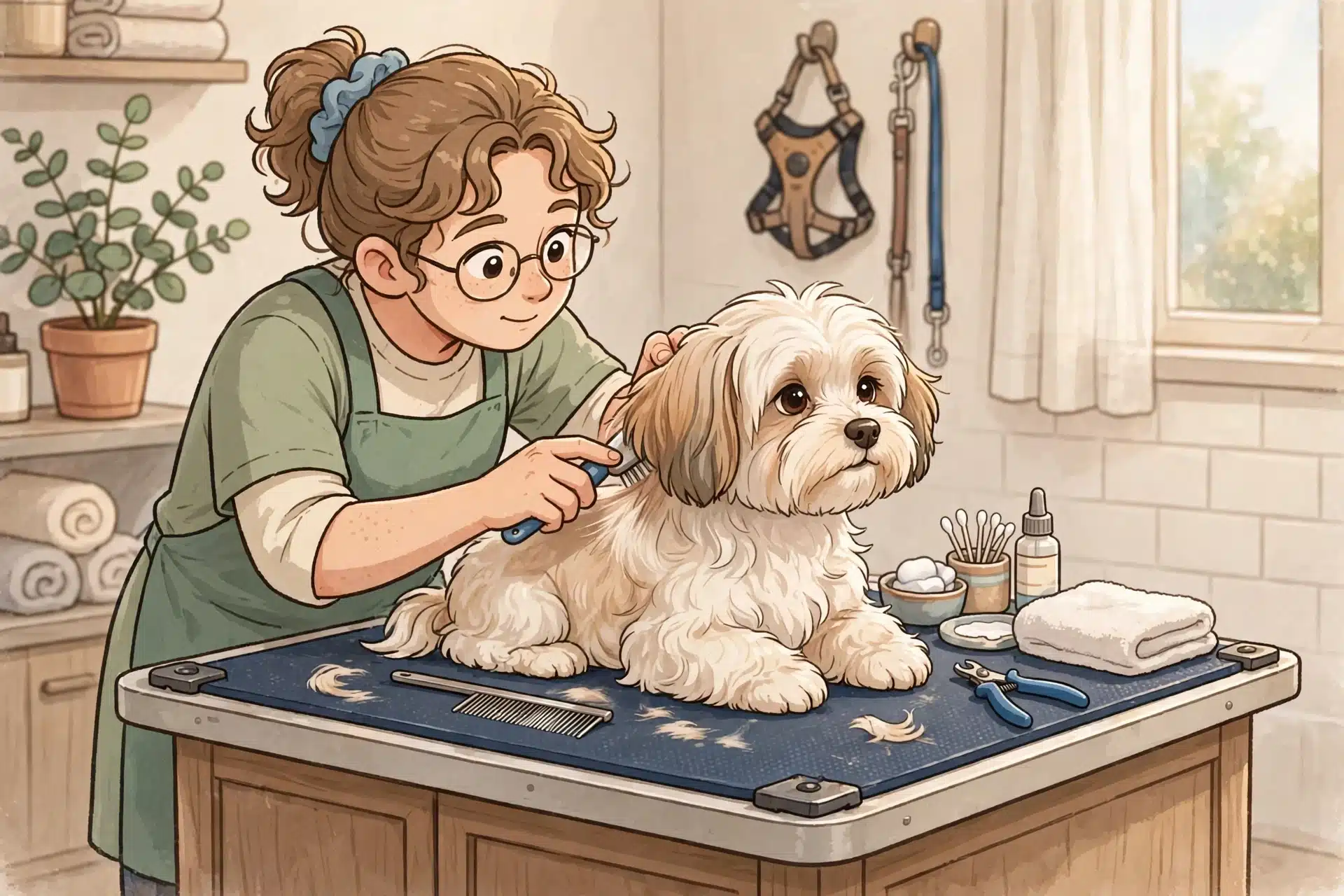
Which breed is easier to groom? In a havanese vs shih tzu grooming comparison, neither is low-maintenance. Both coats are long, fast-growing and mat-prone. The Shih Tzu usually demands a bit more: its dense double coat mats closer to the skin, while a Havanese in a short pet clip can drop to brushing a few times a week.
Havanese Coat Routine
Havanese have a soft, silky coat with little undercoat. The Havanese Club of America notes full-coated adults need brushing two to three times per week, and daily brushing once the coat reaches the floor. Most pet families keep a “puppy cut,” which cuts that to a few thorough sessions weekly. Plan on:
- Brushing two to four times per week with a slicker brush and metal comb
- A bath every three to four weeks, brushed out fully before and after
- Nails, ears and tear stains checked weekly
Matting prevention matters most behind the ears, in the armpits and under the harness line, so work the comb to the skin, not just the top layer.
Shih Tzu Coat Routine
A Shih Tzu’s thick double coat sheds less but tangles faster, especially where the collar rubs. If you keep the classic floor-length show coat, expect daily brushing. Most owners choose a short trim and still commit to:
- Brushing every other day, daily during coat changes
- A full professional groom every four to six weeks
- A topknot or regular face trimming to keep hair out of the eyes
What Grooming Actually Costs and Who Does It
Budget example: a full-service groom for either breed often runs roughly $50-$90 per visit depending on your area and the dog’s condition, plus brushes, combs, shampoo and nail tools at home. Whichever breed you choose, either learn to bathe and trim yourself or build the groomer visits into your monthly budget from day one. Our Havanese puppy care guide walks through a first-year grooming routine step by step.
Temperament, Trainability and Noise
Comparing havanese vs shih tzu temperament comes down to one honest trade-off: the Havanese wants a job, and the Shih Tzu wants a nap. Both are affectionate companions, but they use their brains differently. That shapes training, barking and how each fits a busy household.
How Each Breed Responds to Training
The Havanese ranks among the easier toy breeds to train. The AKC describes them as smart, trainable extroverts who are natural trick dogs, and that eagerness to please shows up fast with treats, short sessions and praise. House training still takes patience, as it does with most small breeds, but they pick up cues quickly. The Shih Tzu can learn the same commands, just more slowly and with more negotiation. Bred for centuries to sit on laps, it often asks “what’s in it for me?” Keep sessions brief and upbeat, and reward generously. If you are starting from zero, the steps behind crate training and basic commands apply to either breed.

Attachment, Barking and Household Noise
Both breeds bond hard with their people, so neither tolerates long workdays alone without help. That said, their noise habits differ. Havanese are alert little watchdogs and will announce the mail carrier, a delivery truck or a knock, then settle once you acknowledge it. Shih Tzu are generally quieter indoors but can be surprisingly stubborn about nuisance barking once a habit forms. Either way, plan early puppy separation training so short absences feel normal, and teach a “quiet” cue from the start.
Children, Strangers and Other Pets
Both breeds are usually gentle with respectful, older children, and both welcome strangers rather than guarding against them. The Havanese tends to be more outgoing and playful, which suits active families. The Shih Tzu is calmer and often content beside a quieter adult. With other pets, both do well when introduced slowly and supervised early on.
Health Testing, Longevity and the Questions to Ask a Breeder
Both breeds are generally healthy, but good breeders prove it with testing, not promises. Parent clubs publish breed-specific protocols under the Orthopedic Foundation for Animals’ CHIC program, which issues a number when a dog completes the required screenings. Here is what each breed’s protocol asks for.
Havanese Health Testing Under the Havanese Club of America
A Havanese earns a CHIC number by completing three tests, per the HCA health guide:
- OFA hips (radiograph evaluated for dysplasia)
- OFA patellas (kneecaps checked for luxation)
- CERF eye exam through a board-certified ophthalmologist, repeated annually
Breeders on the HCA’s own breeder list must keep these current on both parents, so a current CHIC number is a fair baseline, not a bonus.
Shih Tzu Health Testing Under the American Shih Tzu Club
The American Shih Tzu Club’s CHIC protocol centers on:
- OFA patella evaluation, since luxating kneecaps are the breed’s most common orthopedic issue
- An annual eye exam with a certified ophthalmologist, because Shih Tzu’s prominent eyes are prone to surface injuries and dryness
- Optional hip and cardiac screenings many careful breeders add anyway
The same rule applies: a CHIC number means tests were done. Ask what the results actually showed.
Lifespan and Everyday Health
Longevity favors both breeds. Havanese commonly reach their mid-teens, and Shih Tzu often live 13 years or more, with some passing 16. Flat-faced Shih Tzu can struggle more in summer heat and need extra eye care, while Havanese’ main risks stay orthopedic and eye-related. Either way, you are planning for a 12-to-16-year companion, not a short-term pet.

Records to Request Before You Pay a Deposit
Ask for four things, in writing:
- CHIC numbers for both parents, verifiable on the OFA site
- Actual test results, not just “health tested”
- A veterinary exam record for your puppy
- The vaccine and deworming schedule to date
Sage Puppies provides parent health documentation with every match, and any breeder who hesitates here deserves your hesitation right back.
Exercise, Energy and Time Alone
Daily Activity Patterns
Both breeds are small companion dogs, not athletes, so neither needs hours of hard running. A PetMD overview of the Havanese suggests about 30 minutes of daily activity, split across walks and play. The Havanese is the more playful of the two and enjoys games, tricks and short training sessions. Shih Tzu are calmer and happy with two gentle walks and indoor play. Match energy to your household, not to a chart.

Homes, Yards and Weather
Neither breed needs a big yard. An apartment works if you commit to daily walks and toilet training trips. Heat matters more: the Shih Tzu’s short muzzle makes it prone to overheating, so walk early or late in warm months. Havanese tolerate activity better but still need shade and water. In a Utah summer, plan pavement checks, since hot asphalt can burn small paws. Winter means a coat or shorter outings for either breed.
Leaving the House During the Day
This is where the breeds differ most. Both were bred for companionship, so long workdays are hard on either one. Havanese often handle short absences better but can develop separation behaviors if left for hours daily. Start with brief separations from the first week home, using a playpen and short exits. A midday dog walker, neighbor check-in or work-from-home setup keeps either breed settled and happy.
Which Should You Choose: Havanese or Shih Tzu?
There is no single winner here. A Havanese fits an active home that wants a trainable, people-first dog, while a Shih Tzu suits a calmer household happy with daily coat care and a more independent streak. Match the breed to your routine, not to a photo.
Choose Havanese If This Describes Your Home
Pick a Havanese if your family likes walks, play sessions and teaching tricks. These dogs want to be in the middle of everything, so they thrive with people home much of the day or a plan for gradually building alone time. They also learn quickly, which makes first-time training feel less stressful.
Choose Shih Tzu If This Describes Your Home
Pick a Shih Tzu if you want a sturdier, lower-key lap dog. They still need brushing and regular grooming, but they ask for less structured exercise and are content with shorter play bursts. If your household is quieter, or an apartment schedule suits short outings, this calmer pace can be a better match.
Next Steps for Havanese Families
If the Havanese sounds right, start with breeder health records. Look for OFA hip and patella clearances plus current eye exams, which mirror the Havanese Club of America CHIC requirements. Then plan the coat routine before the puppy arrives, because matting prevention starts in week one.
When you are ready to meet Havanese puppies in Utah, Sage Puppies coordinates delivery nationwide and can talk you through current availability. Submitting a Havanese puppy application is the clearest way to reserve a match and ask Cassie your household-specific questions first.

Still torn between the two? That is exactly what a good match call solves. Sage Puppies raises Havanese and Havapoo puppies with honest guidance on coat care and temperament. Check current availability or start the short application, and bring your questions. Cassie answers them all.
Frequently Asked Questions
Q1: How are Havanese vs Shih Tzu puppies compared?
Compare six points: size, coat care, temperament, health testing, exercise needs and time alone. The Havanese suits active, people-first homes; the Shih Tzu fits calmer households.
Q2: What health tests do Havanese and Shih Tzu breeders need?
Havanese breeders follow Havanese Club of America CHIC requirements:
- OFA hips
- OFA patellas
- Annual CERF eye exam
Shih Tzu breeders need OFA patellas and annual eye exams.
Q3: Which breed needs more grooming?
The Shih Tzu usually does, since its dense double coat mats closer to the skin. A Havanese in a short pet clip needs brushing only a few times weekly.
Q4: Can either breed stay home alone all day?
No. Both were bred for companionship. Plan short separations from week one, plus a midday check-in for long workdays.
Q5: Which breed is better for first-time owners?
The Havanese trains faster and forgives beginner mistakes, while the Shih Tzu asks for less activity. Match the breed to your daily routine.
Conclusion
The Havanese vs Shih Tzu choice comes down to routine, not looks. A Havanese fits active, people-first homes that can train daily and build up alone time gradually, while a Shih Tzu suits calmer households and apartments. Both need real coat care and a 12-to-16-year commitment. Whichever you pick, demand written CHIC numbers, OFA results and current eye exams from both parents before you pay a deposit. Then match the breed to the schedule you can actually keep, and you will land on the right small companion breed puppy.