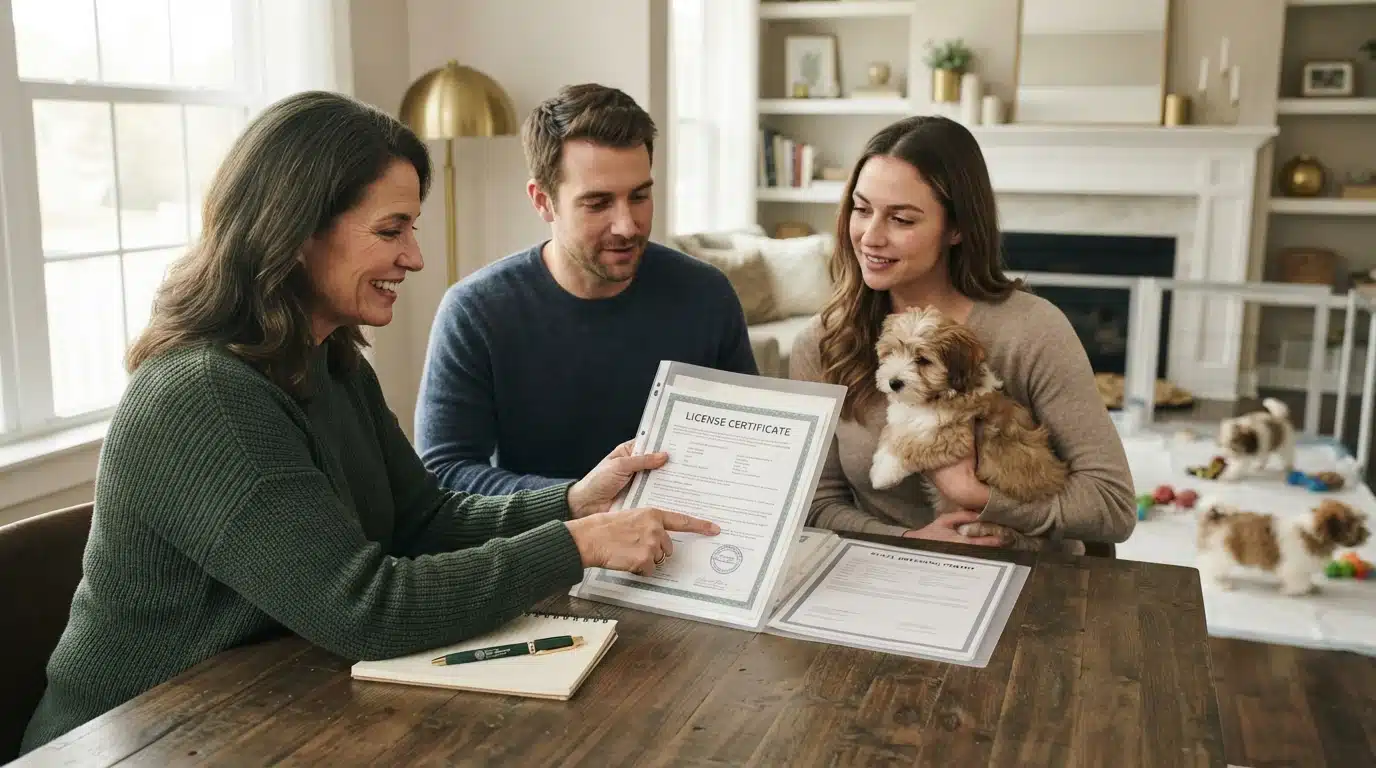
Quick Summary: Meet the mother dog whenever possible, or request a live, unedited video call, to assess temperament, health, and living conditions. Verify the parents through registered names, OFA or PennHIP records, eye and patella tests, and DNA parentage results, since a CHIC number only confirms that tests were completed, not that they passed. In Utah, where legal backup after a purchase is limited, get everything in writing before paying; Sage Puppies supports this process by allowing families to visit dams and review health records before committing.
Most people browsing puppies for sale in Utah pick their puppy long before they ever see the mother, and many never meet a sire at all. In small programs, the male often lives in a guardian home, so he stays a family pet while he contributes to the next litter.
That gap matters. A puppy’s temperament and health trace straight back to the dam and sire, and meeting parent dogs is the most direct way to judge what you are buying. This guide shows you what to look for, how Havanese CHIC screening and DNA parentage verification work, and why Utah’s limited state backup makes your own checks count. At Sage Puppies in South Jordan, Cassie Milar’s Havanese, Havapoo and Cavapoo families visit the mother and review full health records before any commitment.
Should I Meet the Parent Dogs Before Buying a Utah Puppy?
The Short Answer
Yes, whenever you can. Meeting the parent dogs, especially the mother, is the fastest way to judge temperament, living conditions, and the breeder’s honesty. With puppies for sale in Utah, a short drive is often all it takes. If you live out of state, a live video call is a fair substitute. What matters is that you see the actual parents and where the puppies are raised, not just staged photos.
- A visit can prove: the dam’s temperament, how she lives, and whether the home matches what the breeder tells you.
- A visit cannot prove: the sire’s traits if he lives elsewhere, or future health, which is why testing records matter too.
What a Parent Visit Can and Cannot Prove
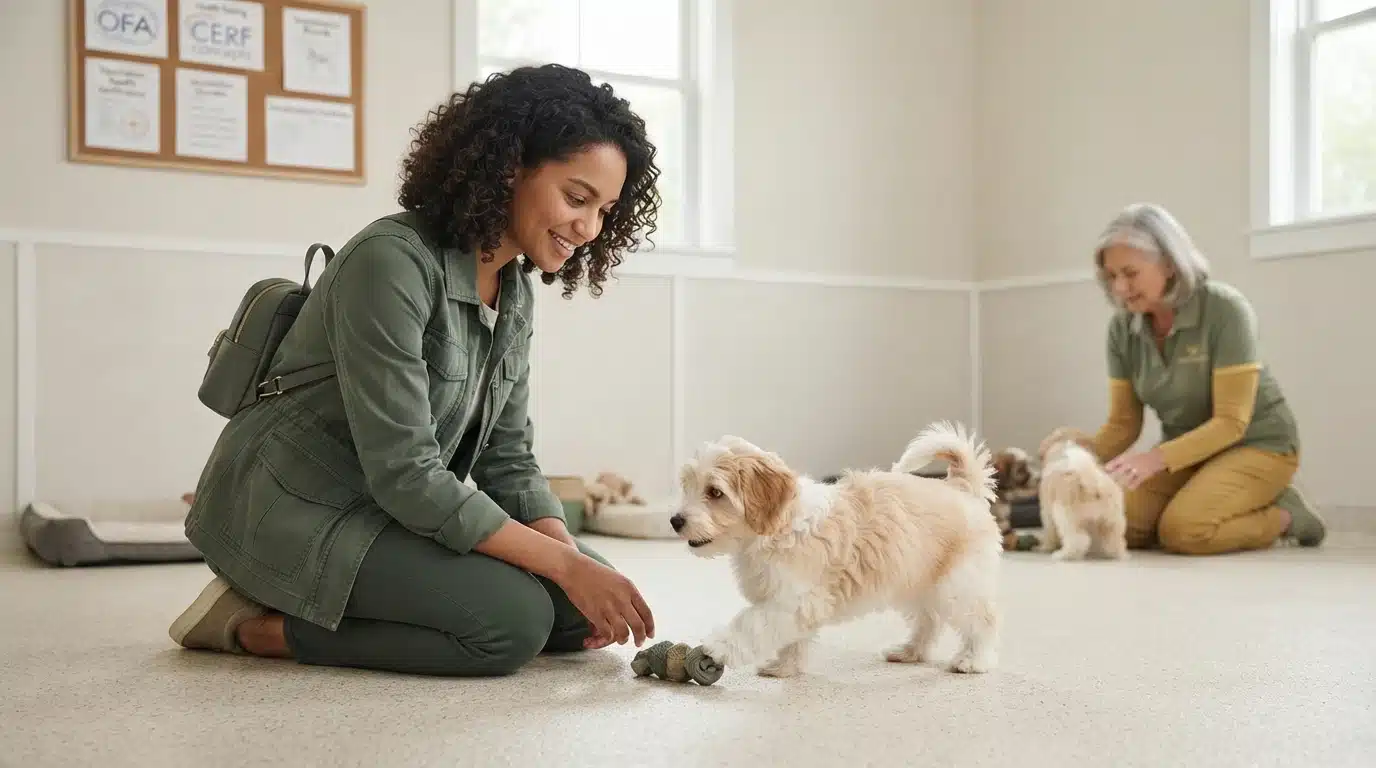
Spend time with the mother. Is she calm around strangers? Does she approach you willingly or hide? A friendly, well-kept dam says a lot about how her puppies will turn out. Watch the environment too: clean flooring, space to move, and dogs that look comfortable.
But a visit has limits. Many breeders use a sire from another state, so you may meet only the dam. And even a lovely parent tells you nothing about hips, eyes, or inherited disease. That evidence lives in documents like OFA and PennHIP results and DNA testing, not in the dog’s personality. Ask to see both parents’ health records in writing.
When a Video Call Is an Acceptable Substitute
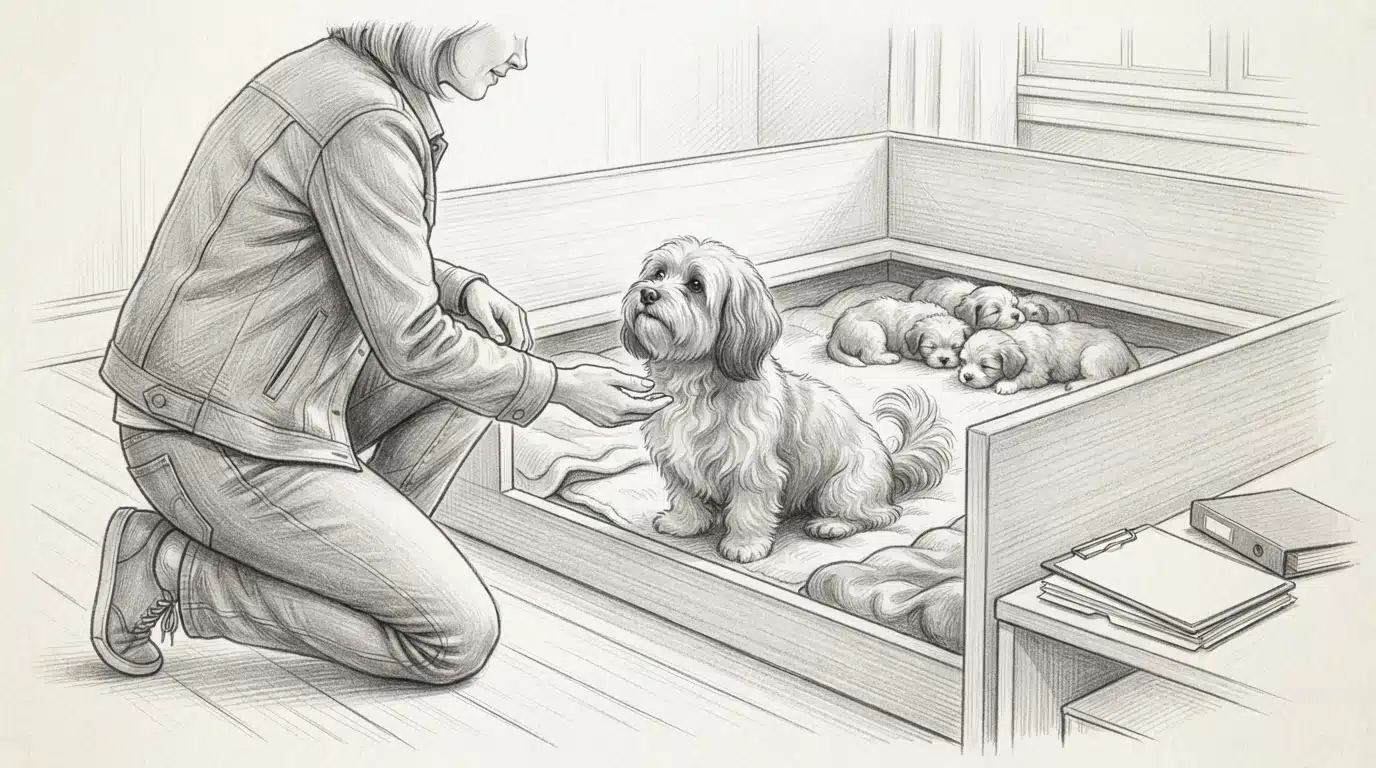
If distance makes a visit impossible, ask for a live, unedited video call. Request a walk-through of the whelping area, a few minutes with the dam, and on-demand views rather than a polished recording. Any breeder committed to meeting parent dogs transparently will agree. If someone refuses video and refuses visits, treat that as a warning sign and keep looking.
What Meeting the Dam (Mother) Tells You
The dam is your best predictor of the adult dog you will live with for 12 to 15 years. Genetics pass through her directly. So when you meet the mother dog, look for three things:
- Temperament: calm, curious, comfortable with strangers, not fearful or snappy
- Coat and body condition: clean, well-groomed coat, healthy skin, lean but well-fed frame
- Home environment: a dog who lives in the house as a pet, not isolated in a kennel run
Temperament Under Observation
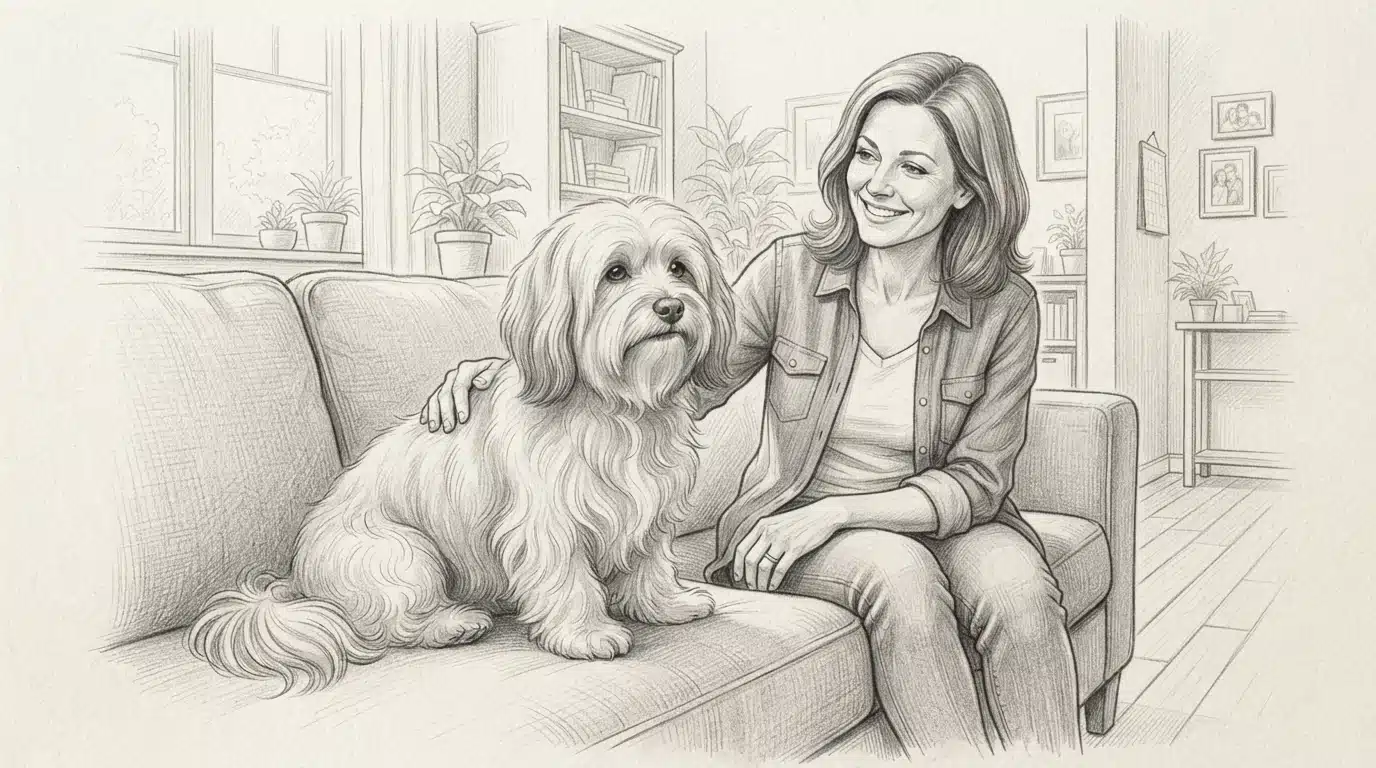
Watch how she reacts to you before anyone prompts her. A well-bred dam may bark once at a stranger, then settle and watch. That is normal. What you want to avoid is a mother who trembles, hides, growls or needs constant restraint around visitors.
Ask to see her interact with the puppies too. A good dam corrects gently and returns to her litter without panic. Temperament is heritable, so a nervous mother in Havanese, Havapoo or Cavapoo lines often produces puppies who struggle with confidence later.
Spend at least 15 minutes with her rather than a quick pass-through.
Coat, Skin and Body Condition
Run your hands over her coat. You should feel no matted patches, hot spots or flaky skin behind the ears. Her eyes should be clear, her teeth reasonably clean and her gait even.
Havanese and both poodle mixes carry coats that need regular care, so a matted dam suggests her needs were neglected during pregnancy, which is exactly the window when her health matters most.
Ask for her grooming records as part of your puppy health records checklist review.
How the Dam Is Raised and Lived With
Finally, ask where she sleeps. A dam raised inside the home, handled daily and treated as a family pet produces puppies already used to household noise, handling and routine.
Dams kept in outdoor kennels or barns, even clean ones, raise puppies with less early socialization. If the breeder uses guardian homes, visit one if you can and confirm the arrangement is real, not a name on paperwork.
What Meeting the Sire (Father) Adds
Why Sires Are Harder to Meet
Many breeders use sires from other states, so the father often never lives where the puppies do. You might see photos, a pedigree, and health test results, but not the dog himself. That is common in small programs, and it does not mean anything is wrong. It just means you need other ways to judge him. Ask why that sire was chosen and which traits he tends to pass on, since the AKC notes that a puppy’s health and temperament come directly from both parents.
How Guardian Homes Change What You Can Verify
Some breeders place their sires and dams with local families, an arrangement called a guardian home. The dog lives as a family pet while the breeder uses him for planned litters. If the sire lives nearby, you can visit, watch how he greets strangers, and see his size and coat in person. Some programs, like Sage Puppies’ guardian home program, keep parent dogs with local Utah families, which makes in-person visits realistic even for the father. Ask for a video call if travel is hard. A breeder who shares the sire openly is easier to trust than one who hides him.
Sire Temperament Without an In-Person Visit
You can still judge temperament from a distance. Request short videos of the sire playing, being handled, and meeting new people. Talk to families who own his earlier puppies and ask what those dogs are like as adults. The father contributes half the genes, so his record matters even when you cannot meet him.
Reading the Health Records Behind Each Parent
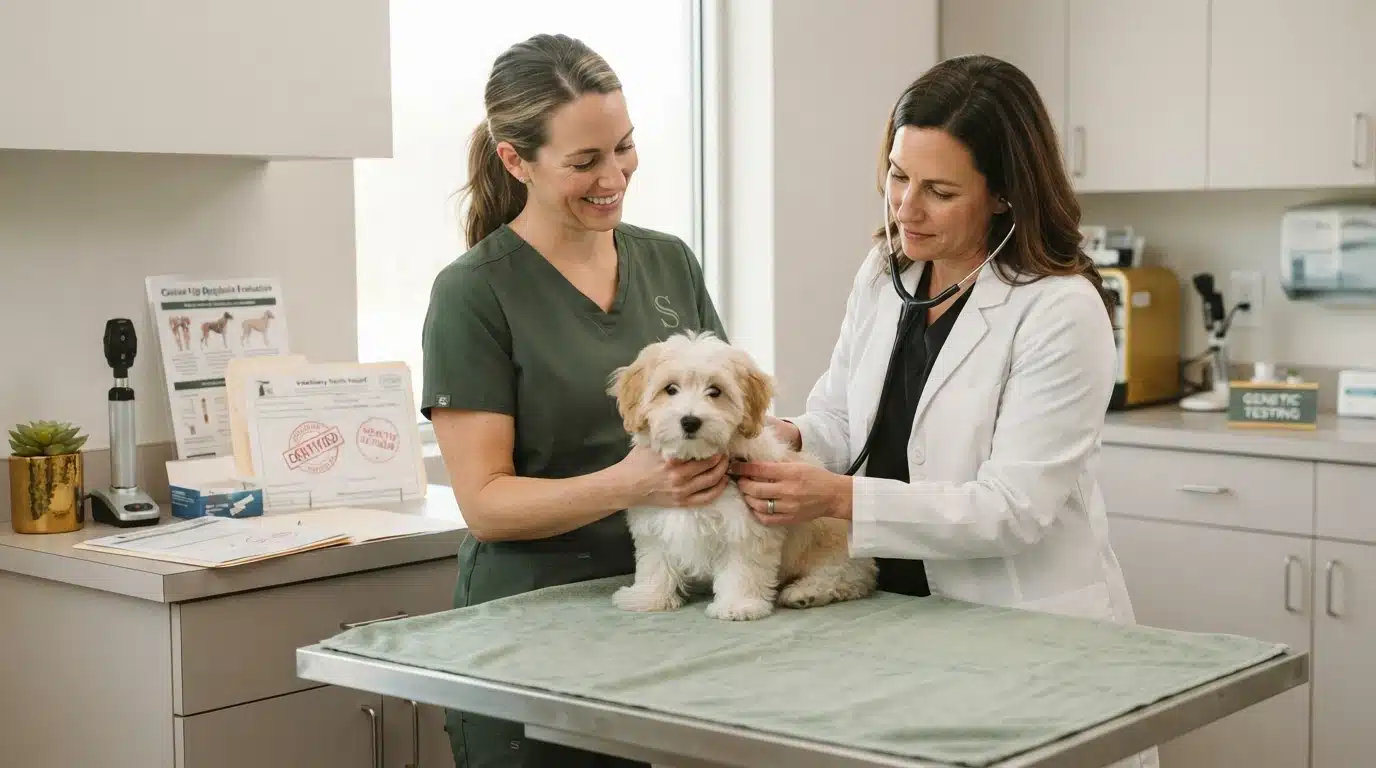
Temperament tells you half the story. Health paperwork tells you the rest, and a good breeder will hand it over without being pushed twice. For a Havanese parent, ask for records that name the body part tested, the method used, the dog’s age or test date, and the actual result. Those four details turn a vague “health tested” claim into something you can verify.
Three Different Kinds of Evidence, Kept Separate
Buyers often hear three claims that sound identical but are not. Physical exams and vet checks describe a dog today. Screening results, like hip X-rays or eye exams, look for inherited disease. DNA tests reveal genes a dog carries even when it looks perfectly healthy. Each one answers a different question, so ask for each kind on its own. A stack of vet receipts is not the same as a screening record.
What Havanese Screening Requires Right Now
The Orthopedic Foundation for Animals runs the CHIC program, which sets breed-specific screening protocols and issues a CHIC number to dogs that complete them. For Havanese, the breed club requires OFA hip evaluations, patella (kneecap) exams, and annual eye exams. Hearing tests and cardiac checks are also common additions among careful breeders.
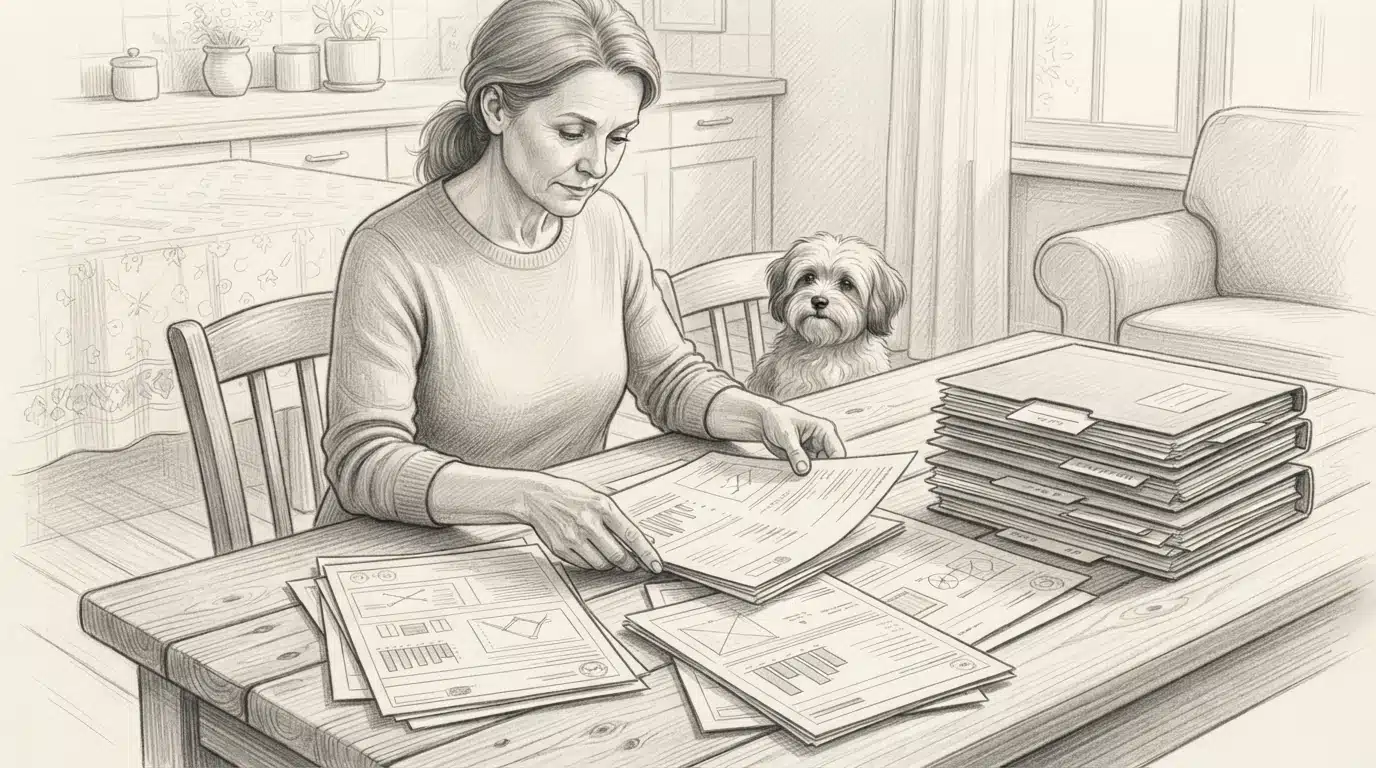
One warning here: a CHIC number proves the tests were done, not that they passed.
Key tip: CHIC listing means the required tests were completed. The results still need your own review, one line at a time.
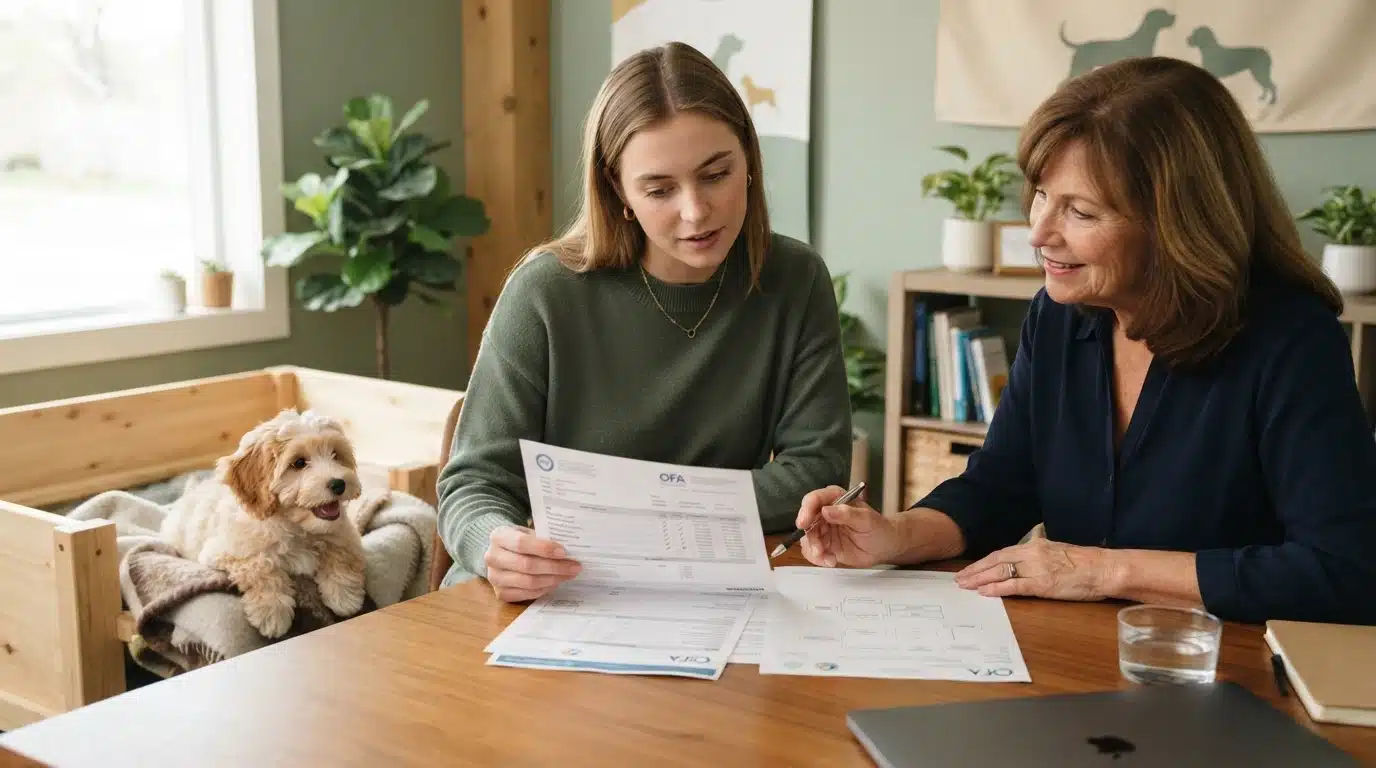
How to Read a Screening Record Properly
Read every record against the dog’s registered name, not a nickname. The name on the certificate must match the parent you met. Then check three things.
- The age at testing. Hip evaluations are reliable only at 24 months or older.
- The method. Hips may be scored by OFA or by PennHIP, and the numbers do not translate directly between systems.
- The result itself. Look for ratings like Good or Excellent, normal patellas, and a current eye exam dated within the past year.
If any record is missing, dated oddly, or names a different dog, ask why before you place a deposit.
Verifying That the Dogs Are Really the Parents
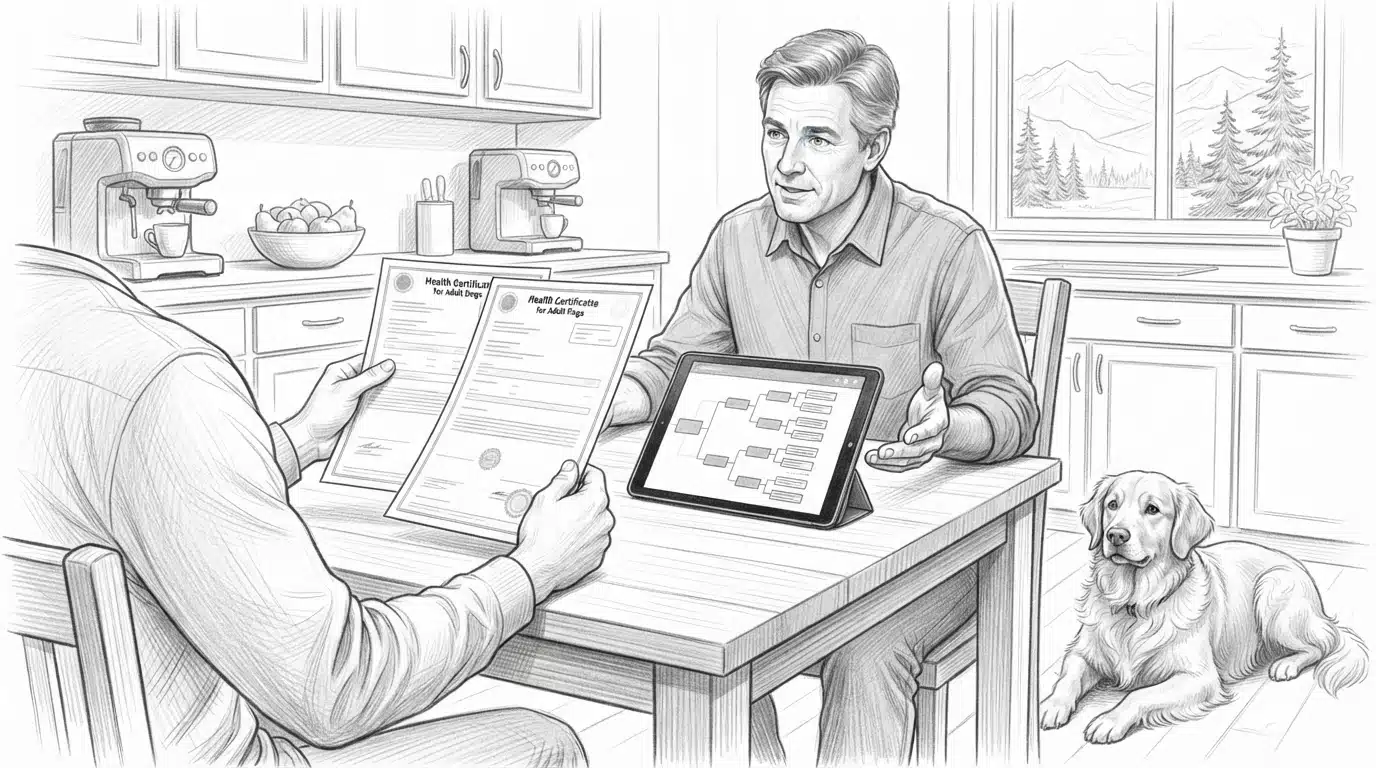
How do you confirm a puppy’s parents are really the parents? Follow this sequence. First, ask for the registered names of both the dam and the sire. Second, request their health test results by those exact names. Third, ask whether the litter has DNA parentage verification on file. Fourth, compare everything yourself during the visit or video call, since a mismatch in any one spot is a reason to walk away.
How DNA Parentage Verification Works
Parentage testing compares genetic markers from the puppy and both parents. A lab confirms that each puppy matches its dam and sire; if one does not, the result rules that dog out. The AKC runs a parentage evaluation service for this purpose, and UC Davis’s veterinary genetics lab offers the same testing. Registered breeders can produce the report, so asking for it is a fair, normal request.
Verifying the Breeder and the Records
Check that health results appear on the breeder’s account with the testing registry, not just in a photo of a paper. Ask to see the dam and sire in person or on live video. Any reservation process worth your deposit should include documented parent health results and answered questions before you pay.
What to Write Down at the Visit or on the Call
Record the dam’s and sire’s registered names, birth dates and microchip numbers. Note which health tests each parent has completed and when. Photograph certificates, save the DNA report, and keep the breeder’s contact details with your puppy’s paperwork.
Planning the Next Step After the Parent Visit
A good visit ends with clarity, not just warm feelings. Before you pay anything, get the breeder’s answers down on paper or email so both sides agree on what comes next.
Questions to Settle in Writing Before Any Deposit
Ask the breeder to confirm these points in writing:
- The exact price and what it covers, plus deposit and refund terms
- Which parent dogs are behind your puppy, with DNA parentage verification documented
- Health screening results you can keep copies of, including PennHIP hip evaluation where it applies and CHIC requirements for Havanese lines
- Pickup date, delivery options, and the puppy’s health records checklist before go-home day
- What happens if a health issue shows up early
A breeder who hesitates to put these in an email is telling you something.
Where Sage Puppies Fits for Utah Buyers
Utah offers little state-level backup if a purchase goes wrong, so the breeder’s own process carries the weight. Buyers looking at puppies for sale in Utah can review Sage Puppies’ application and reservation steps before committing, with Cassie matching each Havanese, Havapoo or Cavapoo puppy to the family rather than filling orders first come, first served. That structure matters more than a fast checkout.
For Buyers Outside Utah
Nationwide families follow the same path: complete the application, review the evidence, then arrange delivery or travel. Written confirmation of parentage and health screening travels with the puppy, so distance should not weaken your proof of a careful match.
Common Mistakes to Avoid When Evaluating Parent Dogs
Mistakes That Skew the Evaluation
Don’t judge temperament from a single short visit. A dam can act nervous because a stranger arrived, not because she’s a nervous dog. Watch her across several settings: with her people, in the yard, around noise. Another trap is trusting photos or video calls alone for the sire. Many sires live in guardian homes or with another breeder, so ask what health testing was actually completed, and for Havanese parents, whether CHIC requirements were met.
Mistakes in the Transaction
Some buyers accept “health tested” as a verbal claim without paperwork. Ask to see certificates for hip evaluations, eye exams and DNA panels, including DNA parentage verification. Utah offers limited legal backup after a sale, so everything you rely on should be documented before you pay. And don’t skip the deposit and contract review just because the breeder seems kind. A thorough process, like the one Sage Puppies uses, protects both sides more than charm does.

Ready to meet the parents behind your future puppy? Sage Puppies raises every Havanese, Havapoo and Cavapoo dam ourselves, and we welcome families to spend time with her before deciding. Start your application at Sage Puppies and take the first honest step toward a well-bred companion.
Frequently Asked Questions
Q1: Should I meet the parent dogs before buying a Utah puppy?
Yes, whenever you can. Seeing the dam in person, or on a live video call, is the fastest way to judge temperament and living conditions. With puppies for sale in Utah, a short drive usually covers it.
Q2: What if the sire lives in another state?
Ask for his registered name, health test results, short videos, and DNA parentage verification for the litter. Talking to families who own his earlier puppies also helps.
Q3: What health records should I request?
Ask for OFA or PennHIP hip evaluations, patella exams, eye exams dated within a year, and DNA panels. For Havanese lines, confirm the CHIC requirements were completed, then read each result yourself.
Q4: Does a CHIC number mean the dog is healthy?
No. It only proves required tests were completed. Results still need your review, line by line.
Q5: Are video calls a fair substitute for a visit?
Yes, if they are live and unedited. Ask for a whelping-area walk-through and time with the dam. Refusal of both visits and video is a warning sign.
Conclusion
Meeting the parent dogs is the most direct check you can run before buying a puppy in Utah. Spend time with the dam, watch her temperament and condition, and ask where she lives. Judge the sire through his registered name, test results and DNA parentage verification, even if he lives in a guardian home. Read every screening record yourself, because a CHIC number proves tests were done, not that they passed. For Havanese, Havapoo and Cavapoo lines, confirm hip, patella, eye and DNA evidence before you pay. Utah offers little legal backup after a sale, so written documentation is your real protection. A breeder who shares parents and paperwork openly is the one worth your deposit.