Quick Summary: Home-raised puppies usually adjust more easily to family life because they spend their first eight weeks around household sounds, floors, and frequent human handling, making them a strong fit for Havanese, Havapoo, and Cavapoo companions. A well-run farm program can also produce healthy, confident puppies, but buyers should verify health records, daily handling, living conditions, and contract terms because raising labels are not regulated. Judge the breeder’s routine first, choose based on your household and budget, and plan continued socialization after pickup.
If you have been comparing puppies for sale near me, you have probably seen two very different descriptions. One breeder talks about living rooms and grandchildren. Another talks about barns, goats and tractors. So which puppy adjusts better? For most families, a home-raised puppy makes the easier transition, especially for a Havanese, Havapoo or Cavapoo bred to be a companion. But a farm-raised puppy can be just as well socialized when the breeder works at it on purpose. The label is not the outcome. What matters is where the puppy spends its first eight weeks, who handles it daily, and which health records come home with it. This guide breaks down the home raised vs farm raised puppies question across seven practical dimensions, from socialization to cost, and gives you the exact questions to ask any breeder before you pay a deposit.
Home-Raised vs Farm-Raised Puppies: At a Glance
| Home-raised puppies | Farm-raised puppies | |
|---|---|---|
| Raising environment | Inside a home, near daily household activity | Barns, pasture, kennels and outdoor run space |
| Early socialization | People, voices, appliances, floors and family routines | Livestock, machinery, weather, varied ground surfaces |
| Health screening and oversight | Parent testing plus in-home wellness care and records | Depends heavily on breeder; facilities may be USDA licensed |
| Temperament after go-home | Often settles quickly, focus is on people | Often bold and resilient, sometimes less people-focused |
| Breed and coat fit | Strong match for Havanese, Havapoo and Cavapoo homes | Suits active households; coat care still required |
| Cost and breeder support | Higher single-puppy price, typically $3,500 to $4,500 | Wide range, many listings priced well below boutique programs |
How Home-Raised and Farm-Raised Puppies Compare
Home-raised puppies
These pups spend their first eight weeks indoors, with people, voices, appliances and family routines as the backdrop of daily life. They suit families wanting a people-focused companion, and boutique programs like Sage Puppies in South Jordan, Utah follow this model for Havanese, Havapoo and Cavapoo litters. Expect a higher single-puppy price, typically $3,500 to $4,500.
Key strengths
- Early socialization with people, household noise and varied floors
- Parent health testing plus in-home wellness care and records
- Strong fit for small breed companion puppy homes
Farm-raised puppies
These puppies grow up around barns, pasture and outdoor runs, where livestock, machinery, weather and varied ground surfaces fill their early weeks. They can suit active households that want a bold, resilient pup, and many listings cost less than boutique programs. Oversight varies, so breeder quality matters more than the setting itself.
What Home-Raised and Farm-Raised Actually Mean
A farm-raised puppy was born and kept in a large-scale kennel facility, often outdoors or in rows of runs, where one staff member cares for many litters at once. The label says nothing about care quality by itself, but it usually signals volume breeding rather than a litter raised inside a family kitchen.
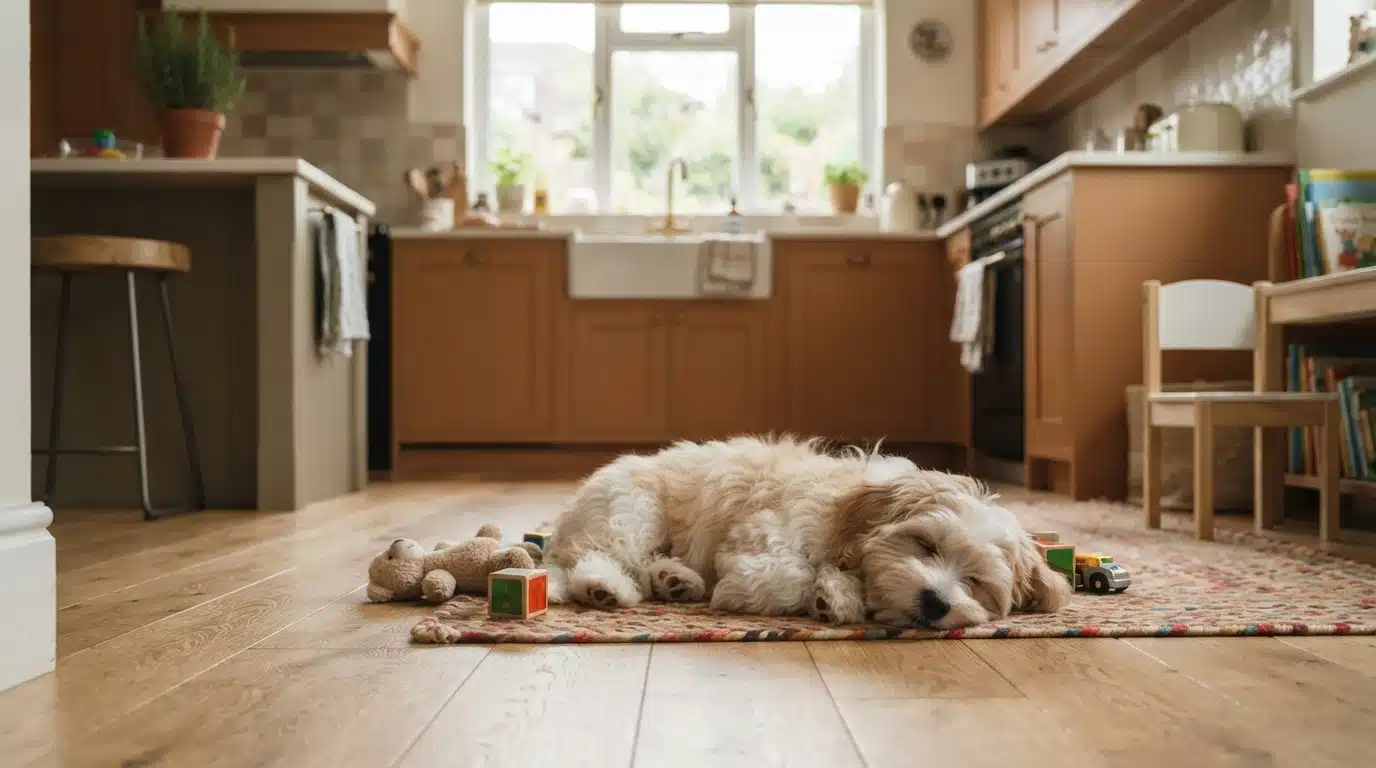
Here is what the label does not guarantee:
- Daily human handling or a calm household
- Health testing on the parents
- Exposure to common household sights and sounds
- A breeder who stays involved after pickup
The words breeders use, and what they do not promise
“Home-raised,” “family-raised” and “kennel-raised” are marketing terms, not regulated ones. Anyone can put them on a website. Some licensed breeders whelp litters in their homes and do everything well. Others use the same words while keeping dogs in outdoor runs. So treat every label as a claim to verify, not a certificate.
Tip: Ask where the puppies sleep, who handles them daily, and how many adult dogs live on site. Vague answers tell you more than any headline.
Why in-home raising fits companion breeds
Small companion breeds like the Havanese, Havapoo and Cavapoo were bred to live beside people. Their first eight weeks of life shape how boldly they meet new floors, noises, and strangers. Puppies whelped and weaned inside a home already hear dishwashers, doorbells and children, so the going-home adjustment tends to be easier. That is why boutique programs, including Sage Puppies in South Jordan, raise litters in the house rather than in runs. For help reading temperament before you choose, this guide for first-time owners walks through what to expect from each breed. Trusting a “companion puppy” label matters less than seeing the environment where the litter actually lived.
Early Socialization and Real-World Exposure
The first eight weeks of life shape a puppy more than any other period. The AVSAB position statement on puppy socialization calls the first three months the main window for meeting new people, places and things, so the litter environment matters from day one.
What a home sounds and feels like
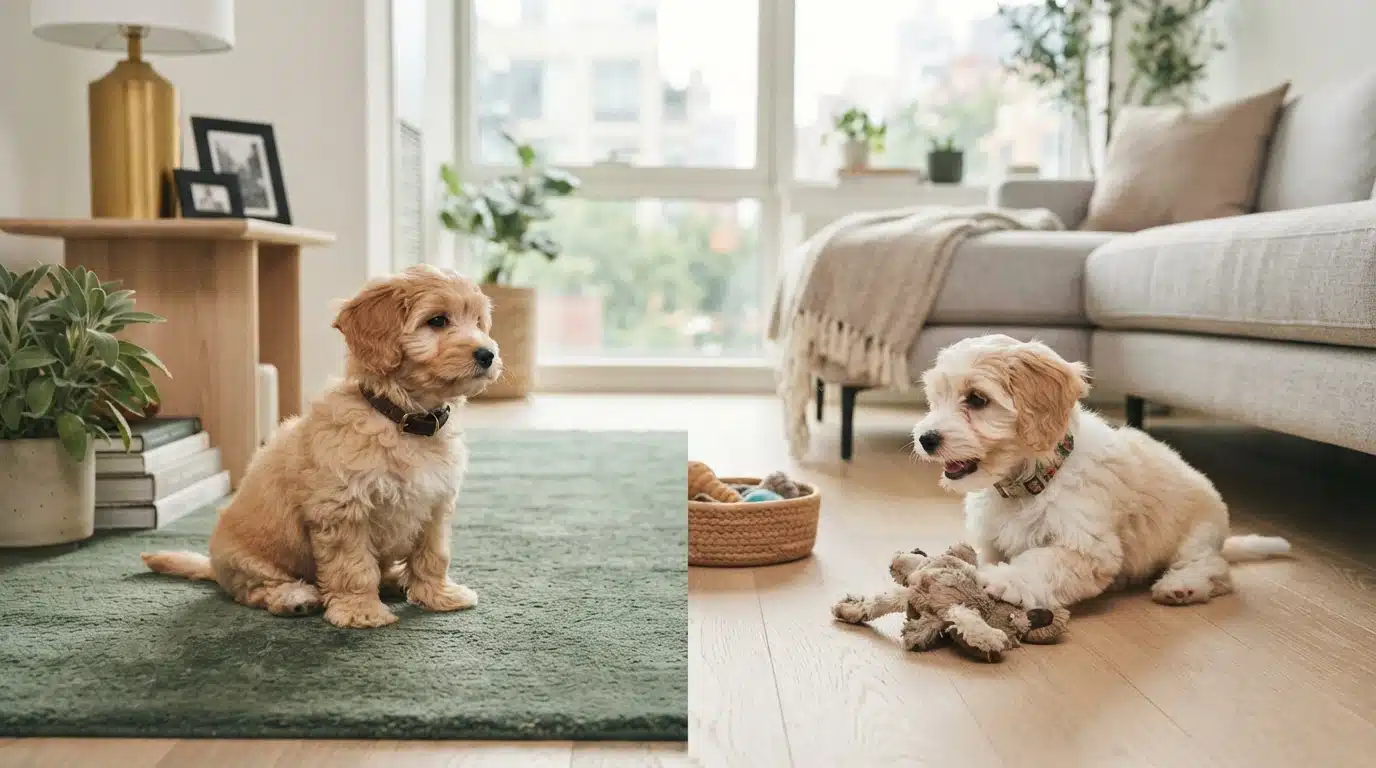
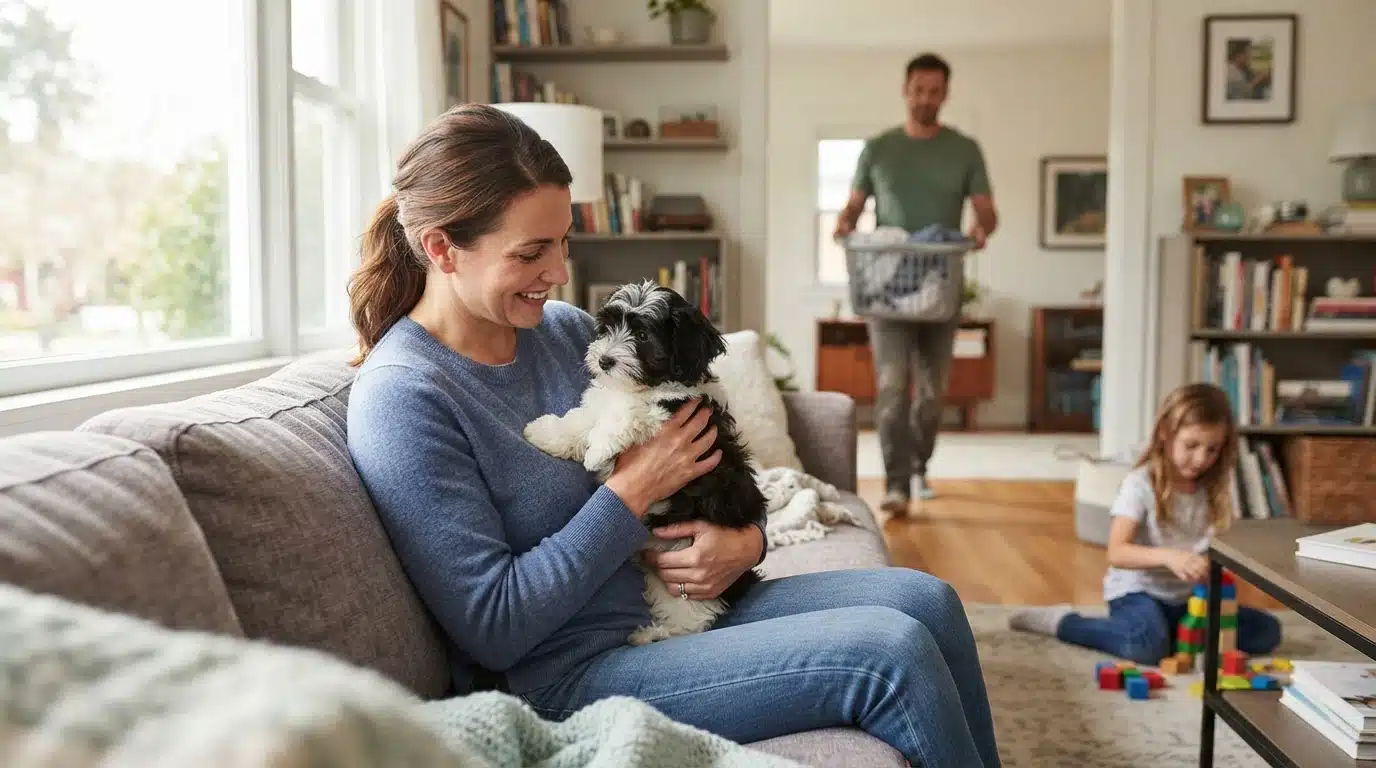
A home-raised litter lives inside daily household noise. Think dishwashers, doorbells, vacuum cleaners, kids on school mornings and the thump of footsteps overhead. Puppies nap through it, wake to it and learn it is normal. Being handled often also matters: daily weighing, nail trims and being carried from room to room teach a young puppy that human touch is safe. By go-home day, most of the house has already happened to them.
What a farm sounds and feels like
A farm or kennel setting sounds different. Outdoor breezes, distant tractors, other dogs barking and birds create their own steady soundtrack. That exposure is real, and well-run farm programs add handling routines on top of it. But the environment tends to be more uniform, and a puppy can spend weeks around only one or two adults and its littermates. Quieter, less varied input means more first-time experiences land after your puppy comes home.
Is a home-raised puppy better than a farm-raised one?
Neither label wins on its own. The puppy socialization period rewards any environment with varied sights, sounds and frequent gentle handling. A busy, attentive farm program can beat a quiet home where pups get little touch time. Ask what actually happens in the litter, not just where it lives: who holds the puppies, how often, and what sounds and surfaces they meet. For small breed companion puppies, everyday household confidence helps with the going home adjustment, which is why programs like Sage Puppies raise litters indoors. Judge the breeder’s routine first and let the location come second. If you want to see how a well-socialized temperament shows up later, our puppy temperament and size guide for first-time owners walks through it.
Health Screening and Veterinary Oversight
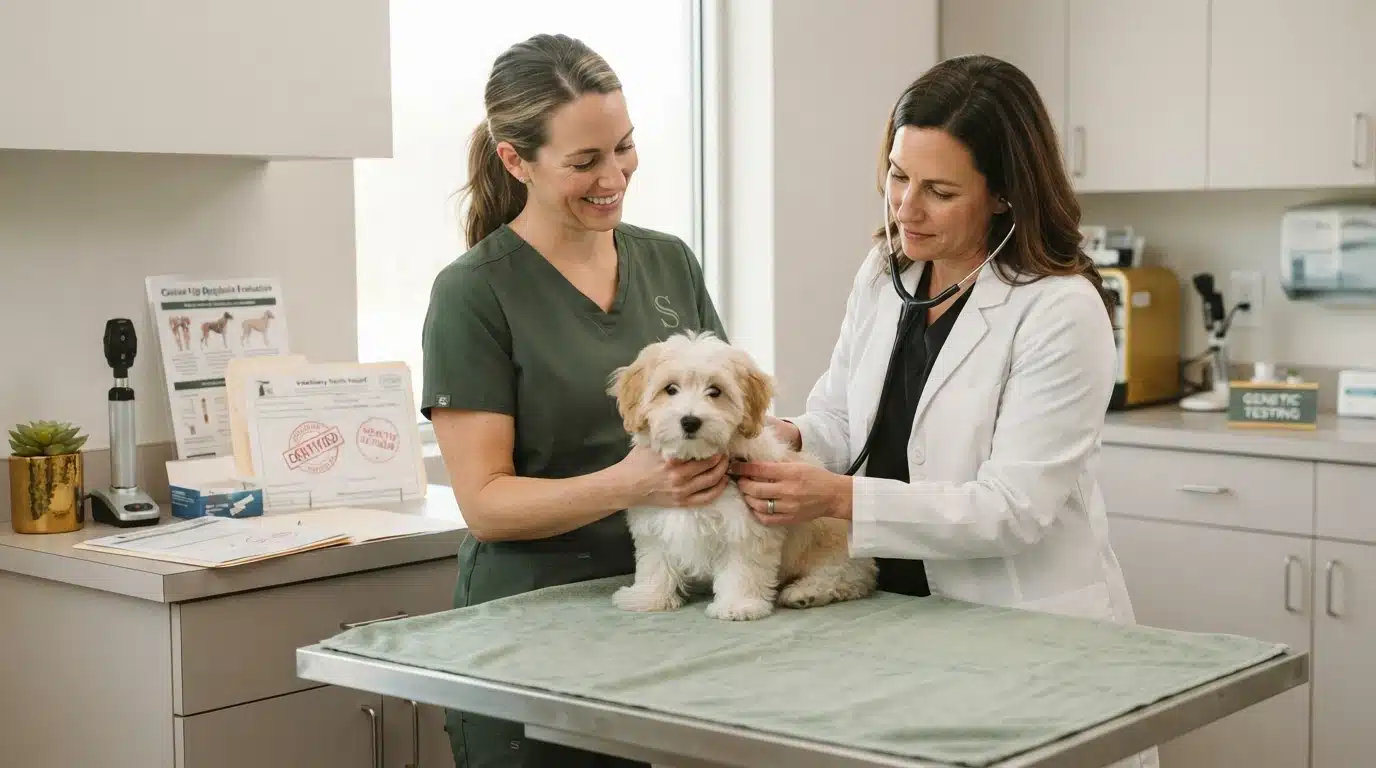
What to ask about parent testing
A responsible breeder should hand you these records without hesitation:
- OFA health clearances for both parents, searchable on the OFA website
- A vet exam record for each parent dog
- Genetic test results for breed-specific conditions
- The puppy’s own vet check and vaccine dates
Ask for the parents’ registered names so you can verify results yourself instead of trusting a screenshot. Smaller programs, including home-raised ones, often DNA test every parent and share results openly, so a big kennel is not automatically better tested. For a deeper checklist, see how to check a breeder’s health testing records.
Facility scale and disease exposure
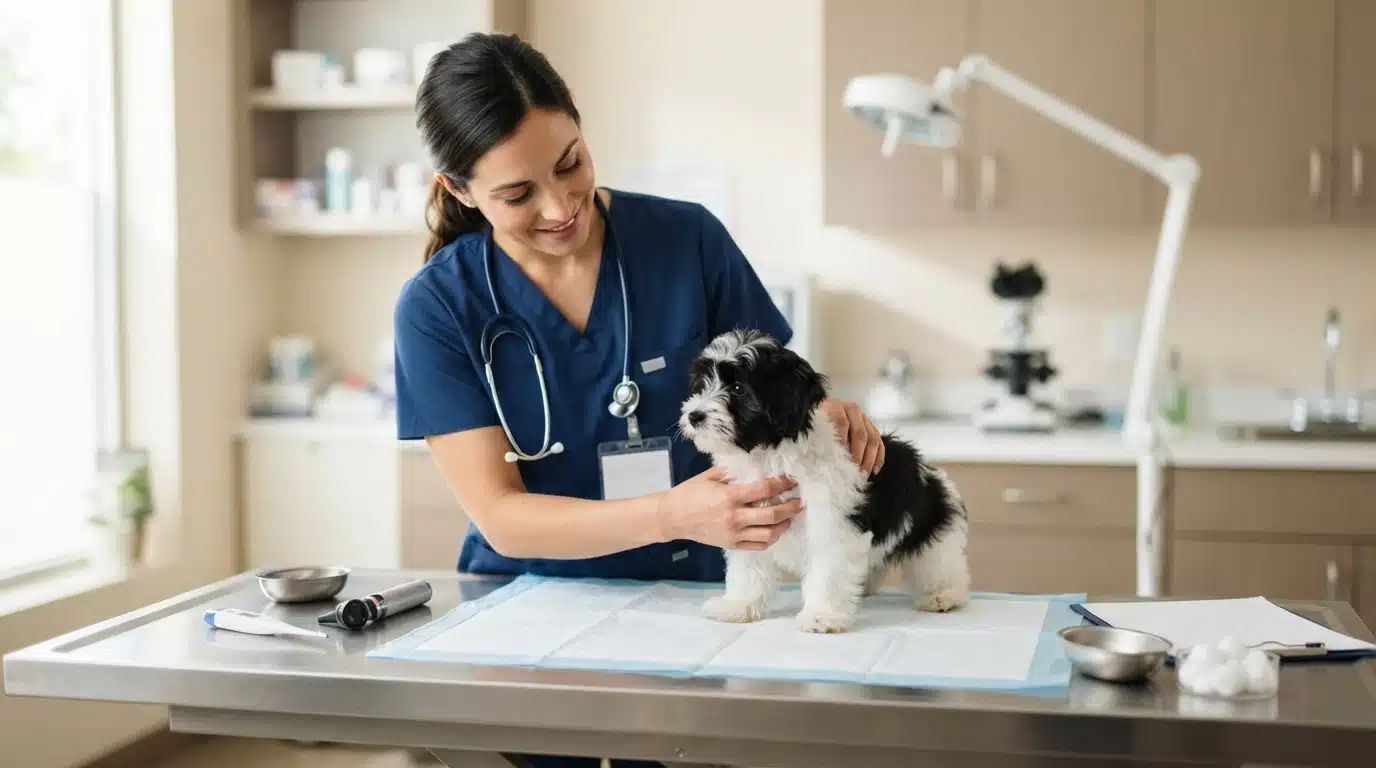
Scale changes risk. Large kennels and puppy farms house many litters at once, so one sick dog can expose dozens. Parvo and kennel cough spread fast in crowded runs. A home with one or two litters a year keeps exposure low, and puppies that see a family vet early start life with a documented health baseline. USDA licensing sets a floor, not a guarantee, so visit if you can.
How Each Puppy Adjusts After Go-Home
The first few days in your house
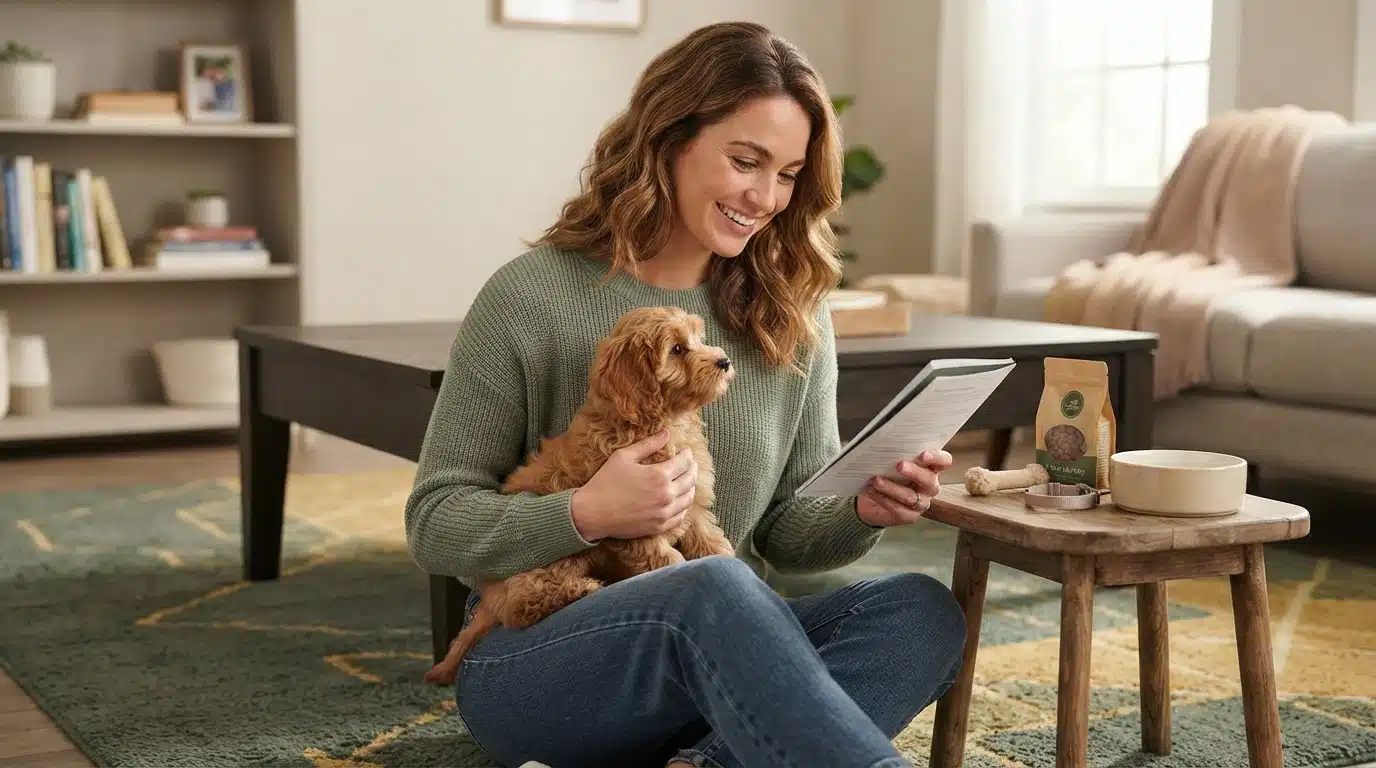
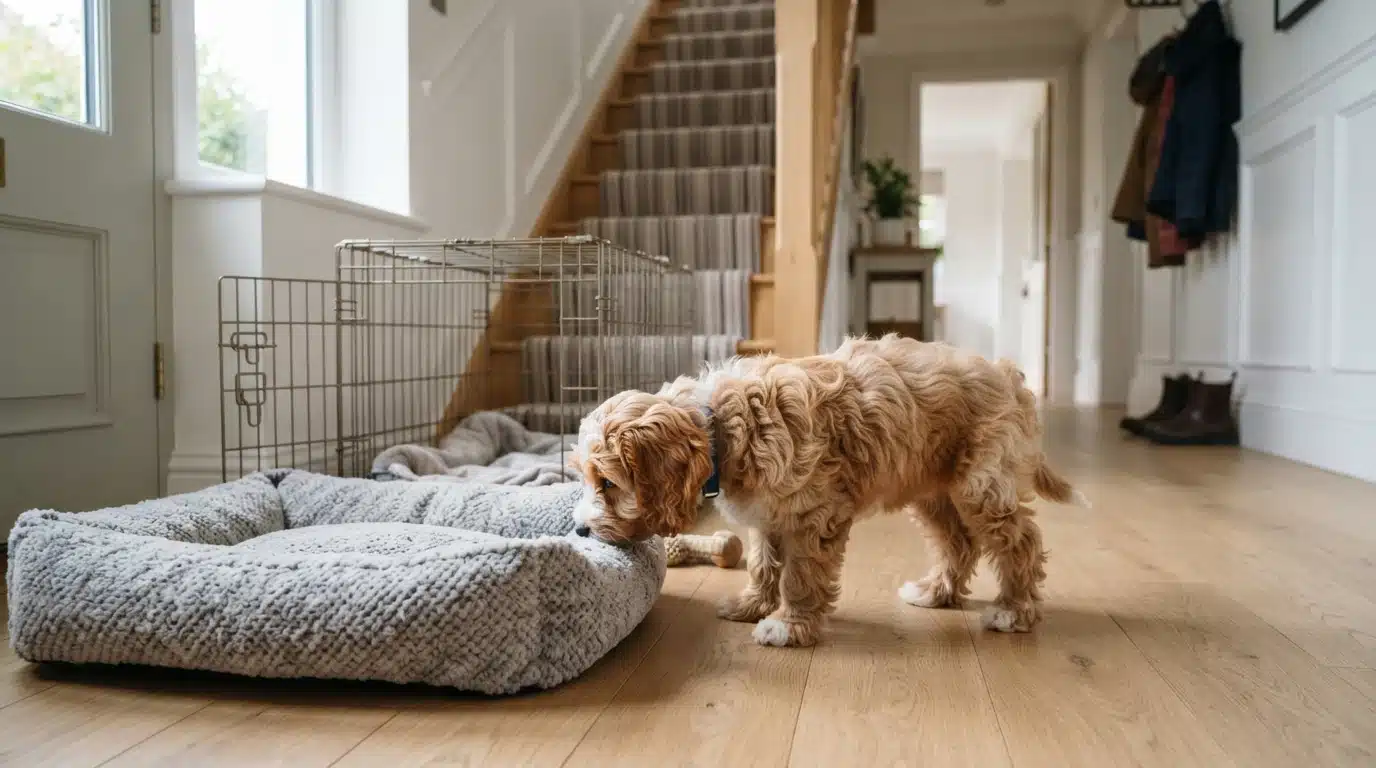
Most home-raised puppies land softly. They already know house sounds, human touch, and being handled, so the change reads as a move rather than a shock. Expect a night or two of whining, a few potty mistakes, and a puppy that follows you from room to room. Farm-raised puppies often need longer. New textures, appliances, and stairs can worry them at first, so plan quieter days and more short, calm sessions. Both groups settle with patience.
Building on what they already know
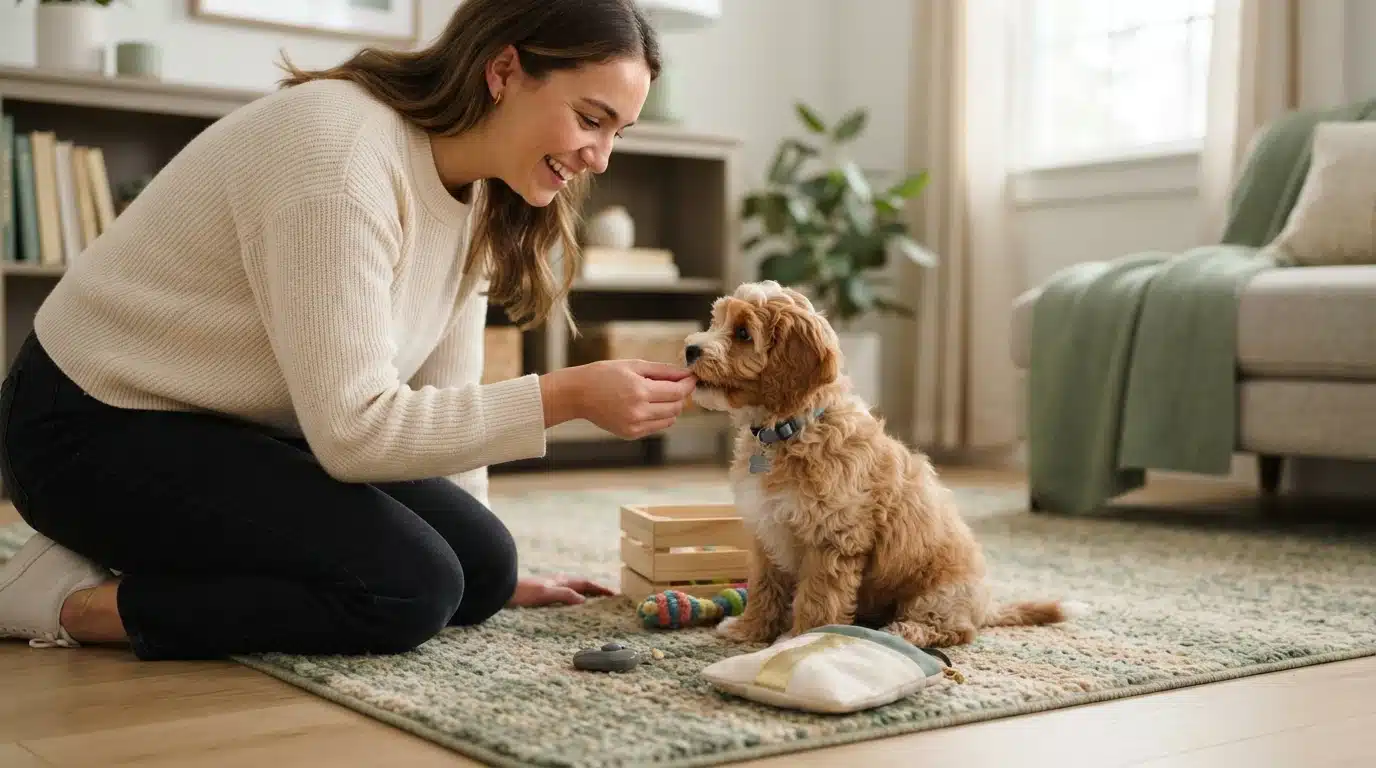
A puppy’s first eight weeks of life shape how fast the next weeks go. Home-raised pups usually come in already used to voices, gentle handling, and early crate practice, so house training and handling exams build on a real head start. Farm-raised pups can catch up, but you start from less. Keep sessions short, praise heavily, and hold the same routine every day. Sage Puppies puppies, for example, leave an in-home program already exposed to everyday family life, which makes going home adjustment easier for most families.
Breed, Coat and Lifestyle Fit
Small companion breeds in each setting
Havanese, Havapoo and Cavapoo puppies fit either setting, because the breed matters more than the label. Home-raised litters often give you more natural handling early on, which helps these people-oriented breeds settle in fast. A farm-raised puppy from a clean, well-run kennel can be just as healthy and happy. The right question is whether the breeder raises small companion breeds like Havapoo puppies with daily attention, not whether the puppies share a wall with other litters.
Grooming, noise and daily routines
Coat type shapes your daily routine more than the raising environment does. Havanese and both doodle mixes need regular brushing and trimming, so plan grooming into your week from day one. These breeds also dislike being left alone for long stretches, which matters for busy households.
Noise tolerance grows with exposure, not age alone. Home-raised puppies hear vacuums, kids and doorbells early. Farm-raised puppies hear kennel sounds, then adjust once home. Ask each breeder what daily life looked like during the first eight weeks of life.
Either way, the winning puppy comes from a breeder who matches temperament to your household, not one who simply uses a trendy label.
Cost, Contracts and Support After the Sale
What each type of program typically charges
How much do home-raised puppies cost? Boutique in-home programs usually charge $3,500 to $4,500 per puppy, so confirm the exact figure with each breeder. Published Havanese prices often cluster lower, around $2,200 to $3,000 nationally, and large listings sites run well below that. A higher price can reflect health testing and hands-on raising, but the label alone proves nothing. Always ask what the fee includes.
Deposits, applications and what you actually receive
Most programs take an application first, then a deposit that holds your spot in a litter. Before you pay, get the total in writing: deposit amount, balance due, and what’s included. Look for vaccination and deworming records, a vet exam, a written health agreement, and a spay or neuter clause. Demand an itemized receipt. Vague terms like “health guaranteed” with no paperwork are a reason to walk away, whatever the price.
Support after go-home
Good breeders stay reachable after pickup. Ask before you commit: Who answers questions at 9 p.m. when your puppy won’t settle? Do they want updates, and will they take a dog back if the home fails? A breeder who talks about lifelong support in writing usually means it. One who disappears after payment usually was never invested.
Ask every breeder for their contract before you send a deposit. Reading it takes ten minutes and tells you more than any listing photo.
How to Vet Either Kind of Breeder
Labels tell you about the environment, not the person running it. A careful farm program beats a careless living room every time. So ask the same questions either way.
Questions that work for any breeder
Ask which health tests the parents had and request the OFA records. Ask how many litters the mother has had, where the puppies sleep, and who handles them daily. Ask to visit, or to see a video call if you live far away. Ask what happens if the match fails. And ask whether the puppies for sale near you come with vaccination and deworming records. A good breeder answers without hesitation.
What a transparent in-home program looks like
A transparent in-home program shows you the real setting, not stock photos. You see the whelping area, meet the mother, and hear how the first eight weeks of life are structured. Some boutique programs, like Sage Puppies in South Jordan, Utah, run owner-managed matching this way, with an application before any deposit. Whatever the label, transparency looks the same: specific answers, real records, and nothing hidden.
Which Should You Choose: Home-Raised or Farm-Raised?
For most families buying a Havanese, Havapoo or Cavapoo companion, home-raised wins. The early weeks inside a house build comfort with noise, floors and handling that a kennel setting rarely matches. But the right answer still depends on your budget, timeline and how you plan to socialize a young puppy.
Choose home-raised when
Pick a home setting if you want a puppy that already lives with household sounds, children and daily handling. It also suits first-time owners who value breeder support during the going-home adjustment. Expect the higher boutique price, and confirm what it includes before you commit.
Choose farm-raised when
A kennel or large breeding operation can fit families with a tighter budget or a firm timeline. Some reputable, well-run programs produce healthy, steady puppies at scale. You will need a sharper eye for health testing, USDA licensing and living conditions, because quality varies more between large operations than between small in-home programs.
How to make either choice work
Either environment can produce a confident puppy, because the first three months after pickup matter just as much. The AVSAB’s socialization guidance recommends exposing puppies to new people, surfaces and sounds early, and notes that puppy classes can begin at 7 to 8 weeks. Visit the breeder, verify health records, and commit to a socialization plan before your puppy comes home. The raising environment sets a starting point; your first weeks together finish the job.

If a puppy raised inside a real home sounds right for your family, take the next step. Sage Puppies matches Havanese, Havapoo and Cavapoo puppies with families through a simple application, starting from Cassie’s home in South Jordan, Utah.
Frequently Asked Questions
Q1: Is a home-raised puppy better than a farm-raised one?
For most companion-breed families, yes, because indoor litters already know household sounds and handling. But an attentive farm program beats a careless home every time, so judge the breeder’s routine first.
Q2: What questions should I ask a breeder before paying a deposit?
Ask where puppies sleep, who handles them daily, what health tests the parents passed, and whether the contract includes a return clause. Hesitant answers are a red flag.
Q3: How much should a home-raised puppy cost?
Boutique in-home programs typically charge $3,500 to $4,500. Confirm what the fee includes: records, vet exam, health agreement, and post-go-home support.
Q4: Are farm-raised puppies harder to settle in?
Often, at first. Expect more worry about stairs, appliances and new floors, so plan quieter days and short, calm sessions during the first two weeks.
Q5: Do the labels “home-raised” and “family-raised” mean anything legally?
No. They are unregulated marketing terms. Verify the claim yourself by visiting, requesting a video call, or asking for specific daily routines and records.
Conclusion
The home-raised vs farm-raised question comes down to people, not labels. A home-raised Havanese, Havapoo or Cavapoo usually settles faster because the first eight weeks of life already include household sounds and daily handling. A well-run farm program can match that, but you must verify health testing, ask who handles the puppies each day, and read the contract before any deposit. Judge the breeder’s routine first and let the setting come second, then commit to a socialization plan once your puppy is home.