Quick Summary: Utah has no statewide breeder license, so buyers must check local rules, vet records, parent health tests, and a live viewing before paying a deposit. For Havanese, Havapoo, and Cavapoo puppies, confirm patella, eye, and cardiac testing, and meet the mother in a clean home setting. Walk away from breeders who pressure you, hide the puppies or parents, request unprotected payments, or change health records; Sage Puppies follows this transparent vetting process in South Jordan.
Picture it: a Sunday morning in a South Jordan living room, phone in hand, a Havapoo litter photo on the screen and a deposit request waiting behind the reply button. The puppy is real, the price is fair, and the only thing standing between you and a bad decision is a set of questions you have not asked yet.
Most buyers searching puppies for sale in Utah skip that step. Utah has no state breeder license, so knowing how to check a puppy breeder takes different proof than it would in other states. This guide walks you through the checks that matter before buying a puppy: local Salt Lake City licensing, USDA thresholds, health certificates, and the parent health testing that fits small companion breeds. You will learn how to know if a breeder is legitimate in about an hour. We raise Havanese, Havapoo, and Cavapoo puppies here in South Jordan, and we built this routine from the questions our own families ask most.
Why Utah Buyers Cannot Rely on a Single License Check
The Utah Gap That Confuses New Buyers
So, does Utah require a dog breeder license? No. Utah has no state dog breeder license, permit, or breeder-specific care standards, so a buyer who asks only “are you licensed?” gets a misleading answer. Nearly every breeder in the state can honestly say no, including careless ones. That gap is why a checklist, like this puppy deposit safety checklist, works better than one license lookup.

Local Permits That Do Exist in Utah
Licensing is local, and it varies by city. Salt Lake City requires dog breeders to hold a license from animal services under Chapter 8.06, which includes inspections and a responsible-breeder standard. Other cities run kennel or fancier permits instead, and some unincorporated areas require nothing. Always check the breeder’s own city or county code, not just the state’s.
Where Federal Rules and State Import Rules Come In
Two other layers exist. Federally, the USDA licenses breeders who sell sight-unseen or wholesale once they pass the five-breeding-female threshold, so an unlicensed small program is not automatically shady. Separately, Utah’s Department of Agriculture and Food requires health certificates for dogs imported into the state, which matters for delivery buyers.
What a Legitimate Utah Breeder Can Show You
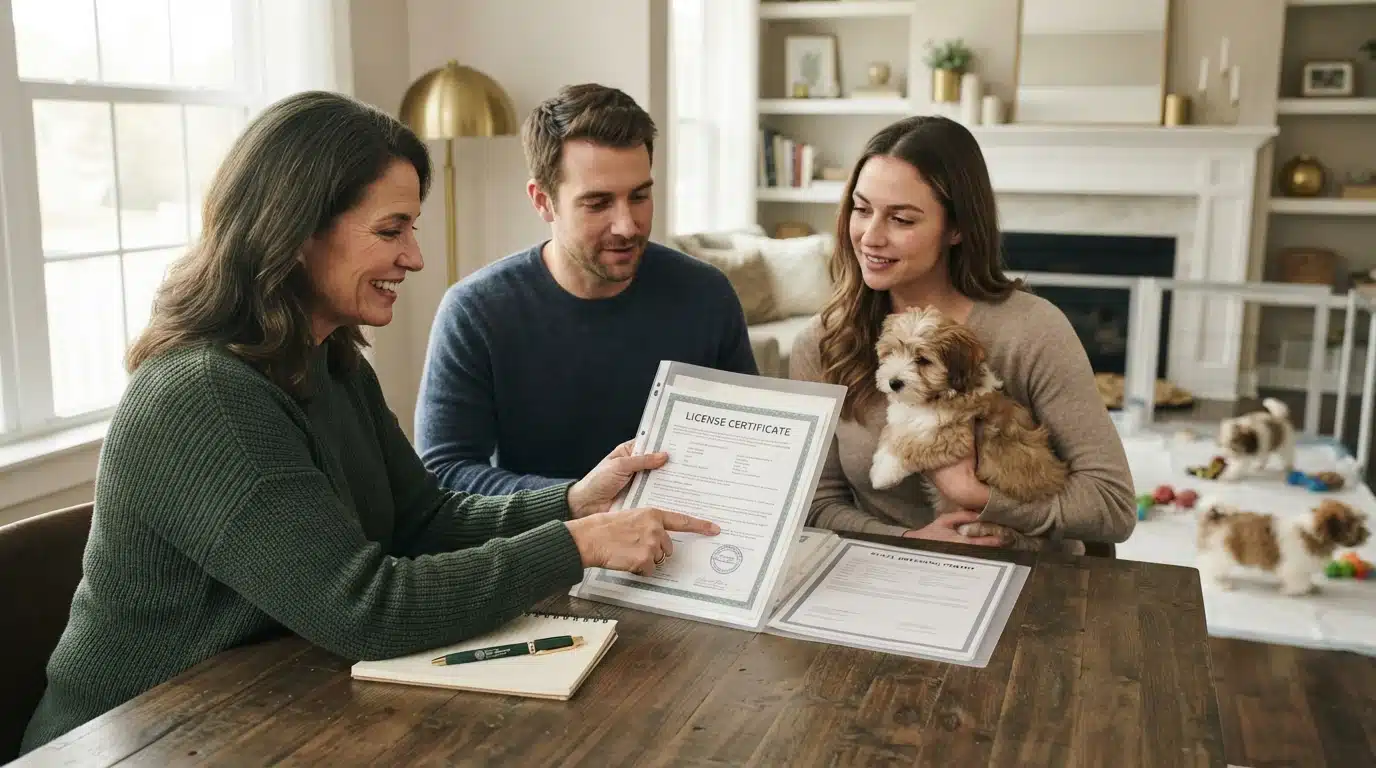
A good breeder proves things, not just promises them. Before you pay any deposit, ask to see four things: a real address, the parent dogs, veterinary records, and a screening process of their own. A serious breeder hands these over without hesitating.
A Real Address and a Real Business
Legitimate breeders can tell you where the dogs live. You should get a street address, not just a P.O. box or a meeting spot in a parking lot. Ask whether they operate under a local license where one applies, such as Salt Lake City’s Chapter 8.06 breeder license with its inspection requirement. A named business, a working phone number, and a willingness to let you visit are the baseline. If someone insists on meeting at a rest stop, that alone should end the conversation.
Parents You Can Actually See or Meet
You should be able to see the mother, at minimum, in the environment where the puppy was raised. Small companion breeds like Havanese, Havapoos, and Cavapoos live with people, not in cages, so the mom should act comfortable around you. Ask about the father too, including his size and temperament. If the breeder refuses all contact with the parents, or the litter was “shipped in,” walk away. Good breeders also share parent health testing results for the conditions small breeds commonly carry.
Veterinary Records and a Named Vet You Can Call
Ask for the puppy’s vaccination and deworming records, dated and signed by a licensed veterinarian. Any puppy crossing state lines into or out of Utah needs an official Utah import health certificate, so ask to see it. Then ask which clinic the breeder uses. A named vet who knows the program, and who will confirm care on a quick call, tells you more than any website.
A Breeder Who Screens You, Too
Serious programs interview buyers before they accept a deposit. Expect questions about your home, your schedule, kids, other pets, and how you plan to handle training and alone time. That screening protects the puppy, and it signals the breeder cares where the dog ends up. Boutique programs like Sage Puppies run an application and matching process for exactly this reason. If a breeder takes cash from anyone on the spot, the puppy’s welfare is not their priority.
How to Check a Puppy Breeder: A Verification Routine Before You Pay
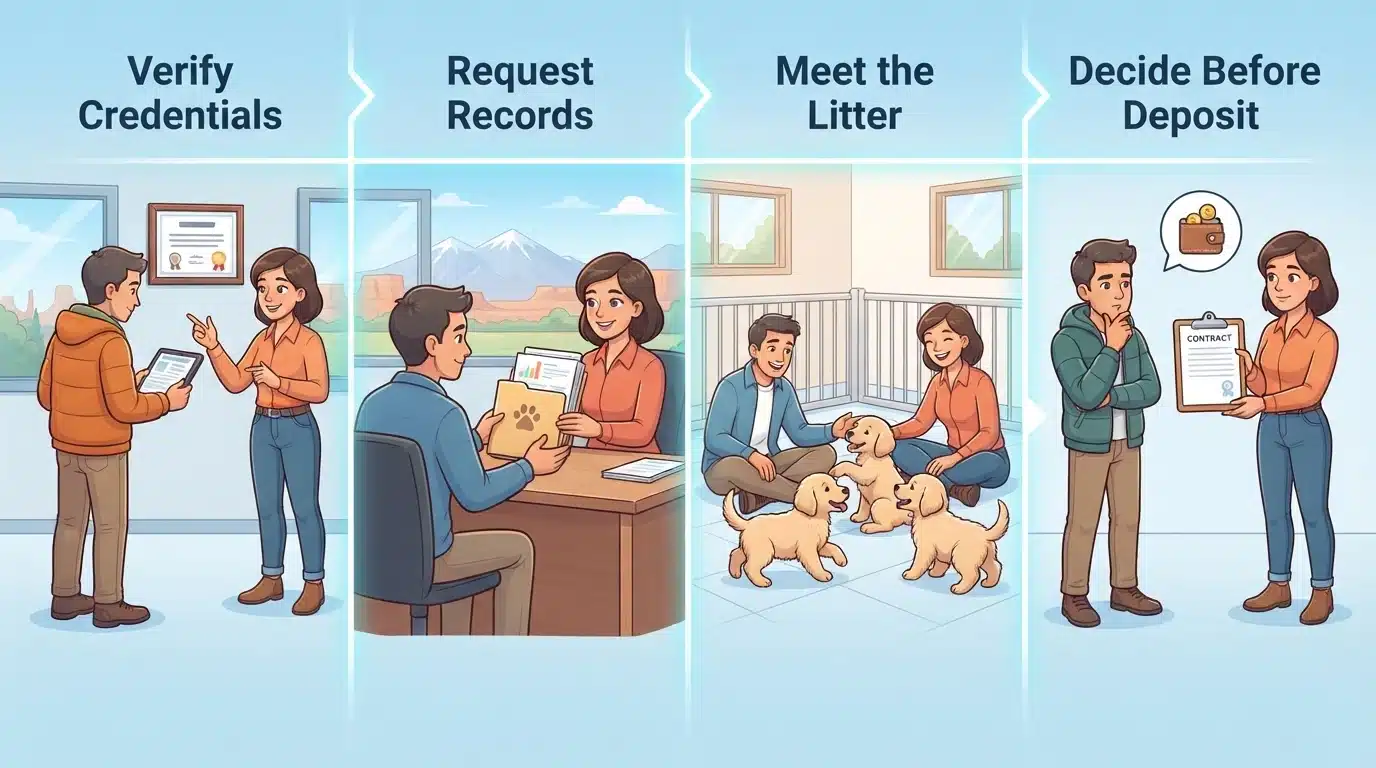
Vetting a Utah breeder comes down to four steps: verify who they are, get records in writing, see the puppies live, and decide before any money moves. Run all four in order and a sketchy seller drops out at step one or two.
Step 1: Verify Identity, Location, and Credentials
Start with the basics a legitimate breeder will never dodge. Ask for their full legal name, physical address, and a phone number you can call. Utah has no statewide dog breeder license, so check whether their city or county requires one. In Salt Lake City, breeders need a license under Chapter 8.06, which comes with inspections. A breeder selling puppies for sale in Utah should answer these questions without hesitation.
Step 2: Request Records in Writing and Read Them
Ask for health records by email, not just conversation. You want vaccination dates, deworming history, a vet exam note, and health testing results for the parent dogs. For small companion breeds like Havanese, Havapoos, and Cavapoos, focus on patellas, eyes, and cardiac checks rather than large-breed hip scores. Written records protect you because claims made in text are hard to walk back later.
Step 3: See the Environment and the Litter Live
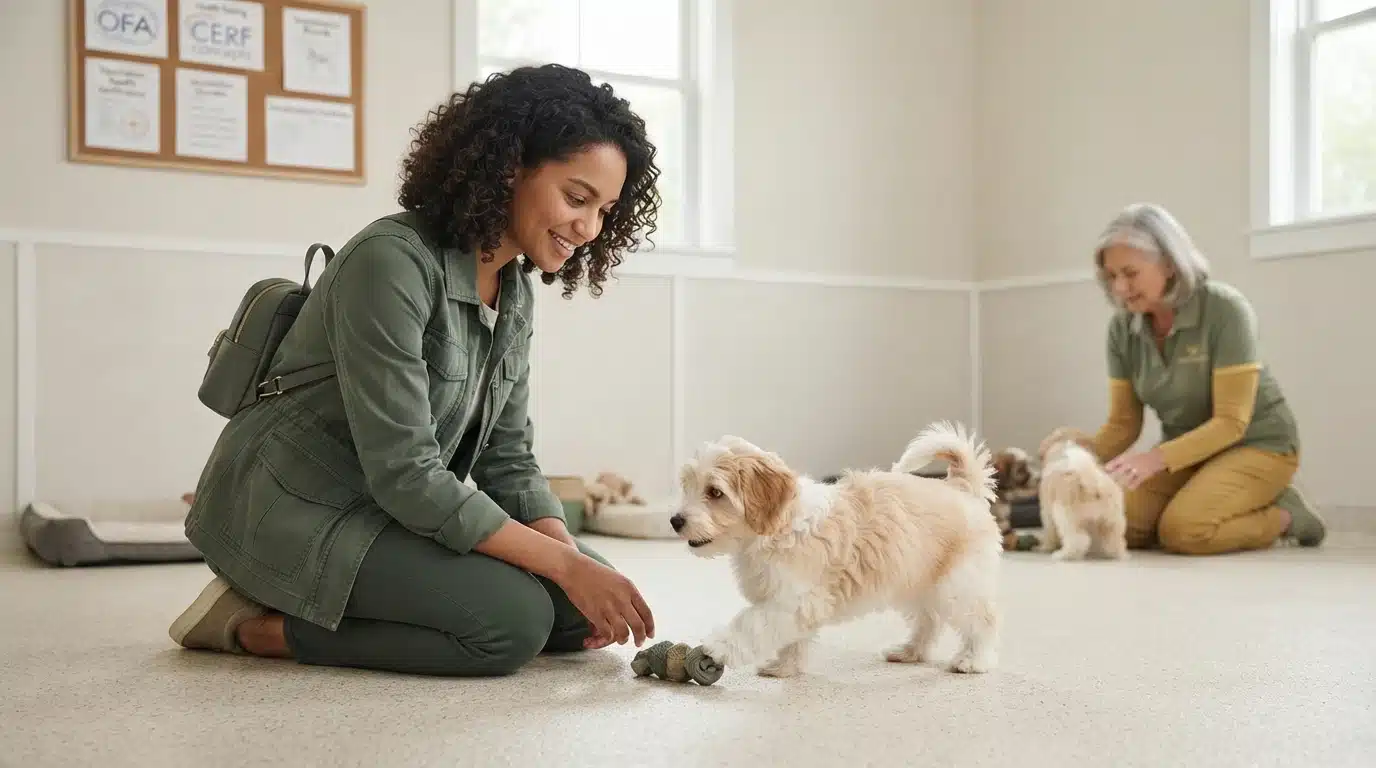
Request a video call or an in-person visit, and ask to see where puppies eat, sleep, and play. You should also meet at least the mother. Puppies raised in a home around people handle new situations better than puppies kept in kennels or shipped from out of state. If a seller refuses live viewing, that refusal tells you plenty.
Step 4: Make the Go or No-Go Call Before Any Money Moves
Now decide. Score what you found: real address, records that match, a clean living space, and a calm, well-socialized litter. Any miss is worth a follow-up question, but two or more misses mean walk away. Many programs, including ours, use a written application before accepting any deposit, which gives you one more layer of proof before you pay.
Questions to Ask a Utah Breeder Before You Pay
Ask the four sets of questions below before you send money. Any breeder raising puppies for sale in Utah should answer them readily, in detail, and without acting offended.

Questions About Testing and Medical Care
Ask which health tests the parent dogs had and request proof. For small companion breeds like Havanese, Havapoos, and Cavapoos, ask about patellas, eyes, and cardiac checks rather than only hips. Also ask what vaccines and deworming the puppy received, and whether a vet examined each puppy.
Questions About Home Life and Socialization
Ask where the puppies live, who handles them daily, and what sounds and surfaces they already know. Good breeders raise puppies in the home, not in stacked kennels. A breeder should describe their routine without hesitation.
Questions About the Contract and What Happens After
Ask what the deposit covers, whether it is refundable, and what the written contract includes. Ask about the return policy if the match fails, and how the breeder supports you after pickup or delivery. Serious breeders apply a clear screening process, so expect questions back from them.
Questions About the Parents
Ask to meet the mother, or see recent photos and videos. Note her temperament, size, and body condition. Ask how often she has litters and where the father is. Skip breeders who dodge this.
Red Flags of a Puppy Mill in Utah
What are the red flags of a puppy mill in Utah? Watch for four patterns:

- A seller with many breeds and litters available at all times
- Refusal to show where the puppies live or let you meet the mother
- Pressure to pay fast, or requests for gift cards and wire transfers
- Missing, vague, or shifting records for health tests and vet care
Volume, Variety, and Always-In-Stock Puppies
Legitimate small breeders work with one or two breeds and only a few litters a year. If a website lists puppies for sale in Utah across five breeds, with new litters every week, the dogs are likely being produced, not raised. Volume is the single clearest warning sign.
Refusal to Show Where the Puppies Live
Ask for a video walkthrough of the home or kennel, and ask to meet the mother dog. A careful breeder says yes quickly. Excuses like “we only do deliveries” or repeated rescheduling deserve caution.
Pressure, Urgency, and Odd Payment Requests
“These puppies will be gone by Friday” is a sales tactic, not information. Never pay with gift cards, wire transfers, or payment apps that offer no buyer protection.
Records That Are Missing or Shifting
Demand vaccination dates, vet clinic names, and parent health test results in writing. If dates or clinic details change between calls, walk away. A written puppy contract should match every record exactly.
Health Records and Testing That Matter for Small Companion Breeds
Small companion breeds fail different health screens than big dogs do. Hip dysplasia matters less than kneecaps, eyes, and hearts, so adjust what you ask for before buying a puppy.
Reading DNA and Genetic Test Results
Ask for the parents’ DNA results by name and lookup number. For Havanese lines, the core checks cover inherited eye disease and cardiac issues, plus patellas at 12 months or older, per the Havanese Club of America’s testing guide. A breeder who says “the parents are health tested” without naming the test has told you nothing.
Eyes, Hearts, Joints, and Teeth in Practice
Insist on an annual CAER eye exam by a board-certified ophthalmologist, an OFA cardiac check, and a patellar luxation screening for both parents. Teeth matter too: ask about retained baby teeth and bite problems, which show up often in toy breeds and affect a puppy’s comfort for life. A good breeder knows each parent’s eye and heart history without checking notes.
Separating Documented Evidence From Reassuring Words
Paper beats promises. Real results live in the OFA database, where anyone can look up a dog by name and see exams, dates, and pass or fail status. You can also verify a puppy’s health test results before money changes hands, which is the same routine an honest breeder expects you to run. If a breeder resists proof, walk away.
Contracts, Deposits, and Payment Safety
What to Look for in a Written Puppy Contract
What should a puppy purchase contract include? Expect these terms in writing:
- Full names and addresses for buyer and seller
- The puppy’s date of birth, breed, microchip number, and description
- Deposit amount, total price, and refund terms before buying a puppy
- A health clause covering vet exams and known conditions
- Spay or neuter expectations, if any
- Return policy if the home does not work out
Read every line before you sign. A legitimate breeder hands you a copy and answers questions without pressure.
Paying Safely and Keeping Your Records
Pay only after the contract is signed. Avoid wire transfers, gift cards, or payment apps that offer no protection; a credit card or documented service gives you recourse if something goes wrong. Get a dated receipt for every payment, save the signed contract, and keep vet records together in one folder. Ask how delivery is handled and confirm details in writing before sending the balance. One folder of records solves most disputes before they start.
Local Pickup and Nationwide Delivery From a Utah Breeder
How a puppy gets to you says a lot about the breeder. Legitimate programs in Utah offer two fair paths: you visit and pick up in person, or the puppy ships with proper health paperwork. A seller who pushes ground transport only, or refuses pickup entirely, deserves extra scrutiny before you pay anything.
When You Can Visit Before You Decide
Local pickup is your strongest vetting tool. A breeder with nothing to hide will welcome you to see where the puppies live, meet the mother, and watch how the litter moves. Some Utah programs also offer video calls if you live out of state, but an in-person visit remains the gold standard. If you are comparing puppies for sale in Utah, treat an open invitation to visit as a good sign.
When the Puppy Travels to You
If the puppy flies or rides to you, paperwork matters. Dogs entering Utah need a Certificate of Veterinary Inspection, per the Utah Department of Agriculture and Food, and your own state may add rules, so check USDA’s state-to-state travel guide before the trip. Most clinics issue health certificates within ten days of travel, and puppies should be at least eight weeks old and fully weaned. Before your puppy ships, confirm the breeder will share the certificate, vet records, and travel details. Sage Puppies uses owner-managed matching, so ask any program who personally handles handoff. For a closer look at how pickup compares with shipping, see puppy delivery and transport options.

Ready to meet a breeder who already passes these checks? Sage Puppies raises Havanese, Havapoo and Cavapoo puppies in South Jordan, Utah, with owner-managed matching and open answers at every step. Start the application today, ask us anything from this guide, and take home a wisely bred companion you can trust.
Frequently Asked Questions
Q1: How do I vet a Utah breeder’s credentials before paying a deposit?
Ask for a legal name, physical address, and phone number first. Utah has no state breeder license, so check the breeder’s own city code, request vet records and parent health test results in writing, and insist on a live visit or video call before any money moves.
Q2: What questions should I ask a puppy breeder before I pay?
Cover four areas before buying a puppy:
- Which health tests the parents had, with proof
- Where the puppies live and who handles them daily
- What the contract says about deposits, refunds, and returns
- The mother’s temperament, age, and litter history
Q3: What are the red flags of a puppy mill in Utah?
Watch for many breeds and constant litters, refusal to show where puppies live, pressure to pay fast, gift card or wire transfer requests, and records that shift between calls. Any two together mean walk away.
Q4: Does a small breeder really need a USDA license?
No. Federal rules only apply past five breeding females with sight-unseen or wholesale sales, so most small home programs fall outside them. Ask about local licensing instead.
Q5: What health tests matter most for Havanese and doodle mixes?
Focus on patellas, annual CAER eye exams, and OFA cardiac checks, plus DNA results by lookup number. Large-breed hip scores matter less for these small companion breeds.
Q6: Should I pay a deposit before seeing the puppy?
No. Ask for a video call or visit first, and sign a written contract before any payment. A legitimate breeder welcomes both without pressure.
Conclusion
Vetting a Utah breeder comes down to four steps: verify identity and local licensing, get records in writing, see the litter live, and decide before any money moves. Utah has no state dog breeder license, so proof lives in city codes, vet records, and parent health testing, not in a single license number. For Havanese, Havapoo, and Cavapoo puppies, focus on patellas, eyes, and cardiac checks, and treat pressure tactics or shifting records as puppy mill warning signs. Run this routine once and you will know how to know if a breeder is legitimate in about an hour, which is exactly the standard any program selling puppies for sale in Utah should meet before you pay a deposit.