
Quick Summary: Don’t trust a breeder’s claims-demand verifiable health records for both parents, including OFA test results tied to the dogs’ names, microchip IDs, and birth dates. A responsible breeder will show you live video of the mother with her litter, explain their socialization process in detail (like handling and exposure to household sounds), and provide a written contract before you pay a deposit. Sage Puppies, for example, walks buyers through parent health files and delivery plans upfront, including for crossbreeds like Havapoos. If a breeder avoids questions, hides records, or pressures you to pay fast, walk away-New York’s pet dealer rules don’t cover all breeders, so proof matters more than licenses.
A New York family may see “health tested” beside a polished Havanese, Havapoo, or Cavapoo photo. The real question is whether the breeder can tie that claim to named parents, breed-fit records, and a clear contract.
Many New York puppy breeders use reassuring words without sharing proof. That leaves families unsure which responsible puppy breeders truly raise healthy, well-socialized puppies.
This guide gives you a practical way to check health tests, parent identity, home care, contracts, deposits, and delivery from Utah. You will also learn why labels such as AKC certified breeders do not replace real records.
The best healthy puppy breeders welcome careful questions. Use these checks to compare New York puppy breeders and find responsible puppy breeders you can trust.
Start With Verifiable Breeder Information, Not the Listing
Confirm Who Actually Raises the Puppy
A polished listing proves very little. Ask who owns the mother, where she lives, and who handles the litter each day.
Request a live video call that shows the puppy with its mother in the normal home setting. If you are considering delivery from Utah to New York, the same standard applies. A responsible program can clearly explain where the puppy was raised and who will meet you at pickup or delivery.
Check these details before a deposit:
- The breeder’s full name, address, and direct phone number
- Parent names, health-test records, and photos or video
- A current video of the litter, not only polished social posts
- The exact person listed on the contract and payment request
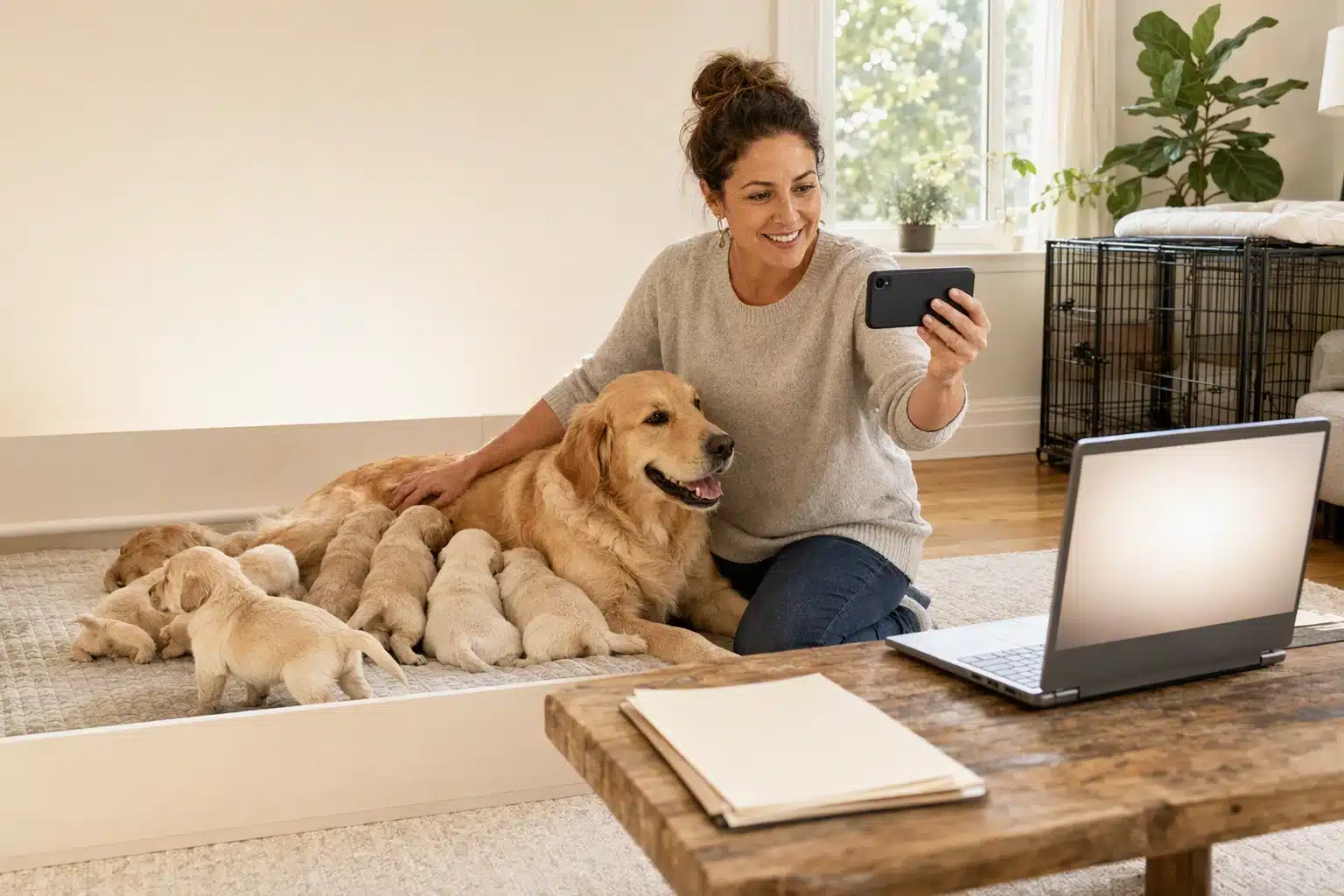
A broker may know the puppy’s price but not its daily care. Pause if basic questions get vague answers.
Sage Puppies, for example, identifies its South Jordan, Utah home-raised program and can explain its delivery or pickup steps directly.
Use New York Rules as a Consumer Checkpoint
New York puppy breeders may need a state license based on how they sell and how many animals they offer. The state says licensed pet dealers are overseen for care, housing, veterinary care, and buyer information, and its public search includes dealer contacts and inspection reports.
Use that record as one checkpoint, not a shortcut.
| Verify | Ask for | Why it matters |
|---|---|---|
| Seller identity | Legal name and address | Confirms who takes payment |
| Puppy source | Breeder and mother details | Helps spot hidden brokers |
| Sale records | Signed contract and health record | Creates a clear paper trail |
New York’s buyer information form calls for the breeder or broker’s name and address, the puppy’s birth date, and treatment history. Review the state purchaser statement before you commit.
No license does not automatically mean poor care. It means you should verify the breeder’s identity, home, and records even more closely.
Also Read: Find a Reputable Puppy Breeder Near You: Step-by-Step
Verify Health Testing Through Parents, Records, and Public Databases
Know What a Real Health Record Should Show
Ask to see records for both parents, not a generic claim that the litter is health tested. Each record should match the parent dog’s registered name, breed, date of birth, microchip or tattoo ID, test date, lab or examiner, and result.
A solid file may include:
- OFA certificates for relevant joints, eyes, heart, or patellas
- DNA test reports with the dog’s identity shown
- A current eye or cardiac exam when applicable
- Pedigree and registration details that match the records
| Check | What you need to match | Red flag |
|---|---|---|
| Parent identity | Name, chip ID, breed, date of birth | A cropped report with no identity |
| Test result | Clear result and test date | “Vet checked” with no report |
| Both parents | Sire and dam documents | Records for only one parent |
A health record lowers risk. It does not promise a puppy will never have a health issue.
Search OFA and Interpret CHIC Carefully
Search each parent by registered name and kennel name in the OFA database. OFA says its breed lists show key screenings, and its database can help buyers research parents and relatives. See OFA’s guide to breed health research before you compare records.
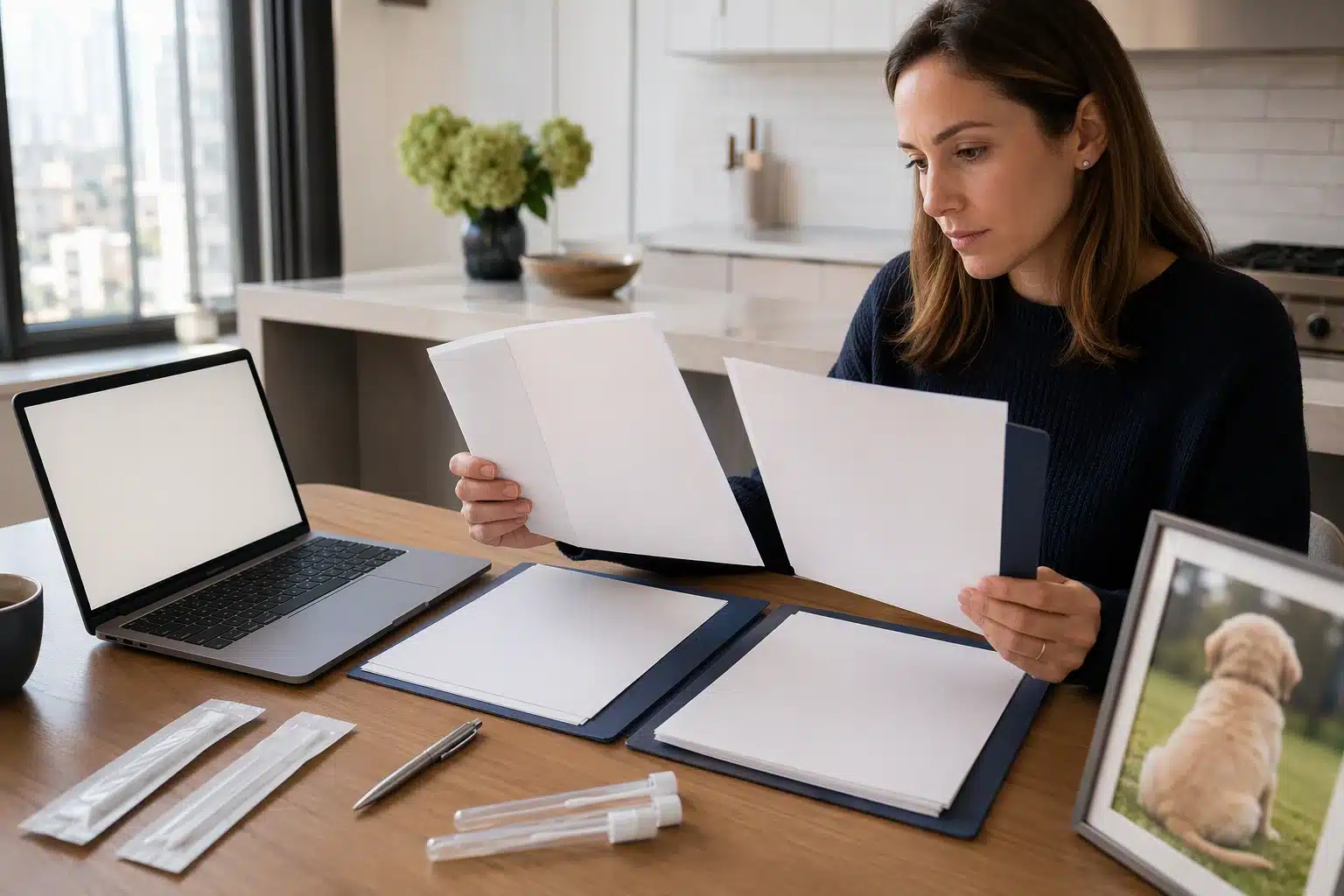
A CHIC number means a dog completed the screenings set by its parent breed club and the results are public. It does not mean every result was normal. Read each result, check the date, and ask what the breeder did with any finding. OFA explains this clearly in its CHIC program overview.
For Havanese, review the Havanese parent records. For Cavapoos and Havapoos, review both purebred parent breeds and the actual sire and dam.
Ask for a Written Testing Summary for Crosses
Crosses do not have one simple health checklist. Ask the breeder for a written summary that names:
- The sire and dam
- Every screening completed
- Each result and testing lab
- Why those tests fit both parent breeds
- Any carrier result and the mate’s matching status
Sage Puppies should be able to walk you through this file before you reserve. If the answer stays vague, pause before sending a deposit.
Also Read: Puppy Care Blog & Resources | Sage Puppies
Evaluate the Parents and Puppy Environment in Person or by Live Video
Use a Visit Checklist Instead of a Photo Impression
Photos can be polished. A live visit shows how the dogs actually live. If you are in New York and the breeder is in Utah, ask for a real-time video call, not a pre-recorded tour.
Use this checklist during the visit:
- Meet the mother with her litter. She should seem calm, cared for, and comfortable near the puppies.
- Look at the space. It should be clean, dry, well lit, and sized for safe movement.
- Watch the puppies. Healthy pups are alert, curious, and steady on their feet for their age.
- Ask to see daily life. Look for gentle handling, household sounds, play space, and rest areas.
- Notice the breeder’s focus. They should answer questions clearly and ask about your home too.
The AKC advises buyers to assess cleanliness, puppy condition, and the mother’s interaction with her litter, including through Zoom when an in-person visit is not practical.
| What you see | Good sign | Concern |
|---|---|---|
| Mother dog | Relaxed and present | Hidden without a clear reason |
| Puppy area | Clean, safe, and lived-in | Tight, dirty, or staged |
| Breeder response | Opens doors and answers questions | Rushes the call or avoids views |
Ask the breeder to walk outside, show the adult dogs, and pan the room in one continuous call. This makes it harder to hide the real setup.
When a Parent Is Not on Site
The sire may live with another owner or be used through a planned breeding. That alone is not a red flag. The mother should still be available to meet, unless a clear welfare reason prevents it.
Ask for the absent parent’s registered name, health-test records, current photos or video, and proof that the named dog is the parent. Compare those details with the puppy contract before you reserve.
A responsible breeder can explain why the pairing was chosen and discuss each parent’s temperament. Ask what traits they hoped to strengthen and what health risks they screened for.
Do not send a deposit until the breeder gives a direct, consistent answer about both parents and the puppy’s home.
Compare Temperament, Socialization, and Placement Practices
Ask How Puppies Are Prepared for Family Life
Ask for the breeder’s real routine, not a vague promise that puppies are “well socialized.” The key window begins early. The American Veterinary Medical Association notes that puppies are most open to positive learning from 3 to 14 weeks.
A thoughtful program should include calm, age-safe exposure to:
- Gentle adult and child handling
- Household sounds, grooming, and crate time
- New surfaces, toys, and short car rides
- Positive recovery after a new sound or object
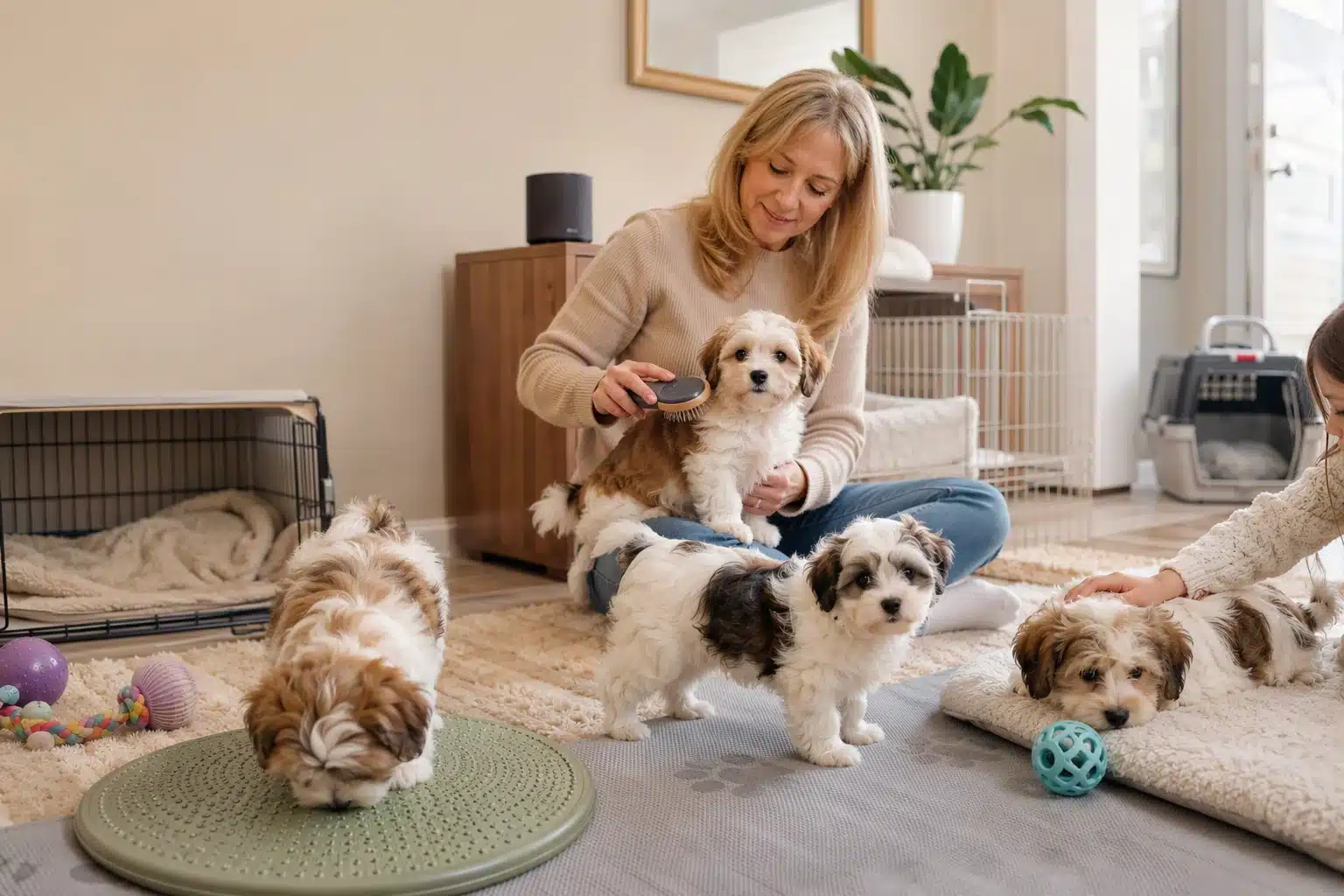
Ask how each puppy responds to touch, novelty, and rest time. A breeder should describe the puppy in plain terms, such as confident, cuddly, observant, or more easygoing. No one can promise a perfect adult temperament.
A puppy who pauses around something new is not automatically a problem. Look for patient, positive handling instead of forced exposure.
Assess Whether the Breeder Screens Your Family Too
A responsible breeder also asks questions before accepting a reservation. That is a good sign, not a hurdle. The AVMA advises breeders to know the dogs they place and match temperament and needs to each family’s lifestyle.
| Breeder question | Why it matters |
|---|---|
| Work schedule and time alone | Helps plan for training and companionship |
| Children and other pets | Supports a safer, calmer match |
| Housing and grooming plans | Confirms daily care is realistic |
| Desired energy level | Guides puppy placement |
Expect questions about your New York home, travel plans, and who will manage early training. Sage Puppies uses this family-first approach for Havanese, Havapoo, and Cavapoo placements, including delivery from Utah.
- Welcome a breeder who recommends a different puppy.
- Be honest about allergies, toddlers, and long workdays.
- Walk away if the breeder will sell any puppy to anyone immediately.
Review the Contract, Medical Packet, and New York Sale Documents
Read the Contract Before Sending a Deposit
Ask for the full contract before you reserve a puppy. Read it slowly, including the fine print. It should name the breeder, identify the puppy, state the total price, deposit terms, pickup or delivery plan, and what happens if either side cannot complete the sale.
Check that health language is plain and fair. A contract should not erase rights that New York law may provide. New York inspectors have cited sellers whose contract terms restricted consumer rights.
| Contract item | What to confirm |
|---|---|
| Puppy identity | Breed, sex, color, birth date, and microchip details if assigned |
| Deposit | Amount, refund terms, and when it may transfer to another litter |
| Health terms | What is covered, required vet timing, and your available options |
| Delivery | Carrier, handoff location, travel date range, and who carries risk |
Do not send a deposit to a breeder who will not let you review the signed agreement first.
For a New York seller that qualifies as a pet dealer, ask for their license number and confirm it through the state. The New York pet dealer program also makes inspection information available.

Build a Complete Puppy Document Packet
Keep every record in one folder before your Havanese, Havapoo, or Cavapoo comes home. This matters even more for delivery from Utah to New York.
Your packet should include:
- Signed purchase contract and payment receipt
- Vaccination and deworming record with dates
- Vet exam record and interstate health certificate, when applicable
- Parent health-test results and parent identity details
- Microchip number and registry steps, if used
- Feeding, grooming, and transition notes
- New York buyer information statement, if required
New York’s official purchaser information statement calls for the puppy’s source, birth details, identifying traits, and known treatment history.
Match the puppy’s birth date, sex, color, and parent details across every page. Differences deserve a direct answer before payment.
Also Read: 10 Signs a California Puppy Listing Is a Scam – Sage Puppies
Verify Delivery, Pickup, and Ongoing Communication Before Committing
Ask for a Written Travel and Handoff Plan
Do not send a deposit until you know exactly how your puppy reaches you. For a Utah-to-New York delivery, ask who travels with the puppy, the pickup location, expected timing, weather backup plans, and who to call during transit.
Request these details in writing:
- Travel date window and handoff address
- Transport method and puppy break, water, and meal plan
- Certificate of Veterinary Inspection and health records
- The final balance, accepted payment method, and receipt
- A named contact for arrival-day questions
New York requires a health certificate for dogs entering from another state, issued within 30 days before entry, according to the New York State companion animal guidance.
A responsible breeder welcomes clear questions. Vague delivery answers, rushed payment requests, or a surprise meeting point are reasons to pause.
| Before travel | At handoff |
|---|---|
| Signed agreement and health records | Confirm puppy identity and condition |
| Written contact plan | Receive feeding and care notes |
Plan the First Veterinary Appointment
Book your own New York veterinarian before pickup or delivery. Aim for the first available visit soon after your puppy comes home.
Bring every record: vaccination dates, deworming history, health certificate, microchip details if provided, and the breeder’s feeding notes. New York’s purchaser information form calls for treatment and immunization records, as shown in the state’s buyer statement.
Ask the breeder how they handle post-home questions. Sage Puppies families should know who to contact for normal transition concerns, such as meals, sleep, crate settling, and stool changes.
Keep all messages, receipts, and records in one folder. Good communication protects both your puppy and your family.
Also Read: Puppies for Sale in New York: Smart Steps for Local Buyers
Use Red Flags and a Simple Go-or-No-Go Decision
Red Flags That Should Stop the Process
Walk away if a breeder will not show you the puppy’s home, live by video if needed, or the mother. A polished website is not proof.
Stop before paying a deposit if you see:
- No named parents or no health-test records you can verify.
- Pressure to pay today, use an unusual payment method, or skip a written contract.
- Vague answers about where the puppy was born and raised.
- Dirty housing, strong odors, sick-looking dogs, or repeated litters always available.
- A breeder who will not explain pickup or delivery details.
- Paperwork with missing dates, vaccine records, or breeder contact details.
New York requires covered pet dealers to give buyers health, source, and treatment information, as outlined in the state’s purchaser information statement.
Go only when the records, parent identity, home conditions, and contract all tell the same clear story.
Questions That Deserve Clarification, Not Panic
A small issue is not always a deal-breaker. Ask, then judge the answer.
| Question | What a solid answer includes | Decision |
|---|---|---|
| Why is a test pending? | Test name, date, and plan before breeding | Pause |
| Why is delivery used? | Route, handler, timing, and handoff plan | Verify |
| Why is a parent off-site? | Ownership details and direct health records | Verify |
Ask for answers in writing. A responsible breeder welcomes careful questions and gives you time to review. If answers change or key records never arrive, choose no-go.

Ready to verify a breeder with confidence? Sage Puppies offers health-tested Havanese, Havapoo, and Cavapoo puppies raised at home in South Jordan, Utah. Review available puppies, ask clear questions, and explore pickup or nationwide delivery options for your New York family.
Frequently Asked Questions
Q1: How do I verify a breeder’s health testing for puppies in New York?
Ask for parent test records, not a verbal promise. Match each parent’s registered name or microchip number to the paperwork. Review breed-relevant results and ask what findings would remove a dog from breeding.
Q2: What red flags should I watch for when visiting a puppy breeder in NYC?
Watch for rushed visits, dirty living areas, fearful puppies, or no access to records. A breeder should answer direct questions, explain care routines, and never pressure you to pay immediately.
Q3: Can I meet the puppy’s parents before adopting in New York?
You should meet the mother when possible. The sire may live elsewhere, especially with a planned breeding. Ask for clear photos, records, temperament details, and proof of the sire’s identity.
Q4: Is a remote breeder delivery to New York safe?
It can be, if the breeder explains transport, timing, paperwork, and handoff details before payment. Sage Puppies offers clear pickup and nationwide delivery options from South Jordan, Utah.
Q5: What should a puppy reservation agreement include?
It should state the deposit amount, refund terms, puppy selection process, expected timing, health records provided, and delivery or pickup plan. Read it fully before sending money.
Conclusion
A responsible puppy breeder earns trust with proof, not polished photos. Verify each parent’s health testing and identity, ask to see where puppies are raised, and read every contract before a deposit changes hands. For a puppy coming to New York from Utah, confirm the travel plan, health paperwork, and who stays accountable after pickup.
New York’s pet dealer program helps buyers check licensed sellers and inspection information, but smaller home breeders may be exempt from licensing. State guidance makes clear why direct records and honest answers still matter.
Choose the breeder who welcomes careful questions and never rushes your family.



