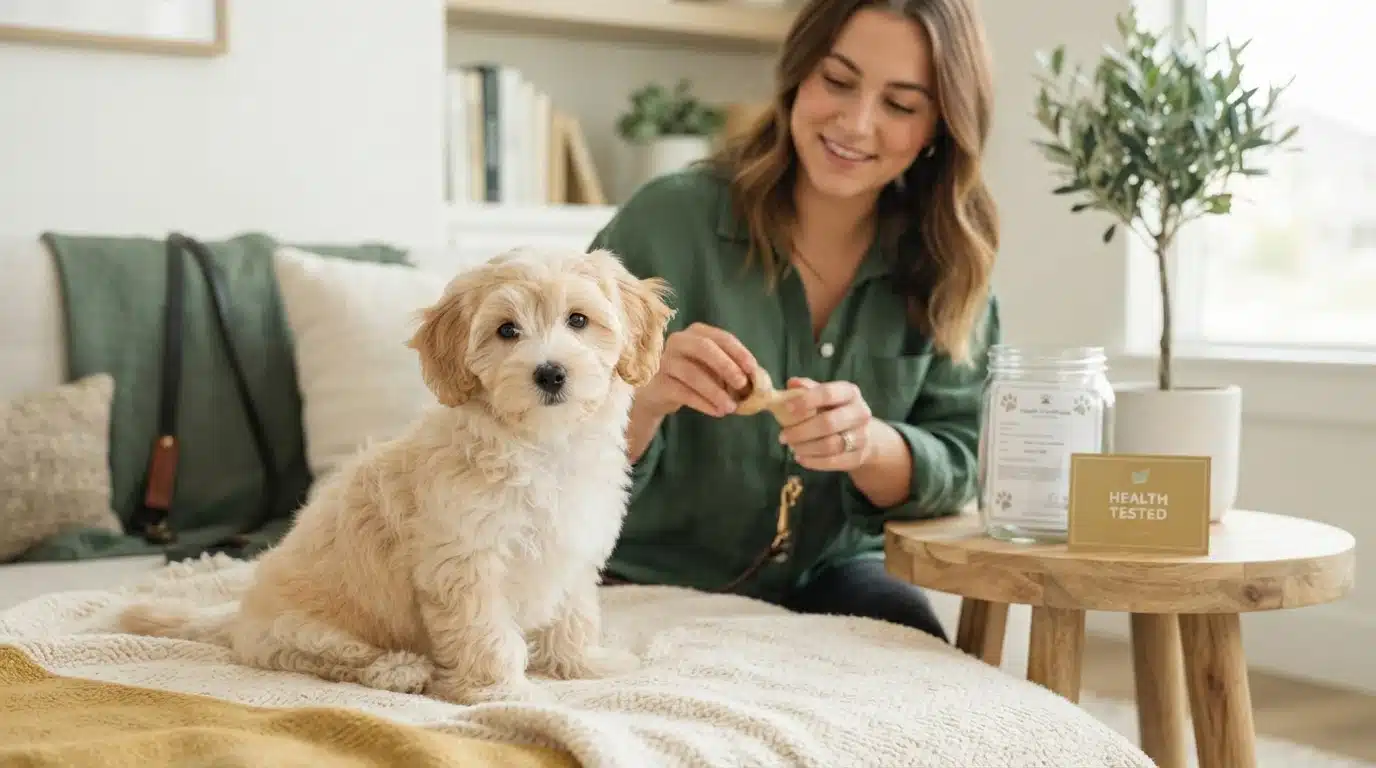
Quick Summary: Finding puppies in New York requires verifying that sellers are legitimate, licensed breeders or rescues, not pet stores or brokers. Buyers should ask for health records, breeder information, and socialization details before committing, and understand the reservation and pickup terms. Focusing on responsible breeding, clear paperwork, and matching the puppy’s temperament to your family helps ensure a healthy, well-raised companion.
Searching for puppies new york near me can go wrong fast if you start with photos and price alone. The smart first move is to check whether the seller is a real, health-focused breeder, then confirm the puppy’s records, care history, and pickup or delivery plan before you reserve.
That is the problem this guide solves. Many buyers looking for puppies new york near me run into vague listings, missing health details, rushed deposits, and unclear promises. A cute puppy can hide a messy process.
This guide will help you sort serious breeders from risky sellers, understand what papers should be in writing, and ask the right questions before you commit. It also covers the New York buyer details that matter most, especially for families who want a well-raised small-breed companion.
Our approach is simple and practical. We focus on ethical breeding, family-raised puppies, clear next steps, and calm decision-making. If you are comparing puppies new york near me, this page will help you buy with more confidence and fewer surprises.
Step 1: Confirm the seller is a lawful source in New York
Start here before you fall for cute photos. In New York, a lawful source should fit a clear lane: a licensed pet dealer when the law requires it, or a small in-home breeder or licensed rescue that can explain why it is exempt. New York also bars pet stores and brokers from selling dogs, cats, and rabbits as of December 15, 2024, according to the New York Department of Agriculture and Markets.
What New York buyers should rule out first
Rule out sellers who stay vague about where the puppy was born, who raised it, or who owns the parents.
Watch for these red flags:
- A pet store or broker offering puppies in New York
- A seller with no real address
- A “meet me in a parking lot” handoff
- A refusal to show source records or health paperwork
- A listing that keeps changing the breeder story
If the seller says, “I’m just helping a friend,” slow down. If they sell often, they may still fall under New York pet dealer rules. State law also says pet dealers must keep records showing where each animal came from, key details about the dog, and where it was sold under Agriculture and Markets Law §402.
If you cannot trace the puppy back to the breeder or lawful rescue, walk away.
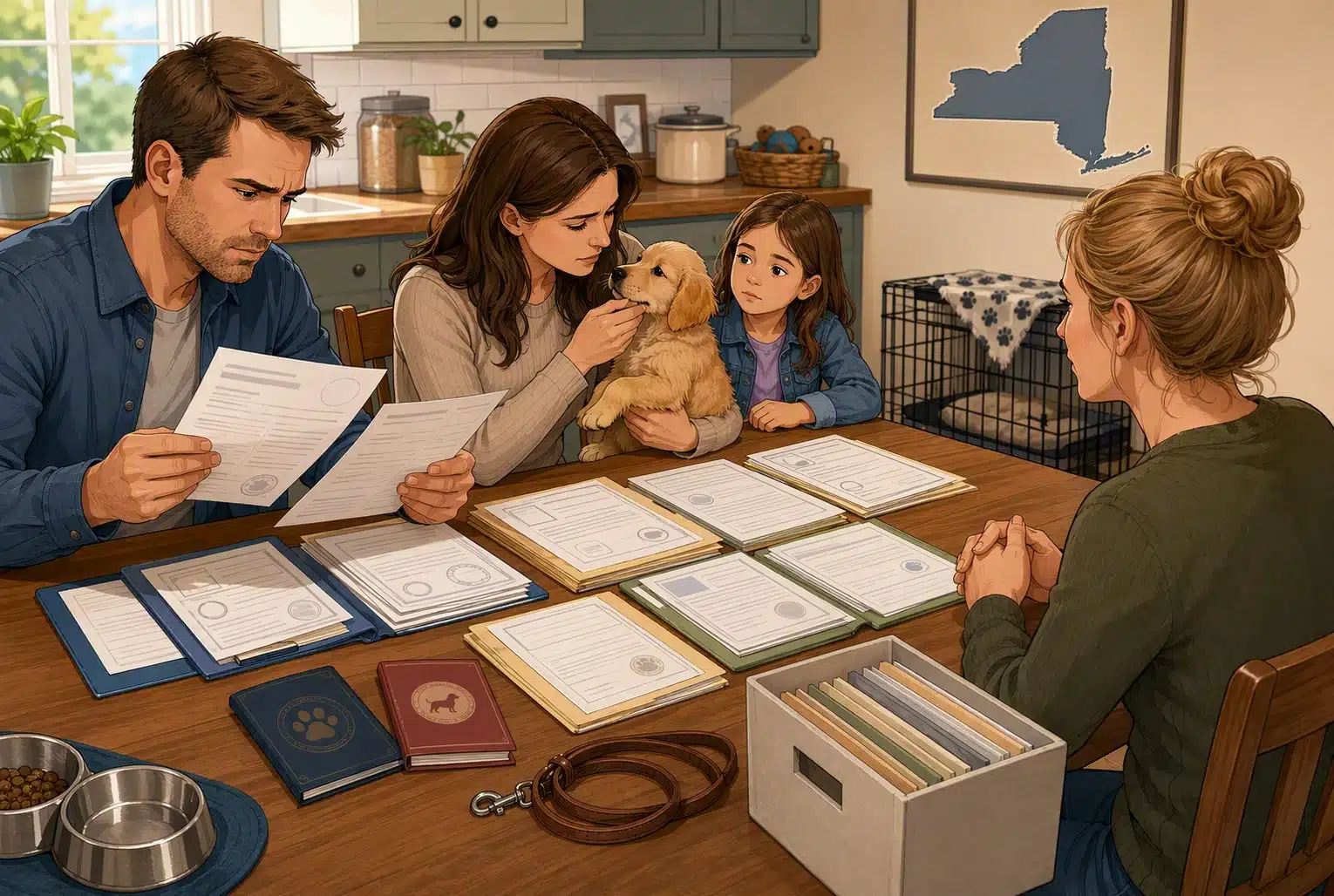
What a legitimate source should be able to show you
A real source does not act annoyed when you ask for proof. They should expect it.
Ask for this short list:
- License status or exemption explanation
- Breeder or source name and address
- Puppy date of birth
- Vaccine and deworming record
- Any vet treatment already given
- Parent registration details, if sold as registerable
| Document | Why it matters | What to check |
|---|---|---|
| License number or exemption | Shows legal status | Matches seller type and volume |
| Information statement | Shows source and care history | Dates, source, treatment, ID details |
| Bill of sale or contract | Confirms terms | Puppy identity matches paperwork |
New York requires pet dealers to give buyers an information statement listing the breeder or source, birth date if known, and inoculation and treatment history.
Good breeders welcome document checks. That is a trust signal, not a hassle.
Also Read: 10 Signs a California Puppy Listing Is a Scam – Sage Puppies
Step 2: Ask for the records that prove the puppy was responsibly raised
Review the health and veterinary history
Ask for records before you place a deposit, not after. A good seller should show them quickly and clearly.
Look for:
- Vaccine dates
- Deworming dates
- Vet exam notes
- Any medication given
- Known illness, injury, or ongoing care
- Parent health testing, when breed-relevant
A clean file matters because it shows a pattern of care, not just one last-minute vet visit. In New York, pet dealers must give buyers health, medical history, and origin details under the state’s pet dealer rules.
| Record | What you want to see | Red flag |
|---|---|---|
| Vaccines | Dates, product names, age-appropriate timing | No dates or vague verbal claims |
| Deworming | Product and treatment dates | “Done at home” with no record |
| Vet exam | Exam date and findings | No exam before pickup |
| Health testing | Parent screening info if offered | Seller avoids the topic |
If a seller says “healthy puppy” but cannot show paperwork, treat that as a no.
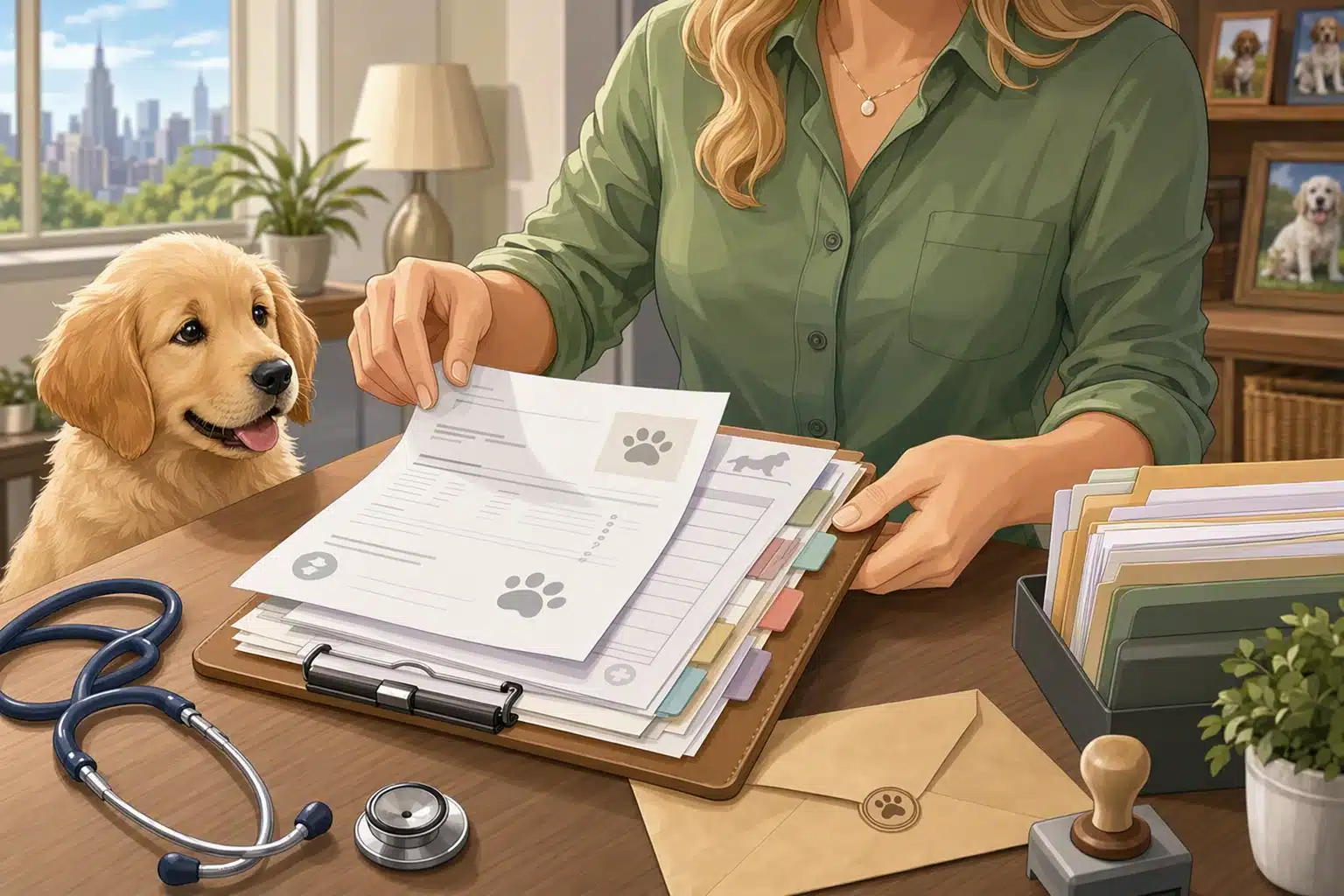
Check the New York information statement
New York gives you a very useful paper trail. The state’s required information statement for dog or cat purchasers includes the breeder or source, date of birth or receipt, breed details, inoculations, worming treatments, and veterinary treatment.
Read it line by line. Make sure it matches the puppy in front of you.
Check these items:
- Breed, sex, color, and identifying marks
- Date of birth or date received
- Vaccines and worming treatments
- Any known congenital or hereditary condition
- Seller signature and your receipt acknowledgment
If anything feels rushed, ask for time to review it. A careful breeder will not pressure you.
Look for early support, not just a handoff
Records matter, but so does what comes next. Ask what support you get in the first few days home.
Strong programs usually offer:
- Feeding instructions
- Potty and crate routine notes
- Transition tips
- A clear pickup or delivery plan
- Fast answers if your puppy seems stressed
That kind of follow-through often tells you more than a polished ad. If you want a calm, premium process, this is where boutique programs like Sage Puppies tend to stand out.
Step 3: Evaluate socialization, temperament, and home-raised care
What well-socialized puppies usually show
A good puppy should feel curious, not shut down. The AVMA notes that puppies benefit from diverse, positive exposure early, and dogs with more social contact before 12 weeks were less likely to show fearful or aggressive behavior in one AVMA socialization review.
Look for a puppy that:
- Recovers fast after a new sound or toy
- Approaches people without panic
- Accepts gentle handling
- Plays, rests, and eats on a normal rhythm
- Shows interest without constant frantic biting
A quiet puppy is not always a calm puppy. Sometimes it is a stressed puppy.
| Green flags | Caution signs |
|---|---|
| Soft body, loose tail, curious sniffing | Freezing, hiding, hard staring |
| Brief startle, quick recovery | Long fear after normal sounds |
| Enjoys touch and follows people | Cries, flails, or avoids handling |
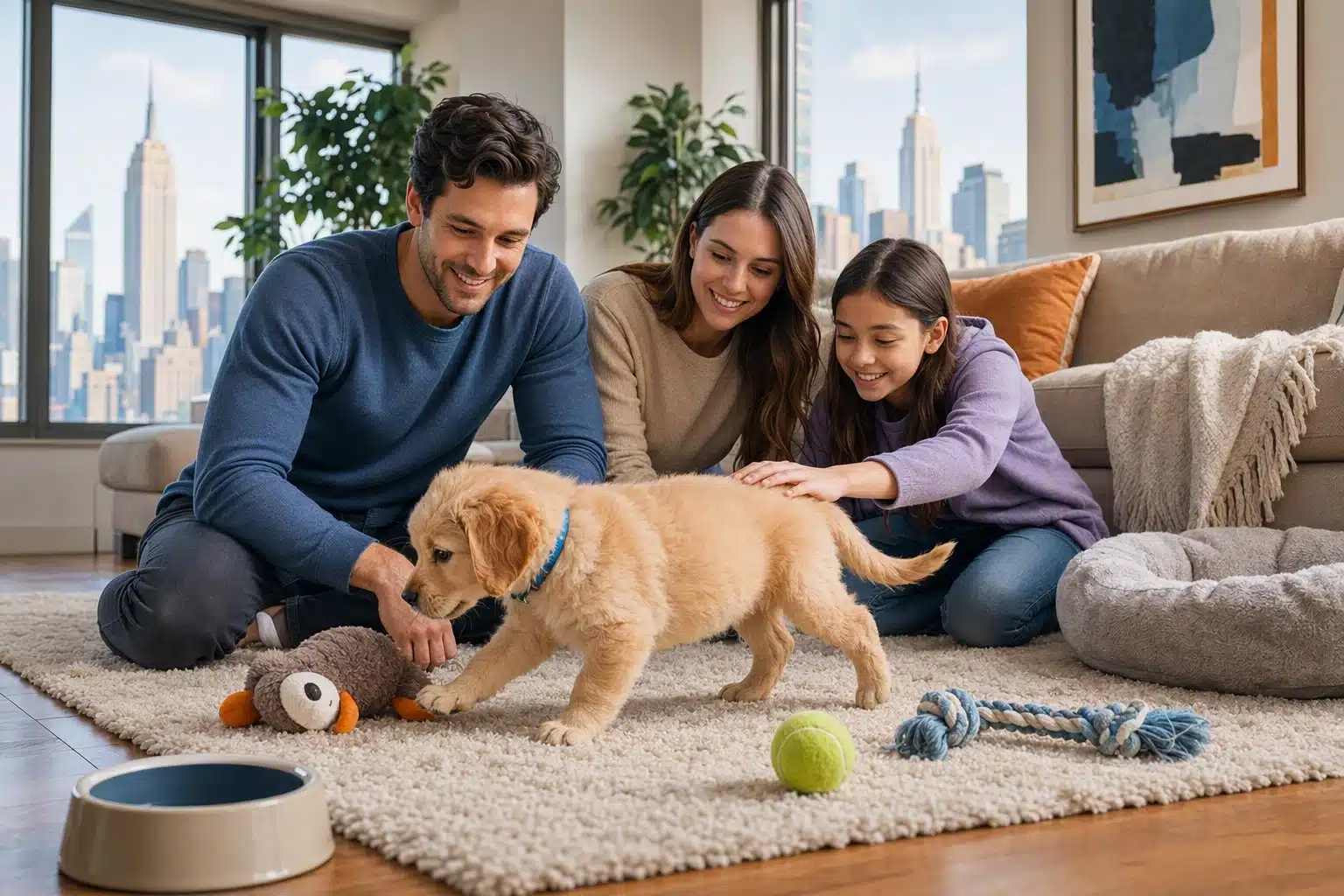
What to ask about daily life in the home
Ask simple, direct questions about the puppy’s real day. You want details, not polished lines.
Use this checklist:
- Where do the puppies sleep?
- What household sounds do they hear each day?
- Who handles them, and how often?
- Are they exposed to kids, men, guests, grooming, and car rides?
- What potty and crate steps have started?
A solid breeder should explain routine, not just outcomes. The AVMA also says socialization should be balanced with disease safety, not skipped entirely in the name of caution in its guidance on canine social settings.
Ask for videos of normal moments, like mealtime, play, and cleanup.
How temperament connects to your family
Do not ask, “Which puppy is cutest?” Ask, “Which puppy fits our home?”
Match energy and sensitivity to your real life:
- Busy house with kids – choose resilient and people-focused
- Calm condo – choose steady, not highly reactive
- First-time owner – choose easy to redirect and handle
At Sage Puppies, that match matters as much as looks. A great family companion should feel safe in human hands, adapt well, and settle after play.
Also Read: Havanese, Havapoo & Cavapoo Puppy Care Blog
Step 4: Read the reservation terms before you place a deposit
A deposit should hold a puppy for you, not trap you in a vague deal. Read every line before you pay. This is also a good point to revisit the parent guide, Puppies for Sale in New York: Smart Steps for Local Buyers, so your paperwork checks match the rest of your buying process.
Know what the deposit is doing
Ask one direct question first: What does this payment actually reserve? Some deposits hold a specific puppy. Others only hold your place on a waitlist.
Look for these points in writing:
- Deposit amount
- Is it refundable, partly refundable, or non-refundable
- What happens if the breeder cannot provide the promised puppy
- Whether the deposit applies to the final price
- Any transfer rules to another litter or breed
New York requires pet dealers to give buyers written information about the animal’s health, medical history, and origin, according to the state pet dealer program. If the seller is vague before payment, expect more trouble later.
Understand pick order and timing
Pick order can shape your whole experience. If you want a small-breed companion with a calm temperament, your choice window matters.
Check these details:
- How pick order is set – by deposit date, application approval, or breeder match
- When selections happen – at birth, after evaluations, or near go-home week
- What happens if no puppy fits your needs
- How long your deposit stays active
A clear process is a good sign. At Sage Puppies, for example, a calm, written process fits families better than a rushed first-pay, first-take setup.
Check for reasonable buyer protections
Reasonable terms protect both sides. You are not looking for a perfect legal document. You are looking for a fair one.
| What to check | Good sign | Red flag |
|---|---|---|
| Health paperwork | Written records promised | Verbal promises only |
| Buyer rights | Clear refund or transfer terms if breeder cannot place a puppy | Seller keeps all funds no matter what |
| Timing | Pickup and decision dates are listed | Dates are open-ended |
| Required notices | Written consumer notices provided | No mention of rights |
New York’s pet lemon law requires written notice of consumer rights, including refund, exchange, or vet reimbursement options in some cases, as outlined in the state notice of rights summary.
If a contract punishes basic questions, skip the deposit.
Also Read: How to Spot Complete Puppy Vet Records Before Buying
Step 5: Decide between local pickup, Utah pickup, or delivery
If you live close enough to drive, local pickup is often the easiest choice. You get a calm handoff, time to ask last-minute questions, and a direct look at your puppy’s body language before heading home. That matters for first-time buyers. If you are flying into Utah, pickup can still work well if you want the most control over timing and travel setup. For many families, meeting in person also helps the whole process feel slower, clearer, and more personal. Review the parent guide, Puppies for Sale in New York: Smart Steps for Local Buyers, before you lock this in.
If distance, work, or young kids make travel hard, delivery may be the better fit. A good breeder should explain the route, handoff plan, timing window, and what your puppy will travel with. Sage Puppies offers both pickup and nationwide delivery, so the right choice depends on your schedule and comfort level, not pressure. For interstate trips, the USDA notes that your destination state may require a health certificate or other entry steps, so always check your state rules early through USDA APHIS interstate pet travel guidance.
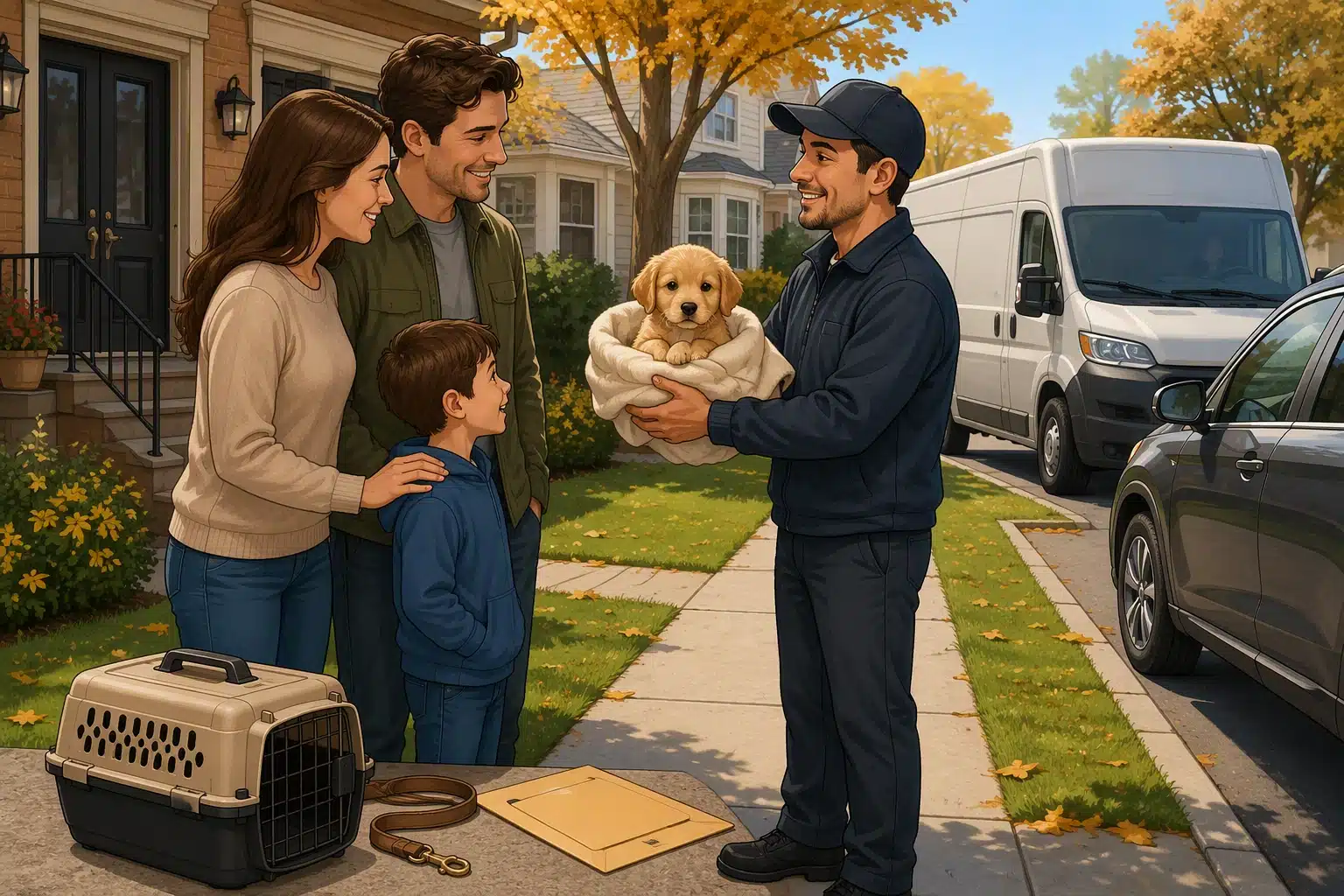
Before travel day, confirm the details in writing. Use this short checklist:
| What to confirm | Why it matters |
|---|---|
| Pickup or delivery window | Prevents rushed handoffs |
| Exact location and contact person | Avoids day-of confusion |
| Travel crate, blanket, and food | Keeps the puppy settled |
| Health record packet | Helps with your first vet visit |
| Payment balance and receipt | Prevents last-minute issues |
Also ask:
- When was the puppy last fed and given water?
- What should you do if travel is delayed?
- Who do you call if the puppy seems stressed?
If your puppy will cross a U.S. border later, CDC rules can apply. As of 2026, dogs entering or returning to the U.S. need a CDC Dog Import Form receipt and some cases need more paperwork.
Also Read: Puppy Care Blog & Resources | Sage Puppies
Step 6: Use a final buyer checklist before you commit
Before you send a deposit, do one last calm review. This step saves money, stress, and heartache. If you missed the earlier screening steps, go back to the parent guide, Puppies for Sale in New York: Smart Steps for Local Buyers, then return here with your notes.
Green flags that usually matter most
Use this short list before you say yes:
- The seller answers direct questions without getting defensive.
- You receive written records for vaccines, deworming, and exam dates.
- The puppy’s source, birth date, and treatment history are clearly listed, which matches New York’s required buyer information statement under state rules.
- The pickup or delivery plan is clear.
- The puppy acts bright, curious, and comfortable with gentle handling.
- You know who to contact after go-home day.
A good breeder does not rush you. Clear paperwork and calm communication usually travel together.
| Final green flag | Why it matters |
|---|---|
| Clear records | Helps you confirm care and timing |
| Honest answers | Builds trust before payment |
| Steady temperament | Often points to good early handling |
Red flags worth pausing over
Pause the deal if you notice any of these:
- Pressure to pay fast, especially by wire or gift card
- Missing vet paperwork or vague dates
- No written notice of buyer rights
- Stories that change about the puppy’s origin
- Refusal to let you review the contract before payment
New York also bans pet stores and brokers from selling dogs, cats, and rabbits under the state’s current rules, according to the Department of Agriculture and Markets.
What to do once the puppy feels like the right fit
Now slow down and finish strong:
- Read every page before paying.
- Save screenshots, receipts, and messages.
- Confirm what is included, such as food, records, and pickup timing.
- Book your first vet visit right away.
- Ask for the best number to use after adoption.
If the fit is right, the last step should feel clear – not confusing.

Ready to buy with more confidence? Sage Puppies gives New York families a calmer path, with health-tested Havanese, Havapoo, and Cavapoo puppies, clear next steps, and pickup or delivery options. Review available puppies, check pricing and reservation details, then submit an application if the fit feels right.
Frequently Asked Questions
Q1: Puppies for sale in New York
Start with the seller, not the puppy photo. Ask for health records, parent testing, a written sales agreement, and vet history. In New York, careful buyers should also confirm pickup terms, refund language, and who handled early socialization.
Q2: How do I spot a responsible breeder fast?
Look for clear answers, not pressure. Good breeders explain parent health testing, home raising, feeding, training starts, and timeline. They welcome questions and share paperwork before deposit time, not after you have already committed.
Q3: What papers should I review before I pay?
Read the sales contract, health record, vaccine and deworming log, microchip details if included, and any return policy. Check names and dates. If anything feels vague, ask for a corrected copy before sending money.
Q4: Is local pickup better than delivery?
Not always. Pickup gives you a direct handoff, but organized delivery can still work well. Ask how travel is handled, what the puppy eats before the trip, and what support you get once your puppy arrives.
Q5: Can I buy from an out-of-state breeder?
Yes, if the process is transparent. Many families in New York buy from trusted programs in other states, including Sage Puppies in Utah, when they want a small-breed companion with health-tested parents and clear pickup or delivery steps.
Conclusion
Buying a puppy in New York goes better when you slow down and check the basics. Focus on health testing, clear breeder answers, and written records before you fall for photos. Ask where the puppy was raised, how the parents were screened, and what support you get after pickup or delivery.
New York gives buyers useful guardrails. The state says pet dealers must provide health, medical history, and origin details to buyers, and pet stores and brokers in New York can no longer sell dogs, cats, and rabbits under the 2024 law change, according to the New York Department of Agriculture and Markets. Buyers should also review the required information statement for purchasers so nothing is missing.
The best match is not just a cute puppy. It is a healthy, well-raised companion from a breeder who welcomes careful questions.