Quick Summary: Adult Havanese typically weigh 7 to 13 pounds and stand 8.5 to 11.5 inches, while Shih Tzus usually weigh 9 to 16 pounds and have a shorter, stockier frame. Both breeds reach most adult height by 6 to 8 months and finish gaining weight around 10 to 12 months, though some Shih Tzus keep filling out until 15 months. To estimate adult size, use the parents’ weights, track the puppy’s weekly weight, and expect a range rather than a guaranteed number, especially with Havapoo or Cavapoo puppies.
Two adult Havanese can differ by several pounds, and so can two adult Shih Tzus. So the useful question is not which breed is smaller in general, but where your puppy’s havanese mature size lands on the breed standard range. Here’s the short answer: adult Havanese run roughly 7 to 13 pounds and 8.5 to 11.5 inches at the shoulder, while adult Shih Tzus run 9 to 16 pounds and about 9 to 10.5 inches. Both reach most of their adult size by 10 to 12 months, with the Havanese finishing slightly earlier and the Shih Tzu carrying a stockier frame.
Many families picking between these two companion breeds run into conflicting numbers online, often pulled from breeder listings instead of breed standards, and none of it helps when the puppy in question is only eight weeks old.
This comparison sorts it out. It lays out the standard ranges for both breeds, walks each growth curve month by month, explains why the curves differ, and shows which adult size prediction methods you can trust. That way you can size your expectations, and your home, before you commit to a puppy. This guide draws on breed standard references and documented experience raising small-breed litters, including Havanese, Havapoo, and Cavapoo puppies at our South Jordan, Utah program, so the numbers reflect what families actually see.
Havanese vs Shih Tzu: Adult Size and Growth at a Glance
| Havanese | Shih Tzu | |
|---|---|---|
| Adult weight range | About 7 to 13 pounds, with most adults between 8 and 12 | 9 to 16 pounds |
| Adult height at withers | 8.5 to 11.5 inches | 9 to 10.5 inches ideal, 8 to 11 inches allowed |
| Time to full adult size | Most adult height by 6 to 8 months, adult weight by 10 to 12 months | Adult height near 6 months, adult weight roughly 10 to 12 months |
| Body build and proportions | Light, fine-boned and relatively long-legged for a toy breed | Compact, stocky and square, with a short muzzle and heavier bone |
| Coat and grooming load | Long, soft, wavy double coat with daily brushing and regular professional grooming | Long, dense, straight double coat with frequent professional grooming |
| Activity and trainability | Moderate to high energy, quick to learn, sensitive to harsh correction | Low to moderate energy, smart but willing to negotiate, needs patience |
Havanese and Shih Tzu: Breed Background and Growth Traits
Havanese
The Havanese is a small Cuban companion breed with a silky double coat and a light, fine-boned frame that is relatively long-legged for a toy breed. It suits active families who want a quick-learning, responsive dog rather than a couch-only lap pet, and its mature size reflects that athletic build.
Key strengths
- Moderate to high energy with quick, eager trainability
- Sensitive nature that rewards gentle, positive handling
Shih Tzu
The Shih Tzu was developed as a lap dog, with a dense flowing double coat, a short muzzle and a compact, stocky, square build with heavier bone. It fits families who want a self-possessed, lower-energy companion and are patient with a dog that likes to negotiate during training.
Key strengths
- Sturdy, well-boned frame that handles family life well
- Calm, adaptable temperament suited to apartment and home living
How Big Do Adult Havanese and Shih Tzu Dogs Get?
Adult Havanese reach 7 to 13 pounds and 8.5 to 11.5 inches at the shoulder. Adult Shih Tzus run 9 to 16 pounds and stand 9 to 10.5 inches at the withers. Both breeds finish most of their height by 6 to 8 months, then fill out in weight until 10 to 12 months. The numbers overlap, but the two dogs carry them differently: the Havanese is slightly taller and lighter, the Shih Tzu shorter and denser.

Standard adult weight ranges for both breeds
The AKC breed standard puts the ideal Havanese weight between 7 and 13 pounds, with 8 to 11 pounds as the preferred middle range. A healthy adult can sit a pound or two above or below that and still be in good condition. Shih Tzus have no strict weight cutoff in their standard; judges assess balance and substance instead, which is why most owners see adults anywhere from 9 to 16 pounds. Ask your breeder where both parents weighed as adults, since that is the single best hint about your puppy’s future size. For Havanese families, our Havanese puppy health checklist covers the year-one vet visits where weight and body condition get tracked.
Height at the withers and why length matters
Withers height is measured from the ground to the top of the shoulders while the dog stands square. Havanese fall between 8.5 and 11.5 inches there, and Shih Tzus between roughly 8 and 11 inches. But height alone can mislead you. Both breeds are longer than they are tall, so a 10-pound Shih Tzu takes up more couch space than a 10-pound Havanese. That extra length matters when you size a crate, a harness, or a car seat.
What a bigger or smaller adult size means for your home
A 16-pound Shih Tzu and a 7-pound Havanese need different gear. Bigger adults outgrow small harnesses and carriers sooner, while the smallest dogs fit airline-style travel bags for life. Either size suits apartments. What changes is cost: food doses, medication doses, and gear sizes all scale with the final weight on the scale.
Havanese Growth Rate: What the First Year Looks Like
A Havanese puppy reaches full adult size in roughly 10 to 12 months, and the year follows a predictable pattern. Here is the month-by-month arc:
- Birth to 12 weeks: rapid early gains, weight often doubling in the first two weeks
- 3 to 6 months: most adult height arrives, legs lengthen, weight climbs steadily
- 6 to 9 months: growth slows, the frame fills out and the adult coat starts coming in
- 10 to 12 months: the final pound lands, and growth is essentially done
Most adults finish between 7 and 13 pounds, though the middle of that range is most common. Knowing the pattern helps you time food switches, harness upgrades and vet checks without guessing. It also keeps you calm during the lanky, leggy phase that worries some first-time owners.
Birth to 12 weeks: the fastest stretch
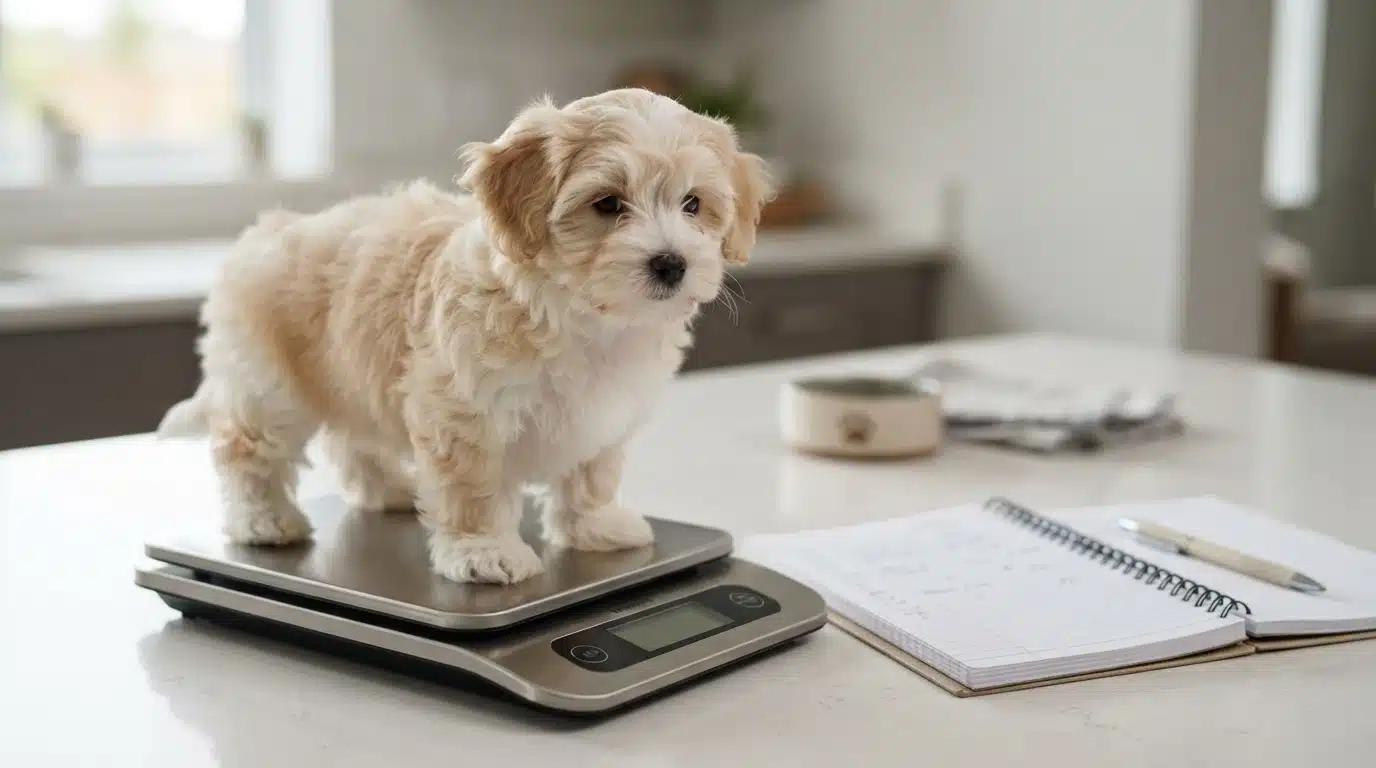
This is the steepest part of the curve. A Havanese puppy often doubles its birth weight within the first week or two, then gains steadily through the twelfth week. By eight weeks, when many Utah families pick up their puppy locally or a pup flies to its new home, a healthy Havanese typically weighs around 2 pounds. Breeders track these gains closely, because steady weekly growth is one of the best early signs of a thriving litter.
4 to 8 months: growth slows and the coat changes
Between four and eight months, height gains taper off. The puppy has most of its adult leg length by six months, so the silhouette shifts from round and fluffy to longer and leaner. Weight keeps climbing more slowly as muscle develops. This is also when the soft puppy coat starts giving way to the silkier adult hair, which can look patchy for a few weeks.
8 to 12 months and beyond: the last pound
After eight months, growth is mostly filling out rather than lengthening. Your puppy may add a final half-pound to a pound of muscle and chest depth, finishing somewhere in the 7-to-13-pound range. Keep a simple monthly weigh-in going. Once the scale holds steady for two or three months, your Havanese has reached its adult size.
Shih Tzu Growth Chart: A Slower, Heavier Finish
The Shih Tzu follows the same broad shape as the Havanese but lands heavier. Adult weight runs 9 to 16 pounds, and many puppies keep gaining past the point where a Havanese has leveled off. Here’s how the months unfold.
The first six months on the Shih Tzu growth chart
Shih Tzu puppies grow fast at first, then steady out. Most weigh 4 to 5 pounds by three months and 7 to 12 pounds by six months, when full adult height has usually arrived, according to Pawlicy’s growth chart. A quick month-by-month snapshot:
| Age | Typical weight |
|---|---|
| 3 months | 4 to 5 pounds |
| 4 months | 6 pounds |
| 5 months | 8 pounds |
| 6 months | 7 to 12 pounds |

Why Shih Tzus often stay small early and fill out later
Two things explain the slow finish. First, the breed carries a stockier frame than the Havanese, so weight gain continues after height stops. Second, that thick double coat hides body shape, which makes a growing puppy look smaller than the scale says. Weigh your puppy instead of eyeballing it. If you’re weighing breeds side by side, remember a heavier Shih Tzu is normal, not a sign of overfeeding, while a lighter one may simply be a smaller line. Body condition score, checked by your vet, matters more than the number alone. When comparing against havanese mature size, expect the Shih Tzu to add its final pound or two a month or so later.
Growth past one year in Shih Tzus
Most Shih Tzus reach adult weight around 10 months, though some keep filling out until 12 to 15 months. A-Z Animals’ progression guide notes the breed finishes height near six months but continues gaining muscle and coat mass well after. Once your dog holds the same weight for several weeks, growth is done. If you’re still choosing between breeds, our guide to choosing a Havanese puppy covers what to look for in that age range.
Which Breed Grows Faster, and Does It Matter?
The Shih Tzu reaches adult height a touch sooner, but the Havanese finishes its overall growth slightly earlier, near 10 to 12 months. In practice, the pace is close enough that feeding schedules, not breed choice, drive the day-to-day differences.
Comparing the two curves month by month
Both breeds follow the same shape: fast gains early, then a long, slow fill-out. Height arrives first for each, mostly between 6 and 8 months, while weight keeps building until roughly a year. The Shih Tzu often looks “done” sooner because its stockier frame fills in earlier, but the Havanese’s curve actually levels off a bit sooner overall. Use the milestones below as checkpoints, not deadlines. Puppies vary, and a single slow month rarely signals a problem.
| Milestone | Havanese | Shih Tzu |
|---|---|---|
| Doubles birth weight | First 2 weeks | First 2 weeks |
| Most adult height | 6 to 8 months | Closer to 6 months |
| Final adult weight | 10 to 12 months | 10 to 12 months |
| Growth fully done | Slightly earlier | Slightly later |
What the difference means for feeding and gear
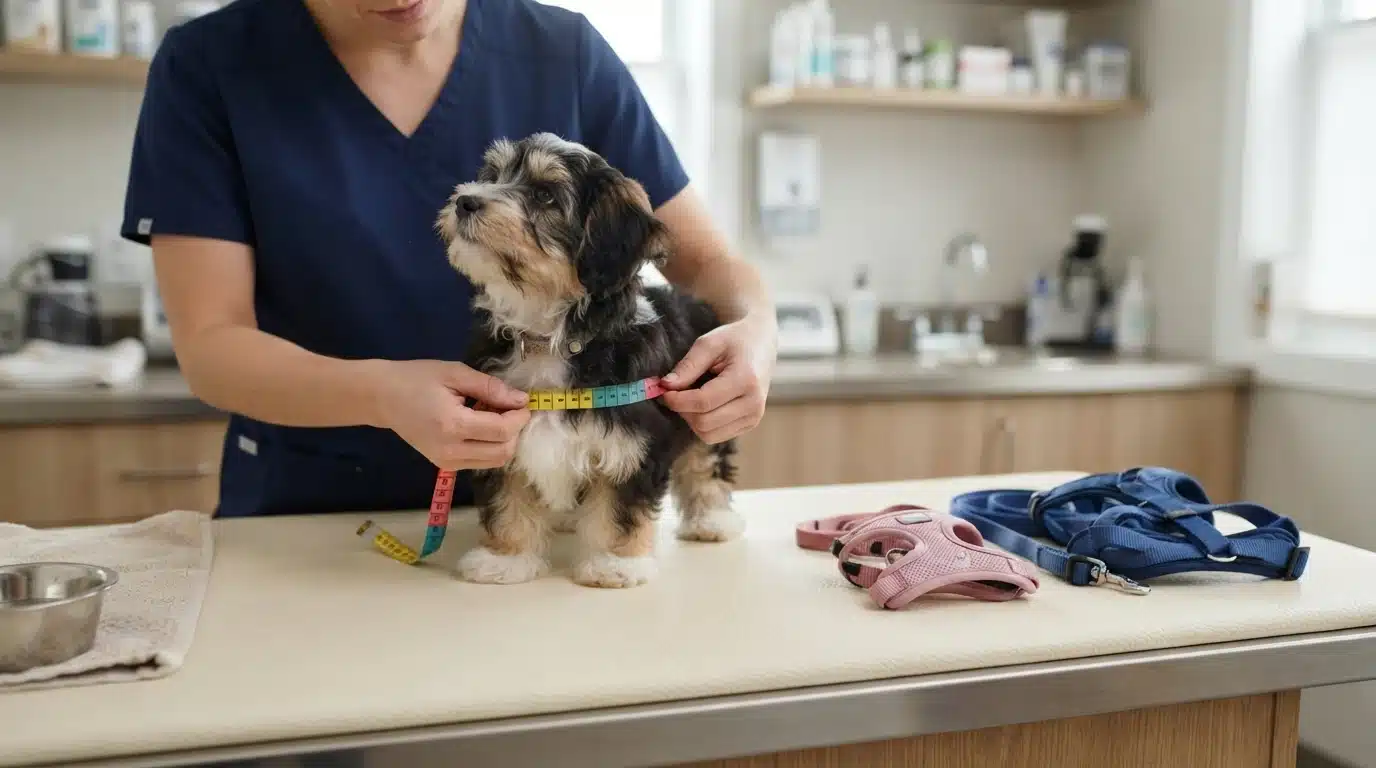
Because both breeds are small, feed a formula made for small breeds; their fast early growth means calorie needs stay high per pound. Watch body condition rather than the bowl. A Shih Tzu trending toward the top of its 9-to-16-pound range needs portions trimmed sooner than a lean Havanese does. If you want week-by-week portion guidance, our Havanese feeding schedule lays it out.
Gear is where the havanese mature size gap shows up most. Buy a crate for the predicted adult weight, not the puppy in front of you, or you will replace it twice. Harnesses, though, should fit snugly now and be resized as the chest deepens around 6 months. Collars, too, need a recheck every few weeks during the first year. Small costs add up, so plan one crate purchase and budget for two or three harness sizes.
Estimating Your Puppy’s Adult Size Without Overpromising
No formula can tell you a puppy’s exact adult weight. But some methods give you a usable range, and knowing which ones to trust keeps expectations honest.
Which estimation methods actually hold up
Breed averages are the most dependable starting point. A Havanese puppy with parents in the 8 to 12 pound range will almost certainly finish there too, so ask for the parents’ weights first. Next, weigh your puppy and track it weekly. Small breeds roughly triple their 8-week weight, so a 2 pound pup at eight weeks often lands near 6 to 12 pounds. A veterinary growth chart built from measured puppies adds accuracy once you have three weights taken two weeks apart. Avoid calculators built for medium or large dogs. Their formulas assume different growth curves and miss small breeds badly.
Skip any breeder who promises a puppy “will be exactly 9 pounds.” Honest answers come in ranges, not single numbers.
Why crossbred puppy size is genuinely unpredictable
Havapoos and Cavapoos mix two breeds, so they inherit a wider range of size genes. Even within one litter, puppies from the same parents can differ by several pounds as adults. According to Wisdom Panel’s guide to predicting puppy size, breed averages only work when the ancestry is known and consistent, which is harder with crosses. A Havapoo might lean toward the Havanese side at 9 pounds, or take after a larger Poodle parent at 18.
That is why experienced programs give you parent weights and a realistic range instead of a guarantee. Ask for the dam’s and sire’s actual weights, then expect your puppy to fall somewhere between them.
Which Should You Choose: Havanese or Shih Tzu?
Both breeds stay small, but size differences shape daily life. Pick by weight range, coat care, and how each one fits your household.
Choose the Havanese when…
You want the lighter, more athletic small companion. Adult Havanese run 7 to 13 pounds, so most adults land a few pounds under a Shih Tzu and move with a springy, bouncy stride. That lighter frame means smaller harnesses, easier pickups, and less strain on your back and arms. The single coat sheds very little and needs brushing a few times a week, not daily detangling. Havanese also tend to be more eager to train, which suits first-time owners who want a quick win. If a Havanese or a Havapoo fits your home better, the lighter adult size is often the deciding factor. Expect a velcro dog that follows you from room to room and wants to be part of everything.
Choose the Shih Tzu when…
You prefer a calm, sturdy lap dog and do not mind a stockier build. Shih Tzus weigh 9 to 16 pounds and stand a bit lower and longer, so they feel heavier than the scale suggests. They are content to lounge, nap on the couch, and greet strangers politely. The trade-off is coat maintenance: the long double coat needs daily brushing or regular professional trims. Their flatter faces also mean you should watch heat and heavy exercise. If you want a laid-back companion and enjoy grooming time, the Shih Tzu fits beautifully.

If a small, sturdy companion that stays near 7 to 13 pounds sounds right, a Havanese may be your match. Sage Puppies raises Havanese, Havapoo and Cavapoo puppies with owner-guided matching from South Jordan, Utah. See available puppies and start your application at Sage Puppies.
Frequently Asked Questions
Q1: How big do adult Havanese and Shih Tzu dogs get?
Adult Havanese reach 7 to 13 pounds and 8.5 to 11.5 inches at the shoulder. Shih Tzus run 9 to 16 pounds and stand 9 to 10.5 inches, carrying the weight on a stockier frame.
Q2: Which breed grows faster, Havanese or Shih Tzu?
The pace is close. Shih Tzus hit adult height slightly sooner near 6 months, while the Havanese finishes overall growth a bit earlier, around 10 to 12 months.
Q3: How long does it take a Havanese puppy to reach full size?
About 10 to 12 months. Most adult height arrives by 6 to 8 months, then weight fills out until growth is done.
Q4: Can I predict my puppy’s adult weight?
Ask for both parents’ weights first, then weigh your puppy weekly. Small breeds often triple their 8-week weight. Expect a range, never a guaranteed number.
Q5: When should I buy a full-size crate?
Buy once, sized to the predicted adult weight, so you avoid replacing it twice. Harnesses are different: fit them snugly now and resize as the chest deepens around 6 months.
Conclusion
Adult Havanese finish at 7 to 13 pounds, while adult Shih Tzus land between 9 and 16 on a stockier frame. Both breeds reach most adult height by 6 to 8 months and fill out in weight until 10 to 12 months. The Havanese levels off slightly sooner overall.
The most reliable adult size prediction starts with the parents’ weights, followed by weekly puppy weigh-ins and a three-point growth record. Crossbred puppies like Havapoos are less predictable, so treat any breeder’s exact number with caution. Choose the lighter, more athletic Havanese if easy handling matters most; choose the Shih Tzu if you enjoy grooming a calm lap dog. Either way, buy gear for the predicted adult weight, not the puppy in front of you.