Quick Summary: Feed Havanese puppies four meals daily from 8 to 12 weeks, three meals until about 6 months, then two meals through the first year. Use the listed cup amounts only as starting points, because calorie density, size, activity, and spay or neuter status affect portions. Weekly weigh-ins and checking for ribs under a thin fat layer with a visible waist should guide adjustments, with a veterinarian confirming food changes and addressing persistent appetite or digestive problems.
It is 6:40 a.m. Your nine-week-old Havanese weighs less than the kitchen scale can register, the kibble bag offers no scoop size for a puppy this small, and three family members are each ready to feed him. That is how double feedings and upset stomachs start.
The real challenge is that every chart online gives different numbers for Havanese feeding amounts, and none of them account for your puppy’s weight this week. The fix is simple: feed by body condition, not by the calendar. In this guide you will find Havanese meal frequency week by week, from four meals a day at eight weeks down to two by six months, plus how to adjust Havanese food portions when your puppy ribs feel too sharp or too hidden. As a small Havanese, Havapoo and Cavapoo breeder in South Jordan, Utah, we have walked dozens of new families through this exact first month, and the plan below is the one we hand them at pickup.
Step 1: Weeks 1 and 2 After Pickup (About 8 to 10 Weeks Old)
The first two weeks set the pattern for everything that follows. Your Havanese feeding amounts stay small and steady, and the meal clock matters more than the scoop size.
How Much Food Should a Havanese Puppy Eat at 8 Weeks Old?
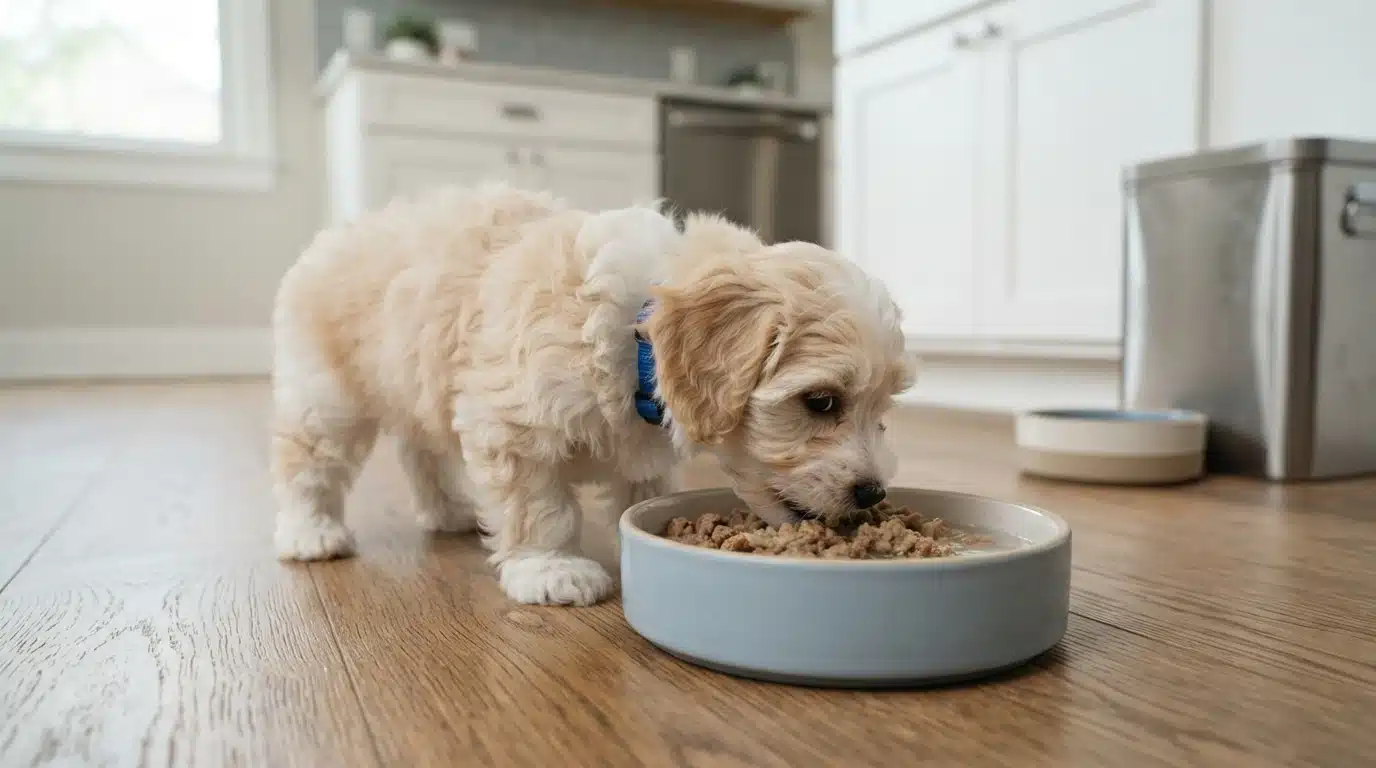
An 8-week-old Havanese usually eats about ½ to ¾ cup of puppy food per day, split across four meals. That range covers most puppies in this breed, but it is a starting point, not a rule. Charts disagree because kibble calorie counts differ, so measure daily total, not per meal. Divide it into four equal servings and adjust by body condition: ribs easy to feel under a thin fat layer means you are close.
Meal Times That Keep a Small Breed Steady
Small breed puppy feeding schedule advice for toy dogs suggests four to five daily meals, since their blood sugar drops faster than a large breed’s, per Chewy’s feeding guide. Keep the four-meal rhythm from week one, roughly 7 a.m., 11:30 a.m., 4 p.m., and 10 p.m. Set phone alarms, and keep the same food your breeder sent home through these two weeks.
What to Do About an Upset Stomach in the First Two Weeks
Travel stress causes most early loose stool. Soft stool alone is fine; drop back to plain food and small portions. Call your vet for vomiting, two skipped meals, watery stool past a day, or low energy. As our week-one feeding guide explains, tiny puppies dehydrate fast, so treat stomach trouble as urgent, not minor.
Step 2: Weeks 3 and 4 (About 11 to 12 Weeks Old)
By now your puppy has settled in, and meals have shifted from survival to routine. These two weeks are when Havanese feeding amounts start to creep upward, so the goal is simple: watch the puppy, not the calendar, and adjust food based on what her body tells you.
Weekly Weight Checks and Body Condition
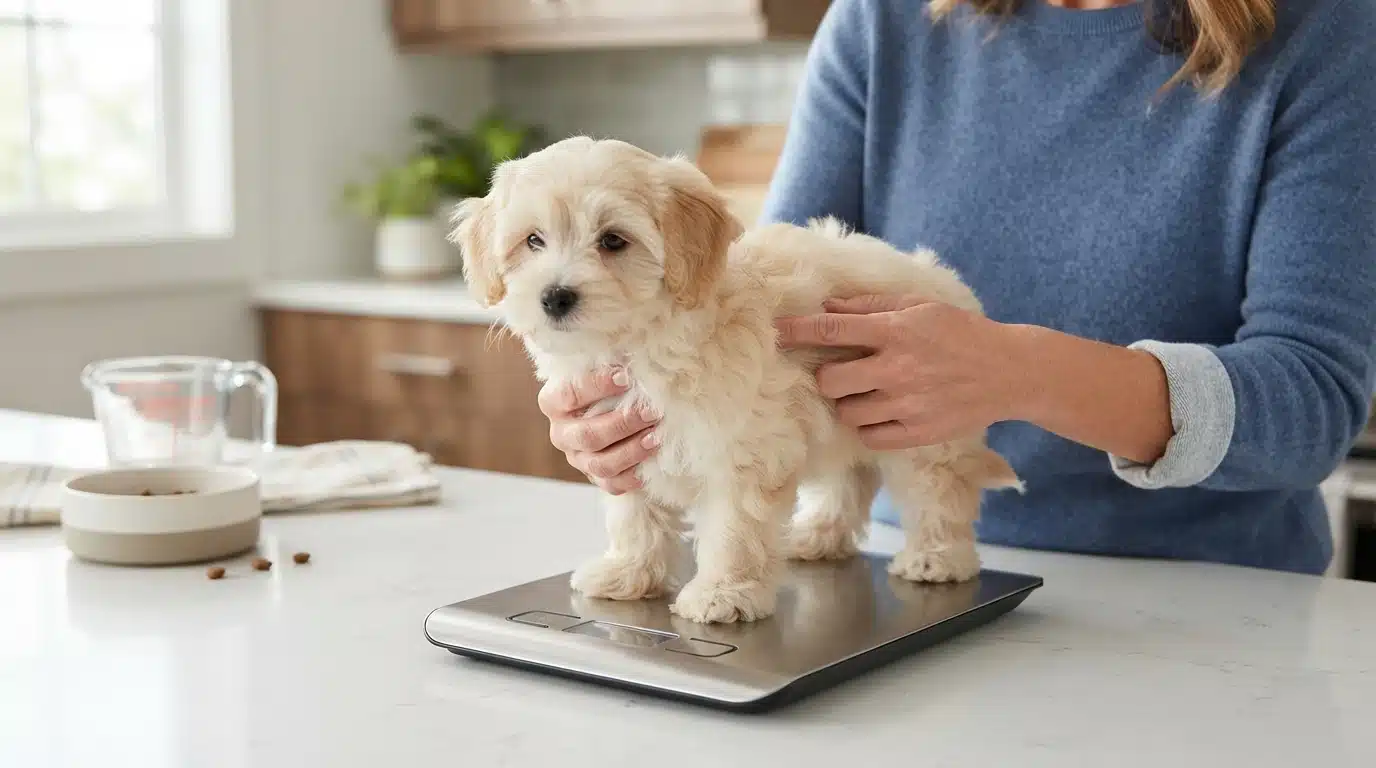
Weigh your puppy once a week, same scale, same time of day, before breakfast. Write it down. Havanese puppies at 11 to 12 weeks usually gain steadily rather than in jumps, so a flat week matters more than the exact number.
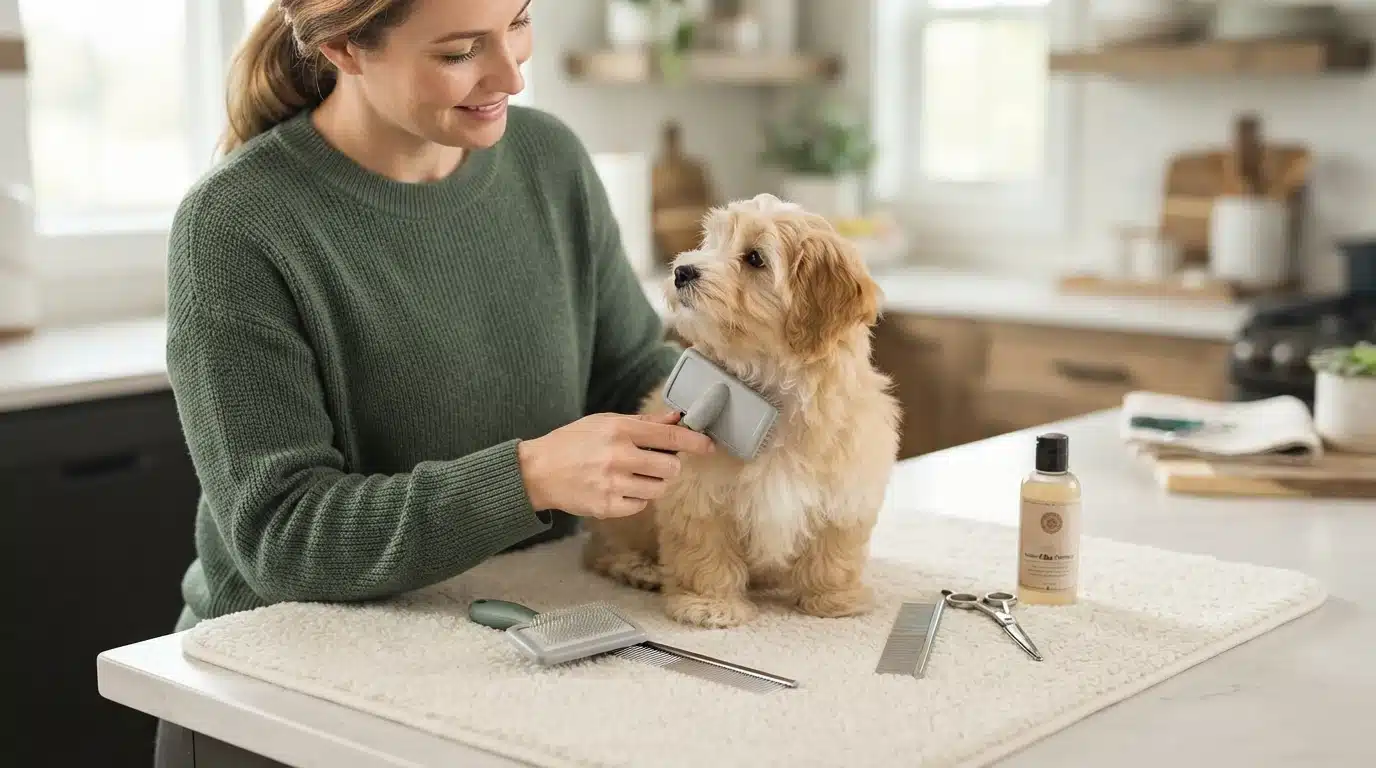
Then do a quick body condition check. Place your thumbs on her spine and spread your fingers over the ribs. You should feel the ribs under a thin layer of fat, with a visible waist from above, the way VCA Hospitals describes it. Ribs you can see usually mean more food.
When a Food Change Actually Makes Sense
Charts disagree, and your puppy does not care. Increase Havanese food portions only when two things line up: ribs feel sharp with no fat cover, and weight gain has stalled for a week or more. Add about a tablespoon per meal, then recheck in seven days. If ribs are hard to find or the waist has disappeared, cut back instead. The bag’s chart is a starting point, never the final word.
Meal Frequency: Still Four, But Tighter
Keep four meals a day for small breed puppies. Small stomachs and fast metabolisms still call for the same rhythm, but you can tighten the spacing as her bladder matures. Aim for roughly 7 a.m., noon, 5 p.m., and 9:30 p.m., and drop the late meal closer to 9 p.m. if house-training is going well. Watch how well your Havanese puppy takes to the rhythm, and the growth milestones worth tracking week by week.
Step 3: Weeks 5 Through 8 (About 3 to 4 Months Old)
By now your puppy has likely settled into a steady pattern, so this stretch is about small adjustments. Daily portions creep up, meal count drops, and treats start playing a bigger role as training begins.
How Many Cups of Kibble Should a Havanese Puppy Eat Per Day?
Most Havanese puppies this age eat:
- 3 months old: about ¾ cup per day, split across three meals.
- 4 months old: about ¾ to 1 cup per day, still three meals.
Exact amounts vary with the food’s calorie density, so treat the bag’s chart as a starting point and check the chart on Havanese feeding amounts by age for a second opinion. Then trust your hands more than the scoop: you should feel ribs under a thin fat layer. That body condition check beats any fixed number, because two healthy puppies at the same weight can need different portions.
Three Meals or Four at This Age
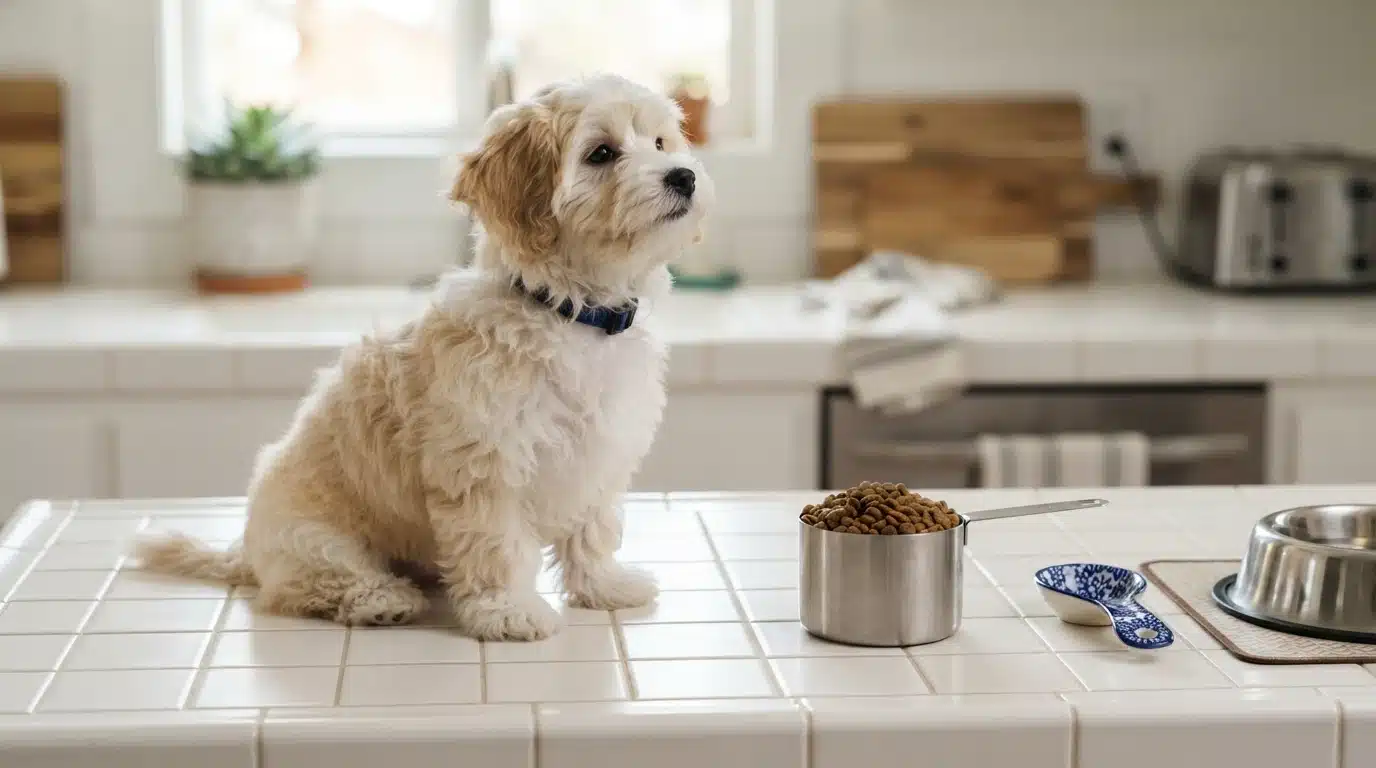
Three meals a day works well from about 12 weeks on. Space them roughly 7 a.m., noon, and 5 p.m., with the last meal finishing a few hours before bed. Watch your puppy rather than the calendar: if he seems shaky or frantic before meals, small breeds can struggle with low blood sugar, so keep four meals going for another week or two.
Where Treats and Training Rewards Fit
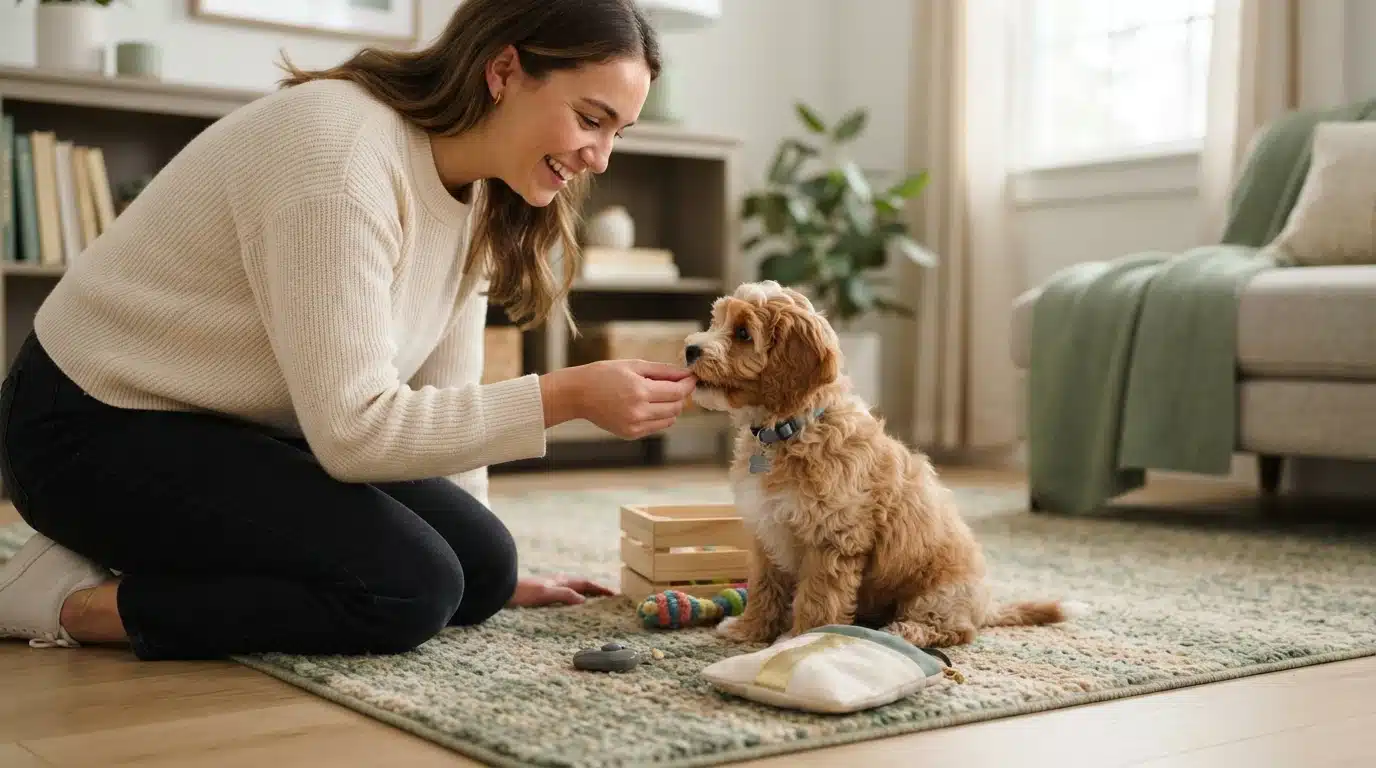
Treats matter now because short training sessions start paying off. Keep rewards tiny, pea-sized pieces, and count them as part of the day’s total food, not extra. A simple rule: treats stay under 10 percent of daily calories. If heavy training days add up, trim a spoonful from dinner. For a fuller picture of how this fits the bigger schedule, the Havanese nutrition and feeding guide walks through the whole first year.
Step 4: Weeks 9 Through 16 (About 4.5 to 6 Months Old)
Moving From Four Meals to Three
Most Havanese, Havapoo and Cavapoo puppies drop to three meals between 12 and 16 weeks. A steady pattern looks like this:
- 12 to 16 weeks: three meals a day
- 4 to 6 months: keep three meals, slightly larger portions
- 6 months and up: most small breeds settle into two meals
Skip the drop if your puppy acts starved between meals or loses weight. Some 5-month-olds still do better on three.
When to Switch From Puppy Food to Adult Food
Plan the puppy food to adult food transition around these steps:
- Watch growth: most small breeds finish growing between 9 and 12 months.
- Switch then, since adult food has fewer calories per cup.
- Ask your vet to confirm timing at a checkup.
- Blend old and new food over 7 to 10 days.
Small breeds mature faster than large ones, so Havanese usually switch before a year. A vet visit is the final call.
Portion Drift and the Spay or Neuter Effect
Portions creep up around 4 months, then spaying or neutering lowers calorie needs. After the procedure, keep portions flat for a few weeks even as your puppy grows, and check the ribs monthly. A healthy Havanese at 6 months eats about 1 cup a day, split across meals, but body condition beats any chart.
Step 5: Weeks 17 Through 26 (About 6 to 9 Months Old)
Growth slows down here, so feeding stops being a chart exercise and becomes a body check. Your puppy still needs structure, but the numbers matter less than the ribs.
Reading Your Puppy’s Body Condition
Place your thumbs on your puppy’s spine and slide your fingers along the ribs. You should feel them easily under a thin fat layer, like the back of your hand. A visible waist from above and a tuck behind the ribs mean the portion is right. Ribs you can see or bones that poke mean feed more. A round belly and ribs you have to press for mean cut back. This body condition score for puppies beats any fixed number, because one 7-month-old Havanese may weigh 8 pounds and another 11.

Adult Portions and Why the Number Differs Per Puppy
Most puppies settle around ½ to 1 cup per day now, split into two meals. The spread is normal. Activity level, frame size and whether your puppy was spayed or neutered all change the target, and altered dogs need fewer calories afterward, according to PetMD. Adjust in quarter-cup steps over one to two weeks, then recheck the ribs.
Keeping Meals Predictable Through the Adolescent Lull
Stick with breakfast and dinner at set times, roughly 7 a.m. and 5 p.m. Predictable meals help with house training and keep appetite swings from becoming begging. If your puppy skips a meal but acts normal, wait for the next one.
Step 6: Weeks 27 Through 52 (About 9 to 12 Months and Into the First Year)
Once your Havanese nears her first birthday, feeding gets simpler. Two meals a day is the norm for small breeds at this stage, and most puppies finish growing between 9 and 12 months, so this is also when many families switch from puppy food to an adult formula. Blend the foods over 7 to 10 days rather than swapping in one day.
The Two-Meal Adult Routine
Keep the meals about 10 to 12 hours apart. A 7 a.m. and 6 p.m. pattern works for most homes. Because the gap between dinner and breakfast is long, some dogs get hollow-tummy nausea overnight. A tiny bedtime snack can settle that. Portions now match the adult chart on your food bag, but the body condition check still wins. You should feel ribs easily under a thin fat layer, with a clear waist from above.
Covering the Middle of a Long Day
A dog fed twice can go ten hours between breakfast and dinner without harm, so a typical workday is fine. If you are gone longer, or your pup seems ravenous by mid-afternoon, split dinner into two small servings or use part of her daily kibble in a puzzle toy. Training treats still count, so keep them under 10 percent of daily calories.
Storing and Serving Food Safely
Keep kibble in its original bag, rolled tight, inside an airtight bin. Store the bin in a cool, dry spot, not a garage that swings hot and cold. Wash bowls daily. Toss any uneaten wet food after two hours. Check the bag’s best-by date before you buy, and note the feeding amounts differ by formula, so measure rather than guess.
Step 7: Fine-Tuning Portions and Keeping the Schedule on Track
Your chart is a starting point, not a contract. The puppy’s body decides the final number, so this step is about reading feedback and adjusting a quarter cup at a time.
When to Increase or Decrease a Portion
Run the rib check every week. You should feel ribs under a thin padding, see a waist from above, and a tucked belly from the side. Ribs too sharp? Add a tablespoon or two per meal. You cannot feel ribs, or the waist is gone? Cut back slightly and recheck in a week. A flat week on the scale matters more than any chart, so log weight weekly rather than guessing by eye.
Troubleshooting Loose Stools, Refusals and Sudden Appetite Changes
Soft stool for one day after a food change is normal during a 7 to 10 day blend. Skip one meal only if your vet says so; never blanket-fast a toy breed puppy, because low blood sugar comes on fast. Refusing a meal twice, runny stool beyond 48 hours, or a skipped breakfast plus low energy is a vet call, not a feeding tweak. Note what changed: new treat, later dinner, teething.
Asking Your Veterinarian the Right Questions
Bring your weight log and portion notes to each visit. Ask three things: “Is his body condition score where it should be for his age?” “When should we cut calories around spay or neuter?” and “Does this food need adjusting as he grows?” Specific numbers from your own record beat “he seems fine.”

Feeding a tiny puppy on a shifting schedule is easier with a breeder who answers when a week goes sideways. At Sage Puppies, Cassie’s families get week-by-week guidance built on real Havanese, Havapoo and Cavapoo litters. If you are still choosing your puppy, start the application today. Wisely Bred. Beautifully Loved.
Frequently Asked Questions
Q1: What is a week-by-week Havanese puppy feeding schedule?
Feed four meals a day from 8 to 12 weeks, three meals until about 6 months, then two. Start near half to three-quarters of a cup daily at 8 weeks and adjust each week using the rib and waist check, not the calendar.
Q2: How much food should a Havanese puppy eat at 8 weeks old?
About half to three-quarters of a cup per day, split into four equal meals. Kibble calorie counts differ, so treat that range as a starting point and confirm it with weekly weigh-ins and ribs you can feel under thin padding.
Q3: How many cups of kibble should a Havanese puppy eat per day?
Around three-quarters of a cup at 3 months, three-quarters to 1 cup at 4 months, then roughly half to 1 cup as an adult. Two healthy puppies can need different portions, so hands beat the scoop.
Q4: Can I free-feed my Havanese puppy instead of set meals?
No. Scheduled meals protect small breeds from low blood sugar, make house training predictable, and let you notice a skipped meal early, which is often the first sign something is off.
Q5: How do I feed a Havanese puppy on a budget?
Buy mid-range puppy food that meets AAFCO standards rather than boutique brands, use part of the daily kibble as training treats, and keep portions measured so waste stays low.
Q6: Does a Havapoo or Cavapoo puppy follow the same schedule?
Yes. Both crossbreeds are small breeds with similar growth rates, so the same meal counts and portion ranges apply, adjusted by body condition as each puppy grows.
Conclusion
A week-by-week plan keeps a Havanese, Havapoo or Cavapoo puppy steady while her portions grow:
| Week | Age | Meals/Day | Daily Portion Start |
|---|---|---|---|
| 1-2 | 8-10 weeks | 4 | ½-¾ cup |
| 3-4 | 11-12 weeks | 4 | ¾ cup |
| 5-8 | 3-4 months | 3 | ¾-1 cup |
| 9-16 | 4.5-6 months | 3 | ~1 cup |
| 17-26 | 6-9 months | 2 | ½-1 cup |
| 27-52 | 9-12 months | 2 | adult chart |
The numbers are starting points only. Weekly weigh-ins and the rib-and-waist check settle every portion question, treat the food bag as a first guess, and let your veterinarian confirm timing for the puppy food to adult food transition around 9 to 12 months.