Quick Summary: Havanese puppies need four meals a day from 8 to 12 weeks (about ½ to ¾ cup of dry food), three meals from 3 to 8 months (¾ to 1¼ cups), and two meals for life (¾ to 1¼ cups), following AAHA and WSAVA guidance. Cups alone are unreliable since foods can differ by 30 percent in calories per cup, so check the bag and divide your puppy’s calorie need by the kcal per cup. Weigh your puppy weekly on a kitchen scale, aiming for 5 to 10 percent weight gain, and feel the ribs to adjust portions by about 10 percent when they look too visible or too buried. Meal count protects toy breeds from hypoglycemia and bile vomiting, and when switching to adult food, blend it in gradually over 7 to 10 days.
Two Havanese puppies can be the same age, the same weight, and still need visibly different amounts of food. The reason sits in the bag: one cup of kibble can hold hundreds of calories more than a cup from another brand. So the real question is not how much to feed a Havanese puppy in general. It is how much yours needs on the food you actually bought. That gap causes most feeding mistakes, from a chubby puppy on a “standard” portion to a small breed puppy who crashes from low blood sugar. This guide gives you a Havanese feeding chart by age, a calorie cross-check so any food amount can be recalculated, and a simple weekly body-condition routine. The advice follows AAHA and WSAVA guidelines, paired with what our breeding program has seen raise healthy litters.
How Much to Feed a Havanese Puppy at Each Age
An 8-week-old Havanese needs about ½ to ¾ cup of dry puppy food per day, split into four meals. Portions climb slowly through the first year, then settle around ¾ to 1¼ cups split into two meals in adulthood.
- 8 to 12 weeks: ½ to ¾ cup per day, 4 meals
- 3 to 5 months: ¾ to 1 cup per day, 3 meals
- 6 to 8 months: 1 to 1¼ cups per day, 3 meals
- 9 to 12 months: transition to adult portions, 2 meals
These cup ranges assume a typical small-breed puppy formula. Check the calories per cup on your bag before trusting any chart, because foods vary more than puppies do, and the AKC’s puppy feeding fundamentals recommend using your food’s guide as a starting point, not a rule.
8 to 12 Weeks: Four Small Meals, Roughly Half to Three-Quarter Cup a Day
At this age, most Havanese puppies weigh 2 to 4 pounds and eat about ½ to ¾ cup of dry food per day. Divide it into four meals spaced three to four hours apart. Small stomachs empty fast, and tiny puppies can’t skip meals safely. If yours leaves food behind, that’s normal as long as energy and stools look good. Keep the last meal early enough that potty training isn’t sabotaged overnight.
3 to 5 Months: Three Meals and a Steady Climb
Drop to three meals a day and let the daily amount creep up to roughly ¾ to 1 cup. Your puppy’s weight, not the calendar, sets the pace. Weigh her weekly and adjust in small steps, about a tablespoon at a time. Growth comes in uneven spurts, so a week of ravenous appetite followed by a fussy week rarely means anything is wrong.
6 to 8 Months: Meal Count Drops, Portions Hold Steady
Keep three meals, but expect the daily amount to level off near 1 to 1¼ cups. Rapid growth is slowing, so calorie needs stop climbing even though your puppy looks bigger. Some breeders and vets suggest trimming to two meals around seven months if your puppy finishes everything eagerly. Watch for weight gain here; overfeeding a puppy sets up joint and weight problems later. Most Havanese owners find the first-year health checklist useful for pairing feeding changes with weigh-ins and vet visits.
9 to 12 Months and Adult Maintenance
Havanese mature early, often between 9 and 12 months. Switch to adult food gradually over seven to ten days, mixing increasing amounts into the puppy food to avoid stomach upset. Most adults do well on ¾ to 1¼ cups per day, split into two meals. The exact havanese puppy food amount for your dog depends on weight, activity and the calorie density of your chosen food, so recalculate from the bag rather than copying a friend’s number.
Why Small Stomachs Change the Feeding Math
A Havanese puppy weighs just 2 to 4 pounds at eight weeks, and its stomach is about the size of a walnut. Small meals on a tight schedule are not fussiness; they are how toy breeds stay safe and comfortable through the first year.
Hypoglycemia Risk in Toy Breeds
Toy breed puppy hypoglycemia is a real emergency. A tiny puppy burns through its blood sugar fast and has almost nothing stored, so a skipped or delayed meal can lead to wobbliness, weakness, or collapse. This is why the chart keeps four meals a day through 12 weeks, even though the daily total is only about ½ to ¾ cup. If you ever see staggering or limpness, rub a little corn syrup or honey on the gums and call your vet right away. That risk drops sharply after four months, which is when three meals become safe for most puppies.
Bile Vomiting and the Empty-Stomach Problem
The second issue shows up on the other side: a stomach that sits empty too long. Bile vomiting in small breed dogs looks like yellow or foamy spit-up, usually early in the morning before breakfast. It happens when bile from the gut irritates an empty stomach. The fix is simple. Move dinner slightly later, or split it so some food lands right before your puppy’s longest overnight stretch. Even adult Havanese do better on two meals than one, which is why the adult portion of ¾ to 1¼ cups stays split rather than served all at once. A pup’s history of morning bile is worth mentioning in your first vet visit notes; you can log meals alongside the shots on a Havanese puppy’s year-one health plan.
Calibrating the Chart to Your Puppy’s Weight
Charts give you a starting point. Your puppy’s scale weight and body condition tell you whether that starting point is right. Weigh weekly, run your hands over the ribs, and adjust from there.
A Weekly Weigh-In Protocol
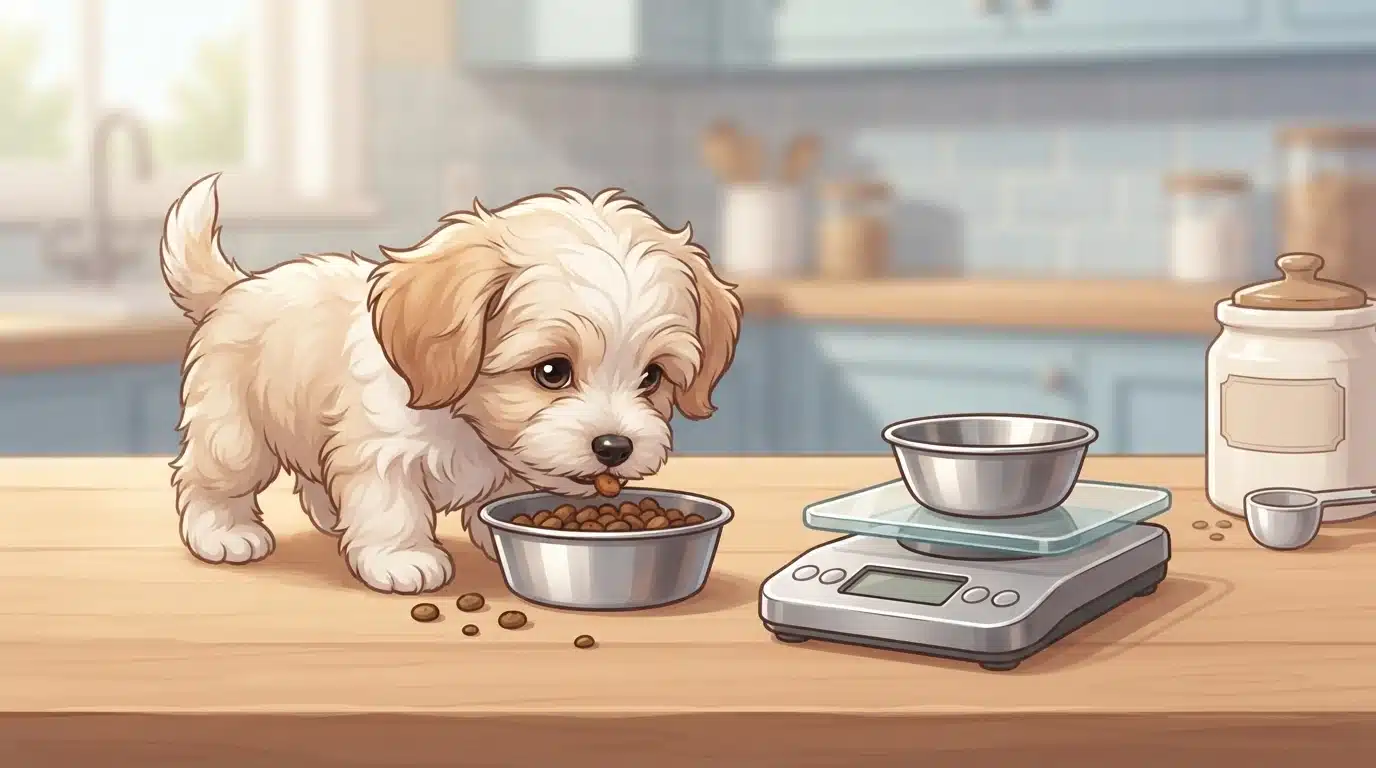
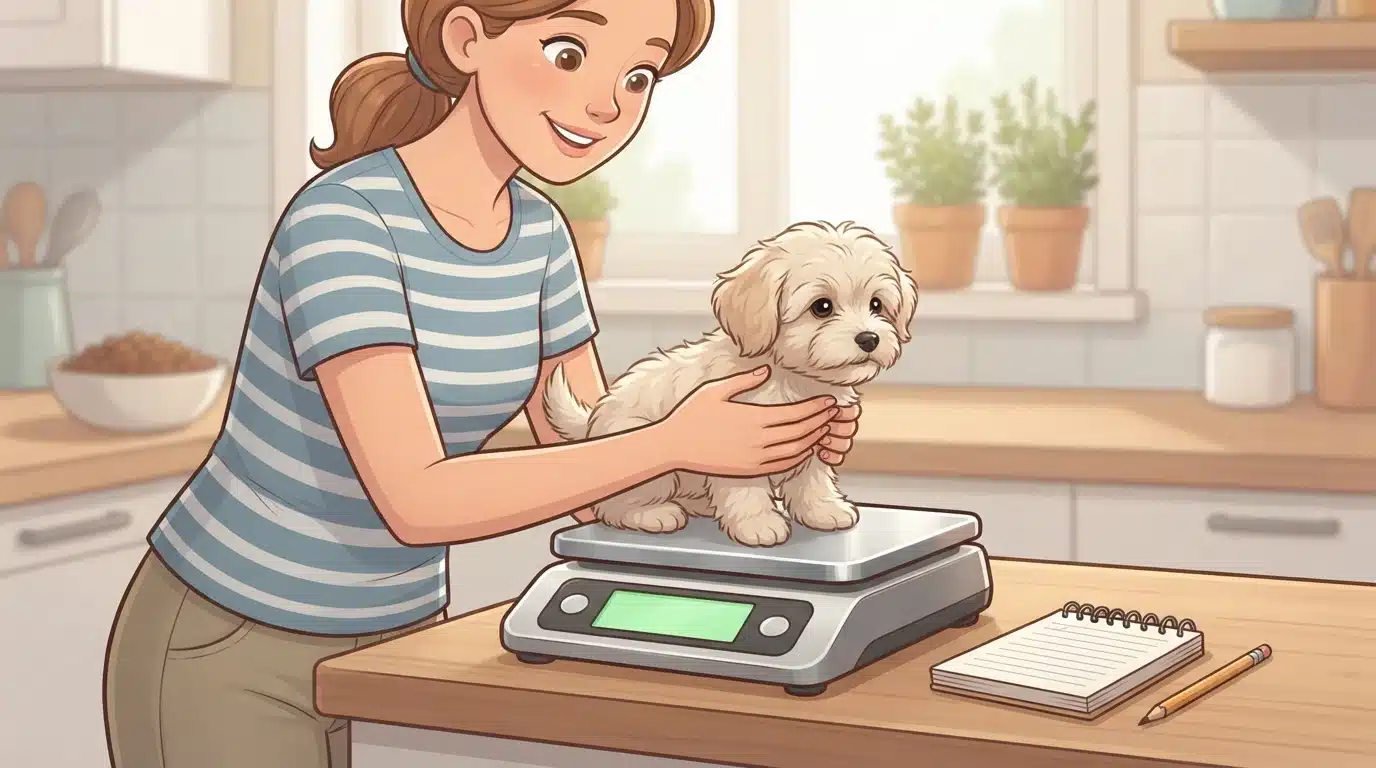
Use a kitchen scale for the first few months. A Havanese puppy weighs only 2 to 4 pounds at eight weeks, so bathroom scales can’t register small changes. Weigh on the same day, at the same time of day, before breakfast. Write the number down. A steady gain of roughly 5 to 10 percent per week is normal early on. A flat week or a sudden jump deserves a closer look.
Body Condition Scoring With Your Hands
Weight alone misses body type, so vets use a body condition score for puppies. You can do a simple version at home. Rest your hands on the ribs with light pressure. You should feel the ribs easily under a thin layer, like the back of your hand. Ribs you can see mean too thin. Ribs you have to press for mean too heavy. Your puppy should also have a visible waist when viewed from above.
When to Add or Subtract Food
If ribs show or the weekly gain stalls, add about 10 percent to the daily amount and check again in a week. If you can’t feel the ribs without pressing, cut back by 10 percent. Change one thing at a time and give each adjustment a full week before judging it. Charts set the starting line; your puppy’s body sets the finish. For the routine checks that pair with feeding, a Havanese puppy health checklist keeps weigh-ins and vet visits on track.
Converting Cups to Calories Across Foods
Reading the Calories Per Cup on the Bag
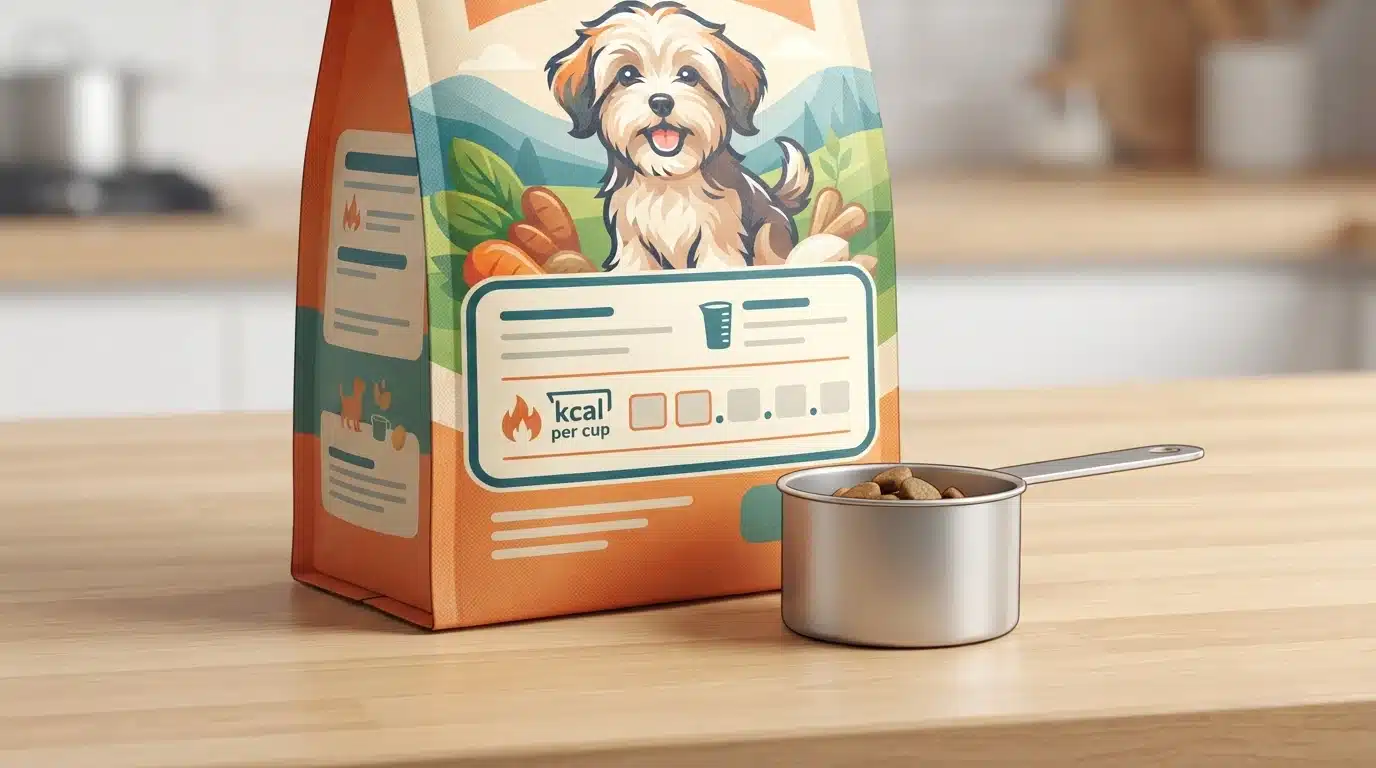
Cups mean nothing until you know the calorie density behind them. Flip the bag and find the calories per cup line, usually listed as kilocalories (kcal) per cup. Two puppy foods can differ by 30 percent, so the same cup pours out very different energy. A quick check: divide your puppy’s daily calorie need by the kcal per cup, and the result should land near the chart’s cup range. When it doesn’t, trust the math.
Wet, Fresh and Mixed Diets
Wet and fresh foods list calories per can or per pound, not per cup, so convert by weight. A 3-ounce pouch at 110 kcal counts as roughly a third of a cup-equivalent in most dry foods. Mixed feeders should add both numbers for the true daily total, then trim the dry portion to stay in range. If you switch foods entirely, recalculate from scratch rather than guessing, since a shift of even 50 kcal a day shows up fast on a 5-pound puppy.
A Sample Feeding Day at Each Stage
A Havanese puppy feeding schedule by age comes down to meal counts: four meals daily from 8 to 12 weeks, three meals from 3 to 8 months, then two meals for life. Here is how those days look on a clock.

The 8-to-12-Week Day
Serve about ½ to ¾ cup total across four meals, near 7 a.m., 11 a.m., 3 p.m., and 7 p.m. Small meals protect against low blood sugar, which toy breeds risk when they skip a feeding. Keep the last meal early enough for an easy overnight stretch.
The 3-to-8-Month Day
Move to three meals around 7 a.m., 1 p.m., and 7 p.m., with the daily total creeping toward ¾ to 1 cup, then 1 to 1¼ cups by six months. Measure each portion so the increase stays gradual. If your pup finishes fast and begs, add exercise before food.
The Two-Meal Adult Pattern
Most adults settle at ¾ to 1¼ cups split into a morning and evening meal, say 7 a.m. and 6 p.m. Two meals beat one for small breeds, since a long daytime gap can trigger bile vomiting. Our week-by-week feeding guide walks through each transition in more detail.
Moving From Puppy Food to Adult Food
Most Havanese are ready to switch at 9 to 12 months, once they stop gaining height and weight. The switch itself matters less than the timing: growing puppies need the extra calcium and calories in puppy food, and adults don’t.
When Small Breeds Are Ready
Watch your dog, not the calendar. Signs include a stable weight for three or four weeks, adult teeth fully in, and a body that looks finished rather than lanky. Ask your vet at the 9-month checkup if you’re unsure. Toy breeds like the Havanese mature early, so a large-breed dog’s 12-to-18-month timeline doesn’t apply here.
A Staged Transition Over About Ten Days
Switch foods gradually to avoid stomach upset and loose stools.
- Days 1 to 3: 75% puppy food, 25% adult food
- Days 4 to 6: 50/50 mix
- Days 7 to 9: 25% puppy food, 75% adult food
- Day 10 onward: 100% adult food
If diarrhea or vomiting appears, hold the current mix for a few days before moving on.
Signs Your Havanese Needs More or Less Food
You can tell a lot from your puppy’s body and bathroom habits. Feel the ribs weekly: you should find them with light pressure but not see them. If you can’t feel ribs at all or the belly looks rounded, cut back 10 percent. If ribs show or weekly gain stalls, add about 10 percent and check again in a week.
Signs of too much food:
- Ribs buried under a soft layer
- Rounded belly, sluggish energy
- Loose or bulky stools
Signs of too little food:
- Visible ribs or hip bones
- Low energy between meals
- Scavenging or frantic eating
Body Condition and Appetite Changes
Use a body condition score for puppies instead of the scale. A small Havanese can shift a few ounces without the bathroom scale noticing. Watch appetite too. A puppy who suddenly leaves food may be teething, too warm, or full from treats. A steady, eager appetite with a trim waist means the portions are right.
Stool, Vomiting and Appetite Loss
Soft, large, or frequent stools often mean the portion is too big for the food’s calorie density. Yellow bile vomiting in the morning is common in small breeds fed too infrequently, so return to the chart’s meal count rather than shrinking portions. Skip one meal and call your vet if vomiting repeats or appetite drops for more than a day.
Growth Outside the Expected Range
A healthy Havanese gains roughly 5 to 10 percent per week early on. Flat weight for two weeks suggests underfeeding or a worm burden. Rapid gain that pads the ribs suggests overfeeding. Adjust the daily amount by 10 percent, keep the meal count the same, and recheck weekly.
Feeding Mistakes to Avoid
Treating the Chart as a Prescription
The chart is a starting point, not a rule. Foods differ by up to 30 percent in calories per cup, and puppies grow at different rates. Weigh your puppy weekly, check the ribs, and adjust the amount by 10 percent based on what you see.
Free-Feeding and Table Scraps
Leaving food out all day works poorly for a Havanese. You lose track of how much your puppy eats, and missed meals matter for a toy breed prone to low blood sugar. Table scraps add extra calories, can trigger stomach upset or worse, and teach begging. Stick to measured, timed meals. According to PetMD, scraps also risk pancreatitis and toxin exposure.
Skipping the Transition and Changing Foods Too Often
Switch foods cold and you’ll usually see loose stools within a day or two. Blend the new food in over 7 to 10 days, raising the share a little every second day. Then stay put. Rotating brands every few weeks keeps a puppy’s gut unsettled and makes it harder to judge whether portions are right.

Feeding a tiny puppy is easier with a plan and a healthy pup to feed. If you’re preparing for a Havanese, Havapoo or Cavapoo, Sage Puppies can walk you through matching and pickup. Visit Sage Puppies to start your application and bring home a puppy ready to thrive.
Frequently Asked Questions
Q1: How much should I feed my Havanese puppy at each age?
Feed ½ to ¾ cup daily at 8 to 12 weeks, ¾ to 1 cup at 3 to 5 months, and 1 to 1¼ cups at 6 to 8 months. Treat these as starting points, then adjust using weekly weigh-ins and body condition.
Q2: How much dry food should a Havanese puppy eat per day?
Most eat between ½ and 1¼ cups daily, depending on age and the food’s calories per cup. Check the bag, divide your puppy’s daily calorie need by that number, and trust the math over the chart.
Q3: What is the best feeding schedule for a Havanese puppy by age?
Four meals daily from 8 to 12 weeks, three meals from 3 to 8 months, then two meals for life. Small, frequent meals protect toy breeds from low blood sugar.
Q4: How much should an 8-week-old Havanese puppy weigh?
Most weigh 2 to 4 pounds at eight weeks. Use a kitchen scale weekly, aiming for a steady gain of roughly 5 to 10 percent per week early on.
Q5: Why does my Havanese puppy vomit yellow foam in the morning?
That’s usually bile vomiting from an empty stomach. Feed dinner later, split it around the overnight stretch, and keep two meals a day, even in adulthood.
Conclusion
Feeding a Havanese puppy comes down to three habits: start with the age chart, check the calories per cup on your bag, and adjust weekly based on weight and body condition. Four meals protect a tiny puppy from low blood sugar through 12 weeks, three meals carry you to 8 months, and two meals last a lifetime. Feel the ribs every week and shift the daily amount by about 10 percent when they feel too buried or too visible. Do that, and the numbers on any feeding chart become a starting point you can trust rather than a guess. Small breeds reward consistency, so measure each meal, keep the schedule steady, and let your puppy’s body tell you the rest.