Quick Summary: Book a Havanese puppy’s first vet visit within 48 to 72 hours of pickup, bring dated vaccine and deworming records, and keep DHPP doses on schedule at 6-8, 10-12, and 14-16 weeks, followed by rabies at 16 weeks or as required locally. Track monthly parasite prevention, weigh the puppy weekly in ounces, and ask at every visit about Havanese-specific checks for patellas, eyes and tear ducts, heart, ears and skin, spine, and body condition. Keep all records together, register the microchip, and use the breeder’s documented health history as a starting point that your vet confirms in person.
Your Havanese puppy comes home with a folder full of vaccine dates and deworming rounds, and about ten days later you are squinting at it, wondering whether the rabies shot still stands or the puppy series stays open. That fog is normal. Most first-time owners get a great start and then lose the thread between visits. This guide lays out the whole first year on one timeline: the Havanese vaccination schedule, the first vet visit, deworming and parasite prevention, plus the breed-specific checks that matter for Havanese, like patellas, eyes and tear ducts, heart, and weight. We raise Havanese puppies at Sage Puppies in South Jordan, Utah, and we built this checklist from the schedule we hand every puppy family, so you can track each visit in order and know exactly what comes next.
The Havanese Puppy Vaccination Schedule, Explained
A Havanese puppy gets core vaccines in a series: DHPP at 6-8 weeks, again at 10-12 weeks and 14-16 weeks, then a rabies shot at 16 weeks or as your state requires. The final dose must land at or after 16 weeks of age, because a puppy’s own immunity only sticks once mom’s antibodies fade.
Core Vaccines and the Puppy Series
The AAHA canine vaccination guidelines call DHPP the core series. That single shot covers four diseases: distemper, hepatitis (adenovirus), parvovirus and parainfluenza. Your vet will also start heartworm prevention during this window. Each dose takes effect about two weeks after it is given, so your puppy is not fully protected until the series ends. A small dose counts less than the timing.
Lifestyle Vaccines to Ask About at the First Visit
Bordetella and canine influenza matter if your puppy will attend classes, day care or boarding. Leptospirosis depends on wildlife and standing water in your area. Utah’s dog parks and trailheads make the leptospirosis conversation worth having. Ask which of these fit your plans rather than accepting every add-on by default.
What to Do If a Dose Is Missed or the Records Are Unclear
Do not restart the whole series. Call your vet, share whatever records you have and let them pick the next date, which is usually a single catch-up dose rather than starting over. If the records list vaccines but no dates, treat the puppy as unvaccinated until a vet says otherwise. Getting a Havanese from a breeder like Sage Puppies means the series has already started with dates you can hand over at the first visit.
Keeping Records That Follow Your Dog
Keep one folder, paper or digital, with vaccine dates, deworming, microchip number and clinic contact info. Photograph each page. Registries, groomers and boarders all ask for it.
Your Havanese Puppy’s First Vet Visit: When to Book and What Happens
Book your Havanese puppy’s first vet visit within 48 to 72 hours of pickup or delivery. That early check confirms your puppy arrived healthy, starts the vaccine series on schedule, and gives your vet a baseline before anything goes wrong.
Booking the First Visit Before Pickup Day
Call the clinic before pickup day, not after. Good vets book up fast, and a new-puppy slot sometimes runs longer than a standard visit. Ask which records the front desk needs, then bring every paper your breeder handed over, including vaccine dates and deworming history. Families arranging delivery should still call ahead, so the visit lands within a day or two of arrival.
What the Vet Checks on the Table
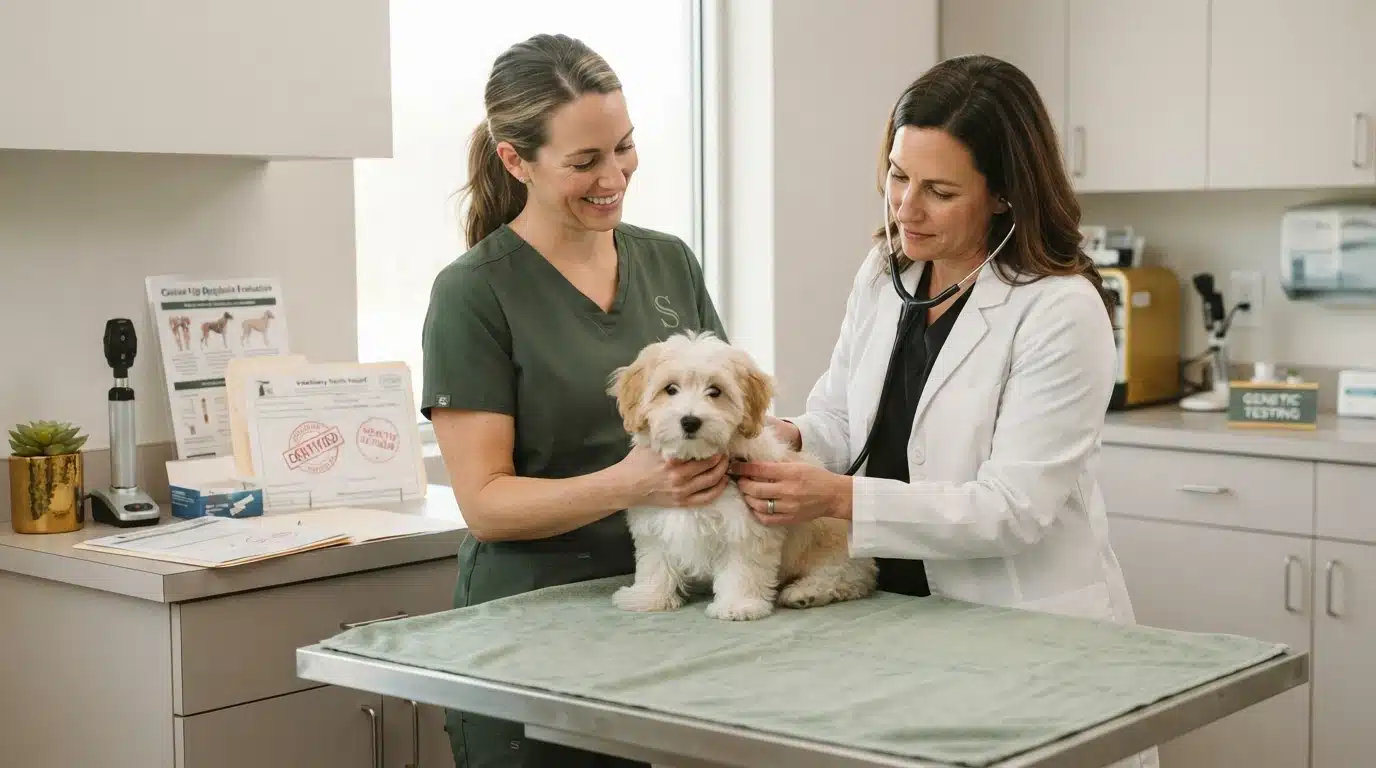
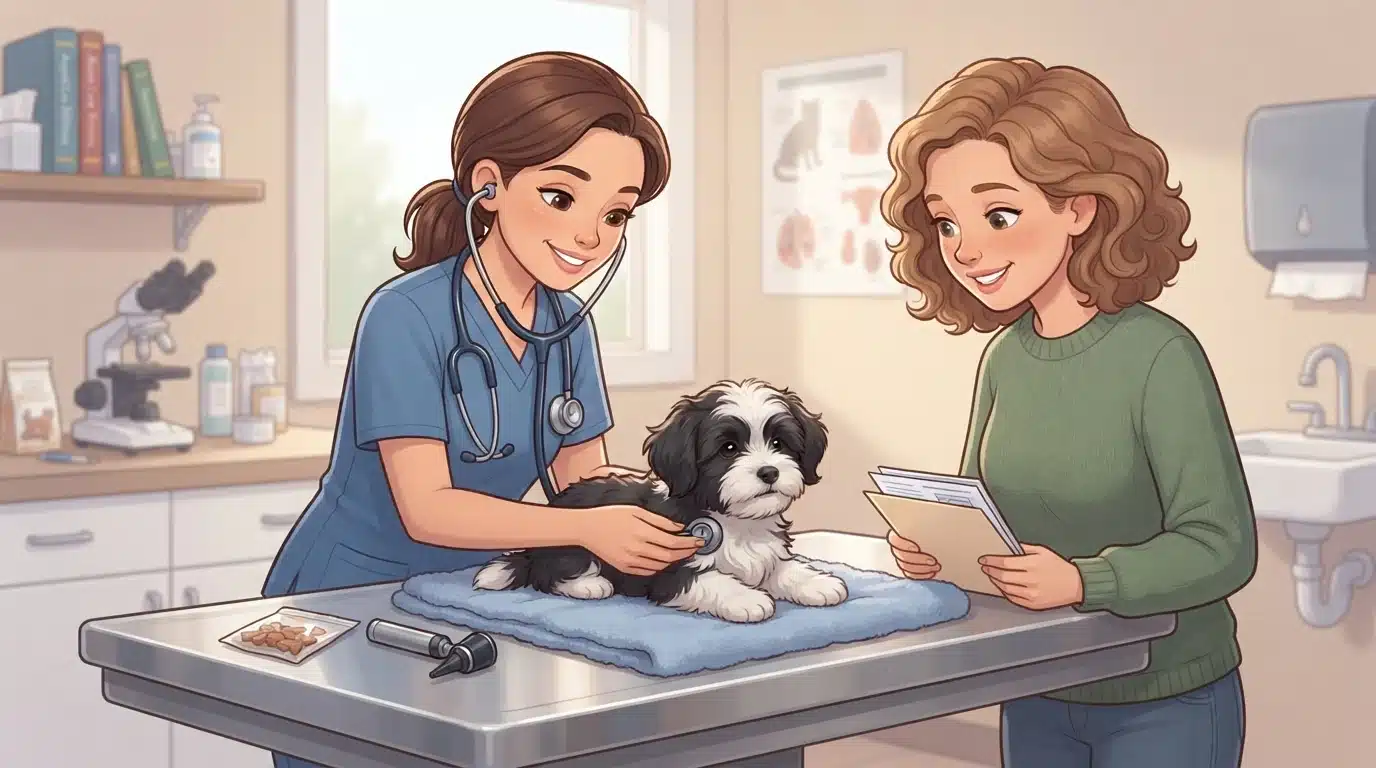
The exam is nose to tail. According to AAHA’s new pet checklist, the vet screens for parasites and overall health, and a typical puppy visit covers:
- Weight, recorded in ounces for a small breed
- Heart and lungs with a stethoscope, watching for a murmur
- Eyes, ears, skin, teeth and gums
- Patellas, a knee check that matters for Havanese
- A fecal test for worms, plus the next vaccine dose if due
Questions to Ask at the First Appointment
Come with a short list so you leave with real answers. Ask when the next DHPP dose is due, which heartworm and flea products are safe at this weight, and what feeding amount keeps body condition healthy. A typical first visit also covers behavior, so ask about house training and early socialization while you have the vet’s attention.
Health Checks to Ask For Across Your Havanese’s First Year
Vets screen your Havanese puppy across five body systems during the first year: joints, eyes, heart, skin and ears, and spine with body condition. Here is each check and what to watch for at home.
- Joints (patellas): The vet slides the kneecap to check for luxation; watch for skipping or bunny-hopping runs.
- Eyes and tear ducts: The vet checks clarity and drainage; watch for squinting, redness or constant watering.
- Heart: The vet listens for murmurs; watch for coughing or tiring fast during play.
- Ears and skin: The vet checks canals and coat; watch for head shaking, scratching or flaky patches.
- Spine and weight: The vet palpates the back and scores body condition; watch for a rounded belly or reluctance to jump.
Patellas, Hips, and Joint Checks
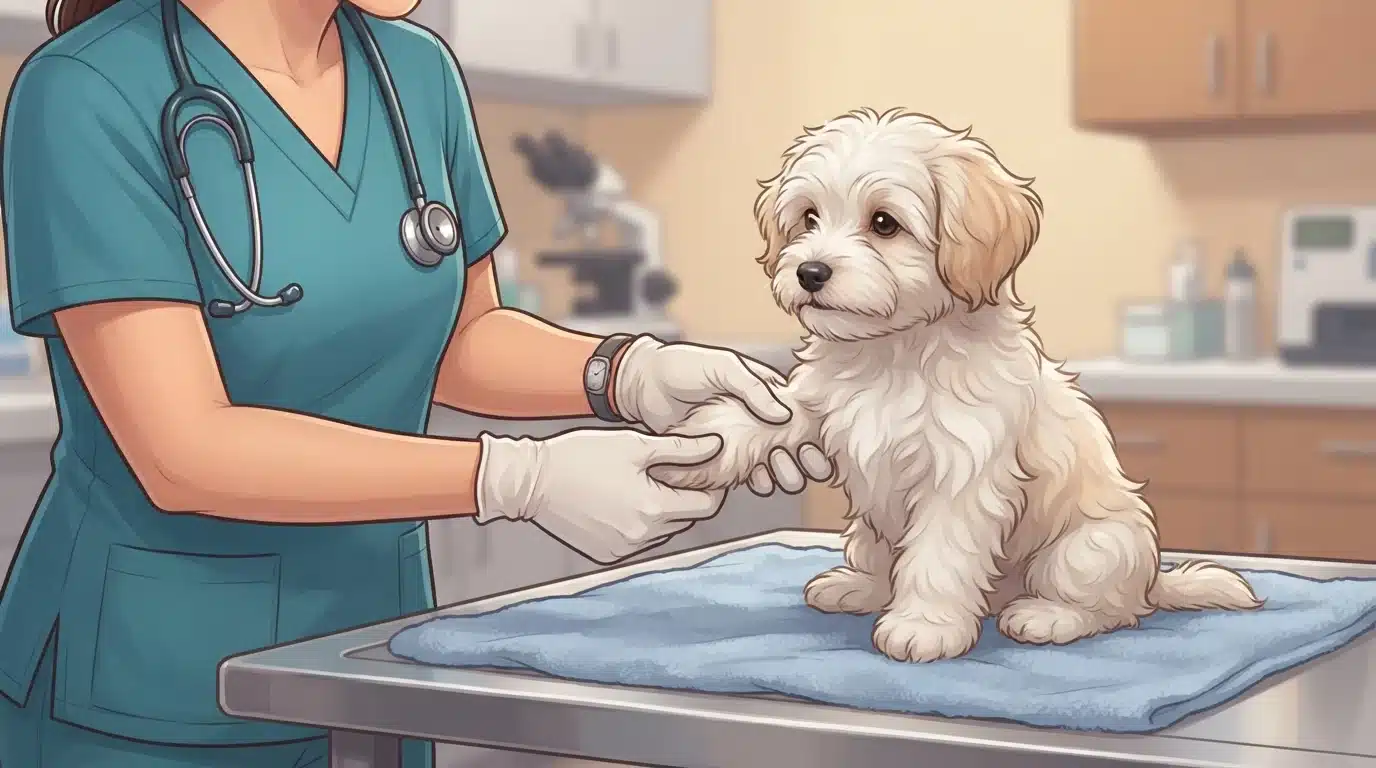
Ask for a patellar luxation check at every puppy visit. Small breeds like the Havanese are prone to loose kneecaps, and the Havanese Club of America lists patellar health as a breed priority. The exam takes seconds: your vet bends each leg and feels whether the kneecap slides out of its groove. Mild cases may only need monitoring and muscle-building exercise.
Eyes, Tear Staining, and Tear Ducts
Havanese eyes tear easily, so ask your vet to check duct patency during early visits. Some puppies have narrow or blocked tear ducts that cause reddish staining under the eyes. Your vet can flush the ducts or refer you to a specialist. Gentle daily wiping with a damp cloth keeps staining manageable, but persistent drainage deserves a look.
Heart, Ears, and Skin
At each visit, your vet should listen for heart murmurs and check both ear canals. Floppy ears trap moisture, so ask about cleaning habits and any early signs of infection. Skin checks matter too: white and parti coats can hide redness under the fur. Mention any scratching, hair loss or dandruff you notice between visits.
Spine, Weight, and Body Condition
Ask your vet to palpate the spine and discuss intervertebral disc disease risk, which affects long-backed small breeds. Ramps and steps cut jump-related strain on a growing back. Weigh your puppy at each appointment; small breeds measure gains in ounces, so keep your own scale notes too. Request a body condition score each visit, and adjust food portions based on that number, not just the bag’s guide. If you want a breeder’s side of early screening, see what to ask about health testing for Havanese parents.
Parasite Prevention and Deworming Through Year One
Parasites are the quiet issue in a puppy’s first year. Most Havanese puppies arrive already dewormed by the breeder, but the schedule continues after pickup.

Deworming and Fecal Testing Are Different
Deworming treats worms; a fecal test checks for them. Your vet should run a fecal test at the Havanese first vet visit and repeat it once or twice, because dewormers miss some parasites like giardia. Bring a fresh stool sample to each visit so the lab has something to read.
Fleas, Ticks, and Heartworm Prevention
Heartworm prevention starts early, often at the first or second visit, and runs monthly for life. Utah has fewer heartworm cases than many states, but the American Heartworm Society recommends year-round prevention because travel and mosquitoes do not respect state lines. Pick a flea and tick product labeled for puppies and give it on the same day each month so you never miss a dose.
What to Watch Between Visits
Watch stool for worms or softness, scratch marks for fleas, and appetite for anything off. Scooting, a swollen belly, or sudden weight loss all warrant a call. Your vet’s weight records from body condition scoring help here, since a small breed drops fast.
Your Havanese Puppy’s Year-One Vet Timeline
Weeks One Through Six
Breeders handle most of this stretch before you ever meet the puppy. Good programs deworm litters at two, four and six week intervals and start the DHPP series around six to eight weeks. Ask for dated records of every dose. Your Havanese puppy vaccines history should arrive on paper or digitally, signed and initialed. Keep it with your own paperwork, because your vet will build the rest of the schedule from it.
Months Three Through Six
This window is busy. The DHPP booster lands at ten to twelve weeks, another at fourteen to sixteen weeks, and rabies follows at sixteen weeks or when Utah requires it. Once the series ends, wait roughly two weeks for full protection, then start puppy class. AVSAB guidance supports early socialization before vaccines finish, but class enrollment is not universal clearance, so follow your vet’s call. Book a patella and eye check around this time too.
Months Six Through Twelve
Growth slows and prevention becomes the routine. Keep monthly heartworm and flea control going, and let your vet monitor weight and body condition at each visit. Small breeds like the Havanese often hold off spay or neuter until closer to a year, so discuss timing rather than defaulting to an early date. Plan a final wellness exam near the first birthday to confirm teeth, heart, knees and weight all check out.
Feeding, Weight Tracking, and Growth in the First Year
Meals, Portions, and Small-Breed Stomachs
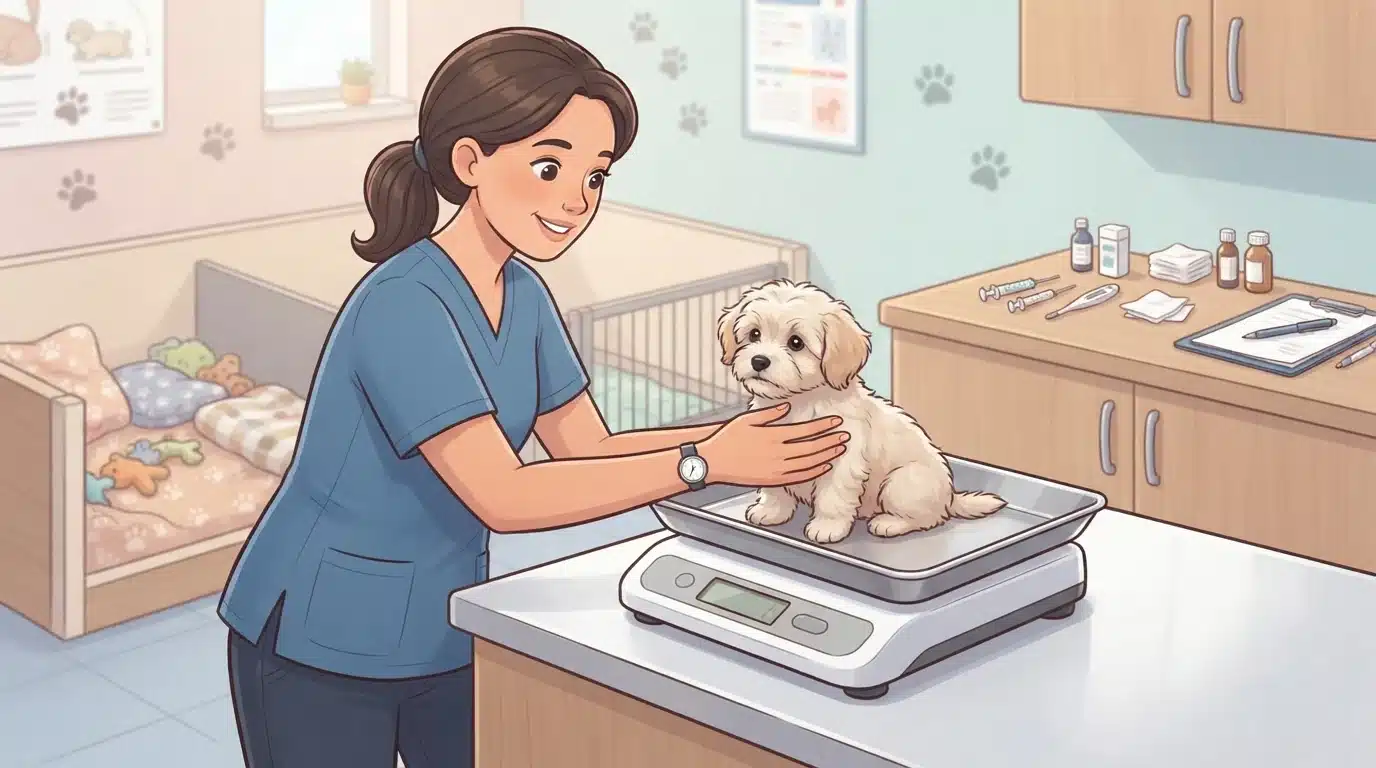
A Havanese puppy runs on a tiny tank, so meals come in small portions, more often. Most do well on three meals a day until six months, then two. A toy-breed puppy formula beats large-breed food because Havanese mature fast, not slow. Keep a kitchen scale handy and weigh weekly in ounces, since a single day can hide real changes. Log the numbers; your vet will ask for them at every visit. Cassie sends Sage Puppies home with a feeding record that shows each puppy’s current portion, so day one matches what the puppy already knows. If you want a fuller week-by-week plan, we keep a Havanese puppy feeding schedule on the site.
Teething, Stool, and Moving to Adult Food
Teething brings loose stools, chewed sleeves, and picky meals, so watch output more closely between weeks 12 and 20. Soft stool that lasts more than a day or two deserves a fecal test at the vet. Around nine to twelve months, small breeds can move from puppy food to adult food, and the AKC puts toy and small breeds at 8 to 12 months. Switch gradually over a week, mixing old and new food, and keep adult portions lean because a mature Havanese needs far fewer calories.
Year-One Decisions: Spay or Neuter, Microchip, and Records
Spay or Neuter Timing for a Small Breed
For a Havanese, AAHA’s guidance calls for neutering small-breed males at six months and spaying females before their first heat, usually at five to six months. Because Havanese mature quickly, early surgery poses less joint risk than it does for larger breeds. Still, the AVMA notes timing is individual, so let your vet weigh in at the final puppy visit. Your puppy should be fully recovered from the vaccine series, including the Havanese puppy vaccines given at 14 to 16 weeks, before surgery.
Microchip, Certificate, and Paperwork
A microchip is your best safety net if your Havanese ever slips a leash. Ask the vet to scan the chip at every visit to confirm placement, then register it in your name right away. Keep three items in one folder: the chip number and registration, the vaccination record showing due dates, and the veterinary health certificate issued before travel or delivery. Save parent screening and DNA results separately, since those belong to the breeder’s records, not your puppy’s.
Common Mistakes to Avoid in Year-One Health Planning
Timing and Record Mistakes
The biggest error is spacing shots wrong. Puppy doses run two to four weeks apart, and the last DHPP must land at or after 16 weeks, because immunity only sticks once mom’s antibodies fade. Stretch the gaps too far and the series may not protect, since delayed vaccines can leave a puppy open to infection. Keep every record in one folder; your vet needs dates, not memory.
Weight, Products, and Over-Confident Claims
Small breeds leave no room for guesswork. A product dosed for a big dog can overwhelm a Havanese, so weigh your puppy in ounces at each visit and let your vet calculate parasite and heartworm preventives. Watch gear marketed for “all dogs,” including collars and chews. Treat breeder paperwork and parent health results as a starting point, not a final answer; your vet confirms everything in person.

Your puppy’s first year moves fast, and missed vaccine dates are hard to undo. Print this checklist, call your vet within 72 hours of pickup, and check the dates off as you go. If you’re still choosing a breeder, the team at Sage Puppies raises Havanese with documented health records from day one.
Frequently Asked Questions
Q1: What health checks should a Havanese puppy have in its first year?
Five systems: patellas, eyes and tear ducts, heart, ears and skin, and spine with body condition. Ask for a knee check at every visit, plus weight in ounces and monthly parasite prevention through the whole year.
Q2: When should I take my Havanese puppy to the vet for the first time?
Within 48 to 72 hours of pickup or delivery. Book the appointment before pickup day, since new-puppy slots fill fast, and bring every dated record your breeder handed over.
Q3: What is the Havanese puppy vaccination schedule?
DHPP at 6-8, 10-12 and 14-16 weeks, with the final dose at or after 16 weeks, then rabies around 16 weeks. Full protection lands about two weeks after the last dose.
Q4: When can my Havanese puppy start puppy class or day care?
Ask your vet, since AVSAB supports early socialization before the series ends. Once the final dose is given, wait roughly two weeks before classes, day care or boarding.
Q5: How often should I weigh my Havanese puppy?
Weigh weekly at home in ounces, and ask for a body condition score at each vet visit. Small breeds change fast, so portion food by that score rather than the bag’s guide alone.
Q6: What happens if my puppy misses a vaccine dose?
Don’t restart the series. Call your vet with the records you have; most gaps need a single catch-up dose, and missing dates mean treating the puppy as unvaccinated until a vet confirms.
Conclusion
A healthy Havanese year comes down to three habits. Keep the vaccine series on schedule, with the last DHPP at or after 16 weeks and rabies right behind it. Ask for the breed-specific checks at every visit: patellas, eyes and tear ducts, heart, and weight in ounces. And keep parasite prevention running monthly, deworming through fecal tests, and heartworm protection without gaps. One folder with dated records, the microchip number and the health certificate makes every visit easier. Follow the timeline from the first visit within 72 hours to the final wellness exam near the first birthday, and your puppy walks into year two with a clean, documented bill of health.