Quick Summary: Choose a Havanese puppy by matching its temperament to your household, checking the breed standard, and reviewing health records rather than picking the cutest puppy. Verify both parents’ BAER hearing, eye, patella, hip, and cardiac tests through OFA records, and select a puppy whose energy level and handling tolerance fit your routine. Expect to pay about $3,500 to $4,500, with another $1,000 to $2,500 in first-year care plus regular grooming, and consider breeders such as Sage Puppies that provide documentation and clear pickup terms.
Put two Havanese puppies side by side at eight weeks and they can look almost identical. Yet the two dogs will settle into very different homes, because the Havanese breed standard allows a wide range within one small package and each litter adds its own mix. That gap is the real challenge in choosing a Havanese: the cutest puppy in the photo is rarely the best fit for your household.
This guide walks through the decisions that actually matter. You will see how to match a Havanese puppy’s appearance and personality to your family, read parent health records, pick an individual puppy rather than a pretty face, and budget for real costs. The advice draws on Cassie Milar’s documented experience raising Havanese, Havapoo and Cavapoo puppies at Sage Puppies in South Jordan, Utah.
Start With Your Household, Not the Photo
If you’re choosing a Havanese puppy, start with your household, not the cutest photo. The right fit comes from matching a Havanese temperament to your daily routine, then asking six household questions before you look at any litter. Get those answers first, and puppy selection becomes simple instead of overwhelming.
What Havanese Temperament Actually Looks Like at Home
The AKC breed standard describes a cheerful, gentle companion that wants to be with its people. That Havanese personality follows you room to room and dislikes long stretches alone. Expect a playful, trainable dog, not a quiet yard pet.

Six Household Questions to Answer Before You Look at Puppies
Run through these before browsing any litter:
- How many hours will the puppy be alone each day?
- Do your children understand gentle handling with a small dog?
- Does anyone in the home have allergies or strong reactions to pet hair?
- Can your schedule support daily grooming and play sessions?
- Is your yard, apartment, or townhome layout safe for a tiny dog?
- Will you stay active enough for a companion who craves attention?
Honest answers here save heartbreak later. A breed bred for company struggles in a household gone ten hours a day. If your answers feel shaky, a breeder who knows her lines can help you decide whether a Havanese still fits, and our guide to a Havanese puppy’s first-year health routine shows what the daily commitment really looks like.
The Questions Breeders Rarely Answer Unless You Ask
Breeders often volunteer photos and pedigree talk, but not lifestyle detail. Ask directly: Which puppy in the litter is boldest or most mellow? How does the dam behave with visitors? What did each puppy experience in the whelping box, from handling to household noise? A breeder raising puppies in her home, as Cassie Milar does at Sage Puppies, can answer from months of daily observation. Vague answers are a signal to keep looking.
Havanese Puppy Appearance: A Standard-Based Checklist
At 8 to 12 weeks, a healthy Havanese puppy looks like this: a soft, silky, slightly wavy coat in almost any color; dark almond-shaped eyes; dropped ears set high; a compact body with a level topline; and a plumed tail that curls over the back. Small paws and a short, slightly rounded muzzle are normal. Here is how each point maps to the official standard.
Size, Proportion, and How Fast Havanese Grow
The AKC standard sets adult height at 8½ to 11½ inches, with 9 to 10½ inches ideal, and an average weight of 7 to 13 pounds. Puppies at eight weeks often weigh two to four pounds. Growth slows after six months, and most dogs reach adult height by eight to ten months.
Coat, Color, and the Puppy-to-Adult Change
Expect a soft, light double coat with a silky outer layer, never harsh or woolly. The standard allows all colors and combinations, so cream, black, sable, and parti coats are all correct. Color can fade or lighten as the adult coat comes in, so do not pick a puppy on shade alone.
Face, Eyes, Ears, and Body Structure in a Young Puppy
Look for dark, almond eyes, tight lids, and a black or brown nose that matches the coat. Ears are set high and hang close to the head. The chest should reach the elbow, the back stays level, and legs are straight with sturdy bones.
| Feature | What to Check | Red Flag |
|---|---|---|
| Coat | Soft, silky, wavy | wiry or woolly texture |
| Eyes | Dark, almond, clear | discharge or cloudiness |
| Body | Level back, straight legs | limping or wobbly gait |
What Puppy Appearance Can and Cannot Tell You
Appearance confirms breed type, not health or temperament. Genes and early care matter more than looks, so pair this visual checklist with a breeder’s health records and a vet exam. Our Havanese puppy health checklist covers the screening questions to ask next.
Vetting the Breeder and the Parents
A Havanese puppy is only as sound as the parents behind it. Good breeders welcome questions about health testing, and they can produce real records on request. Ask before you fall in love with a face.

The Parent Health Tests Worth Asking For
Responsible Havanese breeders test both parents, and each test has a purpose:
- Hearing (BAER test): a veterinary specialist checks for inherited deafness, which appears in the breed.
- Eyes (CERF/OFA eye exam): a board-certified ophthalmologist screens for cataracts and other inherited eye disease.
- Kneecaps (patella evaluation): the vet rules out luxating patellas, a common small-dog issue.
- Hips (OFA evaluation): X-rays confirm healthy hip joints.
- Cardiac exam: a vet listens for inherited heart problems.
Ask why each test applies to the parents, not just the puppy.
Verify the Records Instead of Taking a Screenshot
Verification follows a simple workflow using the parents’ registered names:
- Get each parent’s full registered name and registration number.
- Enter that number into the OFA’s public database and confirm the results.
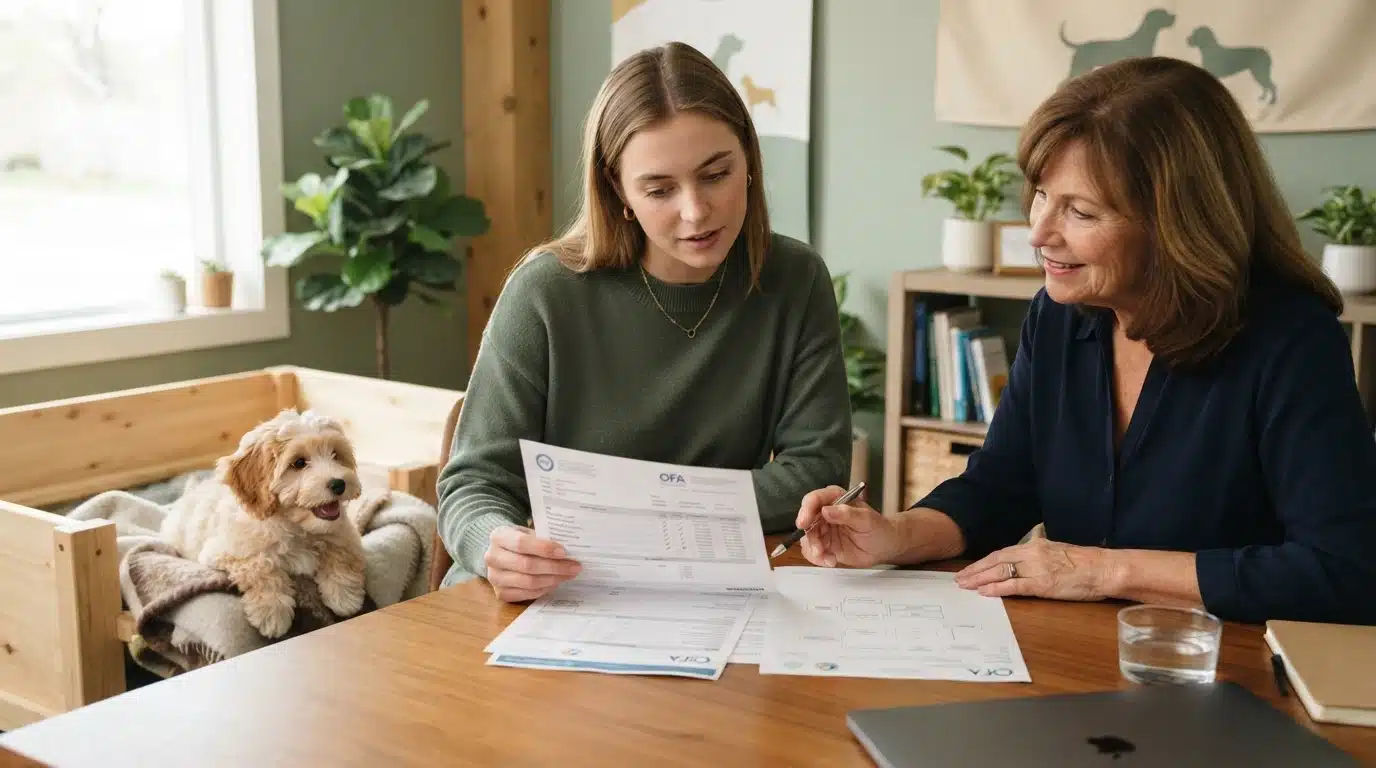
- Ask for the actual certificates, including dates, so you can see the exams were recent.
- Match the names on the paperwork to the parents you meet.
A real breeder hands this over without hesitation. Hesitation itself is information.
Contract, Registration, and Paperwork Details
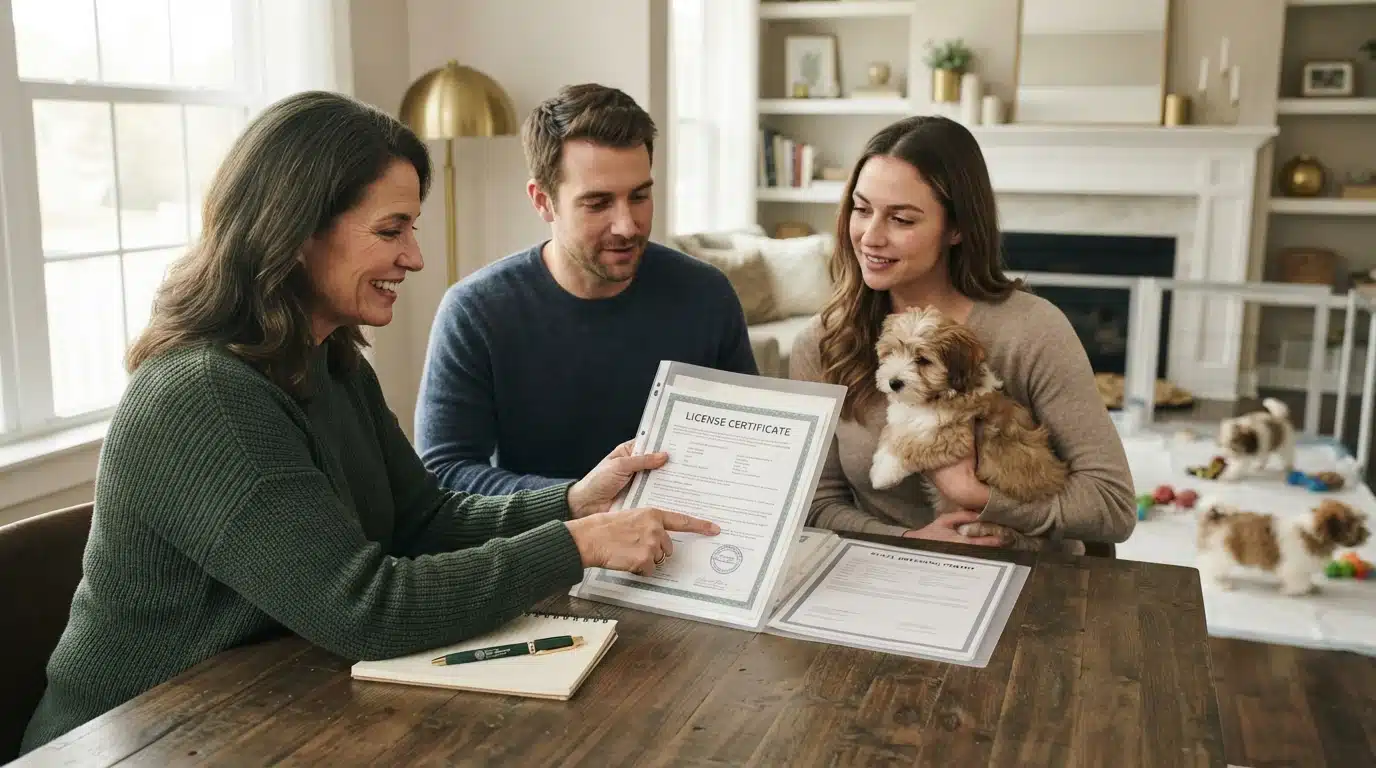
The paperwork protects both sides, so read it before you pay anything. Look for a written contract covering the health guarantee, the spay or neuter expectation, and a clause requiring the breeder to take the dog back at any point in its life. Puppies sold as pets should come with limited AKC registration, which means they can compete in most events but not be bred. Ask to see the puppy’s vet record, deworming history, and vaccination dates. Reputable breeders, including small programs like Sage Puppies, document all of it before pickup day.
Red Flags That Should End the Conversation
Some answers should stop you cold:
- No health testing, or tests done “at the vet” without OFA verification.
- Multiple litters, multiple breeds, or a dam bred every heat cycle.
- No meeting with the mother dog, even by video.
- Payment by wire transfer only, and no written contract.
- Puppies always available, year-round, at any age.
Trust the discomfort. A breeder who avoids questions today will avoid accountability later.
Picking the Right Puppy From the Litter
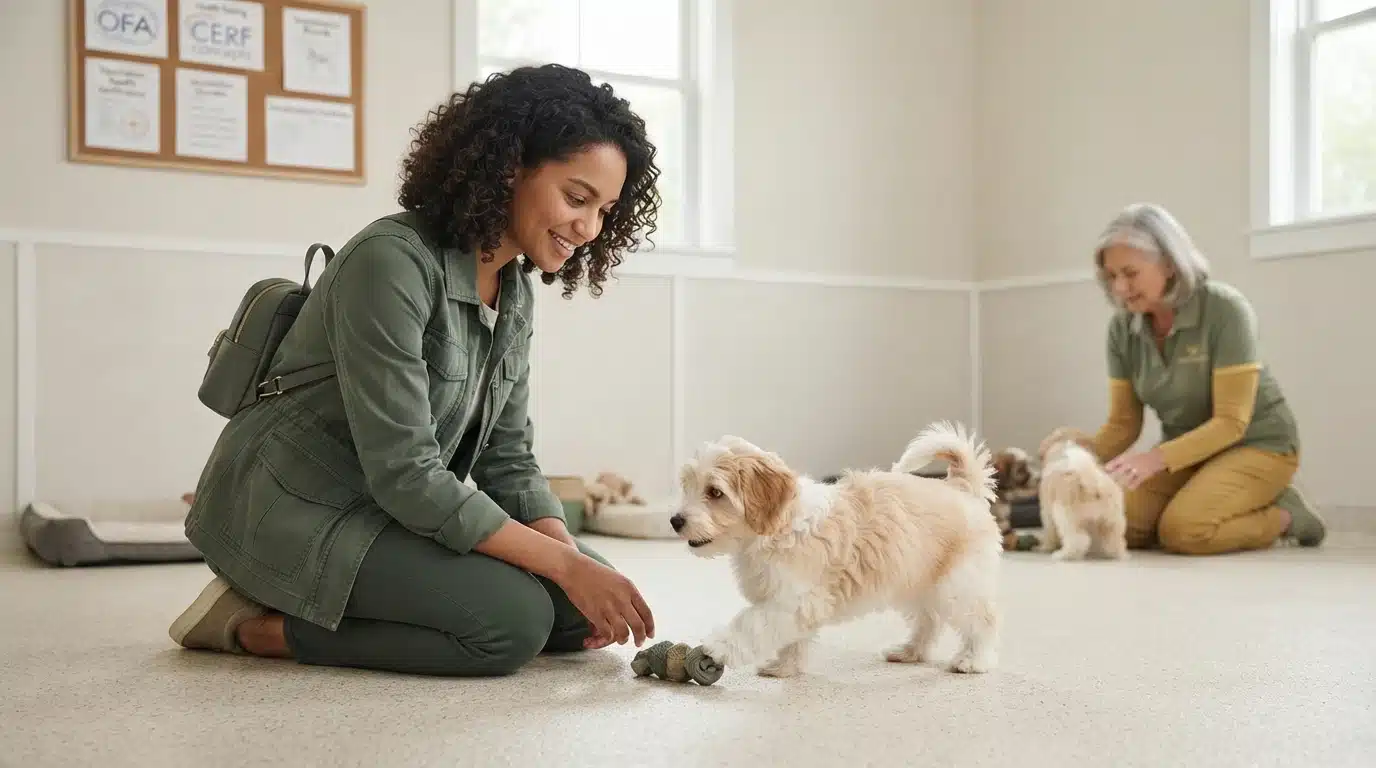
Watch the litter before you touch a single puppy. The one you want should be curious about you, play hard with littermates, and recover quickly when startled. Note which puppy tolerates gentle handling without squirming free, then match that temperament to your household before looks sway you.

How to Read Litter Dynamics
Spend ten minutes doing nothing but watching. Bold puppies start play and push for position; quieter ones hang back but follow the group. Neither is wrong. A pushy puppy suits an active home with training time, while a middle-of-the-pack pup often settles in fastest with first-time owners. Watch for a puppy that hides constantly or bullies without stopping, since those extremes deserve a closer look.
Matching a Puppy’s Energy to Your Home
Match the puppy to your actual week, not your imagined one. Apartment dwellers with long workdays do better with the puppy that naps after play bursts. Families with kids need a pup that shrugs off noise and grabbing. Ask the breeder which puppies sleep through commotion and which stay on high alert, because at eight weeks you are choosing a baseline, not a finished temperament.
The Vet Examination Before You Commit
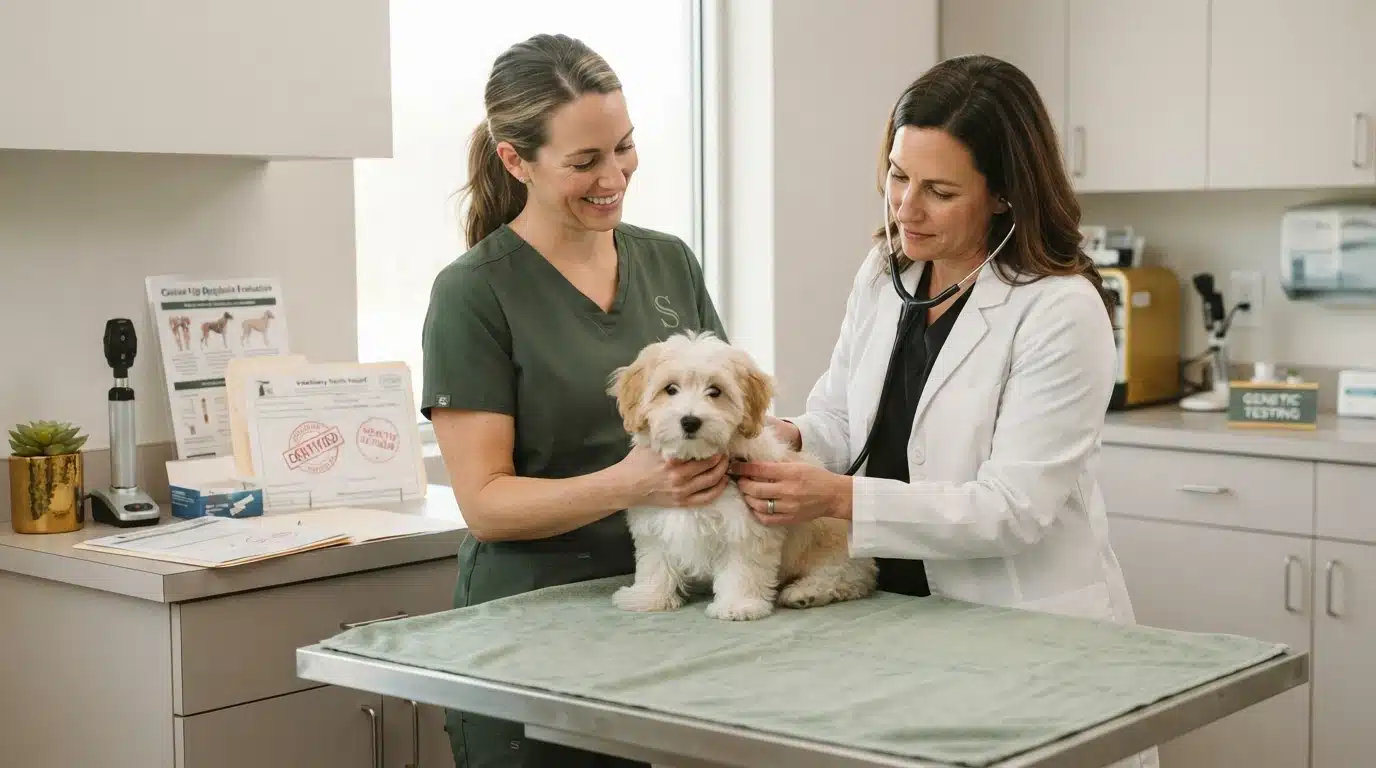
Ask to see each puppy’s own vet record before you decide. You want proof of a wellness exam, first vaccines given on schedule, and a fecal test with results. Check the puppy’s eyes, ears, teeth, and gait yourself: no discharge, no head tilt, no limping. A good breeder welcomes your questions. A vet exam you can read beats a vague “vet checked” claim every time.
Timing, Litter Longevity, and Waitlists
Havanese litters are small, usually three to five puppies, and good ones get claimed fast. Breeders often let families pick puppies in the order deposits came in, so joining a waitlist early gives you real choice rather than leftovers. Plan pickup around eight to twelve weeks of age, and ask when the next litter arrives if this one does not fit. If a breeder pressures you to decide in one visit, treat that as a warning sign, not urgency.
The Full Cost and Time Commitment
So how much does a Havanese puppy cost? Expect roughly $3,500 to $4,500 from a quality breeder, plus several hundred to a few thousand dollars in first-year care. The examples below are illustrative budgets, not quotes, so check current pricing before you plan.
Purchase Price and What It Reflects
A well-bred Havanese puppy usually costs between $3,500 and $4,500. That price reflects health-tested parents, early socialization, vet checks, and the breeder’s time and expertise, not just the puppy itself. Bargain prices often mean skipped testing or minimal care. At Sage Puppies’ current pricing and reservation page, you can see what our Havanese puppies cost and what that fee includes before you apply.

First-Year and Recurring Costs
Plan for more than the purchase price. First-year costs typically include initial vet visits and vaccines, spay or neuter, microchipping, supplies like a crate and brush, and food. Many families also budget for pet insurance, which often runs $30 to $60 per month for a small breed. After year one, expect routine vet care, quality food, flea and heartworm prevention, and occasional boarding or pet sitting. Adding it up, most owners spend somewhere between $1,000 and $2,500 in the first year, then $700 to $1,500 annually. Your numbers will vary with your location and vet prices.
Grooming, Training, and Company
The Havanese double coat needs regular care. Budget for brushing several times a week at home and professional grooming every 6 to 8 weeks, often $50 to $90 per visit. Puppy classes cost roughly $100 to $300. Also plan your time: Havanese dogs are companion dogs who dislike being left alone for long workdays, so a midday visitor, dog walker, or doggy daycare may become a real monthly line item.
Mistakes Buyers Regret Later
Choosing on Cuteness Instead of Records
Every Havanese puppy is adorable, so cuteness alone can’t sort a good litter from a weak one. Buyers who fall for the first fluffy face often skip the questions that matter: temperament in the home, adult size, and grooming load. A puppy that suits a quiet apartment may overwhelm a house with toddlers. Match the dog to your life first, then pick among the puppies that fit.
Skipping Verification and Assuming Health
“We had a vet check” is not the same as documented health testing. The Havanese Club of America urges breeders to use the OFA database so you can trace a dog’s health pedigree. Ask for BAER hearing results, eye certification, and patella and hip records for both parents, then verify them yourself in the OFA’s search tool. Trusting a verbal promise here is the regret buyers mention most.
Underestimating the Coat and the Commitment
That silky Havanese coat is a job. Plan on brushing several times a week, professional grooming every 6 to 8 weeks at $50 to $90 a visit, and years of both. Buyers who budget for the purchase price but not the maintenance often feel trapped by month three. Cost the whole ownership picture before you commit, and the puppy stays a joy instead of a burden.

Ready to meet your puppy? Sage Puppies matches families with well-bred Havanese puppies through a clear application and owner-managed process. Start yours today, or browse available puppies to see who’s waiting.
Frequently Asked Questions
Q1: How do I choose a Havanese puppy that fits my lifestyle?
Start with your household, not a photo. Count hours alone each day, check grooming time and activity levels, then match temperament to your routine. A calmer puppy suits apartments and long workdays, while bold pups fit active families.
Q2: How can I tell if a Havanese breeder is reputable?
Ask for parent health records, then verify them yourself in the OFA database using registered names. Reputable breeders share BAER, eye, patella, hip, and cardiac results plus a written contract and answer lifestyle questions without hesitation.
Q3: How do I pick the right Havanese puppy from a litter?
Watch the litter before handling anyone. You want a puppy that plays hard, recovers quickly when startled, and tolerates gentle handling. Ask the breeder which pups are boldest or most mellow, then match that baseline to your home.
Q4: How much should I budget for a Havanese puppy’s first year?
Plan $3,500 to $4,500 for the puppy, then roughly $1,000 to $2,500 in first-year care, plus grooming every 6 to 8 weeks and possible pet insurance.
Q5: When should I join a breeder’s waitlist?
Early. Havanese litters are small, often three to five puppies, and deposits usually set picking order, so joining early gives you real choice instead of leftovers.
Q6: Does coat color change as a Havanese puppy grows?
Yes. Colors often fade or lighten as the adult coat comes in, so never pick a puppy on shade alone.
Conclusion
Choosing a Havanese puppy comes down to fit, records, and honesty. Start with your household: hours alone, kids, grooming time, and energy level matter more than the cutest face. Then read the puppy against the breed standard for size, coat, and structure. Demand parent health testing in BAER, eyes, patellas, hips, and cardiac, and verify the results yourself in the OFA database. Watch the litter, match a temperament baseline to your week, and confirm the puppy’s own vet record. Finally, budget the whole picture: $3,500 to $4,500 for the puppy, plus first-year care and grooming. Buyers who do all four rarely regret the dog they bring home.