
Quick Summary: Holiday puppy scams on social media surged in 2025, costing families $2.1 billion in reported losses, with fake ads using low prices, urgent deadlines, and polished photos to trick buyers. The FTC warns that legitimate breeders-like Sage Puppies-welcome live video calls, clear health records, and direct questions about pickup or delivery before any payment, while scammers demand gift cards, wire transfers, or crypto upfront. Always verify the seller’s identity, the puppy’s existence with recent photos or video, and contract details before committing, especially during December and January when scams spike. Pressure to act fast or vague answers about the puppy’s parents or care are major red flags.
Holiday pet scams spike when families see a puppy ad and act fast. On April 27, 2026, the FTC said social-media scams caused $2.1 billion in reported 2025 losses, with shopping scams leading the reports. BBB data also flags December and January for pet adoption scams. Holiday pet scams can hide behind polished profiles, paid ads, and cute photos. This guide shows how to check a seller’s identity, puppy records, live access, payment requests, and delivery or pickup details before you share money or personal information.
Why Holiday Puppy Ads Deserve Extra Scrutiny in 2026
The FTC’s Social-Media Scam Findings
Holiday pet scams often begin with a polished social-media ad, a cute puppy photo, and a price that feels unusually low. The FTC warns that scammers post fake pet ads, especially for puppies, then push families to pay before meeting the dog or confirming the seller is real. Read the FTC’s pet-scam warning.
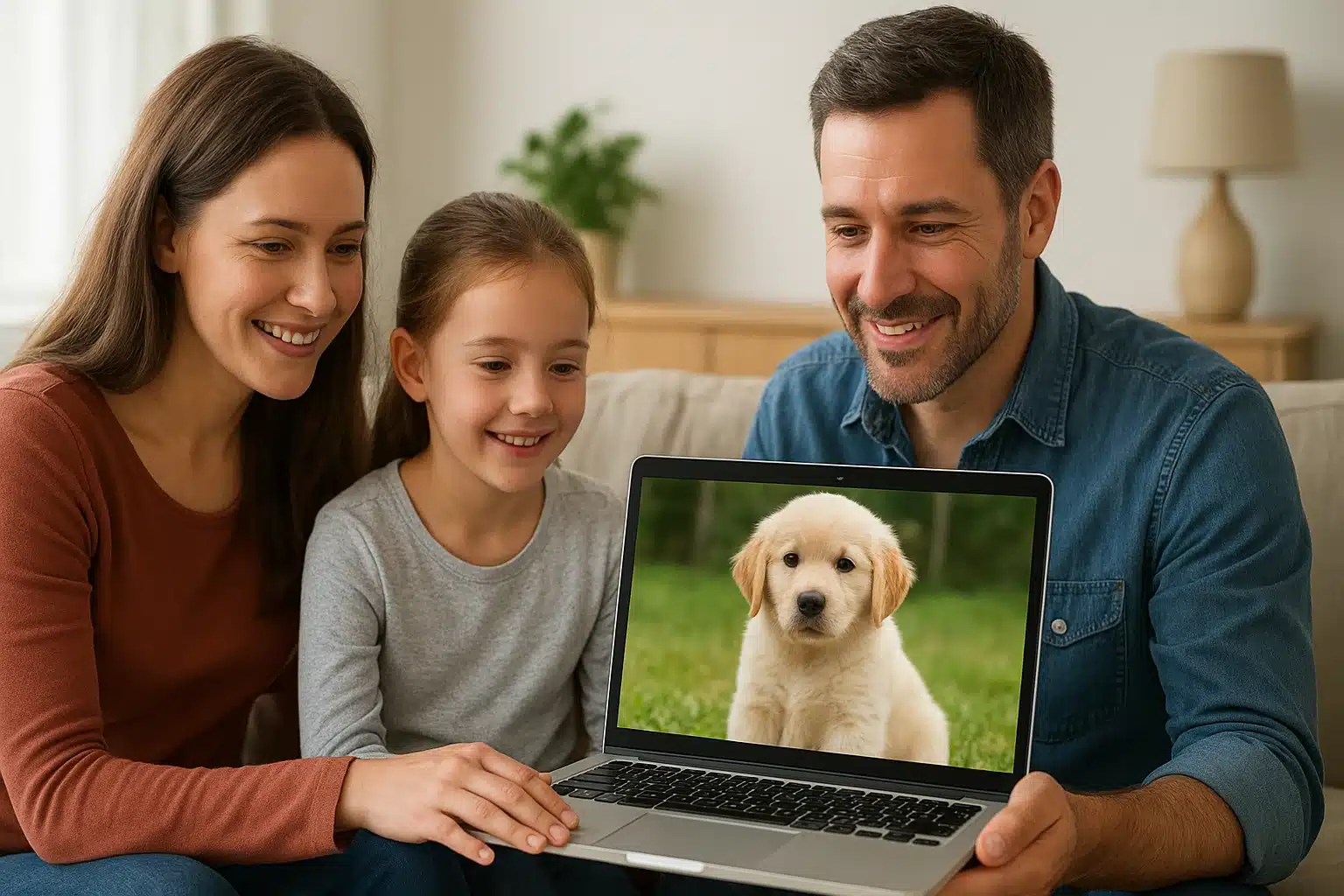
A real breeder should welcome careful questions. Ask for a live video call, current photos, parent information, and clear pickup or delivery details.
Warning: A seller who demands gift cards, wire transfers, crypto, or a payment app only is not offering a safe path to bring home a puppy.
Why December and January Matter
December brings gift pressure and limited-time language. January brings families who missed a holiday puppy and feel ready to act fast. That urgency gives holiday pet scams room to work.
Use this quick pause before you reserve:
- Search the breeder name with “reviews,” “complaint,” and “scam.”
- Confirm the puppy exists through a live, dated video.
- Read the contract, price, and pickup or delivery plan before paying.
| Ad claim | Safer response |
|---|---|
| “Last puppy, pay now” | Pause and verify the breeder |
| “Delivery fee due today” | Review written delivery terms |
| “No calls or visits” | Walk away |
A careful process protects both your budget and the puppy you hope to welcome.
Also Read: 10 Signs a California Puppy Listing Is a Scam – Sage Puppies
First Check: Does the Ad Behave Like a Real Seller?
Price, Urgency, and Emotional Pressure
A low price is not proof of a bargain. It can be bait. The FTC warns that fake puppy ads often offer purebred dogs for a few hundred dollars, push families to act fast, and demand payment up front. Read the FTC’s holiday pet-scam alert.
Watch for pressure such as:
- “Last puppy, pay in the next hour”
- “Another family is sending money now”
- A sad story meant to stop questions
- Extra shipping, crate, or insurance fees after a deposit
A good breeder welcomes thoughtful questions. They do not rush your family into a payment.
Account and Listing Inconsistencies
Read the profile as closely as the ad. Check when the account began, whether posts show a real history, and if the location changes between the bio, ad, and messages.
| Check | Concern |
|---|---|
| Seller name | Does not match payment name |
| Location | Claims Utah pickup but refuses a call or visit |
| Details | Gives vague answers about parents, age, or care |
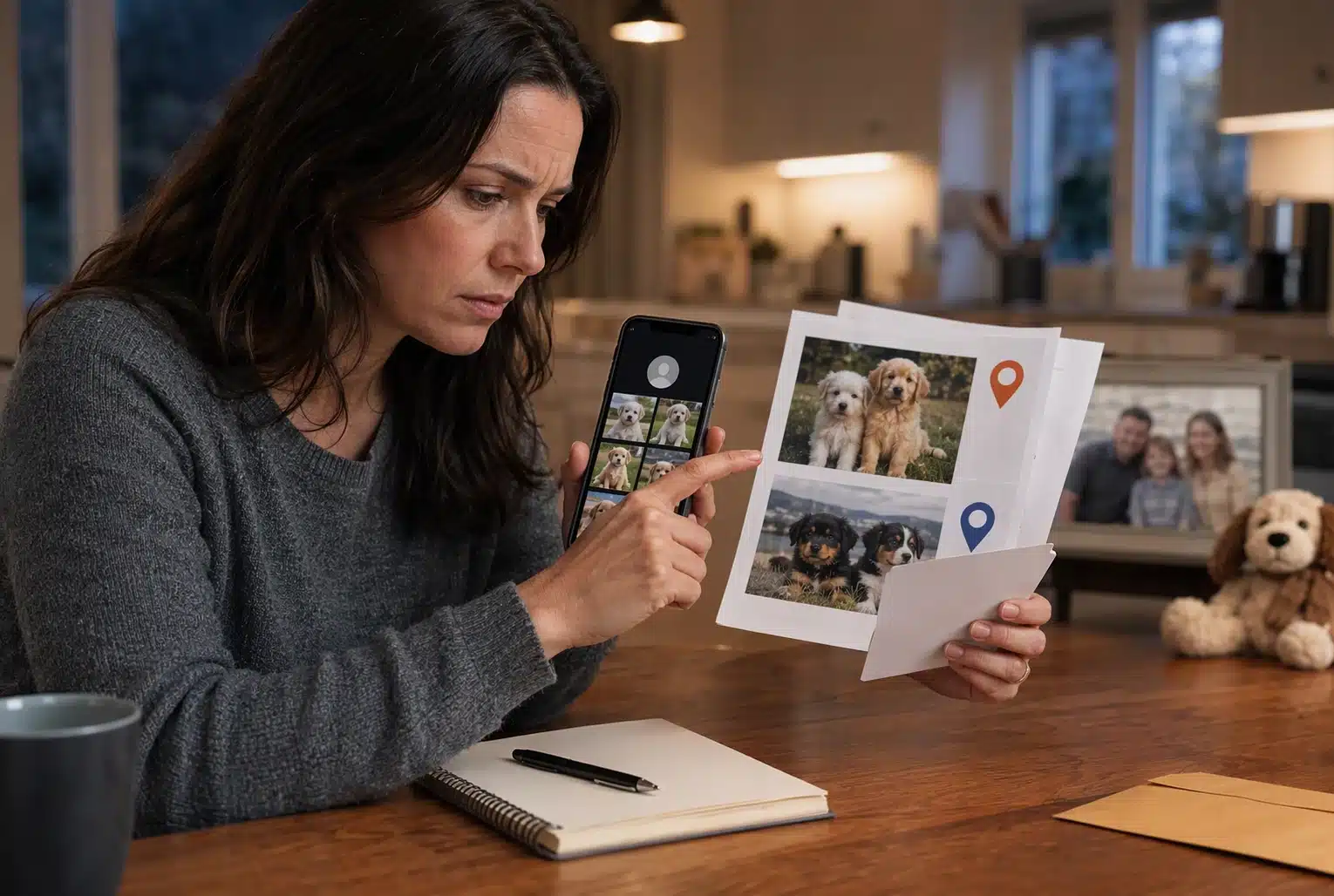
Search the seller’s name and phone number with scam or complaint. A real seller should clearly explain pickup or delivery, not dodge basic questions.
Photos Are Evidence to Check, Not Proof to Trust
Cute photos can be stolen. Run a reverse image search on the puppy photo and ask for a fresh video showing the puppy with a requested simple action, such as a toy beside it.
The FTC also advises an in-person or video visit. Legitimate breeders want a good match and will speak with you. Their guidance says copied photos and refusal to video chat are reasons to move on.
- Compare puppy markings across photos.
- Ask to see the mother when appropriate.
- Stop if the video feels pre-recorded or evasive.
Also Read: Find a Reputable Puppy Breeder Near You: Step-by-Step
Second Check: Require Real-Time Proof Before You Pay
Ask for an In-Person Visit or Live Video Call
Do not reserve a puppy from photos alone. Ask to visit in person if the breeder is nearby. If you live out of state, request a live video call before you send money.
The FTC says legitimate breeders, shelters, and rescues should welcome an in-person or video meeting. A seller who refuses every call, makes excuses, or only sends pre-recorded clips is not a safe choice. Read the FTC’s pet scam guidance.
During the call, ask the seller to show the puppy responding to a simple request, such as walking across the room or playing with a named toy.
A live call should feel unhurried. Pressure to pay before the call ends is a red flag.
Ask to See the Puppy’s Environment and Parents
Ask for a slow, live view of where the puppy is raised. You should see clean sleeping space, water, room to play, and signs of normal family care.
Ask to meet the mother dog. If the sire lives elsewhere, a real breeder can plainly explain that and share his details. This matters whether you plan South Jordan pickup or nationwide delivery.

| What to request | What a trustworthy response looks like |
|---|---|
| Puppy’s living area | A live, unedited view with normal household details |
| Mother dog | Calm introduction and clear relationship to the litter |
| Delivery plan | Specific pickup or transport steps, not vague promises |
Use Specific Questions That a Real Seller Can Answer
Ask questions that cannot be answered with copied text:
- What is this puppy’s daily routine?
- What food is the puppy eating now?
- Which parent gives this puppy its coat type or temperament?
- What date can the puppy go home?
- What records come with the puppy?
A careful breeder answers directly, even when the answer is not perfect. Sage Puppies families should expect clear conversation about parent testing, early socialization, pickup, or delivery before any reservation decision.
Third Check: Verify Records, Seller Identity, and Terms
Check Names, Contact Details, and Business Consistency
Match the seller’s full name, phone number, email, website, and payment account. They should point to the same person or business. Search the name and phone number with “scam,” “complaint,” and “review.” The FTC advises buyers to research the seller and request full contact details before buying a puppy FTC guidance.
- Ask for a live video call.
- Confirm the pickup address or delivery plan.
- Walk away if the payment name changes.
A real breeder should answer direct questions without rushing you.
Request Records You Can Read and Match
Ask for records before a deposit: parent health testing, puppy vet paperwork, vaccine dates, and clear details about the puppy’s parents. Read every page. Names, dates, breed, sex, and puppy description should match what you were shown.
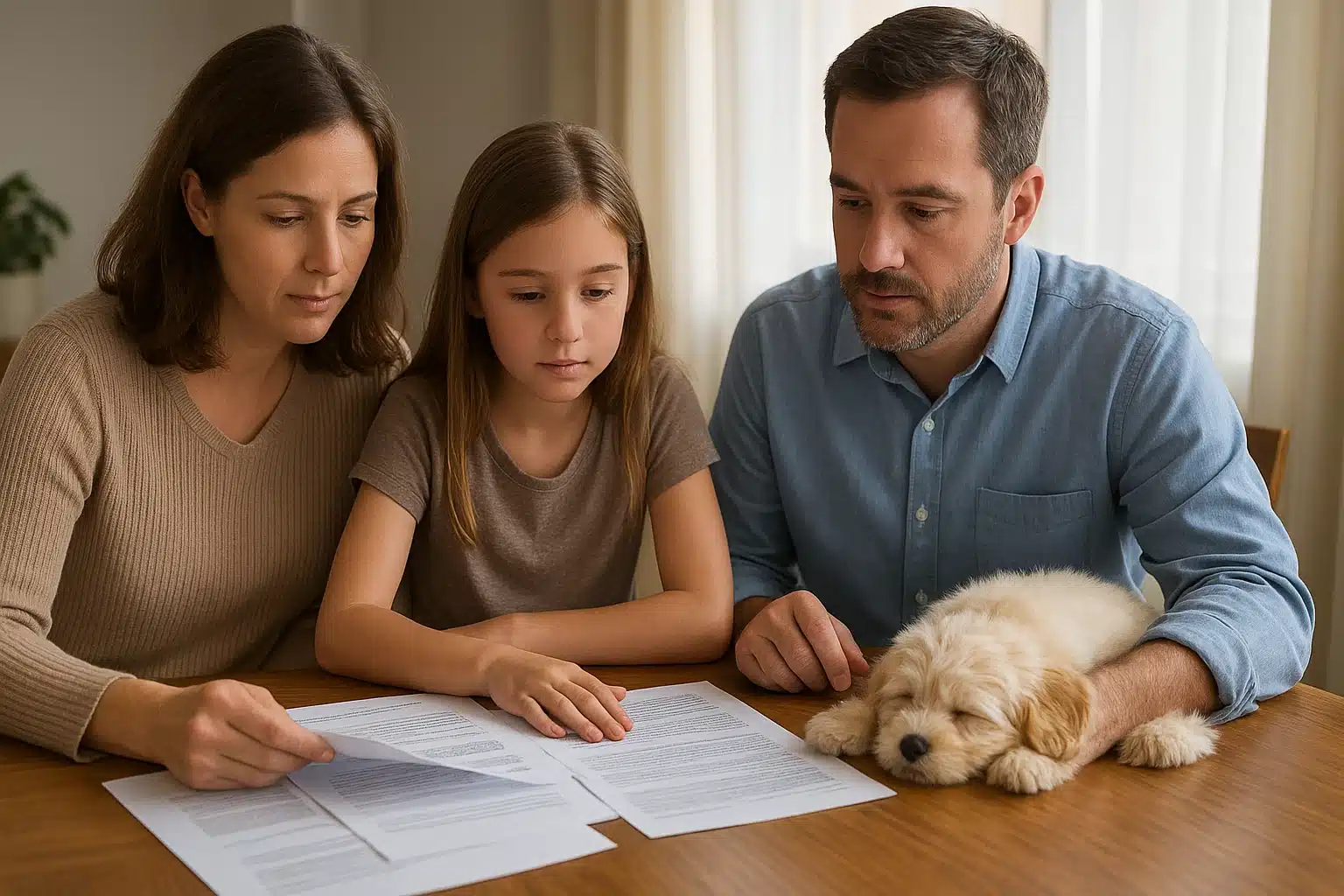
For a Utah pickup, ask how and when you can meet the puppy. For delivery, get the travel plan in writing. Keep screenshots, emails, and receipts. The FTC says to keep seller details, payment proof, and all messages from online purchases FTC recordkeeping advice.
Read the Contract Before Sending a Deposit
Get the full contract before money changes hands. It should state the puppy, total price, deposit terms, balance due date, pickup or delivery details, and what happens if either side cannot complete the placement.
Check for vague language or surprise fees.
- Confirm who receives the deposit.
- Ask which payments are refundable.
- Save a signed copy before paying.
Never send a deposit by gift card, wire transfer, crypto, or a payment method that leaves no buyer protection.
Also Read: Puppy Seasonal Safety Guide for Heat, Cold, and Holidays
Payment and Delivery Demands That Should Stop the Conversation
Be Cautious With Hard-to-Recover Payments
Stop if a seller demands payment by gift card, cryptocurrency, wire transfer, or a person-to-person payment app before you have verified the puppy and breeder. The FTC warns that these methods can be hard to reverse, while credit cards may offer more protection if something goes wrong. FTC pet-scam guidance is clear: do not let a seller dictate an unsafe payment method.
- Do not send a deposit to a name that does not match the breeder.
- Do not pay after only messaging on social media.
- Keep every invoice, message, and receipt.
A real puppy is never worth bypassing your own safeguards.
Watch for Escalating Shipping and Equipment Fees
A fake seller may take an initial payment, then demand more for a “special crate,” insurance, weather permit, airport release, or emergency vet check. The FTC notes that phantom-pet scammers often add charges for crating, shipping, inspection, and vet costs after payment. Read the FTC warning.
Use this stop-check:
| Demand | Safe response |
|---|---|
| New fee after payment | Pause and verify in writing |
| Payment needed “right now” | End the conversation |
| Courier will not identify itself | Do not send funds |
Do Not Let a Holiday Deadline Override Due Diligence
“Someone else wants this puppy today” is pressure, not proof. Slow down and request a live video call, current puppy photos, a clear contract, and a direct explanation of pickup or delivery.
For Utah pickup or nationwide delivery, confirm the plan before money changes hands. A family-first breeder welcomes careful questions.
Also Read: Puppies for Sale Near Me: How to Spot Honest Local Listings
Are Social-Media Puppy Ads Vetted Before They Appear?
A Platform Presence Is Not a Seller Guarantee
No. An ad, business page, or active profile does not prove that a puppy seller is real, ethical, or able to place the puppy shown.
Scammers can use copied photos, short-lived accounts, and friendly messages to look credible. Treat social media as a place to start research, not finish it.
Before you send a deposit:
- Ask for a live video call with the puppy and caregiver.
- Confirm the breeder’s name, location, and phone number match across channels.
- Request parent, health-testing, and pickup or delivery details.
- Walk away if the seller blocks questions or pushes urgent payment.
A real family-raised program should welcome careful questions. Pressure is a warning sign, not proof that a puppy will be gone.
What Meta’s Policy Context Tells Buyers
Meta says it reviews ads before they run, mainly with automated tools, and may review them again later. Its review can check ad text, targeting, linked pages, and business assets, according to Meta’s Advertising Standards.
That is useful, but it is not a breeder approval process. Meta also says its review may not catch every violation. Its rules ban deceptive offers and scams, and may require added checks for suspicious advertisers, under its unacceptable business practices policy.
| What an ad review can do | What you still need to verify |
|---|---|
| Flag policy violations | The puppy exists and is available |
| Check parts of the ad and destination | The seller’s identity and home program |
| Restrict suspicious accounts | Health records, parent details, and logistics |
Also Read: Puppy Care Blog & Resources | Sage Puppies
If the Ad Fails a Check, Preserve Evidence and Report It
Before You Delete the Conversation
Stop contact, but save the record first. Scam accounts can disappear fast.
- Screenshot the ad, profile, messages, phone number, email, and payment request.
- Save the profile link, website address, dates, and names used.
- Keep receipts, payment confirmations, and delivery claims.
- Write a short timeline while details are fresh.
Do not send a “final” payment to release a puppy, crate, insurance, or transport fee.
If you sent money, contact your bank, card issuer, or payment app right away. Ask whether it can stop or reverse the transaction.
Where to Report and What to Ask
Report the ad within the social platform, then file a report through the FTC’s pet-scam guidance. Include the seller’s handles, links, payment method, and every fee requested.
| Report destination | Include |
|---|---|
| Social platform | Ad link, profile, screenshots, and impersonation details |
| FTC | Timeline, loss amount, payment details, and contact information |
| Payment provider | Transaction ID, recipient, and a request to review fraud |
Ask the payment provider to flag the account and explain dispute options. A report may not recover funds, but it helps expose repeat scams.
A real breeder welcomes clear questions. Pressure and extra surprise fees are reasons to walk away.
Also Read: Havanese, Havapoo & Cavapoo Puppy Care Blog
How Puppy Scams Reached Social Media
The Familiar Scam Sequence
A polished puppy ad offers a rare breed at a low price, then pushes you to act fast. After a deposit, the seller adds surprise fees for shipping, a crate, or “pet insurance.” The puppy never arrives.
The FTC says shopping scams were the most reported social-media scam in 2025, and some ads promoted puppies. FTC data shows why families should pause before paying.
Never send money before a live visit or real-time video call with the specific puppy.
Why Good-Looking Pages Can Still Mislead
Scammers can copy breeder photos, make a new page look busy, and buy ads aimed at families. Likes, comments, and a clean website do not prove a puppy is real.
Check the seller’s name with “scam” or “complaint.” Ask for a phone call, current video, and clear pickup or delivery details. The FTC warns that gift cards, wire transfers, crypto, and payment apps are major red flags. Follow its pet-scam advice.
Also Read: 10 Adorable Havapoo Colors You Need to See (2026)
A Calm Holiday Decision Checklist for Puppy Families
Slow down before you reserve. A real puppy should still be a good fit after one quiet night of thought.
The FTC says fake pet ads often push low prices and urgent payment demands. Its guidance also recommends checking the seller and avoiding hard-to-reverse payment methods like gift cards, wire transfers, crypto, or payment apps. Read the FTC’s pet-scam advice.
- Ask for a live phone or video call with the puppy.
- Confirm the breeder’s name, location, and contact details independently.
- Request clear records on parent health testing, care, and pickup or delivery plans.
- Read the agreement and all fees before sending a reservation payment.
- Let every adult in your home review the decision.
| Check | Green flag | Stop and reassess |
|---|---|---|
| Communication | Direct answers and time to decide | Pressure to pay today |
| Puppy proof | Live interaction and current details | Only polished, reused photos |
| Payment | Clear terms and traceable options | Gift cards, crypto, or wire requests |
A trustworthy breeder welcomes careful questions. At Sage Puppies, families can discuss fit, local South Jordan pickup, or nationwide delivery before moving forward.

Choose a puppy program you can verify before you reserve. Sage Puppies offers home-raised Havanese, Havapoo, and Cavapoo puppies with health-tested parents, clear communication, and local pickup or nationwide delivery. Review available puppies, then apply when the fit feels right.
Frequently Asked Questions
Q1: How can I spot a fake holiday puppy ad on social media?
Watch for rushed payment demands, copied photos, unusually low prices, and sellers who avoid live video. Ask for current photos, a video call, parent details, and a clear pickup or delivery plan.
Q2: What red flags should I watch for when buying a puppy online during the holidays?
Be cautious if a seller wants gift cards, crypto, or payment before answering basic questions. Fake sellers often add surprise crate, insurance, or transport fees after you pay.
Q3: Are social media puppy ads vetted for scams before they appear?
No system catches every scam. Ads can look polished and still be fake. Treat an ad as a starting point, then verify the breeder, puppy, location, and payment process yourself.
Q4: Should I meet the puppy before sending money?
If local pickup is possible, yes. For delivery, request a live video call and clear written details. A responsible breeder welcomes thoughtful questions and does not pressure your family.
Q5: What should a real breeder provide before I reserve?
Expect clear pricing, health and parent information, recent puppy updates, and honest answers about timing. Sage Puppies also helps families understand pickup or nationwide delivery steps before committing.
Conclusion
A holiday puppy ad can look polished and still be fake. Slow down, verify the breeder beyond the post, and do not pay until you can confirm the puppy, the people, and the plan for pickup or delivery.
The risk is real: the FTC reports that shopping scams were the most reported type of social-media scam in 2025, including ads for puppies.
A real puppy match should allow time for questions, clear records, and direct communication. Pressure, rushed payment, and excuses for avoiding a live visit are reasons to walk away.



