
Quick Summary: Before visiting a Florida puppy breeder, ask three key questions: can they identify the litter’s parents, will they share verifiable health-testing records, and what exactly will the home visit show. Good breeders answer openly, while vague answers or pressure to deposit quickly are red flags. Verify health tests yourself through databases like OFA, and expect to meet the mother and see where puppies live. Use a proceed, pause, or walk-away decision based on how freely breeders share proof and answer questions.
Before you drive across Florida to meet a puppy, ask the breeder three things: can they identify the litter’s parents, will they share health-testing records, and what exactly will you see during a breeder home visit? Good breeders answer easily. Vague answers are a reason to pause.
That’s the real challenge with choosing a breeder from a distance. Photos and phone calls hide a lot, and a long trip or deposit makes it harder to walk away later. The fix is simple: collect the right answers first, then visit.
This guide gives you the exact questions to ask, what proof to expect, and practical puppy breeder tips for telling a reasonable visit limit from an evasive one. You’ll know how to plan a breeder home visit that shows you what matters – before you spend money or time.
Start With These Questions Before Scheduling a Visit
Before you book a breeder home visit, put a few questions on the phone call. Good answers help you decide if the trip is worth the drive. Vague ones save you time and gas. The Orthopedic Foundation for Animals recommends screening breeders before you visit, and it starts with two simple questions.
Who bred this litter, and where is it being raised?
Ask who owns the mother. Ask where the puppies were born and where they live now. Then listen for a straight answer.
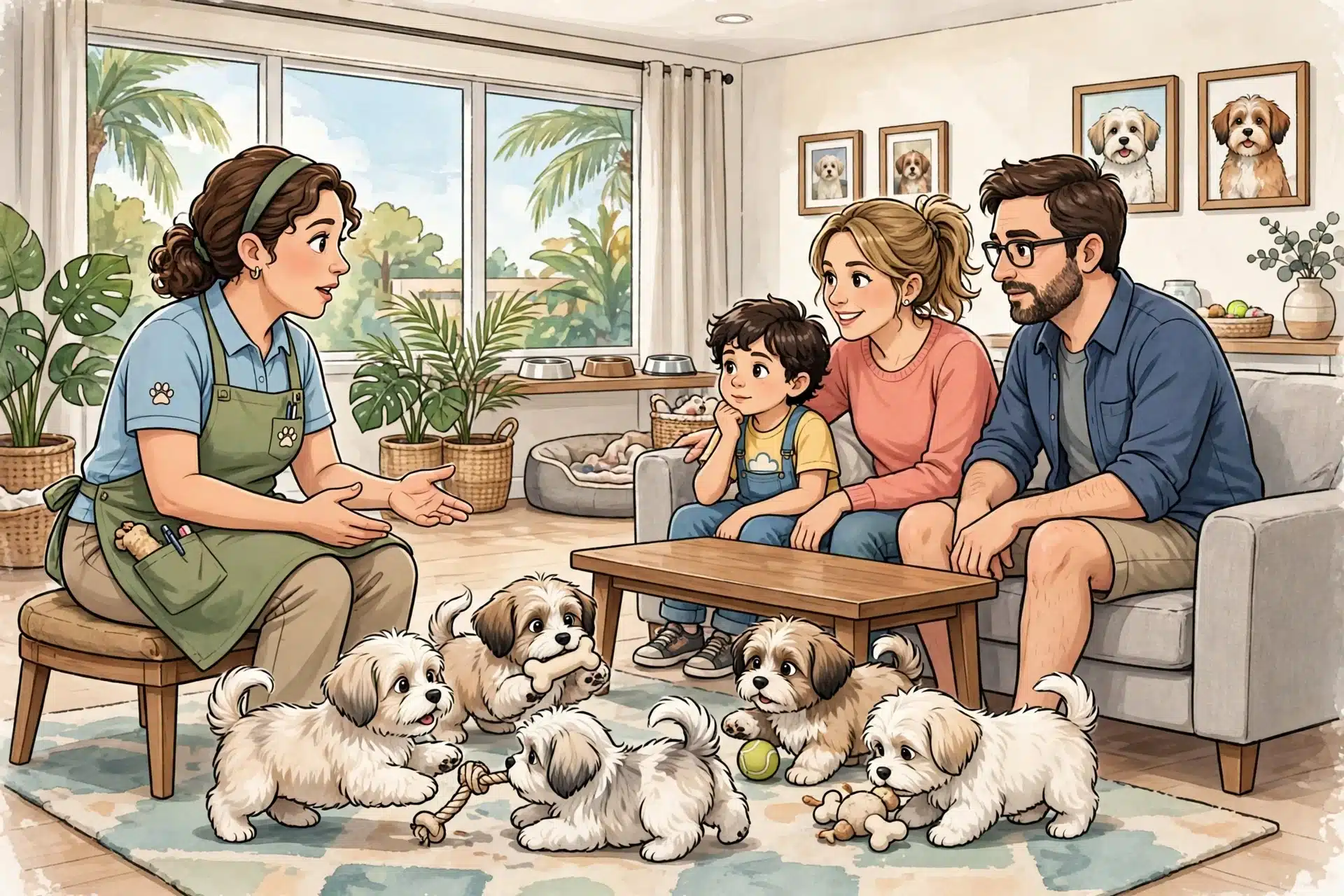
A responsible breeder says “my kitchen” or “our living room” and invites you to see it. Puppies raised in a home hear vacuums, doorbells, and kids. That early noise shapes calm adult dogs. If the answer is a barn, a shed, or “we can meet you halfway,” keep looking.
Also ask if you will meet the mother during your breeder home visit. You should always see her with her litter. The father may live elsewhere, and that is fine, but the breeder should have his health records and photos ready to share.
| Ask This | Good Answer | Warning Sign |
|---|---|---|
| Where do puppies live? | Inside the home | Barn, shed, or off-site |
| Can I meet the mother? | Yes, anytime | “She’s at a friend’s house” |
| Can I see where they sleep? | Of course | Only videos or photos |
Why did you plan this pairing, and how do you match puppies with families?
Now go deeper. Ask why they bred these two dogs. “We wanted puppies to sell” is not an answer. A thoughtful breeder talks about temperament, health testing, and what the pairing improves.
Then ask how they match puppies to families. Good breeders interview you right back. They ask about your home, your schedule, and your kids. The AKC notes that breeders should ask many questions of you, not just answer yours.
At Sage Puppies, we plan pairings around health-tested parents and match each puppy to the family’s energy and lifestyle.
Also Read: 7 Puppy Breeder Red Flags First-Time Dog Owners Should Know
Ask for Parent Health Tests You Can Identify and Verify
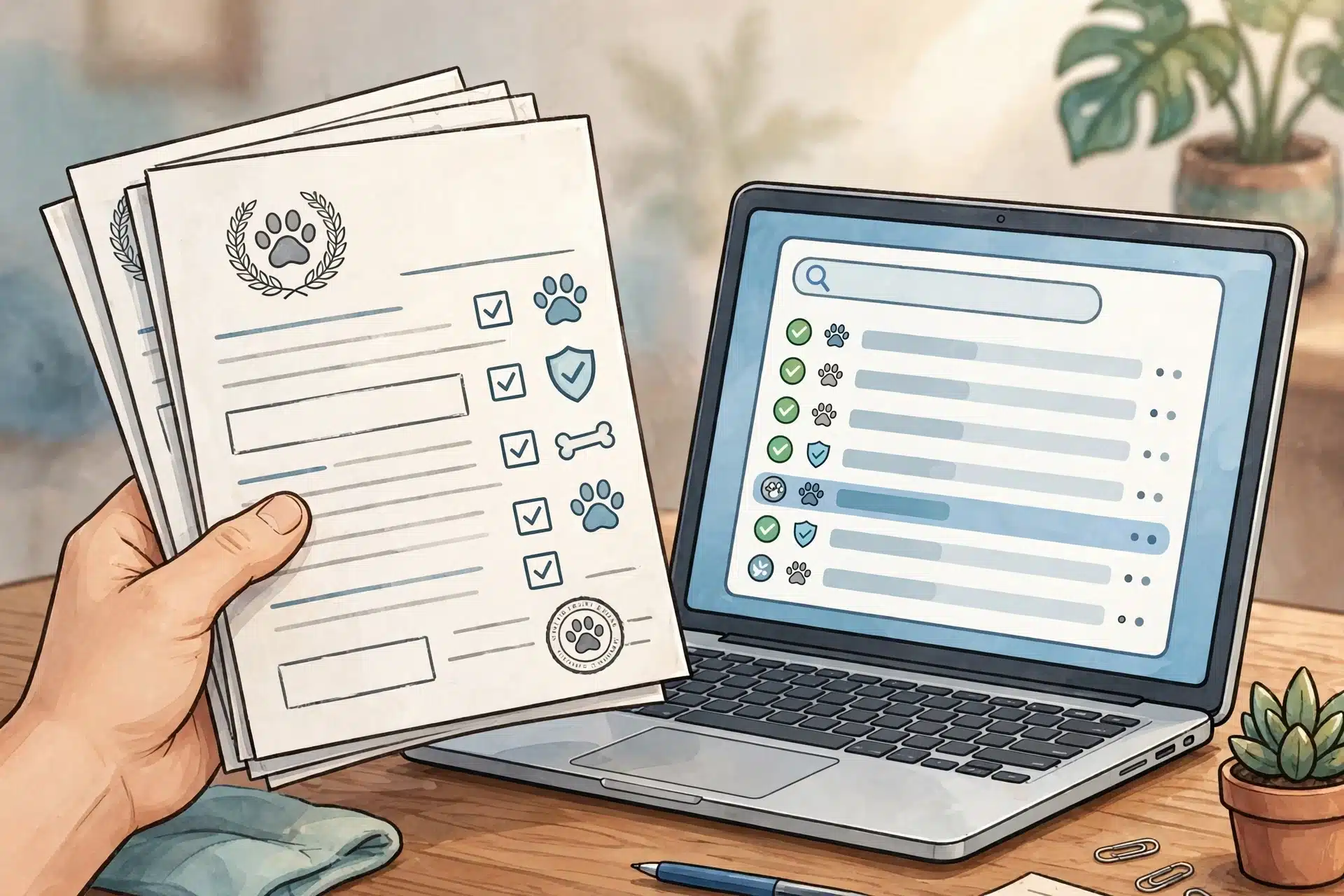
“Both parents are health tested” is a phrase, not a fact. Before you book a visit or pay a deposit, ask for the exact name of each test, the result, and where you can look it up yourself. Ethical breeders expect this question and answer it easily. Vague answers are the red flag.
Ask for exact test names and results, not a general health claim
A clear, healthy dog is not the same as a tested dog. You want specifics like these:
- CAER eye exam – done every year by a board-certified eye specialist
- OFA hip evaluation – X-rays reviewed and scored after age 2
- Patella (knee) certification – checked after age 1
- DNA tests – by name, such as a test for a known breed condition
The OFA’s CHIC program works with each breed’s parent club to set a breed-specific list of screenings. A dog that completes them gets a CHIC number, and the results go into a public database anyone can search.
The best part: you can verify it yourself. Get each parent’s registered name, then search the OFA database and match what the breeder told you. The Havanese Club of America’s puppy buyer guide tells buyers to ask for both parents’ registered names before any money changes hands, so checking takes minutes.
| What the breeder says | What to ask next |
|---|---|
| “Parents are vet checked” | “Which OFA or CHIC tests, and what were the results?” |
| “We do genetic testing” | “Which DNA panel, for which conditions?” |
| “Health tested, of course” | “Can I have the parents’ registered names to verify?” |
Notice the difference. A vet check covers today’s health. Health testing screens for conditions the dog could pass to puppies. You need both to exist, but only testing predicts what your puppy may inherit.
Check recommendations for the puppy’s breed or breed mix
Every breed carries different risks, so every breed has its own test list. Ask the breeder: “What does this breed’s parent club recommend, and which tests have these parents completed?”
For a Havanese, the parent club requires three screenings for a CHIC number: hips, patellas, and an annual CAER eye exam. For a mix like a Havapoo or Cavapoo, both parent breeds matter. A good breeder tests each parent against the list for its own breed, since each side of the mix contributes its own risks.
Watch for these patterns:
- Full lists, named results – a strong sign the program is serious about health
- Partial testing with a clear reason – for example, a young sire not yet old enough for hip X-rays
- Refusal to name tests or share records – walk away
Responsible programs like Sage Puppies share parent test information openly because they have nothing to hide. Use that openness as your standard when you compare breeders.
Also Read: How to Keep a New Puppy Cool During Florida Car Travel
Confirm What the Visit Will Show Before You Travel
Long drives and deposits feel a lot easier once you know exactly what the trip will include. So before you book flights or fill the gas tank, get clear answers in writing. A good breeder will tell you plainly what the visit covers. A vague one will give you a reason to come, then a reason why you can’t see much once you arrive.
What can I see, and who will be there?
Ask this one directly: “Can I see where the puppies live, and can I meet the mother?” The ASPCA recommends visiting the puppy in the place it was born and meeting mom, the litter, and dad if he’s around. Expect to see:
- The whelping area where the litter was born
- The mother interacting with her puppies
- Clean bedding, fresh water, and space to move
- The whole litter, not just one puppy brought out
Meetings should happen at the breeder’s home, not a parking lot or rest stop. Watch the dogs, too. Confident, friendly puppies and a relaxed mother tell you more than any sales pitch.
If in-person access is limited, what is the alternative?
Some limits are fair. Newborn puppies are fragile, so many breeders delay hands-on visits until pups are older. Some mothers get anxious around strangers. The AKC notes that a video call is a reasonable substitute when an in-person visit isn’t possible.
Ask for a live video walkthrough of the space, not pre-recorded clips. You should still see the mother, the litter, and where they sleep, in real time. Red flags look different: a flat refusal, a “meet in a parking lot” offer, or excuses that change each time you ask.

Florida families often work with out-of-state breeders, so video visits matter here. Sage Puppies, for example, offers scheduled video walkthroughs so long-distance families see the home environment before they commit. The medium can flex. The transparency can’t.
Bottom line: agree on exactly what you’ll see and who you’ll meet before you spend money on travel. If the answer keeps shrinking, keep driving.
Ask About Puppy Care, Temperament, and Records
How a breeder raises puppies shapes who they become. Puppies go through a key learning window from three to twelve weeks, so daily handling and new experiences matter. According to AVMA socialization research, dogs with more early social contact are less likely to grow up fearful or aggressive. Ask these questions and listen for specific, concrete answers.
How are the puppies handled and observed day to day?
A good breeder answers this without hesitation.
- Where do the puppies live? Home-raised puppies hear vacuums, doorbells, and kids. Kennel-only puppies often miss that.
- Who handles them, and how often? Daily gentle handling should start in the first weeks. The EU breeder socialization guidance calls for frequent, positive exposure to people, sounds, and surfaces during this stage.
- What do they experience? Different textures, car rides, crate time, and play with littermates.
- How do you track temperament? Ask what each puppy acts like now: bold, mellow, snuggly. Ethical breeders know each puppy as an individual.

At Sage Puppies, puppies grow up in our South Jordan home alongside our kids, not in a separate kennel building. That daily family exposure is a fair expectation no matter where you buy.
Which veterinary and go-home records will I receive?
Ask this before you pay a deposit, and ask for specifics:
- Age-appropriate vaccinations, with dates and products used
- Deworming history and any fecal test results
- A vet wellness exam before go-home, with the date noted
- Parents’ health testing results, like OFA or eye exams
- A written health record folder or file you keep
Good breeders hand these over willingly and explain each item. If someone promises records “later” or offers only verbal assurances, treat that as a warning sign and slow down.
Also Read: Puppy Care Blog & Resources | Sage Puppies
Review the Contract, Payment Terms, and Next Steps Before Committing
A contract should arrive before your money does. A trustworthy breeder will share the full agreement during the phone or video stage, not at the moment you hand over a deposit. Read it once for the big picture, then again with the questions below in mind.
What does the written agreement actually say?
Most contracts cover the same basics: the puppy’s identity, the price, the health guarantee, and what each side promises. AKC guidance notes that a good contract should include the puppy’s registration details, microchip number, the parents’ names, and the purchase price, and that buyers should be able to review it before they decide.
Ask for these specifics:
- Health guarantee: how long it lasts, what it covers, and what proof you must provide.
- Vet exam window: most programs expect a vet visit within 48 to 72 hours of pickup.
- Return clause: a serious breeder will take the dog back at any age if you cannot keep it.
- Spay or neuter terms: the deadline and what paperwork is required.
If a clause confuses you, ask the breeder to explain it in writing. Clear answers are a good sign. Hesitation or a rushed signature request is not.
What are the payment, reservation, and pickup arrangements?
Get the money terms in writing before you send anything. Ask:
- Deposit: Is it refundable, transferable to a future litter, or forfeited if you change your mind?
- Balance due date: Usually at pickup or a few days before delivery.
- Payment methods: Check what the breeder accepts and avoid any request for gift cards or wire transfers only.
- Delivery or pickup costs: Who covers travel, a flight, or a health certificate?
Confirm the exact pickup date, what to bring, and what comes home with the puppy, such as records and feeding notes. At Sage Puppies, we walk families through every step of how it works before any deposit is due, so pickup day feels calm instead of rushed.
Also Read: How Florida Families Can Prepare for a Puppy’s First Week
Use a Simple Proceed, Pause, or Walk-Away Decision
You have your answers. Now sort every breeder into one of three buckets: proceed, pause, or walk away.
Proceed when the visit answers your questions freely. Health test proof is easy to show, the mother is calm and friendly, and the breeder asks about your home and lifestyle. Responsible breeders interview buyers too, because they want the right fit as much as you do, according to the AKC’s guide to responsible breeders.
Pause when answers are honest but incomplete. Maybe health certificates are at the vet’s office, or the sire lives with a co-breeder. A pause is fine. Ask for the missing proof in writing and give it a week. Good breeders follow up without being chased.
Walk away when you see pressure or evasion. The AKC’s scam-spotting guide lists the classics: a seller who pushes for a fast deposit, refuses phone or video calls, or wants payment by wire or gift card.
Quick gut-check before you commit:
- You feel rushed to decide.
- Answers changed between email and phone.
- The puppy is “available today only.”
- Something felt off, even if you can’t name it.
Trust that feeling. A great breeder will still be there next week. This is exactly why our Sage Puppies process includes time for questions, video calls, and unhurried decisions, and why we encourage families to compare us with anyone else before reserving.

Asking the right questions before a visit is exactly how we’d want you to screen us. At Sage Puppies, you’ll see health-tested parents, meet puppies raised in our South Jordan home, and get straight answers every step of the way. Browse our available Havanese, Havapoo, and Cavapoo puppies today, or start an application for pickup or nationwide delivery.
Frequently Asked Questions
Q1: What questions should I ask a puppy breeder in Florida before visiting?
Ask about parent health testing, how puppies are raised, socialization routines, vet care, and what a visit includes. Clear, specific answers signal a breeder worth meeting.
Q2: How do I know a Florida puppy breeder is reputable before visiting?
Look for health-tested parents, a clean home environment, willingness to video call, and references. Breeders like Sage Puppies share updates openly before you commit.
Q3: What health tests should a Florida puppy breeder provide ahead of a visit?
Request parent DNA panels, eye and heart clearances, and puppy vet exam records matched to the breed’s known risks.
Q4: Should I pay a deposit before visiting?
Not usually. Reputable breeders let serious families visit or video call first, then reserve with a written agreement.
Q5: Can I meet the puppy’s parents?
You should meet the mother, at least in person or on video. Her temperament and condition tell you a lot.
Make the Visit Part of Your Due Diligence
A Florida breeder visit works best when you arrive prepared, not persuaded. Ask about parent health testing, vaccination records, socialization, and the written contract before you discuss price. The American Kennel Club lists these same questions as the core of any breeder interview.
Expect some limits. Visit windows and puppy age restrictions are normal; refusing to show you where the puppies live is not. As VCA Animal Hospitals notes, a responsible breeder is proud to show you their home and kennel.
Bring your question list, compare answers to proof, and trust what you see over what you’re told. The right breeder will welcome every question.



