Quick Summary: “Family-raised” is only a starting point, so verify where puppies actually live, how they behave around people and household noise, and how the mother handles handling. Before paying, request parent health-test results, veterinary and vaccination records, and a clear written contract, then confirm the puppy through a live visit or video call and pay by a traceable method. Match the puppy’s temperament and energy to your household rather than choosing on looks or boldness alone.
Two listings can both say family-raised. One may describe a litter that spent its first weeks in a garage kennel with little human contact. The other describes puppies that slept in the bedroom and learned the sound of a dishwasher before they were eight weeks old. The words on the ad do not settle the question; the home does.
That gap is the problem with puppy buying guide material you find online: most of it stops at “visit the breeder” and never tells you what to look at once you are there. This guide fills that space. You will get a checklist for observing the home, the documents to request, the puppy temperament signs that matter, and the red flags that should stop a deposit. It draws on the day-to-day experience of a small Utah breeding program, so every tip reflects what family-raised really looks like.
What Family-Raised Actually Means, and What It Does Not
“Family-raised” tells you where a puppy spent its first eight weeks, not how well it was cared for. A good puppy buying guide treats it as one clue, not a guarantee, and this section separates the real signal from the label.
The Core Definition: Household Socialization
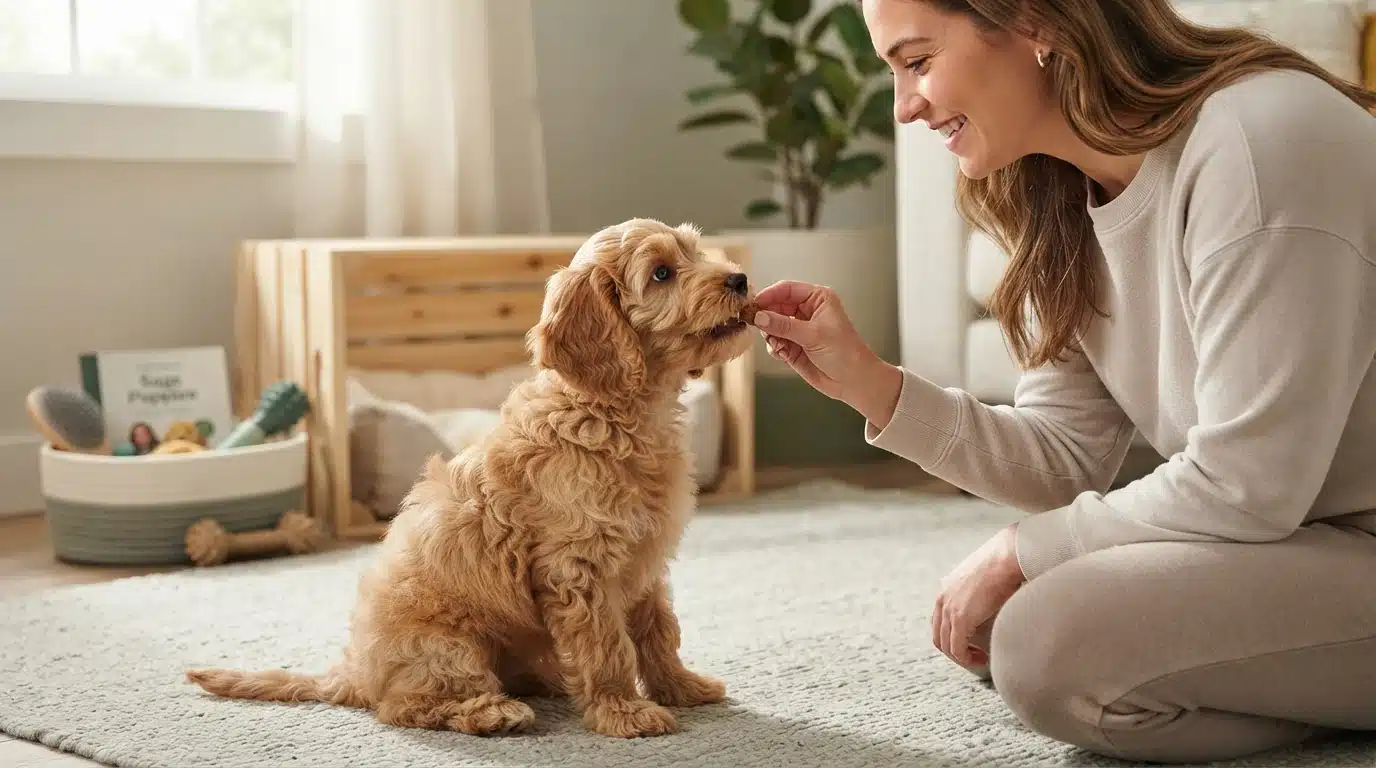
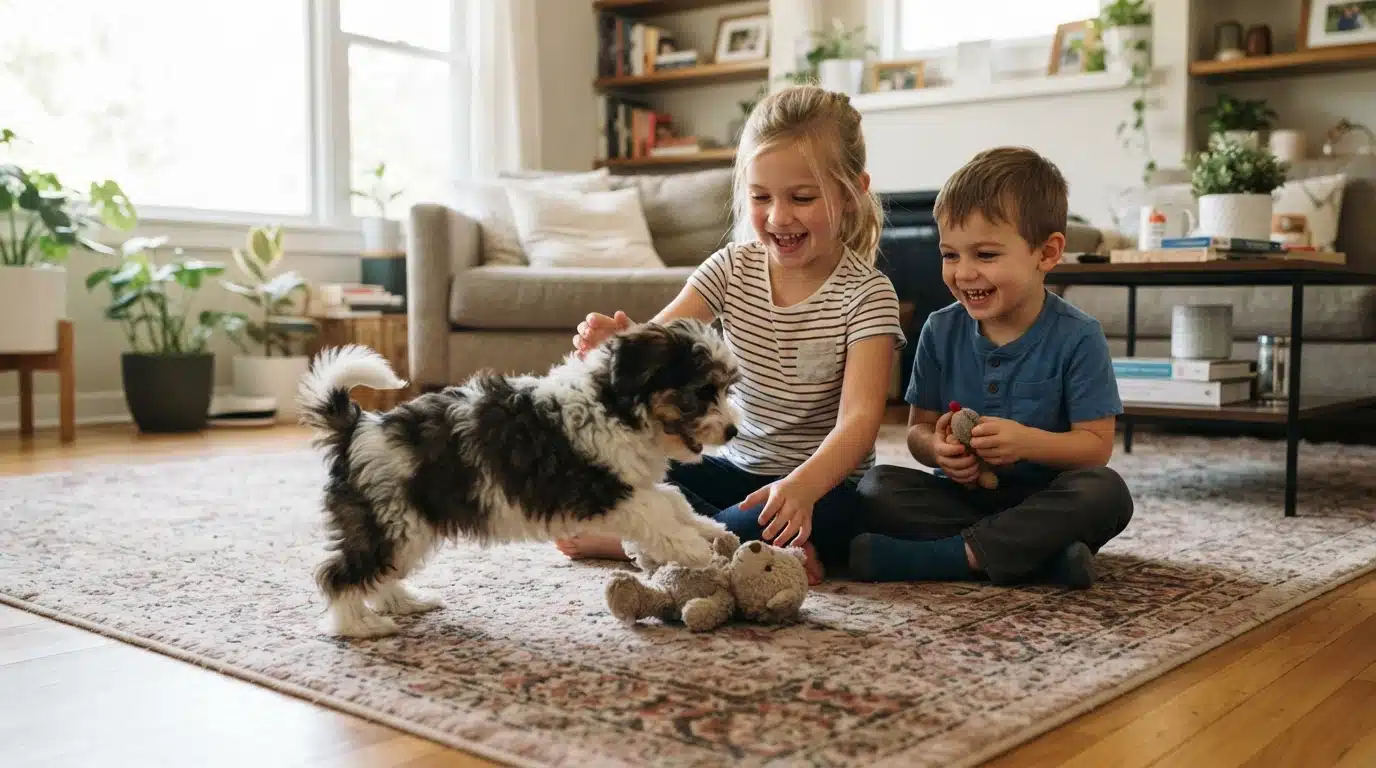
At its best, family-raised means a puppy grows up inside a home, not a kennel run. It hears dishwashers, doorbells and kids, walks on different floors, and gets handled daily by adults and children. That early exposure builds confidence and makes house training and crate training easier later.
Family-Raised, Home-Raised, and House-Raised: Close, Not Identical
These terms overlap, and sellers use them loosely. Ask what daily life actually looked like: Was the litter inside the main living space, or in a garage or basement? How many hours a day were puppies handled? For a deeper comparison of terms, see our guide to what family-raised means in practice.
What the Label Does Not Prove
The phrase proves nothing about health testing, vet care, or honest paperwork. A puppy can be family-raised and still lack genetic screening or vaccinations. Verify those separately with documents, not adjectives.
What to Look for When Buying a Family-Raised Puppy
“Family-raised” means puppies grow up inside a home, not a kennel run. That label alone proves little, so this puppy buying guide breaks your evaluation into three parts: a checklist you can use anywhere, the people and litter behind the puppy, and where honest programs actually are.
The Nine-Point Evaluation Checklist
Score any breeder on nine points: parent health testing you can see in writing, puppies raised in the home, clean and spacious living areas, a vet exam before going home, vaccination and deworming records, a written contract, a waitlist or application process, willingness to answer questions, and an offer to take the dog back if it ever fails. A breeder who passes most of these is a safe start; one who dodges two or more deserves a closer look. For the reasoning behind each point, see Sage’s guide to picking the right puppy breeder.
Meeting the Parents and the Litter
Ask to meet the mother. Her temperament predicts more about your puppy than any guarantee does. Watch how the litter reacts to strangers: curious pups that bounce back after a startle tend to settle into family life well. Check eyes, ears, coats, and movement, and note whether the puppies live in the same space the family does.
Where to Find Family-Raised Puppies Near You
Search locally first, then expand. Buyers in Utah can compare what to expect when choosing a puppy in Utah at Sage, while others can apply the same checklist nationwide. Just verify before any deposit.
Inspecting the Home and the Puppies in Person
A visit tells you more than any website ever will. Watch how the dogs live, not just how they look.
Signs of a Calm, Socialized Household
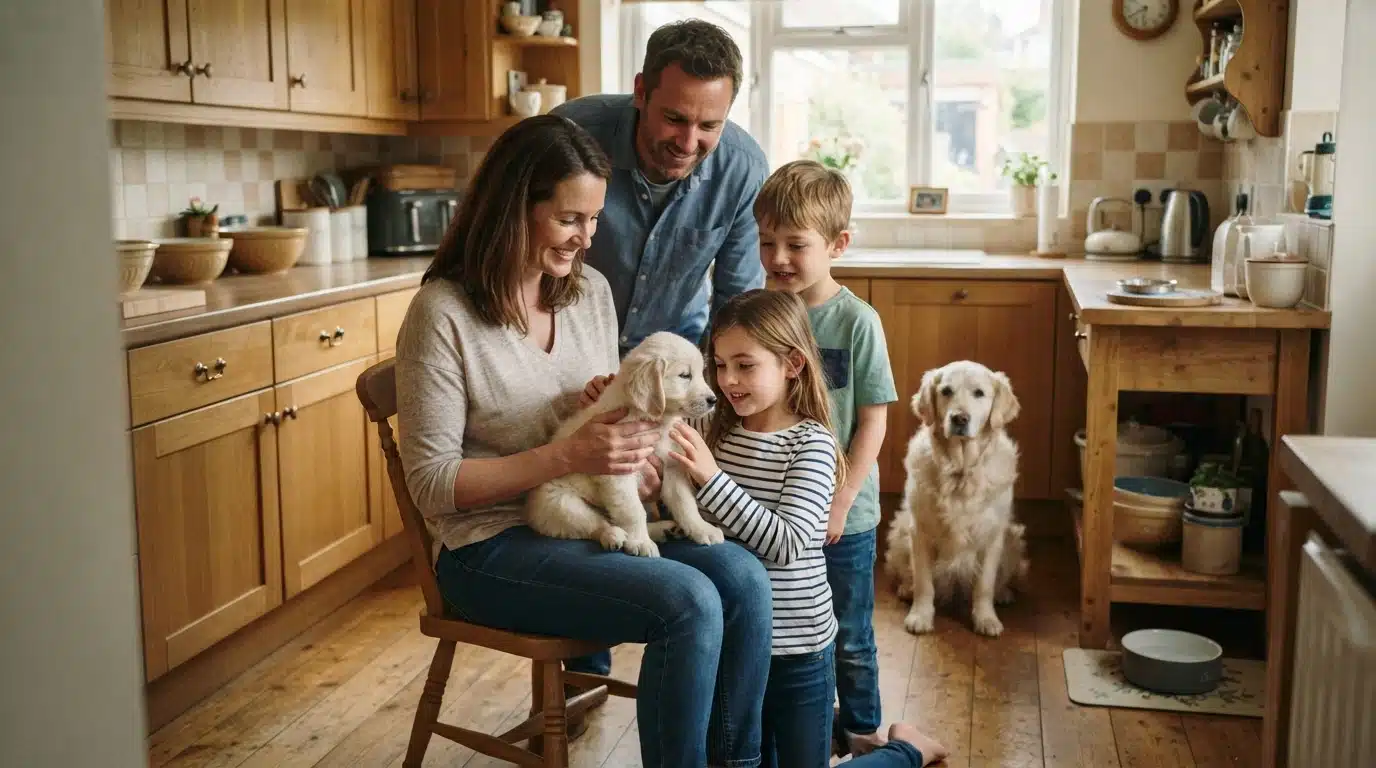
A family-raised puppy comes from a home that feels lived in. Look for dogs in the main living space, not shut away in a garage or back room. Puppies should relax around everyday noise: the TV, a vacuum, kids running past. Calm mothers, clean floors and normal household clutter are good signs. The AKC’s breeder checklist stresses exactly this kind of everyday environment.
How Puppies Should Be Handled
Good handling is confident and gentle. The breeder should pick puppies up without drama, turn them over, touch their paws and ears, and let them settle quickly. Puppies that have never been held may squirm, freeze or hide behind the mother. Ask to handle each one yourself. These simple puppy evaluation tips reveal a lot: a well-socialized pup wiggles, explores and recovers fast from small surprises. Supervised children’s interactions matter too, since careful, respectful handling teaches puppies to trust people.
When a Home Visit Is Not Offered
Some breeders decline visits for safety or biosecurity reasons, and a video call can still work well. The AKC notes that responsible breeders often screen buyers carefully before sharing their homes. Insist on a live video walkthrough, not recorded clips, and ask to see the mother, the litter and the living area in one unbroken call. A breeder who refuses both visits and live video, with no explanation, deserves your caution.
Health Records, Testing, and What to Ask For
Health paperwork tells you what a breeder actually did, not what they claim. Ask for everything in writing before you send a deposit.
The Documents to Collect Before You Pay
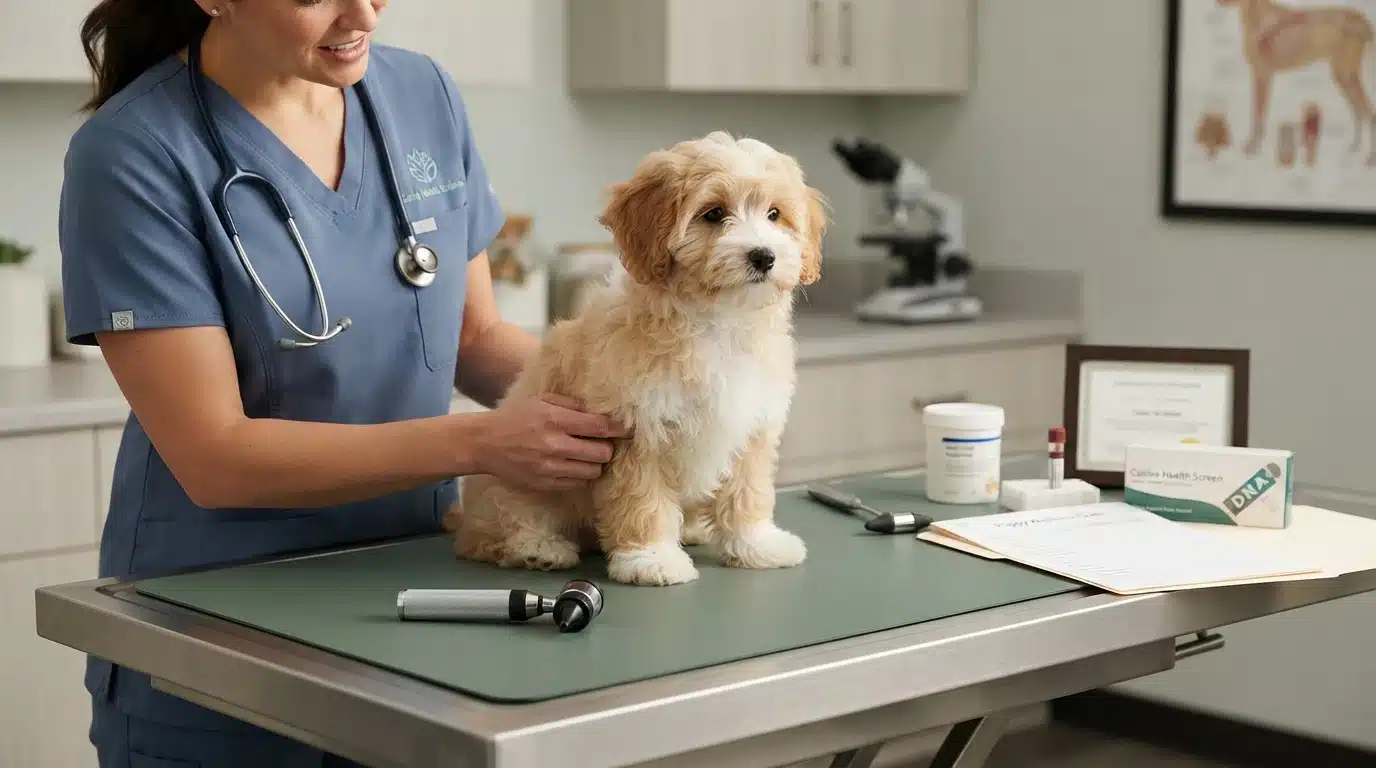
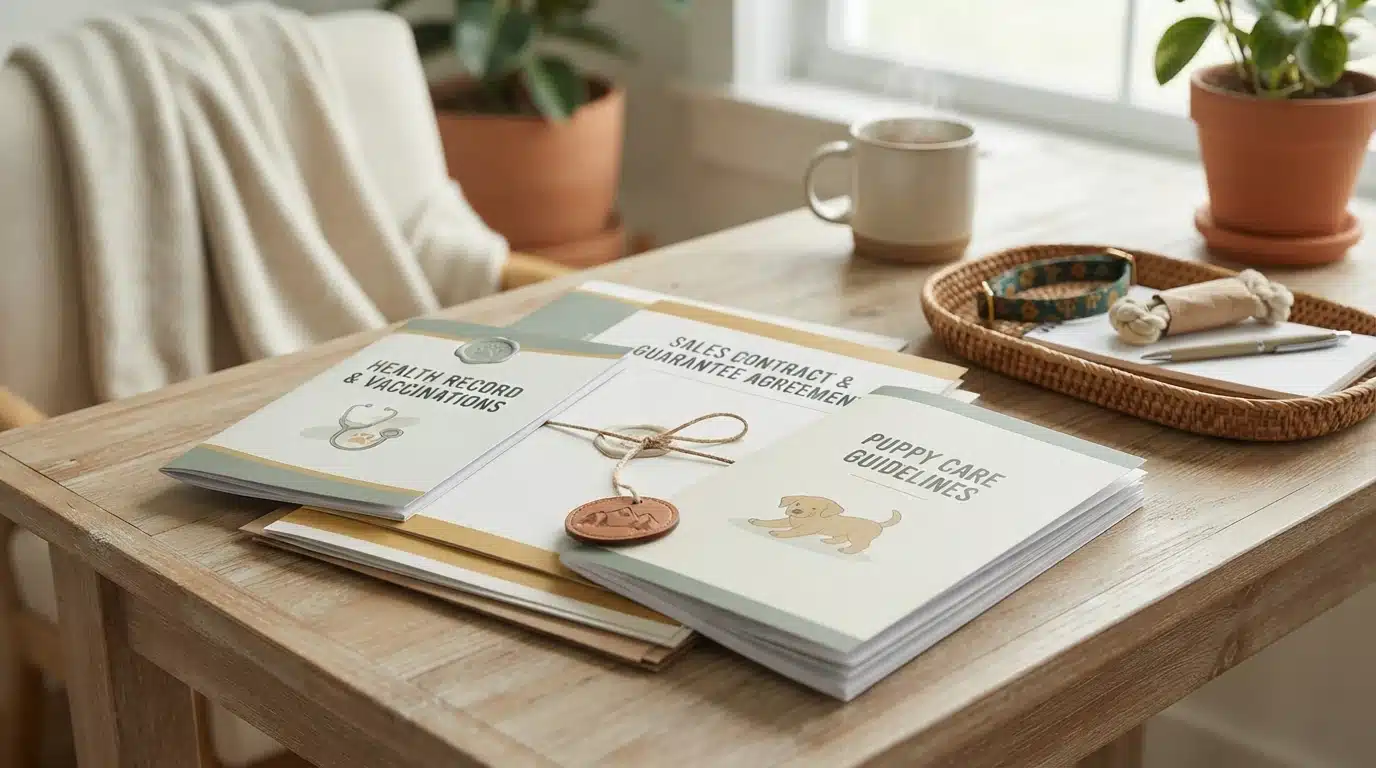
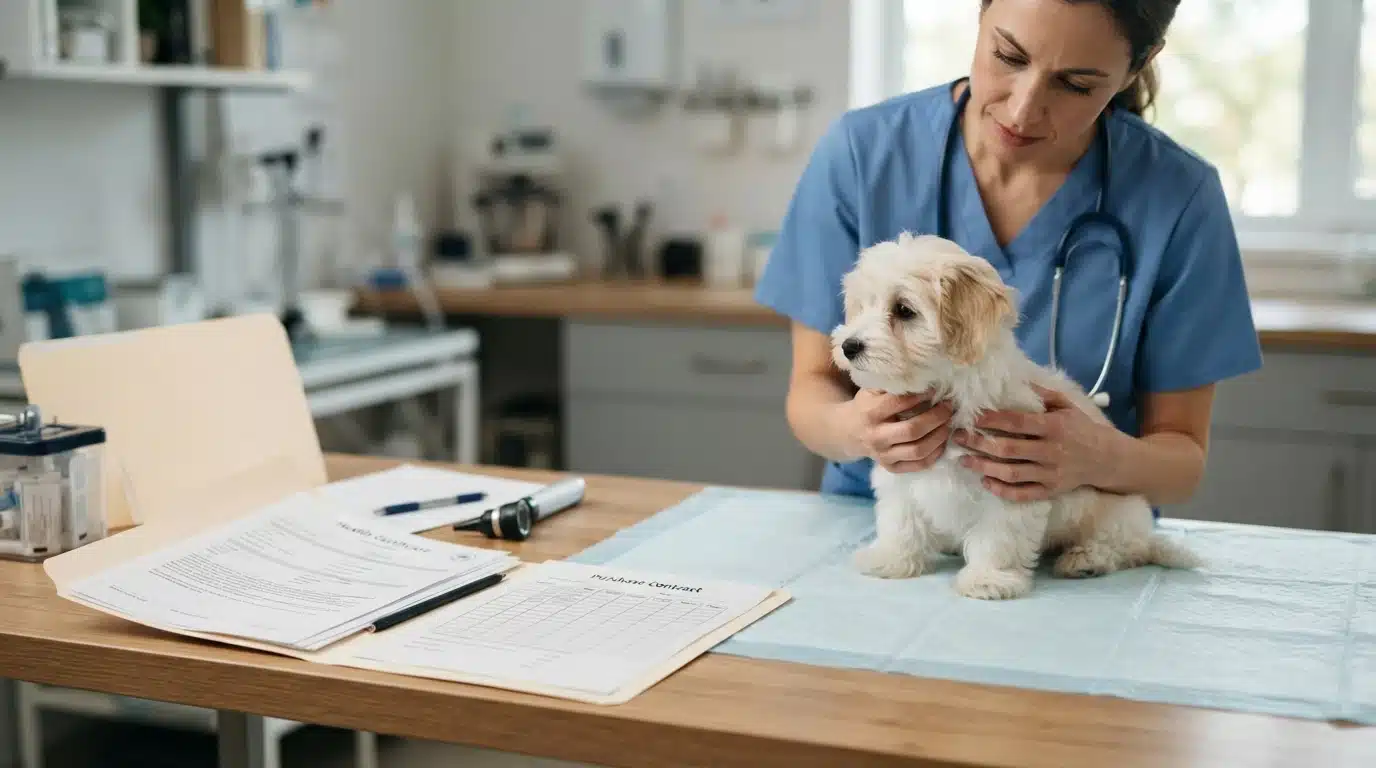
Request four items: the puppy’s veterinary exam record, a vaccination and deworming log with dates and products used, the parent’s screening results, and a written purchase contract. Cross-check dates. A vaccine given at five weeks, then again at eight, follows the normal puppy series. A single shot a day before pickup does not. Keep scans of each document in one folder so you can compare them later.
Understanding Health Testing for Havanese, Havapoo, and Cavapoo
Parent testing matters more than puppy paperwork, because it covers inherited conditions. For Havanese, the current CHIC requirements are an annual eye exam, a hip x-ray, and patella (kneecap) certification, all recorded in the OFA’s public database. Havapoo and Cavapoo parents should have both sides of the mix tested. A CHIC number means results were submitted, not that every result was normal, so ask to see the actual reports. Our own health testing page shows how a program can publish those results openly.
Scheduling an Independent Veterinary Check
Most breeders allow a vet exam within a few days of pickup. Book it before you bring the puppy home, and choose your own clinic rather than one the breeder suggests. Bring the records you collected so your vet can verify the vaccine series and check heart, knees, eyes, and weight.
Questions to Ask a Family Puppy Seller Before You Pay a Deposit
Good sellers welcome direct questions. Ask these before any money moves, and keep written answers so you can compare programs later.

Questions About the Program and the Puppies
Start with how the puppies are actually raised. Ask: Where do the puppies live, and who handles them daily? Can I see the mother? What health testing has she had? Which vaccines and dewormings will the puppy have before go-home day? A family-raised program should answer easily and invite a video call or visit so you can see the home setting yourself.
Reading the Contract Before You Pay
Read the full contract before you send anything. Look for what the deposit covers, whether it is refundable or transferable, the total price, and what happens if a puppy is not available or fails a vet check. Ask how health issues found in the first days home are handled. Clear terms protect both of you; vague answers now usually mean friction later.
Paying Safely and Keeping Your Records
Puppy scams cost buyers real money every year, so the FTC warns against wiring money to strangers. Pay by a traceable method, and pay only after a video call confirms the puppy is real. Then save everything: the contract, receipts, vet records, and the breeder scam alert from the BBB is worth a read if anything feels off.
Puppy Temperament Signs to Look For
Temperament shows itself early, and a litter’s home life shapes it before you ever arrive. Watch the puppies first, then ask your questions.
Positive Signs in a Young Litter
Healthy, well-socialized puppies approach you with loose, wiggly bodies and curious noses. They tumble with littermates, recover quickly when startled, and settle when held. One may bark at a new toy while another investigates it quietly, and both are fine. Variety is normal; ease with handling is what matters.
Caution Signs That Deserve a Question
Some caution is fair. A puppy that hides behind the couch in its own home, stiffens when picked up, or stays frozen while littermates play needs a closer look. Ask the breeder what daily handling each puppy gets and how they react to vacuum cleaners, visitors, and car rides. One shy day is not a verdict, but a pattern deserves an explanation.
Matching Temperament to Your Household
Pick the puppy that fits your pace, not the boldest one in the room. Confident, busy puppies suit active families with kids. A softer, watchful pup often thrives with a quiet household or a retired owner. Tell the breeder about your work hours, children’s ages, and noise level at home. A small program that raises puppies in the kitchen, like Sage Puppies does, can match you from firsthand observation instead of a chart. Then spend a few minutes alone with your top pick before you decide.
Preparing for Pickup and the First Weeks Home
Pickup Day and Handoff
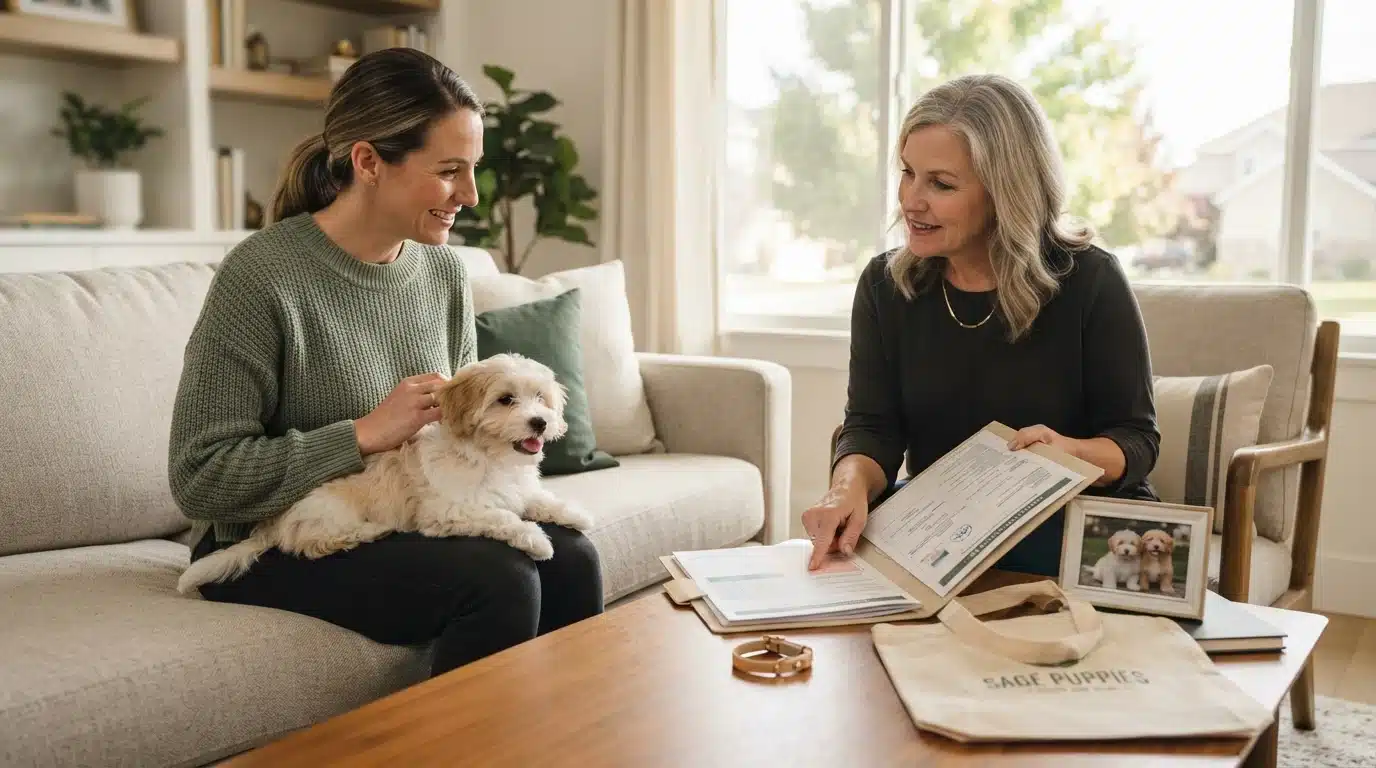
Pack a crate, a leash, water, and a towel before you leave. Ask the breeder to walk you through the puppy’s records, food, and routine, and take notes. Watch how the puppy handles new people and sounds. A calm handoff usually means the litter got real household exposure. Confirm what paperwork comes home that day and what arrives later.
The First Weeks: Routine, Records, and Veterinary Care
Keep the first days quiet and predictable. Feed the same food the breeder used, then change it slowly if needed. Set potty and nap times and stick to them. Book a vet visit within a few days, since puppies need a series of vaccinations starting at 6 to 8 weeks of age, per AVMA guidance. Bring the health records you received, and ask your vet to review them and plan the remaining shots. For a full exam walkthrough, VCA’s new-owner guide covers what to expect.
What Support to Expect After the Sale
A good breeder stays reachable after go-home day. Ask before you pay: how long they answer questions, whether they want updates, and what their contract says about health concerns or returns. Breeders who raise puppies in their own home tend to know each puppy well and can help you solve early problems. Sage Puppies, for example, pairs owner-managed matching with ongoing buyer guidance. Put the agreed support terms in writing.
Common Mistakes to Avoid
Mistakes That Cost Buyers Money and Options
The costliest mistake is sending a deposit before you verify anything. Scams thrive on cute photos, fast answers, and pressure to pay by gift card or wire transfer. Take it slower. Ask to see the puppy on a live video call, meet the mother if the litter is local, and read the health testing records before money moves hands.
Another common error is picking a puppy on looks alone. Temperament and energy level matter more over ten years than coat color does. A mismatched puppy often ends up rehomed, which costs everyone.
Buyers also skip the written contract, or assume a deposit is refundable when it is not. Get every promise in writing first. A breeder who answers your questions plainly, like the family-raised programs around South Jordan, makes this step easy instead of awkward.

If you want a Havanese, Havapoo or Cavapoo raised in a real home, see what’s coming next at Sage Puppies. Browse the available puppies, then submit an application so Cassie can match your family with the right pup.
Frequently Asked Questions
Q1: What should I look for when buying a family-raised puppy?
Check nine things: written parent health testing, puppies raised inside the home, clean living areas, a vet exam, vaccination records, a written contract, an application process, open answers, and a take-back promise.
Q2: What questions should I ask a family puppy breeder before I pay a deposit?
Ask where the puppies live, who handles them daily, whether you can meet the mother, what testing she has had, and which shots the puppy will have. Get the answers in writing.
Q3: How do I know a puppy seller is not a puppy mill?
Request a live video walkthrough or visit, meet the mother, and verify health testing in the OFA database. Sellers who refuse both visits and video deserve caution.
Q4: How much do Havanese, Havapoo, and Cavapoo puppies usually cost?
Well-bred puppies from tested parents often run $3,500 to $4,500. Very low prices usually signal skipped testing, so weigh price against the paperwork.
Q5: Can I safely buy a family-raised puppy without visiting in person?
Yes, if the breeder offers an unbroken live video call showing the mother, litter, and living space, and you pay only by a traceable method after that call.
Conclusion
A family-raised puppy is worth the effort of verifying. The label tells you where a litter grew up, but only documents prove the rest: parent health testing, vaccination records, a written contract, and a breeder who answers questions plainly.
Trust what you can see. Score any seller on the nine-point checklist, watch how puppies handle noise and touch, and confirm claims in the OFA database before money moves. Refuse deposits made under pressure, and pay only after a live video call or visit.
Whether you buy in Utah or across the country, the same steps protect you. Havanese, Havapoo, and Cavapoo buyers who verify first end up with calmer, better-matched puppies, and breeders who raise dogs in their own homes have nothing to hide.