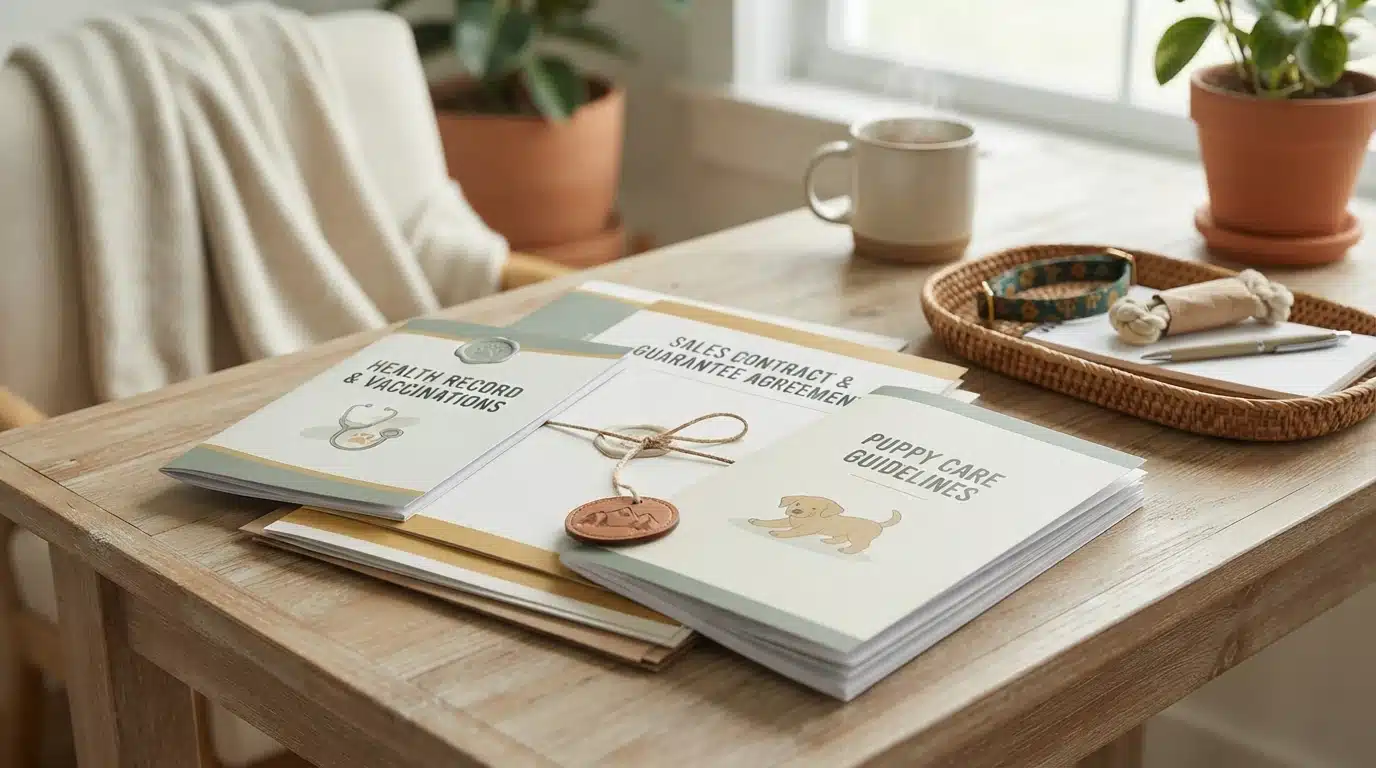
Quick Summary: Treat “family-raised” as an unverified label and judge the litter through records, observation, and written terms. Verify the seller, request dated vaccination and deworming records plus parent health tests, watch the whole litter together for at least 20 minutes, and review the purchase agreement before paying. Sage Puppies supports this evidence-based approach by raising Havanese, Havapoo, and Cavapoo litters in one South Jordan family home and inviting buyers to meet them in person.
The term family-raised sounds reassuring, which is exactly why it deserves a closer look. Two very different homes can both say it, and the difference often shows in the first ten minutes you spend in the kitchen while the puppies come out. The real question is not whether a puppy was raised inside a house, but whether the whole litter got the daily handling, early socialization and clean health records that matter during the critical puppy socialization window at 7 to 8 weeks.
This guide gives you an ordered way to judge a family raised litter as a unit, not just the puppy that tugged at your sleeve. Each step points to evidence you can verify, from dam and sire health testing to written purchase agreement terms. It comes from the evaluation method we use at Sage Puppies, where every Havanese, Havapoo and Cavapoo litter is raised in one South Jordan, Utah family home.
What Family-Raised Actually Means, and What It Does Not
A family-raised puppy grows up inside a breeder’s home, not a kennel run. That setting matters, but only when it comes with proof. Family-raised does not guarantee a healthy puppy. It describes where the litter lived, not what it received, so judge the daily care and records instead of the label.
The advantages a home environment really offers
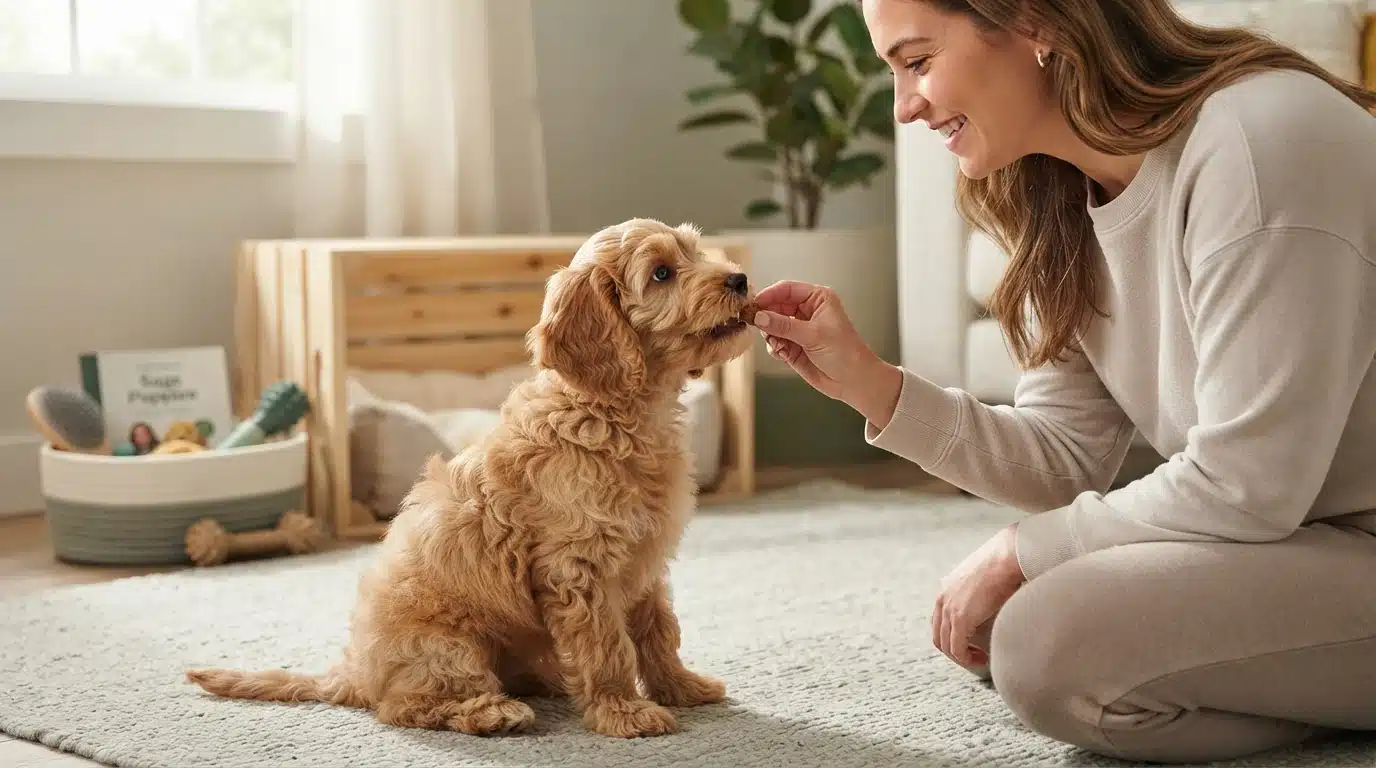
Puppies learn fastest between 3 and 14 weeks, the window when they accept new people, sounds and handling most easily. A home can supply kitchen noise, children, carpet, car rides and gentle strangers that a kennel cannot. Done well, this daily exposure builds confident temperaments, as the AVSAB position statement on early socialization explains.
Why the label alone proves nothing
Anyone can write “family-raised” on a website. The words cost nothing and appear in ads for backyard litters, brokered puppies and serious programs alike. Some breeders call a garage kennel “in-home.” Others keep dogs in the house but skip health testing and structured handling. The phrase carries no legal definition, so treat it as a claim to verify, never as evidence by itself.
The three things a home should be able to document
Ask for proof in three areas. First, how a family-raised puppy was raised: photos or video of the litter inside the living space. Second, health records: parent test results plus each puppy’s vaccinations and deworming dates. Third, a written agreement covering deposit, pickup and return terms.
How to Evaluate a Family-Raised Litter: A Step-by-Step Checklist
To evaluate a family-raised litter, work through four steps in order: verify the seller, request records, watch the whole litter together, and read the purchase agreement before you pay. Judge the litter as a unit, not just the puppy that caught your eye first.
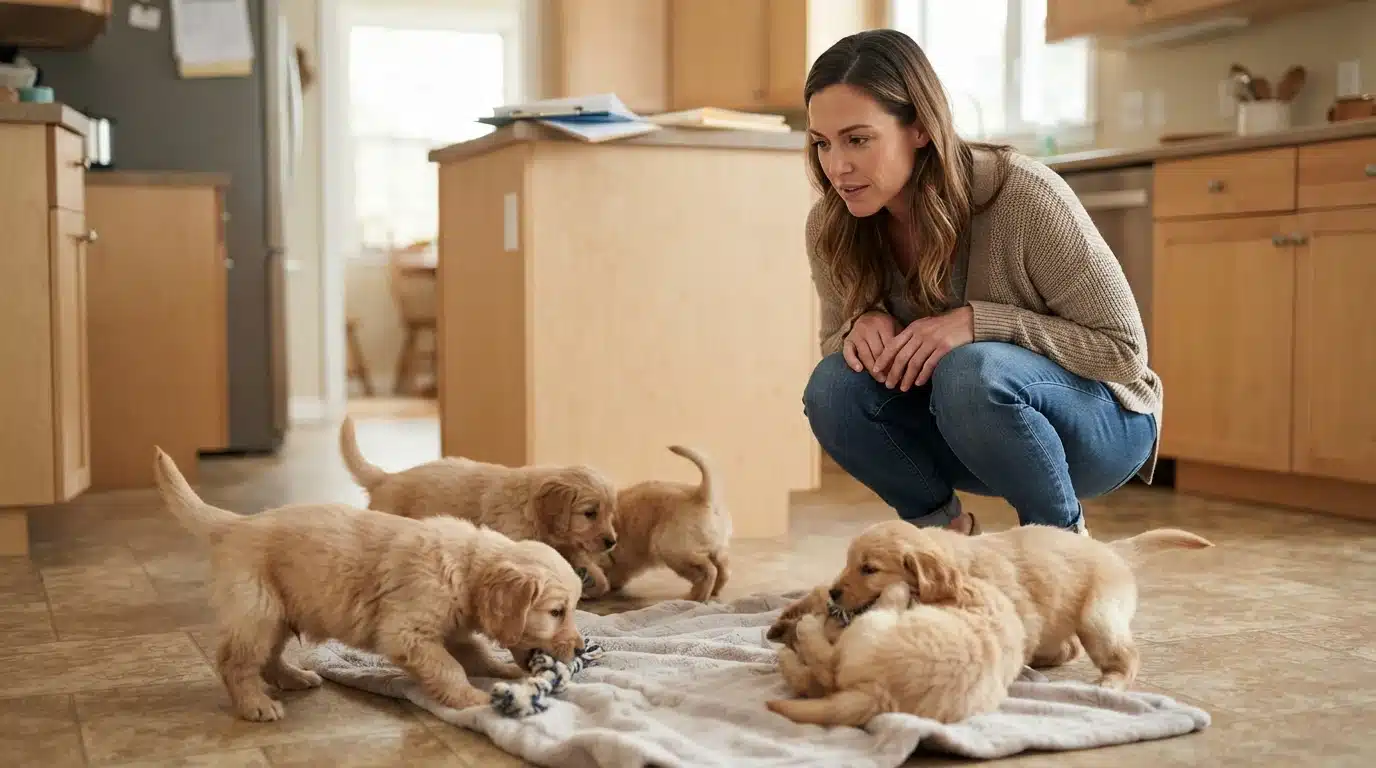
Step 1: Verify the seller before you visit
Start with the person, not the puppies. Ask how many litters the home raises each year and who handles the puppies daily. A responsible program keeps litters few and hands-on. If you’re gathering questions to ask a puppy breeder, ask them all before you commit to a visit, not during it.
Step 2: Request records before you pay anything
Ask for the dam’s health test results and each puppy’s vaccination and deworming record. Parents should be tested for breed-specific conditions, such as hips, eyes and heart, with results you can verify. Knowing how to check a breeder’s health testing records keeps you from accepting a vet’s phone number as proof.
Step 3: Watch the litter as a group
Watch all the puppies for ten quiet minutes. Healthy litters are curious and even in size, with clear eyes and steady movement. One shy or lethargic puppy is a warning about the whole group. This kind of puppy temperament observation tells you more than any photo.
Step 4: Read the paperwork like a buyer, not a guest
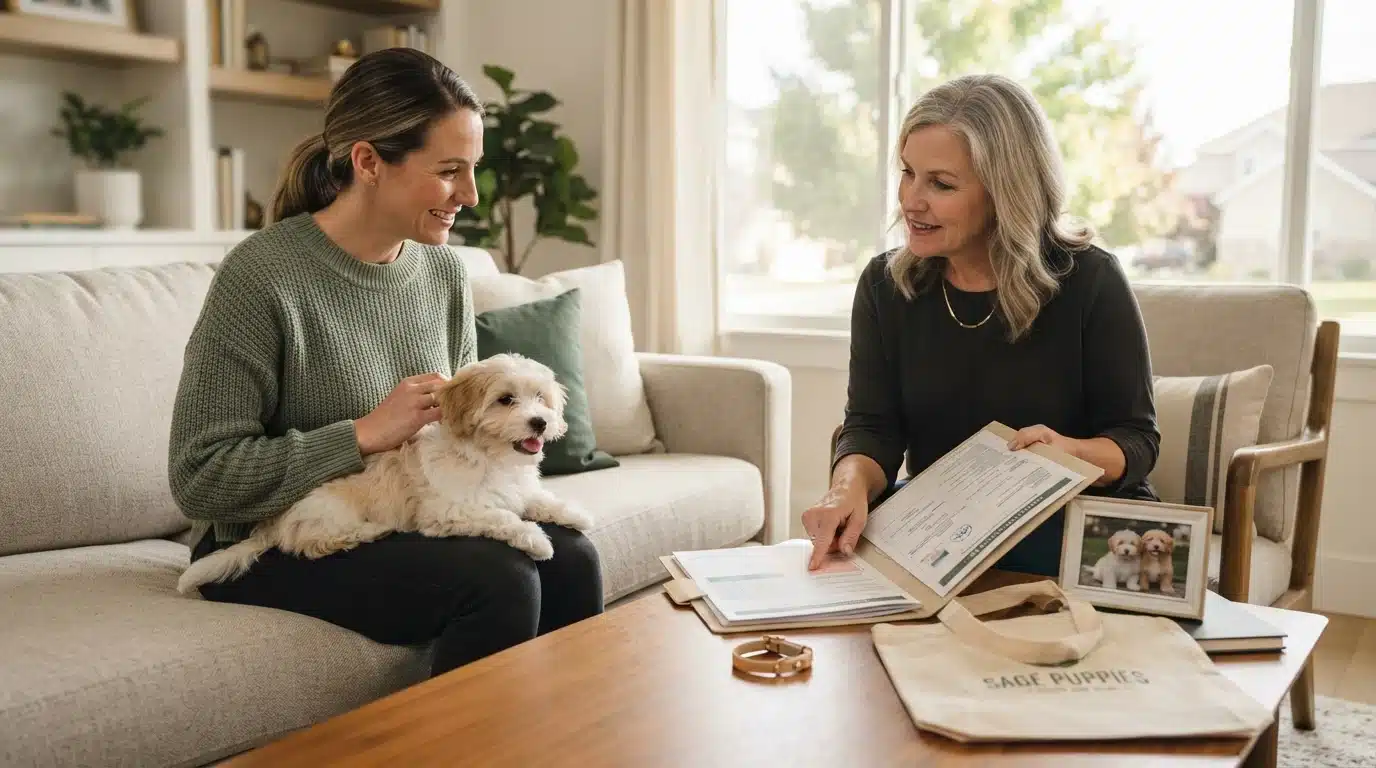
Review the written purchase agreement and deposit terms before signing. Confirm what the health coverage includes, what happens if the puppy needs to be returned, and when take-home day falls. Ask every question now, because a seller who bristles at details is showing you something.
The Home Environment: Where the Puppies Spend Their Days
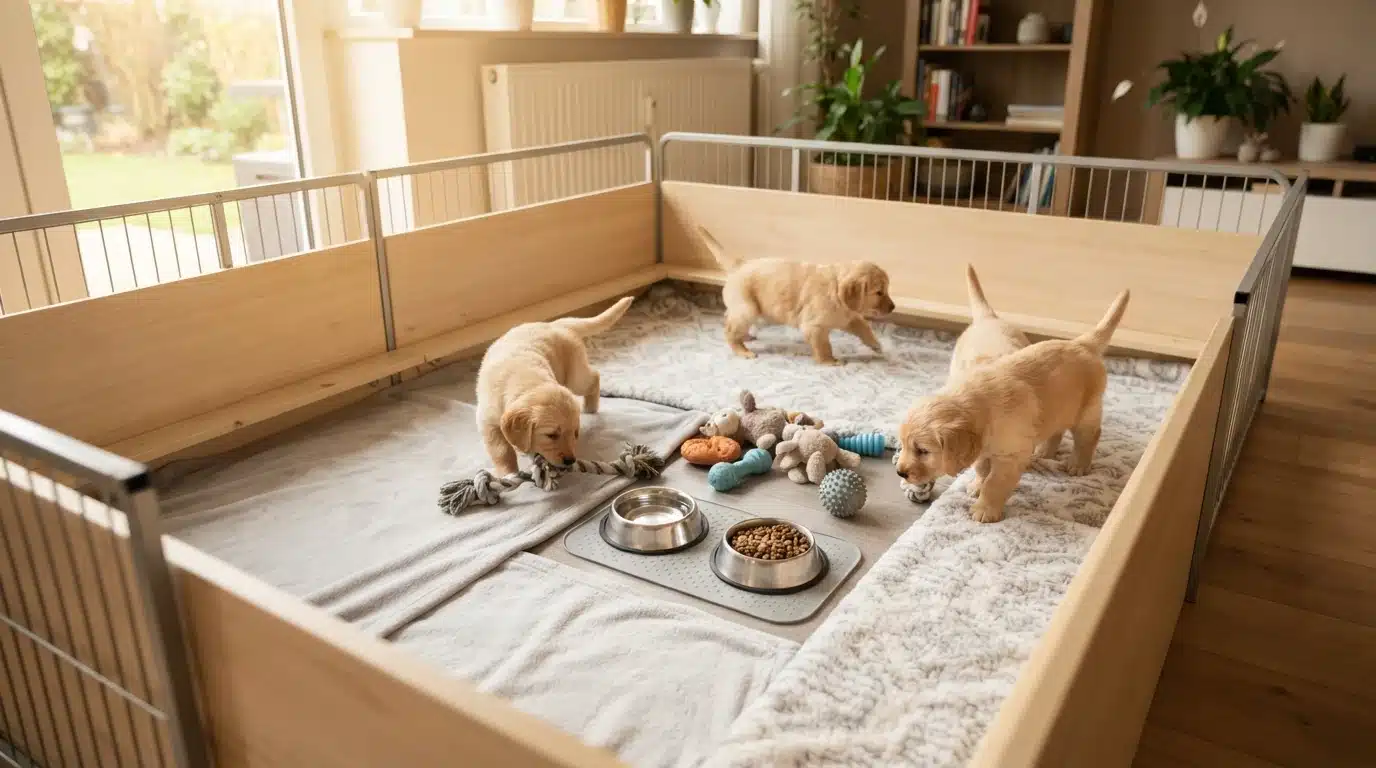
A family-raised label tells you where the litter started, not how it lived. Judge the space itself. When you visit or video call, look for these signs inside the home where the puppies spend their days:
- Clean, dry bedding that gets changed often, with no strong ammonia smell
- A warm, draft-free whelping or puppy area with room to move
- Fresh water, age-appropriate food and sanitized bowls
- Toys of different textures and safe items to chew
- Boundaries that keep very young puppies from stairs or hazards
What a well-kept puppy area looks like
The pen should look lived-in, not staged. Expect a defined sleeping zone away from the potty area, low-clutter flooring the breeder can disinfect, and puppies that look clean around the face, tail and paws. A faint everyday-home smell is fine. A sharp urine odor or caked bedding usually means cleanup happens rarely.
How the home’s sounds and movement reach the puppies
Ordinary household noise is the point. Puppies that hear dishwashers, doorbells, vacuums and kids at play during the 3 to 14 week learning window handle new homes with less stress. Ask where the puppy area sits. A quiet garage or back room limits that exposure. A spot near daily family traffic builds it.
Social household details worth asking about
Ask who handles the puppies and how often. Good answers include children of different ages, older visitors, gentle handling of paws and ears, and short car rides. With Havanese, Havapoo and Cavapoo litters raised in one family home, like the litters Cassie Milar keeps in South Jordan, Utah, this daily contact is the main advantage.
Early Experiences: Handling, Socialization and the Developmental Window
The socialization window, in primary-source terms
When should puppy socialization begin? Basically at birth, through gentle handling, and the most active learning runs from about 3 to 14 weeks. The American Veterinary Society of Animal Behavior says puppies can join socialization classes as early as 7 to 8 weeks, as long as they have had at least one vaccine set at least seven days before class, a first deworming, and continued vaccination in a healthy, sanitized setting. That is class readiness, not a pass for every place or puppy.
The most underrated socialization skill
Stranger handling. Ask the breeder to hand you a puppy you did not pick, then hold it briefly and touch its paws, ears and mouth. A well-socialized pup may wiggle but settles quickly. One that freezes, thrashes or panics has met too few new hands. This shows you something photos never will, because taking a treat does not prove comfort.
Individual variation within one litter
Expect differences. In a five-puppy litter, one may charge forward while another hangs back, and both can become fine family dogs if the shyer pup is curious rather than fearful. Sit on the floor, spend a few minutes with each puppy, and match your home to what you see.

Sage Puppies invites buyers to meet its Havanese, Havapoo and Cavapoo litters in the South Jordan home where they were raised, because that visit reveals more than any listing. Ask each breeder you consider how the whole litter experiences daily handling, not just the puppy you want.
Health Records: What to Request and How to Read Them
Ask to see these before you sign anything:
- Vaccination dates, vaccine type and the clinic that gave each dose
- Deworming dates and the product used
- Any vet exam notes, parasite tests or treatments
- Parent health testing results for the breed
A breeder who keeps good files will hand these over without prompting. The AVMA notes that puppies need a series of shots, not a single visit, so dates matter as much as the list itself.
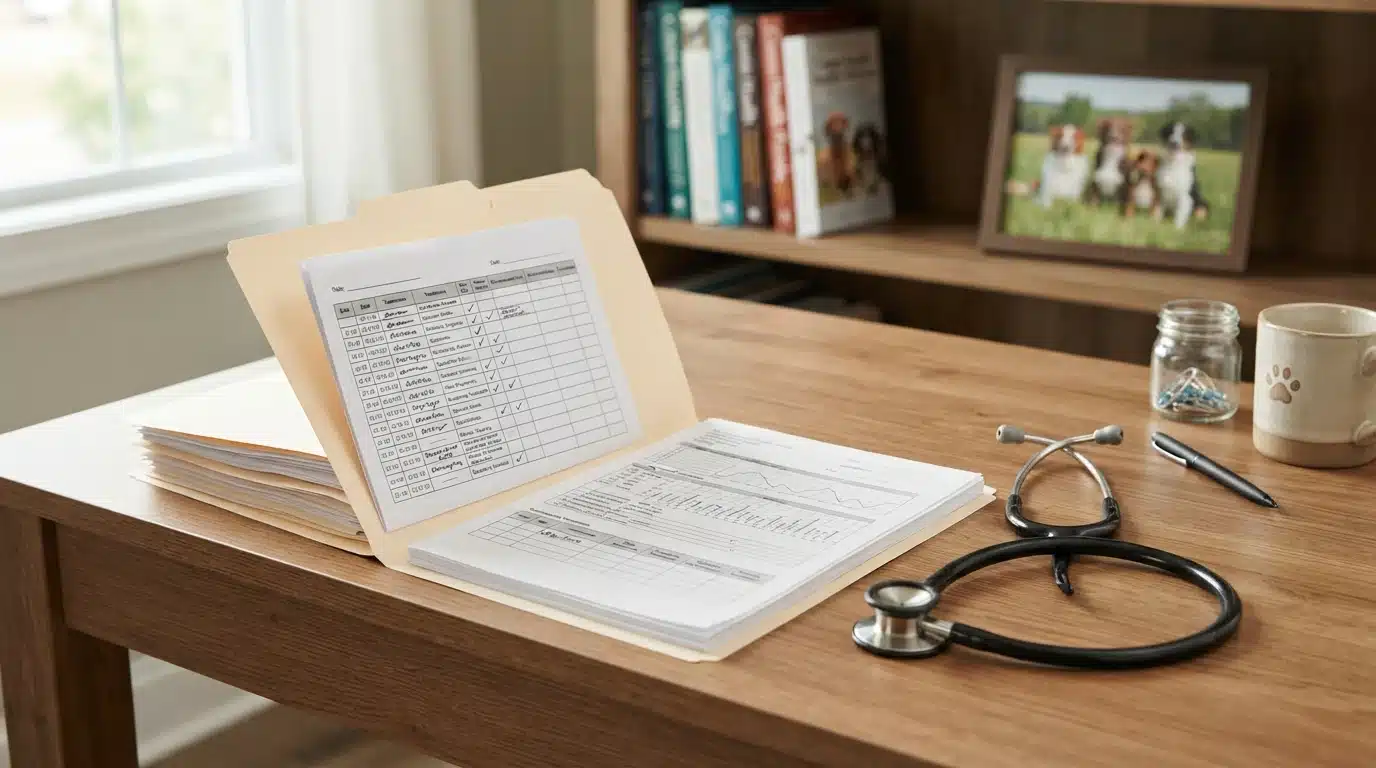
The documents to ask for
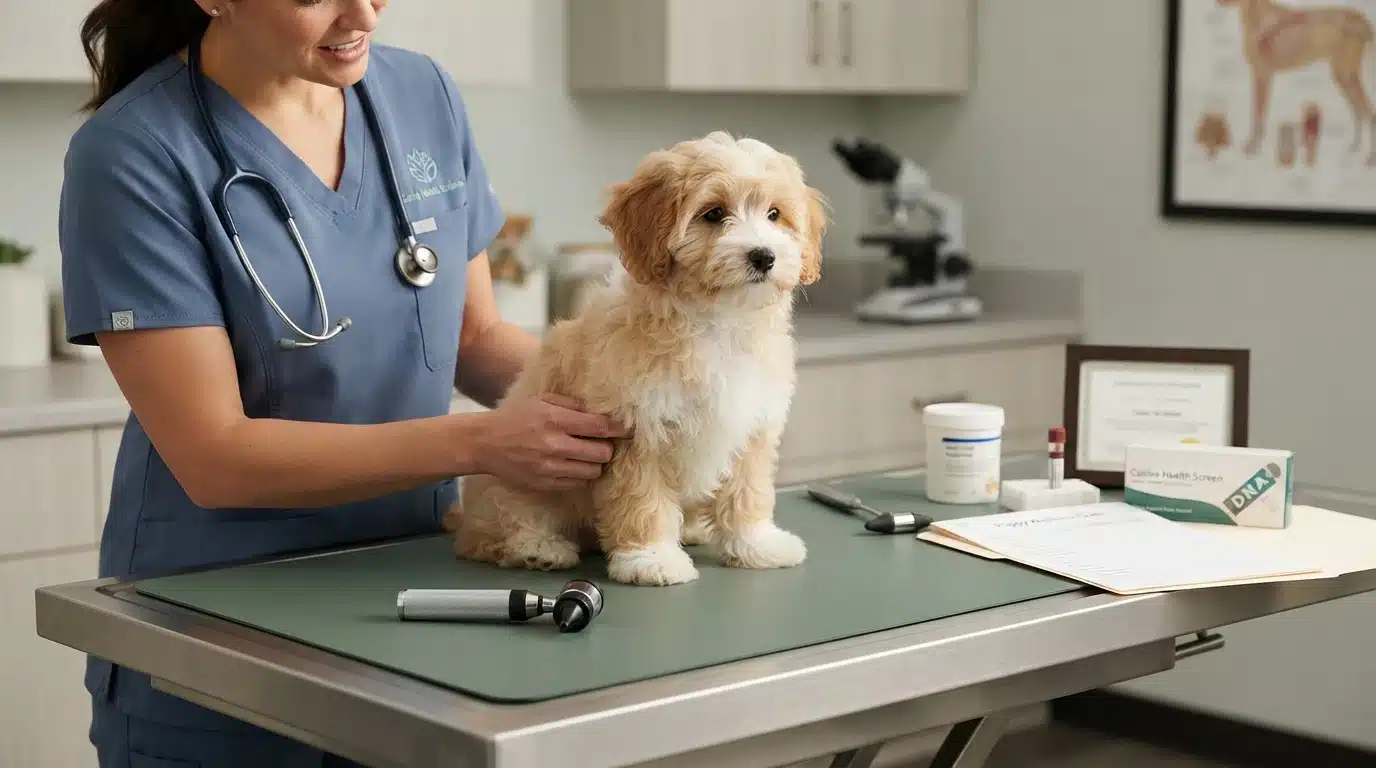
Request the vaccination and deworming records by date, the vet or clinic name, and any written health guarantee in the purchase agreement. For Havanese, Havapoo and Cavapoo litters, also ask for parent OFA or eye exam results. Paper should show the litter, not just the breed.
Reading a schedule without inventing a standard
Deworming often starts around two weeks of age and repeats every two weeks until 16 weeks, while core vaccines repeat every few weeks, according to Petco’s vet-reviewed breeding guide. Compare the dates to the puppy’s age. Gaps of several weeks deserve a question, not an accusation.
What records cannot tell you
Records confirm care that already happened. They cannot predict adult hips, hearts or allergies, and a clean file is not a health guarantee. Judge the records as one piece of evidence alongside how the litter behaves in front of you.
Watching Temperament: How the Litter Behaves Together
One puppy on its best day tells you little. Watch the whole litter for 20 minutes or more and you’ll see the patterns that predict how each pup handles new homes, new hands and new noise.
Approach, retreat and recovery
Walk in and sit on the floor at puppy level. Curious pups should wander over, sniff, maybe nibble a shoelace, then wander off and come back. What matters most is recovery: a pup that startles at a dropped set of keys, checks the noise, and returns to play is learning resilience. A pup that freezes or bolts and stays gone for minutes may just need more handling. Note which pups recover fast, because those are usually the easiest to train.
How the litter treats each other
Littermates teach bite control, patience and how to lose a tussle. Rough play is normal; watch for the way it ends. Healthy litters take turns, yelp when play gets too hard, and the other pup backs off. Red flags are different: one puppy getting pinned constantly, siblings that gang up on the smallest pup, or growers who never release. Ask how pups are grouped and whether any are separated for size or confidence, since a fair grouping shows the breeder is watching temperament daily.
What the seller’s behavior tells you
A good breeder narrates, and doesn’t stage. Expect honest labels like “this one is the bold one” or “she takes longer to warm up,” matched to what you see. Ask which pup they’d place with a quiet home versus an active one, and why. Beware anyone who grabs the boldest pup, declares it “the best,” and hands it to the first buyer, because matching should flow from your answers, not their sales pace. If you’re buying a Havanese, Havapoo or Cavapoo litter sight unseen through delivery, ask the breeder to describe each pup’s exact behavior during a video call and compare it to what you’ve read about the breed’s usual temperament.
Questions That Reveal a Responsible Seller
The right questions to ask a puppy breeder separate real evidence from polished marketing. Ask them all, and take notes.
Questions about the home and the puppies’ daily life
Ask where the litter sleeps, who handles the puppies each day, and how often. Follow up with what sounds they have already heard, such as vacuums, doorbells or children at play. A confident answer names routines and people. A vague one, like “they live in our house,” describes a location, not daily care.
Questions about the parents and the pairing
Ask to meet the mother, or see recent video if she lives with a guardian family. Ask why these two parents were paired, and what health testing each one passed. Also ask how many litters the mother has had, because a dog bred every heat cycle is a warning sign. Good breeders explain their reasoning without hesitation.
Questions about the transaction
Ask for the written purchase agreement before you pay anything, and read the deposit terms closely. Confirm what happens if your puppy gets sick in the first days home, and whether refunds, replacements or support apply. Ask who arranges delivery, what it costs, and how the puppy travels. Responsible sellers, including small Utah programs, put all of this in writing so both families share the same expectations.
Common Mistakes to Avoid
Mistakes that cost money or trust
The biggest mistake is falling in love with one puppy before you judge the litter. You miss temperament problems that show up only when you watch the group for 20 minutes or more. Second, take the “family-raised” label at face value without asking for photos, videos or a visit. Third, skip the health records. Missing deworming dates or vaccine entries in the first 16 weeks are red flags, not paperwork details. Fourth, sign anything without a written purchase agreement that spells out deposit terms and what happens if the match falls through. Pay before you’ve verified all three. A breeder like Sage Puppies puts these terms in writing, and any trustworthy program will do the same. Trust shows up in documents, not in labels.

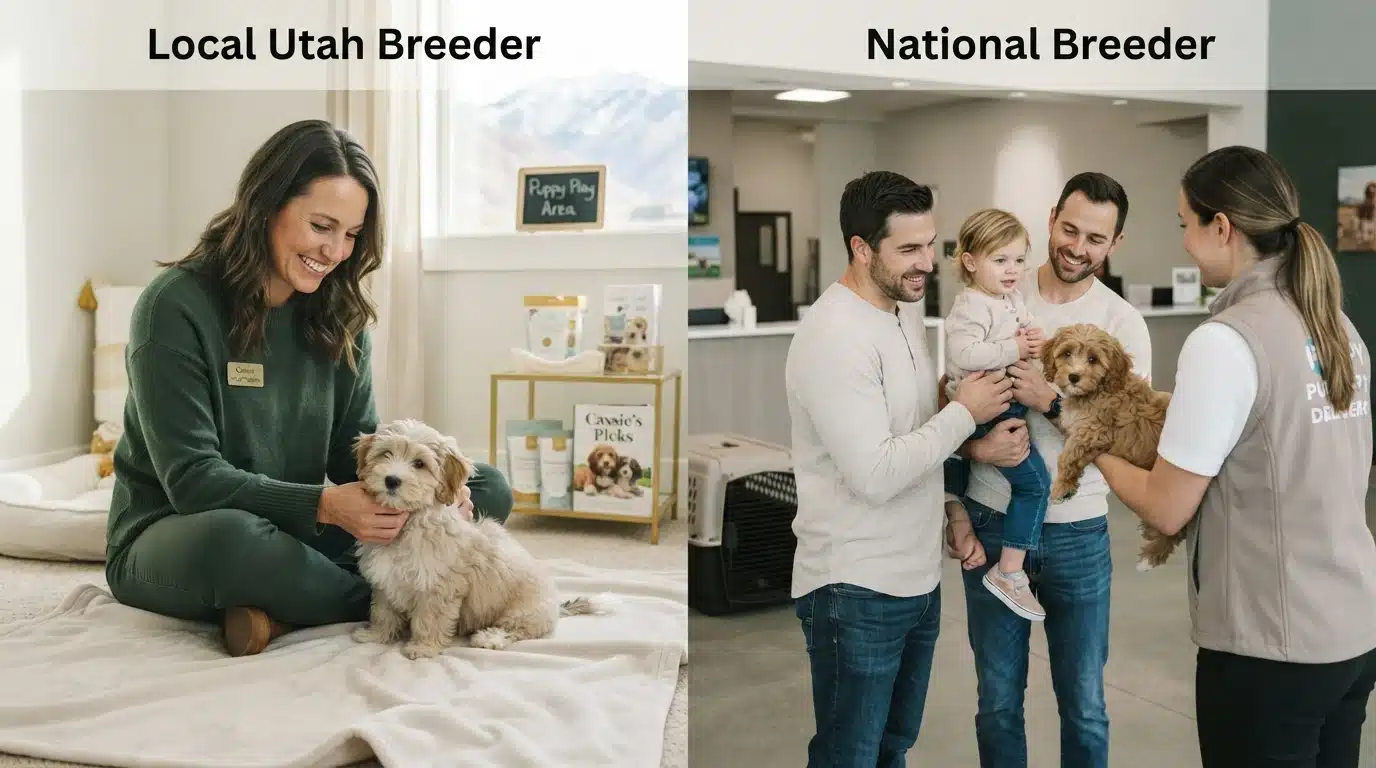
Ready to put this checklist to work? See how Sage Puppies raises each Havanese, Havapoo and Cavapoo litter in one family home, then apply to meet the whole litter in person in South Jordan or arrange delivery anywhere in the US.
Frequently Asked Questions
Q1: How do I evaluate a family-raised litter of puppies?
Judge the whole litter in four steps: verify the seller, request health records, watch all the puppies together for 20 minutes, and read the written purchase agreement before paying anything.
Q2: What health records should a breeder provide?
Ask for vaccination and deworming dates, the clinic name, any vet exam notes, and parent OFA or eye test results. Dates matter as much as entries.
Q3: How long should I watch a litter before choosing?
Twenty minutes or more. Watch approach, retreat and recovery, plus how littermates end their play. One lethargic or fearful puppy can signal a problem for the whole group.
Q4: What questions should I ask a puppy breeder?
Ask who handles the puppies daily, why the parents were paired, how many litters the mother has had, and what happens if the puppy gets sick in the first days home.
Q5: Can I evaluate a litter sight unseen through delivery?
Yes. Ask for live video of the pen and each puppy’s exact behavior, and request photos of the litter inside the living space, not staged portraits.
Q6: Does family-raised guarantee a healthy puppy?
No. The label describes where a litter lived, not the care it received, so it carries no legal definition and proves nothing without documents behind it.
Conclusion
Judging a family-raised litter comes down to evidence, not labels. Verify the seller, read the vaccination and deworming dates against the puppy’s age, watch all the puppies together for at least 20 minutes, and review the written purchase agreement before money changes hands.
Trust what you can document: parent health testing, honest descriptions of each puppy’s temperament, and a home where littermates hear everyday noise and meet gentle hands during the socialization window. A seller who shares records freely and answers detail questions without hesitation is showing you how the whole program works.
Whether you visit a litter in South Jordan, Utah, or evaluate one through video before nationwide delivery, the same method applies. Judge the litter as a unit, and the paperwork will match what your eyes tell you.