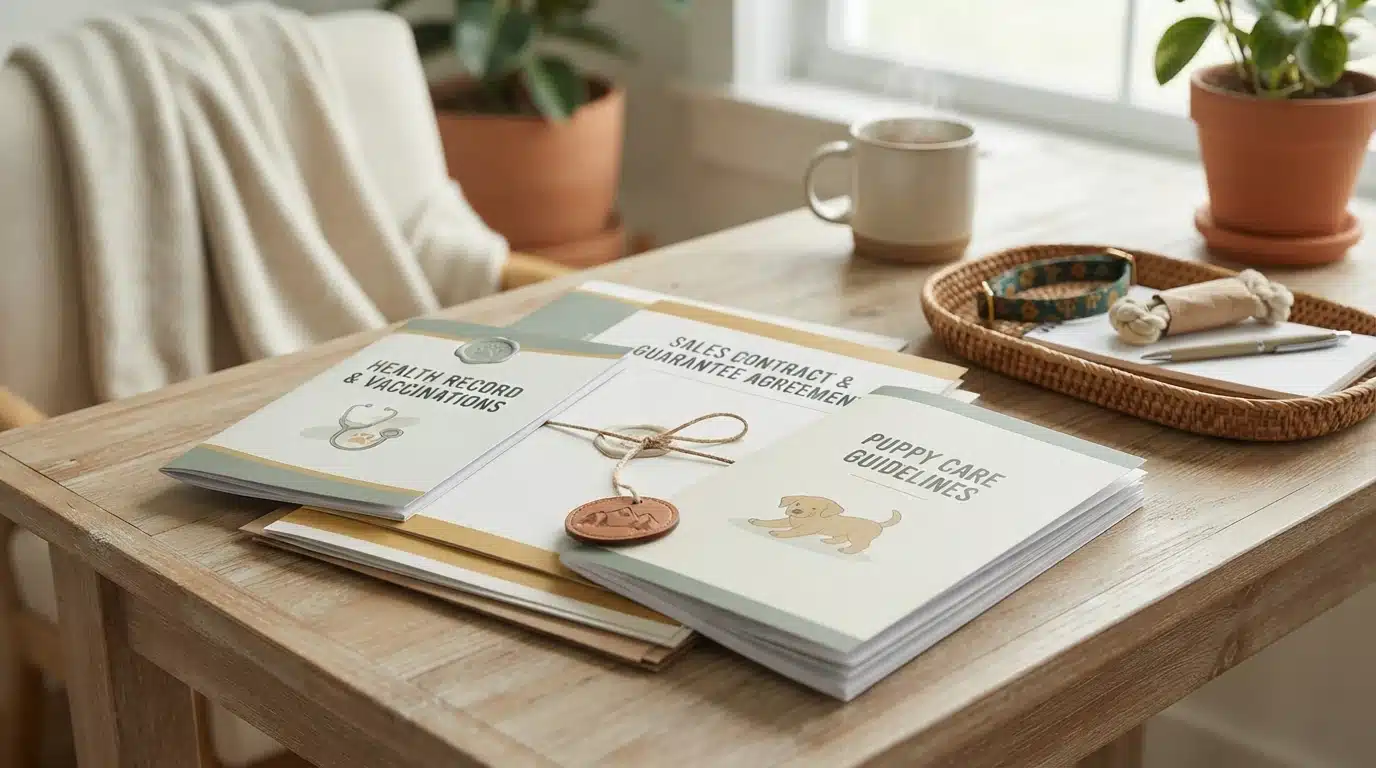
Quick Summary: Neither local nor national breeders are automatically safer; look for verifiable parent health testing, complete vaccination and veterinary records, a clear contract, and a documented transport plan. Local Utah breeders offer the chance to visit, meet the mother, and avoid shipping costs, while reputable national breeders may provide wider selection and stronger documentation. Walk away if records are missing, health questions go unanswered, or a deposit is requested before the contract is reviewed.
Here is the short answer in the local breeder vs national breeder question: neither distance nor shipping decides safety. A local program is not automatically safe, and a national one is not automatically a puppy mill. What protects you is a stack of documents, including genetic health testing, a clear contract, complete puppy vaccination records, and a written transport plan. Where you buy changes only one piece of that stack.
Utah buyers face a wide spread of choices: in-state breeders a short drive away, national breeders that fly puppies to Salt Lake City, and online listings that blur the line between the two. First-time buyers often cannot tell real differences from marketing language.
Sage Puppies, a small South Jordan program founded in 2025 that raises Havanese, Havapoo and Cavapoo puppies, is a useful local example because you can visit, meet the dogs and collect paperwork before paying a balance. This local vs national puppy breeder comparison covers the dimensions that carry real risk, then shows how to find a reputable breeder with a document checklist you can apply to either option before you commit.
Local Utah Breeder vs National Breeder: At a Glance
| Local Utah breeder | National breeder | |
|---|---|---|
| Health testing transparency | Often shared directly and in person; parents, test panels and vet records can usually be reviewed face to face | Typically posted online as test reports; parents may be located in another state and rarely visited |
| Licensing and oversight | Small in-home programs may hold no state breeder license; larger operations may hold USDA or local city licensing | May hold USDA licensing if it has five or more breeding females and sells sight unseen; state license depends on home state rules |
| Contracts and health guarantees | Paperwork signed at pickup in Utah, so the venue and governing law are familiar to the buyer | Signed electronically, often with the breeder’s home state as venue rather than Utah |
| Transport and travel | No air travel required for most Utah buyers; pickup in the South Jordan area | Air or ground transport required, with airlines requiring a minimum of 8 weeks of age and a health certificate |
| Ongoing breeder support | Face-to-face handoff and easier follow-up questions after pickup | Usually remote, by phone or email, after the handoff |
| Best for | Utah families who want to meet the litter, see the environment and avoid flight risks | Buyers outside a breeder’s home region, or those who want a wider selection of litters and timing |
How Local Utah and National Breeders Differ
Local Utah breeder
A local Utah breeder raises litters in state and hands over puppies in person, so you can visit the home before you pay. You can review the parents, health test panels and vet records face to face, and pickup in the South Jordan area means no flight for most Utah families.
Key strengths
- In-person visits to see the environment and meet the litter
- Paperwork signed at pickup, under Utah’s familiar venue
- Easier follow-up questions after the handoff
National breeder
A national breeder sells across states, often through a network or online marketplace that fills orders from whichever licensed seller is available. Health test reports are usually posted online, but parents live out of state and are rarely seen. Transport by air or ground is required, with airlines requiring a minimum of 8 weeks of age and a health certificate.
Key strengths
- Wider selection of litters and timing
- Documented health and licensing records available online
- Remote support by phone or email after delivery
Is a Local Utah Breeder Actually Safer Than a National One?
A local breeder is not automatically safer. Distance changes logistics, not care. A good breeder anywhere proves health testing, offers clear puppy health guarantee terms, and lets you see where puppies live. What actually determines safety:
- Verifiable parent health testing
- A written contract you can review
- Vaccination and vet records
- Transport practices that fit the puppy’s age
- Honest answers about the parents
What distance actually changes
Distance mainly changes transport and oversight. Local pickup means no flights, no crates in cargo, and a visit before you commit. A shipped puppy may fly or ride with a ground transporter, and airlines require pups to be at least 8 weeks old with a health certificate.
Where local breeders have a real edge
You can visit, meet the mother, and watch how puppies behave before money changes hands. Problems are harder to hide in person. Utah families also skip interstate paperwork, and follow-up support sits a short drive away instead of an email thread.
Where national breeders have a real edge
A breeder with a longer track record may document more health testing than a newer local program. Some national programs run structured applications, flight nannies, and defined health terms. For rare pairings, a wider pool helps. Judge each breeder’s paperwork, not the map.
Health Testing and Screening Standards
Health testing separates real breeding programs from polished websites. It matters more than distance, so learn what the paperwork should look like before you compare breeders in Utah or beyond.
What a real health test report contains
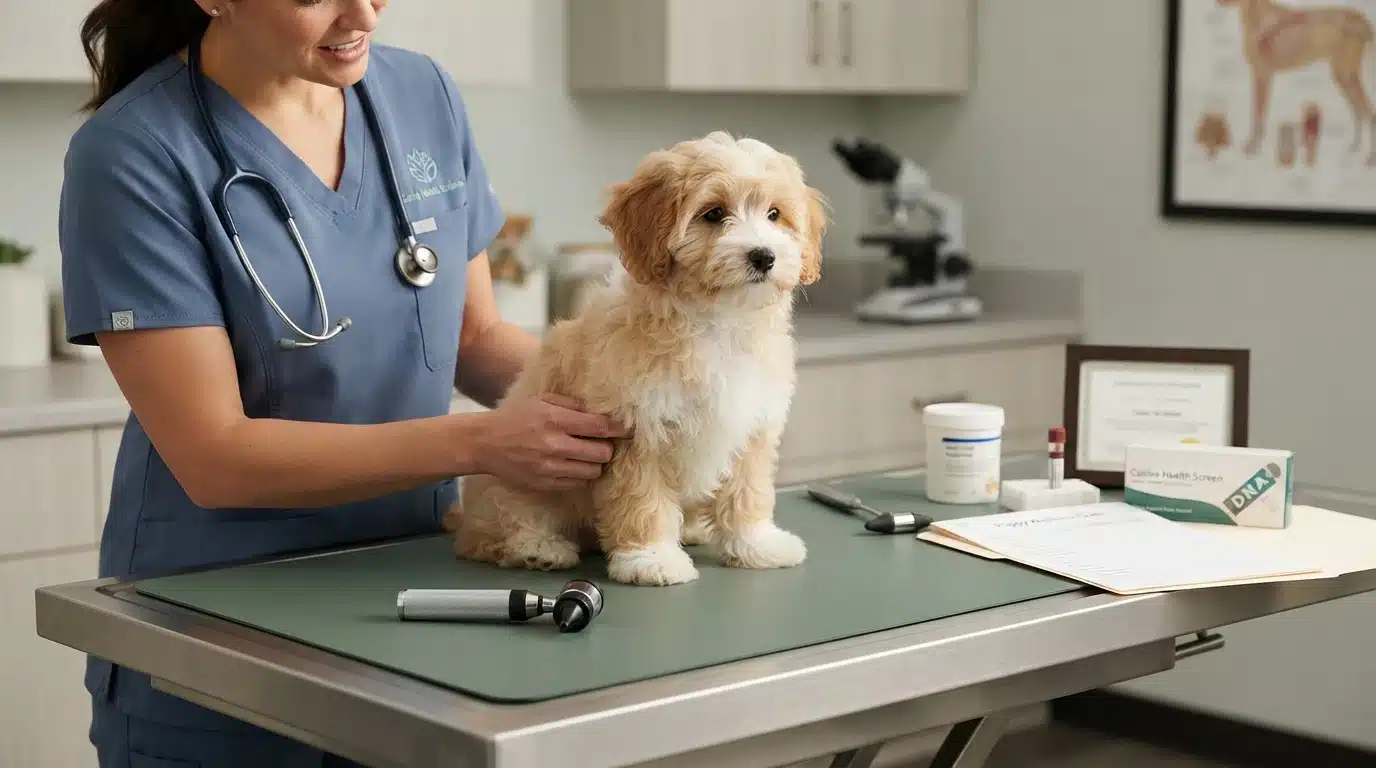
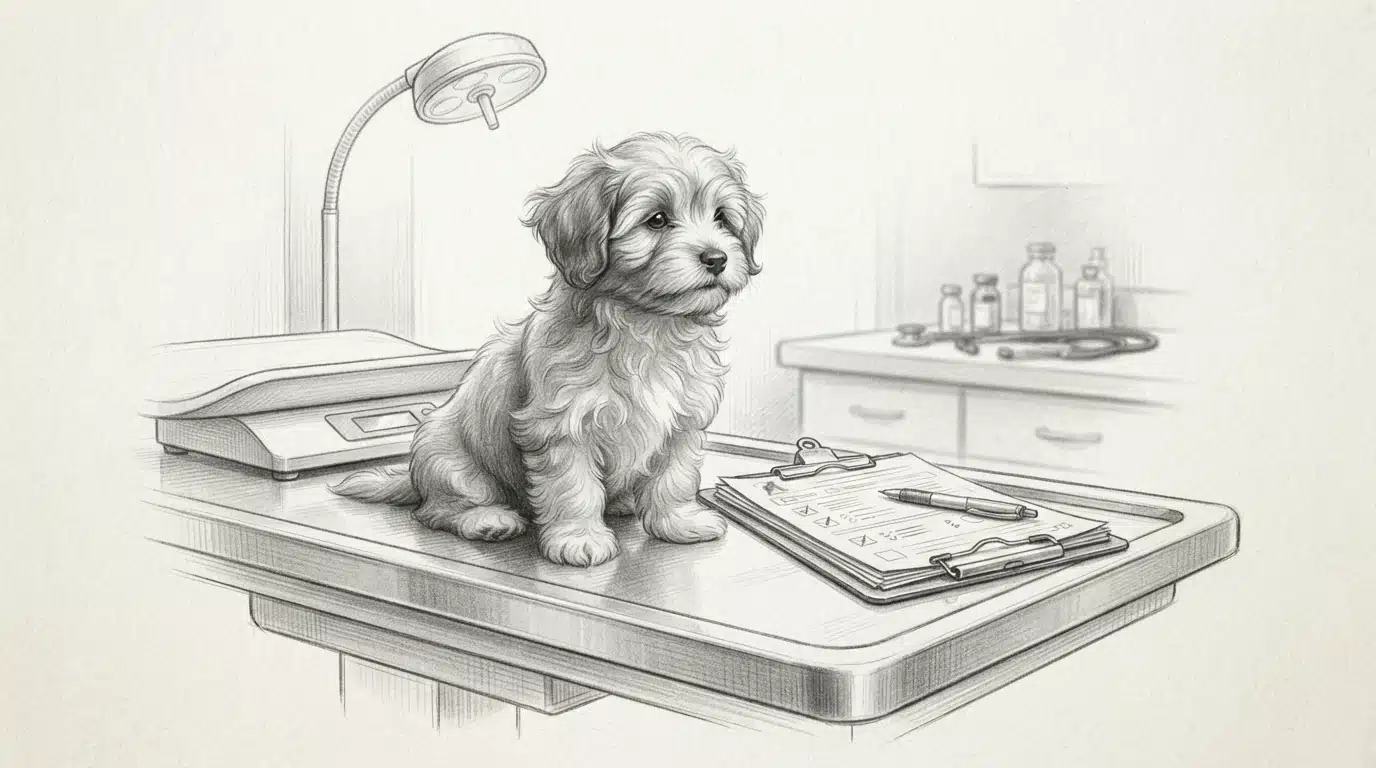
A legitimate report lists the dog’s registered name, date of birth, and the test itself. For Havanese, Havapoos and Cavapoos, ask about OFA certifications for hips, knees (patellas), eyes and cardiac, plus DNA panels for inherited conditions like progressive retinal atrophy. Results should be verifiable in the OFA database, not just a photo of a “passed” sheet. A breeder who can’t produce documentation, or who says testing isn’t needed for these breeds, has answered your question.
Comparing documentation across both breeder types
Local and national breeders should meet the same bar. Ask each one for the parent dogs’ OFA or PennHIP numbers, current eye exams, and the puppy’s vaccination and deworming records with dates. If a puppy ships, airlines require a health certificate from a licensed veterinarian, so that paper tells you a vet saw the animal recently. A local pickup gives you the same records in person, which makes forgery harder and follow-up questions easier.
Questions that reveal the answer
Ask specific ones. “What are the sire and dam’s OFA numbers?” gets a fast check. “Which DNA panels did both parents clear?” separates real screening from marketing. “Can I see the vaccination record with dates and the vet’s name?” confirms the puppy’s care. For shipping, ask who issues the USDA health certificate for puppy transport and when. Vague answers, scanned copies with missing names, or a promise of “papers coming later” are all reasons to walk away. A breeder confident in their testing will send documents before you ask twice.
How to Tell If a Puppy Was Raised Locally or Shipped In
Ask the breeder three things before you fall in love with a photo: where the litter was whelped, who handled the first eight weeks, and when the puppy left that home. Then check the records against the answers.
- Compare the whelping date with the vaccination record dates and the vet clinic’s address.
- Match the health certificate issue date to the travel date.
- Note who signs as the breeder of record on the puppy contract.
If the vet visits all happened out of state, the puppy was raised elsewhere, no matter what the listing implies.
Record timing patterns to compare
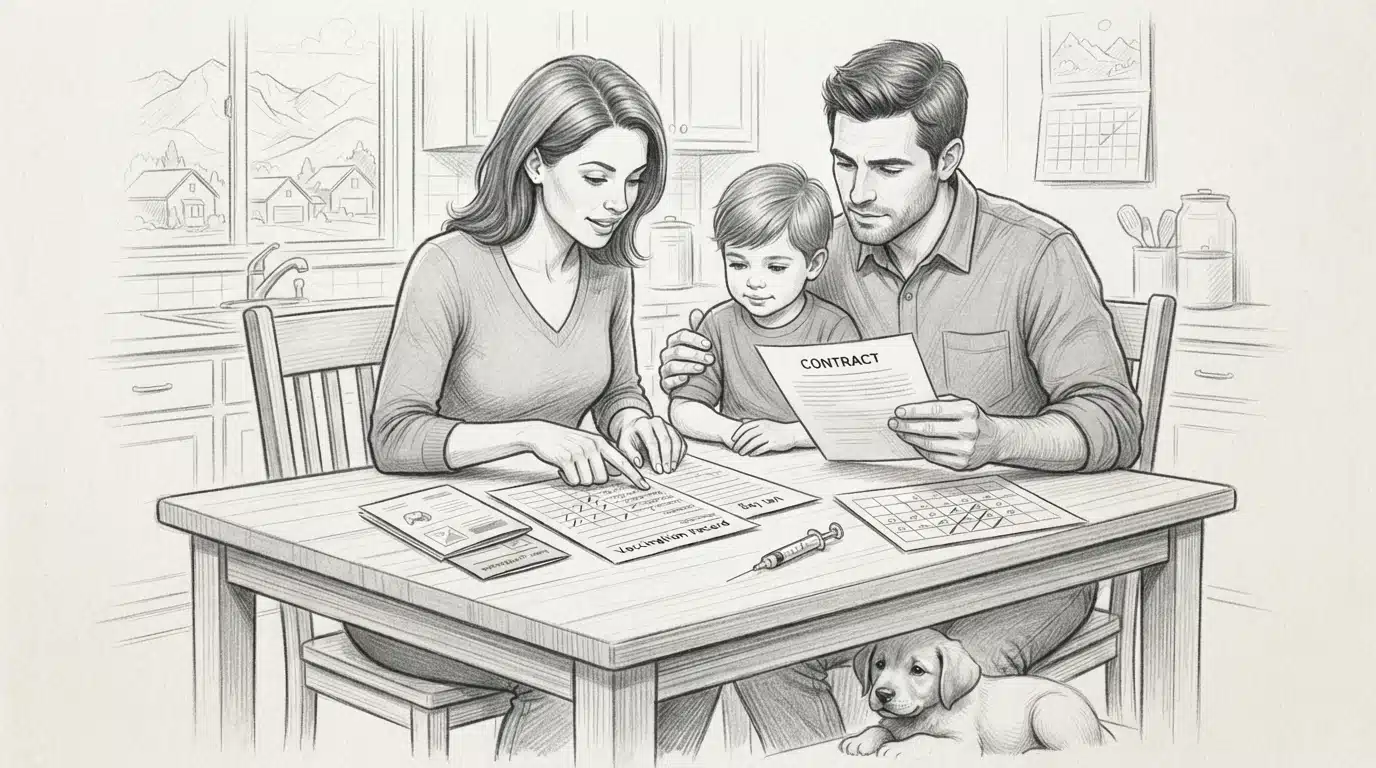
Shipped puppies show a paperwork gap. Vaccines may be recorded by one clinic, then a health certificate appears from a clinic hundreds of miles away, issued days before transport. Local puppies show one clinic, one vet, and steady visits from six weeks onward. Ask for the actual records, not summaries. USDA rules require a health certificate for interstate transport, so a shipped puppy will always have one dated near its travel day, while a locally raised pup in Utah may not.
What a visit actually reveals
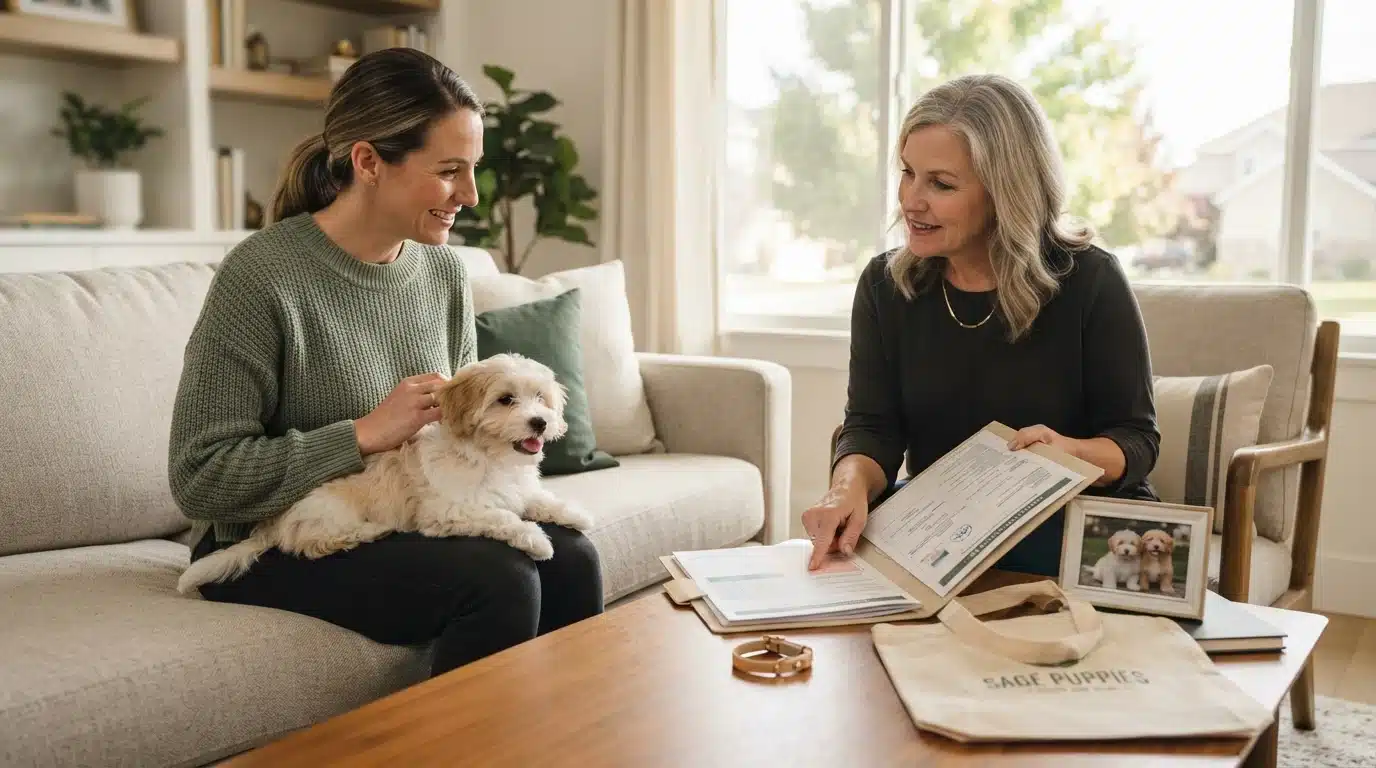
A real visit answers what paperwork cannot. You see the mother, the space where the litter sleeps, and how the puppy reacts to ordinary household noise. Puppies raised in a home are usually curious about new people and already used to vacuums and doorbells. Puppies fresh off transport often seem shut down, clingy, or unsure of grass underfoot. Programs like Sage Puppies welcome visits in the South Jordan area, because seeing the dam and the living space settles the local question faster than any document.
Limits of record checks
Records prove where vet care happened, not how the puppy lived. A breeder can whelp locally, then send the litter to a boarding or training facility for weeks, and the paperwork still looks clean. Conversely, a puppy raised out of state by an excellent breeder may be healthier than a poorly run local one. Use records to rule out obvious shipping, then judge the breeder’s health testing, contract, and references on their own merits, since distance alone never guarantees quality.
Transport, Travel and the First 72 Hours at Home
How a puppy reaches your door matters as much as where it was born. The safest setup is the one you can verify in writing, whether the breeder is ten miles or a thousand miles away.
The federal rules that apply either way
Any puppy shipped across state lines must follow USDA rules. In practice, that means:
- The puppy is at least 8 weeks old before transport
- A licensed veterinarian issued a health certificate, usually within 10 days of travel
- The transporter is USDA-licensed or works with a licensed breeder
Ask for the certificate number and the carrier’s license number. A breeder who hesitates here is telling you something.
Ground transport, air travel and nanny options compared
| Option | How It Works | Watch For |
|---|---|---|
| Ground transporter | Puppy rides in a crate van with scheduled stops | Long trips; ask for rest and feeding logs |
| Air cargo | Puppy flies in a climate-controlled hold | Airlines set their own crate and temperature rules |
| Flight nanny | A person carries the puppy in the cabin | Costs more, but the puppy stays supervised |
For small breeds like a Havanese or Cavapoo, a cabin flight nanny is often the gentlest long-distance option. Ground transport is fine too, but ask how often the driver checks on the dogs.

Adjusting a puppy in the first 72 hours
The first three days set the tone. Keep the world small and boring, and the puppy settles faster.
- Day 1: Let the puppy explore one quiet room. Keep handling short and calm.
- Day 2: Start a simple routine for potty breaks, meals and naps in the same spots each time.
- Day 3: Add brief play sessions and begin gentle crate introductions.
Skip big outings until your vet clears the puppy, usually after the next vaccine round. If your breeder sends a go-home bag with food and a scented blanket, use both. Familiar smells and the same food reduce stomach upset, and most Havanese and doodle mixes settle into a new home within a few days.
Contracts, Guarantees and Consumer Protection
A deposit locks you into whatever the contract says, so read it before you pay. The first things to review: what the health guarantee actually covers, which conditions are excluded, how long the window lasts, and what proof a vet visit requires.
Reading the health guarantee language
Look for three things in any puppy health guarantee. First, coverage terms: which genetic conditions are named, how long the window runs, and what documentation you need. Second, the remedy: refund, replacement puppy, or reimbursement toward vet bills. Third, the return clause, which should let you give the puppy back at any age. The AKC’s contract overview notes that clear written terms separate serious breeders from casual sellers. Vague phrases like “healthy at time of sale” protect no one.
Why the license word needs context
“Licensed” can mean very different things. A USDA license applies to large-scale breeders who sell sight-unseen, mostly by shipping. Many small Utah programs, including home-based Havanese, Havapoo and Cavapoo breeders, operate as hobby breeders and may not need federal licensing at all. So a missing USDA number is not proof of a problem, and a USDA number alone is not proof of quality. Judge the health testing, contract and references instead.
Where disputes are actually heard
Distance shapes your legal options. With a local breeder, small claims court in your own Utah county is usually straightforward: the seller lives and sells in-state, so service and enforcement are simple. With an out-of-state national breeder, the contract’s fine print often names the seller’s home state for any dispute, meaning you may need to sue there. Some states also have puppy lemon laws; Utah’s protections are narrower. Read the venue clause before your deposit leaves your account.
Cost, Selection and Waiting Time Trade-Offs
Total cost, not sticker price
Sticker price rarely tells the whole story. A Utah pickup may cost more up front, but it skips flight nanny fees, crate costs and ground transport, which often add $500 to $1,000 to a shipped puppy. Add travel to pick up the puppy, time off work and overnight stays if the drive is long. Total what you will actually spend before you compare prices.
Selection and wait time
A national breeder gives you more litters to choose from, so you may find the right coat, temperament or timing sooner. A local breeder’s list is shorter, and good Utah programs often have a wait of several months for Havanese, Havapoo and Cavapoo litters. Waiting locally usually buys you a visit before you commit, which a shipped puppy cannot offer.
A worked Utah example
Say a Salt Lake family wants a Havapoo. A shipped puppy might list at $3,200 plus $650 transport, landing near $3,850. A comparable in-state puppy at $3,800 with a 90-minute pickup drive totals about $3,850 too. Same money, one big difference: you met the breeder. For a deeper look at puppy price ranges in Utah, budget line by line before you decide.
Which Should You Choose: Local Utah or National Breeder?
Distance alone doesn’t decide safety. The breeder’s paperwork and practices do. Still, your situation makes one path easier.
Choose local when
You want to see where your puppy lives before money changes hands. A Utah breeder lets you meet the mother, check the space, and drive home with an eight-week-old puppy instead of waiting on a flight. You also skip the $500 to $1,000 in transport fees that often come with a shipped pup. If you’re comparing in-state options, start with these Havanese, Havapoo and Cavapoo puppies in Utah.
Choose national when
The breed you want is rare in Utah, or the breeder with the strongest health testing and cleanest contract lives out of state. A national breeder can be safe if they provide a USDA health certificate, use a flight nanny or ground transporter you can verify, and let you video call before you commit. Ask who actually flies or drives the puppy, and what happens if the puppy gets sick in transit.
Walk away from either if
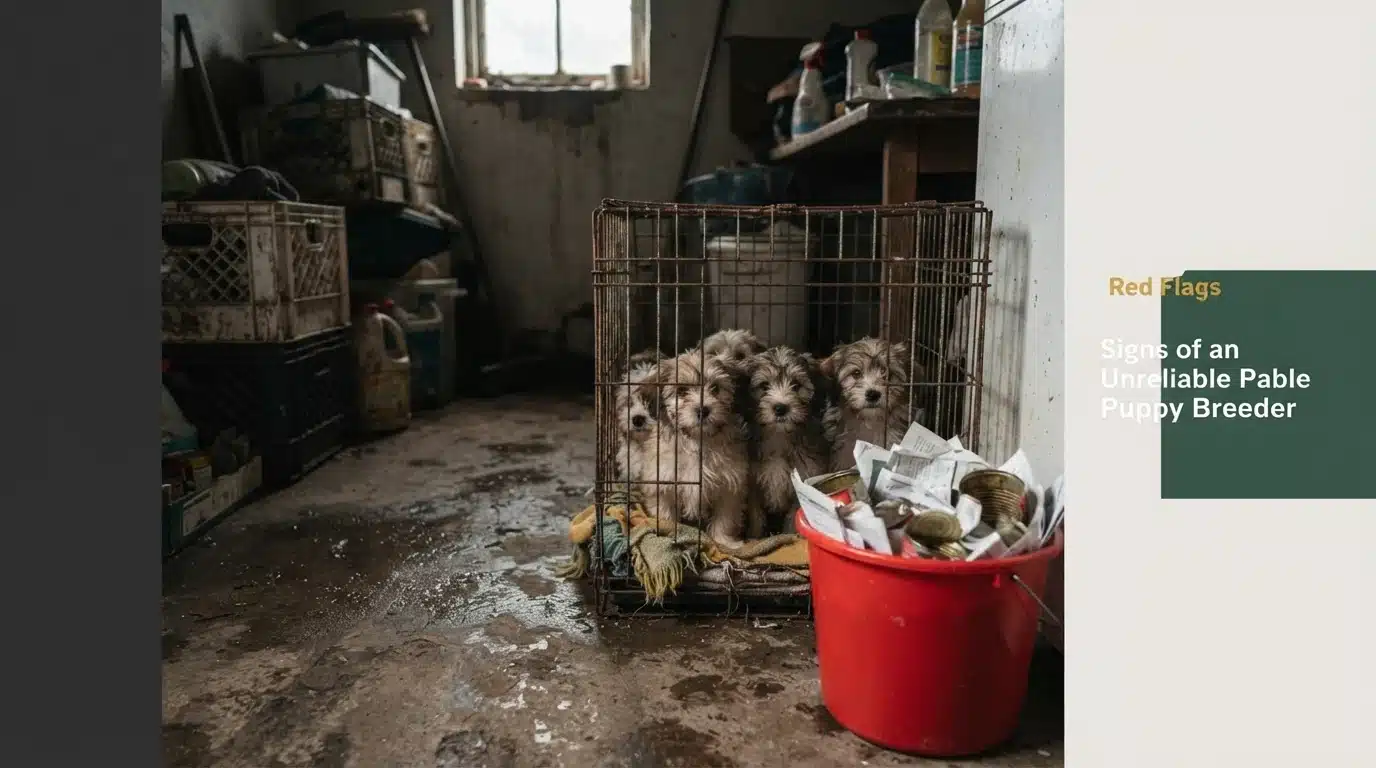
The breeder dodges a video call or visit, won’t share the mother’s health testing, or pushes you to pay a deposit before you’ve read the contract. Other red flags: no veterinary records, no written health guarantee terms, or puppies always “ready now” with no questions asked about your home. A good breeder screens you as hard as you screen them.
(word count target reached)

You came here asking which breeder is safer. The honest answer: the one who verifies health, contracts and how your puppy travels, and who answers your questions plainly. If that sounds like the breeding you want, meet the Utah families already matched through Sage Puppies, or start the application today.
Frequently Asked Questions
Q1: Is it safer to buy a puppy from a local Utah breeder or a national breeder?
Neither is automatically safer. Safety comes from verifiable health testing, a written contract, complete puppy vaccination records and a clean transport plan. Judge the paperwork, not the distance.
Q2: Are national puppy breeders that ship to Utah safe to buy from?
They can be. Confirm a USDA health certificate for puppy transport, a flight nanny or licensed ground transporter, a video call to see the litter, and health guarantee terms you have read before any deposit.
Q3: How can I tell if a puppy was shipped in or raised locally?
Compare the whelping date with vaccination record dates and the vet clinic’s address. Out-of-state clinic visits and a health certificate issued days before travel signal shipping.
Q4: What questions should I ask before paying a deposit?
Ask for the parents’ OFA numbers, which DNA panels both cleared, and the vet’s name on the puppy’s records. A confident breeder sends documents before you ask twice.
Q5: How much extra does a shipped puppy cost?
Transport typically adds $500 to $1,000 for flight nanny fees, crates or ground transport. Add those line items to the sticker price before you compare Utah pickup options.
Conclusion
Neither a local Utah breeder nor a national one is automatically safer. Safety comes from what you can verify: parent health testing, written puppy health guarantee terms, complete puppy vaccination records, and a clean transport plan with a USDA health certificate for puppy transport when shipping applies.
Distance changes logistics, not care. A local pickup lets you meet the mother and skip $500 to $1,000 in transport fees, while a strong out-of-state program can be safe with a flight nanny and a contract you have read. Use the document checklist from this guide on every breeder, then choose the one whose paperwork holds up.