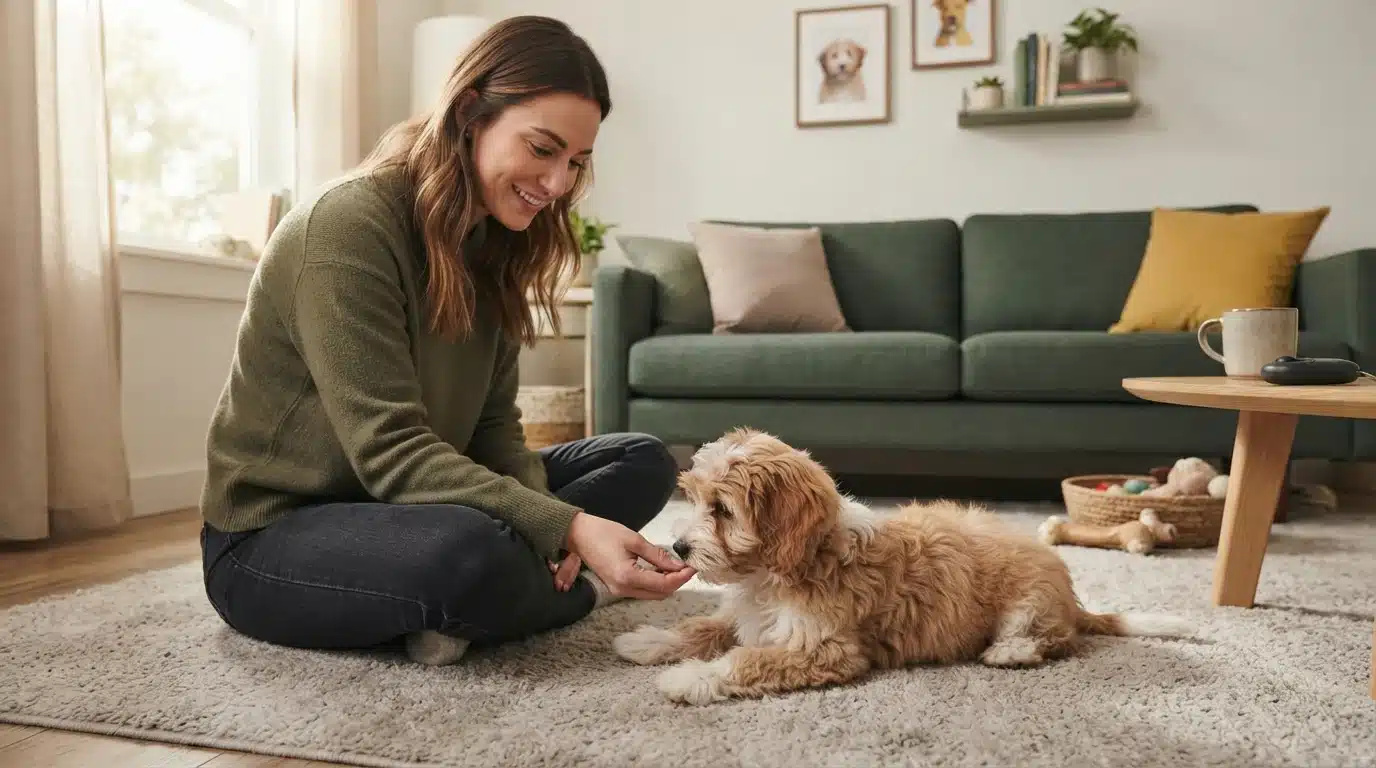
Quick Summary: Each puppy health screen proves only one specific thing: the puppy’s wellness exam shows its current care, while parents’ OFA, patella, eye, and cardiac records assess inherited risk, and DNA panels identify specific disease variants. Buyers should request all three layers, verify the actual results and dates through the OFA database, and understand that a CHIC number only confirms required testing was completed, not that every result was normal. Sage Puppies says it documents screenings for each Havanese, Havapoo, and Cavapoo parent, giving buyers verifiable records to review before paying a deposit.
Two breeders can both write health tested on their websites, and only one will show you the actual OFA radiograph report for the specific dog you are about to pay for. That gap is the problem with health testing explained by slogan instead of record. Each screening, from a puppy’s wellness exam to a parent’s DNA panel or patella certification, proves something narrow and specific, and none proves a puppy is guaranteed healthy for life. This guide walks through what every test checks for, sorted by whether the result belongs to your puppy or to each parent. We raise Havanese, Havapoo, and Cavapoo puppies in South Jordan, Utah, so we will also cover the CHIC requirements those breeds carry and how to review a breeder’s documents yourself.
What Each Puppy Health Test Actually Screens For
Health testing explained simply: each screen checks one thing. Some tests examine the puppy in front of you, some examine the parents’ joints and eyes, and some look at DNA for inherited disease variants. Confusing one layer for another is the most common mistake buyers make.
The Three Layers of Health Documentation
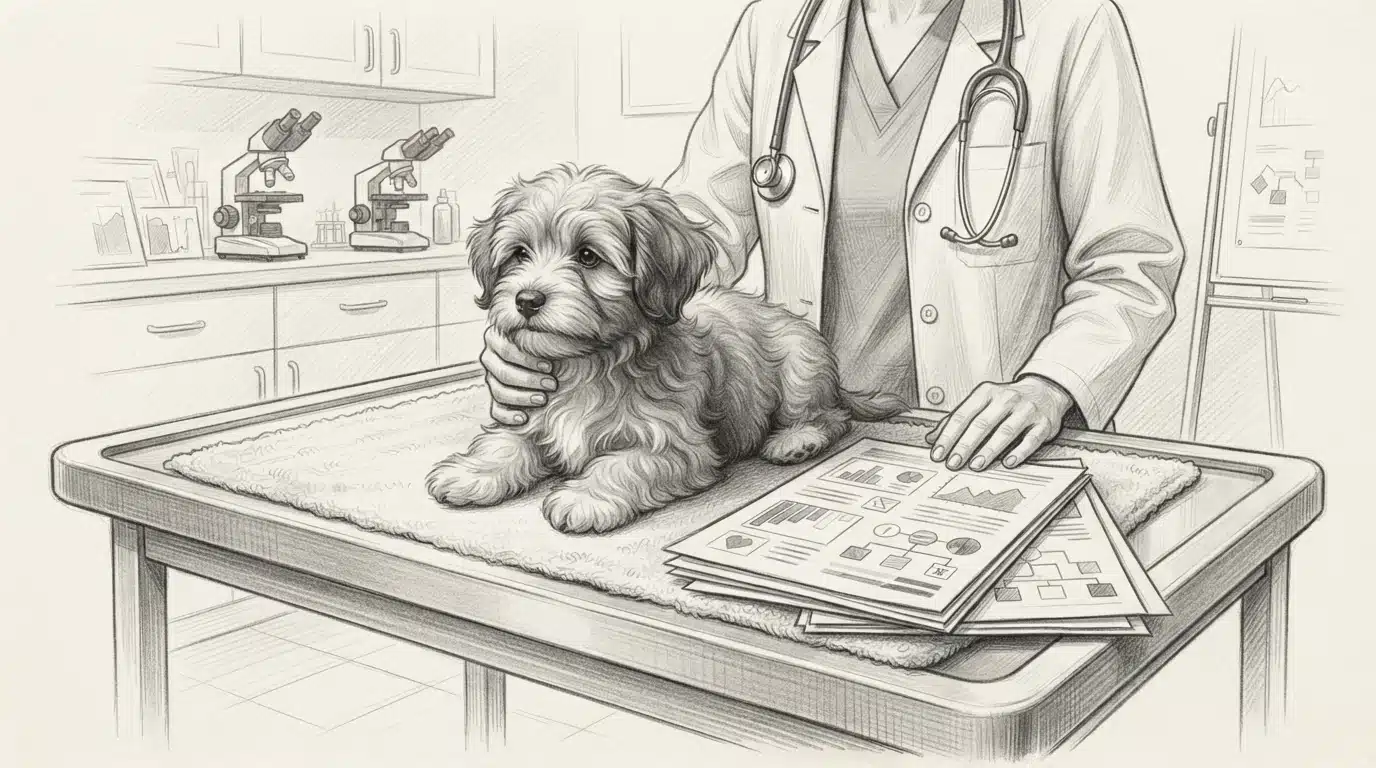
Every serious breeder’s paperwork falls into three buckets:
- The puppy’s own exam: a wellness check by a veterinarian, plus vaccination and deworming records.
- The parents’ clinical screens: X-rays, eye exams and heart exams certified through the OFA, since most of those tests need a mature dog.
- DNA results: lab tests on each parent showing clear, carrier or at-risk status for specific gene variants.
A Quick Map of the Screening Categories
Here is what each screen actually checks:
- Hip evaluation: radiographs read for hip dysplasia.
- Patella certification: grading for loose kneecaps, common in small breeds.
- Eye exam: an ACVO ophthalmologist checks for inherited eye disease.
- Cardiac exam: a vet listens for congenital heart defects.
- DNA panel: blood or cheek swabs screened for breed-specific variants.
The One Rule That Matters Most
A clean result on one layer never proves the others. A healthy puppy exam says nothing about the parents’ hips, and a clear DNA panel says nothing about patellas. Ask for all three layers, matched to your breed’s requirements. For Havanese families, our guide to asking a breeder about puppy health tests lists the exact screens.
DNA and Genetic Variant Testing
What a DNA Test Actually Measures
A DNA panel is a health testing explained simply by lab work: it looks for specific gene variants linked to inherited diseases. It does not test hips, knees, hearts or eyes, and it cannot promise a puppy will never get sick. A good panel covers the disorders relevant to the breed, such as cardiac and liver variants in Havanese lines.

Clear, Carrier, and At-Risk Explained
So what does a clear DNA test mean for a puppy? Labs such as Embark use three labels for each variant tested. Clear means the puppy carries no copies of the variant, so it will not develop or pass on that disorder. Carrier means one copy, and the puppy usually stays healthy but could pass the variant to future puppies. At-risk means two copies (or one, for dominant conditions) and a real chance of developing the disease. Cornell’s canine health center also recognizes “clear by parentage,” where both parents tested clear, which is common evidence for puppies too young to test themselves.
Why Crossbreeds Need Their Own Panel
Crossbreed parents should each be tested for their own breed’s risks, since a Havapoo or Cavapoo can inherit variants from either side. A parent cleared for one breed’s panel says nothing about the other breed’s variants. Ask to see each parent’s full DNA report, not just a summary. Sage Puppies documents both sides of the pairing, and our guide to buying a health-tested puppy locally walks through how to read these reports yourself. If a breeder claims the puppies are “hypoallergenic” or mutation-free without paperwork, treat that claim as marketing rather than evidence.
Hip, Patella, and Orthopedic Screening
Havanese, Havapoos, and Cavapoos are small breeds, so their biggest orthopedic risk is not the hips but the knees. Patellar luxation, a kneecap that slips out of its groove, is the problem breeders screen for most often. Hips still get checked, because a dog can carry more than one joint issue. Here is what each test actually proves.
What Hip Radiographs Measure
Hip X-rays show how the ball and socket fit together. Loose hips appear as poor coverage of the femoral head, and that looseness is what leads to dysplasia later. Breeders usually send images to the OFA, which grades hips fair, good, or excellent. A PennHIP evaluation measures hip laxity as a distraction index number instead, so it can flag risk in younger dogs.
What a Patella Certificate Checks
A patella exam is quick. A veterinarian manually moves each kneecap and assigns a grade from 1 to 4, where grade 4 means the kneecap stays dislocated, according to OFA grading guidelines. The certificate lists a result for each knee, so check that both knees appear, not just one. Grades 1 and 2 may never cause trouble, but they still matter in a breeding dog because the trait runs in families.
Questions to Ask About Any Radiograph Report
Ask to see the actual OFA record, not a text-message summary. Then ask three things. Which dog was tested, the dam or the sire? How old was that dog? And what grade did each knee receive? Reputable breeders keep results searchable in the OFA database, so a missing record is a fair reason to keep looking. Our walkthrough of verifying a puppy’s health test results shows where to find each record.
Eye, Cardiac, and Specialist Evaluations
What an Eye Examination Covers
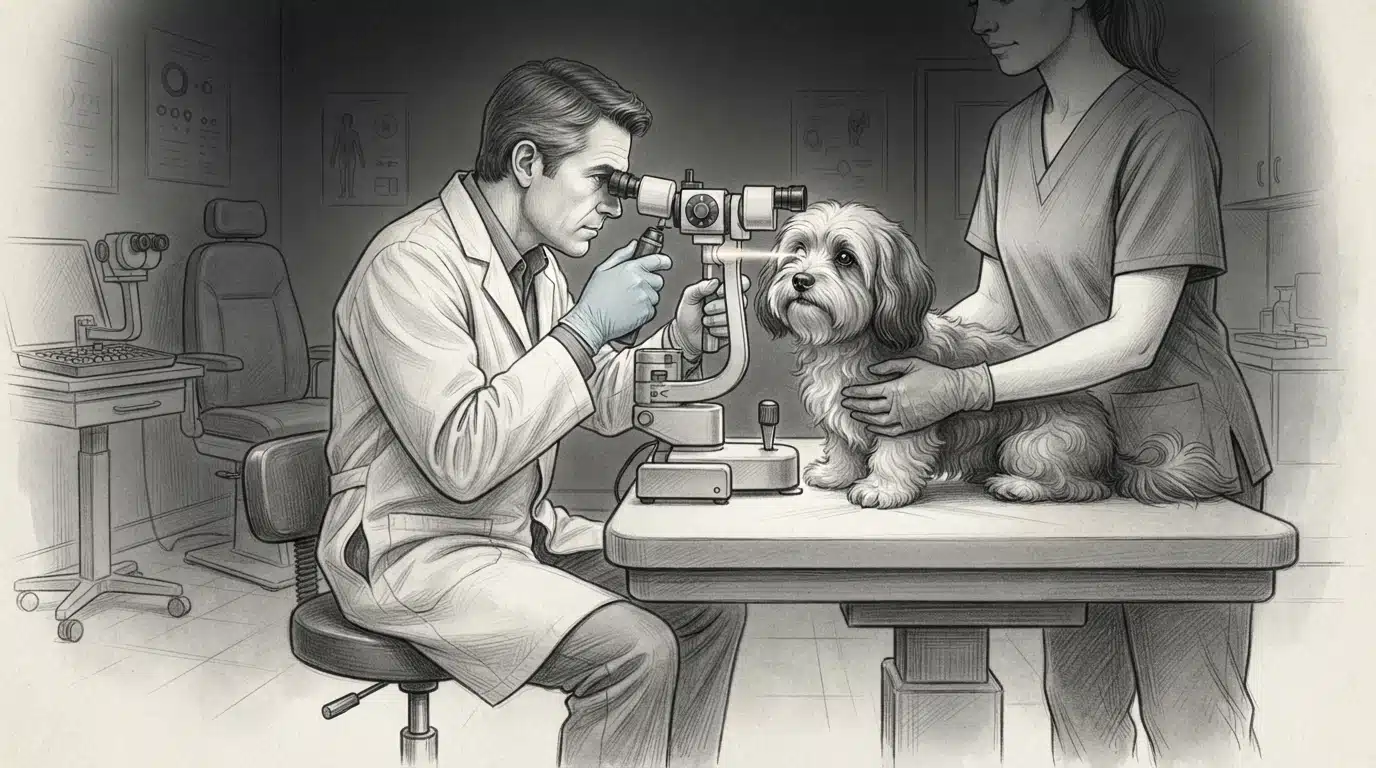
An eye exam looks for inherited eye disease the breeder’s dog could pass on. A board-certified veterinary ophthalmologist dilates the pupils, then uses indirect ophthalmoscopy and a slit lamp to inspect the retina, lens, cornea, eyelids, and optic nerve. Results go to OFA’s CAER registry, which records pass or fail for breed-specific conditions, according to OFA’s eye certification overview. For Havanese, cataracts are the classic concern. Ask to see the parent’s CAER number and the exam date.
What a Cardiac Evaluation Checks
A cardiac exam screens the heart for murmurs and structural defects. The basic version is a congenital cardiac exam: a veterinarian listens with a stethoscope for abnormal blood flow, then assigns a rating. A clearer picture comes from an echocardiogram, an ultrasound that shows the valves and chambers directly. Either result can be registered with OFA. Because small breeds can carry valve problems that develop slowly, a clean auscultation on an adult parent is worth far more than a “puppy was checked” claim with no paperwork.
Screening Versus Diagnosis
None of these tests diagnose your puppy’s future health. They describe the parents. A clear eye exam today does not guarantee a puppy never develops disease, but it lowers the odds because the traits run in families. Screening finds observable risk; DNA panels find known variants. Good breeders pair both, which is why reviewing each parent’s records side by side matters when you compare health-tested puppies. If a breeder claims testing but cannot produce certificates, treat the claim as unverified.
The Puppy’s Own Veterinary Record
Before you fall for a face, read the puppy’s own file. A wellness exam, vaccination history, and a veterinary health certificate tell you how this specific puppy is doing right now. They prove care, not inheritance.

What a Puppy Wellness Exam Evaluates
A wellness exam is a nose-to-tail check by a licensed veterinarian. The vet listens to the heart for murmurs, checks the umbilical area for hernias, looks at the eyes and ears, feels the abdomen, and watches how the puppy moves. The vet may also manually check each kneecap, since loose patellas can show up early in small breeds like the Havanese and Cavapoo. What it cannot do is rule out conditions that develop later.
Documents to Receive Before Pickup
Ask for three things in writing. First, the vaccination and deworming records, dated and initialed, showing which vaccines were given and when the next doses are due. Second, a recent veterinary health certificate, usually issued within ten days of travel. Third, any vet notes from earlier visits. A breeder who hands these over without being asked is showing you how they work.
Why the Puppy’s Own Record Cannot Replace Parent Screening
Here is the catch: a clean puppy exam is a snapshot, not a forecast. Many inherited conditions, including hip dysplasia and some heart and eye diseases, do not appear until adulthood. That is why the OFA record and DNA panel on each parent matter so much. The puppy’s file confirms good care today; parent screening predicts the health you can expect for years. You need both, and breeders who focus only on the puppy’s paperwork are skipping half the picture.
Breed-Specific Requirements for Havanese, Havapoo, and Cavapoo
The Published CHIC List
The Havanese has an official CHIC list because the breed has a parent club that sets one. The current requirements center on an annual eye exam by a board-certified ophthalmologist, a cardiac exam, and a patellar luxation evaluation, with hip radiographs and BAER hearing testing listed as optional. Every item on that list targets a problem the breed actually carries, so treat the full list as the minimum a Havanese parent should have completed.
Havapoo and Cavapoo: Building the Right List
Crossbreeds have no single parent club list, so CHIC requirements vary by breed and each club sets its own standards. A practical approach borrows from both sides of the cross. A Cavapoo parent should carry Cavalier heart and eye clearances plus Poodle DNA screening; a Havapoo parent follows the Havanese list plus Poodle genetic testing. When a breeder explains what each parent was tested for this way, you can judge the mix on its own logic.
What a CHIC Number Does and Does Not Mean
A CHIC number confirms a dog completed every required test for its breed. It does not confirm the results were normal, because results are posted publicly whether they pass or fail. That honesty is the system’s real value: a breeder earns the number only by disclosing everything. The CHIC program overview explains how clubs validate each screen, and reading an actual OFA record beats trusting a breeder’s summary.
How to Read Health Testing Before You Buy
You can verify a breeder’s health testing before buying by following seven steps: ask for the parents’ OFA records, confirm the CHIC number, read each DNA panel result, check patella certification, review the eye and cardiac exams, compare dates against the breeding date, and keep copies of every document. Doing this before you pay a deposit is what separates a health-tested puppy from a well-worded ad. Many sellers of health-tested puppies for sale near me will share records on request, so a slow or vague answer tells you something too.
A Seven-Step Review Routine
- Ask for each parent’s OFA record and confirm the results on the OFA site.
- Check whether the breed has a CHIC number and that both parents hold it.
- Read the DNA panel for each parent: look for clear, carrier, or at risk.
- Confirm patella certification, since kneecap issues run in Havanese and doodle lines.
- Look for an ACVO eye exam and a cardiac exam within the past year.
- Match the test dates to the breeding date so nothing is outdated.
- Save copies of everything before you send a deposit.
Questions to Ask the Seller
Ask which tests each parent had, who performed them, and where the results are posted. Ask about any carrier results and how the pairing avoided risk. Ask for the puppy’s wellness exam, vaccination and deworming records, and veterinary health certificate. A confident breeder answers quickly and in writing, and Sage Puppies keeps parent records ready for every litter.
When to Involve Your Own Veterinarian
Bring every document to your puppy’s first vet visit and ask your vet to read them with you. Your vet can explain what a DNA result means for your dog, review the puppy’s own exam findings, and flag anything worth rechecking. If a record looks unclear, a second opinion from a specialist is reasonable before the puppy comes home.
Where to See Actual Results
Real results live in three places: the OFA database, the breeder’s own document folder, and your puppy’s paperwork. Ask to see all three, and review more on how to check a puppy breeder’s health testing records before you commit.

Ready to see health testing done right? At Sage Puppies, every Havanese, Havapoo, and Cavapoo parent has documented screenings, and Cassie walks you through each result. Start your application today and bring home a puppy backed by proof, not promises.
Frequently Asked Questions
Q1: What does each puppy health test screen for?
Each screen checks one thing. A wellness exam covers the puppy today, an OFA record covers a parent’s hips, knees, eyes or heart, and a DNA panel looks for inherited gene variants. No single result proves lifelong health.
Q2: Does a CHIC number mean the parent is healthy?
No. It confirms the dog completed every required screen for its breed. Results are posted whether they pass or fail, so read the actual grades, not just the number.
Q3: What does a carrier DNA result mean for my puppy?
One copy of a variant. The puppy usually stays healthy but could pass the gene on. Ask how the pairing managed carrier status on both sides.
Q4: How recent should a parent’s eye or cardiac exam be?
Within the past year. Havanese CHIC requirements call for annual eye exams, so check each certificate’s date against the breeding date.
Q5: Can a clean puppy exam replace parent testing?
No. Many inherited problems appear only in adulthood. The puppy’s file proves good care; parent screening estimates future risk. You need both.
Q6: What documents should I receive before pickup?
Dated vaccination and deworming records, a recent veterinary health certificate, parent health screenings, and any earlier vet notes. Get copies before you pay a deposit.
Conclusion
Every screen proves one narrow thing. The puppy’s wellness exam shows how it is doing today; the parents’ OFA records, patella certification, and eye and cardiac exams show inherited risk; each DNA panel names specific variants. No single document replaces the others, so ask for all three layers before you send a deposit.
The seven-step review routine turns claims into evidence. Match test dates to the breeding date, read actual grades rather than breeder summaries, and bring everything to your puppy’s first vet visit. For Havanese, Havapoo, and Cavapoo families, our guide to buying a health-tested puppy shows how to read each record yourself, so the puppy you bring home is backed by paperwork you have personally checked.