Quick Summary: Calm apartment training starts with a predictable routine that protects 18 to 20 hours of daily sleep, a consistent mat for settling, short reward-based sessions, and gradual practice at the door, hallway, and elevator. To reduce barking, identify whether it comes from excitement, alertness, or distress, then mark the first quiet pause and redirect without yelling or punishment. Progress should be measured through faster settling, longer naps, and quicker recovery over weeks or months, and Sage Puppies begins quiet-cue work early for Havanese, Havapoo, and Cavapoo puppies.
The elevator door opening on the fourth floor is enough to set a Havapoo puppy barking, and the neighbors two doors down can hear every sharp syllable through the wall. To train a small breed puppy to be calm in an apartment, reward quiet and settled behavior, meet your puppy’s exercise and sleep needs, and practice calm responses in hallways and elevators. Calm puppy training works best as a plan with clear steps, not a fixed timeline.
This guide walks through those steps, including puppy calming techniques you can use the moment barking starts. It draws on reward-based methods that follow current AVSAB humane training guidance, so nothing here relies on scolding or fear. At Sage Puppies in South Jordan, Utah, we raise Havanese, Havapoo, and Cavapoo puppies for apartment living, and the advice here separates what we know from what every puppy still has to learn.
Step 1: Build a Calm Base in Your Apartment Before You Train Anything
Calm puppy training in an apartment starts before any session does. If your puppy is over-tired, over-stimulated, or staring at the hallway all day, no sit or stay will stick. Set up the environment first, then teach skills on top of it.
Choosing One Room and One Mat as Your Puppy’s Calm Base
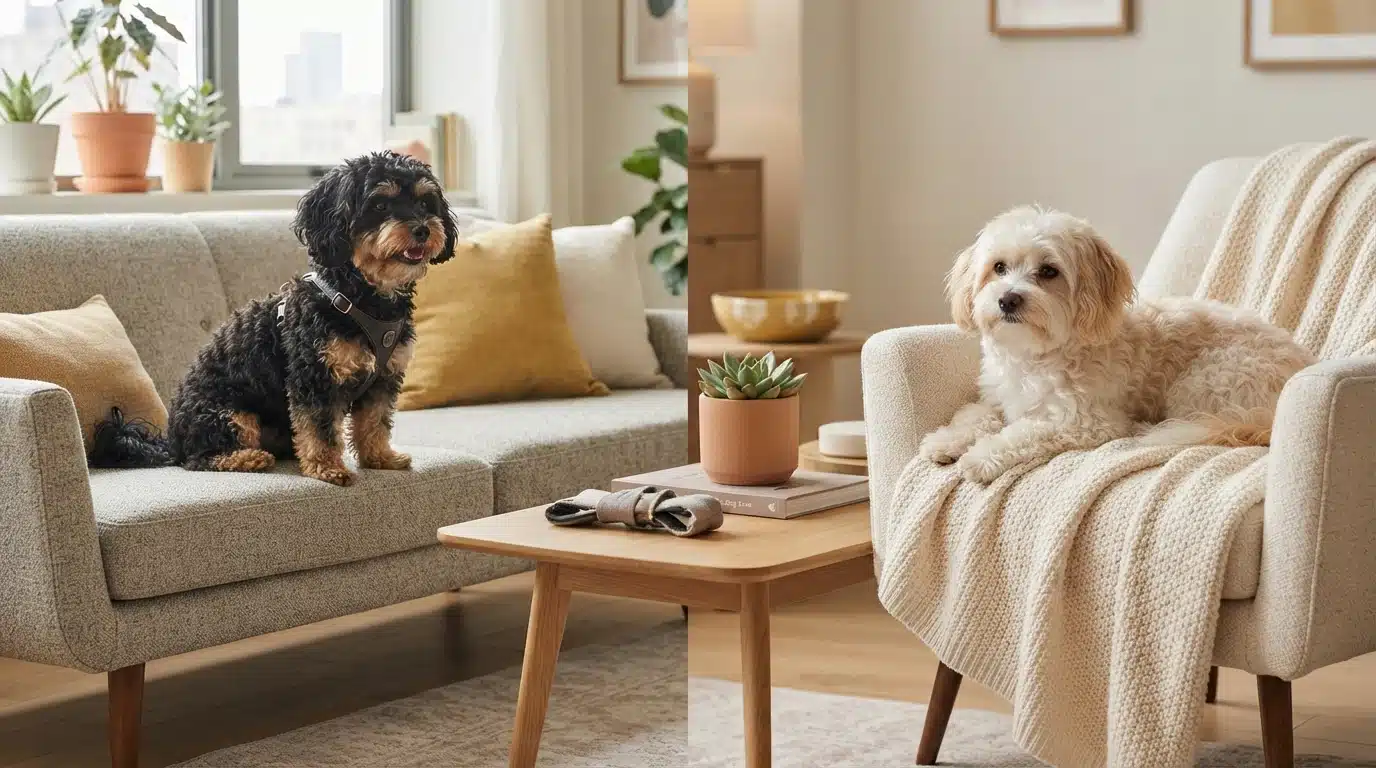
Pick one room where most quiet time happens, usually where you sit in the evening. Put a mat or bed in the same spot every time. The mat becomes the cue: when your puppy steps onto it, rest is expected. Feed a few meals or toss treats there without asking for anything. This is the “settle on a mat” foundation, and it works best when the spot stays consistent for the first few weeks.
Managing What Your Puppy Can Hear and See
Small apartments carry sound. Footsteps in the hallway, the elevator, and voices through thin walls all spark barking. You cannot soundproof an apartment, but you can reduce triggers. Use a white noise machine or fan near the puppy’s mat, close blinds during peak hallway traffic, and place the mat away from the front door. For a fuller setup list, see this small breed puppy apartment checklist covering noise and training prep.
Why a Calm Base Beats a Long Obedience Session
A puppy who naps on schedule and has a predictable spot will learn faster than one getting three training sessions a day. Puppies need 18 to 20 hours of sleep daily, according to AKC guidance on puppy sleep. An overtired puppy zooms, nips, and barks, and owners often mistake that for bad behavior needing more training. It usually needs more rest. Fix the base first, then train.
Step 2: Teach Name Response, a Marker Word, and Settling on a Mat
A calm puppy training session in a small apartment looks like this: one to two minutes of work, one cue, five to ten easy repetitions, then rest. Say the cue once. Reward the moment your puppy gets it right. Mark each success, then end before your puppy loses focus.
Name Response: One Word, One Look, One Reward
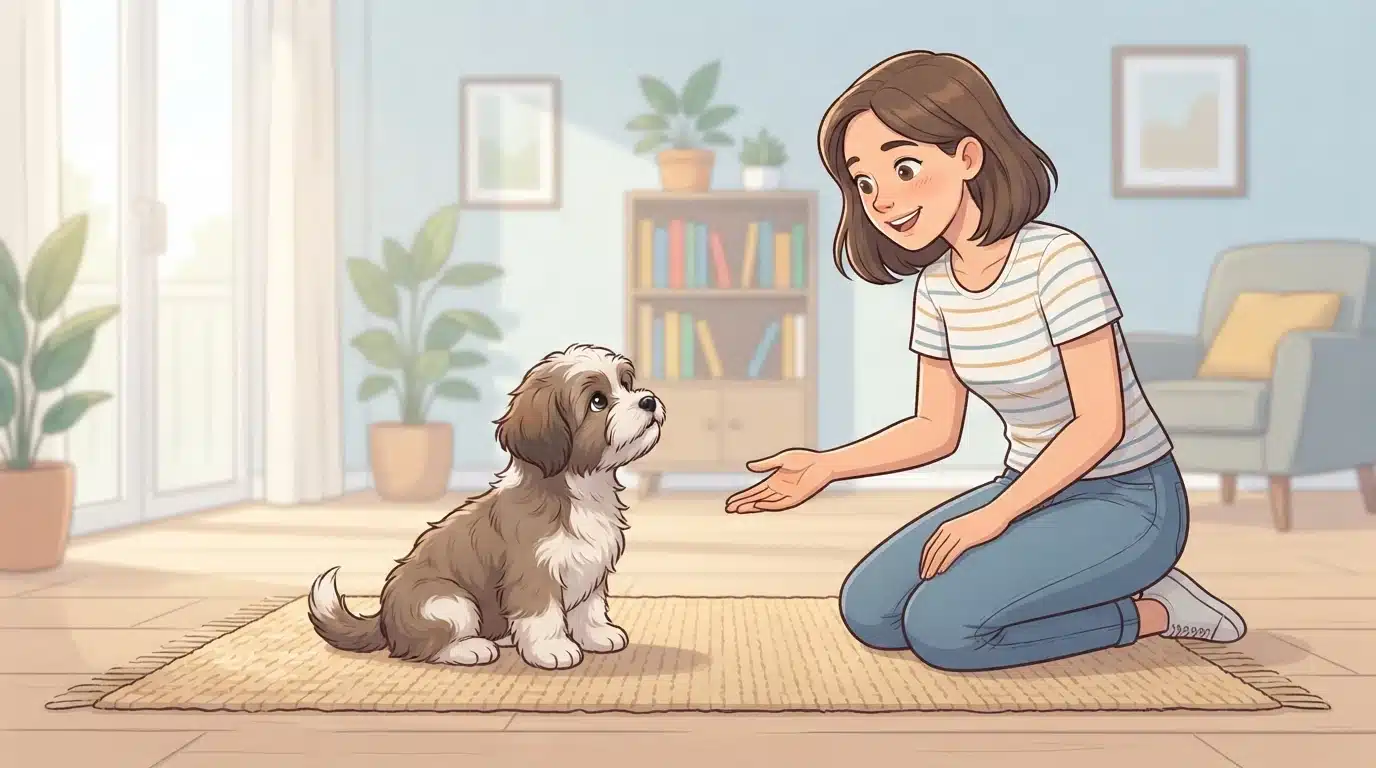
Say your puppy’s name once, in a happy voice. The instant she turns toward you, mark and reward. Skip repeats, chants, or her name as a scolding word, since those teach her to tune it out. Practice during calm moments, not chaos. Five short reps a day build a name response that works in a busy hallway later.
Marker Words That Make Training Faster in a Small Space
A marker word, such as “yes,” tells your puppy the exact moment she earned a reward. Say the marker, then deliver the treat within a second or two. This tight timing matters most in tight quarters, where a late treat rewards whatever she did next, not what you wanted. Pair every marker with a treat for the first few weeks so the word keeps its meaning.
Settling on a Mat Without Restraining Your Puppy
Place a mat a few feet from your couch. Drop a treat on it. When your puppy steps on, mark and reward calmly. Feed a few treats in place, then release her with a word like “free.” Reward calm lies-downs more than sit-stays. This teaches the mat as a choice, not a restraint, which suits a small apartment better than constant holding. For settling near a crate or playpen, the steps in this guide to crate training a Havanese puppy without stress fit Havanese, Havapoos, and Cavapoos alike.
Step 3: Keep Training Sessions Short: How Long Should Puppy Training Sessions Be in an Apartment?
The Direct Answer on Session Length
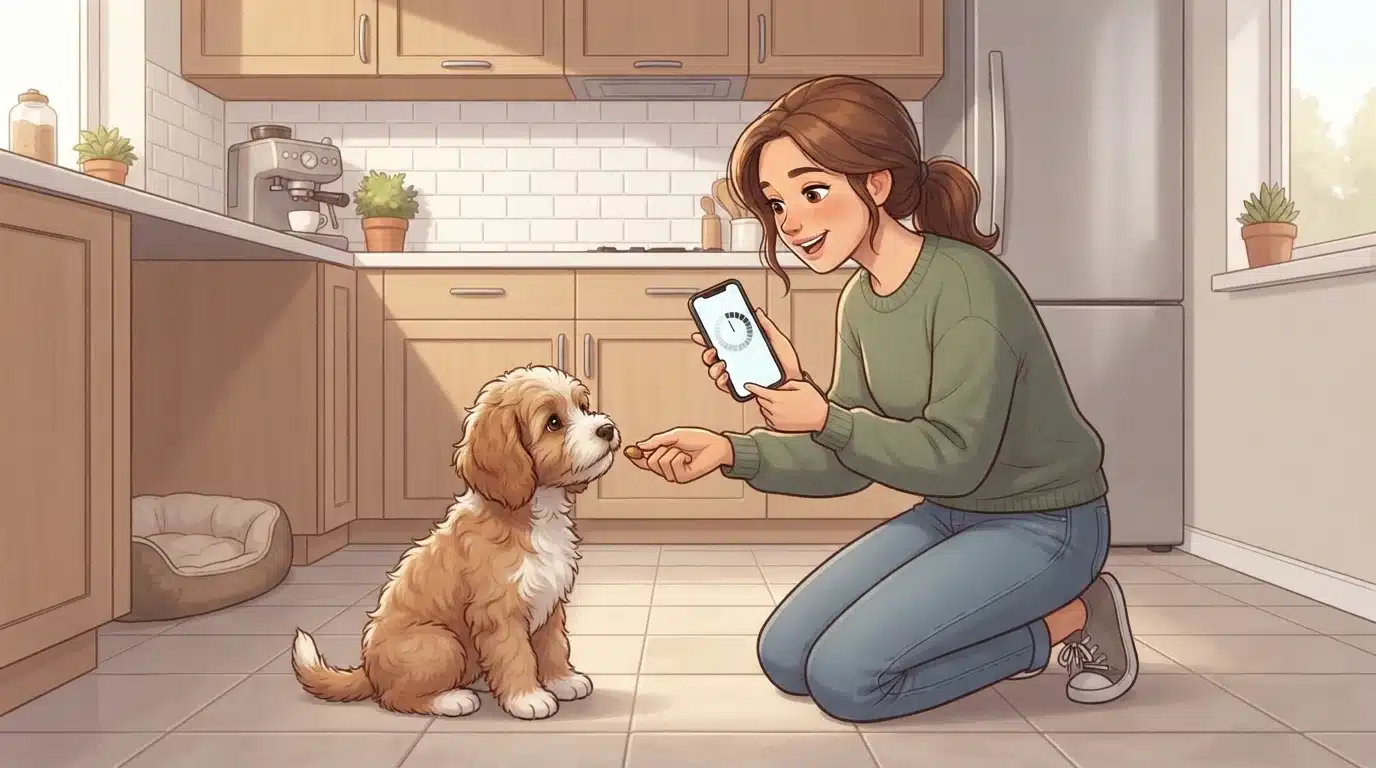
Keep puppy training sessions to three to five minutes for a puppy under four months, repeated a few times a day. Older puppies can stretch to ten minutes. In a small apartment, short sessions also help build a calm puppy apartment routine, because brief bursts of focus leave energy for rest instead of stirring your puppy up right before quiet time.
| Puppy Age | Session Length | Sessions Per Day |
|---|---|---|
| 8 to 12 weeks | 3 to 5 minutes | 3 to 4 |
| 3 to 4 months | 5 to 8 minutes | 2 to 3 |
| 4 to 6 months | 5 to 10 minutes | 2 to 3 |
Reading Your Puppy’s Attention Signals
Your puppy tells you when a session should end. Watch for these cues:
- Sniffing the floor or wandering off mid-cue
- Yawning, scratching, or lying down
- Grabbing treats roughly or mouthing your hands
- Sitting but staring blankly instead of responding
Stop the moment these appear, and end on one easy success. A puppy balancing exercise without a yard with rest learns faster than one pushed past focus, since most young puppies only manage a few minutes per session.
Wiring Two-Minute Training Into an Apartment Day
Apartments make short sessions easy to repeat. Practice a two-minute sit or name response while the kettle warms up, after a potty break, or before a nap in the crate. Three or four of these mini-sessions across the day add up to solid skills without a single long block, and each one ends while your puppy still wants more.
Step 4: Train Calm at the Door, the Hallway, and the Elevator
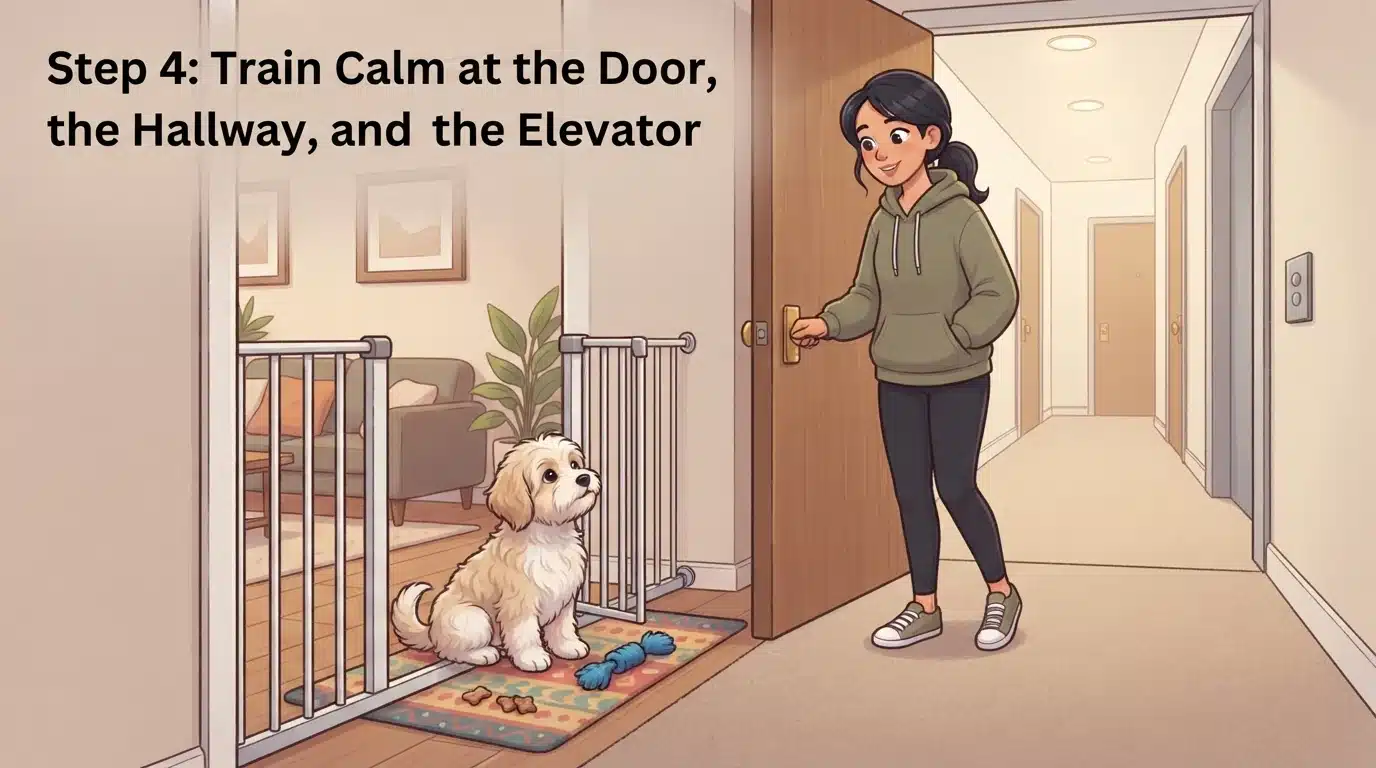
Your door is the noisiest spot in the building, so treat it as its own training zone. Open and close it on a quiet day while your puppy sits behind a baby gate. Reward stillness. Then add the doorknob, a knock, and a neighbor’s voice, one trigger at a time.
Working Up the Ladder: Unit, Hallway, Lobby
Build a simple ladder. Start inside the unit with the door shut. Next, sit just outside the door in the hallway. Last, work the lobby and elevator. Spend a few days at each rung before moving up. If your puppy falls apart two floors down, you climbed too fast, so drop back a level and rebuild.
Reading Stress and Backing Up Without Punishment
Watch for yawning, lip licking, tucked tail, or a puppy who suddenly sniffs the floor. Those are stress signals, not misbehavior. When you see them, increase distance from the trigger and let your puppy watch from farther away. Punishing fear teaches the puppy to hide it, so never scold a scared reaction. Reward-based training, consistent with AVSAB humane training guidance, means calm comes from confidence, not correction.
Elevator and Lobby Practice That Actually Works
Start with the elevator parked and empty. Step in, treat, and step out. Add the doors moving, then a short ride to one floor. In the lobby, ask for a two-second sit away from the mail area, then release. Short, boring sessions win. When your puppy handles it, quiet hallway passes feel easy, and neighbors stop being events.
Step 5: Reduce Barking at Neighbors Without Punishment
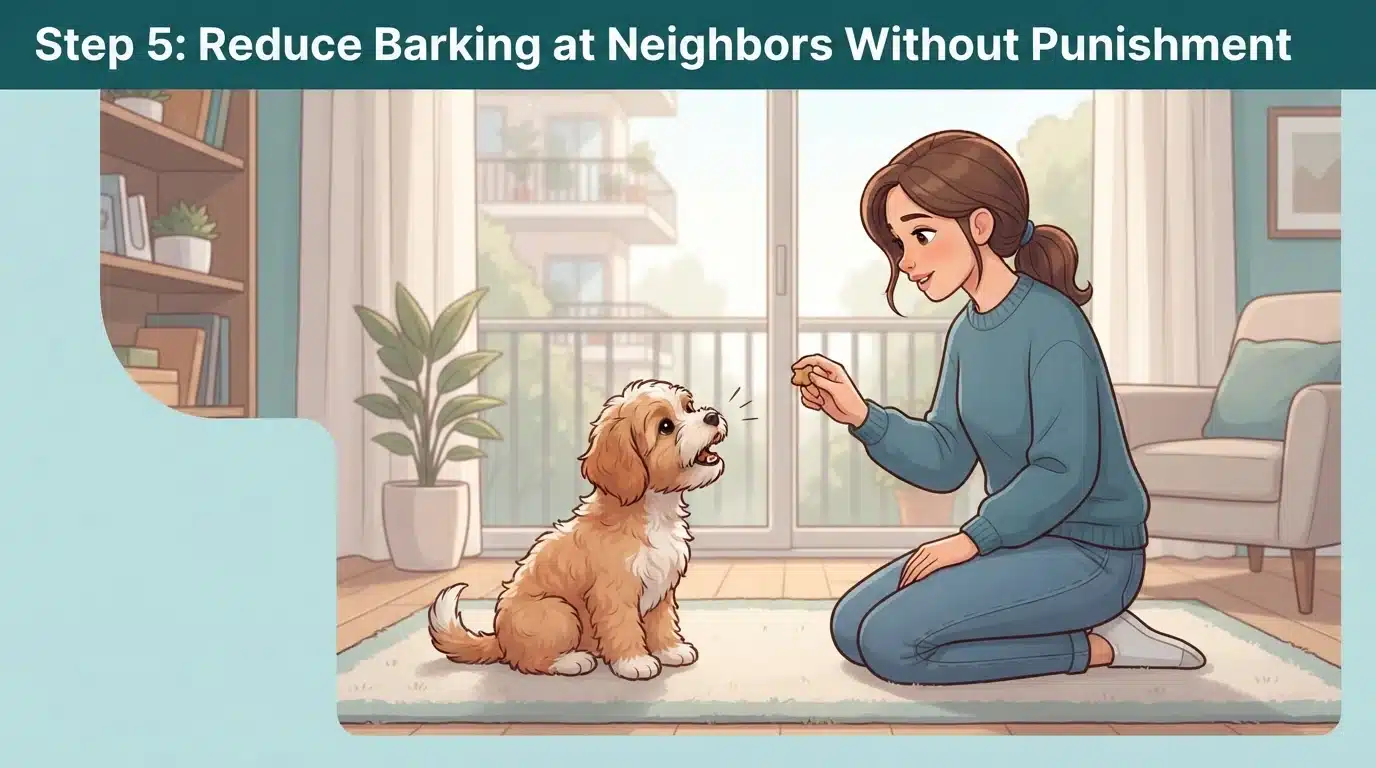
To stop a small puppy from barking at neighbors, figure out the cause first, interrupt calmly, then redirect to a rewarded behavior. Punishment like yelling or a shake can backfire, because your puppy may link the scare to the person passing by. Reward-based steps below fix the trigger instead. The AVSAB position statement on humane training warns that punishment raises stress and aggression risk, so stick to AVSAB’s humane training position statement.
Identify Whether the Barking Is Excitement, Alert, or Distress
| Cause | What it looks like | First response |
|---|---|---|
| Excitement | Wiggly body, play bows, barks when a favorite person appears | Ask for a sit, then reward quiet |
| Alert | One or two sharp barks at hallway noise, then a pause | Mark the quiet pause, redirect to a mat |
| Distress | Pacing, whining, barking when left alone, trembling | Shorten alone time, revisit crate and separation work |
If the pattern matches distress, this is a separation problem, not a manners problem, so treat the alone-time fear rather than the noise.
Interrupt, Mark, and Redirect Without Punishment
Use your established marker word, say “quiet” in a flat tone at the first pause, then toss a treat away from the door. The timing matters: reward silence, never mid-bark. Next, ask for a known cue like sit or a mat settle, and pay it well. Repeat daily at low-traffic times first. If the puppy cannot recover within a few seconds, the trigger is too close, so increase the distance and rebuild.
Talking to a Neighbor Who Complains
Be direct and give a timeline. Something like: “We hear the barking too. Our trainer’s plan is quiet cues, more exercise, and structured naps, and we expect real progress within a few weeks.” Sharing a simple training summary shows the complaint is being handled, not dismissed. For a Havanese, Havapoo, or Cavapoo, patience matters because these breeds watch everything; that alert streak is also why Sage Puppies starts quiet-cue work before puppies go home.
Step 6: Build a Calm Daily Routine for a Small Apartment
Protecting Sleep in a Small, Noisy Apartment
A puppy who skips naps turns into a nipping, barking wreck by evening. Aim for the same 18 to 20 hours of daily sleep the AKC recommends, and treat naps as non-negotiable rather than optional. Set up the crate in the quietest corner you have, away from the door and the kitchen. If hallway noise wakes your puppy, a fan or white noise helps, but remember a crate cover does not soundproof anything. Watch for yawning, slow blinking, or aimless sniffing. Those signs mean it is nap time, even if the clock disagrees.
Movement and Sniffing That Fit a Small Space
Small breeds do not need miles of running. They need short bursts of play, a few sniff-heavy walks, and mental work like puzzle feeders or a scatter of kibble in a towel. Sniffing tires a puppy faster than fetch, so let the walk be slow and nose-led. Keep stairs off the plan until your vet clears them, since small puppies’ joints are still growing. Match the session length to your puppy’s age, not a fixed schedule, and stop before he gets overtired or cranky.
A Daily Order That Keeps You Ahead of the Stress
Predictability is what actually builds a calm puppy apartment life. Run the same loop: potty, breakfast, brief play, nap, potty, training, sniff walk, nap. Repeat in the evening. When your puppy can guess what happens next, he stops scanning for trouble. Adjust the timing to your household, but keep the order steady for the first few weeks.
Step 7: Track Progress and Know When to Bring in Help
There is no fixed timeline for calm, so skip calendars and deadlines. Most puppies show steadier settling over weeks to months when the routine holds. Track three things instead: how fast your puppy settles on a mat, how long naps last, and how quickly recovery follows a startle like a slammed door.
A Simple Weekly Calm Tracker
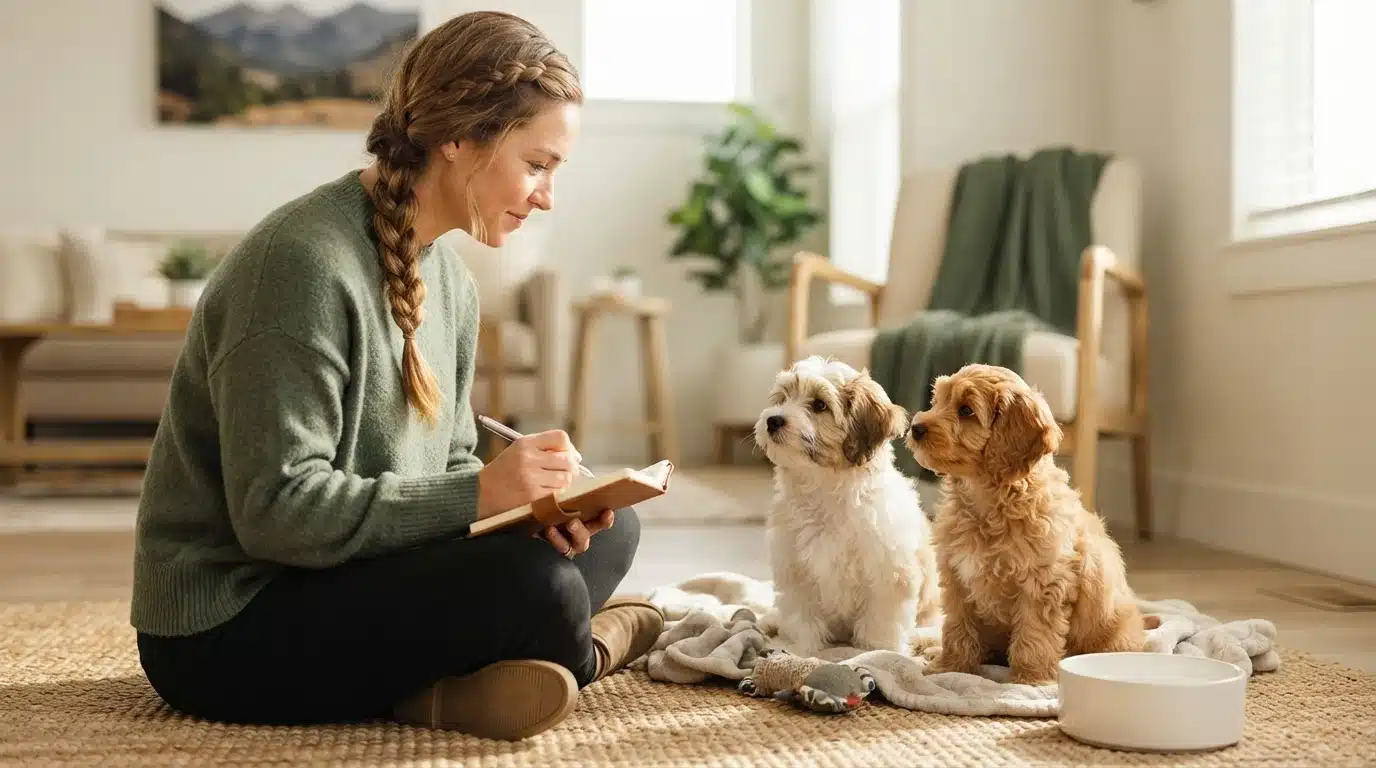
Keep a note on your phone or the fridge. Once a week, jot down how long settling took, whether naps hit target, and any barking streaks. Small wins hide in noisy weeks, so compare month to month rather than day to day. Patterns matter more than single rough evenings.
Signs That Point to a Veterinarian
Some behavior is a health question, not a training one. Call your veterinarian if you see sudden changes in sleep, appetite, or house training, constant pacing that rest does not fix, or distress that escalates despite a solid routine. Pain, stomach upset, and thyroid issues can all look like “hyperactivity.” Rule out the body before blaming the plan.
Finding a Reward-Based Professional
If progress stalls after several consistent weeks, look for a trainer who follows AVSAB’s position statement on humane training and uses reward-based methods only. Ask how they handle barking and settling, and walk away from anyone promising fixed timelines or quick fixes. A veterinary behaviorist is the right call for separation distress that keeps worsening.
Progress here is quiet: shorter settling times, longer naps, faster recovery. That is your evidence the plan is working.

A calm puppy starts with calm habits, and the plan above gives you the daily rhythm to build them. If you’re still choosing a breed, a well-matched Havanese, Havapoo, or Cavapoo from Sage Puppies makes apartment life easier from day one. Browse available puppies and start your application today.
Frequently Asked Questions
Q1: How do I train a small breed puppy to be calm in an apartment?
Reward quiet, settled behavior, meet sleep and exercise needs first, and practice calm responses at the door, in hallways, and in elevators. Keep sessions short and avoid punishment, following AVSAB humane training guidance.
Q2: How do I stop my small puppy from barking at neighbors in an apartment?
Find the cause first, then mark the quiet pause, redirect to a mat, and reward silence. Never yell, since that can link the scare to the person passing by.
Q3: How long should puppy training sessions be in an apartment?
Three to five minutes for puppies under four months, a few times a day. Older puppies can handle up to ten minutes.
Q4: How long until my puppy is calm in an apartment?
There is no fixed timeline. Most puppies settle more steadily over weeks to months when the routine holds, so compare month to month.
Q5: When should I call a trainer or veterinarian for barking?
Call your vet for sudden sleep, appetite, or house training changes. If progress stalls after several consistent weeks, find a reward-based trainer.
Conclusion
Teaching a small breed puppy to be calm in a small apartment comes down to a short list: set up one quiet room and mat, reward quiet moments with a marker word, keep sessions to a few minutes, and build up door, hallway, and elevator practice one rung at a time. Meet sleep and sniffing needs first, because an overtired puppy cannot learn. Skip punishment and fixed deadlines; track settling time, nap length, and recovery instead. Progress shows up quietly, in faster settles and longer naps, and those small wins mean the plan is working.