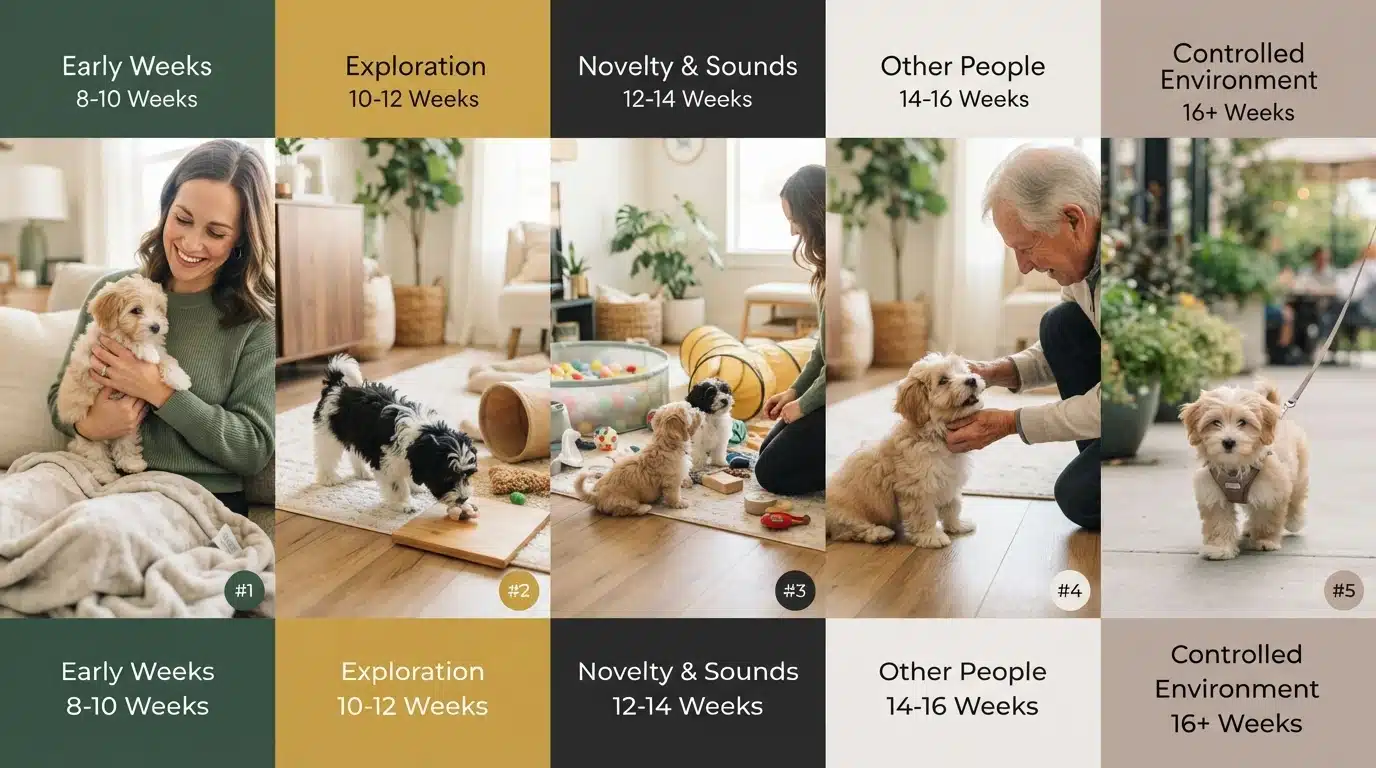
Quick Summary: Prepare a small breed puppy for apartment living by creating one quiet decompression room, puppy-proofing hazards, following a written routine, and reducing manageable noise. Use short, reward-based desensitization sessions below the puppy’s reaction threshold, train a quiet cue and mat routine, and build alone time gradually without fixed deadlines. Plan potty routes, elevators, walks, and controlled socialization, then speak with neighbors and check lease rules before complaints begin.
The first complaint usually arrives before you have a real problem: a neighbor at the elevator, a landlord email about barking after 7 a.m., a roommate who says the pacing starts at 6:30. In a shared-wall unit, a Havanese or Cavapoo puppy’s alarm response carries further than it would in a house. The quiet work has to start before the first complaint does, not after.
This apartment puppy checklist covers what to set up, which sounds to introduce and when, and how to talk with neighbors and landlords before anything escalates. It also builds a graded noise desensitization ladder in clear stages, so you always know the next step.
Everything here follows reward-based training guidance from the AVSAB, and it flags what rests on evidence versus what rests on guesswork. No fixed deadlines, because no puppy reads a schedule.
Step 1: Set Up the Apartment for Quiet and Safety
A small breed puppy in an apartment needs one quiet decompression room, a puppy-proofed space, controlled noise, and a written routine. That is the core of the apartment puppy checklist. Set these up before your Havanese, Havapoo, or Cavapoo comes home, because the first week shapes everything after.
Choose one decompression room, not the whole apartment
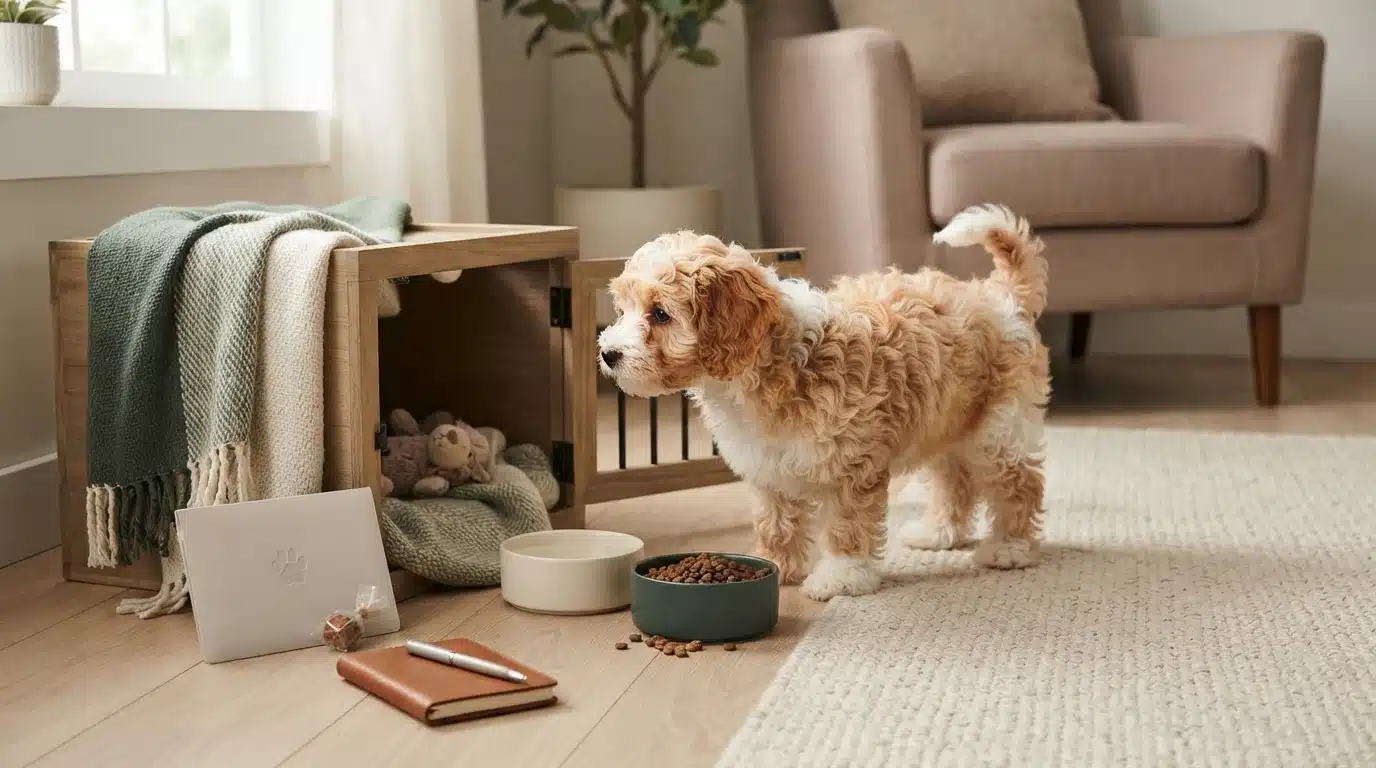
Pick a single room, ideally one away from the entry door and street-facing wall. Put the crate and playpen there so your puppy has one predictable spot to sleep and settle. Free run of the whole apartment feels generous, but it overwhelms a small puppy and multiplies the surfaces you have to guard.
Close the safety gaps that apartments hide
Crouch to puppy height and look for cords, heater gaps, balcony rails, open toilet lids, and trash cans small enough to tip. Block balcony openings before the first potty break. Havanese, Havapoo, and Cavapoo puppies are small enough to slip through spaces you would never notice standing up.
Cut the sound you control before you train
You cannot quiet the hallway, so start with what you own. A rug dampens echo, felt pads soften door slams, and steady white noise masks elevator dings. Skip crate covers that block airflow, and resist true soundproofing claims. Good setup reduces the background your puppy reacts to; it does not replace the noise desensitization training that comes next.
Write down the routine your puppy will learn
Puppies settle faster when the day looks the same. Write out potty trips, meals, naps, and short alone-time blocks on one page, and keep it on the fridge where everyone follows it.
Step 2: Build a Graded Noise Desensitization Ladder
Noise desensitization means exposing your puppy to sounds so quiet and brief that she stays relaxed, then raising the challenge one notch at a time. Desensitization works best paired with counterconditioning, where every sound predicts something great, usually food, according to VCA’s guide to desensitization and counterconditioning.
Find your puppy’s actual trigger list
Spend two days writing down every sound that makes her pause: the elevator ding, hallway footsteps, a door slam, the dishwasher. List them all, even small ones. Then rank them from easiest to hardest. Small breed puppies, including Havanese and Cavapoos, carry strong alerting instincts, so a written list beats guessing.
Set the starting point below the reaction threshold
Your puppy’s threshold is the volume where she first reacts, with a stiff body, a head turn, or a first bark. Start below it. Play the softest sound at the lowest volume so she notices it but keeps eating or chewing. If she reacts once, drop back two notches and stay there for several days. A quiet start is not slow progress; it is the only kind that works.
Run short, frequent reps at a level your puppy can handle
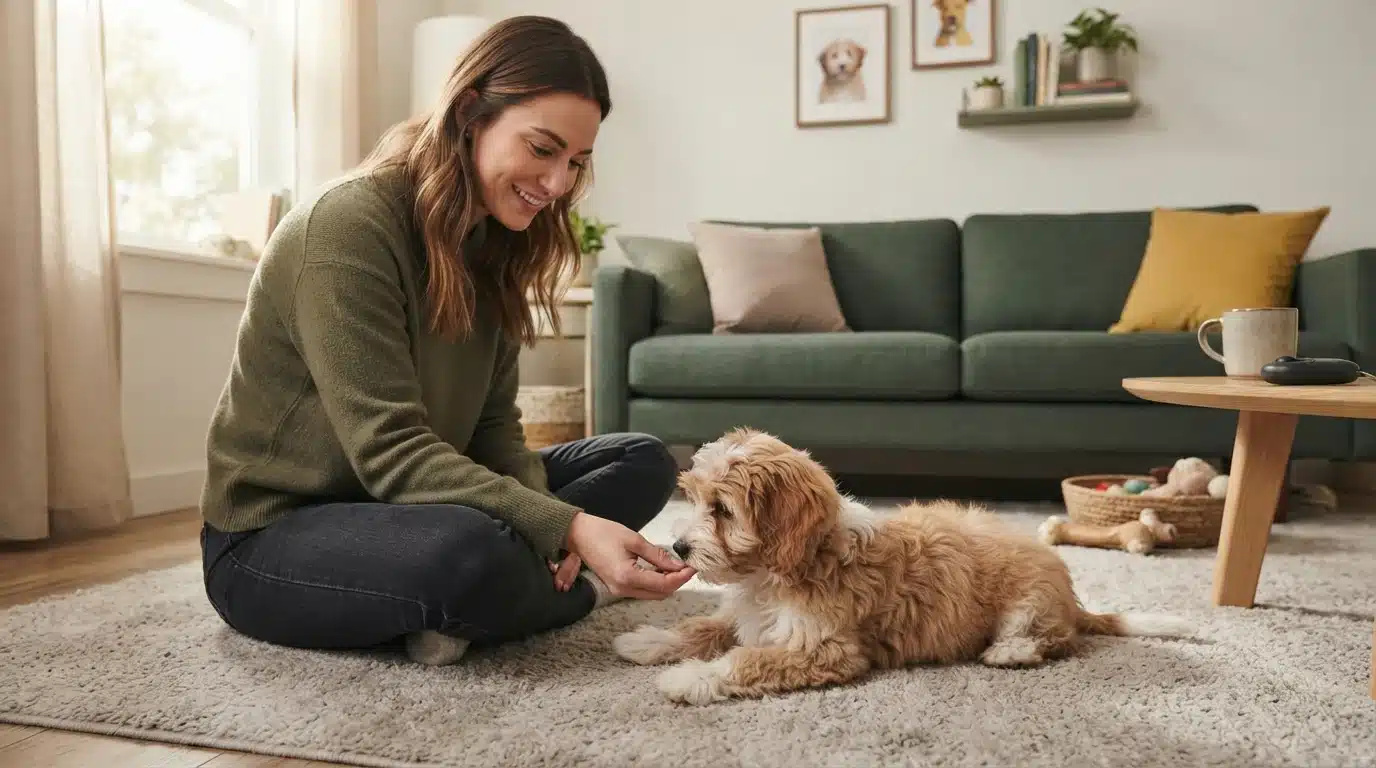
Keep each session to a few minutes, twice a day, and pair every sound with a treat the moment it ends. The method behind this pairing is well studied; one trial found structured desensitization programs reduced noise fear in dogs over four weeks, as described in a published study on desensitization and counterconditioning. Never push past the threshold, and never force her to sit through it. Reward-based training keeps the association positive, which is the standard the AVSAB recommends.
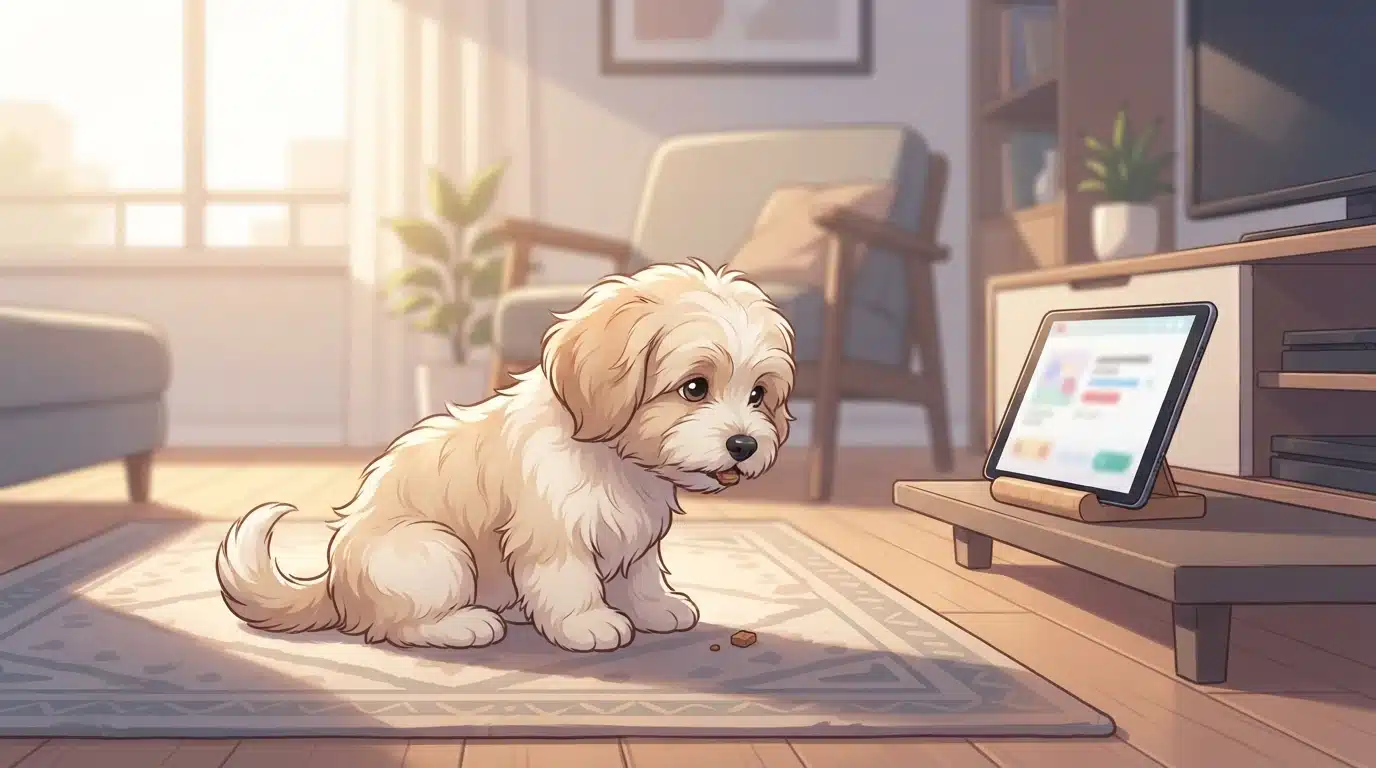
Desensitize to your building, one sound at a time
Build your ladder from recorded sounds to the real thing. Start with elevator and hallway noises on a speaker, then graduate to standing near the actual elevator. Practice one sound at a time so you can tell which one still bothers her. Log each rep in your incident log, noting the volume and her response, so you can see the trend instead of judging by feel. Keep the routine short, and if your puppy barks, go back a level quietly rather than scolding. Within a few weeks, most puppies treat building noises as background hum.
Step 3: Train a Quiet Cue and a Calm Door Routine
Teach a quiet cue your puppy chooses to give
Wait for a natural pause in the barking, then mark it and pay. Say “quiet” the instant your Havanese or Cavapoo stops, then treat. Repeat until the word predicts the pause, so your puppy learns silence is something she offers, not something you demand. Shouting “no” over barking just adds a second voice to the noise.
Offer a replacement behavior instead of silence
A quiet cue works better with a job attached. Teach a “go to mat” skill, and send her there when the hallway gets loud or someone passes the door. Chewing a stuffed toy on her mat cannot happen at the same time as barking at the door, so the replacement behavior does half the work for you. Reward-based methods like this are the approach the AVSAB endorses over correction.
Build the door and elevator routine
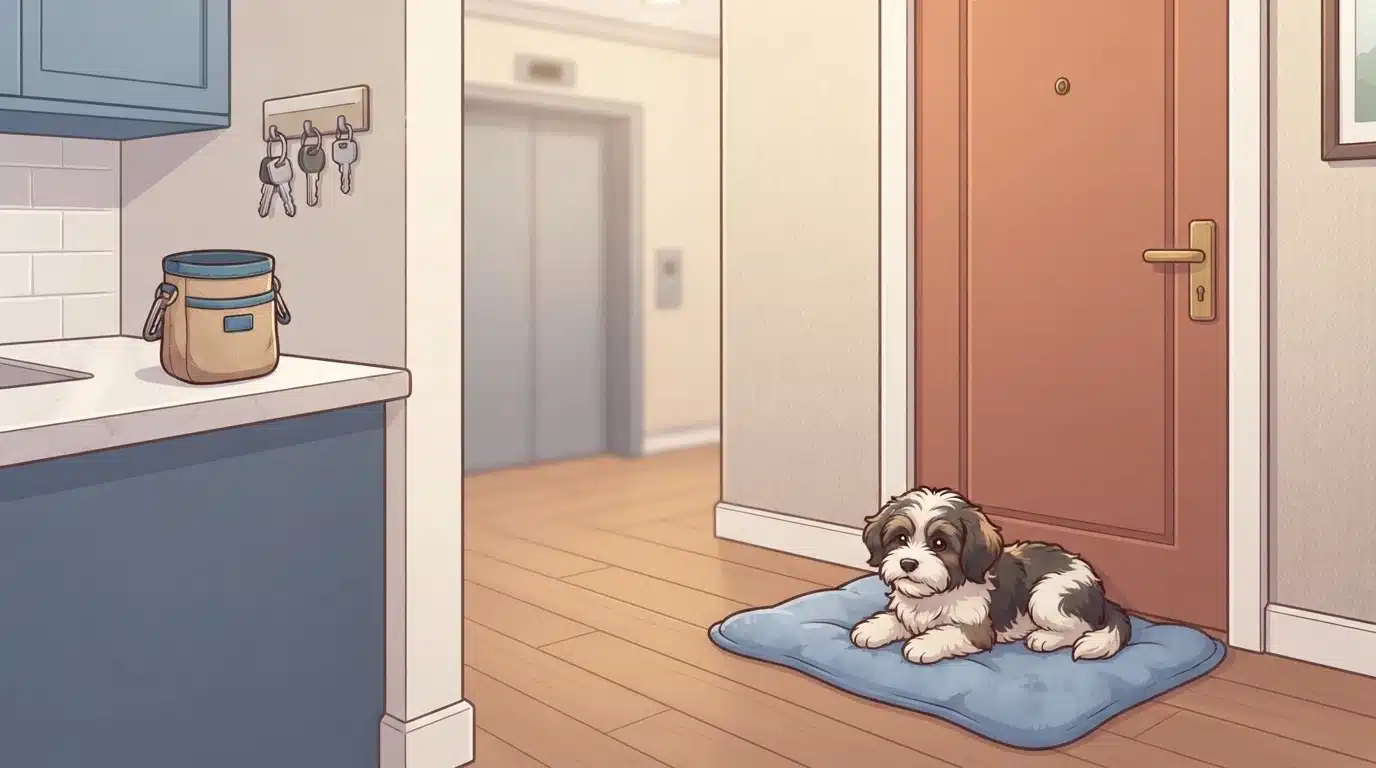
Doors trigger the biggest bursts, so rehearse them on purpose. Knock lightly, open the door a crack, feed a treat, and close it. Build up to full knock-and-open sequences until your puppy expects good things from that sound. Practice in stages:
- Knock, treat, no door
- Open the door, treat, close it
- A friend enters calmly and ignores the puppy, then greets her once she is settled
For elevators and hallways, keep the leash short and step to the side so neighbors pass first. Ask for a sit before the doors open. Reward calm exits, and skip greetings while she is still learning.
If you are still deciding where your puppy settles between outings, a crate and playpen setup for a small puppy gives her a quiet base away from the door. No deadline applies here; some puppies take a week, others a month. Whatever your apartment puppy checklist includes, this routine is the piece neighbors will notice most. Your breeder’s temperament notes can tell you how strong your puppy’s alerting instinct is, so ask before pickup day if you want a head start.
Step 4: Work on Separation Distress Without a Deadline
Tell distress apart from alert barking
Alert barking stops when the trigger stops. Distress does not. A puppy with separation trouble whines, paces, drools, or chews at the door, and it usually starts within the first 15 to 20 minutes alone, according to AVSAB. Watch on a camera rather than guessing from the hallway. The pattern tells you which problem you have.
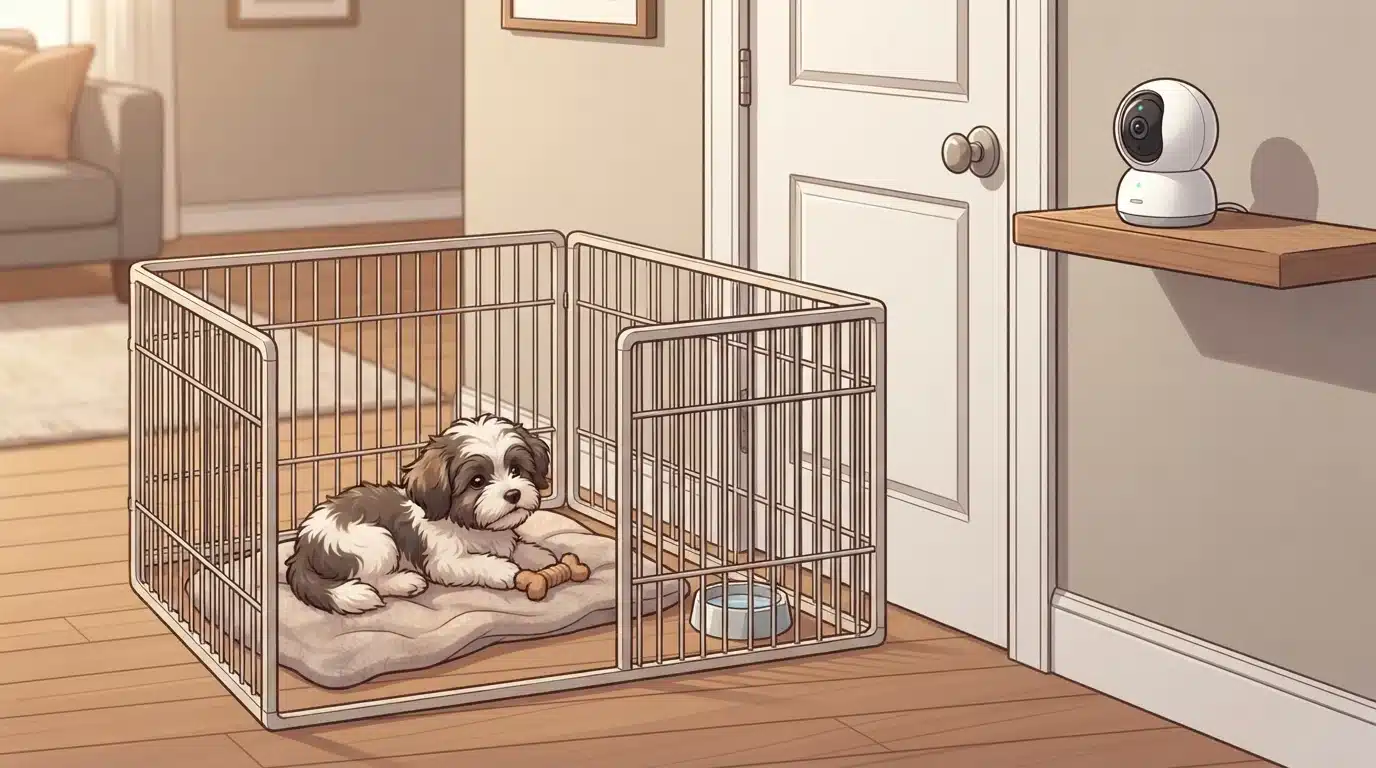
Build alone time in increments your puppy can recover from
Start with seconds, not schedules. Step out, return before the whining starts, and slowly stretch the gap. If your puppy stays calm, you went the right length. If it panics, you jumped too far, so drop back a step. Skip the fixed milestones altogether; every puppy moves at its own pace, and crate or playpen comfort makes the early reps easier. Our guide to crate training without stress covers that foundation.
Make arrivals and departures uneventful
Big goodbyes and big greetings teach your puppy that leaving matters. Keep both flat. Walk out without a speech, and come home quietly, waiting until your puppy settles before you say hello. You can leave a food-stuffed toy so the exit pairs with something good. Calm departures become routine, and routine lowers the stakes for everyone.
Step 5: Plan Toileting, Elevators and the Lobby
Choose a legal, safe elimination area
Ask before pickup day, not after. Some buildings and HOAs allow grass on the property, others point you to a specific patch, and a few ban relief on site entirely. Pet waste rules in common areas are the norm, so confirm where your puppy is allowed to go before you bring it home. Pick the closest legal grass, map the route, and skip balconies if your lease forbids pads or turf.
Time outings around the building, not the clock
A puppy potty schedule in an apartment lives and dies by elevator wait times. Add three to five minutes for the ride down, the lobby and the walk to grass, because a full bladder does not wait for a slow lift. Take puppies out after waking, eating, play and before bed, and use the ride itself as calm practice. If your pup is still mid-vaccination, carry it through shared hallways until your vet clears ground contact. For a full age-by-age rhythm, our small breed puppy potty training schedule breaks the day into manageable windows.
Handle accidents, cleanup and the shared-floor rule
Accidents happen, so plan the response now. Blot, treat with an enzymatic cleaner and log the time; a simple toilet log shows patterns you can fix. Keep waste bags in two places, your pocket and by the door, because a shared floor stays clean only when everyone cleans up.
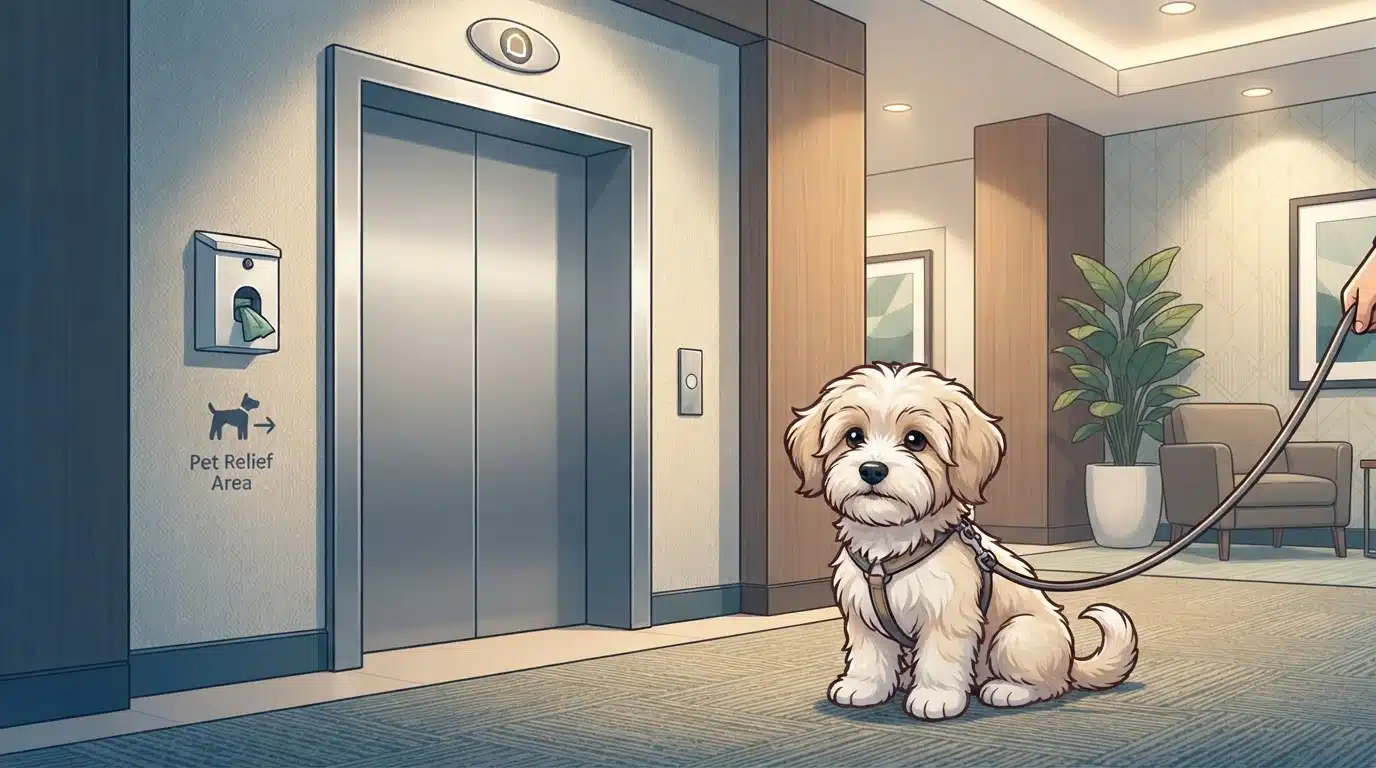
Elevator etiquette is short. Keep the leash short, sit your puppy at your side, and step off first so the leash never tangles with neighbors. Reward quiet rides, and the lobby becomes easy practice rather than a daily struggle.
Step 6: Schedule Walks, Exercise and Apartment Socialization
A small breed puppy in an apartment needs a rhythm, not marathon exercise. Short walks, sniffing time and brief training sessions burn more energy than distance ever will.
Build a daily plan around walks, sniff time and training
Anchor the day with three to four short walks tied to your potty schedule, plus one or two five-minute training sessions. Let your puppy sniff on at least one walk. Sniffing works the brain and settles the body, so a slow, smelly loop often tires a Havanese or Cavapoo more than a fast one. Add indoor play, a puzzle feeder or a stuffed chew for the hours between. Watch for pacing, biting and restlessness, which usually mean the plan needs another outlet, not more laps around the block.
Socialize on a controlled, positive plan
Socialization means pairing new people, sounds and surfaces with good things, not meeting as many dogs as possible. Carry your puppy through the lobby and hallway before vaccinations are finished, and let calm strangers offer a treat. Work at your puppy’s threshold of reaction: if it can eat, it can learn. If it freezes or barks, increase the distance and restart. Pair the elevator with a treat every single ride. Keep each exposure short and end on a win, because one bad flooding experience can undo weeks of progress.
Use class and daycare conditions carefully
AVSAB supports starting puppy classes at 7 to 8 weeks with at least one vaccine set, since behavior problems outweigh infection risk in clean settings (Purdue summary of AVSAB’s position). Choose classes that separate shy puppies and use reward-based training. Skip open-play daycare until your vet and the facility agree your puppy is ready, because a frightened puppy learns faster from rough play than you can repair.
Step 7: Talk to Neighbors and Your Landlord Early
The best time to prevent a complaint is before there is one. A quick check of your paperwork and one friendly introduction can save months of tension later.
Know what your lease and local rules actually say
Most leases allow pets but ban noise that disturbs neighbors’ quiet enjoyment. Read your pet addendum for quiet hours, breed or weight limits, and complaint procedures. Landlords can act on barking even with an approved pet, usually through warnings or fines first. For wording examples, review sample pet noise clauses so you know exactly what you agreed to.
Introduce the puppy to the neighbors who matter
Knock on the doors above, below, and beside you. Give your contact info, mention the new puppy, and ask neighbors to tell you directly if noise becomes an issue. A head start helps: most small breeds, including Havanese, Havapoos, and Cavapoos, alert-bark at hallway sounds, so neighbors who know the puppy are patient with puppy noises but quick to flag real problems.
Have a response plan and measure progress objectively
Keep a simple incident log: date, trigger, length, and what you did. If a complaint arrives, share it with your landlord and show the trend. One property management writer notes that managers must protect every resident’s quiet enjoyment, so documenting your response proves you take it seriously.

If the checklist feels like a lot, remember why it matters: a calm puppy in a quiet apartment starts with steady preparation, not luck. Sage Puppies matches families with Havanese, Havapoo and Cavapoo puppies raised for companion life. Start with the application, and bring your apartment questions with you.
Frequently Asked Questions
Q1: How do I keep a small breed puppy quiet in an apartment?
Start below your puppy’s reaction threshold. Pair quiet sounds with treats, teach a quiet cue, and give a replacement behavior like a stuffed toy on a mat. Keep sessions short and reward-based, per AVSAB guidance.
Q2: What does a small breed puppy need to live in an apartment?
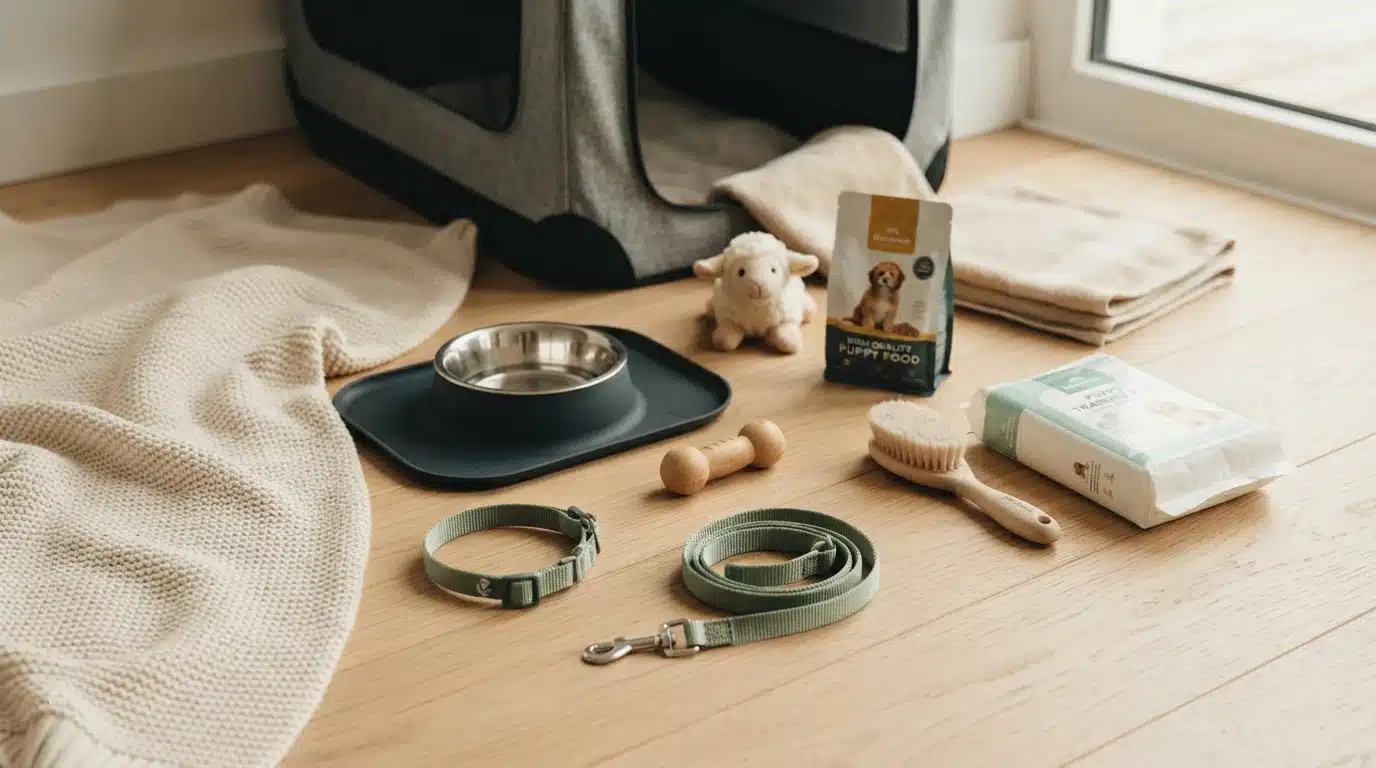
One decompression room with a crate and playpen, puppy-proofed spaces, white noise, a written routine, and a mapped potty route with elevator time built in. An apartment checklist like this one covers setup before pickup day.
Q3: How do I stop my puppy from barking at neighbors in an apartment?
Rehearse knocks and hallway passes in stages, treat each one, and step aside during elevator rides so neighbors pass first. Pay the quiet, never shout over the bark.
Q4: How long can I leave a puppy alone in an apartment?
Build alone time in seconds-to-minutes increments, returning before whining starts. There is no fixed deadline; watch a camera and stretch the gap only while your puppy stays calm.
Q5: When should I tell my landlord about my new puppy?
Before pickup day. Read the pet addendum for quiet hours and complaint rules, then introduce nearby neighbors with your contact info so problems get flagged to you first, not to management.
Conclusion
An apartment puppy thrives on preparation, not luck. Set up one decompression room, keep the noise desensitization ladder below your puppy’s threshold, and build alone time in small steps with no fixed deadline. Pair every sound with something good, use reward-based methods per AVSAB guidance, and log both triggers and progress so you can show patterns, not guesses. Talk to neighbors and check your lease before complaints start. For a Havanese, Havapoo or Cavapoo raised for companion life, this apartment checklist turns a shared-wall home into a calm one.