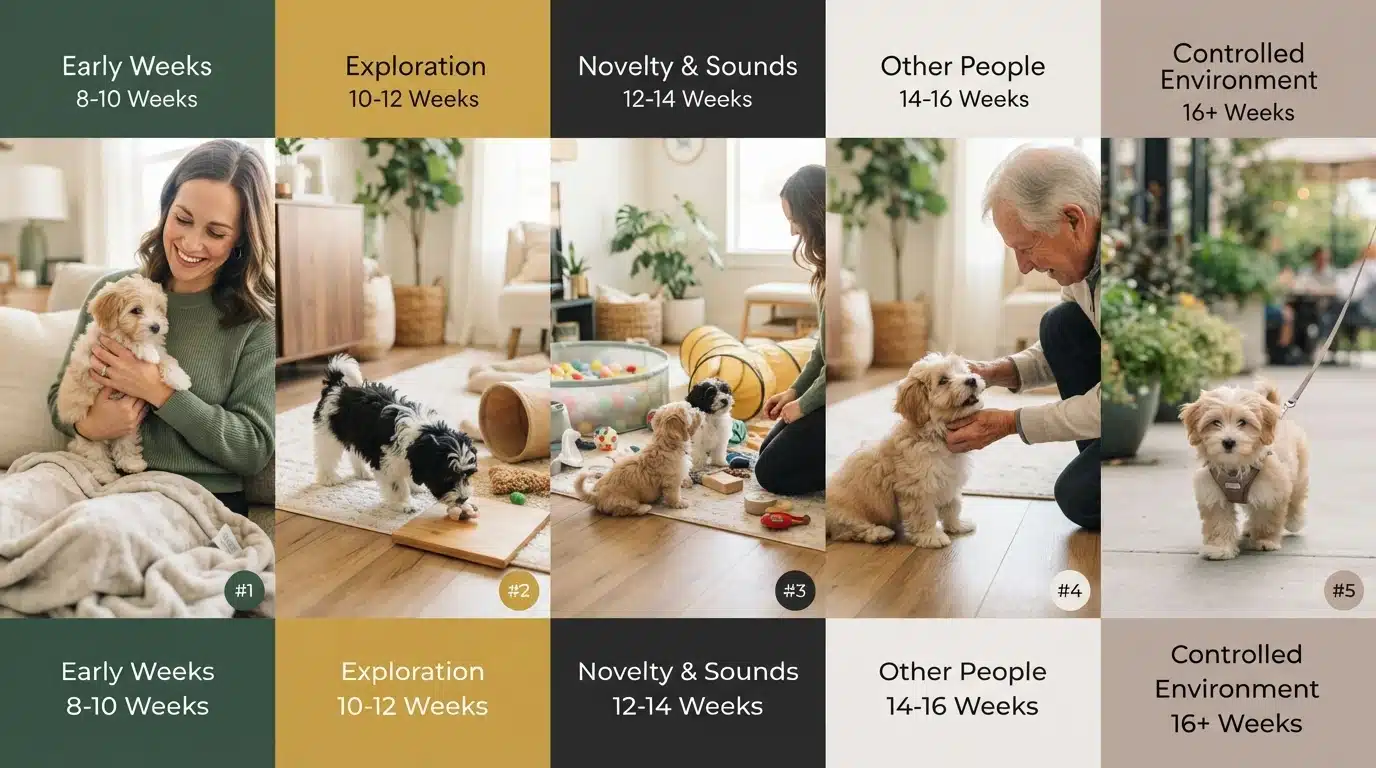
Quick Summary: Prepare for a small breed puppy by measuring first and choosing adjustable gear, including an adult-sized crate with a divider, a Y-front harness, shallow bowls, and a properly fitted carrier. Puppy-proof the home at puppy height, remove toxic plants and tiny hazards, limit stairs and jumping, and arrange health records and a vet visit before pickup. Keep the first week calm and consistent with three to four daily meals, potty breaks every one to two hours, and the same routines for sleeping, feeding, and bathroom breaks.
The week before homecoming, most families buy bowls and a bed, then discover on day one that the crate fits a full-grown dog but not the eight-week-old Havapoo who cries all night, and that the only “safe” spot on the third floor is behind a closed door. Small breed puppies need preparation scaled to their size, not guesses based on adult weight. That’s what this checklist covers: right-sized crates, harnesses and carriers, a puppy proofing pass built on the ASPCA toxic plants list, stairs and jumping limits, and a first week plan that follows AAHA’s new dog guidance. Sage Puppies has helped families place Havanese, Havapoo and Cavapoo puppies in prepared homes since 2025, so every item here reflects what toy breeds actually need.
Know Your Small Breed Before You Buy the Gear
Small Breed Is a Range, Not a Size
“Small breed” covers a lot of ground. A Havanese matures at 7 to 13 pounds under the AKC standard, while a Cavapoo can land anywhere from about 8 to 25 pounds depending on whether the poodle parent was a toy or mini. That spread matters, because a crate or carrier sized for one won’t fit the other. Match gear to the adult weight you expect, not the puppy on your lap today.
Three Things Small Breeds Do Differently
First, they outgrow sizes fast, so buy adjustables: collars, harnesses and crates with divider panels. Second, their joints are fragile, so stairs and jumping need limits from day one. Third, they chill easily, so bedding and car travel need more warmth than a large dog would.
Choosing a Healthy, Well-Developed Puppy
Preparation starts before gear does. Ask for vaccination and deworming records, watch how the puppy moves, and confirm the breeder socializes pups in a home setting. The differences between the Havanese, Havapoo and Cavapoo go beyond size, so compare the three breeds before you shop for anything.
Word check: the AKC Havanese growth guidance confirms the 7 to 13 pound range, which is the number most sizing charts assume.
Set Up the Safe Base: Space, Crate and Playpen Sizing
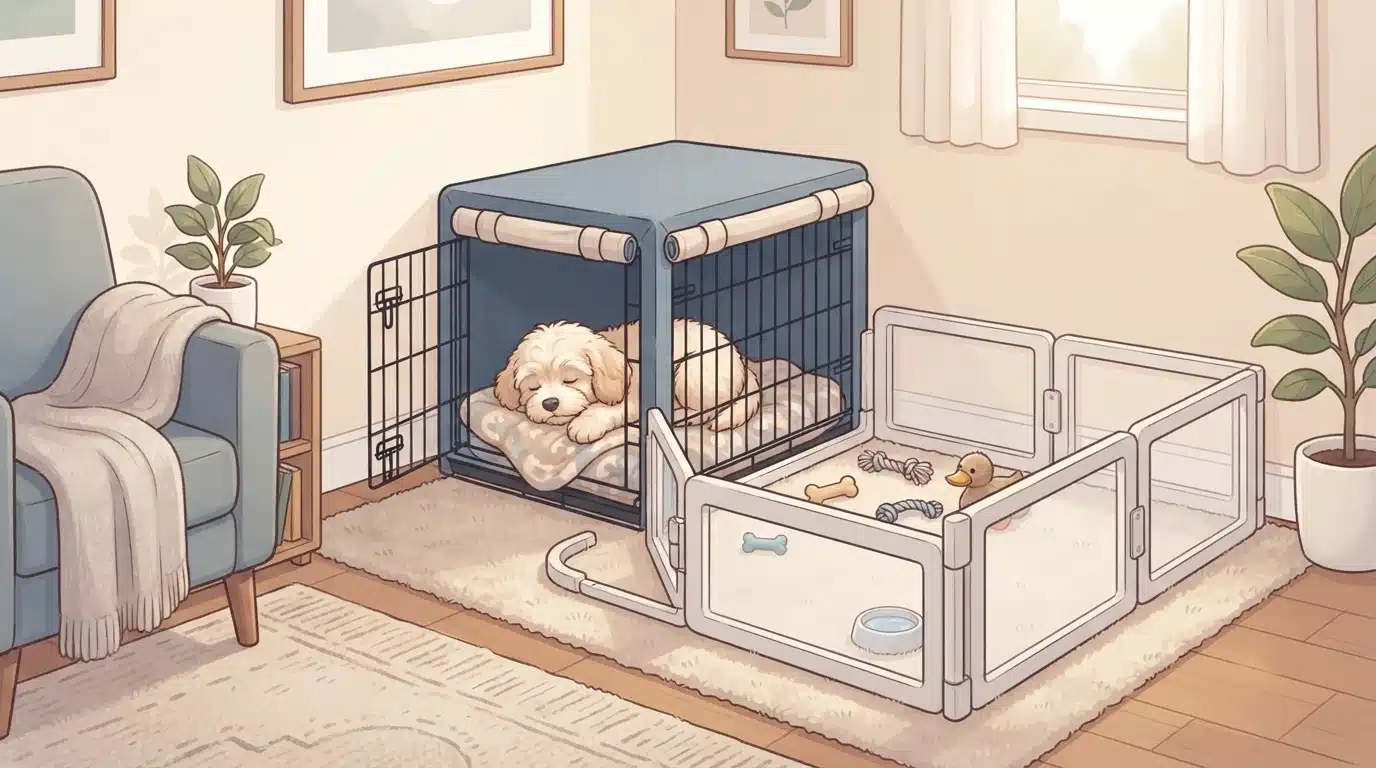
Before your puppy arrives, pick one room as the safe base. This is the heart of small breed preparation: a spot where nothing can be chewed, stepped on or knocked over. A corner of the living room or kitchen works well, since puppies want to hear family life around them. Choose a spot away from drafts, direct sun and heavy foot traffic.
Choosing Where the Base Lives
A Havanese or Cavapoo does not need a huge room. What matters is that the space can be blocked off so the puppy never roams unsupervised. Baby gates beat closed doors here, because a gate keeps the puppy in view. If you have other pets, plan a divider line now so everyone settles in without a turf war.
Crate and Playpen Sizing for a Small Breed Puppy
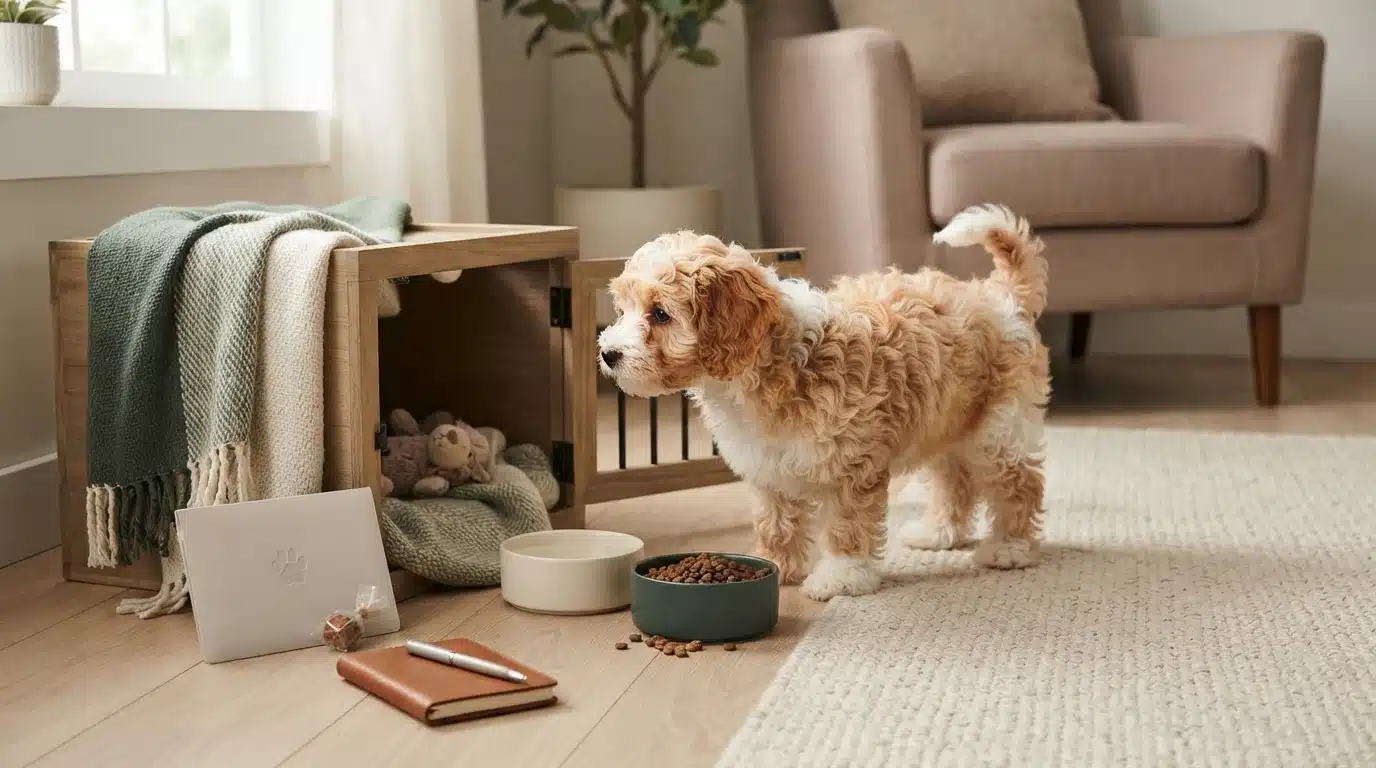
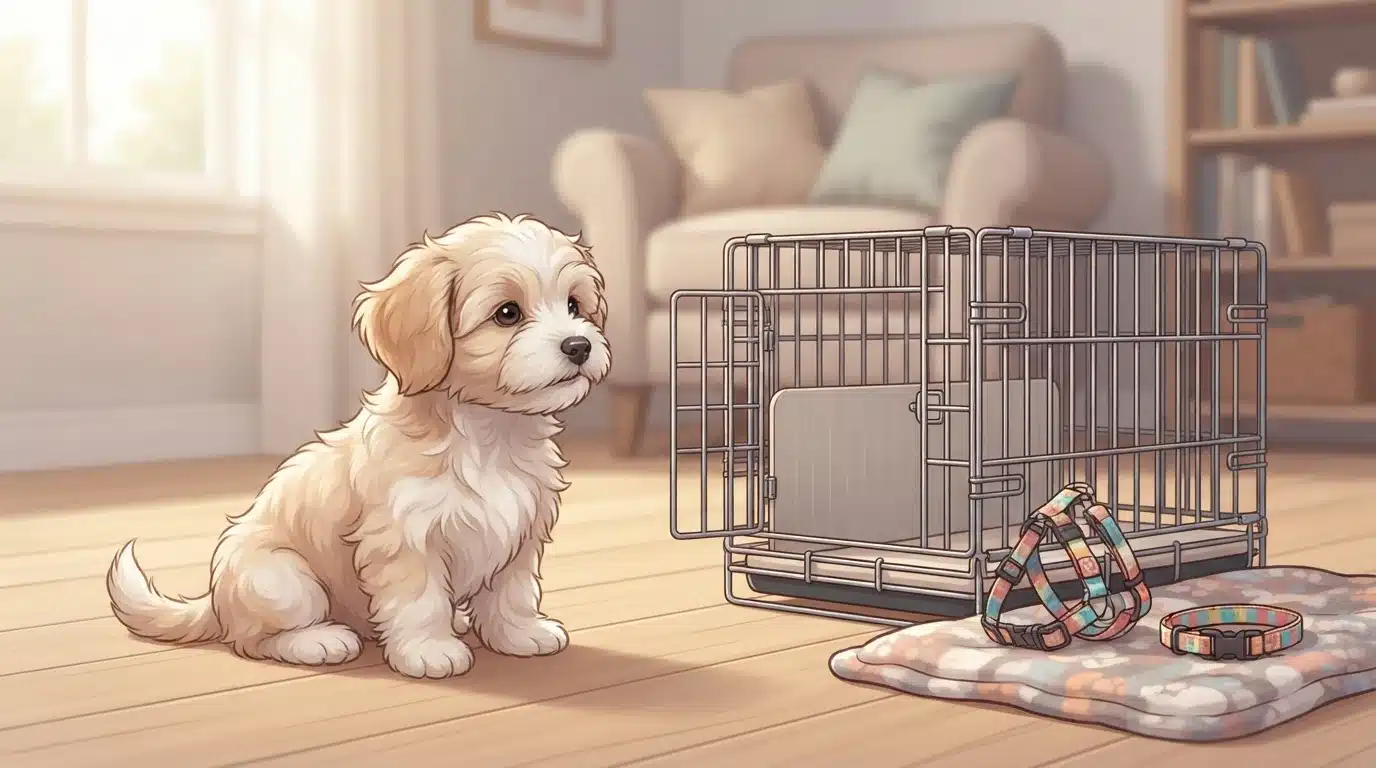
To size a crate, measure your puppy’s nose-to-tail length and height, then add about four inches to each so the puppy can stand, turn and lie down stretched out. Most Havanese and Havapoo adults fit a 22-inch crate, so buy the adult size and use a divider panel to shrink the space while your puppy is small. Per PetMD’s crate sizing chart, crates around 22 by 14 inches suit dogs up to 12 pounds. For playpens, low height is the risk, not the footprint: a 24-inch panel wall stops most climbers. Our guide to puppy crate vs playpen covers what to buy first.
Bedding, Flooring and a Small Breed Comfort Zone
Skip big plush beds in the crate at first; a flat pad with a washable cover is safer for a teething puppy. Outside the crate, rubber-backed mats protect hardwood and give tiny paws traction on tile. Add one snuggle toy for comfort. Keep water shallow, since low bowls suit short necks and reduce spill risk.
A crate that is too roomy invites potty accidents. The divider panel fixes that without buying twice.
Gear That Fits: Collars, Harnesses, Leashes and Carriers
Small dogs need small gear, and the fit matters more than the brand. A collar that slips over the head or a harness that rubs will undo good training fast.
Measure Before You Buy: Two Fingers and a Flat Harness
Measure your puppy before ordering anything. Wrap a soft tape around the widest part of the chest, just behind the front legs, and around the neck where a collar would sit. Then use the two finger rule for collar fit: you should slide two flat fingers under the strap, snug but not tight. For a harness, the chest measurement is the one to trust.
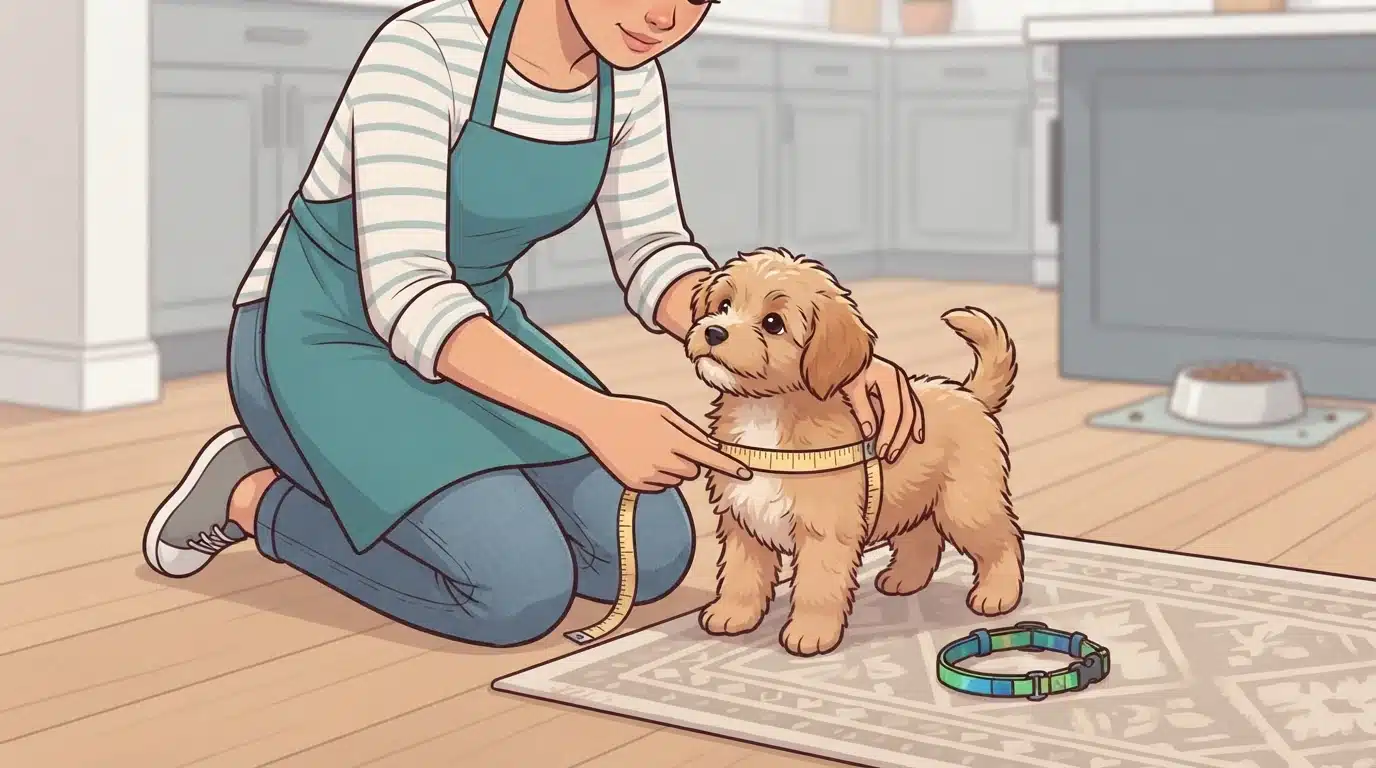
- Measure the chest behind the front legs.
- Measure the neck at the collar spot.
- Choose the size from the chest number, not weight.
- Check the two finger fit every two weeks while your puppy grows.
Why Small Breeds Are Better Served by a Harness
A harness spreads pressure across the chest instead of the throat. That matters for toy breeds, because pulling on a collar can strain a small trachea. A flat, Y-front style with padding at the armpits usually fits a Havanese or Cavapoo best. Skip tight, step-in designs that pinch the shoulders, and adjust the straps so nothing rubs.
Travel Carrier Fit for a Small Breed Puppy
For car rides and vet trips, your puppy needs a carrier it can stand, turn around and lie down in. A soft-sided carrier around 18 to 20 inches long suits most small breed puppies for the first year. Add a thin pad and let your puppy nap in it at home, so the carrier feels safe before travel day.
Identification, Leash Length and Household IDs
Microchip paperwork goes with you on pickup day, but a tag on the flat collar is your first line of defense. Keep the leash short, four to six feet, since long lines teach pulling and let a tiny puppy wander into danger. Stick to one consistent ID tag style in your household so everyone recognizes it.
Feeding Setup: Bowls, Schedule and the First Food Decisions
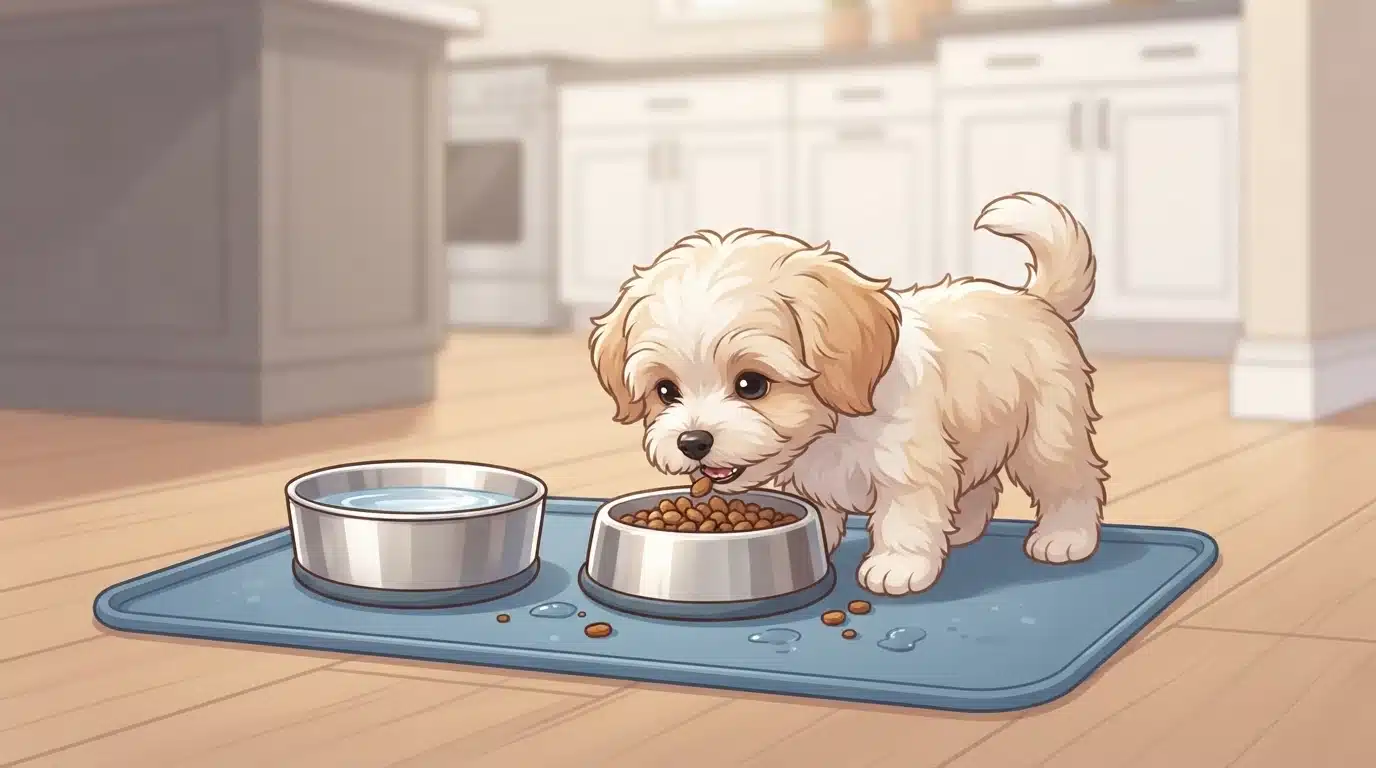
What to Feed, and How to Change Food
Feed whatever your puppy is already eating for the first two weeks, then change slowly if you want a different brand. Mix the new food in over seven to ten days so upset stomachs stay off the checklist. A puppy’s first food matters more than fancy packaging: puppies need a food formulated for growth, according to the AKC puppy nutrition guide. Ask your breeder what the litter ate, and keep the bag so your vet can review the label.
How Often Small Breed Puppies Eat
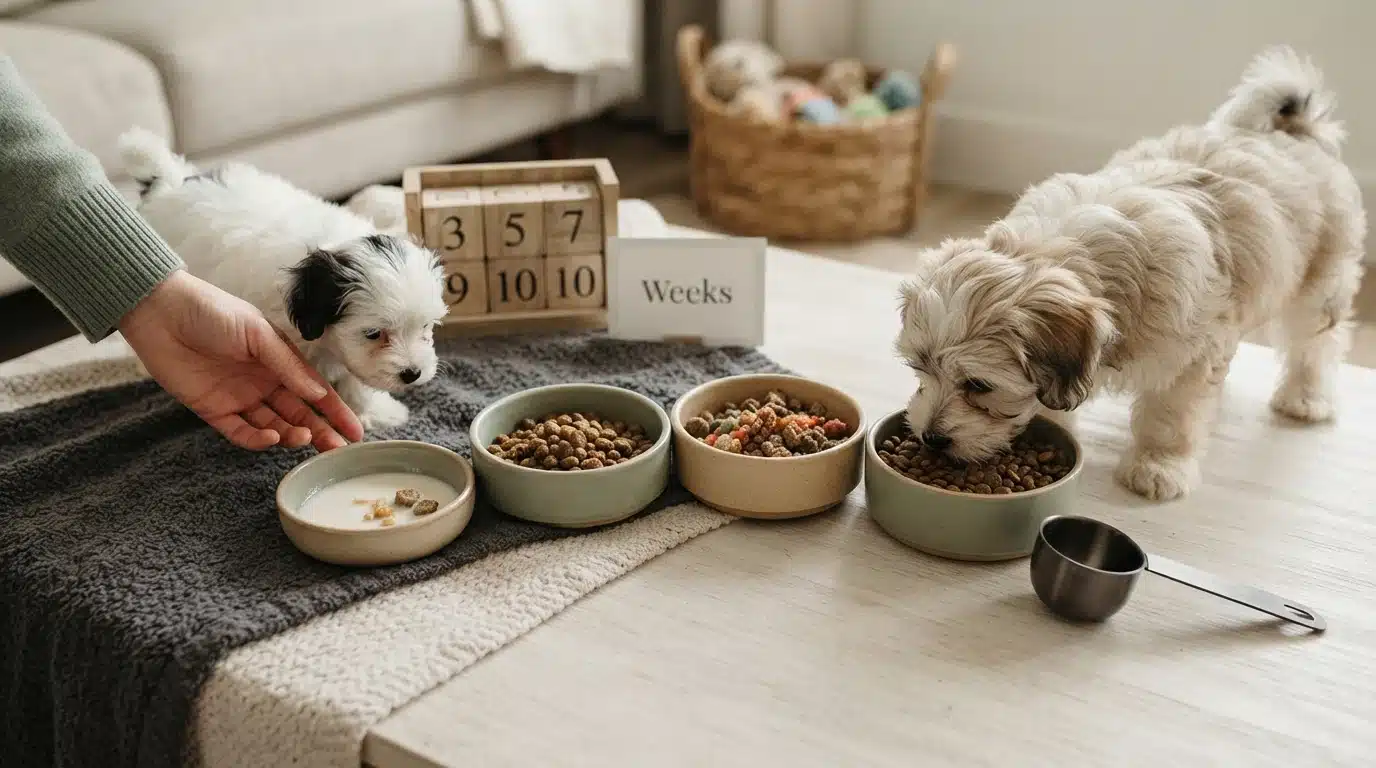
Small puppies run on tiny fuel tanks, so they eat more often than big dogs. Until about four months, plan on three to four small meals a day; PetMD’s feeding guide puts puppies up to four months at three meals per day as a baseline. After that, drop to two or three meals. Set fixed times, since predictable meals make housetraining and crate plans easier. Small breed preparation includes this schedule, not just the gear.
Bowls, Water and Treat Discipline
Choose shallow, non-slip bowls a flat-faced Havanese can reach comfortably, and skip elevated feeders for toy breeds. Keep fresh water down all day and note the puppy meal log basics: what, when, and how much. Treats should stay under ten percent of daily calories so small stomachs still finish real meals.
Health Records, the Vet and Your Support Team
Request the Records Before the Puppy Arrives
Ask for your puppy’s records before pickup day, not after. A responsible breeder hands over vaccination dates, deworming rounds, microchip number and weight history, and your new vet needs all of it. These puppy vaccination and deworming records also tell the clinic which shots are due next, so you avoid gaps or double doses. At Sage Puppies, the health packet travels with the puppy.
Choosing a Clinic and Booking the First Appointment
Pick a vet before your puppy comes home, then book the first visit within a few days of arrival. Call ahead and ask which clinics see new puppies quickly, because small breed puppies can drop weight fast when sick. Bring the breeder’s records, a stool sample and your questions in writing. For a fuller walkthrough, our first vet visit checklist covers what to bring and what happens at the exam.
Building the Support Team Around the Puppy
Good small breed preparation goes beyond the clinic. Line up three more helpers before pickup day: a groomer familiar with Havanese and doodle coats, a pet sitter for work trips, and an emergency vet with after-hours hours nearby. Add a trainer for early socialization classes. Each one takes pressure off you, and your puppy learns to trust new people early.
Puppy-Proofing With Small Breed Eyes
Puppy-proofing works differently at 9 pounds. A Havanese puppy fits where a Labrador never would, so crawl the floor and look up from knee height. This puppy proofing checklist covers what matters most before your puppy’s first day home.
The Plant and Garden Sweep
Which plants are toxic to dogs? The ASPCA’s toxic plant list covers hundreds of species, but the most dangerous include:
- Sago palm – all parts, especially seeds, cause liver failure
- Lilies – severe and sometimes fatal reactions
- Azaleas and tulips – vomiting, drooling, heart problems
Tufts veterinarians note that sago palms in dogs carry especially severe risk. Remove these or move them high and out of reach.
Medications, Cleaners and the Medicine Cabinet
A dropped pill is a full dose for a tiny dog, so check floors after every spill. Store human medications, ibuprofen, supplements and cleaning products in closed cabinets above counter level. Trash cans need locking lids. Note the ASPCA Poison Control number (888-426-4435) and post it where you feed your puppy.
Gaps, Cords and Small-Mouth Hazards
Small heads squeeze through small spaces. Block gaps behind sofas, bookcases and appliances with foam strips. Tuck or cover electrical cords, since teething puppies chew them. Pick up coins, hair ties, buttons and anything smaller than a ping pong ball.
Small Breed-Specific Home Dangers
Recliners and rocking chairs can crush a puppy that naps underneath, so check before you sit. Open doors and screen porches let tiny dogs slip out fast. Watch every step between family members – a Havanese underfoot is easy to miss.
The First 72 Hours and the First Week Plan
The first 72 hours set the pattern for everything after. Keep the world small: one quiet room, one crate, one potty spot, and short calm visits. Book a vet exam within the first couple of days, because even a well-checked puppy needs its own first visit soon after arrival.
The Ride Home and the First Hour
Buckle the carrier in with a seatbelt so it cannot slide. Skip food for the drive if travel is longer than an hour, but offer water at a stop. Once home, carry the puppy straight to the potty spot, then let it explore one room. AAHA’s guidance on a puppy’s first days home stresses keeping things calm so trust can build. Then a nap in the crate. Expect sleep, not play.
Bathroom Breaks for a Small Breed Puppy
Tiny bladders run on tiny timers. Take an 8-week-old out every 1 to 2 hours, plus after every meal, nap, and play session. Use the same door and same spot each time. Quiet praise when it goes, then back inside. Accidents get cleaned with an enzymatic cleaner, never scolded, since a small breed puppy cannot connect the mess to the act.
A Realistic First Week Schedule
- Days 1-2: Settle in. Keep visitors low, per AAHA’s new dog checklist
- Days 3-4: Vet visit, weigh-in, and a simple meal log
- Days 5-6: Short crate naps and first gentle handling practice
- Day 7: Steady feeding and potty rhythm
Common Mistakes to Avoid
Supply and Sizing Mistakes
The biggest gear errors come from guessing sizes. Buying a collar or harness without the two-finger rule test leads to chafing or slips, and an improperly fitted harness can change how your dog walks. Skipping the divider panel in a full-size crate also backfires, because too much room invites accidents. Match every purchase to your breed’s adult weight, not its current one.
Routine and Expectation Mistakes
Inconsistent scheduling causes more problems than any missing supply. If one person feeds at 7 a.m. and another sleeps in, potty training stalls. Rushing crate training counts as another common error, and inconsistency tops Chewy’s list of puppy parent mistakes. Expect setbacks too: progress runs in bursts, not straight lines. Keep the same potty rhythm, same meal times, and same cues, and your puppy settles far faster.

Checklist done? The last step is the right puppy. Sage Puppies matches families with well-bred Havanese, Havapoo and Cavapoo puppies from South Jordan, Utah. Browse available puppies, review pricing, and submit your application to start the conversation.
Frequently Asked Questions
Q1: What should I prepare before bringing home a small breed puppy?
A right-sized crate with a divider panel, a Y-front harness, shallow bowls, an 18 to 20 inch carrier, and a puppy-proofed room cleared of toxic plants.
Q2: What size crate does a Havanese puppy need?
Most adults fit a 22-inch crate; use a divider panel while your puppy is small.
Q3: How often should an 8-week-old puppy eat?
Three to four small meals a day until four months, then two or three.
Q4: How long can a small puppy hold its bladder?
Plan potty breaks every 1 to 2 hours, plus after meals, naps and play.
Q5: Which houseplants are dangerous for small dogs?
Sago palms, lilies, azaleas and tulips top the ASPCA list. Remove them or move them well out of reach.
Q6: When should I book the first vet visit?
Within a few days of arrival, and pick the clinic before pickup day.
Conclusion
Preparation for a small breed puppy comes down to scale and timing. Right-size the crate with a divider panel, fit the harness by chest measurement, sweep the house for toxic plants, and set a steady feeding and potty rhythm before pickup day. Follow the AAHA new dog guidance through a calm first week, and most early struggles never start. Every item on this small breed puppy checklist exists because toy-sized dogs meet hazards a larger puppy would miss, so measure first, buy once, and bring your Havanese, Havapoo or Cavapoo home to a space built for its size.