Quick Summary: Spot Havanese puppy overfeeding by checking for hard-to-find ribs, a missing waist, no belly tuck, rapid weekly weight gain, and loose stools or gas, rather than relying on begging behavior. Track weight consistently, keep treats below 10% of daily calories, and trim portions by about 10% every week while preserving three to four meals to avoid hypoglycemia. A swollen belly, low energy, or poor growth may indicate parasites or illness, so bring a stool sample and feeding log to a veterinarian.
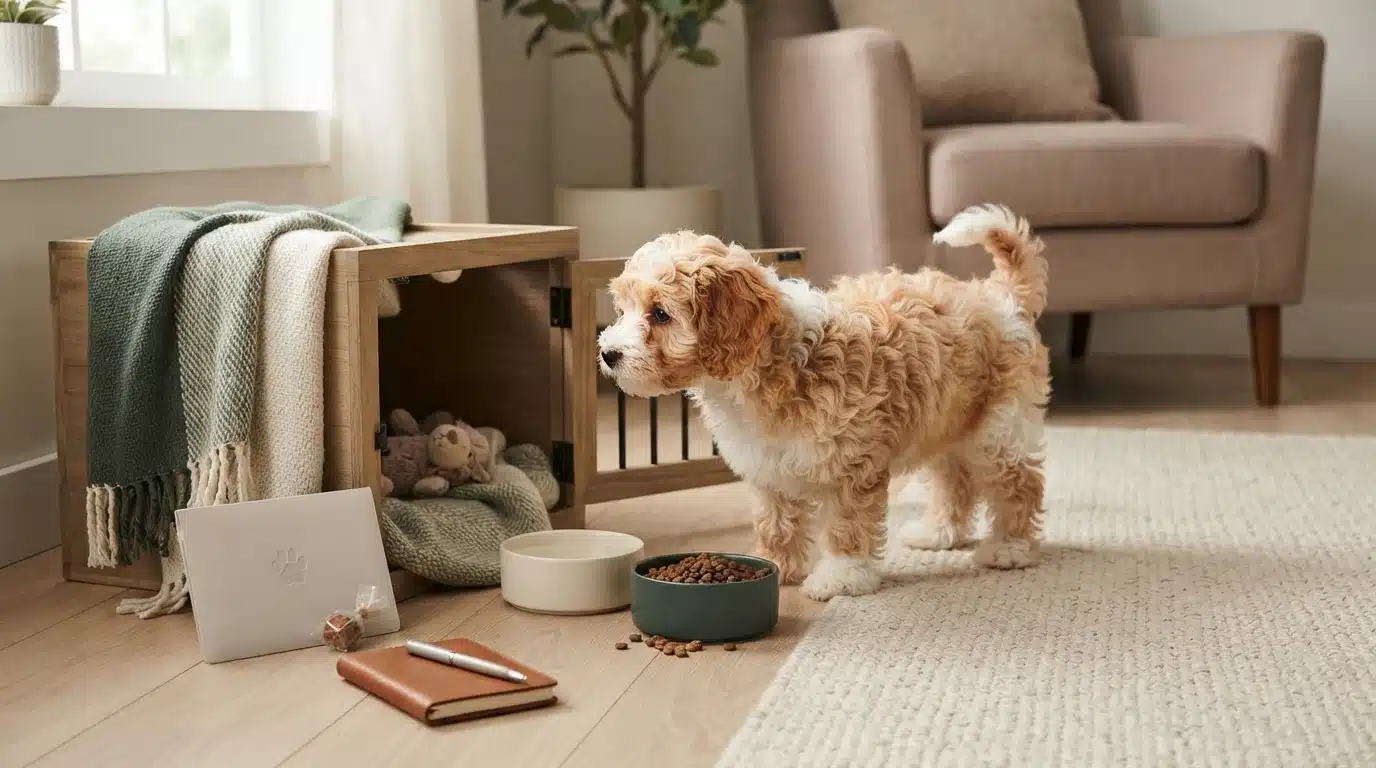
Havanese puppy overfeeding usually shows up in small, easy-to-miss ways long before the scale confirms it. You can tell before your veterinarian says a word. A Havanese who has been getting too much food begs right after the bowl is empty, still seems hungry ten minutes later, and the fluffy belly that looked cute at eight weeks starts to hang lower once the coat fills in. That gap between what your puppy acts like and what her body is doing is the real problem for first-time owners. Most families overfeed out of love, not carelessness. This guide walks you through the visible signs of overfeeding in a puppy, how to check her body condition at home despite that long double coat, and how to trim portions without skipping meals and risking low blood sugar in a 7 to 13 pound puppy. These habits come from the daily puppy-raising experience at Sage Puppies in South Jordan, Utah.
Signs Your Havanese Puppy Is Overfeeding
You can spot overfeeding in four ways: what you can see on her body, how she acts after meals, changes in her stools and tummy, and a weight trend that climbs too fast. Watch for these together, since one sign alone rarely tells the whole story.
What You Can See: Ribs, Waist and Belly Line
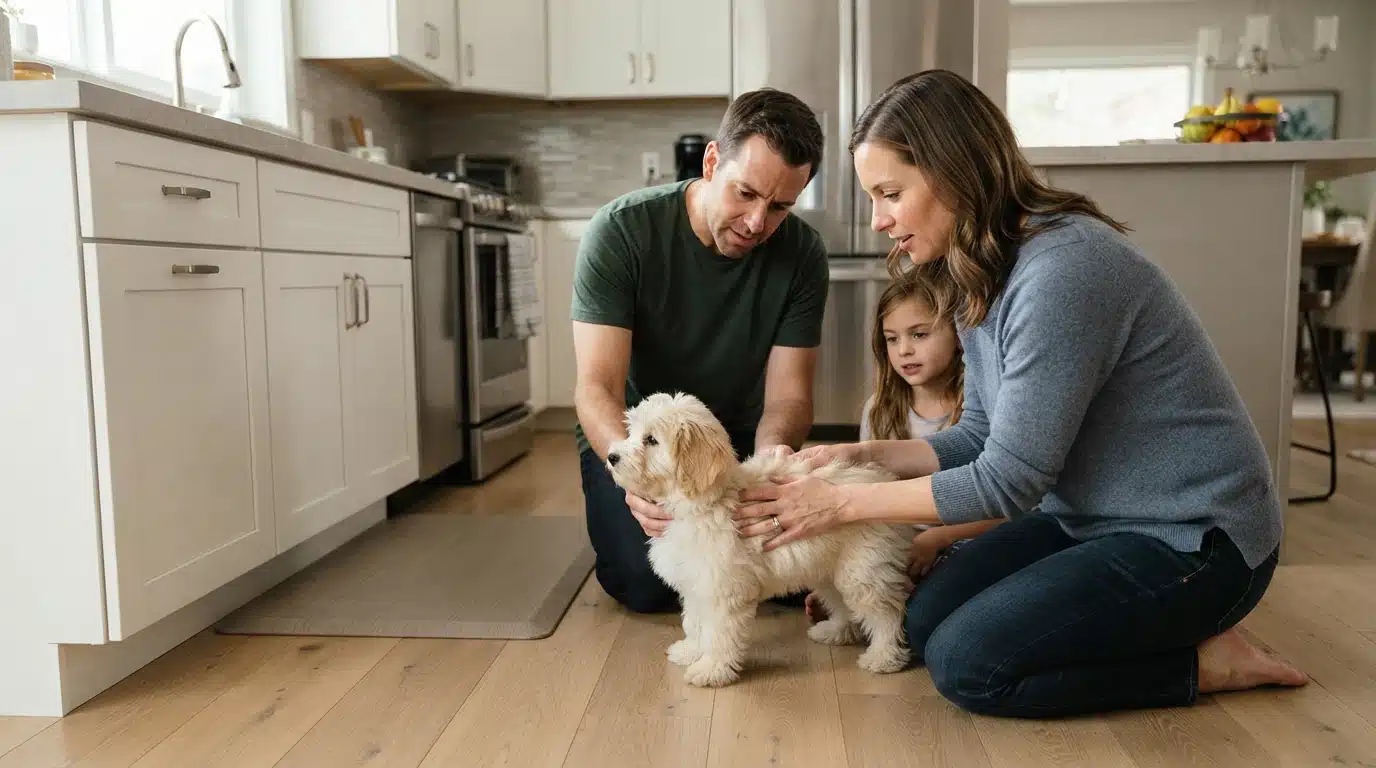
Run your fingers lightly along her sides. You should feel each rib under a thin layer of padding, like ribs under a light sweater. Looking down from above, you should see a clear waist behind the ribs. From the side, her belly should tuck up toward the hips. If ribs are hard to find, the waist is gone, or her belly hangs flat and round, the extra food is showing.
What the Puppy Does: Hungry Right After Eating
Puppies beg, so begging alone proves nothing. The better clue is what happens after a full, measured meal. A puppy who whines, scavenges, or steals food right after eating may simply be used to bigger portions, not truly hungry. That habit builds fast, especially when extra treats fill the gaps. Keep treats under 10 percent of her daily calories, and let the scale, not the pleading eyes, decide.
Soft, Stools, Gas and a Noisy Tummy
Too much food, or food that is too rich, often shows up in her gut first. Loose stools, extra gas, and a gurgling tummy after meals are common hints. A firm, round, tight belly in a puppy can also point to parasites rather than overfeeding, so a vet check matters if the pot belly look appears alongside a poor coat or low energy. Keep a short note of stool changes for that visit.
Gains That Show Up on the Scale and the Tape
Weigh her weekly, same day, same scale, and write it down. Steady climbs that outrun her breed’s expected pace, roughly 7 to 13 pounds at maturity for a Havanese, suggest portions need trimming. A soft tape around her chest helps too, since that fluffy double coat hides what the scale confirms. Small cuts beat big ones. If you want a second set of eyes on her body shape, a quick look at choosing a healthy Havanese puppy covers what good condition looks like.
How to Check Your Puppy’s Body Condition Score at Home
The nine-point body condition scale vets use takes about a minute at home. First, feel the ribs with flat fingers. Next, look down at her from above for a waist. Last, look from the side for a tuck behind the ribs.
The Three-Part Check: Ribs, Top View, Side View
Run your flat hand along her ribcage with light pressure. You should feel each rib like the knuckles of a flat hand resting on a table.
Then stand over her. A healthy puppy has a waist: her body narrows behind the ribs.
Now check from the side. Her belly should slope up toward the back legs. That upward curve is the tuck. If her underside hangs level or sags, the score climbs.
Working Around the Havanese Coat
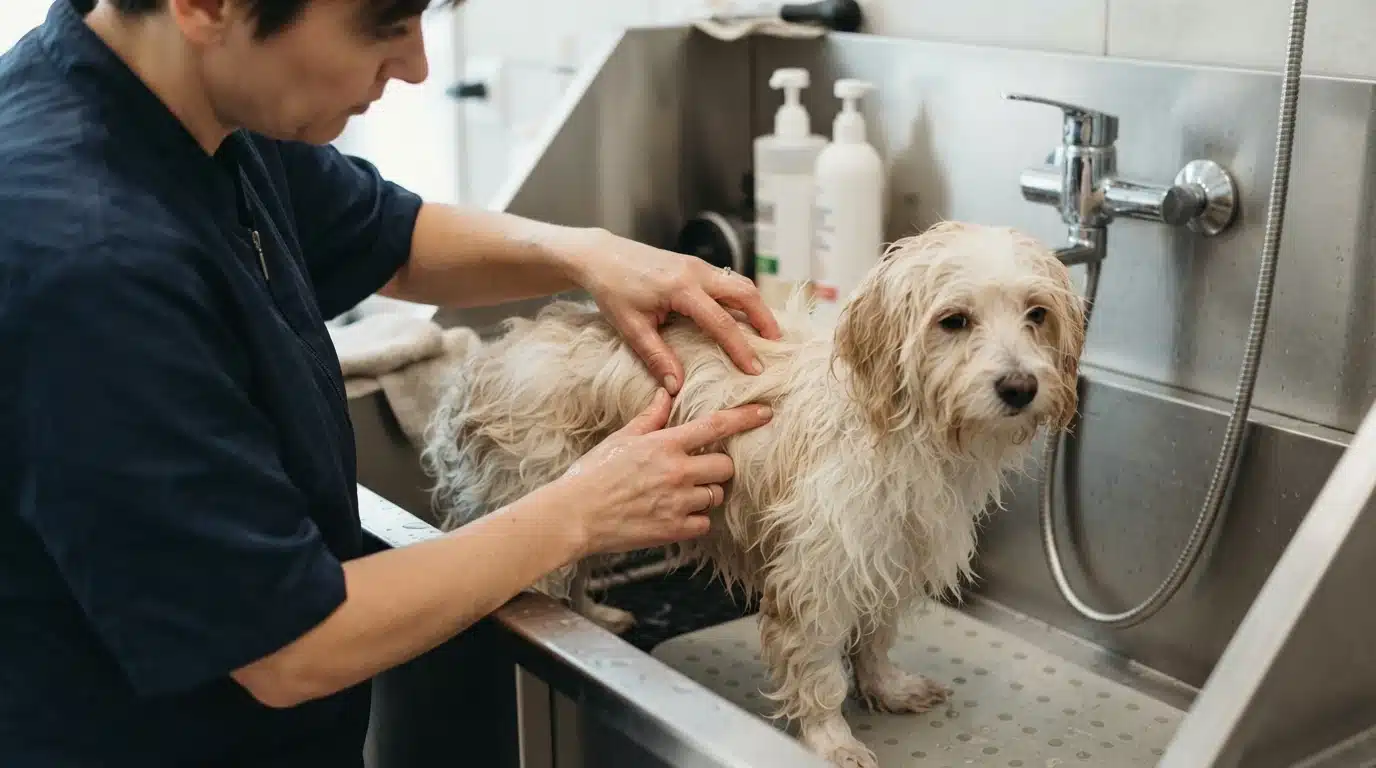
The coat hides the view, so trust your hands over your eyes. Dry fur or a wet puppy after a bath makes ribs easier to feel through the fluff.
Do the check with damp hands right after bathing. The damp hair flattens against her body and lets your fingertips read the ribs clearly. If the coat is dry, part the hair over the ribs with your fingers and press gently through the gap.
Reading Your Score
Ribs easy to feel, clear waist, visible tuck: that is a 4 or 5, the ideal range. Ribs need searching for, waist barely there, no tuck: she sits at 6 or above, which means extra fat.
Score 7 to 9 calls for trimming portions. And if you can see ribs, spine, or hip bones, the score is too low.
When to Check With a Veterinarian Instead
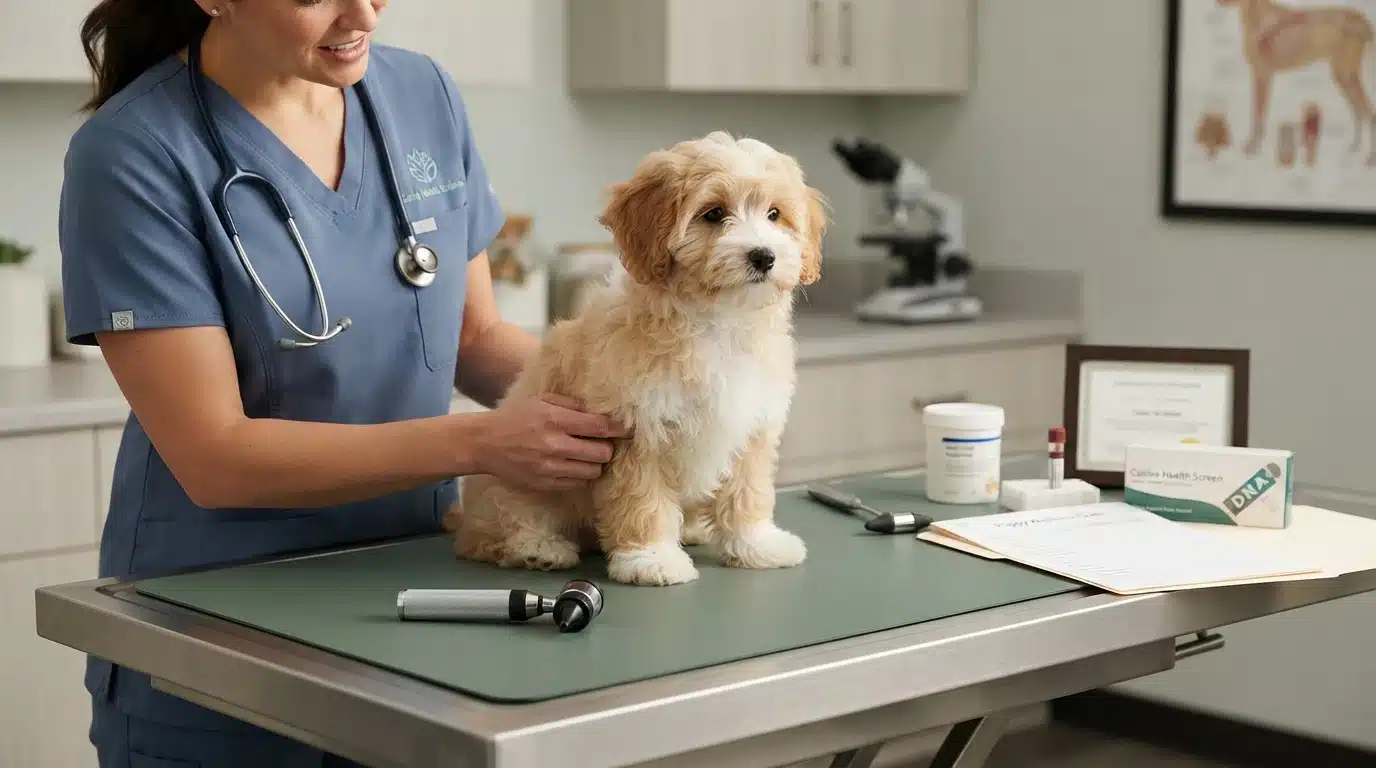
Call your vet if her belly looks round and swollen alongside low energy, since that can point to parasites rather than fat. puppies and food are worth verifying. A quick exam rules this out and sets a target weight. If you are still choosing a puppy, asking about health checks a good breeder already runs starts things on the right foot.
Tracking Havanese Puppy Weight Gain Week by Week
A weekly weight log catches overfeeding weeks before your eyes do. Puppies gain so fast that day-to-day changes hide in fluff, so the trend line matters more than any single number.
Weighing the Same Way Every Week
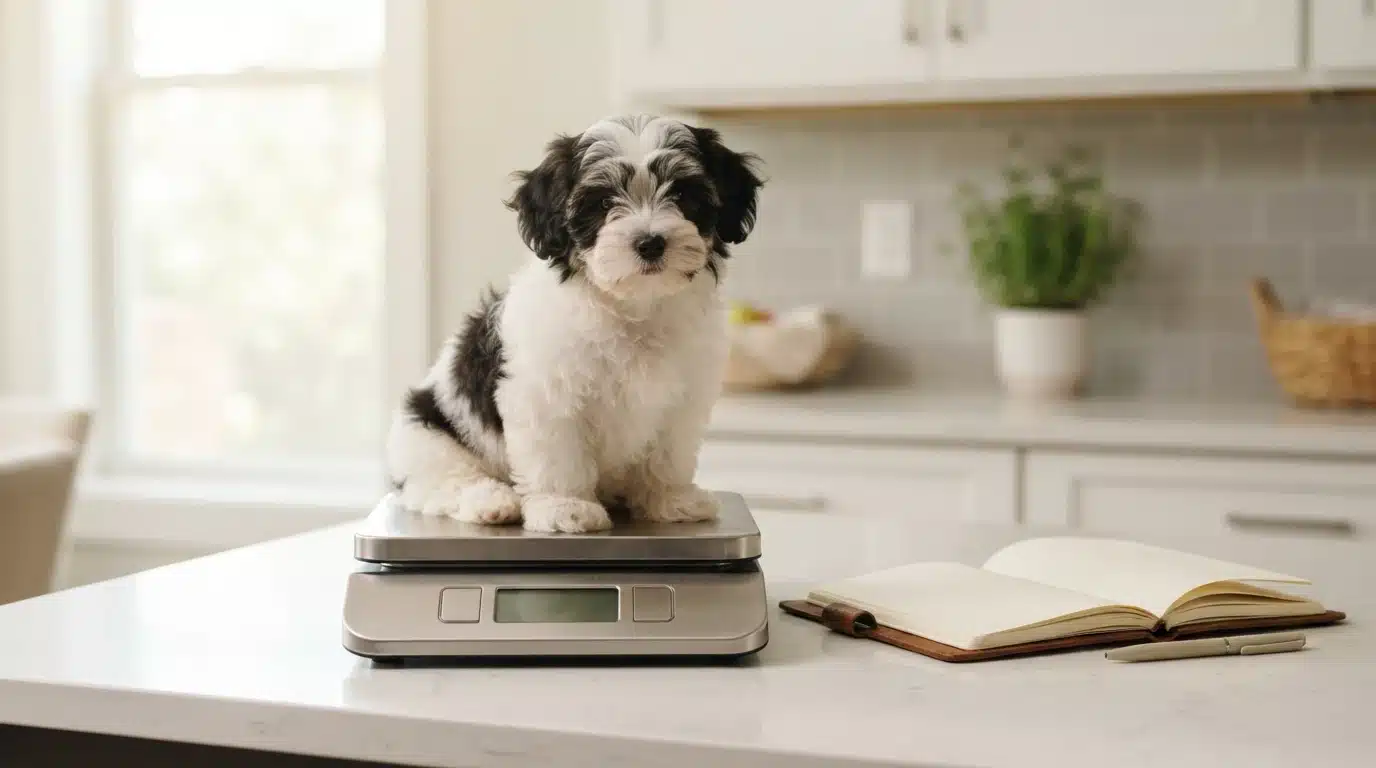
Pick a method and stick with it. A kitchen scale works well for a young Havanese, as long as you weigh her at the same time of day, before breakfast. Hold the reading to the ounce and write it down the moment you finish. Same scale, same time, same conditions: that consistency is what makes week-to-week numbers worth comparing. Random weigh-ins tell you almost nothing.
Using Expected Adult Weight as Your Anchor
Weight alone means little without a target. Havanese usually mature between 7 and 13 pounds, so ask your breeder where your puppy’s parents landed. Breeders who track their own litters can give you a realistic adult range, and a good one will. Then use a rough guide: at 8 weeks, many small breed puppies sit near a fifth of their adult weight, and gains slow from there.
What Counts as Too Fast
Rapid growth is not a badge of health. If your puppy climbs well past a steady, gradual curve, or her weight jumps in bursts after each food bump, portions likely need trimming. Doubt creeps in when everyone guesses, so log the numbers and judge the trend. A steady gain that matches her expected adult size is fine; a steep one usually means too many calories.
Where the Extra Calories Are Hiding
Your puppy’s bowl probably holds the right amount. The weight gain usually comes from everything around it, and on a 7 to 13 pound dog those extras move the scale fast.
The 10 Percent Treat Rule, in Real Numbers
Treats should stay under 10 percent of daily calories, a limit vets repeat because it leaves room for a complete, balanced diet, according to a report on dog treat calories. Here is what that means for a Havanese. A puppy eating about 400 calories a day gets a 40 calorie treat budget. One dental chew can hit that alone. Two small training biscuits and a strip of jerky can double it. Count the treats you gave yesterday against the bag’s label, not by feel. Most owners are surprised.
The Kitchen Habits That Add Up
The food drops, licks, and “just a bite” moments rarely get counted. A scrap of cheese, a lick of yogurt, half a chicken bite off your plate: each one is small, but a toy breed burns few calories, so the same habit repeats itself into a visible change within weeks. Pick one family rule and post it on the fridge: table food only from the measured ration, never from the counter. If several people feed the puppy, keep a small tally on the fridge door for a week. Patterns show up fast.
Calorie Density and Food Swaps
Kibble varies a lot per cup, so a cup of one food can carry 30 percent more calories than another. Switching foods without resizing portions quietly overfeeds. Check the calorie line on your bag, or compare it against a Havanese puppy feeding chart by age, then adjust the scoop to match. Soft treats and chews are usually denser than kibble, so swap some for green beans or carrot pieces.
Adjusting Portions Without Causing Low Blood Sugar
A Havanese puppy runs on a tiny fuel tank. Her body stores very little sugar, so a skipped meal or a sudden portion cut can send her blood glucose into a quick drop, a problem called hypoglycemia. Vets treat this as an emergency in toy breed puppies, with signs like listlessness and wobbling Veterinary Partner. The fix is not to stop trimming her weight gain. The fix is to trim slowly and keep meals steady.
Why Small Breeds Need Smaller, More Frequent Meals
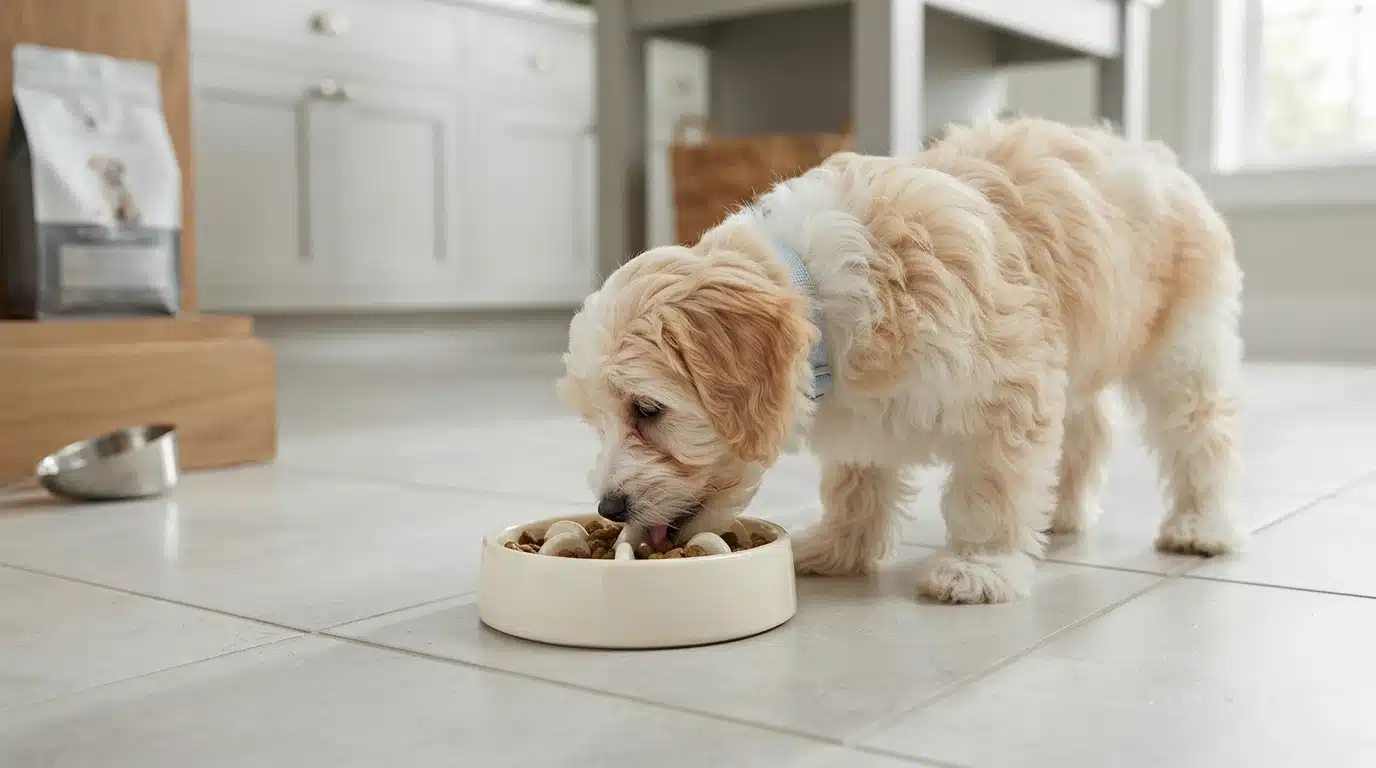
Small dogs burn energy faster per pound than big dogs, and their stomachs hold less food, so glucose runs low sooner. That is why tiny puppies do best on three to four meals a day instead of two, a schedule many vets recommend for the first months Animal Medical Center handout. When you trim an overweight Havanese puppy, keep the number of meals the same and reduce the size of each one. Four slightly smaller meals protect her blood sugar far better than two big ones.
A Gradual Reduction Schedule
Cut portions about 10 percent at a time, then hold that new amount for a week. Weigh her at the same time of day on the same scale, and watch her body condition score alongside the number on the scale. If her ribs stay easy to find and she keeps gaining fast, trim another 10 percent the next week. If she starts losing weight instead of slowing her gain, add a little back. For age-by-age portions, the Havanese feeding schedule we give our Sage Puppies families breaks this down week by week.
Filling the Gap Without More Calories
A puppy used to grazing may act hungry between meals, and that is normal. Offer relief, not food. Move a treat to inside a meal, switch to green beans or a few pieces of her regular kibble if you need a snack, and use play or a short training session to fill the time. Puzzle feeders slow down fast eaters too. Keep any extras inside the 10 percent treat budget you already counted, and never drop a meal to make up for them.
When Overfeeding Is Not the Problem
Sometimes a round puppy is not eating too much. A soft, rounded belly is an appearance, not a confirmed condition. Extra fat shows up along the ribs and spine first, so a pup with a full belly but easy-to-find ribs may be perfectly normal. Puppies also carry a natural puppy pot belly that fades as they grow.
Signs That Need a Veterinarian, Not a Smaller Bowl
Some changes point to illness rather than portions. Call your vet if you see vomiting, diarrhea, a bloated or painful belly, sudden weight gain without more eating, low energy, or a puppy who stops growing. Puppies who seem hungry all the time but stay thin need checking too.
Parasites, Hormones and Other Look-Alikes
Roundworms are a classic culprit, and the term “pot belly puppies parasites” exists for a reason: worms cause a swollen belly while the rest of the body stays thin. Thyroid problems and Cushing’s disease are rarer in young dogs but can shift weight. A stool sample catches most parasites quickly.
What to Bring to the Vet Visit
Bring a stool sample from the last day, your feeding log, the food bag, and any treat labels. A weekly weight log puppy record helps your vet see the trend.
Common Mistakes to Avoid
Treating Hunger as a Portion Problem
A Havanese puppy will act starved at every meal, even a well-fed one. That pleading look is normal puppy behavior, not evidence she needs more food. When you respond with bigger scoops or extra treats, overfeeding follows fast. Stick to measured portions and keep treats under 10 percent of daily calories, no matter how convincing the performance gets.
Skipping the Weigh-Ins and the Body Condition Check
Overfeeding hides until the scale and your hands reveal it. Weigh her weekly and log the number, then feel for ribs, waist, and belly tuck under that fluffy coat. Skip either check and extra pounds build quietly. Steady, small corrections beat a sudden strict diet later.

If your Havanese puppy is packing on pounds faster than she should, small daily fixes work better than worry. Keep meals steady, trim treats, and check her ribs weekly. Want more help raising a healthy small breed pup? Visit Sage Puppies for honest guidance from breeders who know these puppies well.
Frequently Asked Questions
Q1: What are the signs my Havanese puppy is overeating?
Look for ribs you have to search for, a missing waist from above, a sagging belly tuck, fast scale gains, and loose stools or gas after meals. Begging right after a full meal is a habit clue, not proof of hunger.
Q2: How can I tell if my Havanese puppy is overweight?
Feel the ribs through the coat. Hard-to-find ribs plus no waist or tuck means extra fat. Compare her weight trend against the expected 7 to 13 pound adult range, and ask your breeder where her parents landed.
Q3: How do I check my puppy’s body condition score at home?
Run flat hands over the ribs, look down for a waist, then check the side view for an upward belly tuck. Easy ribs with a clear waist scores 4 or 5, the ideal range.
Q4: How much should I cut her portions if she is overweight?
Trim about 10 percent at a time and hold that amount for a week. Keep the same number of meals, weigh her weekly, and adjust again based on the trend.
Q5: Can I skip a meal to help my puppy lose weight?
No. Toy breed puppies can drop into low blood sugar fast, which vets treat as an emergency. Reduce each meal slightly instead.
Q6: When is a round belly not overfeeding?
A tight, swollen belly with low energy or a thin body can mean worms or other illness. Bring a stool sample and your feeding log to the vet.
Conclusion
Overfeeding a Havanese puppy rarely announces itself. It hides under fluff and behind pleading eyes. The signs are simple to learn: ribs you have to hunt for, a waist that disappears from above, a belly that stops tucking up, and weekly gains that outrun her 7 to 13 pound adult target. Check her body condition with your hands, not your eyes, and log her weight every week. When portions need trimming, cut about 10 percent at a time and never skip a meal, since toy breed puppies can drop into low blood sugar fast. Small, steady corrections now keep her lean, energetic, and healthy for life.