Quick Summary: Havapoo week one is manageable with three priorities: book a vet visit within 72 hours, keep the breeder’s food and four-meal schedule unchanged, and use a 24-inch crate with a divider for a snug sleeping space. Expect soft stool, a few accidents, and two to four nighttime potty trips, while calling the vet for persistent diarrhea, repeated vomiting, refusal to eat, or unusual lethargy. This practical checklist draws on Havapoo-raising experience at Sage Puppies in South Jordan, Utah, plus current small-breed veterinary guidance.
It is 2:14 a.m. on day two. Your Havapoo is awake again, you are standing in the kitchen holding a bottle you have not yet learned to offer, and the dark stool in the yard has you wondering whether something is wrong. Havapoo week one feels like this for almost every new owner, and almost none of it is an emergency.
The real challenge is that first-week advice comes scattered. One site covers vet visits, another covers food, and crate sizing turns into guesswork. Meanwhile your puppy is eating, sleeping, and learning where to potty, so the timing of each decision matters.
This guide pulls those answers into one Havapoo-specific checklist. You will find when to book the first vet visit and which records to bring, a small breed puppy feeding schedule with amounts, and a crate sized by measurement, including the fit test and divider panel that make puppy crate training week one work. A day-by-day rhythm ties it together, so you always know what today should look like.
The advice here draws on Cassie Milar’s documented experience raising Havapoo litters at Sage Puppies in South Jordan, Utah, and on current veterinary guidance for toy and small breeds. If you are still choosing a puppy, the available Havapoo puppies page shows what is ready now. For everyone already holding that bottle: you are doing better than you think.
Step 1: Book and Prepare for the First Vet Visit
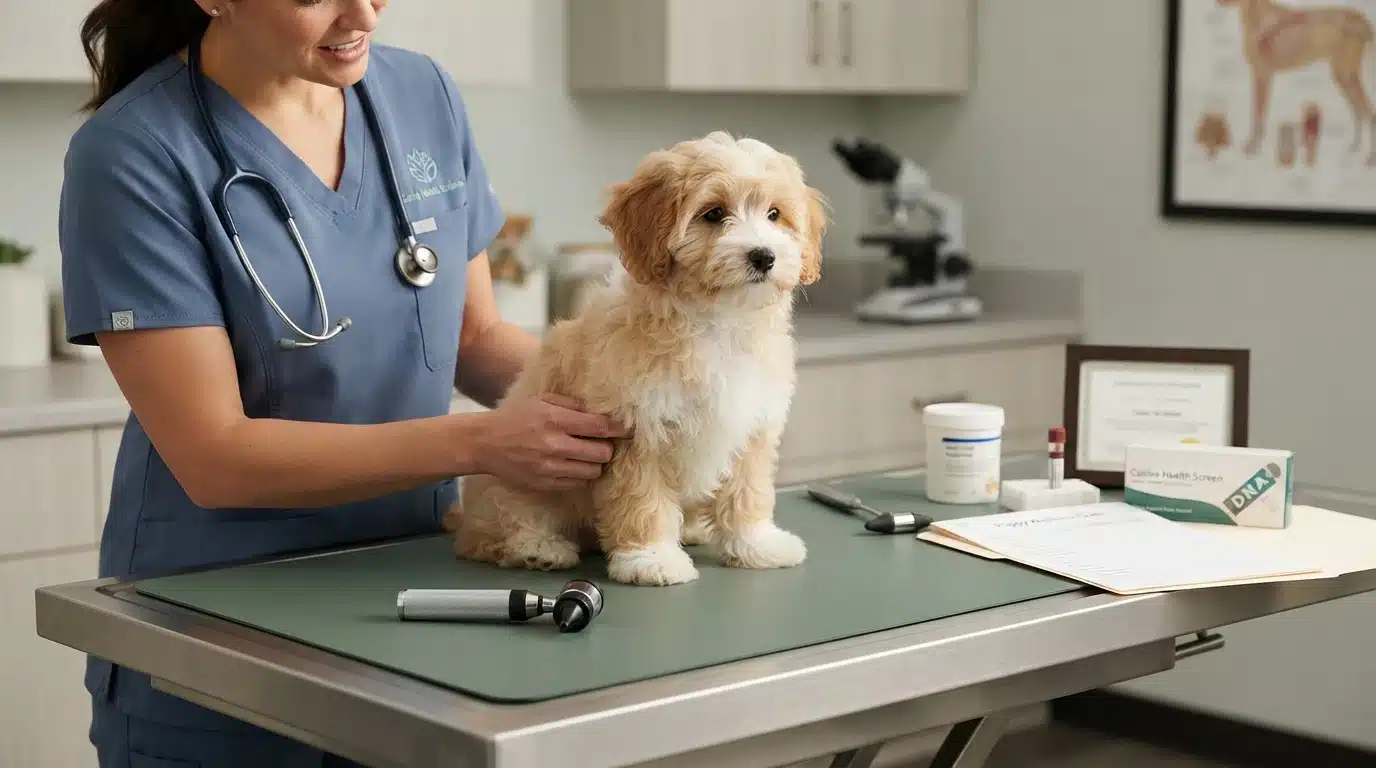
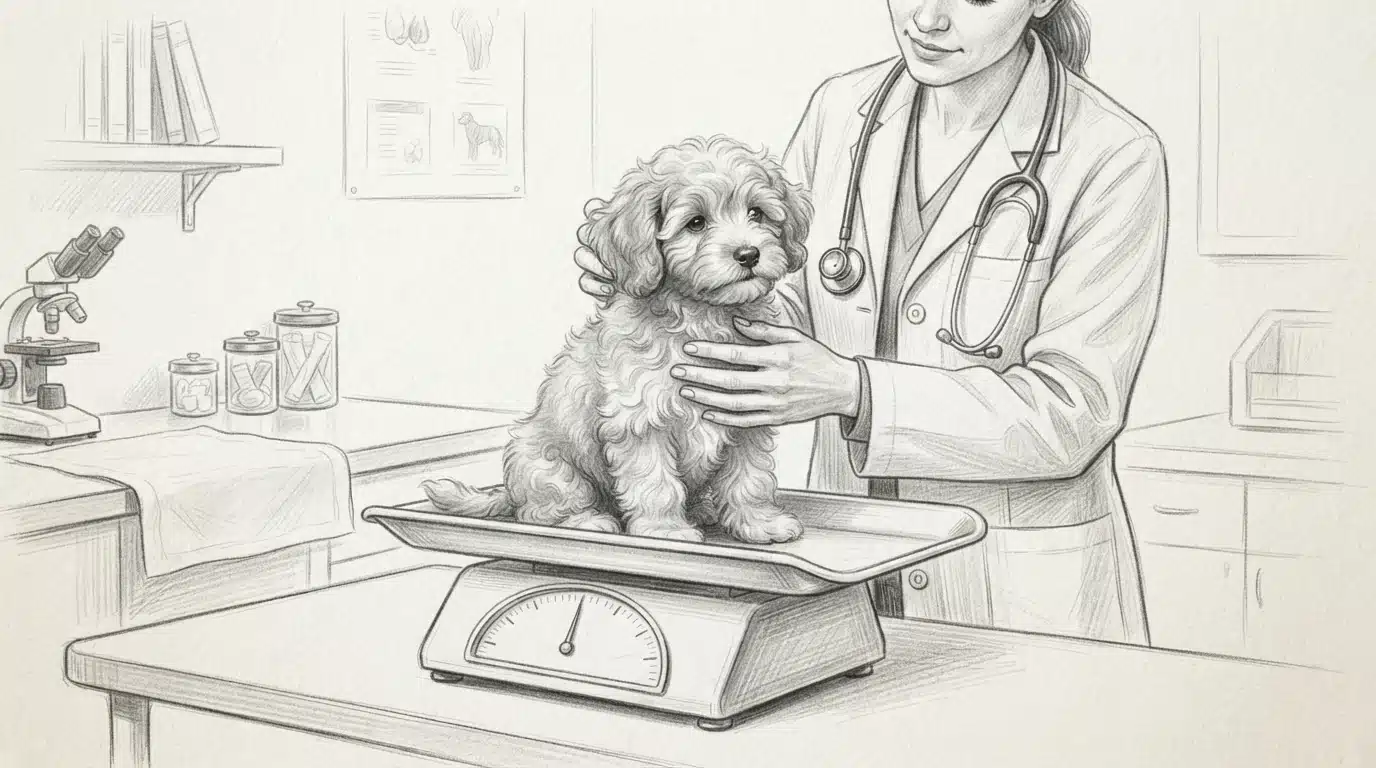
Call your vet before your Havapoo puppy even comes home. Most breeders ask for a health check within 72 hours, and a few days after pickup is the common window, mainly so travel and weekends don’t push it out. So the direct answer: book the Havapoo puppy first vet visit for within the first few days, not on a hard universal deadline. If your breeder’s contract sets 72 hours, that clock matters more than any general rule. There is no single Havapoo week one without this step, because it anchors everything else you’ll do.
The paperwork to bring and what to ask
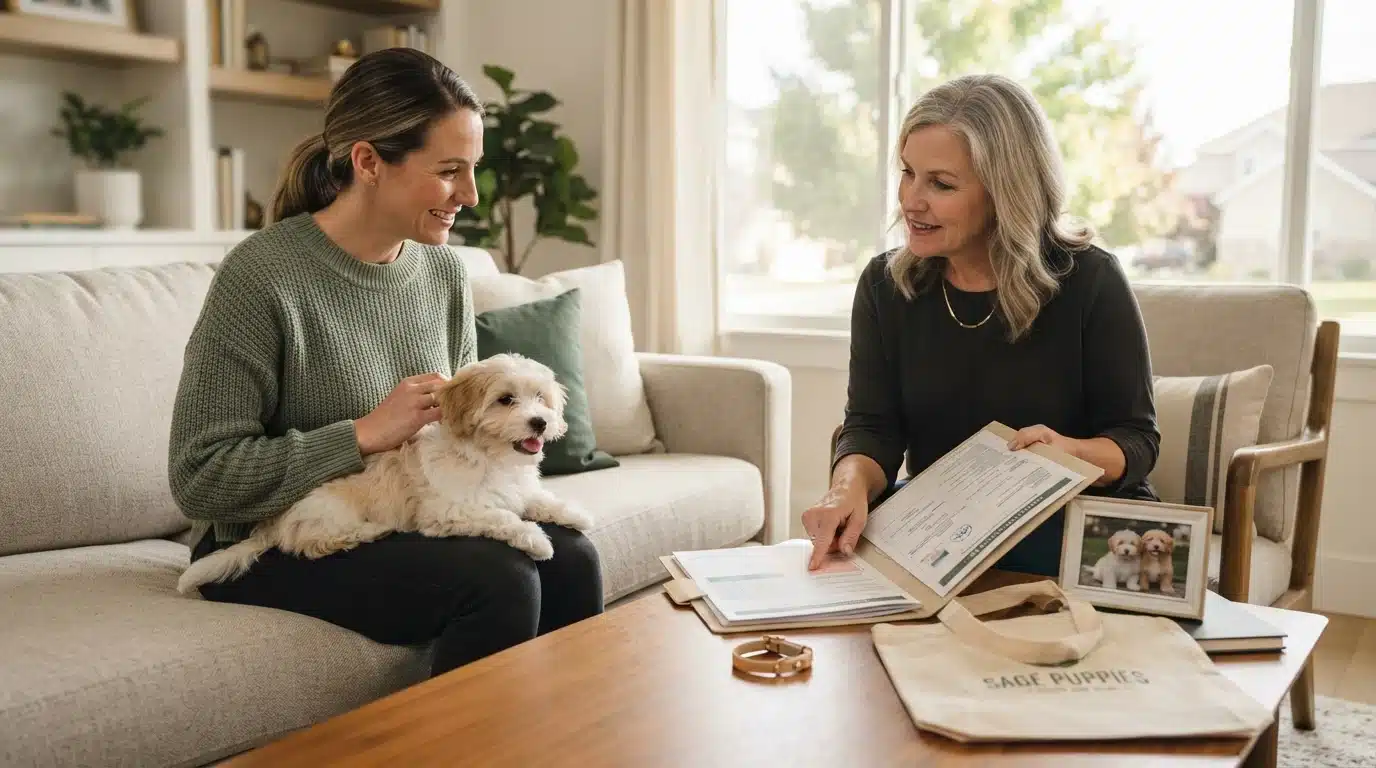
Bring whatever health records came with your puppy. Most responsible breeders send vaccination and deworming records, and your vet will want them to plan booster shots correctly. If your puppy traveled, ask which vaccine the breeder gave and when the next dose is due.
Write down three questions before you go:
- What feeding amount and schedule do you recommend for a small breed puppy at this weight?
- Which parasite prevention should start now, and which can wait?
- When do you want to see us again for boosters?
This visit is also where you confirm what to feed a new puppy, since the vet can weigh your pup and adjust portions. Our first-year Havapoo milestones page walks through the visit and feeding rhythm in more depth.
Signs that mean call the vet today
Some things can’t wait for a scheduled appointment. Call the same day if you see diarrhea that lasts past a meal or two, vomiting, refusal to eat for more than a day, a cough, or low energy that doesn’t match a big play session. Small breed puppies dehydrate fast, so runny stools deserve a quick call, not a wait-and-see week. Ask the clinic’s after-hours number on your first visit so you’re not searching for it at midnight.
Step 2: Feed the Puppy Exactly as Before, Then Watch the Stool
Your Havapoo’s stomach is the most sensitive system in the whole house right now. The safest move for havapoo week one is to keep everything about meals exactly as the breeder did: same food, same brand, same rhythm. Change one thing at a time, and change nothing at all for the first several days.
Keep the same food for the first several days
Ask your breeder what food the puppy is eating and buy that bag before pickup day. If you can’t match it, ask for a small supply to blend over a week. A sudden switch is the most common cause of week-one diarrhea, and it’s completely avoidable. Any food transition you want to make can wait until the puppy has settled, then happen slowly over seven to ten days.
Four small meals, on the same clock
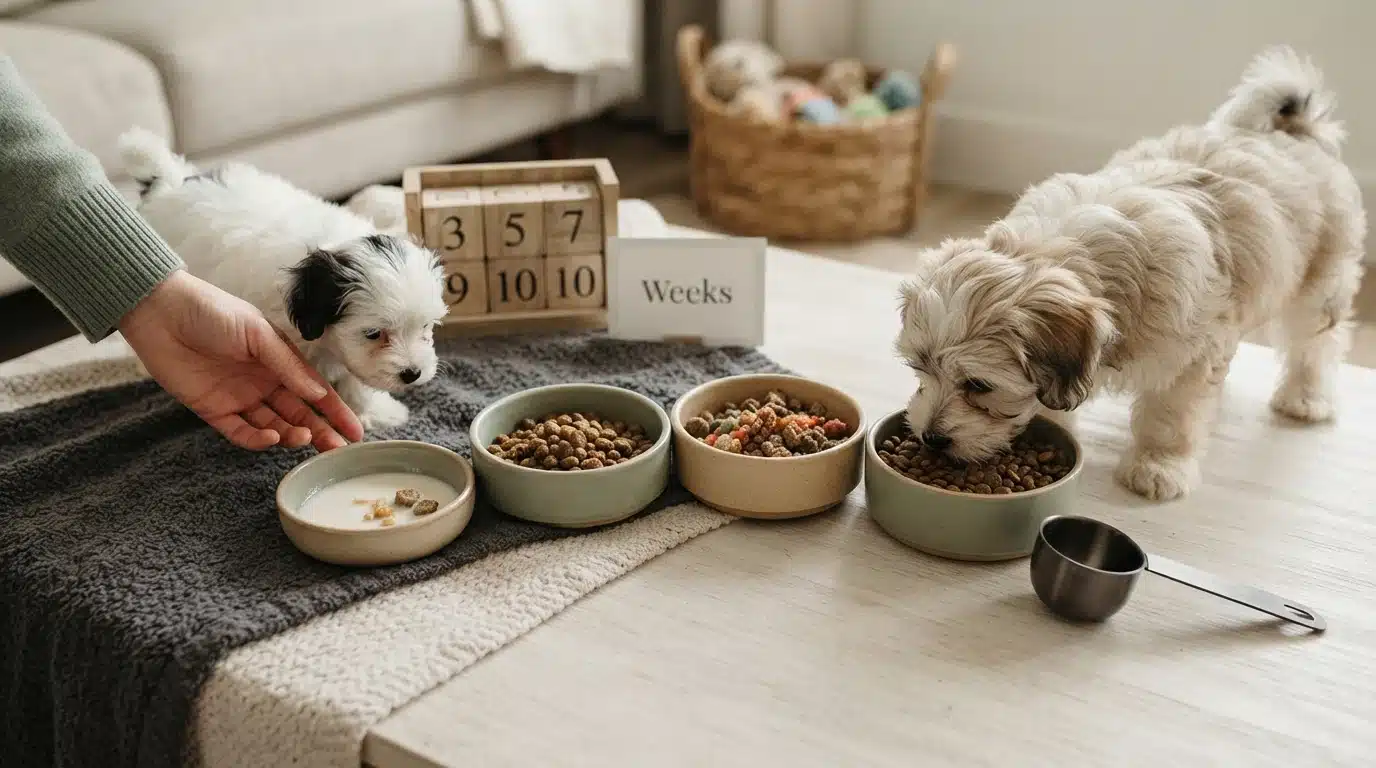
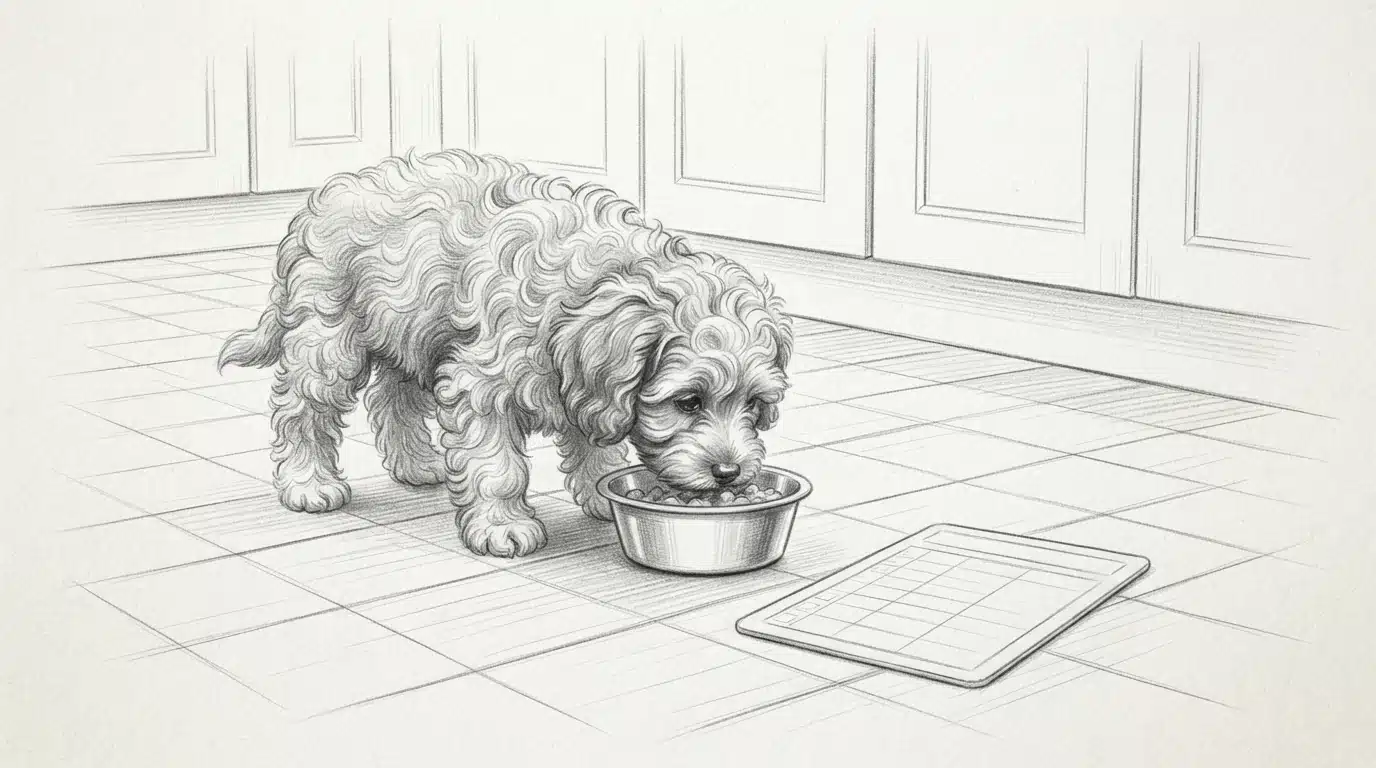
How often should you feed a Havapoo puppy in the first week? Four times a day. Small breeds burn through energy fast and their stomachs are tiny, so smaller, more frequent meals steady their blood sugar. Then copy that clock every day:
| Meal | Time | Note |
|---|---|---|
| Breakfast | 7:00 a.m. | Right after the first potty trip |
| Lunch | 12:00 p.m. | Pick up the bowl after 15 minutes |
| Dinner | 5:00 p.m. | Last big meal |
| Small fourth meal | 8:00 p.m. | Helps pups sleep through the night |
If your breeder uses different times, keep their schedule instead. Consistency beats the clock itself. Our guide to how often to feed a Havapoo puppy week by week walks through when to drop to three meals later on.
Treats, chews and the 10 percent rule
Treats work great for training, but they count. Limit treats and extras to less than 10 percent of daily calories, a rule the AVMA recommends for avoiding weight gain. For an eight-week Havapoo, that’s a few tiny pieces. Skip new chews during week one, especially rawhide and pig ears, since soft stomachs react badly.
Loose stool, no appetite and what is normal
Soft stool for a day or two is common as puppies settle in. What matters is how the puppy acts. Eating well, playing, and drinking normally? Keep watching. Skip one meal but act lively? That’s usually fine too. Call your vet if diarrhea lasts more than 24 hours, stool turns black or bloody, or the puppy vomits repeatedly and seems flat or refuses two meals in a row.
Step 3: Choose and Set Up the Right Crate
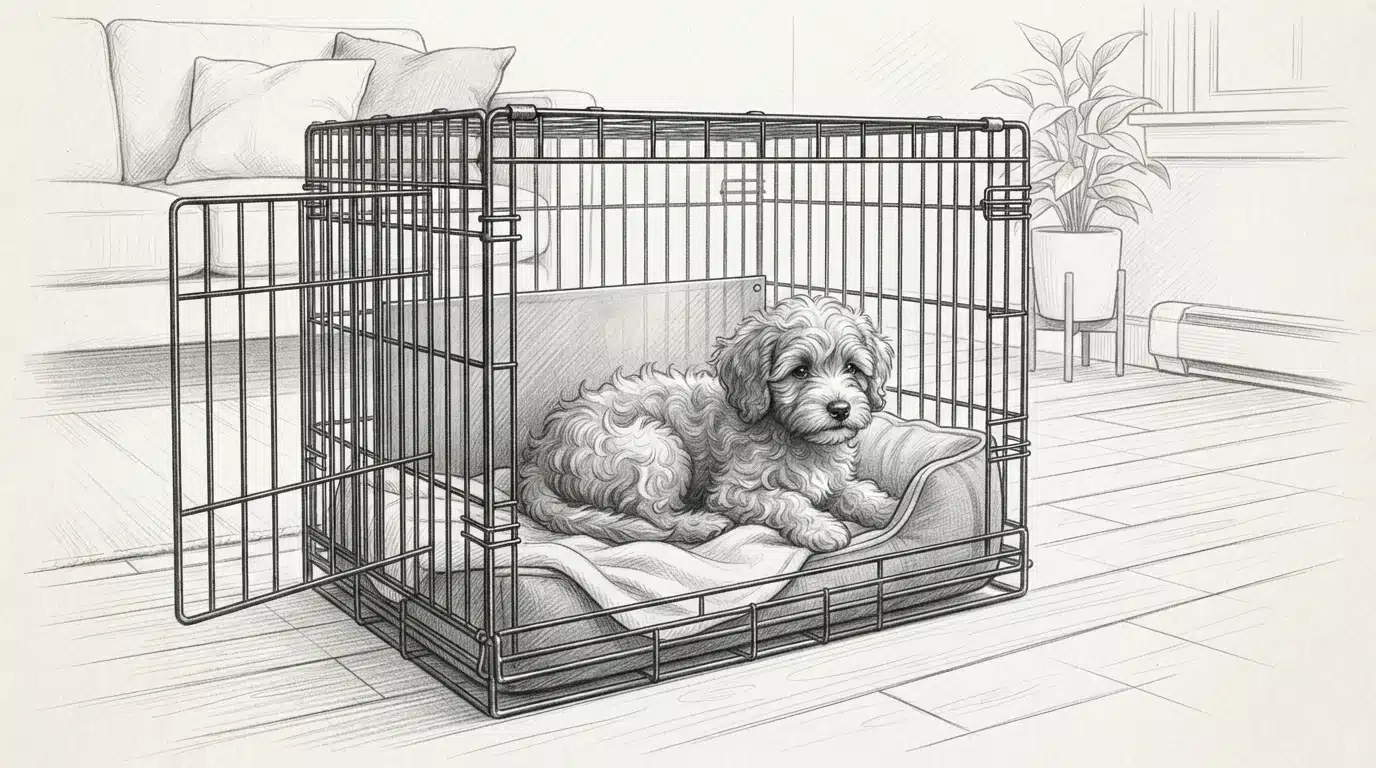
What crate size does a Havapoo puppy need? An adult Havapoo lands around 15 to 25 pounds, so a 24-inch crate usually fits for life. Buy the adult size now and use a divider panel, which shrinks the space inside. The puppy keeps one snug corner to sleep in, and you never buy a second crate.
The fit test: stand, turn, lie down
A crate is the right size when your puppy passes three checks. Use the divider to shrink the space until all three hold true:
- Stand at full height without ducking or hunching.
- Turn around completely without bumping the walls.
- Lie down stretched out, paws and all, with room to spare.
Too much room defeats the purpose, because most puppies will soil the far corner and sleep at the other end. Too little space means a puppy that resists going in at all. Adjust the divider weekly; Havapoo puppies grow fast, and the fit changes within a month.
Crate, playpen and pen alternatives
A crate handles sleep and short alone time, but it cannot cover a whole afternoon. Pair it with a small playpen so your puppy can stretch, sip water and chew a toy without roaming the house. Some families skip the crate entirely and paper-train in the pen. That works, but it usually makes house training slower, since dogs naturally avoid soiling where they sleep.
Where the crate lives
Location matters more than most people expect. Put the crate where your family spends evening hours, such as the living room corner, so the puppy feels included rather than exiled. For the first few nights, many owners keep it beside their bed; your breathing and presence settle a new puppy quickly. Keep it away from heating vents, direct sun and drafty doors.
A first-week crate routine that does not turn into punishment
The crate should predict good things. If it only appears when you leave, your puppy learns it means abandonment.
Set the pattern in week one: drop a treat in, let the puppy walk in, praise calmly, then let her walk out. Feed one meal a day inside with the door open. Short naps with the door closed build up to longer stretches. Take a potty break right before crating, since most young puppies cannot hold it for long, and expect one or two night wake-ups at first. Never send your puppy to the crate as discipline; a dog punished there will fight the door for months.
Step 4: Survive the First Three Nights
Why small breed puppies wake often
A Havapoo puppy’s stomach holds about as much as a shot glass at eight weeks. So the food that gets your pup through the day simply cannot stretch to sunrise yet. Small breeds also burn calories fast and lose body heat quickly, so cold and hunger both wake them. Expect two to four potty trips each night during the first week. It’s normal, and it fades as the bladder grows.
The 2 a.m. routine that works
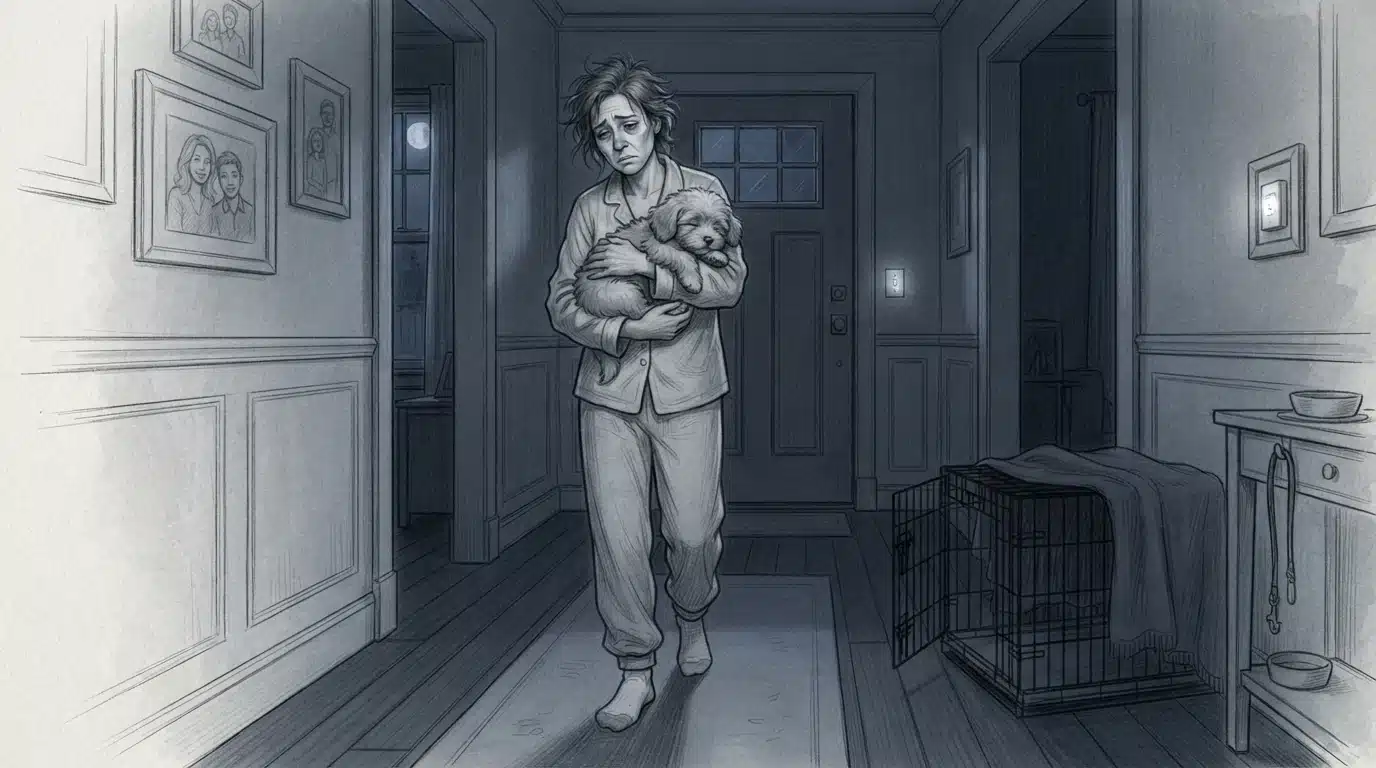
Keep the whole trip boring and businesslike. Set a soft alarm instead of waiting for whimpering, then carry your puppy straight out to the same potty spot. Use one calm cue word, give it two to three minutes, and skip play or long chats. Carry the pup back to the crate, and go back to bed yourself. Lights low, voice low, no treats. Most pups settle within ten minutes if you stay consistent, and the routine itself starts to cue sleep.
What your veterinarian should weigh in on
Your first visit is the right time to ask about overnight needs, not just shots. Bring up night waking frequency, how much water to leave down at bedtime, and when you can expect longer stretches of sleep. Ask your vet to review the vaccination and deworming records your breeder sent home, and confirm what comes next. If your puppy wakes screaming rather than fussing, or pants and can’t settle, mention that pattern too. Sometimes pain or an upset stomach, not habit, is the reason behind a rough night.
Your First Seven Days, Day by Day
Day one: arrive, weigh, settle, no visitors
Keep the first day boring, on purpose. Potty outside at arrival, then show your puppy one room, not the whole house. Offer food at the schedule you planned and weigh her if you have a kitchen scale. No visitors, no errands, no new toys every hour. Your Havapoo puppy is learning that this house is safe and quiet.
Days two to three: the vet visit and the first real routine
Book the first Havapoo puppy vet visit within 72 hours, since most breeders ask for it and travel days eat the clock fast. Bring any vaccination and deworming records you were given. Keep meals, naps and potty trips at the same times both days, so a pattern forms before the fun stuff starts.
Days four to five: expanding the safe area
Open one more room, but only while you can watch. Practice short crate sessions after meals and potty breaks, five minutes at a time, and pair the crate with a chew. Start teaching name recognition with treats. If accidents happen, note the time instead of scolding, because the pattern tells you when to head outside.
Days six to seven: look back and plan
Check weight, appetite, sleep and any accidents against your notes from earlier in the week. Adjust the feeding amounts or potty times if the pattern says so, and confirm your next vet appointment. A calm week one makes week two, and training beyond it, far easier for both of you.
Common Mistakes to Avoid in Week One
Most first-week trouble traces back to a few fixable habits. Skip these and the whole week goes smoother.
Free-feeding all day. Leave food down around the clock and potty training gets random. Stick to set meals and pick the bowl up after 15 minutes, so you know when the next potty trip is due.
Buying a crate that’s too big. Extra room invites a potty corner. Use the divider panel so the sleeping area stays snug, and save the full space for later.
Skipping the 72-hour vet window. Travel and weekends eat the clock fast. Book the visit before pickup day if you can.
Crate as punishment. If the crate only means timeout, your puppy will fight it. Feed meals inside and keep the door open during the day so it feels safe.
Too much freedom too soon. One unsupervised accident on carpet can set toilet training back weeks. If potty progress stalls, our potty training week-by-week plan walks through the reset.

Your Havapoo’s first week goes smoother with a plan. If you’re still choosing your puppy, Sage Puppies breeds Havanese, Havapoo and Cavapoo puppies in South Jordan, Utah, and sends each home with honest preparation guidance. Browse available puppies, or start the application today so your week one is calm instead of chaotic.
Frequently Asked Questions
Q1: What supplies do I need for a Havapoo puppy’s first week?
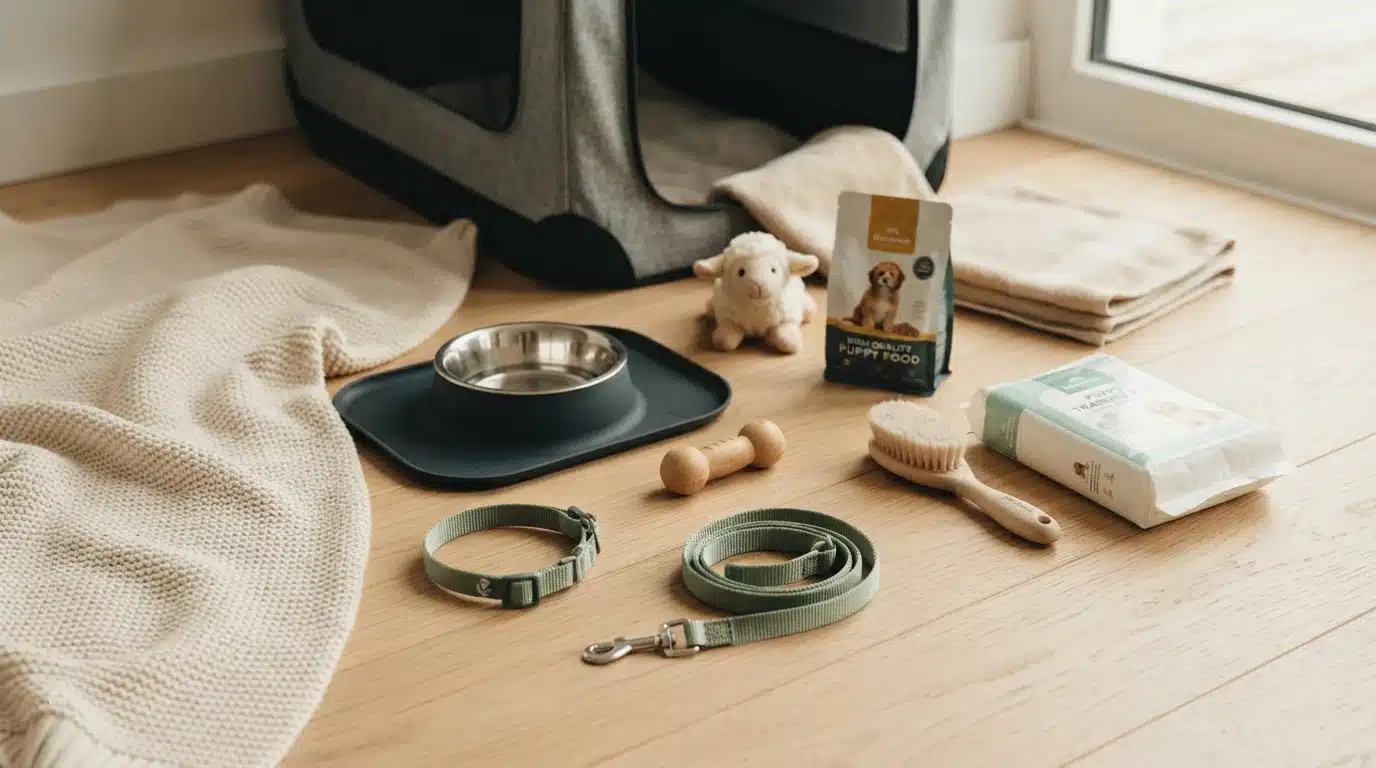
Keep it simple: the same food the breeder used, two bowls, a 24-inch crate with a divider panel, a small playpen, a harness and leash, pee pads, a soft chew, and a kitchen scale for weighing. Skip new chews and rawhide until the stomach settles.
Q2: When should I take my Havapoo puppy to the vet after bringing him home?
Within 72 hours in most cases, because many breeders require it in their contract. Book before pickup day so travel and weekends don’t eat the window, and bring the vaccination and deworming records your breeder sent along.
Q3: What crate size does a Havapoo puppy need?
A 24-inch crate usually fits an adult Havapoo of 15 to 25 pounds for life. Buy the adult size now and use the divider panel to keep the sleeping space snug until your puppy grows into it.
Q4: How many meals should a Havapoo puppy eat in week one?
Four small meals a day keeps blood sugar steady for a tiny stomach. Feed on the same clock daily, pick the bowl up after 15 minutes, and keep treats under 10 percent of daily calories.
Q5: Should I switch my Havapoo puppy’s food right away?
No. Stay on the breeder’s food for the first several days, since a sudden switch is the most common cause of week-one diarrhea. Any transition can wait, then happen slowly over seven to ten days.
Q6: How often will my puppy need potty breaks at night?
Expect two to four trips during the first week. Set a soft alarm, carry your puppy to the same spot, keep it boring, and go straight back to bed. The frequency fades as the bladder grows.
Conclusion
Havapoo week one comes down to three moves: book the vet within 72 hours and bring the vaccination and deworming records, keep the breeder’s food and four-meal clock exactly as-is, and set up a 24-inch crate with a divider panel so the sleeping space stays snug. Add the boring 2 a.m. potty routine and the day-by-day rhythm, and most of the chaos disappears before it starts.
Expect soft stool, night waking and a few accidents. They are normal, and they fade on schedule. Measure the crate, watch the stool, keep the same clock every day, and week two will feel twice as easy as week one.