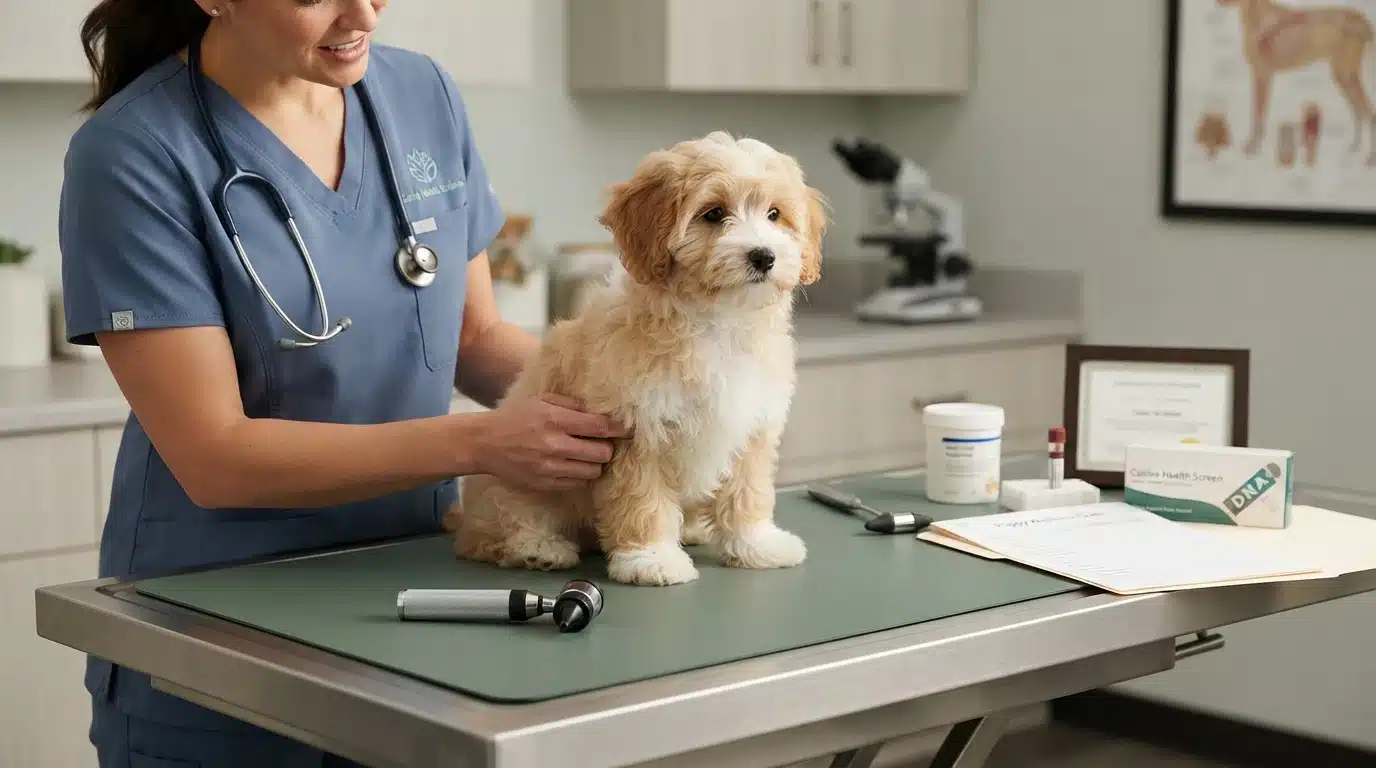
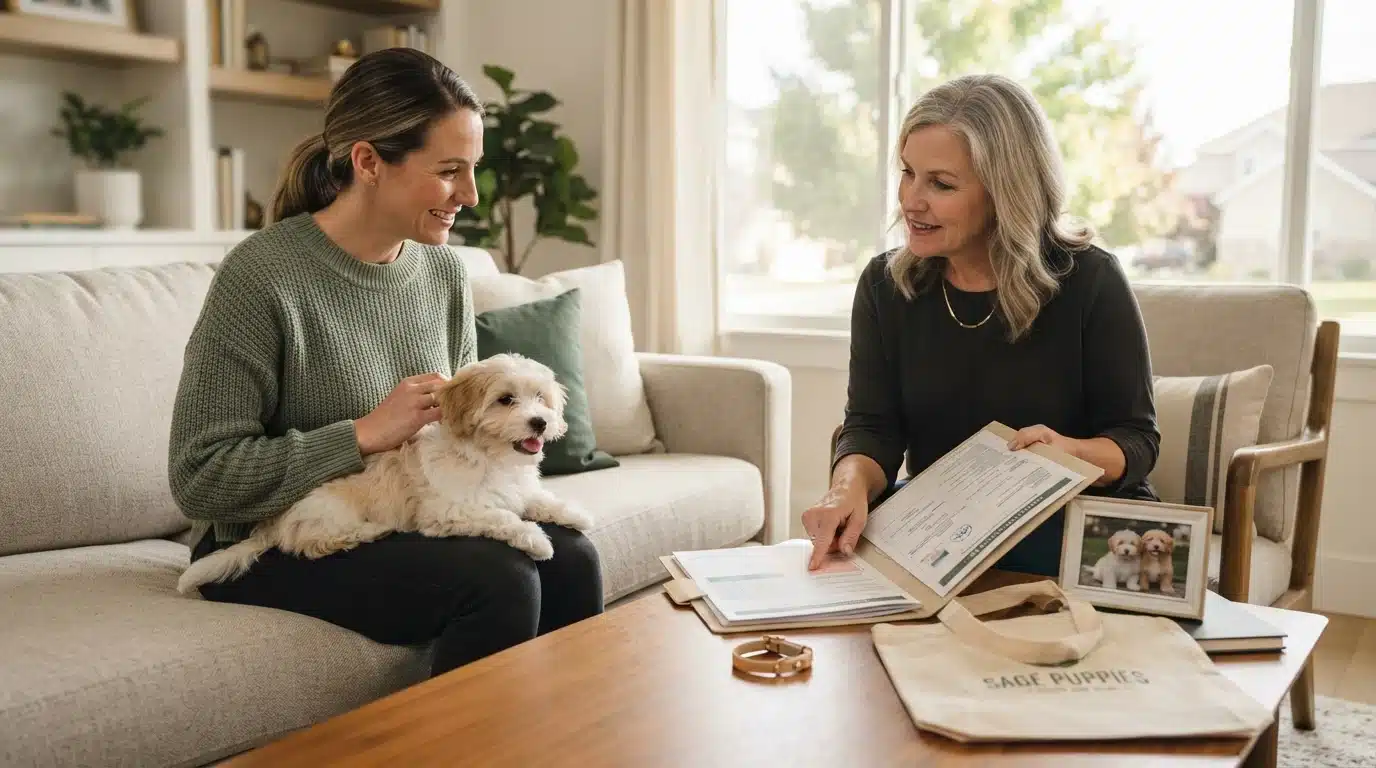
Quick Summary: Before paying a puppy deposit, request both parents’ DNA reports and verify their OFA screening records in the public database, rather than relying on claims or screenshots. DNA tests identify inherited gene variants, while OFA exams assess physical problems such as hip dysplasia and patellar luxation, so healthy puppies need both. Most testing uses a vet-collected sample or a $80 to $200 mail-in kit, and breeders such as Sage Puppies make parent records available for independent review.
You have a Havapoo puppy in mind, the breeder swears both parents were DNA tested, and the whole deal rests on paperwork you have never actually seen. So the real question is not just where to get a puppy DNA test done, but who can get one for the puppy you are about to buy, and how you check it before you pay a deposit.
That paper comes from one of three places. A lab the breeder uses, an at home puppy DNA kit you order yourself, or a veterinary clinic that draws and ships samples for clinical screening. Each option costs differently, proves different things, and fits a different point in the buying process. This guide walks through all three, including how to read results for Havanese, Havapoo, and Cavapoo litters, and how to verify them in public records before money changes hands.
Step 1: Find Out Where Puppy DNA Testing Actually Happens Near You
If you’re wondering where to get a puppy DNA test, the honest answer is: almost none of it happens at a lab you walk into. Most puppy DNA testing runs through your vet’s office or a mail-in kit. Here’s how each route works, so you know exactly where your puppy’s sample actually goes.
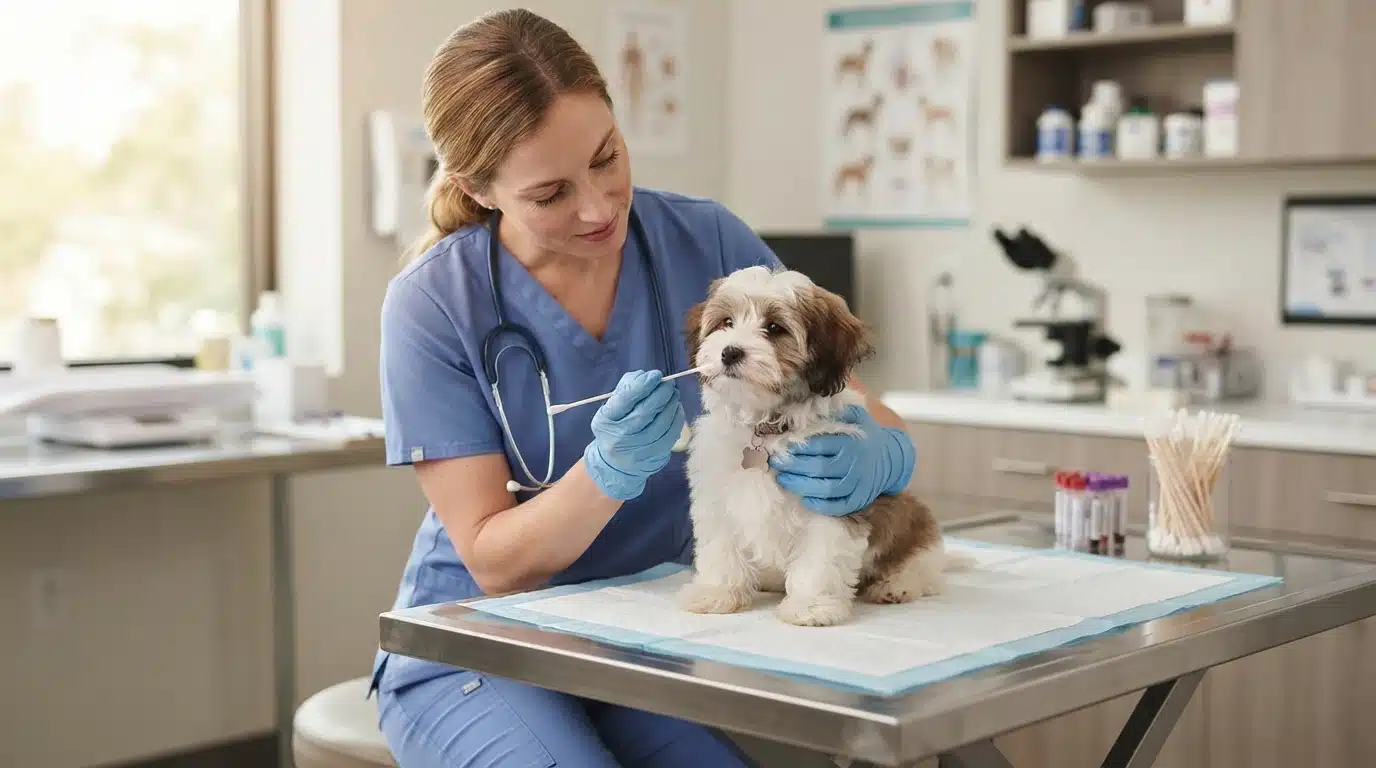
Your vet’s office: the easiest starting point
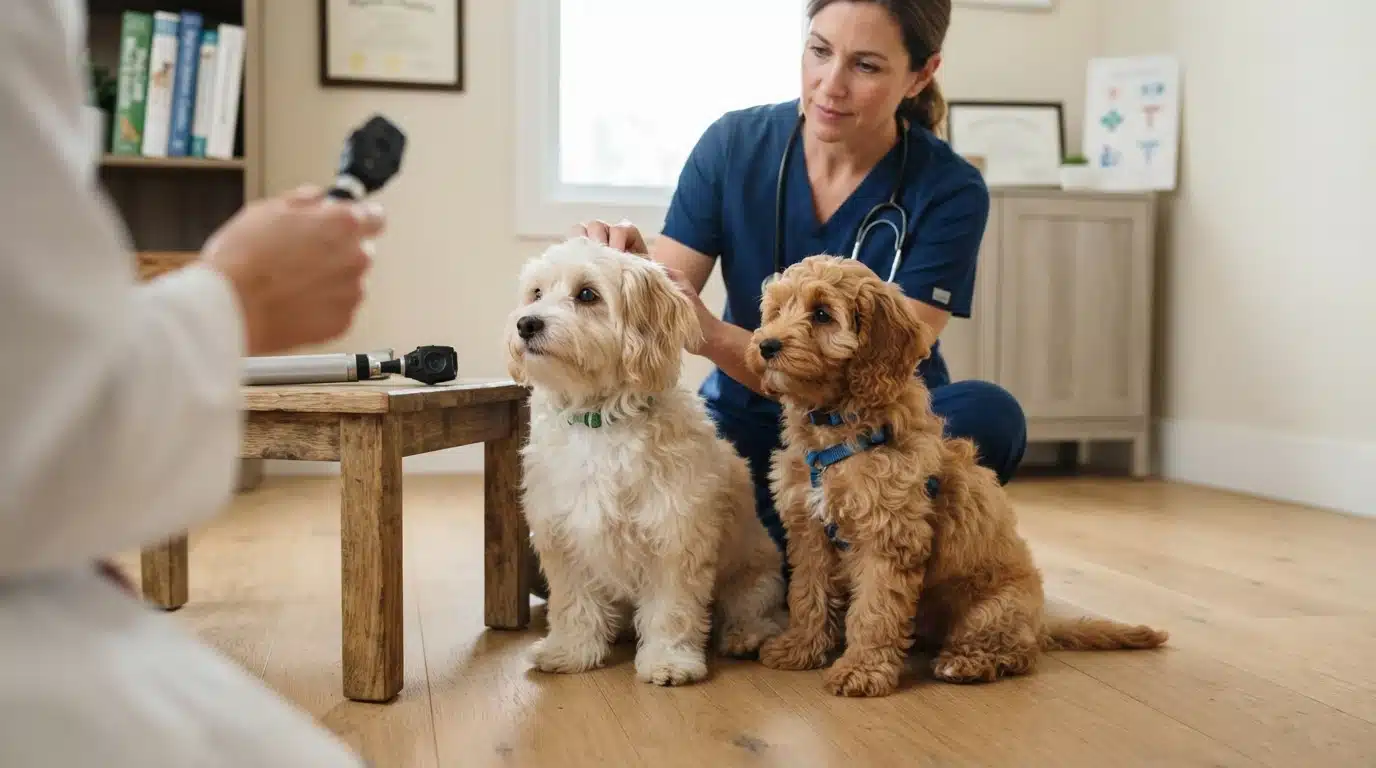
Your regular vet is the simplest place to start, even though the testing itself happens elsewhere. Ask during a routine visit and the staff can collect a cheek swab sample or draw a small blood sample, then ship it to the lab. The upsides are real: they handle collection correctly, the sample links straight into your puppy’s health records, and you can discuss results with someone who knows your dog. Costs usually run higher because you pay for the visit plus the lab fee.
Direct-to-consumer mail-in labs
This is where most families actually go. Companies like Embark and Wisdom Panel sell an at-home puppy DNA kit: you rub a swab inside your puppy’s cheek, register the kit online, and mail it back in a prepaid envelope. Results typically arrive online in two to four weeks. Prices generally fall between about $80 and $200 depending on how deep the panel goes. No appointment, no travel, and the reports often cover breed mix and inherited disease risk in one run.
Tip: If you want results before you pay a deposit, ask the breeder to run the kit on the specific puppy. The swab takes under a minute.
Specialty and mobile options worth knowing about
Some areas have mobile vet services that will come to your home and collect the sample for you, which helps with wiggly puppies. University teaching hospitals and specialty clinics occasionally run genetic testing tied to clinical care, usually at a vet’s referral. For most buyers, though, a standard swab kit covers everything a companion puppy needs. If you’re weighing testing against a breeder’s existing health screening, it helps to review what a health tested puppy should already come with.
Step 2: Understand the Difference Between a DNA Test and OFA Health Screening
A DNA test and an OFA screening answer two different questions, so you need both when you buy a puppy:
- DNA variant testing reads a cheek swab for known gene variants the parents might pass on.
- OFA and CHIC screening is a hands-on exam, like a hip radiograph or patellar evaluation, done on adult dogs.
- Your puppy’s vet record covers the exam and shots your puppy has already had.
DNA variant testing: what it can and cannot tell you
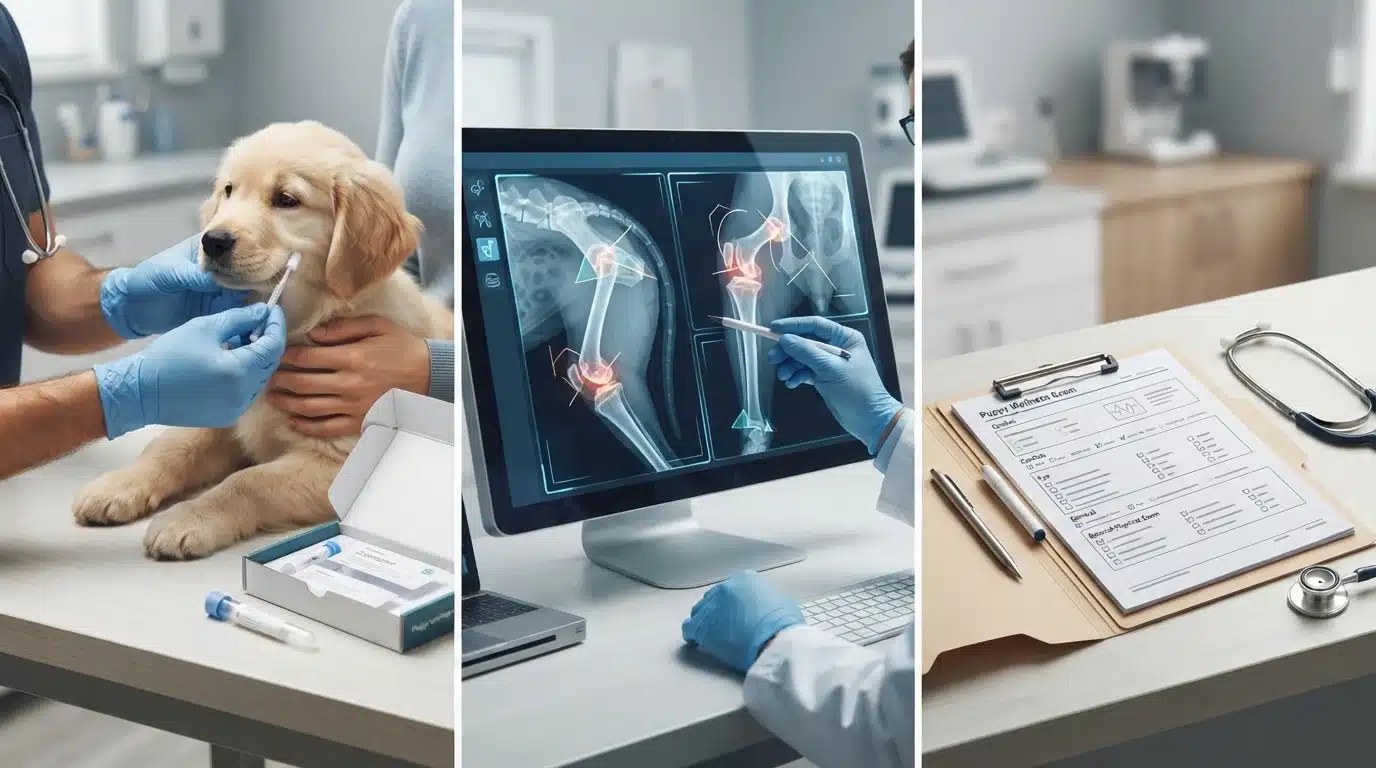
A DNA test checks a small sample, usually a cheek swab, for specific gene variants linked to inherited conditions. It can tell you whether a parent carries a variant that could cause trouble in a litter. It cannot tell you that a dog’s hips or knees are structurally sound, because those problems come from build and growth, not just genes. A clean DNA panel is a good sign, never a full health clearance. Some breeders run these at home with a mail-in genetic testing kit, which is one option if you want a DNA test puppy before buying.
OFA and CHIC: clinical screening on the parents
The OFA evaluates X-rays and exams on adult dogs, then posts pass results in a public database anyone can search. The CHIC program tracks which breed-specific tests a breeder has completed. For Havanese families, note that BAER hearing testing was removed from CHIC requirements, so ask breeders directly about hearing history instead of assuming. When a breeder shows you OFA numbers, look the parents up yourself. Sage Puppies shares both parents’ screening records before you pay a deposit, so you can verify everything independently.
Your puppy’s own vet record
Your puppy should arrive with a vet exam record and a vaccination history you can read. This is separate from both the parents’ DNA results and their OFA clearances. Check that a licensed veterinarian saw the puppy, note the dates, and ask which vaccines are still due. If your puppy has Havapoo or Cavapoo ancestry, keep this record handy for your own vet’s first visit, since mix-bred puppies need the same baseline care any puppy does.
Step 3: Order the Test Before You Buy, Not After
Yes, you can DNA test a puppy before you buy it. Follow these steps:
- Ask the breeder for the sire and dam’s names and registration numbers.
- Look up the pair’s genetic results in a public database, or order your own cheek swab test.
- Send your request by email so the answer is documented.
- Review the report before you pay a deposit.
A short email works well: “Could you send a copy of both parents’ genetic health reports, plus the lab’s name and testing date? I’d like to review them before reserving a puppy.” That single message answers where to get puppy DNA test proof, too, because the lab report is the proof.
Ask for the report in writing
A verbal “parents are tested” is worth little. Ask for the actual PDF report from the lab, showing the dog’s registered name, the panel run, and each variant’s result. Reputable breeders keep these on hand and send them the same day. Some also publish results through the OFA CHIC program, so you can verify the records yourself in the public database rather than relying on a screenshot.
Who swabs, and when
The breeder swabs each parent, usually with a cheek swab collection kit mailed by the lab. Puppies are rarely tested themselves, since the results come from the parents’ pairing. Tests cost between about $80 and $200, and the breeder already carries that expense. Your job is simply to confirm the paperwork matches the pair you’re buying from, including dates and registered names.
If the breeder pushes back
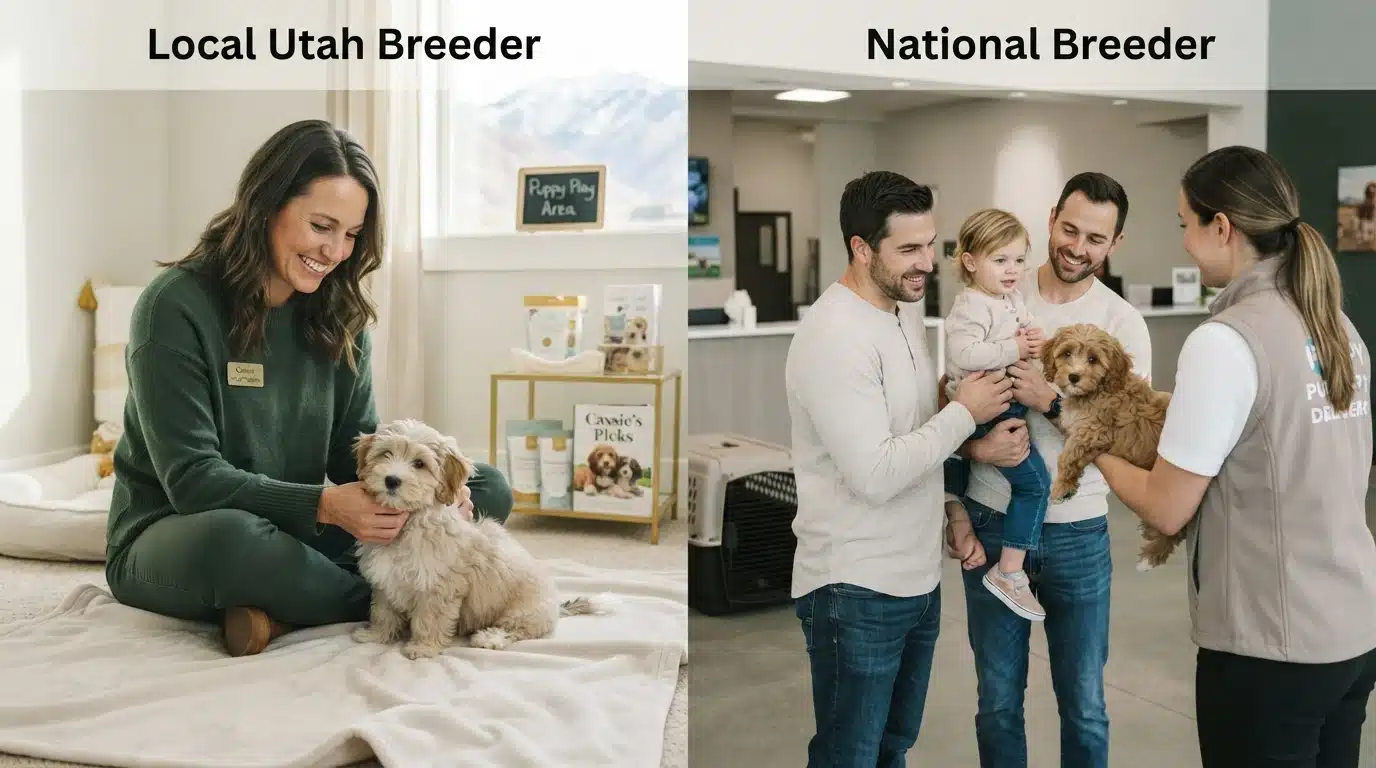
“We don’t do tests” or “the vet checks them” are red flags for a breeder charging premium prices. A delay of a day or two is normal; refusal or vague excuses are not. Walk away, and keep your deposit money. Families arranging delivery or picking up in Utah have plenty of options, so don’t settle for missing paperwork.
Step 4: Verify the Results Yourself
You do not need the breeder’s lab account to check their claims. Verify results yourself with a three-step routine: look the parents up in the OFA database, read the DNA report closely, and confirm the puppy’s ancestry matches the tests. Ten minutes of checking protects a deposit of thousands.

Look up parents in the OFA database
OFA keeps a free public records database, so anyone can search it. Go to ofa.org, enter the parent’s registered name, and review what comes back. Look for hip radiograph results, patellar evaluation, cardiac exams, and eye exams, plus any CHIC number showing the dog met the breed’s requirements. If a parent’s name returns nothing, ask the breeder why before you pay. Some young dogs simply have not finished screening yet, but a two-year-old parent with no record is a red flag. For Havanese, the breed club publishes its own health expectations too.
Read a DNA report like a document
A DNA report lists variants, so read it line by line. Each result should say clear, carrier, or affected for a named condition. Clear means the dog has no copies. Carrier means one copy, which is fine as long as the other parent is clear. Affected means two copies, which matters a lot. Ask for the actual PDF from the lab, not a summary text, and match the registered name and birth date to the puppy.
Sanity check the ancestry
The report should confirm parentage, so compare it to the pedigree you were given. A Cavapoo or Havapoo puppy needs one clear parent line for each breed’s risks, since doodle puppies inherit from both sides. If the ancestry panel lists breeds you were not told about, stop and ask.
Trust results you can trace, not claims you cannot. Any breeder confident in their testing will hand over records on request.
At Sage Puppies, we make parent records available before reservation.
Step 5: Know What Matters Most for Havanese, Havapoo, and Cavapoo
What current CHIC asks for
CHIC numbers matter because they show a breeder did the breed’s required screening and published the results. For Havanese, the OFA CHIC program asks for a short, specific list, updated by the breed club in 2025:
- An OFA hip radiograph, done at 24 months or older
- A patellar luxation evaluation at 12 months or older
- An annual CAER eye exam by a board-certified ophthalmologist
BAER hearing testing was removed from the current requirements, so an older checklist that lists it is out of date. Our overview of Havanese health tests breeders should complete walks through each one. A CHIC number is not a guarantee of perfect hips or eyes. It proves the breeder tested and shared the findings, whatever they were.
Havanese plus Poodle
Havapoos inherit health risks from both parents, so look at two sides of the paperwork. The Havanese parent should meet the CHIC list above, and the Poodle parent should show clear hip and patellar results plus current eye and heart exams. Poodles add hip dysplasia and some eye conditions to the mix. DNA panels help here too, but they cover inherited variants, not joint structure. Ask for both: genetic results from the parent dogs and clinical screening on file.
Cavalier plus Poodle
Cavapoos bring the Cavalier side into the picture, and that side matters most for the heart. Cavalier King Charles Spaniels carry a high risk of mitral valve disease, so a murmur check by a veterinarian or cardiologist on the parent is worth more than any DNA test. Cavaliers also need annual eye exams and patellar evaluation, which the breed-specific CHIC listings track. Poodle ancestry again raises hip concerns. When you review a Cavapoo litter, read the Cavalier parent’s records first, then the Poodle’s.
Step 6: Turn the Paperwork Into a First-Vet-Visit Plan
A DNA report only helps your puppy if someone medical actually reads it. Bring it to the first vet visit.
What to bring and what to ask
Pack the folder before you leave: the DNA report, the vet exam record, deworming dates, and the vaccination history with dates and vaccine types. Ask your vet three things. First, does any DNA result change screening timing for this puppy? A patellar luxation check usually starts at 12 months, and a hip radiograph waits until 24 months, but your vet may want baseline looks sooner. Second, which results are carrier-status only, and which need follow-up? Third, what should you watch for at home in the next month? Write the answers down while they are fresh.
Keep the file together
Put everything in one place, digital or paper, and keep adding to it. Scan the DNA report, exam notes, and receipts. Add each vaccine as it happens. If you used a breeder who runs a documented program like Sage Puppies, ask whether they keep health records on file you can request later, so the file stays complete if you switch vets or move. A complete record also matters at boarding, grooming, and training appointments, where staff often ask for proof of vaccination on the spot.
Where to go next
Set calendar reminders now, not later. Book the follow-up vaccine visits, note the 12-month patellar check, and add a 24-month reminder for the hip radiograph discussion. If your puppy’s results included variants worth tracking, ask your vet whether an annual recheck is enough. Then file the paperwork and enjoy the puppy. The plan is done; the fun part starts.
(Draft note: verify any linked sources before publishing.)

Planning a Havanese, Havapoo, or Cavapoo? Ask any breeder for DNA and OFA records before you pay a deposit, and verify the paperwork yourself. At Sage Puppies, health testing comes first, so browse available puppies or start an application with confidence. Wisely Bred. Beautifully Loved.
Frequently Asked Questions
Q1: Where can I get puppy DNA testing done locally at a vet or lab?
Start with your vet’s office. Staff collect a cheek swab sample or blood draw and ship it to the lab. Direct-to-consumer mail-in genetic testing kits cost less, usually $80 to $200.
Q2: Are Havapoo and Havanese puppies DNA tested before sale?
Usually the parents are tested, not the puppies, since results come from the pairing. Ask for both parents’ lab reports before you pay a deposit, and verify them in the OFA database.
Q3: What is the difference between a DNA test and OFA health screening for puppies?
DNA testing finds inherited gene variants. OFA screening uses hip radiographs and patellar evaluations on adult dogs to check joint structure. You want both.
Q4: Can I DNA test a puppy before buying it?
Yes. Email the breeder, request the parents’ reports and lab name, and review everything before reserving.
Q5: How long do puppy DNA test results take?
Mail-in labs typically return results online in two to four weeks, depending on the panel.
Conclusion
Finding where to get a puppy DNA test is mostly about knowing who collects the sample. Your vet can gather a cheek swab sample, or you can order an at home puppy DNA kit yourself, usually for $80 to $200. Either way, ask for the parents’ lab reports before you pay a deposit, then verify them in the OFA public records database. Remember that DNA variant results and OFA clinical screening answer different questions, so a healthy puppy needs both. For Havanese, Havapoo, and Cavapoo ancestry, check each parent line for its own risks, including hip radiograph and patellar evaluation results. Ten minutes of checking paperwork protects a deposit of thousands, so it’s worth reviewing everything before you reserve.