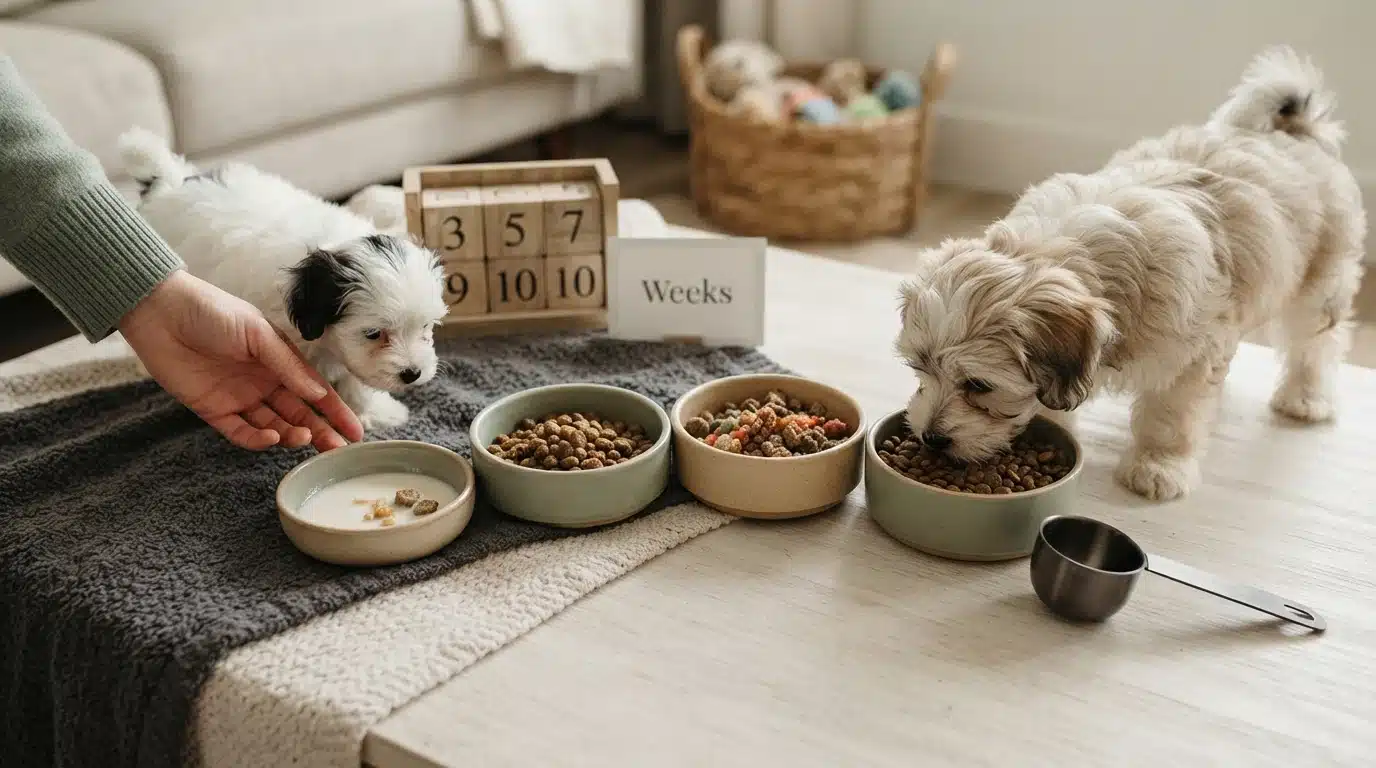
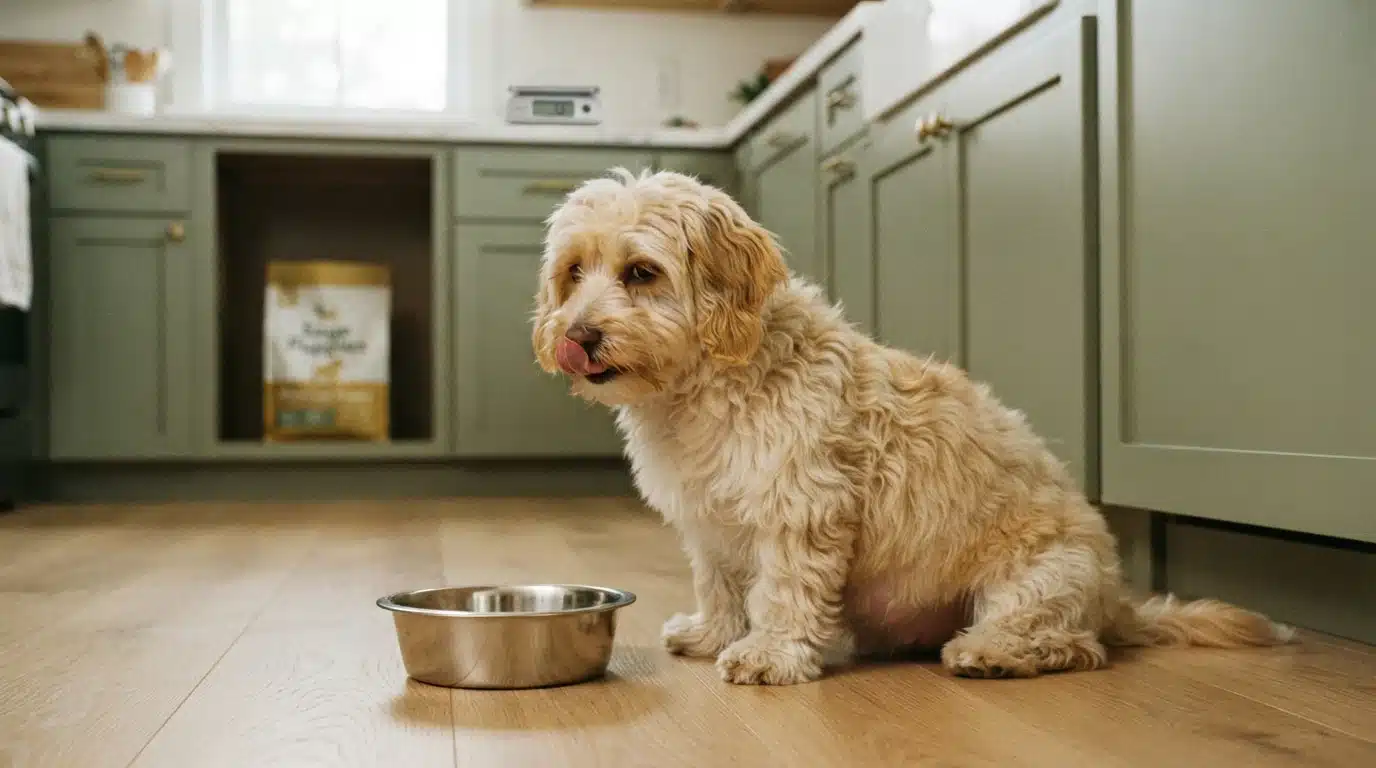
Quick Summary: Havanese socialization should begin with breeder handling around weeks 3 to 7, continue with people, car rides, and short outings at home from weeks 8 to 12, and build toward busier places, puppy classes, and grooming practice from weeks 13 to 20. Keep each exposure short and positive, watch for stress signals such as hiding, freezing, or refusing food, and adjust the pace based on how quickly the puppy recovers. Work alongside your vet’s vaccination plan by avoiding dog parks and other high-risk areas until cleared, while regularly handling paws, ears, muzzle, and tail to build confidence for grooming and handling.
A Havanese puppy usually comes home around 8 weeks old, but the most important window for shaping how that dog handles the world is already half over. Researchers call it the critical socialization period, and it runs roughly 3 to 14 weeks of age. What you do in the remaining weeks matters more than anything you teach later.
The problem for most families is timing. Generic advice says “socialize early,” yet rarely explains what to do in week by week terms, or how to balance new experiences against a puppy who has not finished vaccines. This Havanese puppy timeline fills that gap. It maps weeks 3 through 20, marks what to introduce each week, and shows how to read stress signals before they become setbacks. As a small-breed breeder program based in South Jordan, Utah, we use this same Havanese puppy weekly schedule with our own litters, and we have written it so you can pick up exactly where we leave off.
When Should You Start Socializing Your Havanese Puppy?
Start socializing the day your Havanese puppy comes home, usually around 8 weeks. The work actually began weeks earlier, because breeders handle puppies through the newborn and weaning stages. The goal now is simple: keep exposing your puppy to new sights, sounds, people and surfaces every single week until about 20 weeks of age.
- Weeks 3 to 7: breeder handling, household sounds, gentle holding
- Weeks 8 to 12: new people, car rides, short positive outings
- Weeks 13 to 20: busier places, puppy classes, grooming handling
The 3 to 14 Week Critical Socialization Period
The window that shapes how your dog reacts to the world for life runs from about 3 to 14 weeks. During those weeks, puppies learn fast which things are safe. Research summarized by the AVMA shows dogs learn best from new experiences in this period, so what you miss is much harder to add later. Good breeders start the work early; that early start is one sign of a well-run program like ours.
Socialization Before Vaccinations Are Complete
Yes, you can and should socialize before your puppy finishes vaccinations. The American Veterinary Society of Animal Behavior advises starting classes after the first vaccine set.
Do: carry your puppy in new places, invite calm visitors, ride in the car, play surface games at home.
Avoid: dog parks, pet store floors, and grass where unknown dogs roam until your vet clears them.
How to Know Your Puppy Is Ready for a New Experience
Watch for stress signals: yawning, lip licking, tucked tail, freezing or hiding.
- Mild signs (yawning, sniffing): pause, let your puppy watch, then retry.
- Strong signs (trembling, hiding): increase distance and end the session.
A puppy that recovers within a minute or two is ready to keep going. Recovery speed matters more than never showing worry.
Weeks 3 to 7: Building Confidence at Home
Most of weeks 3 to 7 happen in the breeder’s home, not yours. That is worth knowing before you pick a litter, because this stretch sits squarely inside the critical socialization period (roughly 3 to 14 weeks). The Havanese puppy week by week work here is simple: gentle handling, everyday sounds and steady routines. Breeders do it. Good ones make it a daily habit.
Early Handling and Human Contact
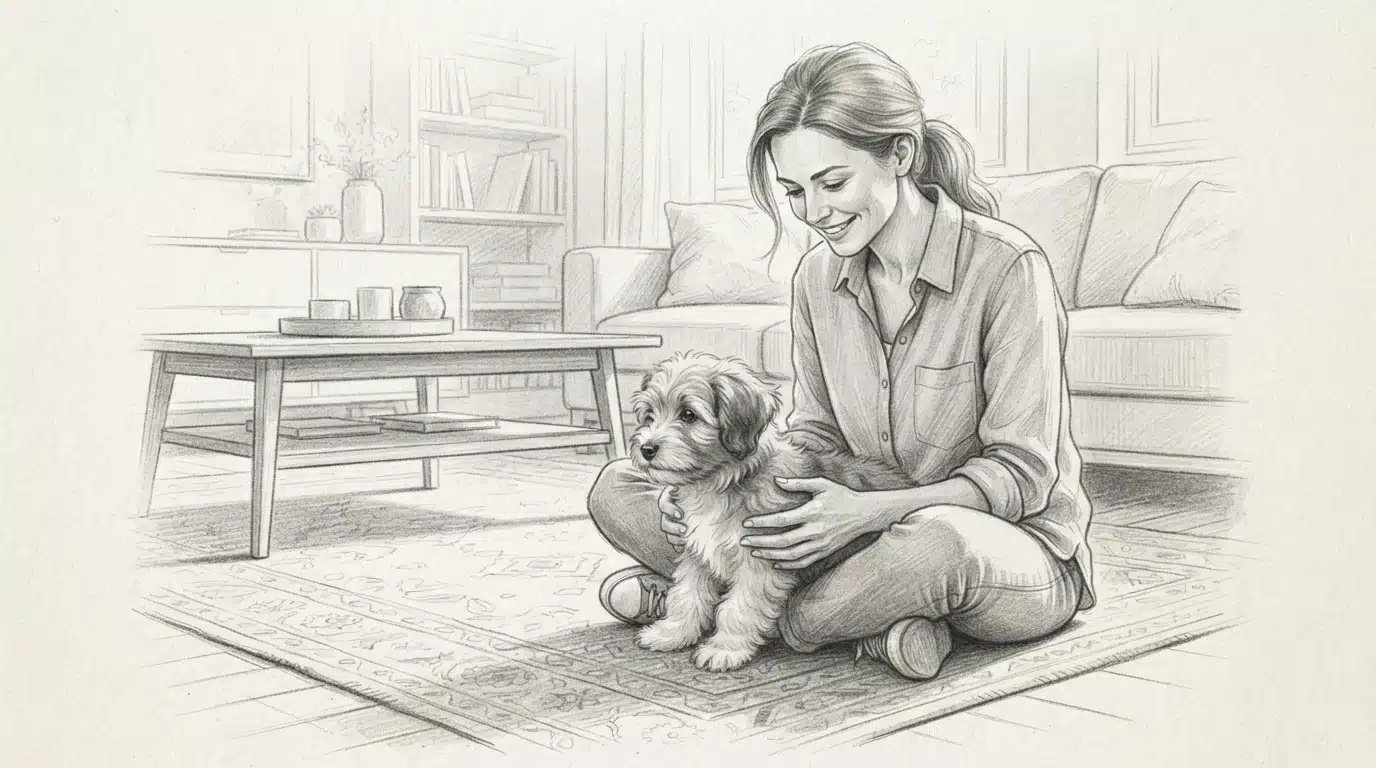
From about 3 weeks, puppies should be picked up, held briefly, and set back down by calm adults. Short sessions work best. A few minutes several times a day beats one long cuddle. Handling should include paws, ears, mouth and belly, because these are exactly the spots a groomer and your vet will touch later. The American Veterinary Society of Animal Behavior notes that puppies handled regularly during this window grow into dogs that accept restraint and exams more easily. Ask any breeder you talk with how often they handle the litter.
Sound, Surface and Household Routine Exposure
By weeks 4 to 6, a puppy’s ears and eyes are fully working, so the world becomes a curriculum. Good breeders expose litters to vacuum cleaners, dishwashers, doorbells, music and normal family chatter at a comfortable volume. Textures matter too: tile, carpet, grass, a wobble board. The standard advice from puppy development researchers, including the Avidog and Puppy Culture protocols many breeders follow, is small daily doses rather than one big scary session. Watch for stress signals like freezing, backing away or hiding, and let the puppy recover before trying again.
What the Breeder Should Have Started Already
By 7 weeks, a well-started puppy has met several people, heard household noise, walked on varied surfaces and had nails trimmed at least once. Ask for specifics: who visited, which sounds were introduced, how littermates were separated for short solo time. The AKC recommends meeting many new people before 12 weeks, so early breeder work sets you up to continue it. If a breeder keeps puppies isolated until pickup, treat that as a red flag and keep comparing options, since the groundwork laid in signs of a good breeder starts right here.
Weeks 8 to 12: First Trips Out of the House
Settling In: The First Seven Days Home
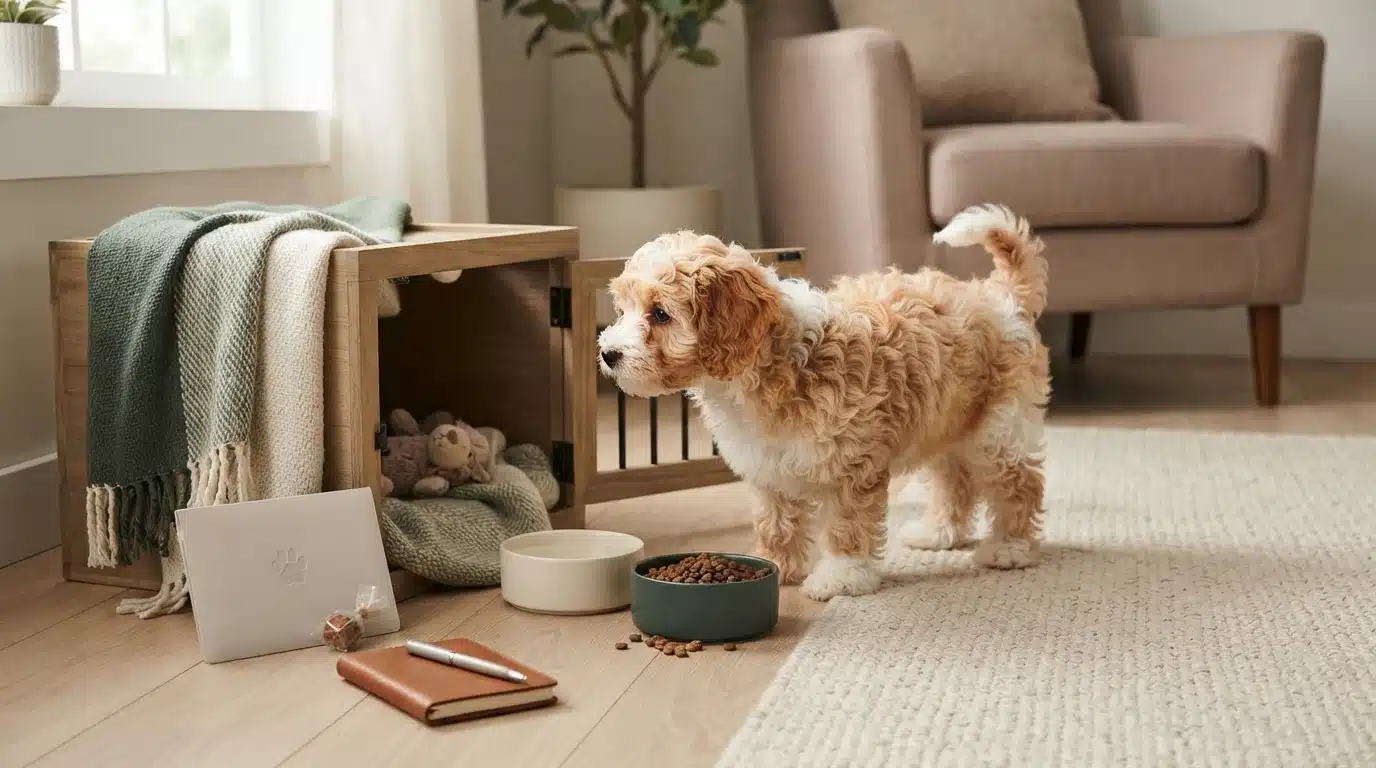
Give your puppy three to four quiet days before the outings begin. Keep the crate, food and potty routine predictable. This is a Havanese puppy week by week turning point, because the window is still open but everything now happens on your watch. Let your puppy watch household life from a safe spot rather than meeting everyone at once.
Building a Household Socialization Plan
Write a simple list: new sounds, surfaces, people and handling. Aim for two or three small exposures a day, each ending well. Rotate family members so your puppy learns that all humans are safe. Track what you did and how your puppy reacted. A notebook works fine, and gaps are easy to spot before they become fears.
Short, Controlled Outings That Build Confidence
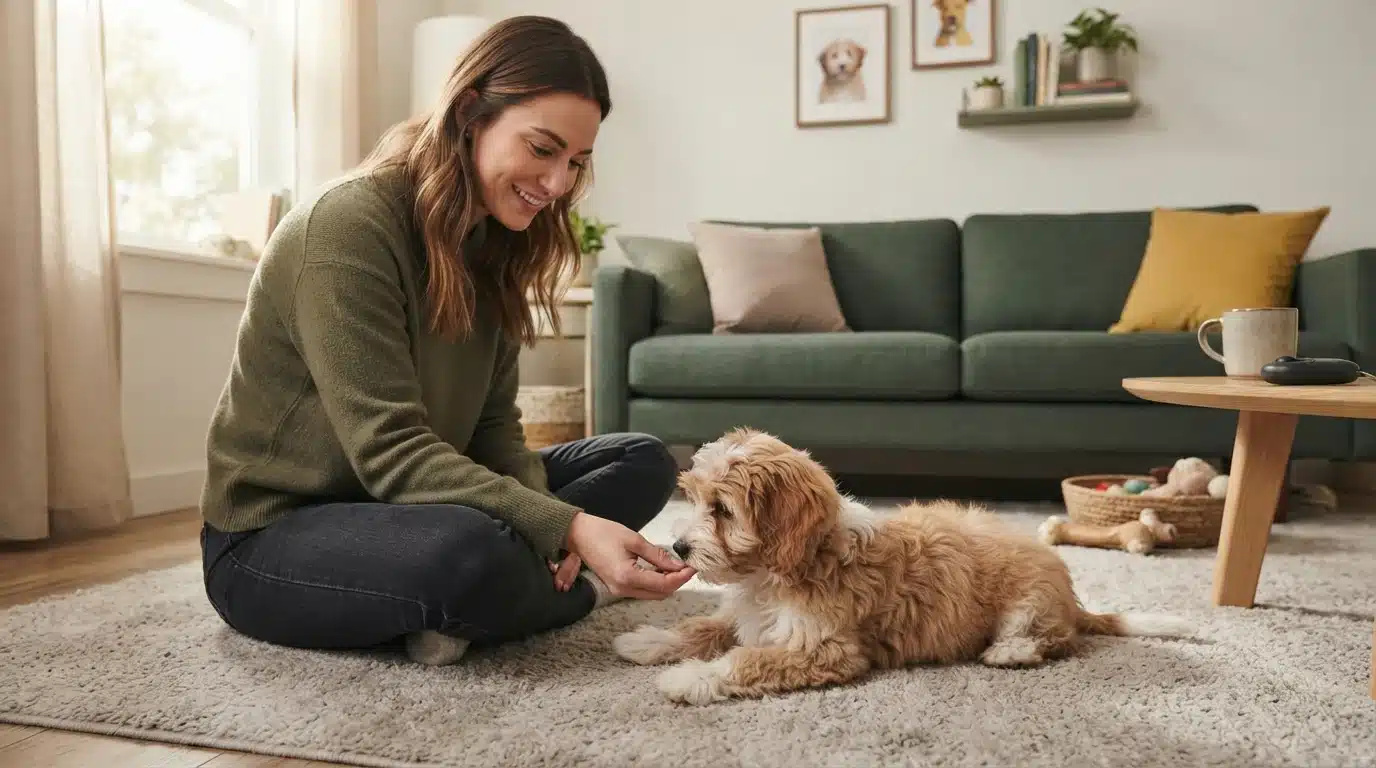
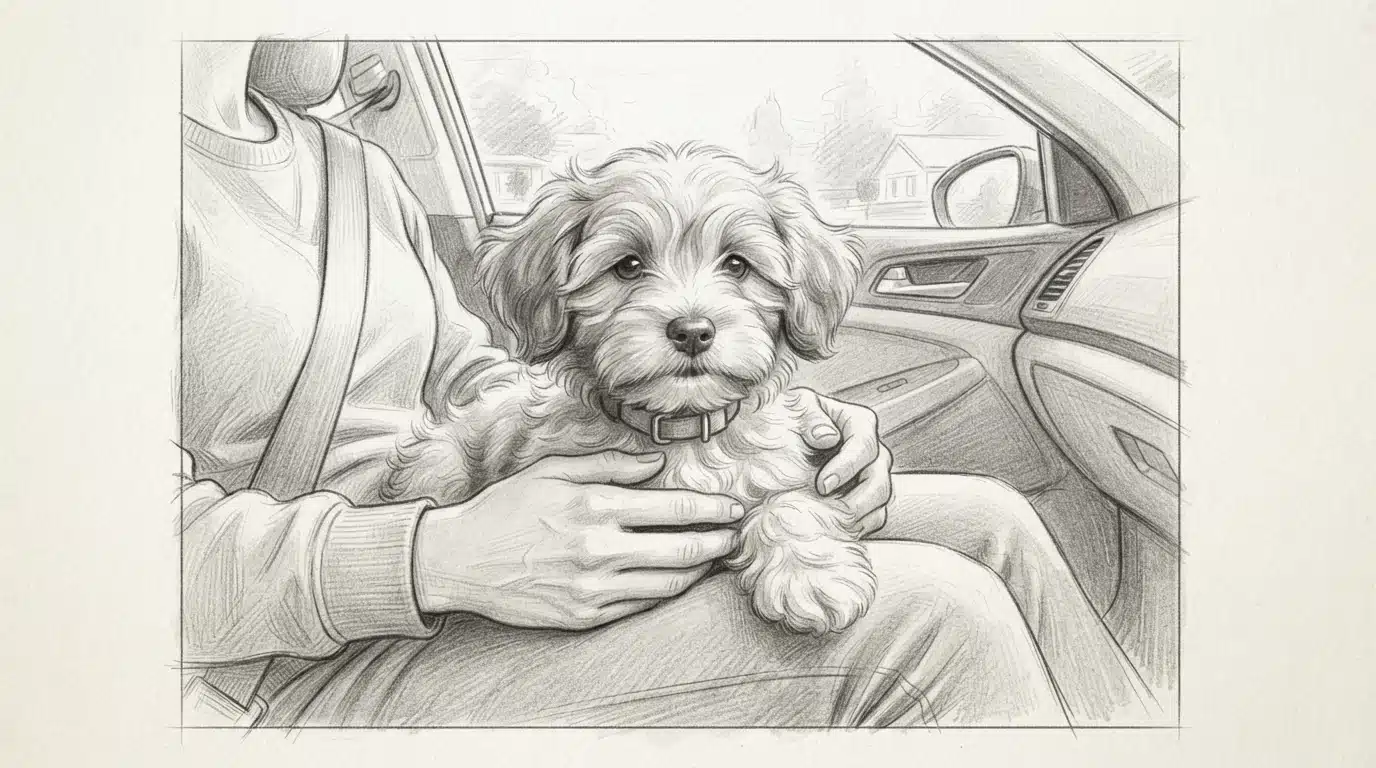
Once your puppy is settled and has had a first vaccine, carry it into new places. Pet-friendly stores, a friend’s porch, a short car ride. Five to ten minutes is plenty. Stay low to the ground so your puppy can retreat to your arms. Pair each new thing with a treat. End while your puppy still looks curious, not overwhelmed.
Puppy Classes and Safe Dog Introductions
A Havanese puppy can meet other dogs after its first vaccine, from about 8 to 10 weeks, in controlled settings only. Check the basics before any introduction:
- First vaccine given at least a week earlier
- A calm, vaccinated, friendly adult dog
- Short meeting, five minutes or less
- Your puppy free to move away at any time
The AVMA reports that puppy classes can safely start at 7 to 8 weeks when vaccination and health rules are followed, and behavior experts support early socialization alongside vaccines. Choose a class that requires proof of vaccination, uses positive reinforcement and keeps groups small. Families preparing for pickup can review local bringing-home tips before the first outing. If your puppy freezes, hides or won’t take treats, leave and try an easier version next time.
Weeks 13 to 20: Consolidating Skills and Adding Challenge
What Changes After the 14 Week Mark
The critical socialization period closes around 14 weeks, but that does not end the work. It changes it. Before, new exposures built associations from scratch. Now you reinforce ones already made and guard against the second fear period, which the AKC places between roughly 6 and 14 months. Expect occasional spookiness at familiar things. If your Havanese suddenly distrusts the mailbox, respond with calm, short, positive visits, not force. Keep rewarding loose-leash walking, name response and gentle handling, and track your Havanese puppy week by week so a stall shows up fast.
Busier Places, Still Controlled
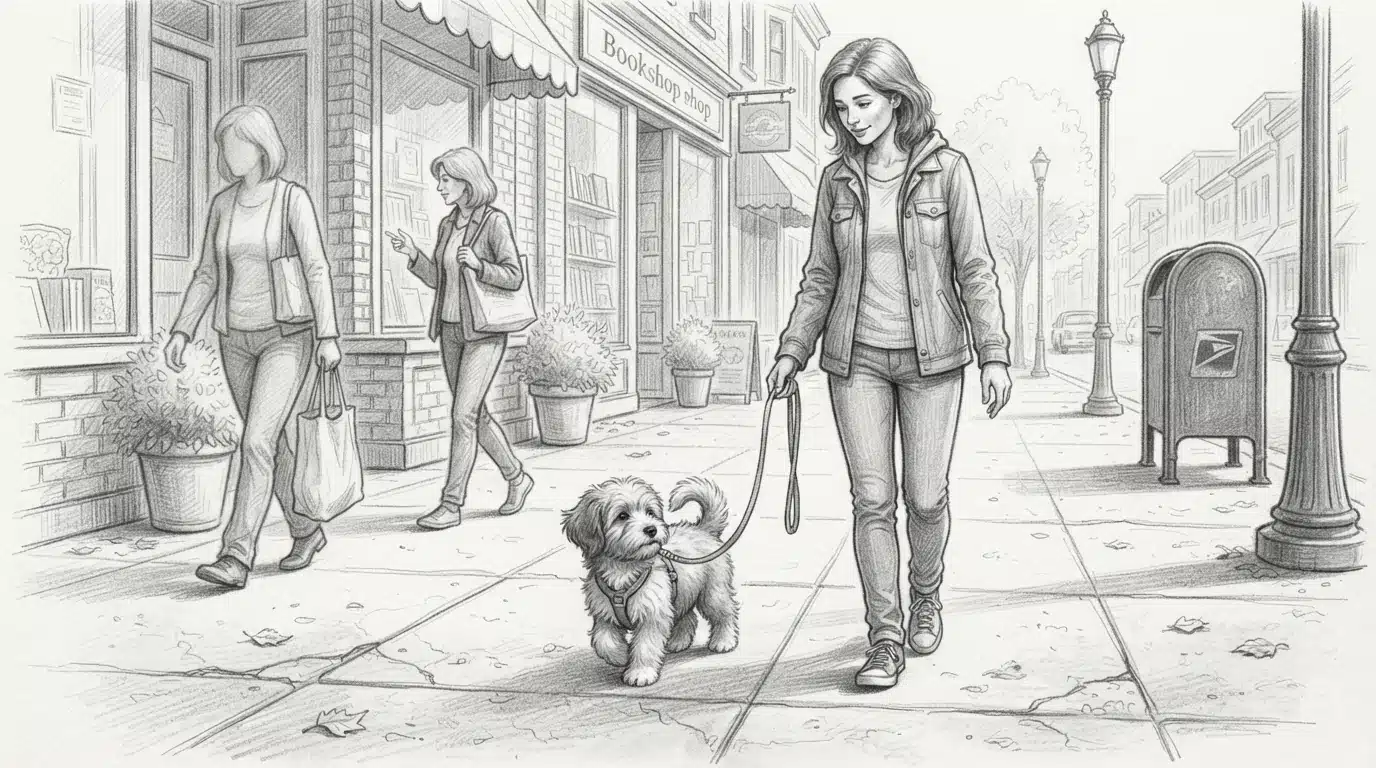
This is the phase for complexity. Take your puppy to a pet-friendly store, a quiet park at busier hours, or a café patio. New people, dogs at a distance, strollers, skateboards and dropped food all become practice. Stay in control of distance and duration, since one bad scare can undo weeks of progress. A well-run puppy class remains useful here for structure and supervised play. Keep sessions short, end on a win, and watch body language the whole time.
Maintenance Into Adulthood
Socialization fades without practice, so build it into daily life. Rotate new routes, keep handling ears, paws and mouth for grooming, and schedule a novel outing most weeks. Research on puppy socialization links early and ongoing positive exposure to better behavior later, so a few minutes now prevents problems for years.
Health Safeguards for Socializing a Small Breed Puppy
Socialization only works if your puppy stays healthy, so the schedule and the vet plan run side by side.
Vaccination and Deworming Checkpoints
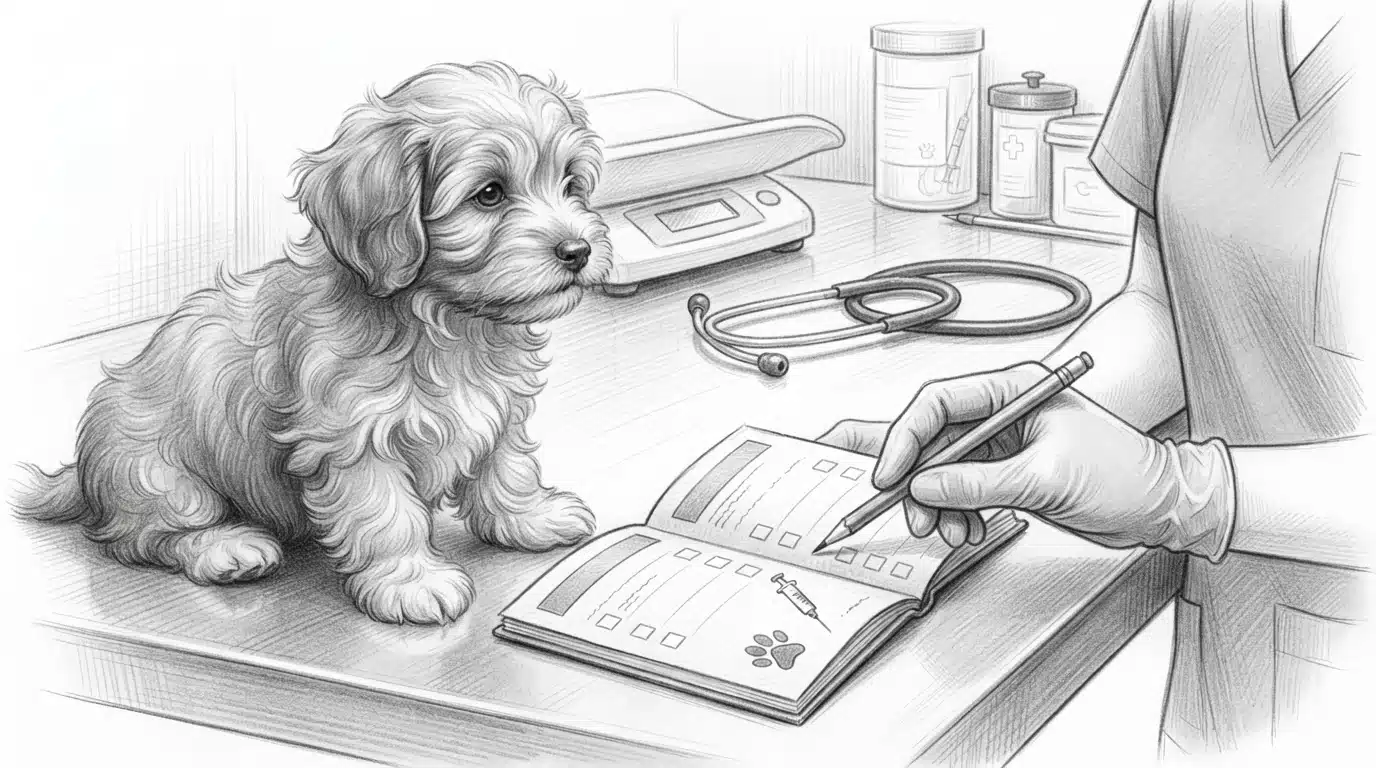
Keep your own timeline in a simple log: vaccine dates, deworming dates, and the date your vet cleared group settings. Most puppies need a core vaccine series every 3 to 4 weeks until about 16 weeks, so ask your vet when each dose protects well enough for classes. Carry records to any puppy class, since good trainers require them. This is exactly why knowing your puppy’s exact vaccine and deworming history from the breeder matters before the weekly schedule even starts.
Where to Go and Where to Wait
Until your vet clears them, favor places that are clean and low-risk over high-traffic ones. Carry your puppy into pet-friendly stores instead of letting them walk where unknown dogs go. Skip dog parks entirely this early, and grass at parks where strays roam. Backyard visits with known vaccinated dogs, car rides, and porch time with neighbors give the same exposure without the germs.
Coat, Skin and Eye Care During Busy Socialization
A busy schedule shows up in the coat first. Wipe paws after outings, brush a few times a week so you catch burrs and mats, and check eyes after windy walks. Havanese coats need regular handling anyway, so each brushing doubles as desensitization practice. If eyes water or skin looks red after a new spot, rest a day and watch closely.
Havanese-Specific Socialization Priorities
A Havanese needs the same core socialization as any puppy, but three things deserve extra attention: grooming, handling, and how you adapt the schedule for a mixed breed.
Grooming as Socialization
Havanese coats mat fast, so a long coat needs daily brushing, and many owners keep a shorter puppy cut trimmed every 5 to 6 weeks. That makes grooming handling a socialization priority, not an afterthought. During weeks 8 to 12, brush gently for a minute or two each day, touch the paws, ears, muzzle and tail, and let your puppy hear clippers and dryers from a distance. Pair each session with treats. Short, calm repetitions now prevent a dog that fights the groomer for life.
Tip: make the brush a cue for good things. Treat first, brush second, and stop before your puppy fusses.
Handling for a Small Breed
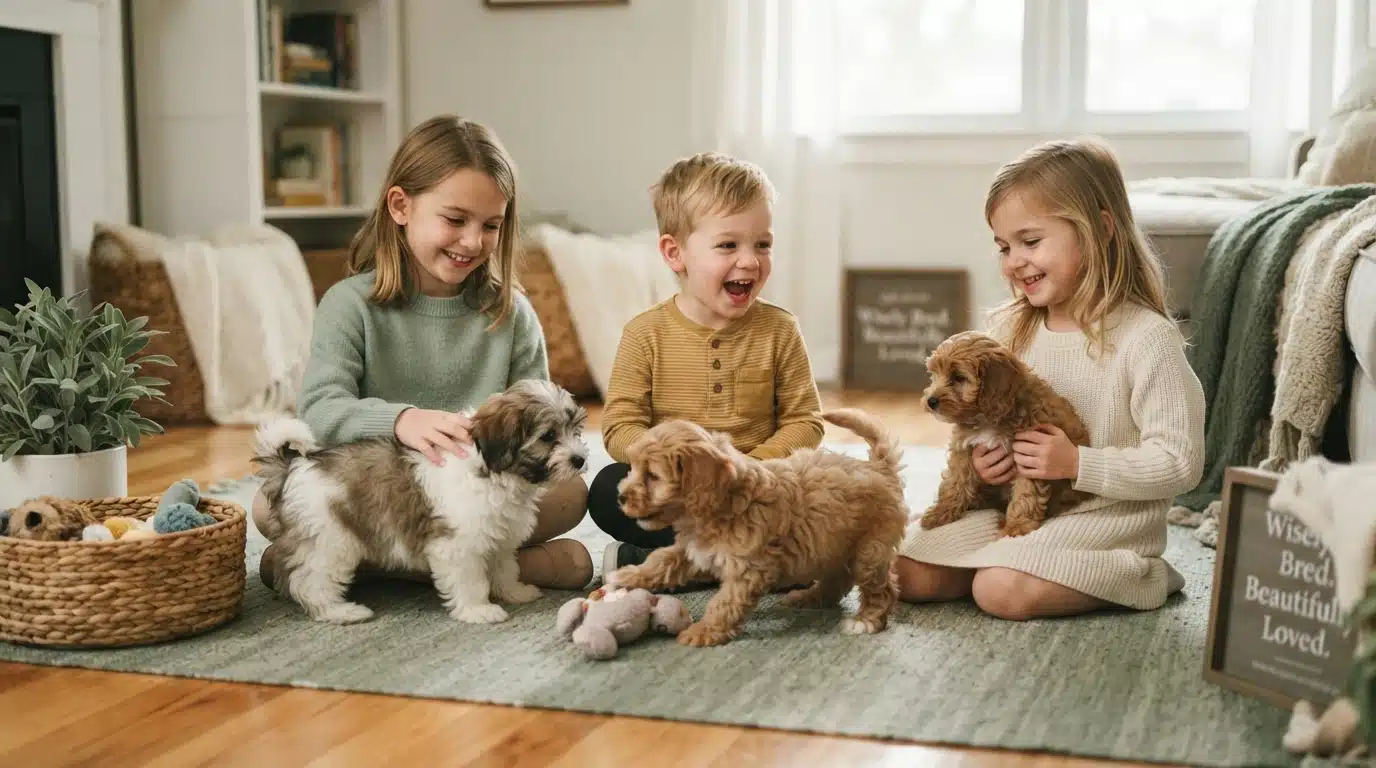
Small dogs get picked up more than big ones, often by children and strangers, so your Havanese must accept it willingly. Practice lifting correctly: one hand under the chest, one under the rear. Hold briefly, treat, then set the puppy down. Teach kids to ask before touching and to sit on the floor for greetings. Watch for stress signals like lip licking, yawning or turning away, and give recovery time before trying again. A puppy that learns handled means calm grows into a portable, easygoing companion.
Adapting the Schedule to Havapoo and Cavapoo Puppies
The same week-by-week schedule works for Havapoos and Cavapoos, with small tweaks. Both mixes often inherit coats that need regular brushing, so start grooming handling on day one. Cavapoos tend toward softness with strangers, so keep exposures short and positive rather than pushing longer sessions. Havapoos can lean busier, so build in extra sniffing walks and puzzle toys. Track which exposures your puppy recovers from quickly, and repeat those most often.
Tracking Progress and Knowing When to Get Help
A common guideline: aim for roughly 100 different positive experiences by 12 to 14 weeks. Count variety, not repetition:
- People of many ages, sizes and appearances
- Surfaces, sounds, places and handling positions
- One new item per day is enough, kept short and happy
That number is a target, not a rule. Quality and calm recovery matter more than totals.
Progress Markers Worth Logging
Keep a simple notebook or phone note. Log each new exposure, your puppy’s reaction, and how long recovery took. A confident puppy notices something new, investigates, and moves on within seconds. Note grooming handling too: nail trims, brushing and paw touches should stay routine. Many puppies keep adapting well past 20 weeks with continued exposure, so logging stays useful after the window closes.
When Fear or Aggression Appears
Watch for signals that outlast the moment: freezing, hiding, growling, snapping or refusing food in new settings. One cautious day is normal. Several cautious days in a row, or fear that grows instead of fades, calls for help. Contact your vet first to rule out pain, then a positive-reinforcement trainer or veterinary behaviorist. Early support keeps a small worry from becoming a lasting problem.

A week-by-week plan works best when it starts before your puppy comes home. If you want a Havanese raised with this kind of early handling, Sage Puppies can walk you through the application and matching process. Then use the schedule above from week eight onward.
Frequently Asked Questions
Q1: When should I start socializing my Havanese puppy?
Start the day your puppy comes home, usually around 8 weeks. Breeders handle litters from 3 weeks, and the critical socialization period runs 3 to 14 weeks, so every week you continue counts.
Q2: What does a Havanese puppy’s week-by-week socialization schedule look like?
Weeks 3 to 7 cover breeder handling and household sounds. Weeks 8 to 12 add people, car rides and short outings. Weeks 13 to 20 bring busier places, puppy classes and grooming practice.
Q3: How old should a Havanese puppy be before meeting other dogs and people?
After the first vaccine set, around 8 to 10 weeks, in controlled settings. Choose calm, vaccinated adult dogs and classes requiring vaccine records. Skip dog parks until your vet clears your puppy.
Q4: How many new experiences does my puppy need?
Aim for roughly 100 varied positive experiences by 12 to 14 weeks. Count variety, not repeats. A puppy that investigates calmly and recovers fast matters more than hitting a number.
Q5: What stress signals mean I should stop a socialization session?
Strong signs like trembling, hiding, growling or refusing food mean increase distance and end. Mild signs like yawning or lip licking call for a pause. Recovery within a minute or two means continue.
Q6: Can my puppy attend puppy class before finishing vaccines?
Yes. The American Veterinary Society of Animal Behavior advises starting classes after the first vaccine set, around 7 to 8 weeks, when health and vaccination rules are enforced.
Q7: Does socialization stop at 14 weeks?
No. The window closes, but the work shifts to reinforcing old exposures and adding complexity. Keep novel outings, handling and grooming practice going, since skills fade without regular use.
Conclusion
The pattern is simple: work inside the window, then keep going. Breeders lay the groundwork from 3 to 7 weeks, your first weeks home (8 to 12) build on it with people, car rides and short outings, and weeks 13 to 20 add busier places and grooming practice. Watch stress signals, end sessions on a win, and let fast recovery guide the pace.
Keep the health plan moving in parallel. Log vaccine and deworming dates, carry your puppy through high-risk areas until your vet clears group settings, and choose classes with health rules in place. Havanese-specific work, especially daily grooming and handling, doubles as socialization practice.
Small, positive exposures repeated weekly beat any single big session. Stick with the schedule through 20 weeks, and you will have a portable, easygoing companion for years.