Quick Summary: Small breed puppies need potty breaks every 30 to 60 minutes while awake, plus outings after waking, eating, drinking, and play. Use one toilet spot, reward immediately, watch for sniffing and circling, and use a crate or playpen when you cannot supervise. Sage Puppies recommends tracking weekly trends rather than expecting a fixed finish date, since small breeds may need longer than 4 to 6 months, and contacting a vet if accidents appear medical.
A Havanese puppy can be bright, playful and completely unbothered by the fact that you just mopped the hallway. That gap between a tiny bladder and a busy little brain is where small breed potty training usually breaks down. Small puppies need to go out often, and they give subtle puppy potty signals that are easy to miss during a normal, busy day.
This guide gives you a concrete small breed puppy routine instead of training theory. You will get a puppy potty training schedule by age, the everyday triggers that predict an accident, and practical fallbacks for winter weather, apartment living and a puppy’s first days home. It also covers how often to take a puppy out, reward-based training that actually sticks, and how to adjust as your pup grows. The routines draw on AVSAB and AKC guidance, plus what we see day to day with Havanese, Havapoo and Cavapoo puppies at Sage Puppies in South Jordan, Utah. No fixed finish lines, just a schedule you can adapt.
Step 1: Choose One Toilet Spot and One Exit Route
Why Small Breed Puppies Need Their Own Rhythm
Small breed potty training moves faster through your day than most guides admit. A Havanese, Havapoo, or Cavapoo puppy has a tiny bladder, so “how often to take a puppy out” is really every 30 to 60 minutes while awake, plus after naps, meals, and play. Their puppy potty signals are subtle too: sniffing, circling, or wandering off mid-game. You have to spot the cues early, because these little dogs don’t give you much warning.
Pick the Spot and the Door Once
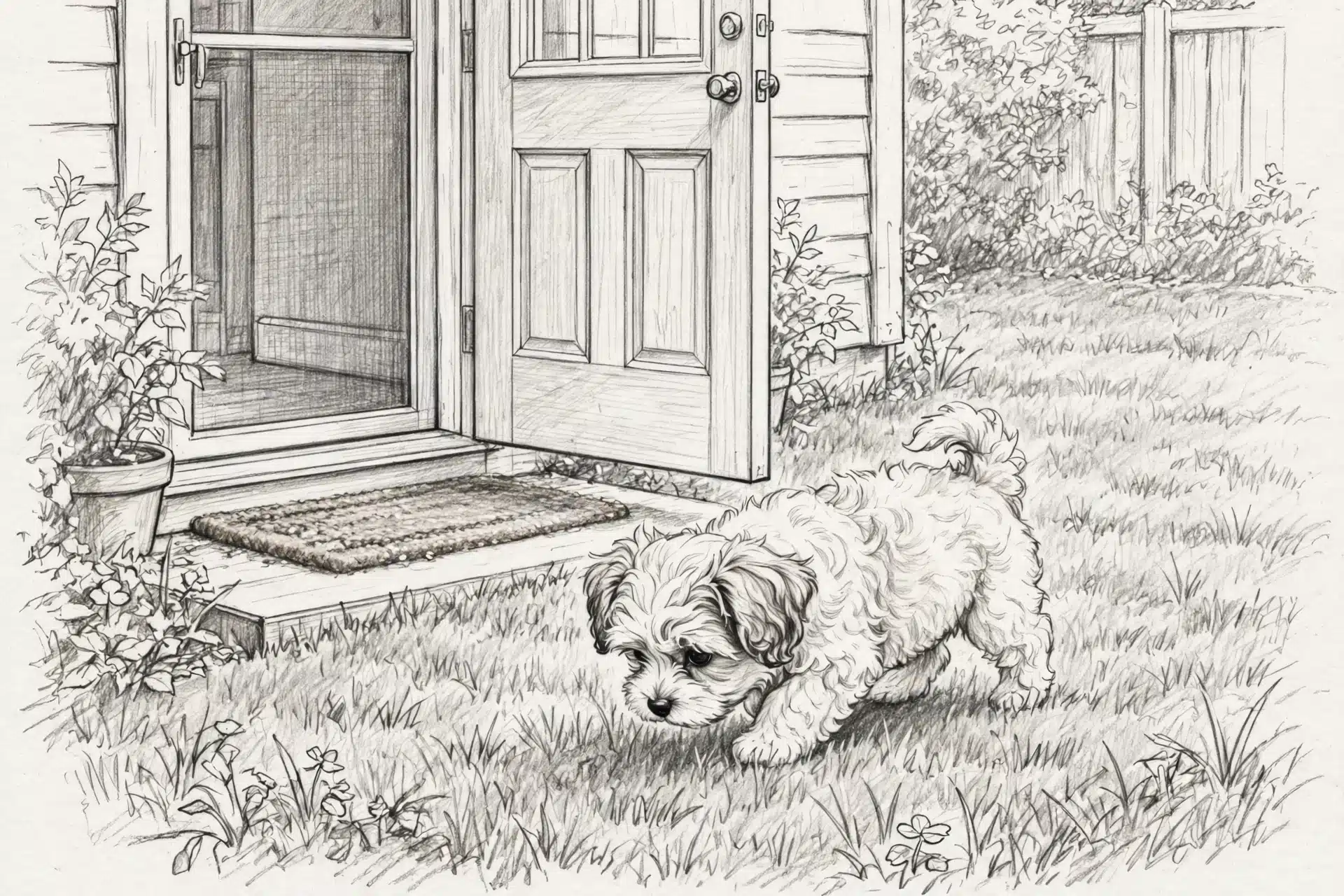
Choose one toilet spot outdoors and use the same exit route every single time. Consistency builds a scent marker that tells your puppy “this is where we go,” which speeds up learning more than anything else. If you live in an apartment, skip this step and set up a single indoor toilet area instead, like a pad or grass patch by the door, and keep the route to it just as fixed. Two spots confuse; one spot teaches.
Reward Delivery That Actually Teaches
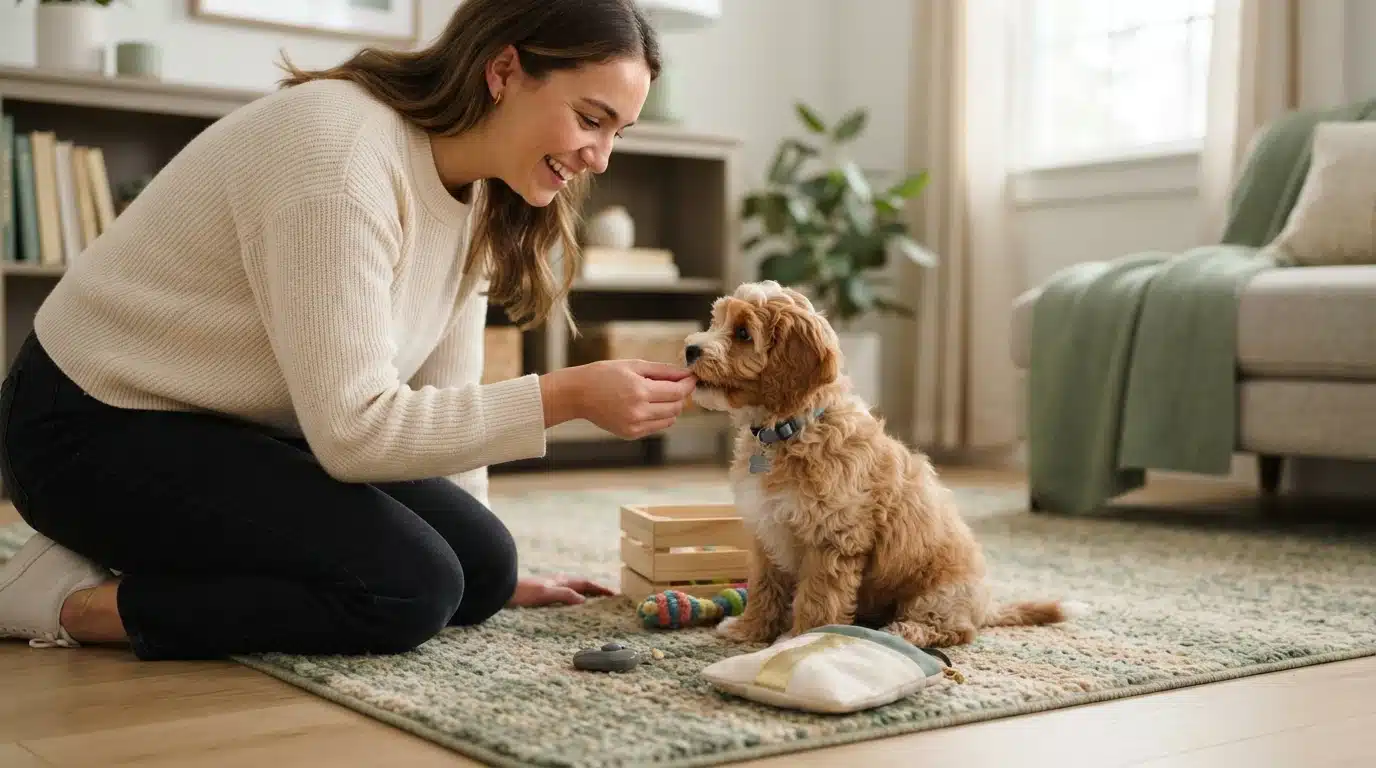
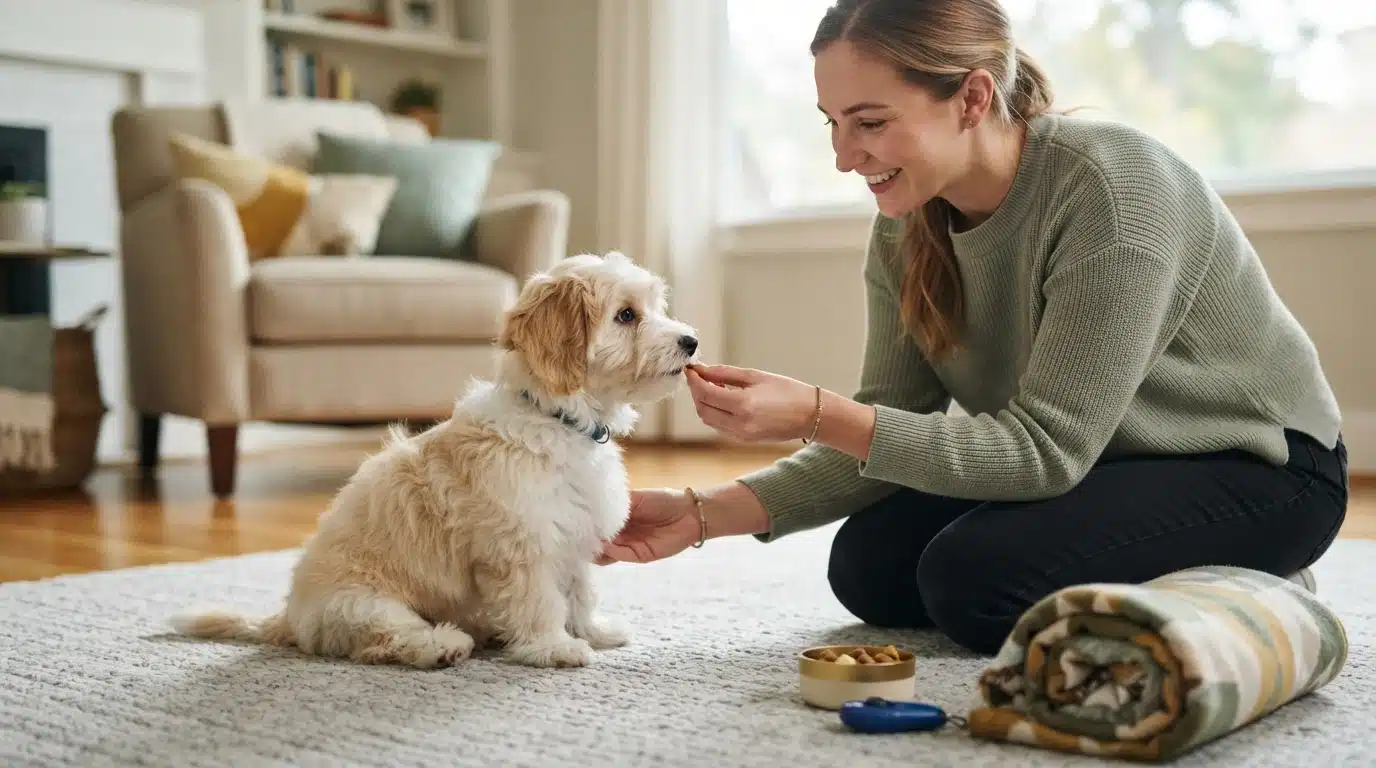
Reward-based training works here, but timing is everything. Treat the second your puppy finishes, while still standing on the spot, not once you’re back inside. Delay a few seconds and you’ve accidentally rewarded the walk back instead. Keep treats tiny, since a small breed puppy routine includes several meals and snacks already. If feeding timing is on your mind, our guide to small breed puppy nutrition covers meal schedules that keep potty times predictable.
Step 2: Build the Break Schedule Around Triggers
Small breed potty training works best when breaks follow events, not the clock alone. A trigger is anything that reliably fills a tiny bladder: waking, eating, drinking, play, and excitement. Build the day around those, and accidents drop fast.
The Daily Break Plan
Use the AKC’s month-plus-one rule as your floor: a puppy can hold it roughly one hour per month of age, plus one. Then treat every trigger as an automatic trip outside.
| Trigger | Starting range |
|---|---|
| Waking from a nap | Immediately, every time |
| After meals or water | 5 to 15 minutes after eating |
| During or after play | Every 15 to 20 minutes |
| Between triggers | Every 30 to 60 minutes while awake |
If a break comes early and nothing happens, wait two quiet minutes, then go back inside. If your puppy came home through a delivery or pickup and seems off schedule, the first week is usually about pressure and routine more than age, which is why our breeder guidance starts everyone on the same trigger-first plan.
What Changes the Interval
Several things shorten the time between breaks. Age is the big one, but not the only one.
- Excitement: visitors, zoomies, or a new toy can trigger a pee within minutes.
- Water timing: free access means more unpredictable breaks; offered bowls are easier to track.
- Weather and surface: cold rain or unfamiliar grass can make a puppy stall, so budget extra minutes.
- Night: most 8 to 10 week olds need one or two breaks, not a full stretch.
Anchoring Breaks to Your Real Day
Attach breaks to actions you already do. Out before the crate opens, out after the leash clips on, out when you pour coffee. Tying trips to your own habits means the schedule survives work days, school runs, and weekend chaos, because the puppy’s routine rides on yours rather than competing with it.
Step 3: Read the Signals and Catch the Moment
Your schedule handles the clock. Your puppy’s body language handles the rest. Small breeds give quiet, fast signals, and a 10-second window often decides whether you reach the door or reach for the cleaner.
The Signals Worth Memorizing
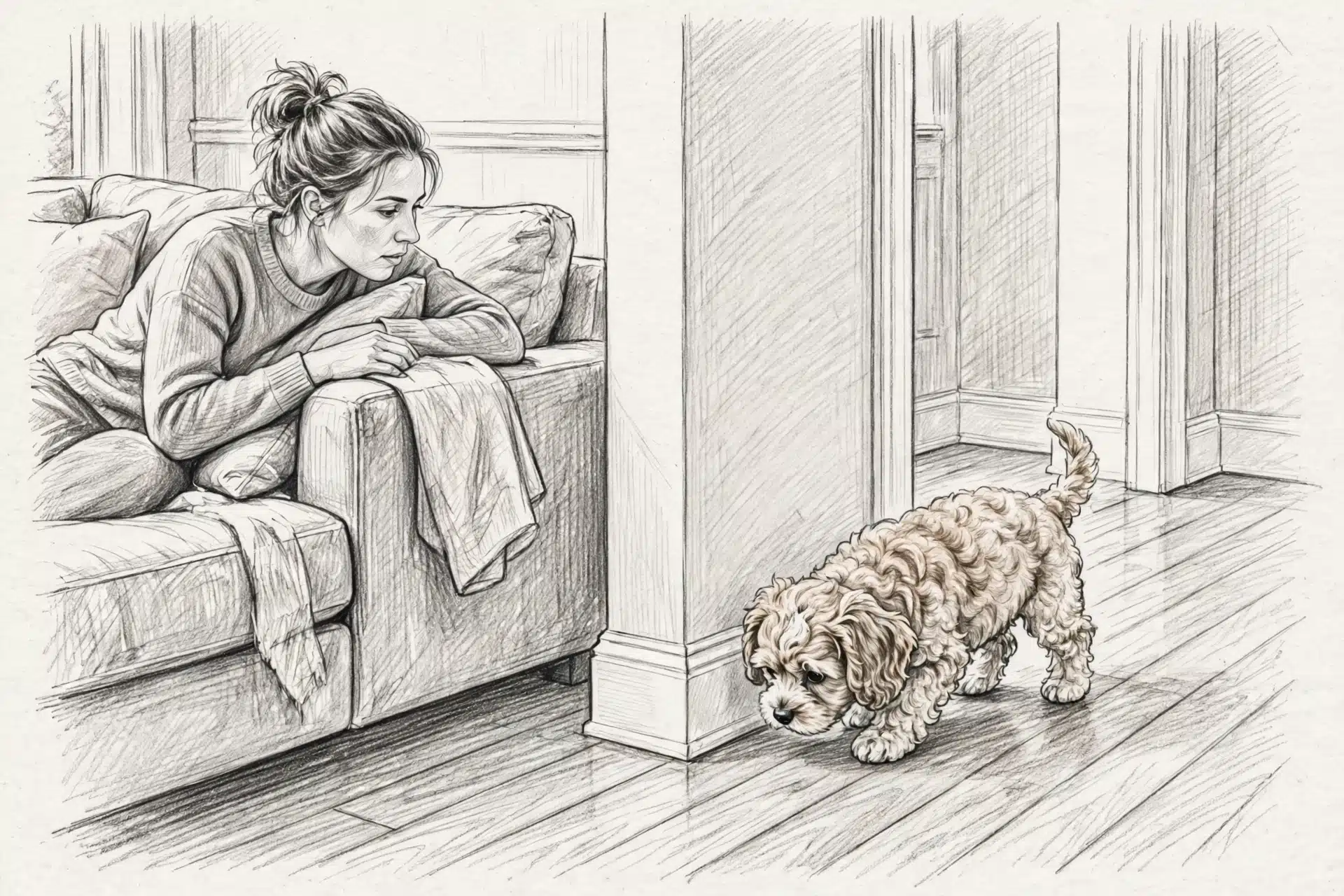
Triggers for a potty break include finishing a meal, waking from a nap, ending a play session, and a sudden behavior shift such as sniffing, circling, squatting, whining, or pacing. Watch for:
- Sniffing the floor in tight circles
- Whining or pacing mid-activity
- Wandering away from the group
- Sudden stillness or squatting
These pre-elimination behaviors are the ones American Humane tells owners to act on immediately. A Havanese or Cavapoo may just drift toward a corner, so keep eyes on the puppy, not the phone.
The Response That Builds Independence
See a signal, and move without drama. Scoop your puppy up, carry her to the spot, and wait quietly. Calm repetition works better than rushing or loud cue words, which can interrupt her mid-squat. Reward the finish, not the walk. This is where good supervision pays off, because a puppy who is always loose in the house learns to hide her signals instead of use them.
What Not to Do After an Accident
Stay quiet if you miss one. No nose-rubbing, yelling, or time-outs. AKC guidance is clear that punishment teaches puppies to hide, not to hold it. Clean the spot with an enzymatic cleaner, note the time in your log, and tighten the schedule. Accidents are information, not defiance.
Step 4: Protect the Schedule with Supervision and Confinement
A schedule only works if the puppy cannot sneak off and go in a corner while you make coffee. Supervision and confinement are what turn the routine you built into habits that actually stick.
Managing the Room the Puppy Can Reach
Free access to the whole house is the fastest route to puppy accidents indoors. Until your puppy is reliable, keep one or two rooms gated off with towels and shoes out of reach. Watch for the signals: sniffing, circling, or wandering away mid-play. When you cannot watch closely, tether the leash to your belt or close the door behind you in the bathroom so the window stays small.
Using a Crate or Playpen Well
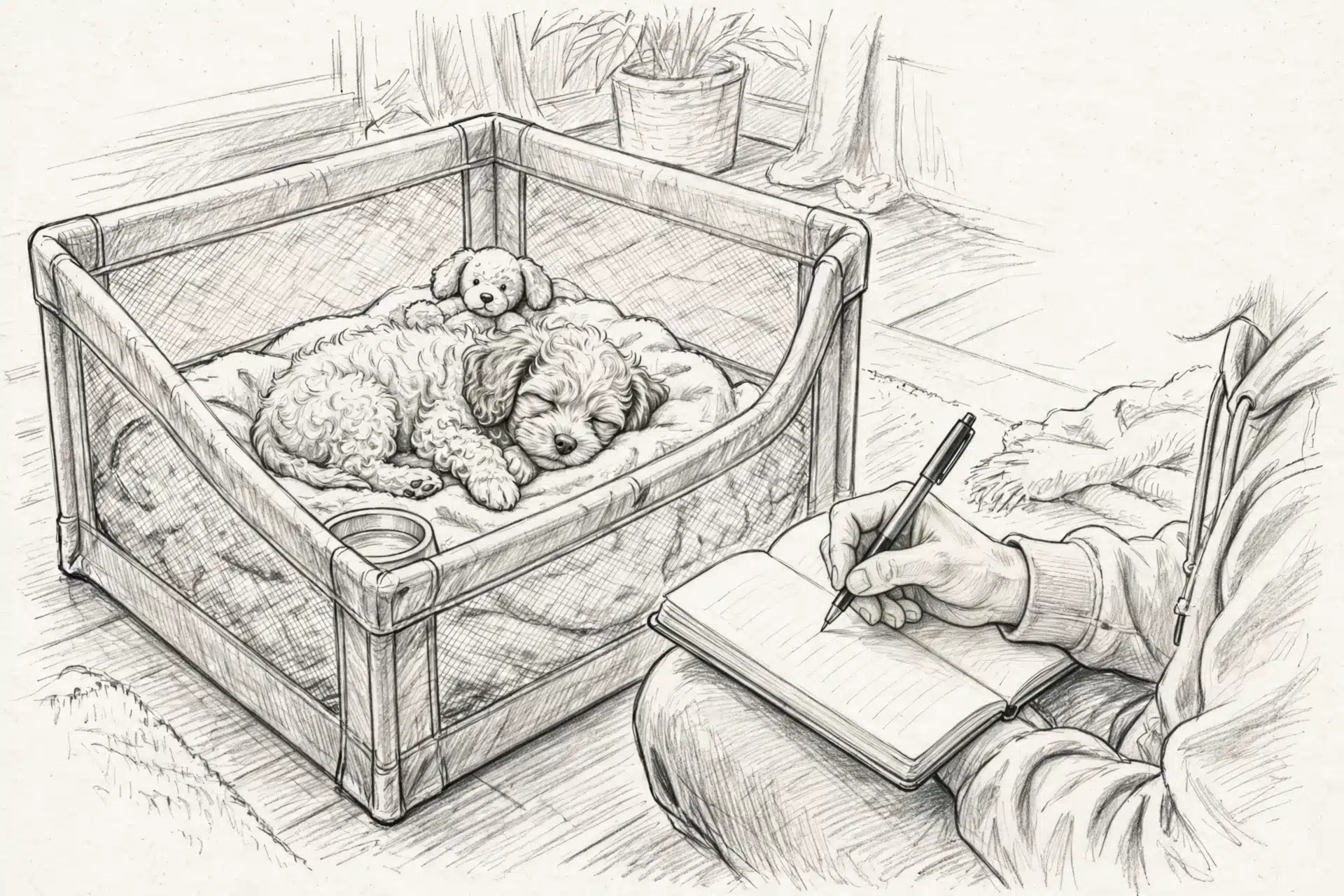
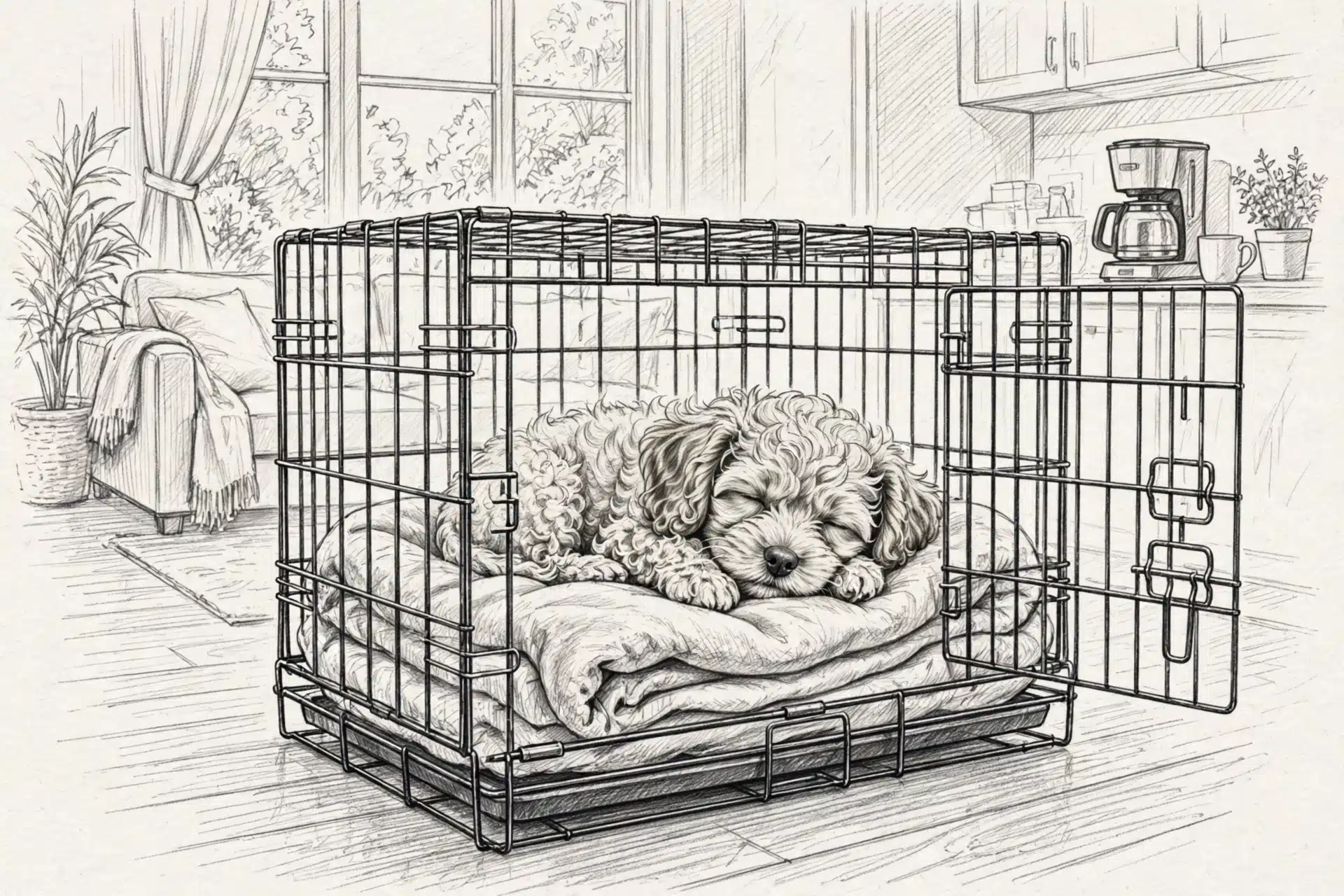
When you cannot supervise, confine, and do it kindly. A crate sized for your puppy should let him stand, turn, and lie down, with no extra space to use as a toilet corner. Dogs naturally avoid soiling where they sleep, so the crate works with that instinct. If you will be gone longer than the puppy can hold it, use a playpen with a potty pad at the far end. We compare both setups in our guide to choosing between a puppy crate and playpen, including sizing basics.
Keeping Nighttime Manageable
Night is where most first-week families wobble. Set an alarm for one or two breaks for an 8 to 10 week old, carry the puppy out quietly, and skip play or chatter. Keep the crate beside your bed so you hear stirring early. Most puppies stretch longer within a few weeks, but let the pace follow the puppy, not a fixed deadline.
Step 5: Handle Indoor, Weather and Travel Reality
When the Weather Does Not Cooperate
Utah winters and summer storms will test your schedule. Keep going outside if you safely can, because skipping trips confuses a puppy mid-training. Shorten the outing instead: shovel one clear patch, carry your puppy to it, and go back in the moment she finishes. A winter potty routine works better when the spot stays consistent, so pick the same corner every time.
Apartment Living and Indoor Options
No yard? Set up an indoor toilet area on a pad or a grass patch, placed far from her crate, food, and bed. Small breeds take to pads well because the distance is short and the bladder is small. Treat it like the yard: same spot, same cue word, same praise. AKC’s housetraining guidance stresses consistency of location above almost anything else. Once she is reliable, you can move the pad closer to the door and eventually outside.
Travel Days and New Homes
Car rides and unfamiliar floors reset a puppy’s rhythm, so expect accidents the first day or two. Plan breaks every two hours on long drives, and take her out on arrival before anything else happens. If your puppy comes home by delivery, a simple travel day plan makes the first week far smoother. Bring a pad from her old space if you can; the scent tells her what that spot is for.
Step 6: Troubleshoot Accidents and Plateaus
Accidents in the Same Spot Repeatedly
Dogs return to places that smell like urine. Even if the floor looks clean, your puppy can still detect residue you cannot, so it goes back to that corner again and again. Blot the area, then treat it with an enzymatic cleaner that breaks down odor instead of masking it. Skip ammonia-based products, since ammonia smells like urine to a dog. Until the spot is truly clean, block access to it with a gate or furniture.
When Progress Stalls
Plateaus are normal around 14 to 16 weeks, especially in apartments or during a stretch of bad weather. First, audit the basics: is everyone in the house following the same schedule and rewarding outdoors within two seconds? Then tighten supervision for three or four days, because most stalls trace back to a few unsupervised minutes. If progress still stalls after a week of a tight routine, look for a pattern in your log, such as missed evening breaks.
When a Veterinarian Should Be Involved
Some puppy accidents indoors are medical, not behavioral. Call your veterinarian if your puppy urinates small amounts very often, strains, cries while going, has loose stools for more than a day, or suddenly regresses after weeks of success. Urinary tract infections and parasites are common in young puppies and can undo a solid routine within days. Treatment usually resolves the issue quickly, and potty training typically gets back on track afterward. According to guidance from the AKC, sudden house-soiling in a previously reliable puppy is a classic reason to rule out health problems first. Document what you see, including frequency and timing, so your vet has a clear picture.
Step 7: Track Progress Without Setting a Deadline
So how long does small breed potty training take? Most puppies get reliably close by 4 to 6 months, but small breeds often need longer because their bladders are small and their signals are quiet. Skip fixed promises. Watch your puppy’s actual trend, and let that tell you when things are on track.
What Real Progress Looks Like
Progress looks like fewer puppy accidents indoors, longer stretches between trips, and clearer puppy potty signals like sniffing, circling, or heading to the door. A bad day after a schedule change is normal. Judge the week, not the afternoon.
A Simple Weekly Log
Keep a progress log on your phone or fridge. Each day, note the time of any accident, what happened right before it, and what went well. Review it every Sunday. Patterns show up fast, like missed post-meal trips or rushed mornings, and each pattern points to one easy fix.
| Week | Accidents | Pattern You Noticed | Adjustment |
|---|---|---|---|
| Week 1 | Daily | Missed post-meal trips | Add alarm 10 minutes after meals |
| Week 3 | Every few days | Fast signals near the door | Watch for sniffing and circling |
Why There Is No Finish Date
Timelines vary with age, breed size, weather, and your routine, and plateaus around 14 to 16 weeks are common. As AKC house training guidance notes, consistency matters more than speed, and AVSAB’s position statement favors reward-based training over punishment for setbacks. Track the trend instead of a date, and trust it.

A steady schedule beats willpower every time. If you’re preparing for a Havanese, Havapoo, or Cavapoo puppy, Sage Puppies can help you start before day one. Browse the available puppies, review the pricing and reservation details, or submit an application, and bring this routine home with your new companion.
Frequently Asked Questions
Q1: How does small breed puppy potty training work?
Build the day around triggers like waking, meals, and play. Take a Havanese or Cavapoo out every 30 to 60 minutes while awake, reward immediately on the spot, and supervise closely between trips. Consistency of one toilet spot matters most.
Q2: How often should I take my puppy out at night?
Most 8 to 10 week olds need one or two breaks. Set an alarm, carry her out quietly, and skip play or chatter. Most puppies stretch longer within a few weeks.
Q3: Can I potty train a puppy in an apartment?
Yes. Set up one indoor toilet area, a pad or grass patch far from her crate, food, and bed. Keep the route fixed, use the same cue word, and move it toward the door once she’s reliable.
Q4: How long does potty training a small breed take?
Most puppies get reliably close by 4 to 6 months, but small breeds often need longer. Track your weekly log trend rather than promising a finish date.
Q5: When should I call the vet about accidents?
Call if your puppy urinates small amounts very often, strains, cries while going, or suddenly regresses. Urinary tract infections and parasites are common and treatable in young puppies.
Q6: What should I do when it’s too cold outside?
Keep going out if you safely can. Shovel one clear patch, carry your puppy to it, and return inside the moment she finishes.
Conclusion
Small breed potty training comes down to a few steady habits. Build the day around triggers like waking, meals, and play, take your puppy out every 30 to 60 minutes while awake, and reward the finish on the spot. Watch for quiet signals such as sniffing and circling, confine kindly when you cannot supervise, and keep one toilet spot or indoor pad no matter the weather or floor plan. Skip nose-rubbing, use an enzymatic cleaner after accidents, and call your vet if accidents look medical.
Most of all, track the trend, not a date. Small breeds like the Havanese, Havapoo, and Cavapoo often need longer than 4 to 6 months, and plateaus are normal. A weekly log will show you what to adjust, so your small breed puppy routine bends to real life without breaking.