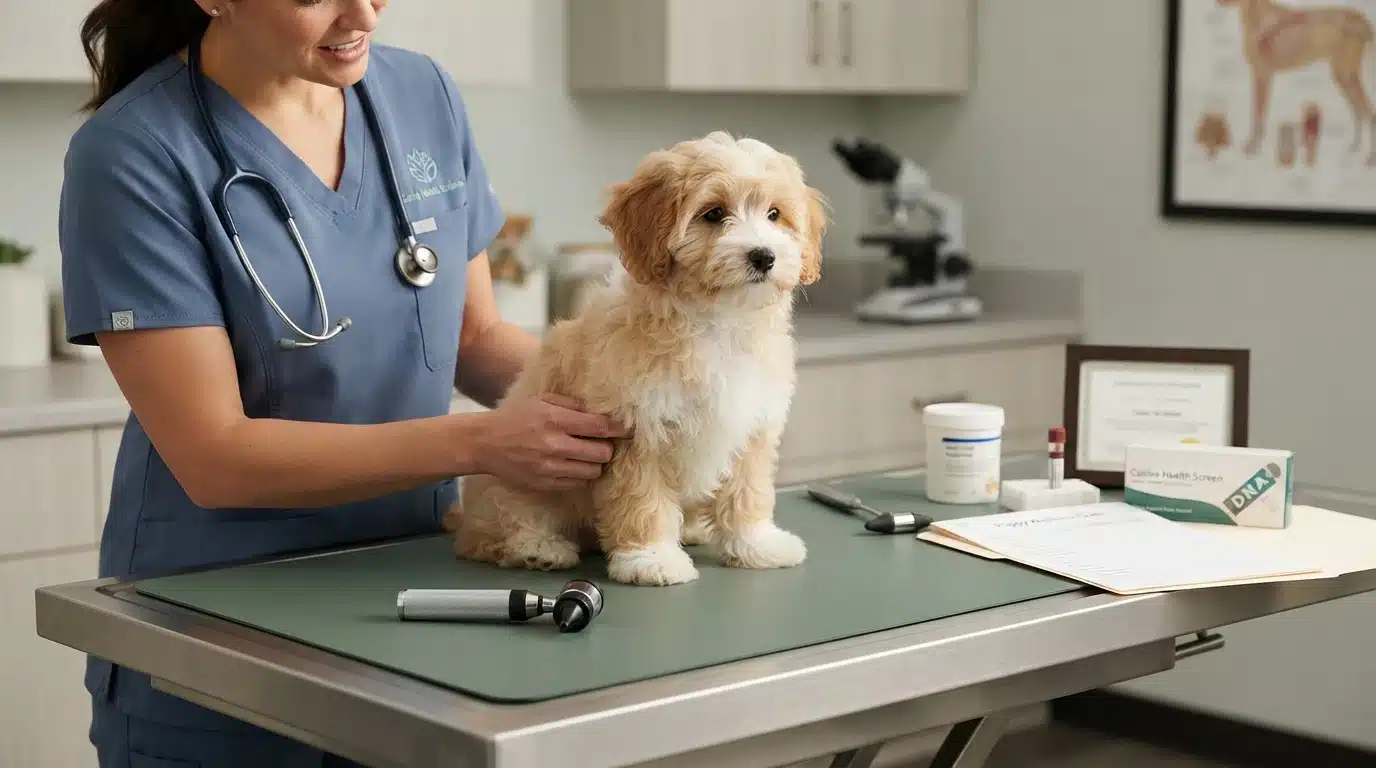
Quick Summary: Ask breeders for each parent’s OFA hip and patella results, current CAER eye exam, cardiac screening, DNA tests such as prcd-PRA, and CHIC number, then verify the records at ofa.org. A CHIC number only confirms required tests were published, not that they passed, and DNA panels cannot rule out hip, heart, eye, or other conditions. For Havapoos and Cavapoos, screening should cover both parent breeds, while the puppy’s vet, vaccination, deworming, and microchip records complete the health picture.
A breeder who writes “health tested” in an email has given you words, not evidence. Most puppy buyers stop at the phrase and miss the gap between a claim and a document. Real proof lives in health screening reports: registry records, eye exam forms, and certifications you can check yourself.
This guide shows exactly which papers to request, how to read an OFA or CHIC record, and what Havanese, Havapoo, and Cavapoo parents should be tested for. You will also learn what each report cannot tell you, because even a clean file has limits.
We raise Havanese, Havapoo, and Cavapoo puppies at Sage Puppies in South Jordan, Utah, and we hand families the actual paperwork before they commit. Whether you are comparing health-tested puppies for sale near you or arranging delivery from across the country, ask for the documents. Then verify them.
What a Health Screening Report Actually Is
A health screening report is a documented test result for a breeding dog, not a verbal promise. It records what the dog was tested for, who performed the test, the date, and the outcome. Breeders collect these reports on the parents before a litter is ever planned, because results show which dogs are safe to breed together.
Three Separate Categories of Records
Keep three groups straight in your mind. First, genetic test results, usually DNA panels that show whether a dog carries genes for conditions like prcd-PRA. Second, physical exam certifications, such as patella, cardiac, and eye exams. Third, routine care records: vaccinations, deworming, and your puppy’s own first vet visit notes. Parents’ results matter most; puppy records come later.
What a Report Proves and What It Does Not
A report proves one dog passed one test on one date. It does not guarantee a puppy will never develop a health problem, and it is not a substitute for a written health guarantee in your purchase contract. Think of results as risk reduction, not insurance.
Where Records Live: Registries, Clubs, and Veterinarians
Most results are filed with the Orthopedic Foundation for Animals (OFA), which issues a CHIC number once a dog completes a breed’s required tests. Breed clubs such as the Havanese Club of America set those requirements. Eye exams go through CAER-certified ophthalmologists, and your own vet keeps everyday records. A breeder who shares registry numbers you can verify yourself is showing real evidence, not just claims. Health-tested puppies for sale deserve that level of proof.
Which Health Screening Reports Should a Breeder Share
A breeder should share a specific set of records before you pay anything. Ask for these eleven documents:
- OFA hip evaluation results for both parents
- Patella luxation certification
- CAER eye examination reports
- Cardiac auscultation results
- BAER hearing test results where relevant
- DNA test results, including prcd-PRA and carrier status
- A CHIC number for each parent
- The puppy’s vet examination record
- Vaccination records with dates and vaccine types
- The deworming schedule
- Microchip registration details
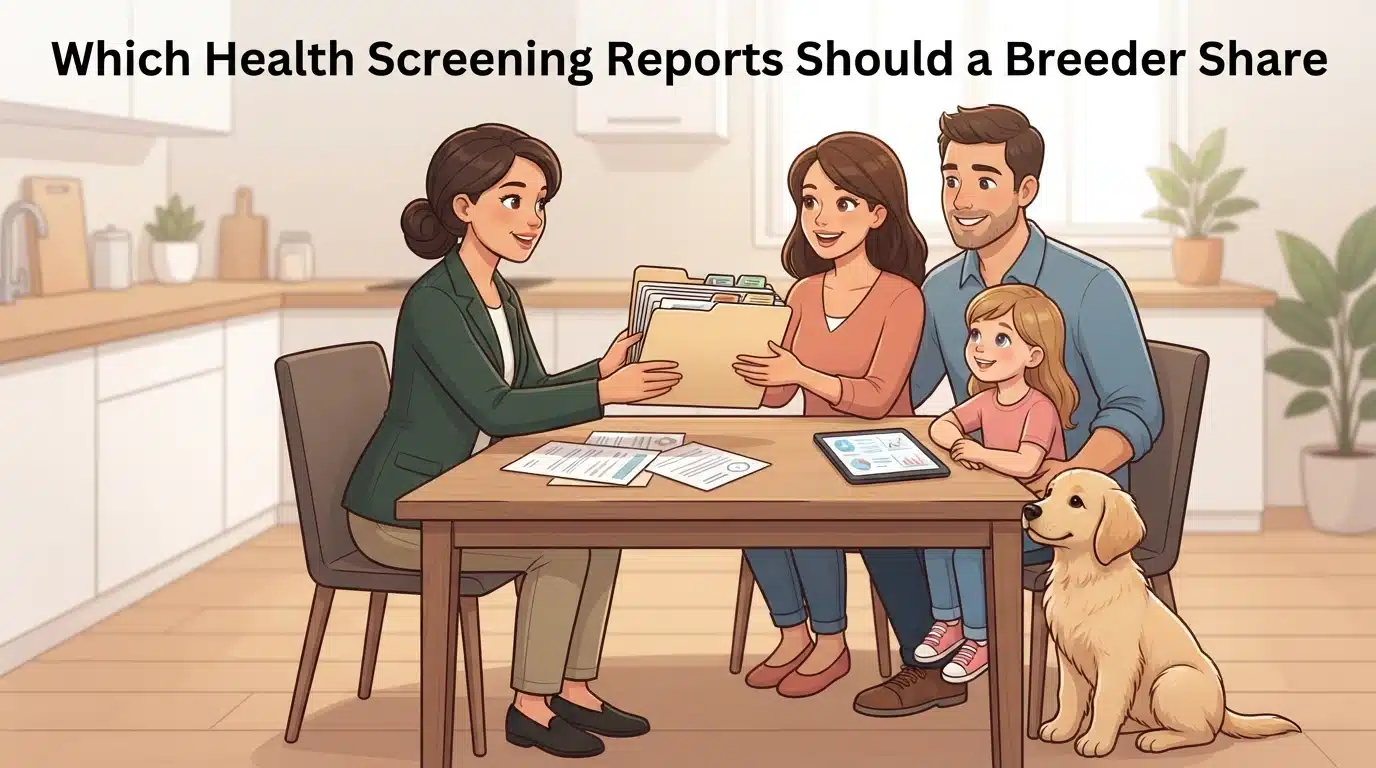
If a breeder hesitates at any of these, treat that as information too. Responsible programs keep these records organized because they expect buyers to ask.
What the Parent Club Currently Recommends
The Havanese Club of America sets the standard for the Havanese parent. Its health and testing guide currently centers on:
- An OFA hip evaluation, completed at 24 months or older
- A patellar luxation exam at 12 months or older
- A CAER eye examination by a board-certified ophthalmologist
BAER hearing testing is no longer required for CHIC because deafness is rare in the breed, but many breeders still run it. You can see how each of these tests works in more detail on our page about Havanese puppy health tests.
Havapoo and Cavapoo: Screening Both Parent Breeds
Mixed breeds need evidence from both sides. A Havapoo needs Havanese screening plus Poodle tests, typically hips, patellas, eyes, and progressive retinal atrophy DNA testing. A Cavapoo adds Cavalier King Charles Spaniel requirements, where a heart check by a cardiologist matters most because of mitral valve disease.
Ask which parent breed’s requirements each test satisfies. A breeder who can answer that clearly has done the work; one who cannot has likely tested for show, not for health.
How to Read an OFA or CHIC Record
What a CHIC Number Does and Does Not Mean
A CHIC number means a dog completed every health screening its breed’s CHIC program requires and the owner agreed to publish the results, whatever those results are. It is not a certificate of good health. A dog can carry a CHIC number and still have failing hips or an inherited eye condition, so always open the record and read the individual results.

Reading the Fields on an Individual Record
Each OFA record lists the dog’s registered name and number, birth date, and owner. Test results carry codes: PI or VPI after a number means the dog had a microchip or tattoo, which ties the result to that exact dog. For hips you will see ratings like Good or Excellent, and each test also shows the dog’s age at evaluation, which matters because hips are not final until 24 months.
A result without permanent identification is weaker evidence, because nothing proves the test belongs to the parent of your puppy.
Verifying a Breeder’s Claims Yourself
Here is exactly how to verify a breeder’s health test results:
- Ask for the registered name or OFA number of each parent.
- Search that name at ofa.org and open the record.
- Check that the birth date and breed match the puppy’s parents.
- Read each result, not just the CHIC line, and confirm tests were done at the right age.
Any breeder confident in their dogs will hand these numbers over. At Sage Puppies you can see parent health records as part of the matching process before you commit. If a seller dodges, treats the claim of health tested as unverified.
DNA Panels, Clear Results, and What They Leave Out
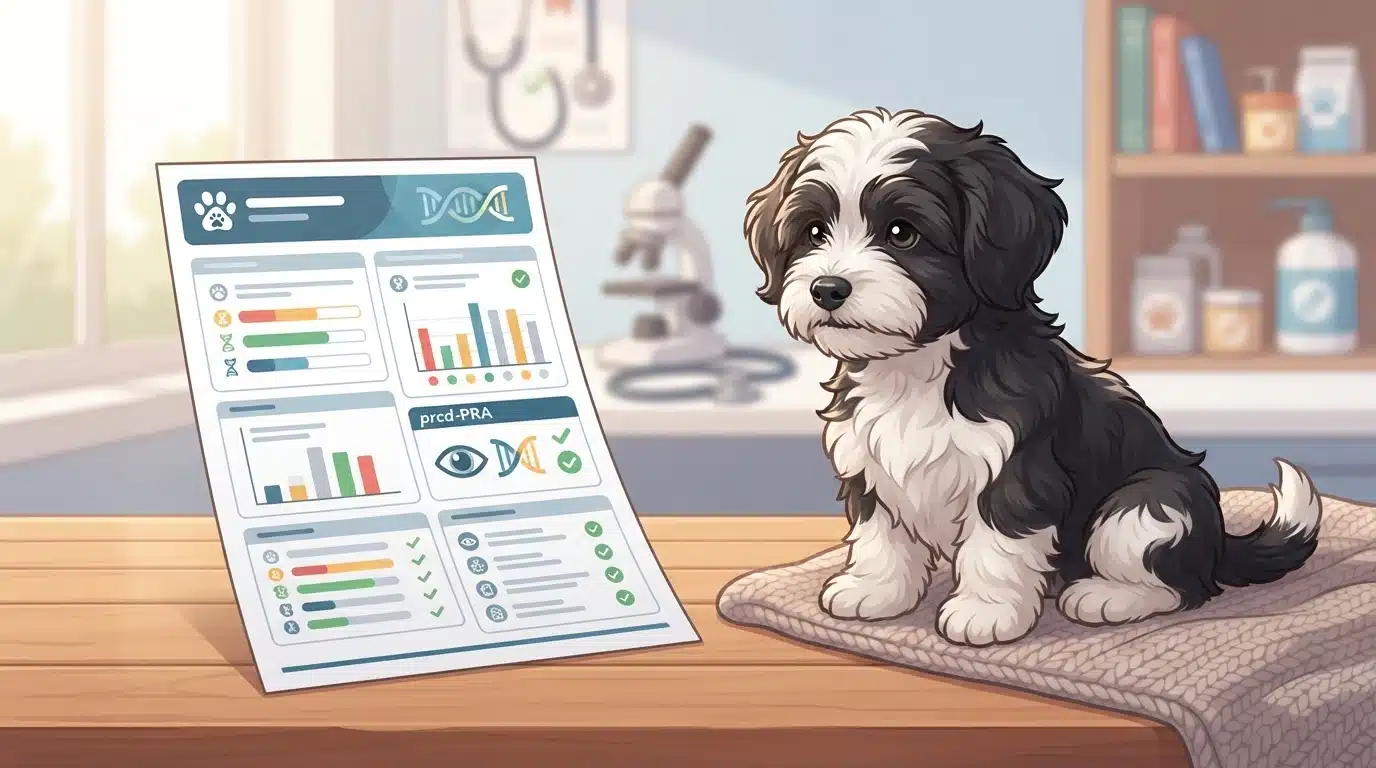
A DNA panel is not enough on its own to prove a puppy is healthy. It screens for inherited gene variants, such as prcd-PRA, but it cannot see hips, knees, hearts, or eyes. Treat a panel as one report among several, not the whole answer.
Clear, Carrier, and Affected
Panel results use three words. Clear means no copies of the variant. Carrier means one copy, with the dog usually healthy but able to pass the gene on. Affected means two copies, so the dog may develop the condition. For recessive diseases, the key rule is that two carriers should never be bred together, according to Purdue’s breeding screening guidance.
What a Panel Cannot Tell You
Panels only test the variants they include, so a clear result never rules out every disease. Some conditions, like hip dysplasia, involve many genes plus environment, and no panel predicts them. Results can also lag if a test has not been validated for a breed, which is why AKC breeder guidance urges caution with unfamiliar tests.
Questions to Ask About Genetic Pairing
Ask which panel each parent took and for which variants. Then ask whether the pairing avoids matches between carriers of the same condition. A breeder for Sage Puppies keeps both parents’ results on file, so request copies and check that each result ties to a named, microchipped dog.
Eye, Cardiac, and Clinical Clearances
Eye Examinations and Why Recency Matters
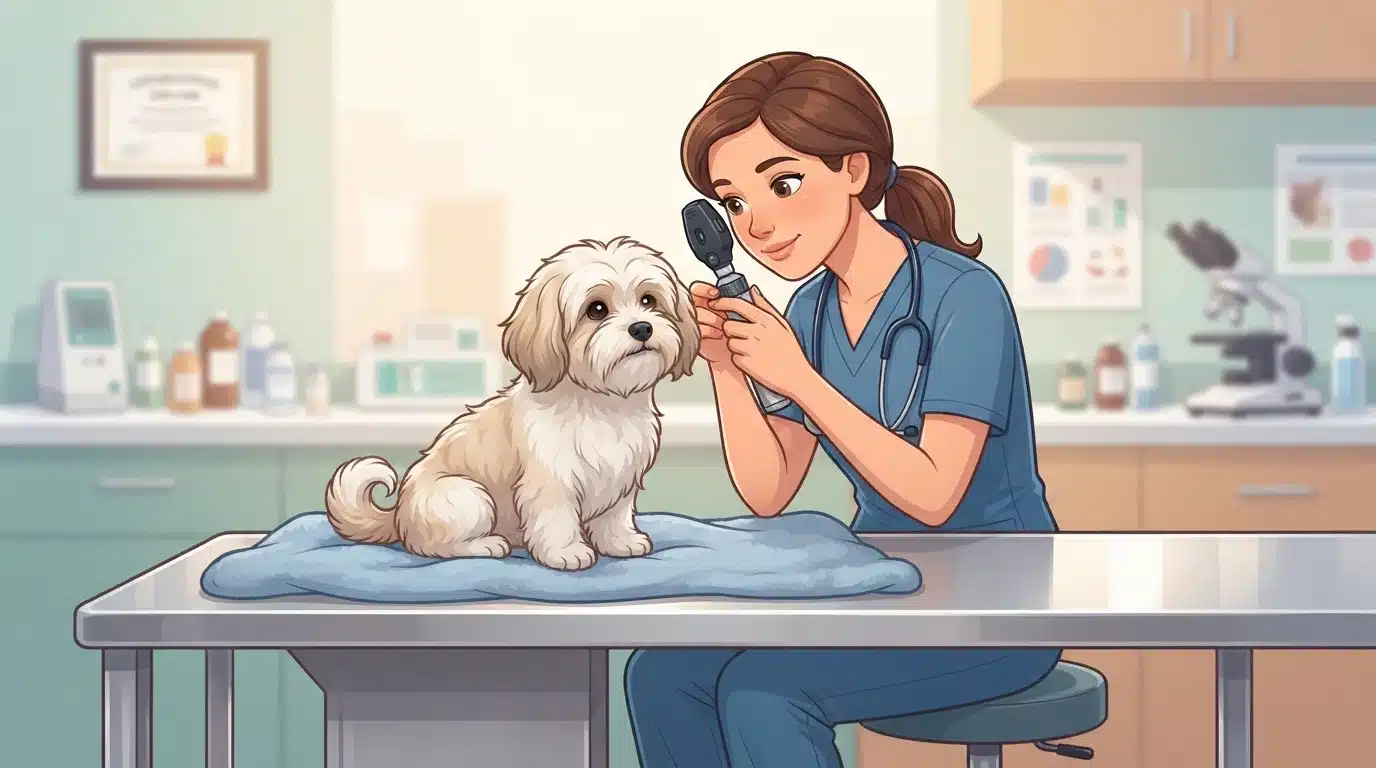
Ask for a CAER eye examination from a board-certified veterinary ophthalmologist. This exam screens for inherited eye disease, including progressive retinal atrophy signs that DNA tests can miss. Results file with OFA and stay valid for one year, so check the exam date. A two-year-old certificate tells you little about the dog today.
Cardiac Evaluations for Small Companion Breeds
Cardiac screening matters for Havanese and mixes like Havapoos and Cavapoos, where heart issues can hide behind a healthy appearance. The basic test is cardiac auscultation: a veterinarian listens to the heart for murmurs or irregular rhythm. A stronger level of proof is an exam by a board-certified veterinary cardiologist, which OFA records separately. Ask which one the parents had, and request the dated certificate either way.
Hearing, Dental, and Other Optional Testing
BAER hearing testing measures the brain’s response to sound, and it matters most in breeds with white or parti-color coats where deafness appears more often. Results can be recorded with OFA, and researchers describe the test as noninvasive. Dental screenings and general bloodwork round out a thorough program. None are required for a CHIC number, so treat them as a bonus that shows extra care.
The Puppy’s Own Records Before You Take Him Home
Parent testing tells you about the bloodline. Your puppy’s own paperwork tells you about him. Ask for it a week before pickup so you have time to read it.
Pre-Placement Exam and Vaccination Records
A good breeder has every puppy checked by a veterinarian before it goes home, often between 6 and 8 weeks of age. Ask for a copy of that exam note. You also want vaccination records showing which shots were given and when. Core vaccines like DHPP start at 6 to 8 weeks and repeat every few weeks, so expect boosters to continue with your own vet.
Parasite Treatment and Microchip Paperwork
Request the deworming schedule with dates and product names, plus any fecal test results. Most breeders treat puppies several times before pickup, and a negative fecal test is worth having in writing. Confirm the microchip number on paper matches the chip scanned at your vet, and ask whether registration is done or left for you.
Where Health Records End and the Vet Begins
These documents record care, not guarantees. A clean exam does not replace a warranty in your puppy purchase contract, and it says nothing about inherited conditions like prcd-PRA. That is why parent screening reports matter alongside these records. Read both together before you sign anything.
Asking for the Records and Reading the Response
A Copy-Ready Request You Can Send by Email
Keep the request short and specific. Something like this works:
“Could you send copies of both parents’ health testing? I’d like the OFA records (or CHIC number), including hip results, patella luxation certification, a CAER eye exam, cardiac ausculation results, and any DNA tests such as prcd-PRA status. Please include the vet exam and vaccine records for the puppy I’m considering.”
Asking by name matters. A vague ask for “health papers” invites a stack of paperwork that proves nothing. You can also search the OFA’s public database yourself using each parent’s registered name or OFA number, so you are not depending only on what arrives in your inbox.
What a Cooperative Response Sounds Like
A good breeder answers fast, sends copies rather than screenshots of certificates hanging on a wall, and explains any imperfect result. “Her hips rated Good at 26 months, and here’s why we paired her with this male” is exactly what you want to hear. Breeders who welcome scrutiny usually welcome questions about everything else, too.
Warning Signs and Deal Breakers
Some answers should stop the conversation. Watch for these:
- “The parents are healthy, so we don’t test.”
- Results for dogs under 24 months, or a single screenshot with no registry lookup
- A different registered name than the puppy’s parents
- Pressure to decide before records arrive
Walk away. A breeder confident in their program proves it with paperwork.
Common Mistakes to Avoid When Reviewing Screening Reports
Overreading a CHIC Number
A CHIC number proves a dog was tested, not that it passed. A dog can earn one with fair hip ratings or as a genetic carrier, as long as the required tests were done and results were made public. Read the actual results on the record, then judge them.
Applying the Wrong Panel to the Wrong Breed
Havanese requirements differ from poodle requirements, and a Cavapoo needs tests for both parent breeds. A breeder who shows one prcd-PRA result may have missed something else in the mix. Ask which club’s panel applies to your puppy and check each item on it, not just the easiest one.
Settling for a Puppy Exam Instead of Parent Screening
A clean puppy vet check is not health testing. Vets catch obvious problems at 6 to 8 weeks, but conditions like hip dysplasia and inherited eye disease show up later, so parents must be screened. Ask for the parents’ registry records, and treat a puppy-only exam as a starting point, never the evidence.

Now you know exactly which reports to ask for and how to check each one yourself. If you want a program that shares this paperwork before you ever commit, look at Sage Puppies. Every Havanese, Havapoo, and Cavapoo litter is matched through an owner-run process built on documented health testing. Start your application at Sage Puppies and see the evidence for yourself.
Frequently Asked Questions
Q1: Which health screening reports should a breeder share?
Ask for OFA hip and patella results, a CAER eye exam from the past year, cardiac auscultation or cardiologist clearance, DNA results including prcd-PRA status, and a CHIC number for each parent. Then verify every record at ofa.org yourself.
Q2: Does a CHIC number mean the parents are healthy?
No. It confirms the required tests were done and published, not that results passed. Read each result on the record.
Q3: What DNA results do I need for a Havapoo or Cavapoo?
Both parent breeds. Havanese plus Poodle tests for a Havapoo, and Cavalier cardiac screening plus eye and DNA tests for a Cavapoo.
Q4: How recent should a CAER eye exam be?
One year. Older exams tell you little about the dog’s eyes today.
Q5: Are puppy vet records enough?
No. A clean puppy exam misses inherited conditions, so parent screening reports matter alongside vaccination and deworming records.
Conclusion
Health screening reports turn a breeder’s word into evidence you can check. Ask for OFA hip and patella results, a current CAER eye exam, cardiac clearance, DNA panels with prcd-PRA status, and a CHIC number for each parent. Then open each record at ofa.org and read the actual results, not just the CHIC line.
Remember the limits. A CHIC number proves testing happened, not that results passed. DNA panels cannot see hips, hearts, or eyes, so physical exams matter too. For a Havapoo or Cavapoo, screening must cover both parent breeds.
Your puppy’s own vet exam, vaccination, and deworming records complete the picture. Request everything by name, verify it yourself, and treat hesitation as an answer.