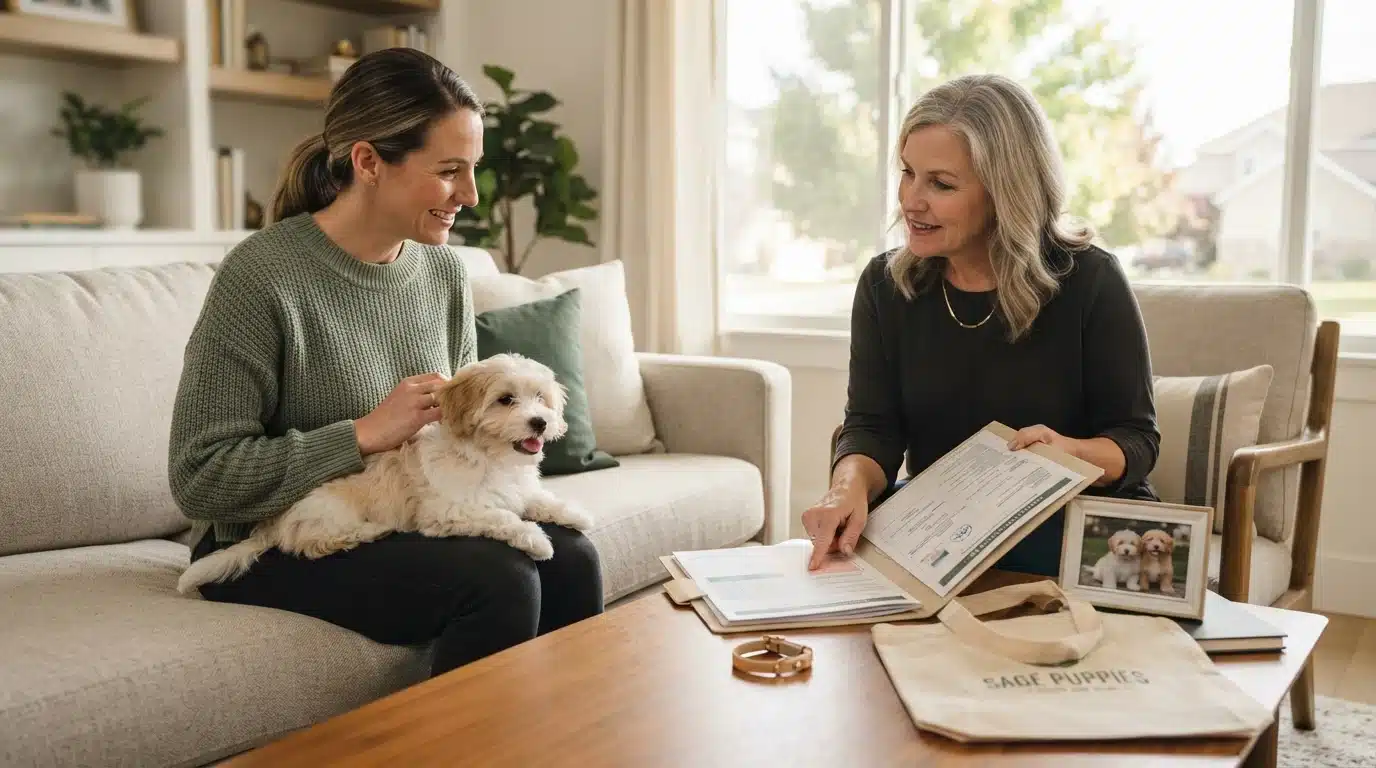
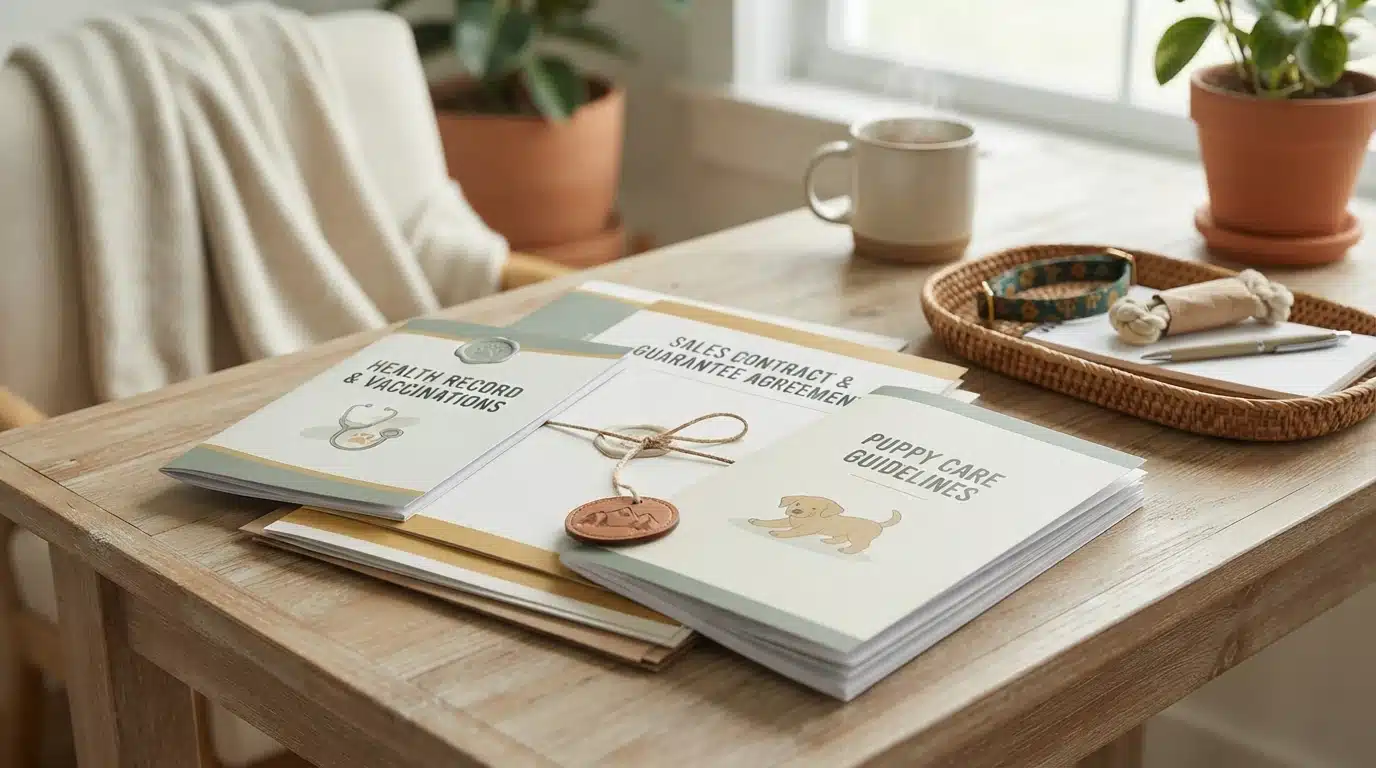
Quick Summary: “Health tested” means little until you independently verify the OFA results, genetic panels, puppy health certificate, vaccination records, and microchip details. Meet the dam, visit where the puppy was raised, review contracts, keep deposits small and traceable, and require an independent veterinary exam before purchase. Sage Puppies raises Havanese, Havapoo, and Cavapoo puppies in South Jordan, Utah, using the same verification process it recommends to families.
A seller can say “health tested” and mean nothing, because that phrase fills nearly every puppy listing online without a single certificate behind it. Real vetting puppy sellers starts with paperwork: asking for OFA result numbers, genetic panel records and a puppy health certificate, then checking those documents against the registries that issued them. The challenge for families is that sellers know the right words. What separates a careful breeder from a puppy mill is proof you can verify yourself. This guide walks through a step-by-step sequence for how to vet local sellers, from confirming who they are to reviewing contracts, deposits and one final exam with your own veterinarian before money changes hands. Sage Puppies raises Havanese, Havapoo and Cavapoo puppies in South Jordan, Utah, and this process mirrors the questions our own families ask us.
Step 1: Define What Health Tested Actually Means
Sellers use “health tested” to mean three different things. A quick vetting of puppy sellers starts with knowing which one you’re hearing, because each layer protects your puppy against a different problem.
- Genetic panel testing: DNA screening for inherited diseases like progressive retinal atrophy. Verify results in the OFA database under the parent’s registered name.
- Orthopedic screening: X-ray evaluations for patellar luxation, hips and elbows, scored by the Orthopedic Foundation for Animals. Confirm the OFA number, not just “OFA done.”
- A puppy health certificate: a licensed vet’s exam of the puppy itself. Ask for the paper, dated within ten days of pickup.
The Three Layers of Testing Sellers Blur Together
Ask a seller “are your dogs health tested?” and you’ll often hear “yes, the puppies come with vet papers.” That answers layer three while skipping the two that matter most for the parents. Some sellers have done one OFA test on the sire and none on the dam, then call the line health tested. Untangle it early: which dogs were tested, for what conditions, and where the results are published.
Why Breed Club Testing Lists Are a Useful Benchmark
Breed clubs publish the tests each breed should have before breeding. The Orthopedic Foundation for Animals lists these breed-specific requirements through its CHIC program, which gives buyers a clear record of what a breeder has actually completed. Look up Havanese, then compare the parent poodle line for any cross. A breeder who skips a recommended test should explain why.
Write Down Your Testing Standard Before You Contact Anyone
List the exact tests you’ll accept for each breed before your first call. For a Havapoo or Cavapoo, that means the Havanese or Cavalier side and the poodle side, both. If you’re weighing two mixes, the comparison of Havapoo and Havanese health tests shows which questions to carry into each conversation. Sellers who meet a written standard can prove it; vague answers tell you just as much.
Step 2: Verify the Seller Before You Talk About Puppies
Vetting puppy sellers starts with identity, not cuteness. Before you discuss litters, confirm who actually bred the puppy and where that person operates.
Confirm the Seller Bred the Dog or Is the Dog’s Keeper
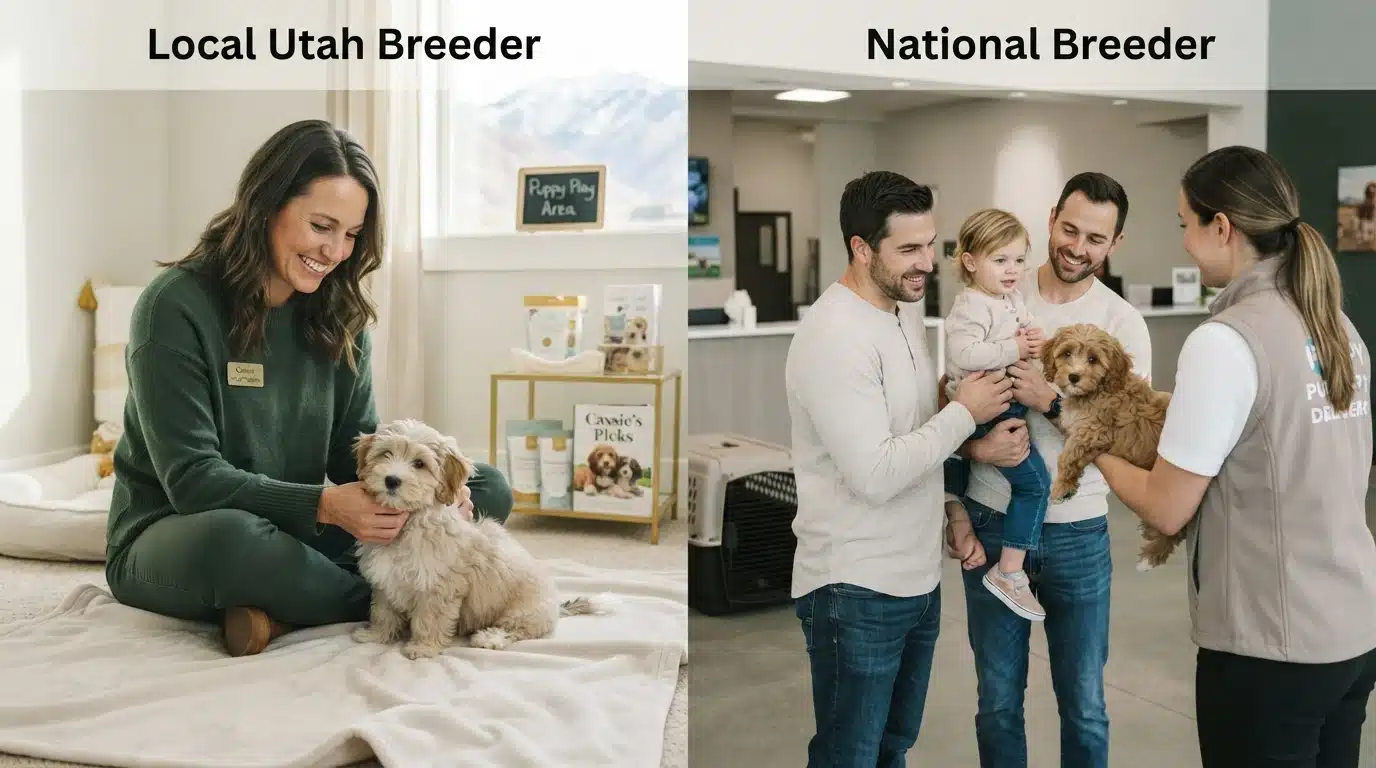
Ask one direct question first: did you breed this litter yourself, and can I meet the mother? A real breeder says yes without hesitation. A reseller deflects, offers a video call with someone else’s dog, or claims the dam lives “back east.” Ask how many litters the household produces each year. Someone with five breeds and constant availability is likely a broker, not a keeper. Sellers who breed only Havanese, Havapoo or Cavapoo litters, as some Utah programs do, are easier to hold to their answers.

Check the Physical Location, Licensing and Business Basics
Next, verify the address and paperwork. Search the business name, phone number and address online, then confirm the breeder is registered under the Animal Welfare Act using the USDA public search tool if they ship sight unseen. Federal rules require a USDA license for breeders with more than four breeding females who sell puppies sight unseen, per Good Dog’s licensing FAQ. Ask for a Utah business license or seller permit, read recent reviews, and visit in person when you vet local sellers. A puppy mill hides behind a website; a real kennel welcomes the visit.
Step 3: Request Health Records and Authenticate Them Yourself
Ask for documents in writing, then confirm each one on your own. A seller who healthy-sounds on the phone but stalls on paperwork is telling you something, and puppy seller vetting works best when you treat every record as a claim to verify, not a favor to admire.
The Documents to Request in Writing
Send one short message that lists everything you need. A credible breeder of Havanese, Havapoo or Cavapoo puppies will send copies quickly:
- Parent health test results with the registered name or OFA number for the dam and sire
- Genetic panel results from a named lab, showing which variants were tested
- The puppy’s health certificate from a licensed veterinarian, dated within roughly ten days of sale
- Vaccination and deworming dates signed or initialed by the clinic
- Microchip number matching the paperwork
Authenticate Each Document Rather Than Admiring It
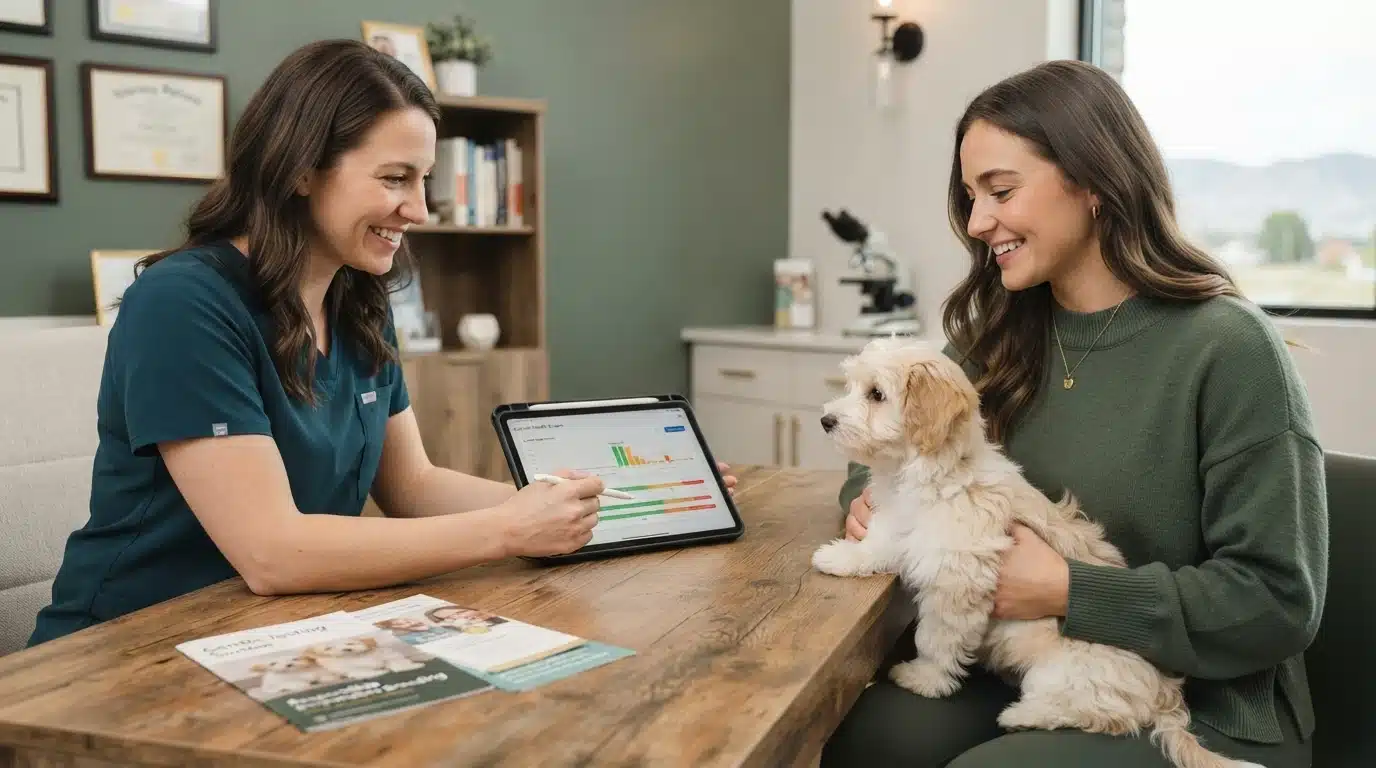
Paper can be copied, edited, or borrowed from a different dog entirely. So check each item at its source. Use the OFA’s advanced search to look up the parents by registered name or number, and confirm the orthopedic results match what the seller told you. Cross-check the genetic panel against the lab’s own portal when the lab offers one. For the health certificate, call the clinic listed on it and ask whether that puppy was seen on that date. Our guide on checking a breeder’s health testing records walks through each check in order. One more detail: the dog’s name on the OFA page should match the name on the pedigree the seller sent. Scammers sometimes cite a real dog with good results who is not the actual parent.

Timing Is a Verifiable Clue
Real records arrive before you ask twice. A parent’s OFA results exist years before the litter, so there is nothing to prepare. Delay, excuses, or promises of “results next week” are classic puppy mill red flags, because mills test rarely or not at all. Set a personal rule: no documents verified, no deposit paid. Sellers confident in their screening welcome the checks, and their timing shows it.
Step 4: Examine the Puppy’s Environment, Records and Socialization
A puppy’s surroundings and paperwork tell you how a seller really operates, past anything the website says. Visit in person if you can, and ask to see where puppies sleep, eat and play.
Where the Puppy Is Kept and How Often Humans Are Around
Look for a clean, warm space inside a home, not a shed or garage. Puppies should live around daily noise like vacuums, doorbells and children. Ask how many litters the breeder raises at once; a home that always has puppies for every breed mix is a puppy mill red flag. The first three months of a puppy’s life are the window when sociability outweighs fear, so the AVSAB position statement urges breeders to start socializing before vaccines are finished. Sellers who handle puppies early, from day one, set that habit up for you. You can see how we raise ours through family-home puppy raising practices.

Vaccinations, Deworming and Microchip Details
Ask for a printed vet record, not a handwritten note. At eight weeks, a puppy should have its first round of puppy shots, at least one deworming, and a first exam by a licensed veterinarian. Many breeders also place a microchip before the puppy leaves. Check that the record lists the vaccine brand, the date given and the clinic name, and match those details to the vet’s contact information. If the seller can’t produce this paperwork, walk away.
What You Should See in the Puppy Itself
Healthy puppies have bright eyes, clean ears, a soft coat and a round but not bloated belly. They should be curious, playful and happy to approach you. Watch for limping, coughing, discharge or hiding. A well-socialized puppy will explore your hands instead of freezing or scrambling away from you.
Step 5: Review Parents, Contracts and How You Will Pay
Meeting the Parents and Comparing Temperament
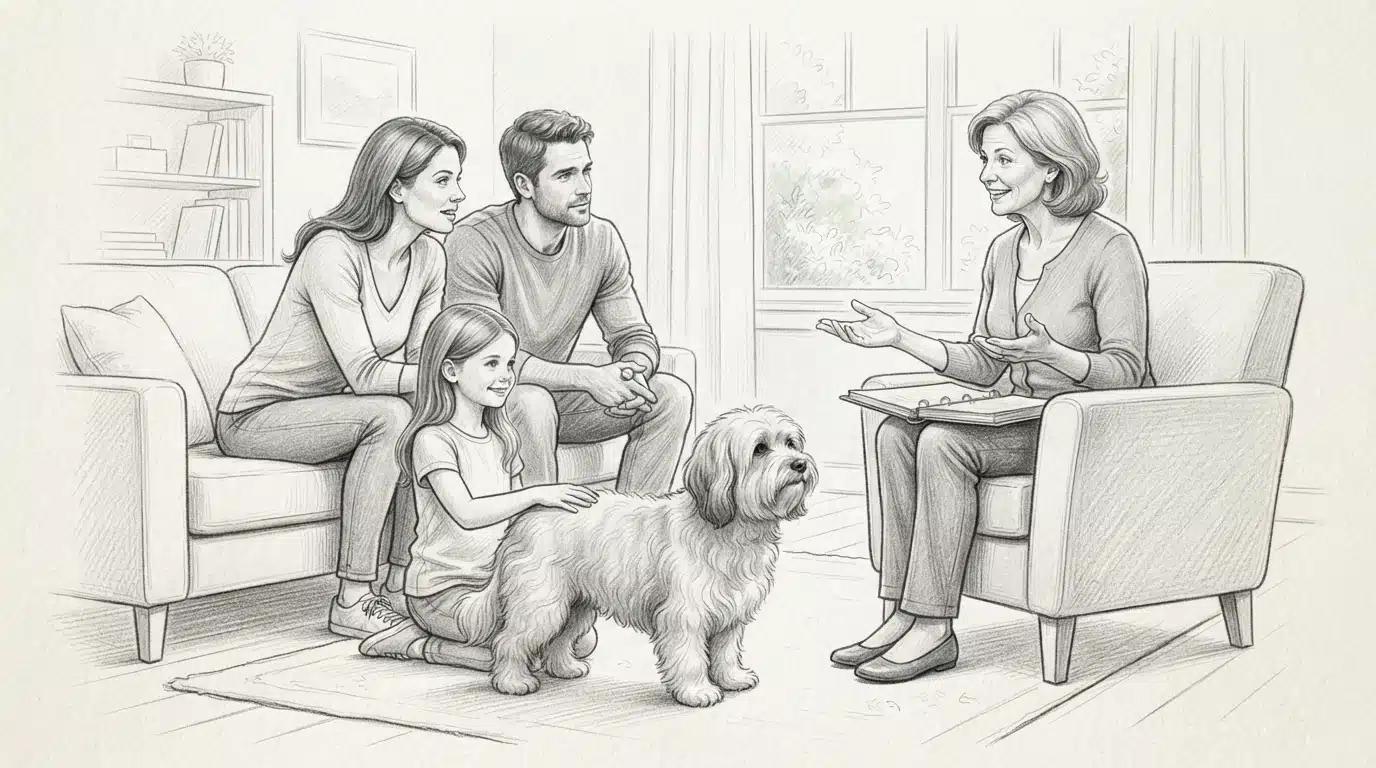
Ask to meet the dam, and the sire too if he lives there. Temperament is largely inherited, so the mother’s behavior tells you a lot about how her puppies will turn out. A calm, friendly dam that approaches you is a good sign. One that cowers, growls or paces may be stressed, poorly socialized, or kept mainly for breeding. Compare what you see with the breed standard for the mix you chose. If the seller makes excuses about why you cannot see the mother, treat that as a serious warning. Reputable breeders expect you to ask, and the California Attorney General notes that responsible sellers ask about you as well.
The Contract Terms That Matter
A written contract protects both sides. Every sale should spell out who the parties are, the puppy’s identity, the price, and any health guarantee, according to CVS Vets’ guide to responsible breeders. Before you sign, check these terms:
| Term | What to look for |
|---|---|
| Health guarantee | A clear timeframe and what it actually covers, not just the word “healthy” |
| Return policy | Whether you can return the puppy and under what conditions |
| Spay or neuter clause | Requirements, timing, and any exceptions for pet homes |
| Registration papers | When documents are provided, or why they are limited |
Several states have pet “lemon laws” that add rights on top of the contract, so review your own state’s rules as Michigan State University’s Animal Legal Center explains. Take the contract home and read it before paying.
Deposit and Payment Safety
Never pay a full balance upfront to someone you have not verified. A modest deposit to hold a puppy is normal; large or wire-only transfers are not. Use a traceable method such as a credit card, and get a written receipt that states what the deposit covers and whether it is refundable. Puppy scam warnings from police departments highlight sellers who demand gift cards or quick wire transfers. If anything about the payment feels rushed, step back and recheck the seller’s identity.
Step 6: Have Your Own Vet Review Before You Finalize
Should you pay a deposit before the puppy has been to your own vet? In most cases, no. An independent veterinary exam before purchase, or within the first days your contract allows, is your last safety check. Paperwork tells you what was tested. Your vet tells you how the puppy in front of you actually looks.
What an Independent Vet Checks That the Seller Cannot
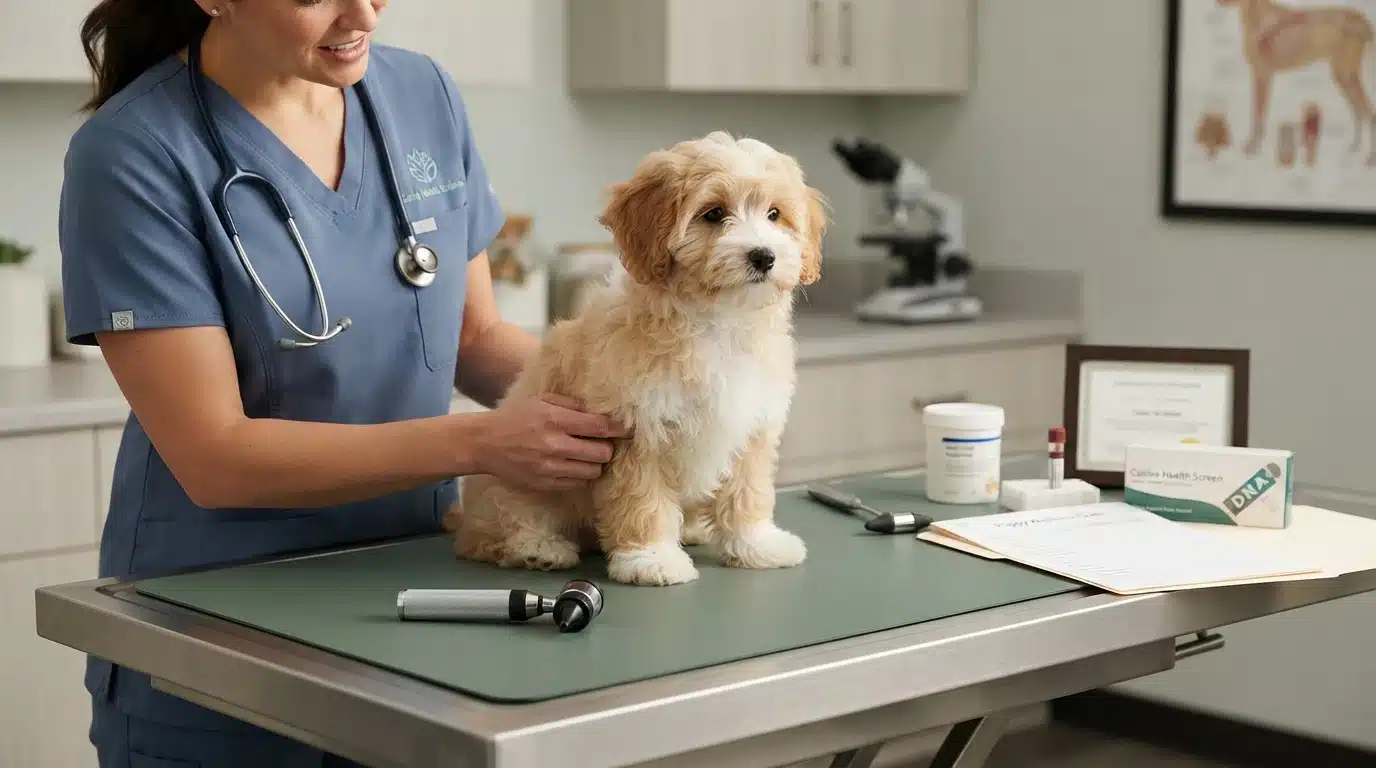
Your vet performs a head-to-toe physical exam to spot congenital problems and confirm the puppy is growing as expected, as PetMD describes. Expect a listen to the heart and lungs, an eye and ear check, a look at teeth, knees and gait, plus a review of weight, temperature, vaccination dates and microchip number. The AVMA recommends a veterinary exam as soon as possible after you select a puppy so vaccinations and any concerns get handled early, according to its guidance on selecting a pet dog. Genetic panel results cannot show a current heart murmur. This exam can.
When a Seller Pushes Back on a Vet Check
A confident seller expects this step. Many breeder contracts already require a buyer’s vet exam within a few days of pickup, so a refusal to allow one runs against normal practice, as the AKC notes. Watch for these responses:
- “Our vet already checked it.” That vet works for the seller. Yours works for you.
- “You must decide today.” Pressure to skip the exam and pay now is a classic puppy mill red flag.
- “The deposit is non-refundable.” Read the puppy deposit contract terms. A fair contract ties your money to the puppy passing your vet’s exam.
Reasonable sellers put the exam window in writing. Unrealistic ones push you past it. Choose accordingly, and keep every record you were given for that visit.

Ready to put this vetting checklist to use? At Sage Puppies, you’ll find health-tested Havanese, Havapoo and Cavapoo puppies raised in South Jordan, Utah, with clear health records, honest answers and an owner-managed application process. Browse current availability or start an application today, then bring your questions. Wisely bred. Beautifully loved.
Frequently Asked Questions
Q1: How do I know if a puppy seller is actually health testing their dogs?
Ask for the OFA result numbers and genetic panel records in writing, then look up the parents’ registered names in the OFA database yourself. Real results exist for years, so verified documents arrive fast. Vague answers or delays are puppy mill red flags.
Q2: What questions should I ask a local puppy seller before I pay a deposit?
Ask who bred the litter, whether you can meet the dam, what tests each parent had, and what the puppy deposit contract terms cover. Also request the puppy health certificate, vaccination and microchip records, plus the exact refund conditions.
Q3: Where can I find health-tested Havapoo and Cavapoo puppies near me?
Search local breeders who specialize in small companion breeds, verify their records independently, and visit in person when possible. Sage Puppies raises health-tested Havapoo and Cavapoo puppies in South Jordan, Utah, and works with families nationwide.
Q4: Should I pay a deposit before my vet examines the puppy?
Usually no. Fair contracts tie your money to the puppy passing an independent veterinary exam before purchase or within the first few days home.
Q5: What payment methods are safe when vetting puppy sellers?
Use traceable options like credit cards and get a written receipt. Avoid wire transfers, gift cards or full upfront payments, since scammers favor untraceable methods.
Q6: Do I need to verify a seller’s USDA license?
Only if the breeder ships puppies sight unseen. Federal rules require a USDA license for breeders with more than four breeding females who sell that way, so check the public search tool first.
Conclusion
Vetting puppy sellers comes down to one habit: verify documents instead of trusting phrases. “Health tested” means little until you see the genetic panel results, the OFA orthopedic scores and a puppy health certificate dated close to pickup, each checked at its source. Confirm who actually bred the litter, visit the home where puppies are raised, and read every contract term before money moves. Keep deposits modest and traceable, and treat an independent veterinary exam before purchase as your final check, since your own vet sees what paperwork cannot show. Sellers who breed Havanese, Havapoo or Cavapoo litters and welcome these questions are usually the ones worth your trust. Walk away quickly from delays, excuses or pressure, because those are puppy mill red flags you can spot yourself.