Quick Summary: Before paying a Utah puppy breeder, verify who raised the litter, inspect the parents’ OFA health results, and have your own vet check the puppy’s vaccines, deworming schedule, health certificate, and microchip details. Get a written contract covering the puppy, total price, deposit policy, health remedies, pickup or delivery, and payment receipt, and collect all records before the puppy leaves. Walk away from sellers who pressure you to pay quickly, refuse visits or video calls, provide unverifiable records, or send puppies home before eight weeks.
Two families in the Salt Lake Valley can ask a breeder the same question and get very different answers. One leaves with a folder of records. The other leaves with a promise that paperwork will come later. The difference is rarely luck. It comes down to asking questions in a specific order, before any money changes hands.
That is what this Utah puppy checklist is for. It walks you through what to ask, from the questions to ask a Utah puppy breeder about licensing to the puppy vaccination records and puppy health records you should hold in your hand before pickup. Each question pairs with the document that proves the answer.
Cassie Milar of Sage Puppies, a South Jordan program that raises Havanese, Havapoo and Cavapoo puppies, put this order together so buyers can compare any breeder fairly. Use it before you place a deposit, not after.
Step 1: Confirm Who You Are Actually Buying From
The first question on any Utah puppy checklist is not about the puppy. It is about the seller. Before you fall for photos, confirm that the person answering your messages is the person who raised the litter.
Did this person breed the litter, and can I see where the puppies are raised?
Ask directly: “Did you breed this litter yourself?” A breeder who owns the mother can talk about the pregnancy, the whelping and each puppy’s first weeks in detail. A reseller cannot. Then ask to see where the puppies live. Local families in the Salt Lake Valley should visit in person. If you are arranging delivery from out of state, ask for a live video tour instead of polished clips. Vague answers, stock photos or pressure to pay a deposit before any visit are classic puppy scam warning signs.
What can you tell me about the mother dog’s age, litter history and health?
The dam tells you more about a puppy’s future than any photo. Ask her age, how many litters she has had, and when her last one was. Responsible breeders rest their girls between litters and retire them well before old age. Ask which health tests the parents have had for breed-specific issues, and ask to see results, not just hear the word “tested.” Any Utah puppy purchase checklist should include this question, because a seller who dodges it is telling you something.
Is the seller licensed where they operate?
Do Utah dog breeders need a license? Often, yes. Salt Lake City requires a commercial dog breeder license under Chapter 8.06 of its city code, and federal rules apply to larger sellers. Ask which license fits their operation, then verify it with the city or county. Note that many small home programs operate legally without one, so the honest answer matters more than the paperwork itself.

Programs like Sage Puppies publish pricing and process openly, and if you want to see how local Utah pricing works before you ask these questions, it helps to understand typical puppy costs in Utah first.
Step 2: Health Testing and Veterinary Records You Can Actually Check
A verbal “vet checked” means little. On any utah puppy checklist, this step is about documents you can open and verify yourself, not promises made over text.
Which health tests should the parents have, and can I see the results?
For Havanese, Havapoo and Cavapoo parents, ask for results for the sire and dam on file with the Orthopedic Foundation for Animals (OFA). The core screens are patellas, cardiac, eyes (a CAER exam) and hearing, plus relevant DNA tests. Age matters: OFA requires dogs to be at least 24 months old for hip certification and 12 months for patellas and cardiac. Ask the breeder to send you the OFA lookup links rather than screenshots, then check the registry yourself.
Ask for one shared document, or the breeder’s own health-testing overview, that lists each parent’s test results in one place.

What veterinary records should come with the puppy?
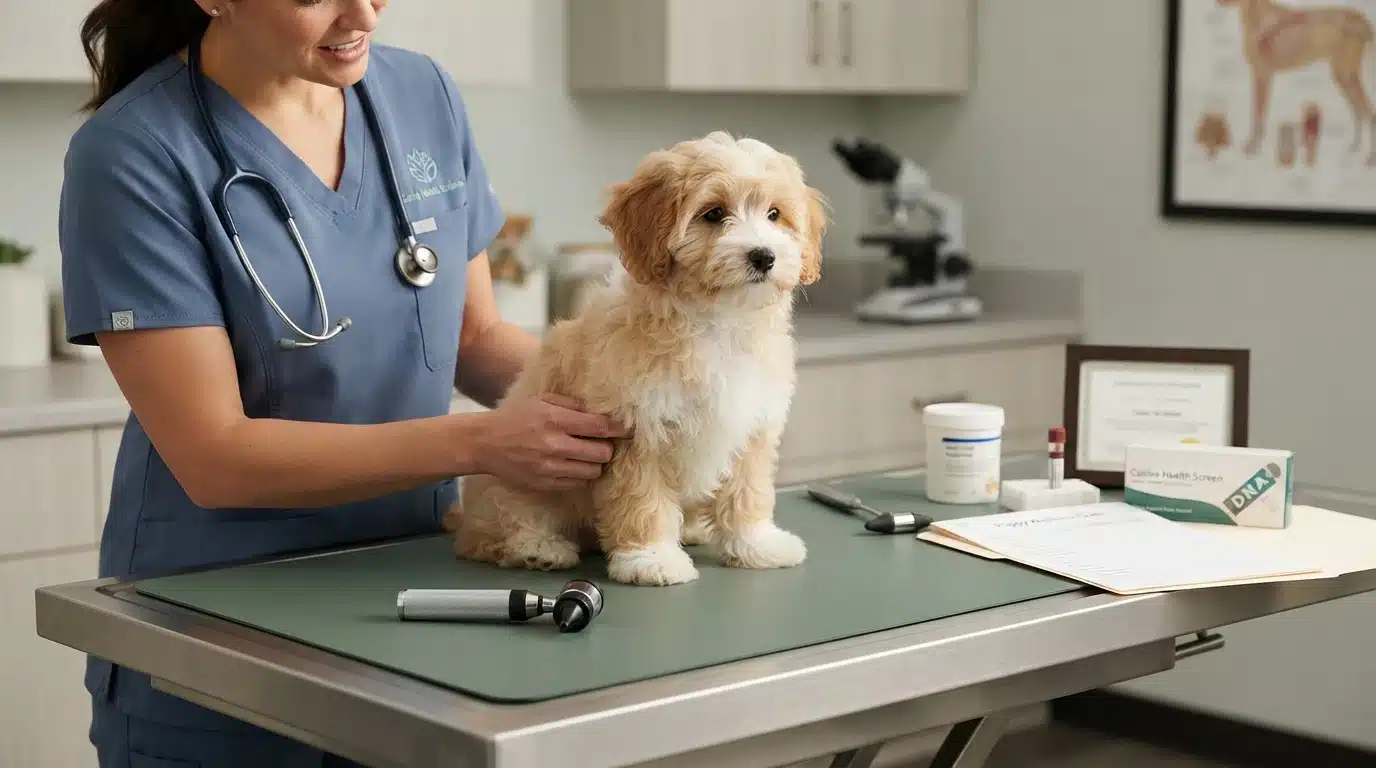
The puppy health records should show every vaccine given, with the vaccine type, date and the clinic name or vet stamp, plus the deworming and parasite control schedule used so far. You should also receive a veterinary health certificate for puppies issued shortly before pickup, signed by a licensed vet, and microchip details you can verify in the registry. If records are handwritten with no clinic name, treat that as a warning sign and ask for duplicates from the clinic.
Should I have my own vet review the records before I commit?
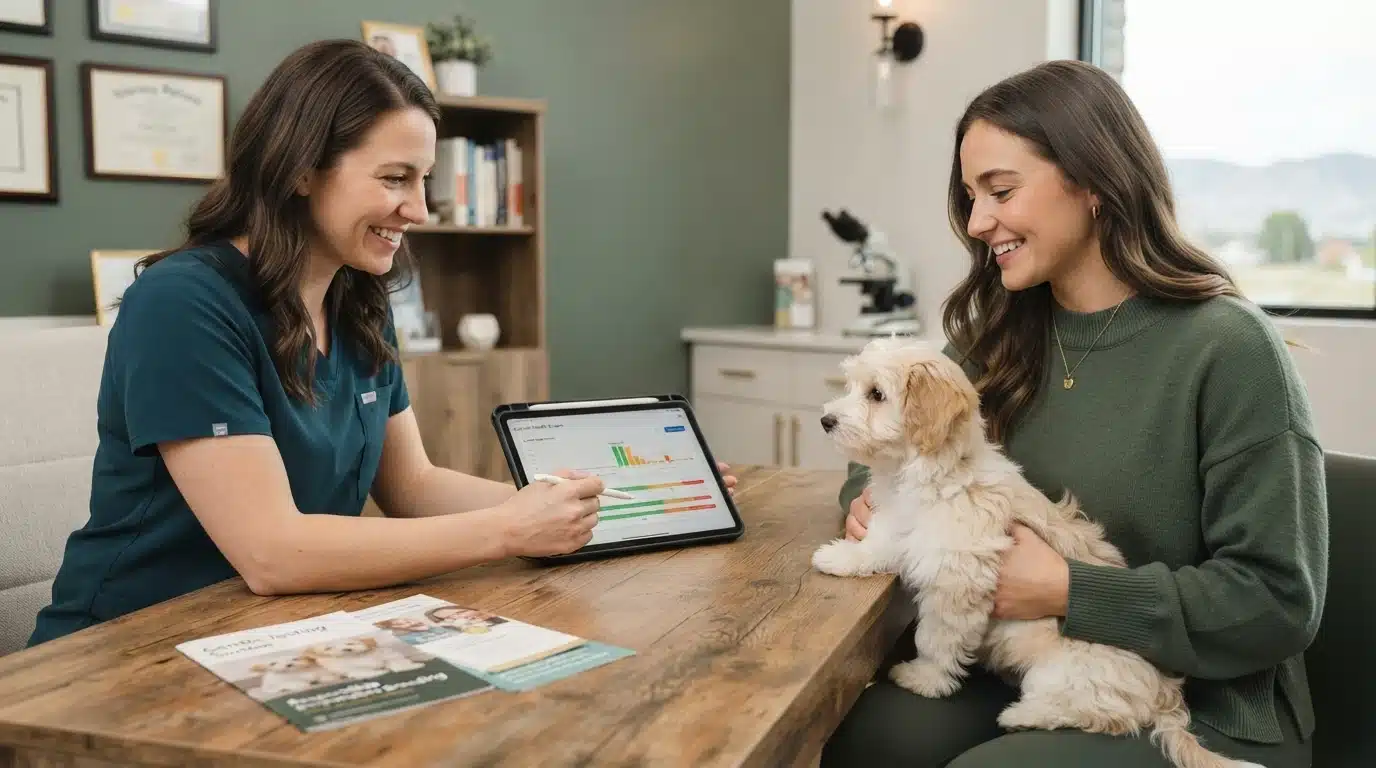
Yes. A vet review costs little and often takes one phone call. Before you pay a deposit, send the records to your own clinic and ask two questions: are the vaccines on schedule for the puppy’s age, and is anything missing from a normal eight-week protocol? For Utah families picking up in the Salt Lake Valley, book the puppy’s first-week appointment before pickup day, and have out-of-state buyers do the same with their local clinic. breeders who expect this, like the small programs behind Havanese puppy health tests, will usually welcome the extra set of eyes.
Step 3: The Contract, Deposit and Receipt Terms to Nail Down
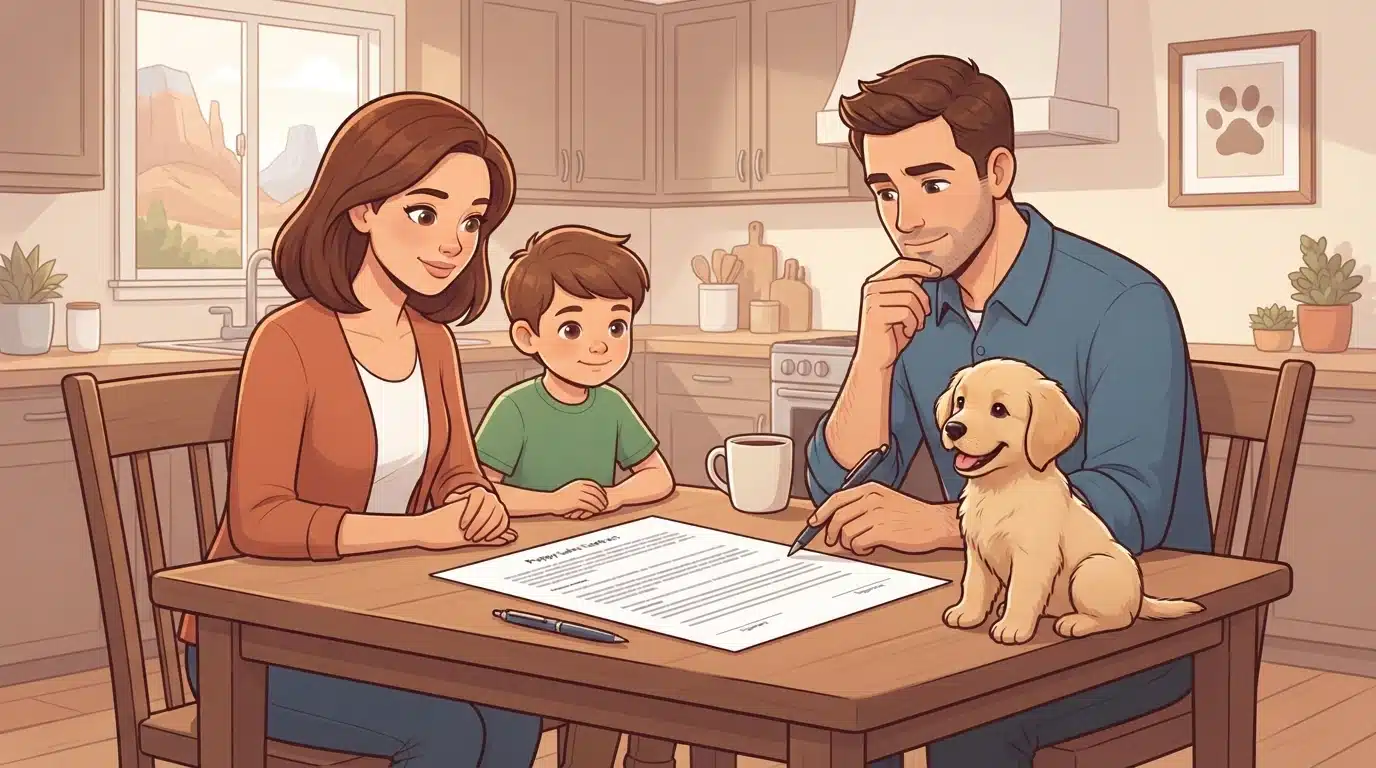
A handshake means nothing once money changes hands. Before you send a deposit, the puppy contract and deposit terms should spell out exactly what you are buying, what happens if something goes wrong, and what proof you will hold at the end.
What should be in writing before you pay a puppy deposit?
- The total price, deposit amount and balance due date
- Whether the deposit is refundable or transfers to another litter
- What the price includes: vaccinations, microchip, spay or neuter terms
- Health remedies and any time limits attached to them
- The pickup or delivery date and who arranges it
What exactly is the contract selling, and what is included in the price?
Ask the breeder to name the puppy in the contract: breed, sex, date of birth and, where applicable, registration details. Then ask what the price covers. Some programs include microchips, starter food or a spay or neuter agreement; others bill those separately. Get each inclusion listed line by line. A vague “all shots included” leaves room for disagreement later, so ask for dates and the clinic name instead. When you compare quotes, a full breakdown of puppy prices in Utah helps you judge whether one program’s higher number already includes services another charges for.
What are the health remedies, and what are their limits?
Ask what happens if a vet finds a problem within the first few days, and exactly how long that window runs. Does the breeder refund, replace or share vet bills? Note that some breeders promise guarantees they cannot honor, while others keep terms deliberately modest and clear. Also ask what voids the remedy, such as missing a required vet visit, so you know your own obligations.
Which clauses should be in writing before you pay anything?
Require these clauses in the signed document: deposit amount and refund status, health remedy window, return policy if you cannot keep the dog, spay or neuter or breeding restrictions, and a receipt confirming final payment. Sample contracts, such as PandaDoc’s puppy contract template, show how these standard terms typically appear, so read one before you sign anything else.
Paperwork and First-Week Essentials Utah Buyers Need
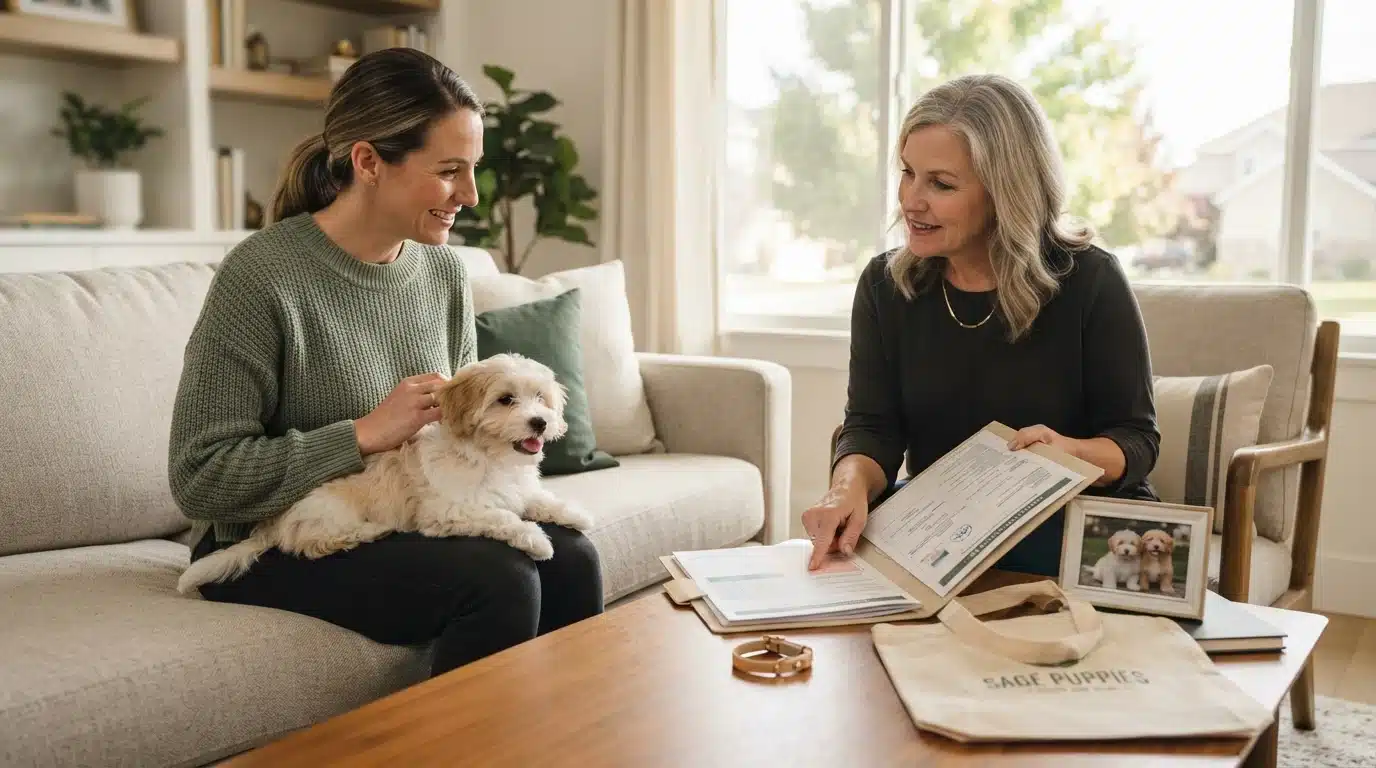
The folder you build before pickup day matters as much as the questions you ask. Your paperwork list is short: the signed puppy contract, the payment and deposit receipt, a veterinary health certificate, a puppy vaccination record stamped by the practice, a deworming schedule, and the microchip number with registration instructions. Get paper or PDF copies of all six before your puppy leaves the breeder, not after.

The document folder to build before pickup day
Ask the breeder to show you, not just describe, each document. A vaccination record should name the vaccine, the date given, and the clinic that gave it. The health certificate should be dated close to pickup. If the puppy is microchipped, ask how to transfer registration into your name; an unregistered chip cannot be traced back to you. Bring your own pen and a phone charger if you are picking up locally in the Salt Lake Valley, because you will review everything on site.
The home setup to have ready in week one
Plan for the first week with a new puppy: a crate sized for a small breed, a playpen or gated area, food matching what the breeder fed, bowls, a harness and leash, pee pads, and a few quiet toys. Book the first vet appointment within 48 to 72 hours of arrival, even when records look complete. Ask which vet you will use before pickup day so you are not searching on night one.
What to watch in the first seven days
Most Havanese, Havapoo and Cavapoo puppies settle within a few days, but a quiet start is normal. Watch appetite, stool, breathing, and energy. Call your vet if your puppy refuses two meals in a row, has persistent diarrhea, or seems flat for more than a day. Take notes each evening so your first vet appointment answers real observations rather than guesses.
Pickup and Delivery: Logistics for Utah Families
What should be confirmed before pickup day?
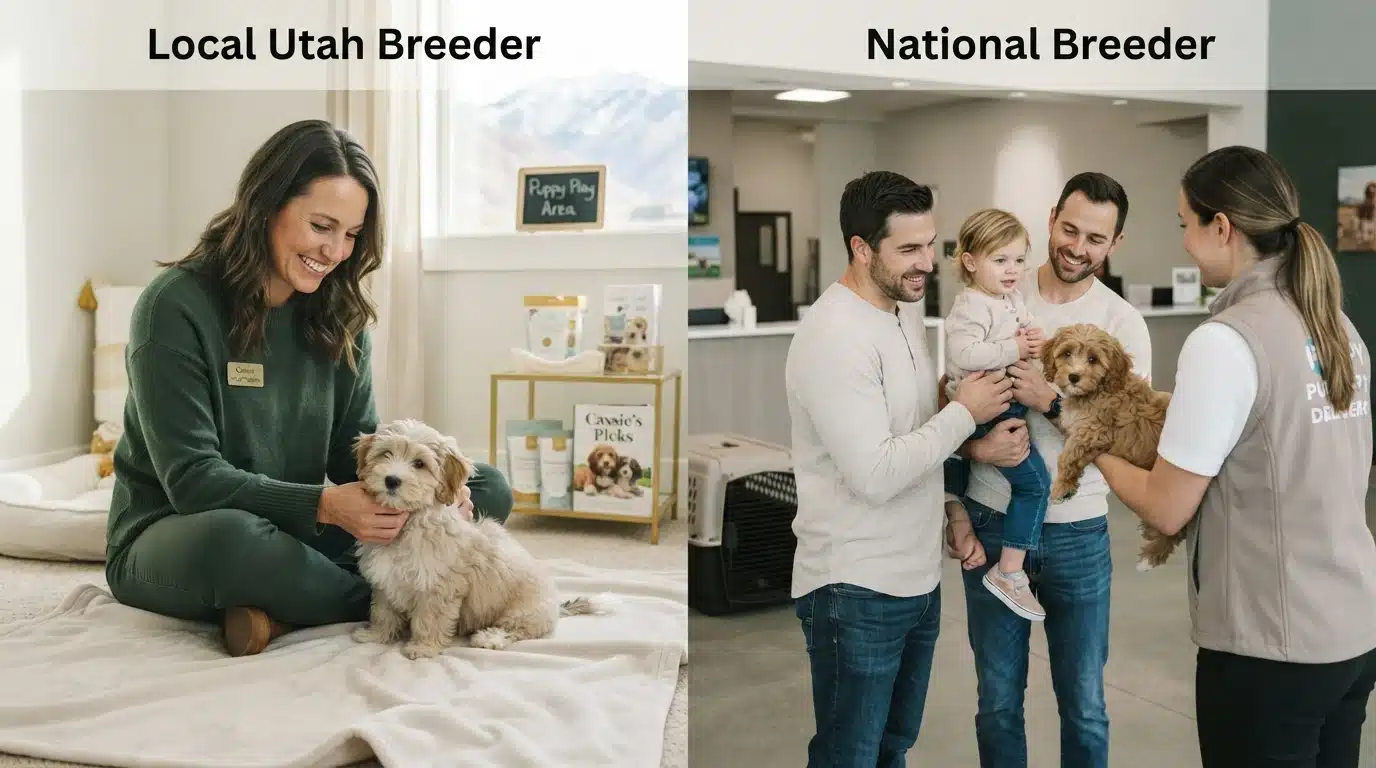
Set the date and time in writing at least a week ahead, and confirm who is coming and where. Puppies usually go home around eight weeks old, so plan the drive for a morning visit when the puppy is rested and the breeder has time to walk you through paperwork. Bring a small crate, a leash, water, and a towel, because the ride home is often a puppy’s first car trip. Ask which food the puppy eats so you can keep the same brand during the switch, and confirm the exact documents you will carry home: the health record, vaccination sheet, contract, and any microchip details. Your vet visit should already be booked within 48 to 72 hours, so the timing lines up from day one. If you are comparing programs across Utah, the way a breeder handles local pickup and delivery tells you a lot about how organized the rest of the process will be.
For families arranging delivery beyond Utah
Long-distance delivery works differently, and each option carries its own questions. Ask who actually travels with the puppy, whether that person is the breeder or a hired flight nanny, and what the puppy eats and drinks en route. Request a veterinary health certificate dated close to travel day, and confirm the crate size, layover plan, and pickup location in advance. Get the full delivery cost in writing, including any fees for weather delays, and agree on what happens if a flight is canceled. A breeder should send photo or video updates during the trip so you know where your puppy is at every stage. Before you sign anything, make sure the contract spells out when responsibility transfers from breeder to you, because that point matters if something goes wrong mid-journey.
Red Flags That Should End the Search
A bad breeder shows itself in patterns, not one bad answer. Walk away when you see:
- Pressure to pay a deposit same-day or through apps like Zelle or gift cards
- No proof of licensing when the location requires one
- Refusal to video chat or meet before payment
- Vaccination records with no vet clinic name, stamp or phone number
- Puppies offered before they are eight weeks old
- No written puppy contract or health discussion
Pressure and payment red flags
Scammers create urgency so you skip verification. Phrases like “two other families are depositing tonight” or “this price ends Friday” exist to move money before you think. Wire transfers, gift cards and payment apps are the most common routes, because the FTC notes they are hard to reverse once sent. A legitimate breeder accepts questions, holds your spot through a written process, and never asks you to pay before you have seen the puppy and the paperwork.
Records and photos that do not hold up
Ask for a puppy vaccination record stamped by the veterinary practice, plus a deworming and parasite control schedule with dates. Photos should be current, dated and specific to your puppy, not recycled litter shots. Reverse-search the images; stolen puppy photos are a classic scam warning sign. If records look complete but the vet clinic will not confirm them, treat the file as missing.
The puppy itself: signs worth taking seriously
Meet the puppy in person or on video before you commit. Watch for nasal discharge, coughing, diarrhea, visible ribs, limping, or a pup that seems lethargic around its littermates. Puppies sent home before eight weeks miss critical time with their mother. Any breeder who dismisses these signs, or resists your vet checking records within your planned 48 to 72 hour visit, has told you what to expect.

Ready to meet a puppy raised with this checklist in mind? Sage Puppies matches Havanese, Havapoo and Cavapoo puppies with Utah and national families through a clear, owner-run application. Start yours today, ask every question on this list, and bring home a companion that is wisely bred and beautifully loved.
Frequently Asked Questions
Q1: What paperwork and first-week essentials do Utah puppy buyers need?
Collect six documents before pickup: the signed contract, deposit receipt, veterinary health certificate, stamped puppy vaccination record, deworming and parasite control schedule, and microchip registration details. Set up a crate, playpen, matching food, and a vet visit within 48 to 72 hours.
Q2: How much should I pay a breeder before seeing paperwork?
Nothing. A deposit comes after you have seen the puppy, the mother and the records. Never pay through wire transfer, gift cards or payment apps, because those payments are hard to reverse.
Q3: Can I verify a Utah dog breeder’s license myself?
Yes. Salt Lake City lists commercial breeder licenses under Chapter 8.06. Small home programs may operate legally without one, so ask directly which applies.
Q4: How do I check a puppy’s health test results?
Ask for OFA registry links for both parents rather than screenshots, then search the database yourself. Look for patellas, cardiac, eyes and hearing results.
Q5: When can a puppy legally leave its mother?
Responsible breeders send puppies home at eight weeks or later. Earlier separation is a red flag.
Q6: Should out-of-state buyers get different documents?
Add a health certificate dated near travel day and written delivery terms stating when responsibility transfers to you.
Conclusion
A Utah puppy purchase checklist works as your decision filter. Ask each question in order, and hold the document that proves the answer before money moves. Confirm who bred the litter, verify the puppy vaccination records and puppy health records with your own vet, then read the contract and deposit terms line by line. Build your paperwork folder before pickup day, and walk away the moment a seller pushes you to skip a step.
Honest breeders welcome this process. Vague answers, missing stamps and pressure to pay are puppy scam warning signs, not personality quirks. Whether you pick up in the Salt Lake Valley or arrange delivery across the country, the same standard applies: no paperwork, no puppy.